

Politics
UK teachers to tackle misogyny in classroom

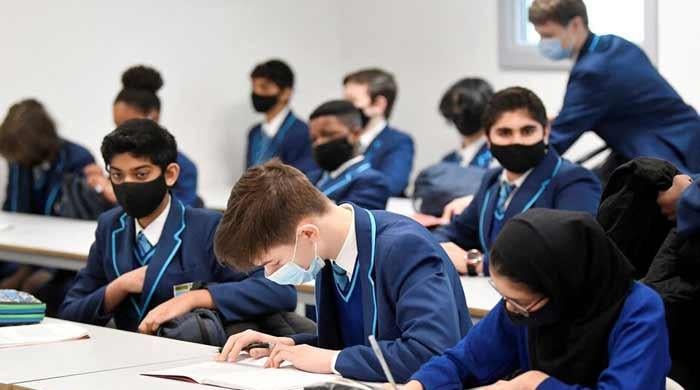
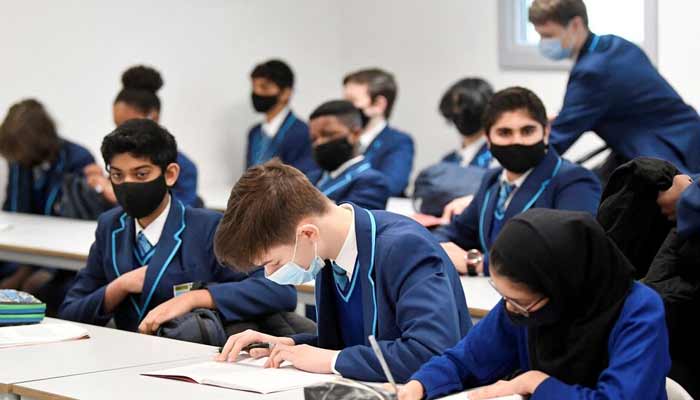
UK teachers will be trained to tackle misogyny in the classroom under a new strategy aimed at halving violence against women and girls over the next decade, a minister told parliament on Thursday.
The new strategy would deploy “the full power of the state” to introduce a joined-up approach to cracking down on violence against women and girls, safeguarding minister Jess Phillips told MPs.
The 20 million pounds plan comes as latest statistics showed over 40% of young men held a positive view of so-called manosphere influencer Andrew Tate, a government statement said citing research by NGO Hope Not Hate.
Over the last year alone, one in every eight women was a victim of domestic abuse, sexual assault or stalking, said Phillips.
“For too long the scale of violence against women and girls has been treated as a fact of life in our country,” she added.
Tackling ‘radicalisation’
Under the strategy, all secondary schools in England will have to teach students about healthy relationships.
Teachers will receive specialist training to talk to pupils about issues such as consent and the dangers of sharing intimate images.
The most worrying attitudes would be tackled early with schools able to send high-risk individuals for support focused on challenging misogyny.
Phillips said the battle would no longer be left to crime-fighting departments alone to tackle in isolation.
Taking the fight into classrooms would help “stop the violence before it starts”, she said, adding “the proliferation of content with the potential to poison young minds” had never been greater.
“Our strategy tackles radicalisation and confronts concerning behaviour long before it spirals into abuse or violence.
“We must empower teachers to challenge harmful attitudes and act before they escalate,” she said.
A new helpline would be launched, targeted at pupils concerned about their own behaviour.
Ban on ‘nudification’ tools
The government would also ban so-called “nudification” tools that allow users to strip clothes from those in photographs.
It will also work with tech companies to make it impossible for children to take, view or share nude images through “nudity detection filters”, Phillips said.
Prime Minister Keir Starmer said the strategy was about “driving forward education and conversation with boys and young men”.
“I want my daughter to grow up in a Britain where she feels safe in school, online, and in relationships,” he said on X.
“Every young girl deserves that, and every young boy should be protected from harmful misogynistic influences. My government is making that happen, by backing teachers,” he added.
The strategy comes after Starmer earlier this year said the searing Netflix drama “Adolescence” would be shown in secondary schools.
The drama about a 13-year-old boy who stabs a girl to death after being radicalised on the internet sparked widespread debate about the toxic and misogynistic influences young boys are exposed to on the internet.
- Interim govt announces mourning, special prayers nationwide.
- Police launch manhunt, offer reward for suspects’ arrest.
- Muhammad Yunus says attack aims to derail upcoming polls.
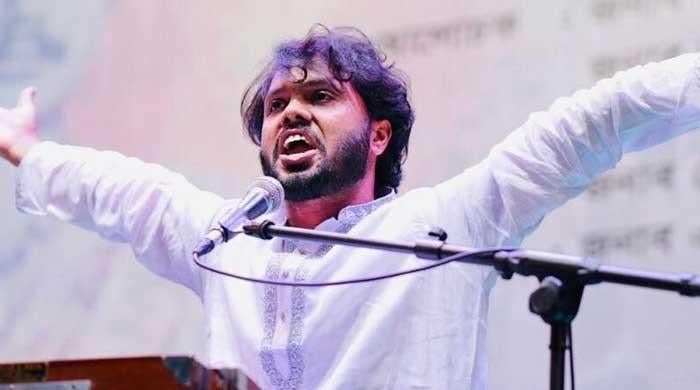
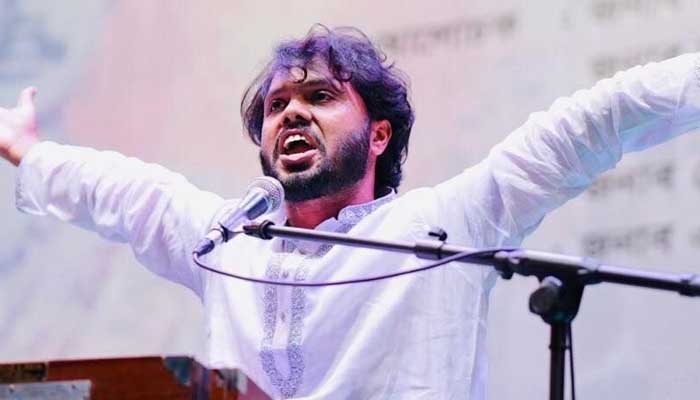
A leader of Bangladesh’s 2024 uprising who was wounded in an assassination attempt and flown to Singapore for treatment has died in the city-state, officials said on Friday.
Masked attackers shot 32-year-old spokesperson for student protest group Inqilab Moncho, Sharif Osman Hadi, 32, a week ago as he was leaving a mosque in the Bangladeshi capital Dhaka, wounding him in the ear.
“Despite the best efforts of the doctors…, Mr Hadi succumbed to his injuries,” Singapore’s foreign affairs ministry said in a statement, adding that it was assisting Bangladeshi authorities with repatriating his body.
Inqilab Moncho first announced Hadi’s death in a Facebook post, stating: “In the struggle against Indian hegemony, Allah has accepted the great revolutionary Osman Hadi as a martyr.”
Hadi was a candidate in the February 2026 elections, the first parliamentary polls since a student-led uprising toppled the autocratic rule of former prime minister Sheikh Hasina last year.
He was airlifted to Singapore on Monday for treatment.
In Dhaka, the interim government headed by Nobel laureate Muhammad Yunus confirmed Hadi’s death.
“I express my deepest condolences. His demise is an irreparable loss for the nation,” Yunus said.
“The country’s march toward democracy cannot be halted through fear, terror, or bloodshed,” he said in a televised speech.
The government also announced special prayers at mosques after Friday prayers and a half-day’s mourning on Saturday.
Hadi was a senior leader of the student protest group Inqilab Mancha and has been an outspoken critic of India — Hasina’s old ally, where the ousted prime minister remains in self-imposed exile.
Manhunt for gunmen
Police in Bangladesh have launched a manhunt for the attackers who shot Hadi, releasing photographs of two key suspects and offering a reward of five million taka (about $42,000) for information leading to their arrest.
Yunus, the 85-year-old Nobel Peace Prize winner leading Bangladesh until the February 12 elections, said last Saturday that the shooting was a premeditated attack carried out by a powerful network, without providing a name.
He said that “the objective of the conspirators is to derail the election”, adding that the attack was “symbolic — meant to demonstrate their strength and sabotage the entire electoral process.”
Muslim-majority Bangladesh, a nation of 170 million people, will directly vote for 300 lawmakers for its parliament, with another 50 selected on a women´s list.
A referendum on a landmark democratic reform package will be held on the same day.
Tensions are high as parties gear up for the polls, and the country remains volatile.
Hasina, convicted in absentia last month and sentenced to death, refused to return to attend her trial. She remains in hiding in India, despite Dhaka´s repeated requests for New Delhi to hand her over.
The last elections, held in January 2024, gave Hasina a fourth straight term and her Awami League 222 seats, but were decried by opposition parties as a sham.
The Bangladesh Nationalist Party (BNP), led by three-time former prime minister Khaleda Zia, is widely tipped to win the upcoming vote.
Zia is in intensive care in Dhaka, and her son and political heir Tarique Rahman, is set to return from exile in Britain after 17 years on December 25.
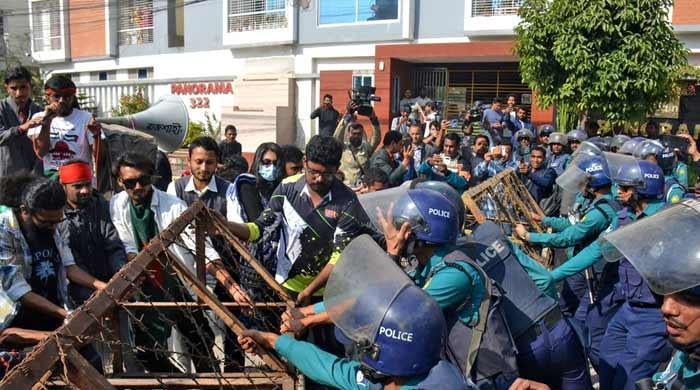
- Police stop protesters from marching towards Indian diplomatic mission.
- New Delhi says it examining Bangladesh’s requests on Hasina’s extradition.
- Protestors demand Hasina, others’ repatriation during sit-in outside mission.
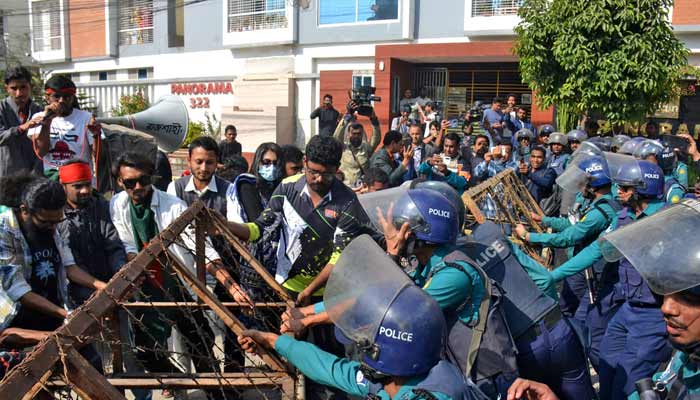
Bangladesh police on Thursday stopped protesters from marching towards an Indian diplomatic mission, a day after India’s foreign ministry conveyed its concerns over the “deteriorating” security environment in the country.
Ties between the two countries have been frosty since former prime minister Sheikh Hasina fled to India following a student-led uprising last year.
Dhaka has repeatedly asked for her extradition so that she could stand trial for her alleged crimes, with Delhi responding that it was examining the requests.
On Thursday, dozens of demonstrators began marching towards the assistant Indian high commissioner office in Rajshahi district, which borders India.
Miftahul Jannat, one of the protesters, said the plan was to carry out a sit-in, demanding the “repatriation of all the killers, including Sheikh Hasina”.
The protest was stalled by the police, who said they “listened to their demands and promised to forward them to the authorities”.
“We are not aware of any further plans (for demonstrations) and hope the issue will be resolved peacefully,” Nashid Farhad, a senior officer with the Rajshahi Metropolitan Police, told AFP.
On Wednesday, a group of protesters tried to march towards the Indian High Commission in Dhaka.
India’s foreign ministry on Wednesday summoned Bangladesh’s top diplomat in New Delhi to convey its concerns about the actions of some “extremist elements”.
In a statement, the ministry also said it expected the interim government under Muhammad Yunus to “ensure the safety of missions and posts in Bangladesh in keeping with its diplomatic obligations”.
Hasina, 78, was sentenced to death in absentia by a Bangladesh court last month for crimes against humanity.
The country of 170 million people goes to the polls on February 12, with Hasina’s former ruling party, the Awami League, banned from running.
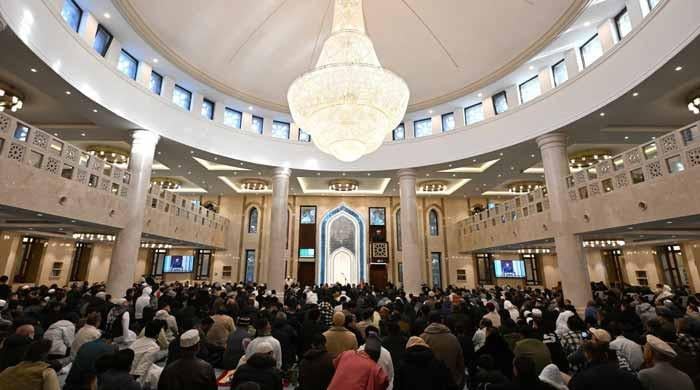
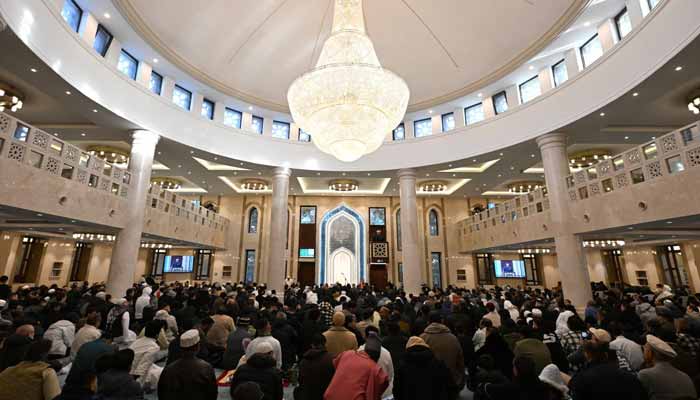
Days after a terrorist attack at Sydney’s Bondi Beach that left at least 15 people dead, a mosque in Australia’s Brisbane was vandalised, sparking further tensions in the country.
The wall of the mosque, named Masjid Taqwa, at Bald Hills — a northern Brisbane suburb — was sprayed with Islamophobic comments and white supremacist symbols.
In the Bondi attack, a father and son duo, identified as Sajid Akram and Naveed — who originally hailed from India — opened fire during a Jewish event on December 14, in an attack that shook the nation and intensified fears of rising antisemitism and violent extremism.
One of the mosque’s directors, Kambiz Koshan, said he received countless calls from worried community members after the vandalism. “Our message to the community has always been to keep peace,” Koshan said.
“It’s unfortunate that we have people that do such things in it. We do understand people’s frustration but this is not a solution.
“We’re all Australians. We shouldn’t be pointing to a specific community for the fault of someone who doesn’t even know what they’re doing. Our message is peace. It’s always peace,” he said.
Bisma Asif, who represents Sandgate in the Legislative Assembly of Queensland, shared the photo of the vile vandalism and strongly condemned the incident.
“Overnight, the local Bald Hills Mosque was vandalised with white supremacist symbols and the subject of death threats,” she wrote on Instagram.
“This, on the back of 15 innocent people losing their lives at the hands of extremists in an anti-Semitic attack on Sunday,” she said, adding: “I’m sick of the constant anti-Semitic, Islamophobic and racist incidents we’ve had in our community.”
“This is not the way forward. This is not how we get through this. Not with more hate. Not with retaliation. Not by tearing each other apart,” Asif said, calling for the community to stand together against divisiveness and for the state government to pass racial vilification laws.
“Everyone in our community deserves to feel safe in their homes, places of worship and at work. Now more than ever, it is important we stand together against divisiveness,” she added.
Meanwhile, Australian cricketer Usman Khawaja, a South East Queensland resident, also condemned the incident.
“Don’t let the haters divide us,” he posted in an Instagram story with an Australian flag emoji.


American Airlines no longer lets basic economy flyers earn miles

Bangladesh student leader Sharif Osman Hadi dies in Singapore hospital

Weak demand drags US textiles & apparel exports down 3.6% in Jan–Sept

-
 Business5 days ago
Hitting The ‘High Notes’ In Ties: Nepal Set To Lift Ban On Indian Bills Above ₹100
-

 Politics1 week ago
Trump launches gold card programme for expedited visas with a $1m price tag
-

 Tech1 week ago
Jennifer Lewis ScD ’91: “Can we make tissues that are made from you, for you?”
-
 Business1 week ago
Rivian turns to AI, autonomy to woo investors as EV sales stall
-

 Sports1 week ago
Police detain Michigan head football coach Sherrone Moore after firing, salacious details emerge: report
-

 Fashion1 week ago
Tommy Hilfiger appoints Sergio Pérez as global menswear ambassador
-
 Business1 week ago
Coca-Cola taps COO Henrique Braun to replace James Quincey as CEO in 2026
-

 Tech1 week ago
Google DeepMind partners with UK government to deliver AI | Computer Weekly