

Politics
Ukraine security guarantees on agenda for US, European military chiefs

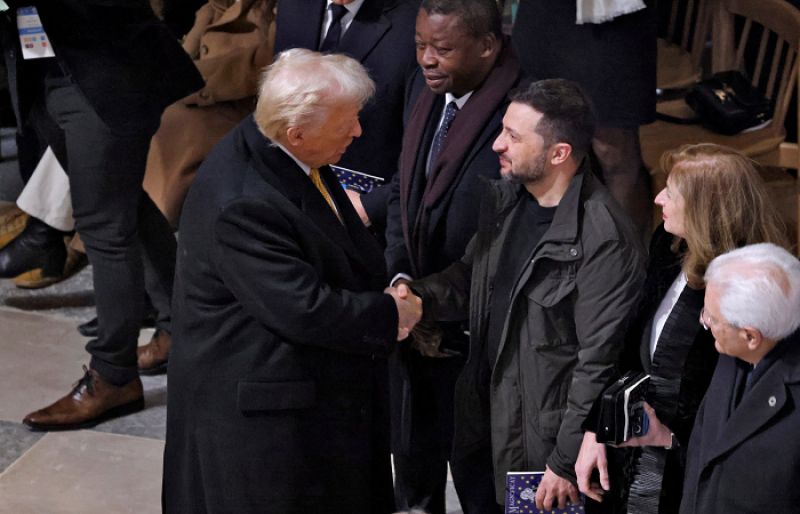

Top US and European military leaders are working on plans to provide security guarantees to Ukraine, officials said.
They shared their ideas with national security advisers this week, as efforts continue to find ways of protecting the country while the war with Russia drags on.
This followed US President Donald Trump’s pledge to help protect the country under any deal to end Russia’s three-and-a-half-year-old war in Ukraine.
A Pentagon statement said US and European planners had developed the military options for “appropriate consideration” by allied national security advisers.
Reuters was the first to report that the military leaders were preparing the options.
The chiefs of defence for the United States, Finland, France, Germany, Italy, the United Kingdom and Ukraine met in Washington, DC, between Tuesday and Thursday.
A source familiar with the matter said US Secretary of State Marco Rubio, who also serves as Trump’s national security adviser, held a conference call on Thursday with his European counterparts to discuss the options.
A separate US official said Rubio spoke with UK National Security Adviser Jonathan Powell, the European Commission president’s head of cabinet Bjoern Seibert, NATO secretary general’s chief of staff Geoffrey van Leeuwen, and other national security counterparts in France, Italy, Germany and Finland.
Final details must still be worked out, the source familiar with the matter said, but European countries would provide “the lion’s share” of any forces involved in security guarantees for Ukraine.
That echoed Vice President JD Vance’s comment on Wednesday that Europe would need to shoulder “the lion’s share” of the costs of the operation.
“The planning work continues,” said the source, adding that Washington was still “determining the scope of its role.”
Trump has said he will not deploy US troops in Ukraine but has left the door open to other US military involvement, including air support.
Troop deployments
One option was sending European forces to Ukraine but putting the United States in charge of their command and control, sources told Reuters.
US air support could come in several ways, including providing more air defence systems to Ukraine and enforcing a no-fly zone with US fighter jets.
French President Emmanuel Macron and British Prime Minister Keir Starmer have both supported troop deployments as part of a “coalition of the willing”, with German Chancellor Friedrich Merz also signalling openness to his country’s participation.
The head of Germany’s soldiers’ union said on Thursday that European NATO leaders must face the reality that tens of thousands of troops would need to be deployed in a Ukraine peace force for the long term.
Trump has pressed for a quick end to Europe’s deadliest war in 80 years, while Kyiv and its allies have expressed concern he could seek to force an agreement on Russia’s terms.
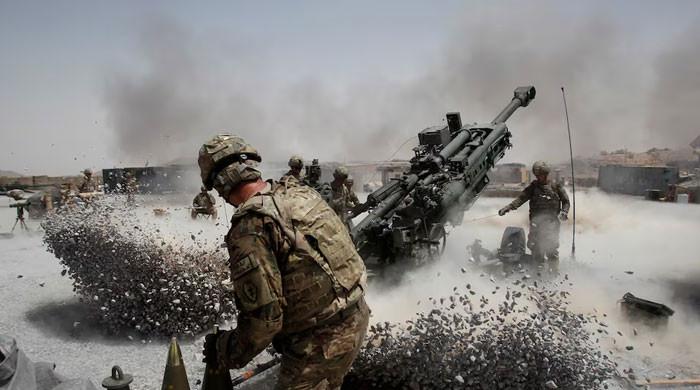
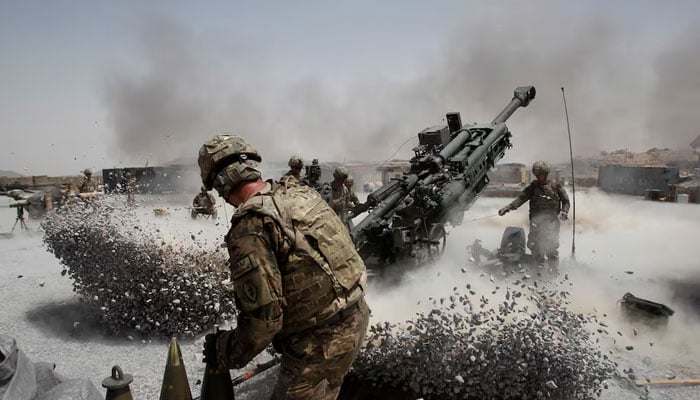
Despite promising to end United States’ involvement in costly and destructive foreign wars, President Donald Trump, together with Israel, has launched a massive military assault on Iran, targeting its leadership as well as its nuclear and missile infrastructure.
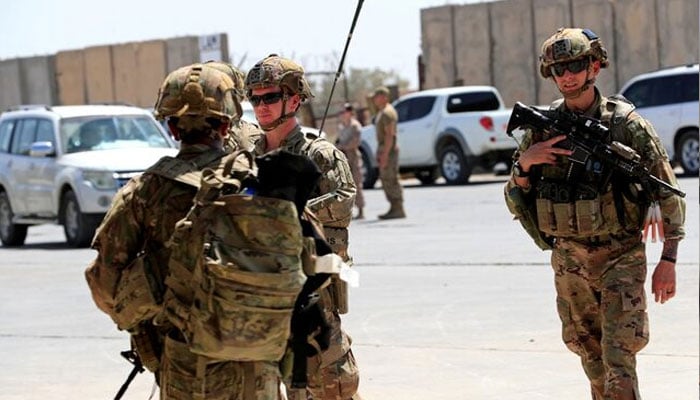
Since the September 11, 2001, attacks on New York and Washington DC, the United States has engaged in three full-scale wars and conducted bombing operations in at least 10 countries. These operations have ranged from large-scale invasions to targeted air strikes and drone campaigns, often carried out over multiple years.
In the immediate aftermath of 9/11, then-President George W Bush declared a “war on terror”, launching a global military campaign that reshaped US foreign policy.
The wars in Afghanistan and Iraq were followed by military operations in Pakistan, Syria, Yemen and other regions, as successive administrations expanded or sustained counterterrorism efforts.
Two decades of war and its costs
Research by Brown University’s Watson Institute for International and Public Affairs estimates that US-led wars since 2001 have directly caused approximately 940,000 deaths across Afghanistan, Pakistan, Iraq, Syria, Yemen and other conflict zones, according to Al Jazeera report.
The figure excludes indirect deaths resulting from displacement, destruction of infrastructure, limited access to healthcare and food shortages, the report said.
According to the report, the United States has spent an estimated $5.8 trillion on post-9/11 wars. This includes $2.1 trillion allocated by the Department of Defence, $1.1 trillion by the Department of Homeland Security, $884 billion added to the Pentagon’s base budget, $465 billion for veterans’ medical care and roughly $1 trillion in interest payments on war-related borrowing.
In addition, the US is projected to spend at least another $2.2 trillion on veterans’ care over the next three decades, bringing the total estimated cost of its post-2001 wars to approximately $8 trillion.
- Airline shares stabilise after significant losses.
- Skies over swathes of Middle East still empty.
- Worst crisis for global travel industry since Covid-19.
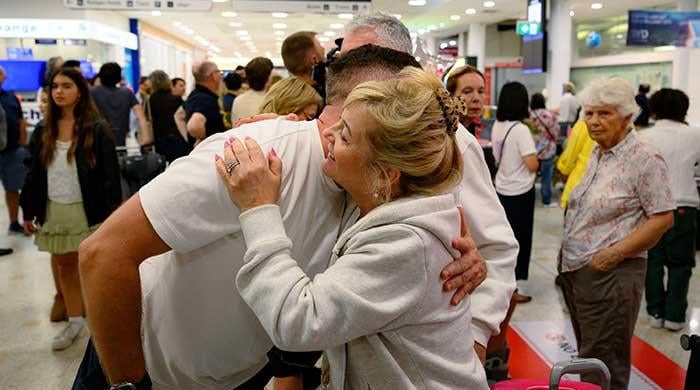
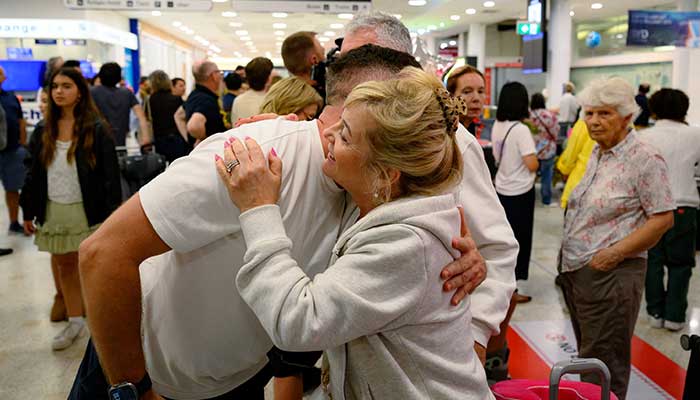
Dozens of repatriation flights were due to depart from the Middle East on Wednesday as governments hurried to bring tens of thousands of stranded citizens home in the midst of an intensifying US and Israeli conflict with Iran.
Skies over most of the Middle East remained empty of commercial planes on Wednesday, with major Gulf hubs, including the world’s busiest international airport in Dubai, largely shut for a fifth day, in the biggest travel disruption since the Covid-19 pandemic.
The first repatriation flights were due to leave for Britain and France on Wednesday, and the United Arab Emirates opened special corridors to allow some citizens to return home. Normally, thousands of commercial flights would take off from the region daily.
Marooned tourists and some expatriates have also tried to find their own way out.
“We’re doing this cautiously,” said French Finance Minister Roland Lescure. The French government said several repatriation flights for its citizens, around 400,000 of whom are in the region, were planned for Wednesday.
A British chartered flight will leave Oman on Wednesday evening, prioritising vulnerable UK nationals, the British Foreign Office said.
Emirates, the world’s largest international carrier, said all routes to and from Dubai remain suspended until March 7 and it was operating a “limited” flight schedule from Dubai International and from Maktoum International.
The New Zealand government said it expected a total of 121 repatriation flights to depart from Dubai International Airport on Wednesday.
Qantas, meanwhile, was running extra flights to bring British people stuck in Australia back home, but would have to route them via a refuelling stop in Singapore as an alternative to the normal Middle East hubs.
With airspace severely constrained, many airlines are carrying extra fuel or making additional refuelling stops to guard against sudden rerouting or longer flight paths through safer corridors.
Airline shares were less volatile on Wednesday after double-digit percentage drops in the past few days, which wiped tens of billions of dollars from airlines’ market value.
Lufthansa was up 3% at 1306 GMT, while Qantas closed down 2.7% lower, having lost more than 10% of their value so far this week. BA-owner ICAG was up 2%, having fallen more than 13% in the past three days.
Airline executives have said that crew and pilots are now scattered across the world, complicating the process of resuming flights when airspace reopens. Soaring prices of oil will also add to carriers’ costs.
Analysts said flights will become more expensive if longer routes become the only options for international carriers.
The Gulf is also a major hub for air cargo, putting further pressure on international trade routes following the disruption of Red Sea shipping routes.
Asian airline stocks
Shares of US carriers United Airlines, American Airlines and Delta Air Lines were all up about 1% in pre-market trading, while Southwest Airlines shares were marginally lower.
Most Asian airline shares pared losses from earlier this week, though Korean Air Lines shares fell 7.9% after dropping 10.3% on Tuesday.
South Korea’s stock market was closed on Monday when most airline and travel stocks bore the brunt of the impact from the conflict.
Oil prices have risen sharply this week, with Brent crude oil up around 14% since the US-Israeli strikes on Iran, potentially pushing up fuel costs for airlines.
Hedging is expected to help mitigate some of the cost increases.
“Recent guidance indicates that the airlines have hedged around 50% of their jet fuel needs. In general, they should be able to pass through the balance of the price rise to passengers,” Lorraine Tan, director of equity research for Asia at Morningstar, said.


DUBAI: Dubai Police have issued a fresh warning that spreading rumours, false information or sharing content that contradicts official announcements is a criminal offence punishable by up to two years in prison and a fine of at least 200,000 dirhams.
In a statement on Wednesday, Dubai Police urged the public not to circulate images or information except those released through official channels by the Government of Dubai.
Authorities said publishing or forwarding unverified material, particularly content that could incite panic or fear among the public, would be treated as a violation of the law.
“Your social media post may seem ordinary to you, but for others it could be intelligence,” officials said, warning users to act responsibly online.
Under the regulations, offenders face a minimum of two years’ imprisonment and a fine starting from 200,000 dirhams (approximately Rs 15.2 million).


MLB Rank 2026: Ranking baseball’s top 100 players

How many countries has US bombed since 9/11, and what has it cost?

Google’s Pixel 10a May Not Be Exciting, but It’s Still an Unbeatable Value

India Us Trade Deal: Fresh look at India-US trade deal? May be ‘rebalanced’ if circumstances change, says Piyush Goyal – The Times of India

Households set for lower energy bills amid price cap shake-up

US arrests ex-Air Force pilot for ‘training’ Chinese military

-
Business5 days ago
India Us Trade Deal: Fresh look at India-US trade deal? May be ‘rebalanced’ if circumstances change, says Piyush Goyal – The Times of India
-
Business1 week ago
Households set for lower energy bills amid price cap shake-up
-
 Politics6 days ago
What are Iran’s ballistic missile capabilities?
-
 Politics7 days ago
US arrests ex-Air Force pilot for ‘training’ Chinese military
-

 Fashion6 days ago
Policy easing drives Argentina’s garment import surge in 2025
-

 Sports1 week ago
Top 50 USMNT players of 2026, ranked by club form: USMNT Player Performance Index returns
-
 Business6 days ago
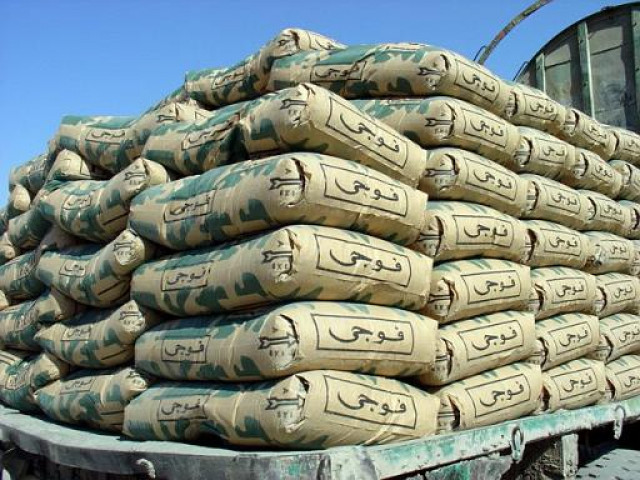
Attock Cement’s acquisition approved | The Express Tribune
-
 Business1 week ago
Lucid widely misses earnings expectations, forecasts continued EV growth in 2026