

Fashion
UK’s M&S doubles down on denim with Spring 26 campaign


M&S enters 2026 holding the leading position in women’s denim and a growing market share in men’s denim as more customers turn to M&S for style, quality and accessible price points.
M&S is strengthening its dominance in women’s denim and building momentum in men’s with its Spring 26 campaign.
Holding an 18.2 per cent share in women’s denim, it is expanding trend-led fits, reducing legacy lines by 40 per cent, and introducing modern silhouettes with broader sizing.
Updated men’s smart-casual shapes and wider washes aim to attract younger shoppers and drive higher volumes.
With the denim market in growth – +7.9% vs LY (WW), +6.1% vs LY (MW) – M&S is well placed to accelerate its leadership in one of its key growth categories.
A confident women’s proposition
The Spring 26 womenswear offer reflects M&S’s category strength in fit and breadth. Already the UK’s leading retailer in women’s denim, with a market share of 18.2%, M&S is doubling down on trend led newness while refreshing customer favourites to drive volume.
Over the past year, M&S has reduced legacy lines by 40%, enabling the business to pivot into faster moving, trend aligned fits. The introduction of new fashion led silhouettes – alongside a new pricing architecture where 40% of the SS26 range sits at £30 ($40.92) or under – will sharpen value and style perception further.
New silhouettes include the High Waisted Patch Pocket Flare, sitting alongside updated customer favourites, such as the Barrel – including the new High Waisted Crease Front Barrel Leg, High Waisted Turnup Wide Leg and Lyocell Blend Wide Palazzo fits. Wide Leg and Barrel fits now account for 65% of total womenswear denim sales. M&S has sold 105,000 pairs of Barrel Leg Jeans since first introducing the shape in March 2025.
With sizes 6–24 and across up to five different leg lengths, the offer maintains M&S’ position as a destination for inclusive and reliable denim. The breadth of trend-aligned shapes and sizing mix is playing a key role in attracting a younger shopper – sales among the 35–54-year-old customer have increased by +9.5%, with M&S outgrowing the wider denim market.
Maddy Evans, Director – M&S Woman, said: “We’re building on our market share leadership in women’s denim with new refreshed shapes that are modern, versatile and stylish. This season, we’ve strengthened our offer around the fits our customers are loving most, from new takes on Wide Leg to updated Barrel silhouettes. With 65% of sales now driven by these modern shapes, and 40% of our SS26 range coming in at £30 or under, we are continuing to stay ahead by staying close to our customers and what they want – modern fits and a consistent focus on value, quality and style. ”
Momentum building in men’s denim
In menswear, M&S is sharpening its style credentials with a modernised proposition. The Spring collection introduces straighter and more tailored shapes, complemented by a wider wash palette ranging from deep indigo to soft ecru. These updates reflect a category-wide shift towards smart casualwear.
With a 12.1% share of the men’s denim market, M&S aims to further strengthen its relevance among younger male shoppers who are seeking style, dependable quality and great value. The introduction of a new £20 price point broadens entry-level accessibility while the £60 Autograph Selvedge Denim range gives customers access to premium craftsmanship at a market-leading price point.
Mitch Hughes, Director of Menswear at M&S, said: ‘Denim at M&S Man continues to gain momentum, and this season we’ve sharpened the offer with more modern, tailored shapes and clearer price points, including our new £20 ($27.28) tier, through to £60 Autograph Japanese Selvedge”
“Combined with an expanded wash palette including overshirts and an array of new denim fits our latest collection – backed by a bold campaign – positions M&S as a stronger, more relevant choice to help broaden our customer base.’
Kidswear denim: durable, great value and backed by the Kidswear Guarantee
The Spring 26 kidswear denim range has been designed to offer reliable, everyday value for families, supported by M&S’s One Year Kidswear Guarantee. The collection includes essential fits as well as style-led shapes, including carpenter and barrelleg complemented by relaxed denim shirts, with prices starting from £10. Each product has been designed for durability, comfort and repeat wear, incorporating practical ‘grow with me’ design details such as reinforced seams and adjustable waists.
Note: The headline, insights, and image of this press release may have been refined by the Fibre2Fashion staff; the rest of the content remains unchanged.
Fibre2Fashion News Desk (RM)












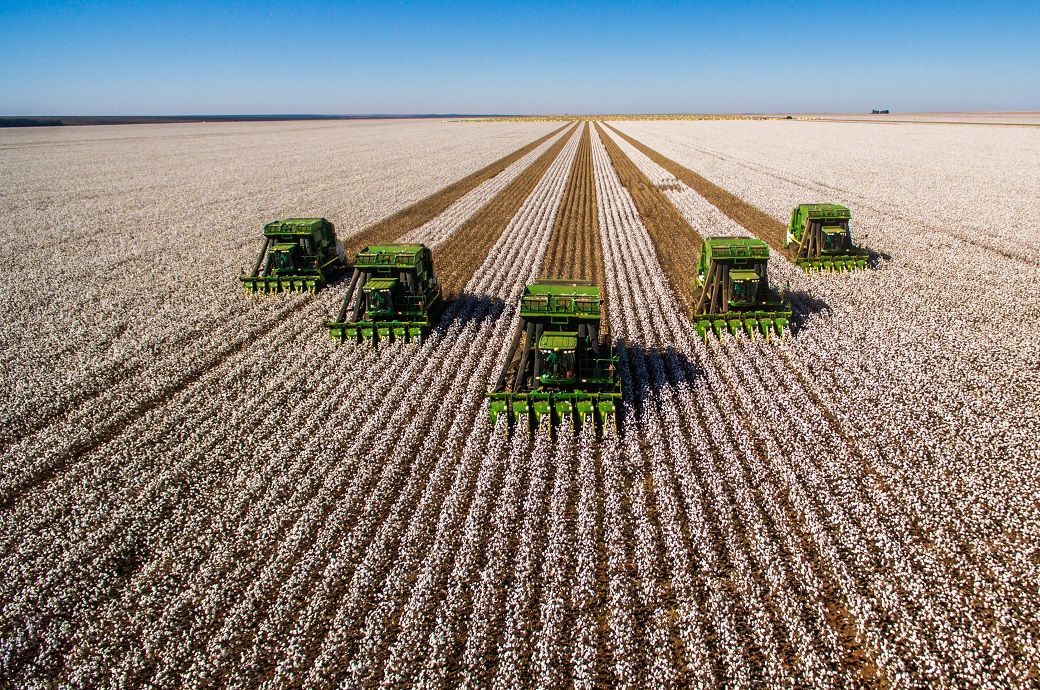
The most traded May 2026 contract settled at 71.67 cents per pound, up 0.75 cent or 1.06 per cent. The contract marked the highest level since May 6, 2025. December 2026 contract settled at 75.75 cents with a gain of 0.77 cent. The market is showing strong momentum with third consecutive higher close and 8 gains in the last 9 sessions, indicating sustained bullish trend.
ICE cotton futures climbed to an 11-month high, supported by drought concerns in key US regions and a weaker dollar boosting export appeal.
Strong fund buying and declining certified stocks reinforced bullish sentiment.
Despite moderate export sales, demand outlook remains firm, with any price dips expected to attract active buying interest.
Total trading volume stood at 63,327 contracts, relatively lighter, suggesting controlled but firm buying interest.
A key supportive factor was the 0.2 per cent decline in the US Dollar Index, making American cotton more competitive globally and boosting export demand outlook.
Trade sentiment improved as demand conditions showed signs of recovery, even though export sales pace remained moderate but stable.
Market participants believe any price dips will attract strong buying interest, reflecting underlying strength.
Weather concerns remain critical, with drought conditions persisting in major US cotton-producing regions, especially across the southern belt, raising supply-side risks. USDA’s first Crop Progress Report for the 2026 season showed planting at 5 per cent, in line with the 5-year average and slightly ahead of last year’s 4 per cent. Early sowing has begun in Texas, Arizona, and California, indicating a normal start to the season but weather risks remain.
ICE data showed certified stocks declining to 113,241 bales, down from 114,665 bales, reflecting tightening available deliverable supplies. CFTC positioning data revealed that speculators increased net long positions by 21,606 contracts to 28,743, highlighting strong bullish participation from funds.
In related markets, crude oil prices rose 0.8 per cent, increasing polyester production costs and making cotton a more attractive alternative fibre.
US equity markets gained around 0.5 per cent, supported by optimism over possible ceasefire developments, improving overall risk sentiment. However, Chicago wheat futures declined over 1 per cent due to weak export demand, limiting broader commodity market strength. Broader market direction continues to be influenced by geopolitical tensions, inflation concerns, currency movements, and energy market volatility.
The cotton market is in a strong bullish phase, driven by improving demand outlook, weaker dollar, fund buying, and supply risks from drought and falling stocks. The trend remains firm upward, and any short-term correction is likely to be well supported by active buying interest.
This morning (Indian Standard Time), ICE cotton for May 2026 was traded at 71.67 cents per pound (unchanged), cash cotton at 69.67 cents (up 0.75 cents), the July 2026 contract at 73.94 cents (up 0.10 cent), the October 2026 contract at 75.80 cents (up 0.78 cent), the December 2026 at 75.78 cents (up 0.03 cent) and the March 2027 contract at 76.74 cents (up 0.06 cent). A few contracts remained at their previous closing levels, with no trading recorded so far today.
Fibre2Fashion News Desk (KUL)

CBAM’s scope directly intersects with India’s trade profile. Steel, aluminium, cement and fertilisers make up most CBAM-covered exports and now face higher landed costs in the EU, closer scrutiny of plant-level data and formal verification at the installation level, said Saunak Saha partner, Climate Change and Sustainability Services at EY India in an article titled ‘How Indian industries are adapting to CBAM and carbon pricing’.
Global trade is entering a carbon-priced era as the EU’s CBAM links market access to verified emissions, according to EY.
For India, this raises export costs in key sectors like steel and aluminium while pushing decarbonisation efforts.
Firms are shifting strategies and markets, while India’s Carbon Credit Trading Scheme aims to internalise costs domestically.
The policy timeline raises the stakes. After a transitional reporting period that began in October 2023, the definitive phase from January 1, 2026, requires importers to purchase CBAM certificates aligned with European Union—Emissions Trading system linked carbon prices. The first annual declaration for 2026 imports—along with certificate surrender—is due on September 30, 2027. For Indian producers, this formalises carbon as an explicit line item in export economics, with downstream product coverage expected to broaden over time.
Importantly, CBAM is also reshaping revenue strategy—not just compliance cost. Exporters that diversify away from concentrated EU exposure toward select Africa, West Asia and Latin America markets can defend or even enhance unit realisations, particularly when paired with credible low-carbon attributes.
The Carbon Credit Trading Scheme (CCTS) anchors a national carbon price in the very sectors that CBAM targets, allowing carbon costs to be internalised at home rather than paid at the EU border. That keeps revenues within India’s fiscal system and enables strategic recycling toward Indian industrial decarbonisation, clean-technology deployment and household welfare protection.
Just as importantly, a credible, rules-based CCTS—underpinned by strong MRV—enhances India’s standing in climate-trade forums and supports arguments for recognising an ‘effectively paid’ domestic carbon price. In practical terms, this reframes CBAM from a unilateral liability into a managed, development-aligned transition tool.
Treat CBAM as a structural signal, not a temporary hurdle. Build verifiable emissions baselines, prioritise technology shifts that cut intensity fastest per rupee invested and craft go-to-market strategies that monetise low-carbon attributes across multiple destinations. With disciplined MRV, targeted capex and a credible domestic carbon market, Indian producers can protect market access, lift realisations and compete in a world where carbon—and proof of reduction — has become part of the price, added the article.
Fibre2Fashion News Desk (SG)

The USDA said in its report that India’s cotton area is estimated to increase to 11.5 million hectares, up 3 per cent from the previous year, while production is forecast at 25.2 million bales (480 pound or 220 kg), marking a 7 per cent rise. In Indian terms, this translates to around 32.3 million bales of 170 kg, or nearly 5.5 million tonnes.
USDA projects India’s cotton acreage to rise 3 per cent and production 7 per cent in 2026–27, supported by better yields and a normal monsoon.
Domestic consumption is expected to grow on stronger textile exports, while imports decline and exports soften.
Higher stocks and favourable cotton-polyester dynamics signal comfortable supply, despite rising input cost pressures.
The production increase is driven by a recovery from last season’s untimely rains and a projected improvement in yield to 477 kg per hectare, up 3 per cent year on year. A normal monsoon outlook and better crop conditions are expected to further support output.
On the demand side, India’s domestic mill consumption is projected to rise to 25.8 million bales, reflecting improved prospects for textile and apparel exports. Higher demand is also likely to be supported by recent trade agreements with the EU and the UK, which are expected to boost shipments of value-added products.
India’s cotton imports are estimated at 3 million bales, lower than the previous year, as improved domestic availability reduces reliance on overseas purchases. In contrast, exports are forecast to decline to 1.2 million bales, down from the previous year, due to tighter exportable surplus and a strategic shift towards higher-margin textile exports.
Total cotton supply is expected to increase to around 39.3 million bales in next marketing year, supported by higher production and elevated beginning stocks. Ending stocks are projected to rise further to 12.3 million bales, pushing the stock-to-use ratio to about 46 per cent, indicating comfortable availability in the domestic market.
At the same time, rising crude oil prices continue to influence the cotton economy by increasing input costs such as fertilisers and agrochemicals, while also raising polyester fibre prices and improving cotton’s relative competitiveness, the report said.
Overall, the outlook for India’s cotton sector in 2026–27 points to a recovery-driven expansion, with higher acreage, improved yields, and strong domestic demand shaping market dynamics, even as export competitiveness and cost pressures remain key concerns.
Fibre2Fashion News Desk (KUL)


McKennie equals career best with goal in Juve win; Napoli edge Milan

Queen’s trusted aide shares heartfelt truth after saying goodbye to Palace

Non-Vegetarian Thali Price March 2026: Home-cooked non-veg thali gets cheaper in March, veg meal cost stays flat: Report – The Times of India

-
Uncategorized5 days ago
[CinePlex360] Please moderate: “Trump signals p
-
Uncategorized1 week ago
[CinePlex360] Please moderate: “Further tariff
-

 Tech4 days ago
Our Favorite iPad Is $50 Off
-

 Entertainment4 days ago
Joe Jonas shares candid glimpse into parenthood with Sophie Turner
-

 Fashion6 days ago
China’s Anta Sports posts record $11.62 bn revenue in 2025
-

 Sports4 days ago
UConn Final Four run could trigger a $50M furniture giveaway for Massachusetts-based Jordan’s Furniture
-

 Politics4 days ago
Iran can sustain Strait of Hormuz closure for years, will cut US military logistics: Official
-
 Business6 days ago
UPI transactions hit record Rs 29.53 lakh crore in March; volumes cross 22.6 billion – The Times of India