

Business
Under mounting toy pressures, Hasbro has a secret sauce that Mattel hasn’t matched


The gap is widening between rival toy makers Hasbro and Mattel — thanks in part to a 30-year-old trading card game.
The toy giants have flip-flopped dominance in the space for decades, jockeying for the most coveted master licenses to put new fan favorites — Disney princesses and “Star Wars” characters among them — on store shelves. But as the industry recovers from a period of declining sales, Hasbro is the one winning over Wall Street.
For the fiscal year 2025, Hasbro reported revenue gains of 14%, reaching $4.7 billion, while Mattel saw its net sales drop 1% to $5.3 billion.
Though Mattel’s revenue is larger than Hasbro’s, its growth has been stagnating, according to Eric Handler, managing director and senior research analyst at Roth Capital Partners.
“[Mattel’s] revenue has been in a very tight range for five years now, and 2026, on an organic basis, is the same,” he told CNBC.
Mattel shares are down more than 20% in the last 12 months, trading at around $17. Meanwhile, Hasbro’s stock is up roughly 46% over the same period, with shares trading at around $100.
Of course, Hasbro’s journey post-pandemic has not been without its own headwinds. The company’s revenue took a hit when it divested its film and TV business, eOne. Also, its entertainment segment, which includes film and TV licenses, was deeply impacted by Hollywood’s dual labor strikes in 2023.
“Despite market volatility and a shifting consumer environment, we returned this company to growth in a meaningful way,” Hasbro CEO Chris Cocks told investors during an earnings call earlier this month.
Throughout these changes, one key piece of Hasbro’s business has been steadily growing — Wizards of the Coast.
A dash of Magic
The Hasbro division includes Dungeons & Dragons, Magic: The Gathering and the company’s portfolio of digital and video games.
In 2025, Wizards’ revenue grew 45% to $2.1 billion, fueled by sales of sets tied to Magic’s Universe Beyond and smaller, limited-edition Secret Lair packs — some that sell for close to $200.
While the segment accounts for less than half of the company’s revenue, it represents 88% of its adjusted profits.
Magic: The Gathering playing cards form a light fixture at the Wizards of the Coast headquarters in Renton, Washington, Sept. 11, 2025. With traditional toy and game sales lagging, Hasbro has found a growth engine in role-playing games such as Dungeons and Dragons, trading card games like Magic: The Gathering and a growing portfolio of digital and video games.
Bloomberg | Bloomberg | Getty Images
The strategic trading card game Magic, which was created in 1993, typically features two players going head-to-head using custom decks of collectible cards to cast spells, unleash creatures or use artifacts to defeat their opponent.
In the last five years, Hasbro has expanded beyond the lore of the initial game to launch card sets based on intellectual property from third parties, including “Avatar: The Last Airbender,” Marvel’s “Spider-Man” and “Lord of the Rings.”
These sets are not only popular with long-standing Magic fans, but act as a gateway for consumers from other fanbases into the world of Magic. In mid-2025, Hasbro released a “Final Fantasy” set that became the fastest-selling expansion pack in Magic: The Gathering history, generating $200 million in sales in a single day.
“They have done a fantastic job of widening the funnel in the last couple years, and it’s become a multigenerational type of product,” Handler said. “The player base is growing. It’s a sticky player base that is showing eagerness with new products and new ways to play.”
Through the end of 2025, more than 1 million unique players participated in organized play — meaning sanctioned tournaments — according to Cocks. That’s a 22% year-over-year increase, he said.
Additionally, the number of game stores that host events, called the Wizards Play Network, has grown to more than 10,000, a 20% increase from 2024.
“Taken together, this reinforces our confidence in Magic’s long-term growth,” Cocks said on the company’s earnings call. “We are building a system of play with multiple entry points, product types, and engagement paths, and that system is positioned to continue driving growth into 2026 and beyond.”
In 2026, Hasbro plans to launch new Magic sets based on “The Hobbit,” “Teenage Mutant Ninja Turtles” and “Star Trek.”
The company has forecast mid-single-digit growth for its Wizards business in 2026, but Keegan Cox, associate vice president and research analyst at D.A. Davidson, in a research note published shortly after the company’s earnings, called that estimate “conservative.”
The digital frontier
Hasbro’s Wizards unit also includes the digital and licensed gaming space, which saw revenues jump 6% in 2025, fueled by the success of “Monopoly Go!”
Cocks has previously noted that modern consumers and modern play is increasingly moving into online forums, and the company has launched new games and an in-person video game studio in Montreal to boost play.
While Hasbro’s digital gaming division is growing, Mattel is just getting its own digital unit off the ground.
Earlier this month, Mattel announced it would buy out partner NetEase from its 50% stake in their Mattel163 joint venture, taking full ownership of the business. Mattel163 develops digital games based on the toy company’s brands and since 2018 has launched four digital games: Uno, Uno Wonder, Phase 10 and Skip-Bo.
“In our view, [Mattel] is in the early stages of an investment similar to Hasbro’s investment in gaming over 7 years ago,” D.A. Davidson’s Cox wrote. “While we do not think [Mattel] will be chasing to compete with Hasbro … we do believe [Mattel] can make successful mobile games tied to their IP and should add to profit margins over time.”
An industry in flux
Mattel’s push into digital comes as two of its flagship brands struggle to make sales.
“Barbie’s been on a meaningful decline, as has Fisher-Price,” Handler noted. “That’s sort of been negating a lot of the good news that’s been happening with Hot Wheels.”
The vehicles division saw gross billings jump 11% in 2025, while the dolls segment fell 7% and the infant, toddler and preschool space slipped 17%.
That segment for the youngest consumers has been in decline for over a decade, the result of shrinking population growth and the fact that children are being introduced to electronics earlier in their development. Shifting play habits have meant toy makers have to adapt, and fast.
But there’s hope for Mattel and the toy industry as a whole. In 2025, total annual dollar sales were up 6% in the U.S., according to data from Circana. And, perhaps more importantly, the number of units sold increased 3%, quelling fears that price-conscious consumers are pulling back on toy purchases.
“Unit sales being up, I think, is the most important metric we can look at,” said James Zahn, senior editor of The Toy Insider and The Toy Book. “If unit sales were down, that’s when you know people are really buying less, and that didn’t happen.”
Mattel and Hasbro, alongside other toy companies, are also expected to get a boost from a robust theatrical calendar this year.
Mattel has two of its own brands being represented at the box office with “Masters of the Universe” coming in June and “Matchbox” arriving in October. While Mattel won’t see a major bump from ticket sales, its toy sales could get a boost. After all, the 2023 release of “Barbie” helped fuel a 16% increase in gross billings of the doll in the quarter after it hit cinemas.
Mattel also holds the master toy licenses for “Toy Story” and Disney princesses, meaning it’ll handle the bulk of the product for “Toy Story 5” and the live-action “Moana.”
Hasbro will have toy lines for “The Mandalorian and Grogu,” “Spider-Man: Brand New Day” and “Avengers: Doomsday.”
Together, Mattel and Hasbro have also collaborated on the much anticipated product line for Netflix’s hit animated film “KPop Demon Hunters,” promising dolls, foam roleplay items, games and plush items.
“‘KPop Demon Hunters’ is gonna do big business for both Hasbro and Mattel,” Zahn said.





The development is an unusual consequence of Northern Ireland’s strict licensing laws.
Source link
Business
‘Ships continuously coming even amid blockage’: Centre assures 100% energy supplies across the country – The Times of India

The Centre assured that LPG supply across the country is normal, despite rising tensions in the Middle East, with shipments sailing through the Strait of Hormuz without any disruption. Dismissing fears of any shortage in the nation, petroleum and natural gas secretary Neeraj Mittal, on Thursday, said that domestic availability remains stable. “I don’t see any problem anywhere. All domestic supplies are at 100 per cent,” he stated, adding that around 70 per cent of packed LPG has already been released into the system.While acknowledging the possibility of minor, localised supply bottlenecks, Mittal said such issues are routine and managed on a day-to-day basis.He also addressed concerns over maritime movement in the region, noting that vessel traffic has not faced delays. “Ships have been continuously coming even when there was a blockage. It takes its normal travel time. We are not talking about any delay in crossing the Strait,” he said.According to Mittal, the government is closely tracking developments and remains prepared to act if needed. “The government is reviewing this on a daily basis. If any change has to be made, it will be done,” he said.Speaking at a conference on energy security and India’s growing gas demand, Mittal further emphasised the need for preparedness in light of recent global developments. He highlighted that nearly 90% of India’s crude oil imports pass through the Strait of Hormuz, underlining its strategic importance.He further noted that India sources crude oil from 41 countries, natural gas from 30 countries, and LPG from 13 countries, stressing that such diversification plays a key role in shaping future energy policies.“The government is committed to ensuring that gas is available to all entities, and we are also focusing on diversification so that such crises do not impact supplies,” he said. Meanwhile, Green Asha, a fuel carrier with over 15,400 tonnes of LPG, also arrived in the country on Thursday after crossing Strait of Hormuz earlier this week.The conference, organised by the petroleum and natural Gas regulatory board (PNGRB) in partnership with Indraprastha Gas Limited (IGL), brought together stakeholders to discuss the expanding role of natural gas in the country’s energy mix.Discussions at the two-day event focused on infrastructure investment, regulatory support, and addressing sectoral challenges, while also encouraging innovation as India works to strengthen its energy security in the face of global uncertainties.
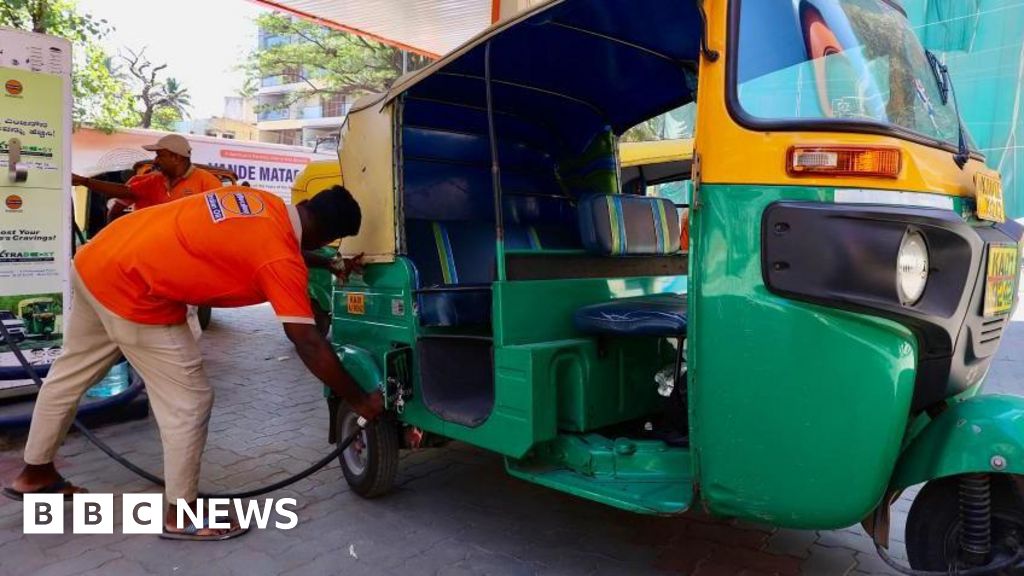
The cost of crude plunged on Wednesday after a deal was announced that includes the opening of the Strait of Hormuz.
Source link


Global apparel margins under pressure as costs surge in Q2

Laufey teases new music video co-starring Lola Tung, Alysa Liu, KATSEYE

Documents: NC State trainer initiated ‘unwelcome,’ ‘sexual’ contact

-
Uncategorized7 days ago
[CinePlex360] Please moderate: “Trump signals p
-
 Business7 days ago
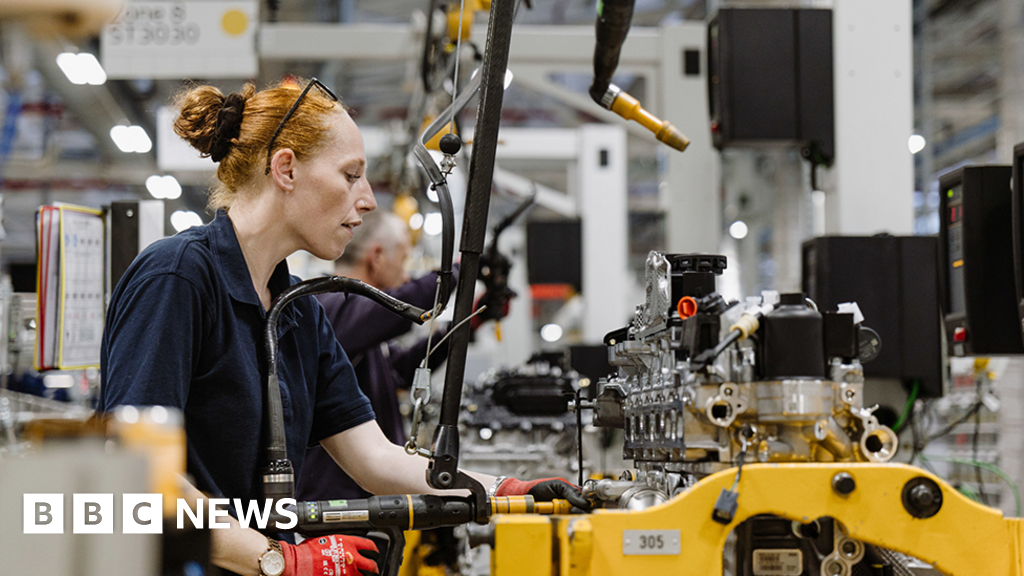
Jaguar Land Rover sees sales recover after cyber attack
-

 Entertainment6 days ago
Joe Jonas shares candid glimpse into parenthood with Sophie Turner
-

 Tech6 days ago
Our Favorite iPad Is $50 Off
-

 Fashion1 week ago
China’s Anta Sports posts record $11.62 bn revenue in 2025
-

 Politics6 days ago
Iran can sustain Strait of Hormuz closure for years, will cut US military logistics: Official
-

 Sports6 days ago
UConn Final Four run could trigger a $50M furniture giveaway for Massachusetts-based Jordan’s Furniture
-
 Business6 days ago
Gold prices in Pakistan Today – April 3, 2026 | The Express Tribune