

Business
Universal UK theme park could rival Disneyland Paris in size


Danny FullbrookBedfordshire, Hertfordshire and Buckinghamshire
 Universal Destinations & Experiences/Comcast
Universal Studios’ UK theme park was given the green light this week, a decision creating buzz for families up and down the country who might one day want to go.
After months of discussions, Secretary of State for Housing, Communities and Local Government Steve Reed gave planning permission for the park to be constructed in Kempston Hardwick, close to Bedford.
This isn’t just another attraction – it’s an attempt by the US entertainment giant to build one of the biggest theme parks in the world.
Universal mentioned in planning documents that a country like the UK should have at least two global theme parks, and this project was described as a “generational opportunity”.
But can Universal pull off something of quite this scale, going up against the likes of Disneyland Paris? As BBC News heard from locals, it might be a tall order – and not everyone is happy.

 Bloomberg via Getty Images
Living on the doorstep of a theme park
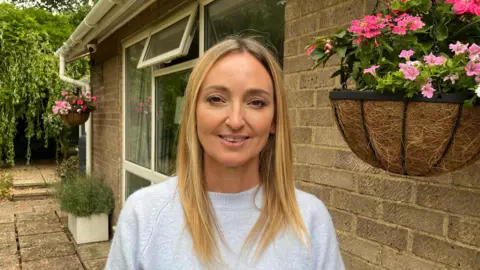
“They haven’t bought enough land; what they should be buying is 2,000 acres somewhere and put their theme park in the middle,” says Claudia Pixley, 46, who lives in a bungalow on the road where the theme park entrance will be built.
“But as it happens, some of these roads around here are tiny village roads.
“Anything goes wrong on the M1 or the A421, this whole area is at a standstill… and then you want to put Universal Studios in the middle of that.”
She describes the project as “absolute madness” and says representatives of Universal have approached her about buying her home, where she’s lived for the last decade, but she wants to stay put in her “little slice of Eden”.
 Nicola Haseler/BBC
She may well be one of few people in the area unhappy about the new park. According to Universal, in the Bedford area 92% of those who responded to its survey of 6,000 people were supportive of the development.
But it raises an interesting point about what might and might not be achievable in the grand vision for Universal UK to rival some of the biggest and best current theme parks.
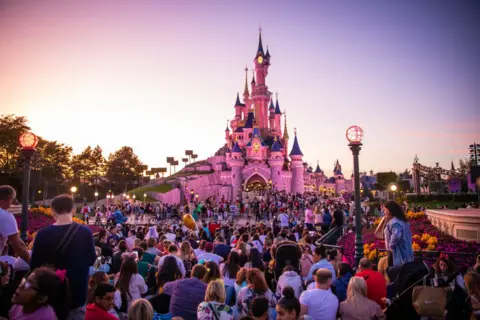
Slated to open by 2031, the park is expected to draw 8.5 million annual visitors and could feature the tallest rides seen in Europe. The total size of the resort would be 268 hectares (662 acres), with the theme park 96.7 hectares (238 acres).
By comparison, Disneyland Paris is by several estimates just under 52 hectares (130 acres), though some of Disney’s other parks worldwide are far larger.
 NurPhoto via Getty Images
Universal said its UK visitor numbers were expected to rise to 12 million by 2051, which could make it the most-visited park in Europe by today’s standards. According to Forbes, Disneyland Paris held that title last year with 10.2 million visitors.
However, even at opening, 8.5 million is more than three times the attendance of the UK’s biggest parks today:
- Legoland Windsor Resort, Berkshire: 61 hectares (150 acres), 2.42 million annual visitors (2023)
- Alton Towers, Staffordshire: 222 hectares (550 acres), 2.35 million annual visitors (2023)
- Thorpe Park, Surrey: 200 hectares (490 acres), 1.62 million annual visitors (2023)
- Chessington World of Adventures Resort: 52 hectares (128 acres), 1.5 million annual visitors (2022)
Can Universal UK shake things up?
For content creator Theme Park Kate, who specialises in theme parks and attractions on TikTok, Universal’s future attraction could be “a huge game changer within Europe” and the ambition with its size and rides is realistic.
“It will potentially be a theme park that can compete with the popularity of Disneyland Paris, which has dominated the European theme park market for many years now,” she tells BBC News.
The theme park fan speculated that the park would benefit from using intellectual property (IP) that has not been used at other locations around the world.
 Theme Park Kate
She adds: “Harry Potter has been done now at various Universal parks, but a new IP like the rumoured James Bond or Lord of the Rings will be unique to the park and bring in a large amount of fans that will want to see these brand new experiences for themselves for the very first time.”
Last year, a source told the BBC that the new park could include James Bond, The Lord of the Rings, Paddington and Jurassic World-themed rides – although a Universal spokesperson said it was too early to confirm this.
Theme Park Kate is hopeful this could have a ripple effect of boosting the country’s existing parks and forcing them to “step up their game” to match Universal.
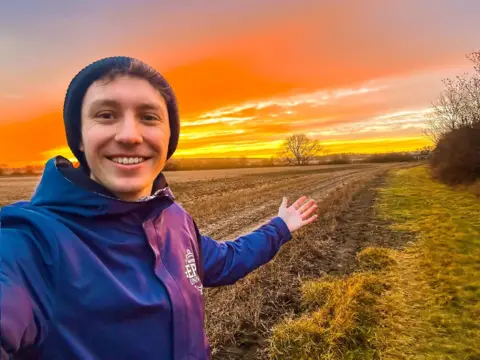
YouTuber Jack Silkstone, who visits theme parks around the world, agrees with the sentiment. He lives “next door” to Thorpe Park – and his message to any unhappy Bedford residents like Claudia is that living on the doorstep of a theme park is “honestly a dream”.
 Jack Silkstone
“Everyone has some form of connection to the park – whether they work there themselves, they know someone that works there, they love to visit, or they aspire to work at the park when they’re older,” he says.
“It creates a real sense of community that then spills out into the wider surrounding towns.”
Jack sees the projected scale of the Universal UK park as a huge oportunity for the UK’s economy, and seems confident that the company can pull off its aims for scale.
“We’re very lucky, we’ve got some amazing, classic theme parks already in this country. But Universal are global leaders in the theme park industry; they do it different.”
‘Winners and losers’
Universal said it expected to directly create 8,050 jobs when it opens, with many staff coming from the surrounding areas.
Wixams, a town which will border the new theme park, will also get an upgraded four-platform railway station as part of the proposals.
Despite the concern expressed by some like Claudia that the area may not be able to cope with an influx of visitors, Bedford borough councillor Marc Frost says councillors have been assured that traffic surveys are complete and road infrastructure will be in place.
Universal’s engagement with local officials suggested they “genuinely want to work and get on with their neighbours”, he adds.
Another consideration for those in the local area is property prices – and some could fare better than others here, too.
Nick Kier, a partner at Lane & Holmes estate agents, says he already knows of some people who have already bought property close to the Universal site, which they plan to rent out to visitors in the future.
He explains “there are definite winners and losers in this scenario” and “you cannot expect, with that amount of investment coming in… that the prices won’t go up”.
“The people who are living here for a completely other reason will find it more expensive… That’s the losing side.”
At the same time, he acknowledges that local hotels for miles would be likely to benefit.
What’s clear is that the Universal park could dwarf much of its competition if all goes to plan, and while the impacts can be a double-edged sword, many are keen to see what its opening brings.
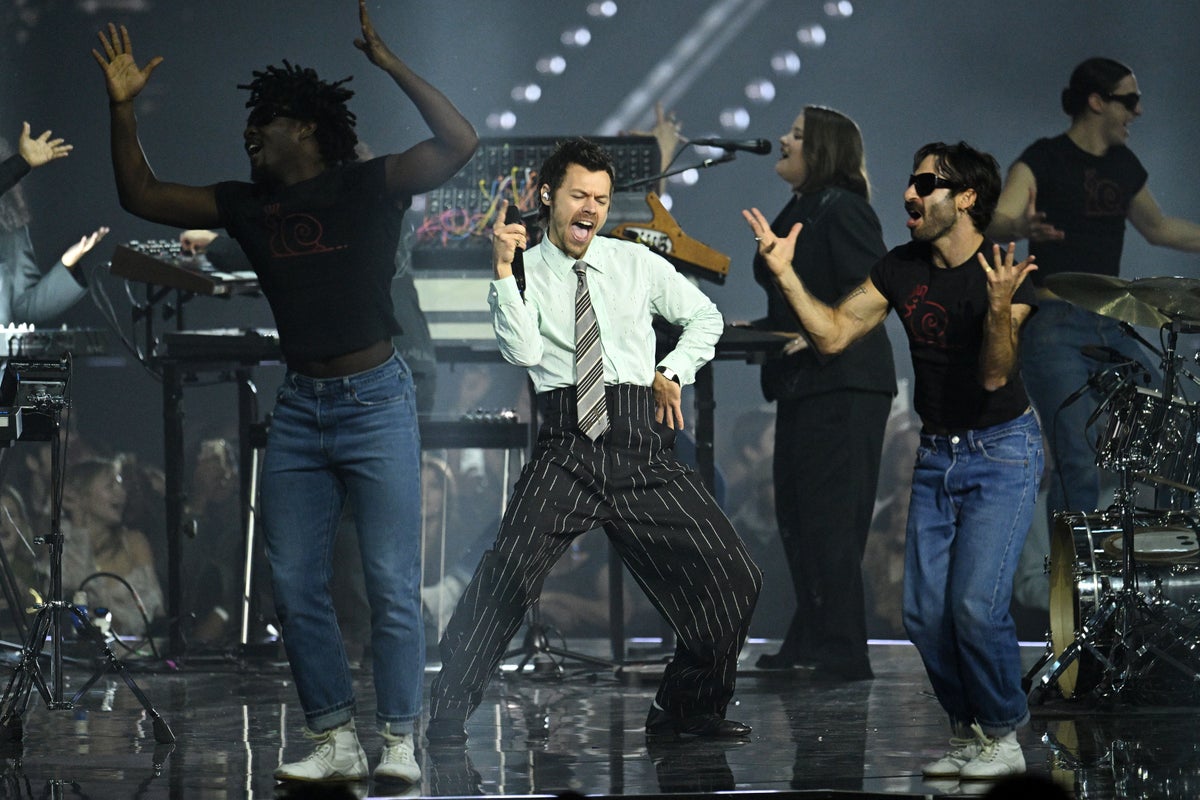
Fan spending for Harry Styles’s 12-night run at Wembley Stadium is set to reach £1.1 billion despite ongoing cost-of-living pressures, figures suggest.
Ticket-holders are expected to spend a total of £981 on average attending the Together, Together tour – which is limited to London in the UK – including travelling to the venue, staying overnight, buying merchandise and other costs, according to a survey for Barclays bank.
The figure exceeds the average £848 spent by fans who flocked to Taylor Swift’s Eras Tour, and the average £766 on attending the Oasis Live ’25 shows, although these were both held across four UK locations, leading to lower travel costs.
Styles’ fans anticipate they will spend an average £102 on official tour merchandise, while nine in 10 will participate in a “fan trend” on the day with 63% planning to wear a Harry Styles-themed look.
A fifth (20%) will make sure their outfits are co-ordinated with their friends and 22% hope to create or exchange fan-made items with other fans.
Barclays said the event was set to be a “major cultural moment” as a million ticket-holders travel to London for the 12 dates beginning on June 12.
With just one other European tour location, in Amsterdam, Styles’ Wembley residency will be the most performances by any artist in a single year at the venue, which has a capacity of around 90,000 people for music events.
The survey found those going to the show spent an average of £143.20 on their ticket, with 19% saying this was more than they planned but 66% saying they would have been willing to pay more if needed.
Other expected costs include an average £141.20 on accommodation, £103.10 on transport and £103.10 on food and drinks before the show.
Some 28% of fans say they are planning other activities such as sightseeing and exhibitions while in London.
More than a quarter (27%) of ticket-holders view the concert as a once-in-a-lifetime experience, and 17% said FOMO (fear of missing out) played a part in their purchase.
Almost 74% of those polled said getting tickets to sold-out or in-demand events now felt like a status symbol.
Tom Corbett, managing director of sponsorship and client experience at Barclays, said: “This tour shows just how powerful live entertainment can be, benefiting consumers and businesses alike.
“‘Concert tourism’ is on the rise because of the extent to which people value unique, shared experiences – so much so that they’re willing to invest in them even when cutting back elsewhere, and to travel to see their favourite artists perform.”
Opinium surveyed 2,000 respondents, and an additional 200 ticket-holders, between April 28 and May 1.

A sign sits outside of the Centers for Disease Control and Prevention (CDC) Roybal campus in Atlanta, Georgia, U.S. March 18, 2026.
Megan Varner | Reuters
One American has tested positive for Ebola in the Democratic Republic of Congo in connection to the deadly outbreak in central Africa that global health agencies are racing to contain, the Centers for Disease Control and Prevention said on Monday.
The person was exposed as part of their work in Congo, developed symptoms over the weekend and tested positive late Sunday, Dr. Satish Pillai, the CDC’s Ebola response incident manager, told reporters on a call. The CDC and State Department are working to move that individual and six other Americans exposed to Ebola to Germany for treatment, care and monitoring.
But Pillai emphasized that no cases tied to the outbreak have been confirmed in the U.S., and that the overall risk to the American public and travelers remains low.
Still, the CDC also announced on Monday that for the next 30 days, it will restrict entry into the country for people without a U.S. passport who were in the Democratic Republic of the Congo, South Sudan or Uganda in the last three weeks.
The update came one day after the World Health Organization declared the Ebola epidemic a “public health emergency of international concern.” The outbreak does not meet the criteria of a “pandemic emergency,” but the WHO warned that the high positivity rate and increasing cases and deaths point toward a “potentially much larger outbreak” than what is being detected and reported.
As of Sunday, more than 300 suspected cases and 88 suspected deaths have been reported, primarily in Congo but also in neighboring Uganda, according to the CDC.
The specific virus involved in this outbreak, called Bundibugyo, has no vaccine or treatment. Historically, that virus has death rates ranging from 25% to 50%, the CDC added.
But agency officials told reporters on Monday that work is underway to develop a monoclonal antibody therapy as a potential treatment for this specific strain of Ebola.
Musk’s loss against OpenAI is the latest in a string of courtroom defeats.
Source link

Fan spending on Harry Styles Wembley gigs set to top £1bn

‘Star Wars’ voice actor was 64

Harry Potter important actress leaves series just before season 2

-

 Entertainment6 days ago
Conan O’Brien hat tricks as Oscar host
-

 Tech1 week ago
Could Contact-Tracing Apps Help With the Hantavirus? Not Really
-

 Fashion5 days ago
Italy’s Zegna Group’s Q1 growth boosted by strong organic performance
-

 Entertainment1 week ago
Martin Short: Facing tragedy with joy
-

 Entertainment1 week ago
Tom Brady gets back at Kevin Hart during Netflix roast
-

 Sports1 week ago
Jacob Fatu unleashes vicious assault on Roman Reigns after World Heavyweight Championship loss at WWE Backlash
-

 Entertainment1 week ago
Martha Stewart: How to make an omelet
-

 Tech1 week ago
Papa Johns Is Getting Into Drone Delivery—but Not for Pizza