

Fashion
US apparel and footwear deals surge to record $21B as brands react to tariff pressure

By
Reuters
Published
September 18, 2025
U.S. President Donald Trump’s trade war is helping push U.S. clothing and footwear acquisitions to all-time highs this year, with some companies merging to help offset tariff costs while others go private to weather the next 3-1/2 years of his presidency outside the public market, dealmakers say.
Popular sneaker company Skechers announced a $9.42 billion deal in early May to go private, days after it withdrew its annual earnings forecasts and sent a letter — along with 75 other footwear companies — to Trump, stating that the tariffs were an “existential threat” to the industry.
Sneaker seller Foot Locker, which also signed the letter to Trump, in May accelerated its $2.4 billion sale to Dick’s Sporting Goods. While both deals were in the works for months, bankers and analysts said Trump’s tariffs are creating both chaos and opportunity for retailers and brands to explore tie-ups. This has driven dealmaking in the U.S. footwear and apparel sectors to roughly $21 billion in announced deals year-to-date.
With more than three months left in the year, that figure is already a record, according to LSEG data dating back to the 1970s — particularly surprising for an industry where valuations are not nearly as lofty as those in tech or financial services. The previous record for U.S. apparel and footwear M&A was last year’s $16.1 billion, and before that, 2021’s $15.6 billion, according to LSEG.
“Scale is more important in a tariff-rich environment because you can negotiate better terms across a larger base with many of your counterparties,” said Carmen Molinos, Morgan Stanley’s global co-head of consumer retail investment banking.
Morgan Stanley advised Canadian apparel maker Gildan Activewear on its acquisition last month of U.S. underwear maker Hanesbrands for $2.2 billion.
Both companies produce more in Central America and the Caribbean than in Asia, and primarily use U.S.-grown cotton, which provides them with some protection from tariffs. The combination insulates them more from fluctuating geopolitics, and Gildan was one company looking to get bigger amid the chaos.
“We think that we’re really well aligned to take advantage, actually, of this near-shoring opportunity,” Gildan’s CEO and co-founder Glenn Chamandy said on an August investor call about the deal.
Tariffs were a shock to the system that showed retailers just how quickly their businesses could get disrupted, highlighting the importance of scale, several bankers said.
“In moments of turmoil and change, those who are in a position of strength are looking to build up on those strengths, and if they see the right strategic fit, they’re taking advantage (and buying),” said JPMorgan’s Jonathan Dunlop, co-head of North America consumer and retail investment banking.
This year, JPMorgan advised 3G Capital on Skechers and brand management firm Authentic Brands Group’s $1.4 billion deal last month for Guess. Authentic also picked up Dockers from Levi Strauss, while another brand management firm, Bluestar Alliance, announced a deal to buy Dickies from VF Corp this week.
Brand management firms typically buy a brand’s IP and then license it to operating partners that handle manufacturing, design, and sales.
“The brand management companies have been some of the most prolific acquirers of both middle-market and a handful of multi-billion-dollar retail brands,” said David Shiffman, partner and head of consumer retail at Solomon Partners. The bank advised the special committee of Guess.
Navigating the uncertainty
Going private, as in Skechers’ case, is becoming an increasingly attractive option to navigate the uncertainty without the pressure of public quarterly reporting — especially if companies feel the public market is not valuing them appropriately.
Foot Locker, meanwhile, had been in discussions about a sale since Dick’s Executive Chairman Edward Stack first reached out to rival CEO Mary Dillon in January 2024.
Trump’s April 2 self-styled “Liberation Day,” when he announced sweeping new global tariffs, helped seal the deal earlier than expected, according to an SEC filing. Foot Locker said tariffs were causing the company’s stock to drop and that it was headed for a weaker-than-expected first-quarter earnings report — a development executives feared would further depress shares.
The board decided on May 10 to try to bring “negotiations to a close quickly,” it said in a securities filing. The next four days were a flurry of paperwork and legal meetings before the companies announced their deal — with two weeks to spare before reporting earnings.
Bankers advise watching for more tie-ups later this year as stronger retailers seek deals and struggling companies look for partners.
Private equity firm Bain Capital is trying to offload its stake in Canada Goose, and Lands’ End has received offers from brand management firms.
© Thomson Reuters 2025 All rights reserved.




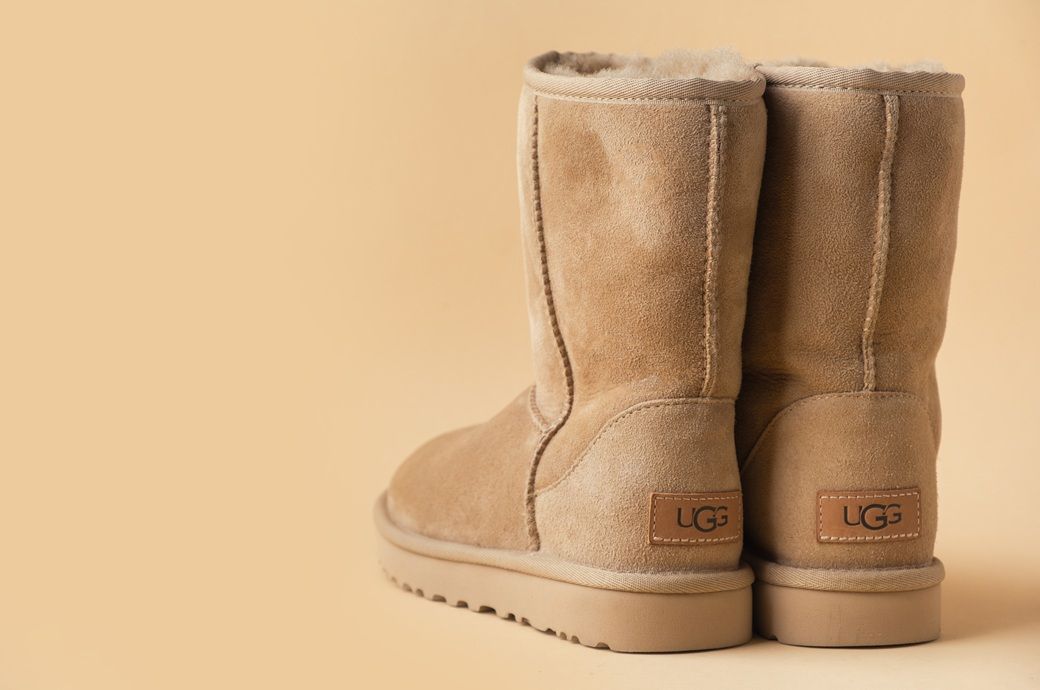
Kenneth Straka, Senior Product Development Manager at Deckers Outdoor Corporation, said that Deckers places strong emphasis on sustainability, noting that founder John Luke often reminded the team that the French word for sustainability is durability. This idea aligned with discussions at the Global Fashion Summit, where the theme centred on “Building Resilient Futures” in the sustainable and circular economy.
Durability has helped UGG become one of the most sought-after boot brands and a key sales driver for Deckers, alongside its sportswear brand Hoka. “One of the things we think about in terms of circularity is making products that last a long time and remain with consumers throughout their lives. We want products that consumers can wear for ** or ** years,” Straka said in an interview with Fibre*Fashion on the sidelines of the Global Fashion Summit in Copenhagen.
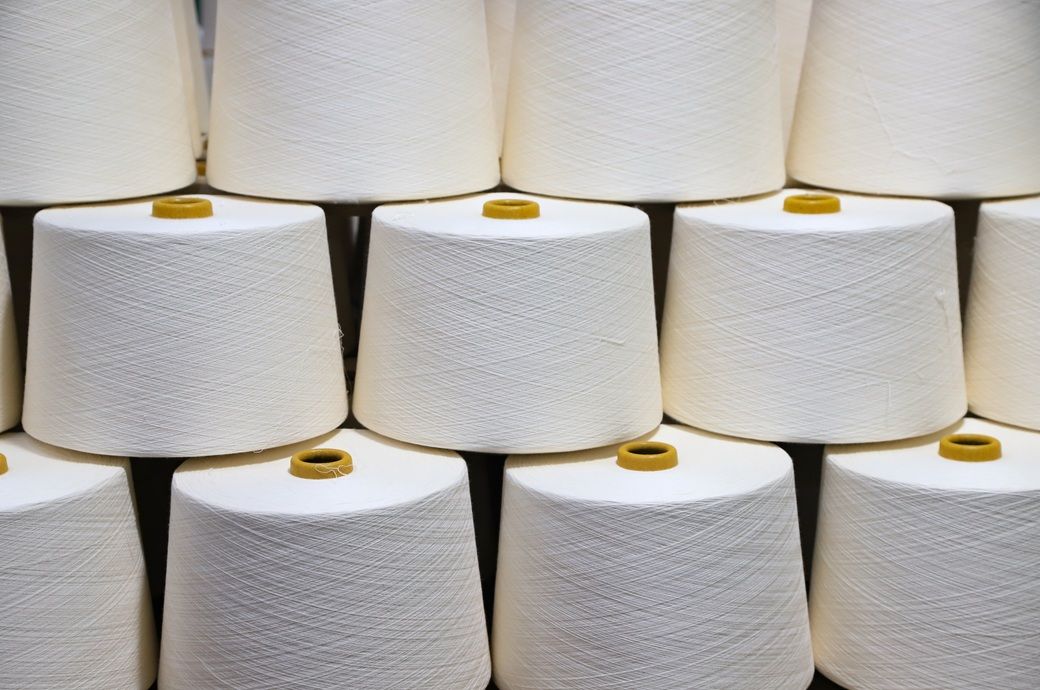
In the Tiruppur market, cotton yarn prices increased by ****;*–* per kg in this week despite sluggish local demand. Prices were quoted higher because of limited supply from spinning mills. A trader from the Tiruppur market told Fibre*Fashion, “Domestic demand remained limited, but spinning mills are not relying solely on the domestic market for cotton yarn sales. They are focusing more on exports, where demand and prices remain attractive. Mills have raised yarn prices following higher ICE cotton prices and the CCI’s increase in auction base prices, although ICE cotton has witnessed a sharp decline over the past two days.”
In Tiruppur, knitting cotton yarn prices were noted as: ** count combed cotton yarn at ****;***–*** (~$*.**–*.**) per kg (excluding GST), ** count combed cotton yarn at ****;***–*** (~$*.**–*.**) per kg, ** count combed cotton yarn at ****;***–*** (~$*.**–*.**) per kg, ** count carded cotton yarn at ****;***–*** (~$*.**–*.**) per kg, ** count carded cotton yarn at ****;***–*** (~$*.**–*.**) per kg, and ** count carded cotton yarn at ****;***–*** (~$*.**–*.**) per kg.
BGMEA president Mahmud Hasan Khan said they discussed export diversification within the garment sector, reopening of closed factories and many factories’ struggle for survival.
Representatives of two top Bangladesh garment trade bodies recently met PM Tarique Rahman and urged him to ensure uninterrupted power and energy supply, quick release of export receipts from banks, reopening of closed factories and easing of customs regulations.
BKMEA raised concerns about misuse of the bond facility and urged action against violators of bond licences.
104 factories have informed the BGMEA about their closure till now, Khan said. BGMEA will scrutinise these cases to identify the genuine reasons for the closures.
Following the scrutiny, the association will send recommendations for reopening these factories, as the government is working to open a Tk 200-billion fund to assist their revival.
BKMEA president Mohammad Hatem said some 400 factories closed in the last three years—nearly 300 of them due to non-cooperation from banks. He said banks release export receipts to exporters’ lien accounts, but delays in payment often force loans into default, leaving exporters unable to pay suppliers on time.
He also demanded uninterrupted supply of power and gas to industrial units as recent shortages of fuel oil have severely affected productivity, according to domestic media ooutlets.
Hatem raised concerns about misuse of the bond facility and urged action against violators of bond licences.
He also called for easing the rules of the National Board of Revenue, particularly customs procedures, to smoothen export and import processes and reduce lead times.
Fibre2Fashion News Desk (DS)


Military jets’ crew members safely eject after Idaho air-show collision

Pete Davidson’s friends support comic against ex Elsie Hewitt allegations

Indy 500: Counting Down The 10 Best Finishes In Race History

-

 Entertainment5 days ago
Conan O’Brien hat tricks as Oscar host
-

 Tech1 week ago
Could Contact-Tracing Apps Help With the Hantavirus? Not Really
-

 Tech1 week ago
I Tried the Best Captioning Smart Glasses, and Only One Leads the Pack
-

 Fashion5 days ago
Italy’s Zegna Group’s Q1 growth boosted by strong organic performance
-

 Sports1 week ago
Bobby Cox, legendary Atlanta Braves manager who led 1995 World Series champions, dead at 84
-

 Entertainment1 week ago
Martin Short: Facing tragedy with joy
-

 Entertainment1 week ago
Tom Brady gets back at Kevin Hart during Netflix roast
-

 Entertainment1 week ago
Martha Stewart: How to make an omelet