

Business
US beef prices are soaring. Will Trump’s plans lower them?

Danielle KayeBusiness reporter
 Mike Callicrate
Beef prices have gotten so high in the US that it has become a political problem.
Even US President Donald Trump, who long ago declared inflation “dead”, is talking about it, as the issue threatens to undercut his promises to bring down grocery prices for Americans.
This week, he took to social media, urging ranchers to lower prices for their cattle.
But his demand – and other proposals his administration has floated to address the issue – has sparked a backlash among ranchers, who worry some of his solutions will make it harder for them to make a living, while making little dent at the grocery store.
The number of beef cattle farmers and ranchers in the US has dwindled steadily since 1980, reducing domestic supplies and driving up prices, as demand remains high.
The country’s cattle inventory has fallen to its lowest level in nearly 75 years, while the US has lost more than 150,000 cattle ranches since 2017 – a 17% drop, according to the Agriculture Department.
Ranchers say they are under pressure from four decades of consolidation among the meat processors that buy their livestock, while high costs for key inputs like fertiliser and equipment have intensified the strain.
The contraction in the industry has worsened as several years of drought have forced ranchers to slash their herd sizes.
Christian Lovell, a cattle rancher in Illinois, says parts of his farm that were lush and grassy when he was a child have now dried up, limiting where his cows can graze.
“You put all these together and you have a recipe for a really broken market,” says Mr Lovell, who works with advocacy group Farm Action.
Beef inflation
Retail prices for beef mince rose 12.9% in the 12 months to September, and beef steaks were up 16.6%, according to US inflation data published on Friday by the Bureau of Labor Statistics.
A pound of ground chuck – richer mince from the neck and shoulder of cows – now costs an average of $6.33 (£4.75), compared to $5.58 a year ago.
The increases have significantly outpaced general food inflation, which stood at 3.1%.
“The cattle herd has been getting smaller for the last several years, yet people are still wanting that American beef – hence the high prices,” says Brenda Boetel, a professor of agricultural economics at the University of Wisconsin, River Falls.
Derrell Peel, a professor of agricultural economics at Oklahoma State University, says he expected prices to remain elevated until at least the end of the decade, noting that it takes years to replenish herds.
The Trump administration’s “hands are tied” when it comes to interventions that will help lower prices, he adds.

 Reuters
‘Chaos’ for US producers
The Agriculture Department unveiled what it called a “big package” this week aimed at ramping up domestic beef production by opening more land for cattle grazing and supporting small meat processors.
That proposal came after Trump drew the ire of ranchers when he proposed importing more beef from Argentina, potentially quadrupling US purchases.
Eight House Republicans responded with a letter expressing concerns about the plans.
Even the National Cattlemen’s Beef Association, which has voiced support for Trump’s policies in the past, said the import plan “only creates chaos at a critical time of the year for American cattle producers, while doing nothing to lower grocery store prices”.
Trump responded by assuring farmers that he was helping them in other ways, noting that tariffs that were limiting imports from Brazil.
“It would be nice if they would understand that, but they also have to get their prices down, because the consumer is a very big factor in my thinking, also,” Trump wrote.
But that has failed to quell the furore.
Justin Tupper, president of the US Cattlemen’s Association, says only the big four meat packers would benefit from Trump’s import plan in his view.
“I don’t see that lowering prices here at all,” he says.
‘These are consolidated markets’
Some say the US government could make an impact if it focused on the way a handful of companies dominate the market for meat processing.
Today, just four firms control more than 80% of the beef slaughtering and packing market.
“These are consolidated markets gouging ranchers and gouging consumers at the store,” said Austin Frerick, an agricultural and antitrust policy expert and a fellow at Yale University.
The meat processing firms – Tyson, JBS, Cargill and National Beef – have faced several lawsuits, including one filed by McDonald’s alleging that they colluded to inflate the price of beef.
Though Trump revoked a Biden-era order earlier this year directing agencies to tackle corporate consolidation across the food supply chain, his administration has taken other steps to investigate competition issues in the agricultural industry.
‘We’re not going to rebuild this cow herd’
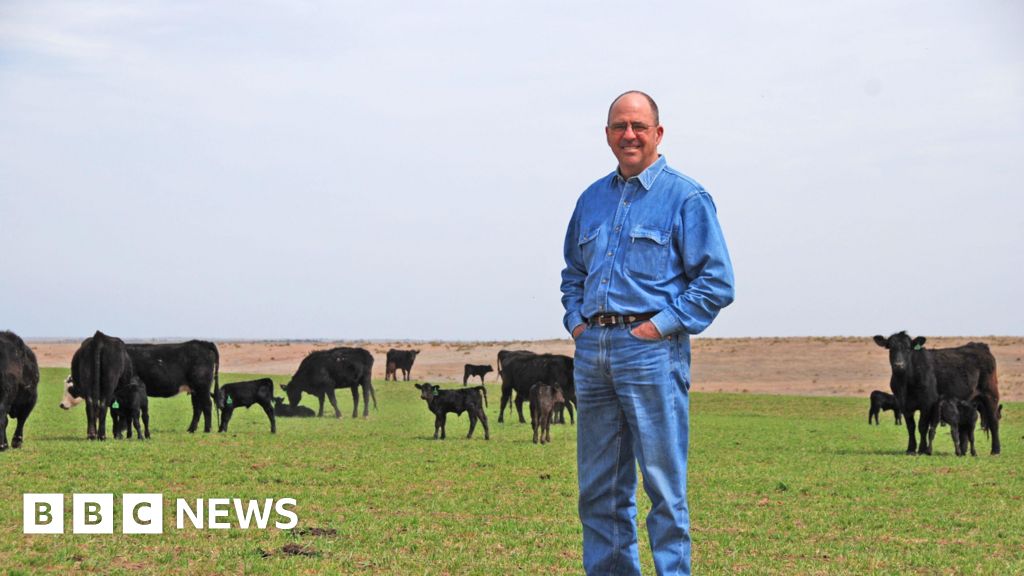
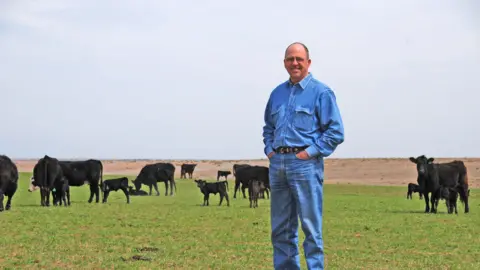
Mike Callicrate runs a cattle ranch in St Francis, Kansas. He says the only way he has managed to stay in the industry was by cutting out the middleman and setting up his own stores to reach consumers directly.
But he acknowledged that most ranchers do not have the money to make that shift. Many have left the industry – and see no incentive to jump back in.
“We’re not going to rebuild this cow herd – not until we address market concentration,” Mr Callicrate says.
He adds that he supported the Agriculture Department’s plans to open up more cattle grazing land.
“But unless we have a market”, anyone would be a “fool to get into the cattle business”, he says.
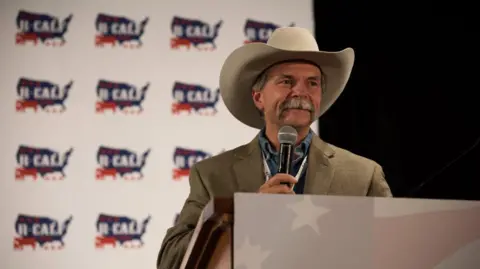 Bill Bullard
Bill Bullard found himself in the first wave of ranchers pushed out as the meat processing industry started to consolidate in the early 1980s.
He closed down his 300-cow operation in South Dakota in 1985.
Now the chief executive of R-CALF USA, a cattle producer trade association, he says it was only in the last year or so that ranchers had received good prices for their livestock, as supply dropped to such a low level that the prices paid by meat processors “simply had to increase”.
Still, reliance on imports and meat packers’ buying power persists, Mr Bullard says, meaning ranchers “lack confidence in the integrity of the marketplace” and remain reluctant to grow their herds.
He says he does not have confidence that the president’s ideas would fix the issues.
“He’s focused on the symptoms and not the problems.”

Motorists are facing higher fuel prices ahead of Easter break due to the conflict in the Middle East, the RAC says.
Source link

Hyderabad: Pharma player Hetero on Friday said it has rolled out exports of its generic semaglutide injection portfolio as part of a multi-year plan to widen access to treatments for type 2 diabetes and obesity in more than 75 countries.The Hyderabad-based pharmaceutical company said initial rollouts are under way in Africa, Asia and the Middle East, with additional launches planned in other markets subject to regulatory approvals.The injectable therapies will be sold under the brand names Truglyx, Rolmodl and Moto G. Semaglutide belongs to the GLP-1 class of medicines, which are used in diabetes care and weight management.Hetero said the export launch is part of its broader strategy to improve access to advanced cardio-metabolic therapies, particularly in emerging markets.The company said the products will be offered in multi-dose disposable pen devices designed in line with innovator formats and will be available in several strengths, including 0.25 mg, 0.5 mg, 1 mg, 2 mg, 1.7 mg and 2.4 mg, allowing dosing flexibility for both diabetes and obesity treatment.Hetero said it is also awaiting approval from India’s Central Drugs Standard Control Organisation (CDSCO) after completing clinical trials in type 2 diabetes and obesity and plans an India launch after regulatory clearance.Hetero managing director Dr Vamsi Krishna Bandi said the company aims to provide high-quality, affordable generic semaglutide through a single global product platform backed by its manufacturing and development capabilities.He said Hetero would use its commercial networks across Asia, the Middle East, Africa and Latin America to support supply and access. The Hyderabad-headquartered Hetero operates in more than 145 countries and employs over 30,000 people.
Business
India-US trade deal update: Piyush Goyal meets USTR Jamieson Greer, discusses next steps in BTA talks – The Times of India
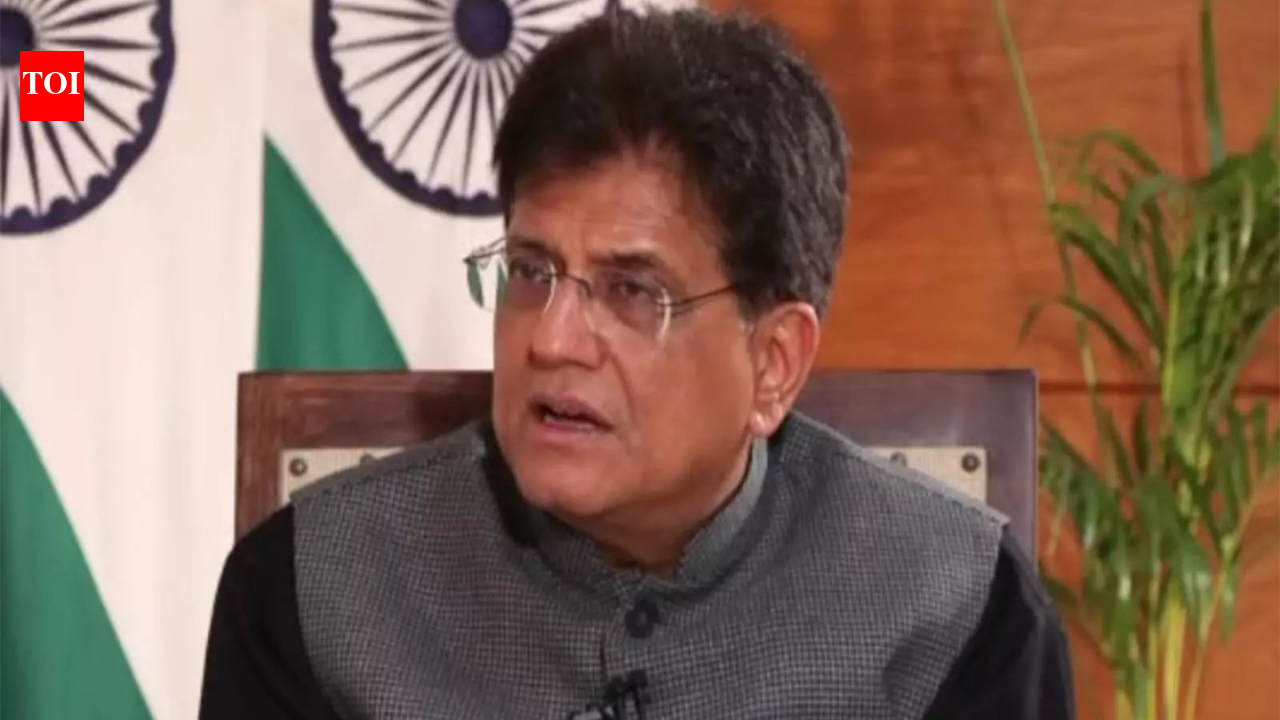
Commerce and industry minister Piyush Goyal on Friday met US Trade Representative Jamieson Greer and reviewed the next steps in negotiations for the proposed India-US bilateral trade agreement (BTA).The meeting took place on the sidelines of the 14th ministerial conference (MC14) of the World Trade Organisation in Yaounde, Cameroon, where both sides also exchanged views on issues related to the WTO agenda.“Had a very productive discussion with @USTradeRep Jamieson Greer on the sidelines of the WTO Ministerial Conference. Exchanged views on the #WTOMC14 agenda, next steps in the India-US BTA negotiations and explored ways to further deepen our economic cooperation and bilateral trade ties,” Goyal said in a social media post.The development comes amid ongoing efforts by both countries to finalise an interim trade pact. Last month, India and the US announced that they had finalised a framework for the first phase of the agreement, though it is yet to be signed.The two sides had earlier announced a trade deal on February 2, followed by a joint statement on February 7 outlining the contours of the agreement.As part of the framework, the US had agreed to reduce tariffs on Indian goods to 18%. However, the tariff structure has since undergone changes after the US Supreme Court struck down sweeping tariffs imposed under earlier measures.Following the ruling, US President Donald Trump introduced a 10% tariff on all countries for a period of 150 days starting February 24.In view of these developments, a planned meeting between chief negotiators of India and the US — aimed at finalising the legal text of the agreement — has been postponed. The pact was earlier expected to be signed this month.An official had earlier said that the interim trade agreement would be signed once the new global tariff framework of the US is fully in place.

Asda boss rejects profiteering claims as petrol price tops 150p

Britney Spears turns a new page after recent legal trauma

This Premium Sennheiser Soundbar Is $1,000 Off

-

 Entertainment1 week ago
Val Kilmer revived 1 year after death through AI
-

 Fashion7 days ago
China’s textile & apparel exports surge 17% to $50 bn in Jan-Feb 2026
-
 Business7 days ago
Flipkart group CFO to leave co amid IPO plans – The Times of India
-

 Sports7 days ago
Rating Adidas’ 2026 World Cup away shirts: Argentina, Spain, Mexico and more
-
 Business1 week ago
Video: The Effects of High Oil Prices
-

 Sports7 days ago
American Conference Commissioner Tim Pernetti thanks Trump for Army-Navy game executive order
-
Tech1 week ago
The Corsair 4000D RS PC Case Keeps Your System Cool
-

 Fashion1 week ago
The hidden $1.62 war tax now embedded in every garment you source