

Fashion
US brand Nike debuts ACG Zegama crafted for wild, technical terrain

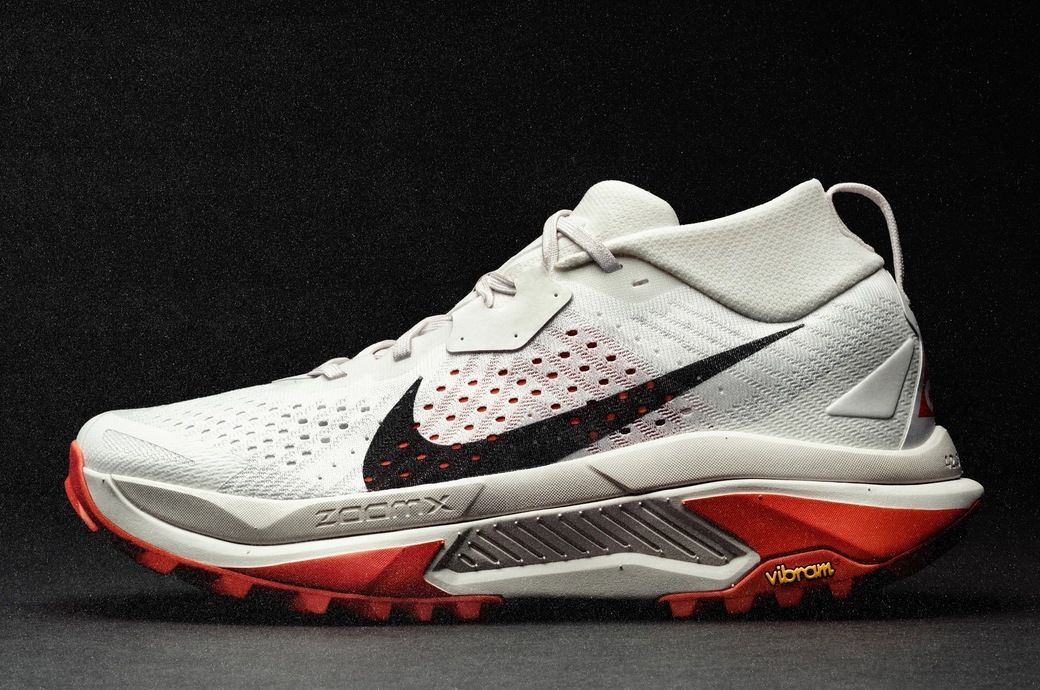
Built for ultramarathons and long days in the mountains, the ACG Zegama is the most rugged model in the All Conditions running footwear lineup, offering runners a max cushioned ride that leaves no distance or terrain off limits.
Nike’s new ACG Zegama is a rugged, ultra-distance trail shoe built with exposed ZoomX foam for max cushioning, an accommodating fit, a Vibram Megagrip outsole, and added protection including a rock plate and adaptive gaiter.
Tested by elite All Conditions Racing athletes across extreme terrain, it delivers stability, responsiveness and all-day comfort for technical, long-distance runs.
“The ACG Zegama is designed, tested and engineered for max cushioning and comfort for the most rugged trail adventures,” says Brenden McAleese, Director, Nike ACG Footwear. “Thanks to feedback from athletes who push the limits, we’ve obsessed every detail to ensure the ACG Zegama can handle any distance. From the moment you lace up, the wider toe box and trail-tuned ZoomX foam are noticeable, helping you venture into wild, technical terrain in confidence.”
The latest evolution in the trusted Zegama lineage of trail running footwear positions exposed ZoomX foam directly below the foot, delivering a comfortable ride and 85 percent energy return. ZoomX, Nike’s lightest and most responsive midsole compound, also pairs with a bed of Cushlon 3.0 foam to offer runners an added sense of stability on uneven trails.
A Vibram Megagrip outsole with an improved lug pattern and strategic rubber coverage provides unparalleled traction in both dry and wet conditions, improves confidence and control on rugged terrain, and delivers long-lasting durability, meeting the rigors of every run head-on. A forefoot rock plate helps runners move across rocky trails, and a modified heel bump improves foot placement in technical terrain.
A new, trail-specific last provides a more accommodating fit by adding room in the forefoot and toe box. A stretchier, more adaptive gaiter helps keep out rocks and other trail debris. Padding in the tongue and heel offer more comfort over long distances, and a fit band drives additional midfoot support and consistent lockdown.
“The ACG Zegama has the same comfort and stability as its predecessor, which I already loved as a daily trainer, and adds more responsiveness that makes it really fun to race in,” says Caleb Olson, a member of the All Conditions Racing Department and winner of the 2025 Western States Endurance Run. “It’s a sturdy shoe that’s a great option for more technical races, when I’m moving through rocky terrain and need my feet to be comfortable and cushioned all day.”
Every aspect of the ACG Zegama was informed by feedback from the All Conditions Racing Department: 22 elite trail athletes from eight countries and five U.S. states who have put the silhouette through its paces in race-like environments around the world, covering 50 to 100 miles at a time. Many athletes tested the ACG Zegama for up to eight weeks, logging upward of 400 miles. Their feedback, combined with dynamic Nike ACG wear testing during development, helped designers fine-tune the silhouette to the exact demands of ultramarathons and the audacious athletes who run them.
“I first tried the ACG Zegama a few days before a major race on a ridiculously steep and rocky course,” says Tyler Green, All Conditions Racing Department athlete, two-time Western States runner-up and top 10 UTMB finisher. “It’s rare that I’d jump right into a new shoe so soon before a big race, but I made an exception for the ACG Zegama, and it was the right choice. The shoe feels excellent right out of the box; the traction is stellar; and, of course, it looks really good.”
The ACG Zegama draws on Nike ACG’s legacy, beginning in the 1980s, of creating footwear that’s light, fast and speaks trail fluently — delivering bold solutions matched only by the tenacity of the athlete who chooses wild.
The silhouette is also powered by Nike’s 50-year history as the biggest champion of runners and the running community, as well as the brand’s continued commitment to creating the most technologically advanced products to help runners across all disciplines reach their greatest potential. It joins an unparalleled lineup of trail-tuned offerings, road running footwear and racing innovations that serve the needs of all athletes, no matter where and how they choose to run.
Note: The headline, insights, and image of this press release may have been refined by the Fibre2Fashion staff; the rest of the content remains unchanged.
Fibre2Fashion News Desk (RM)













The announcement was made during a summit in Brussels, where leaders from both sides emphasised the need to deepen transatlantic trade amid global economic uncertainty and shifting geopolitical dynamics.
Canada and the EU have agreed to modernise the Comprehensive Economic and Trade Agreement (CETA) following a summit in Brussels.
It aims to reduce trade barriers, support SMEs while expanding co-operation in digital services and cross-border data flows.
Leaders including Ursula von der Leyen said it will strengthen economic resilience, diversify trade partnerships and secure supply chains.
The initiative seeks to update the 2017 free trade deal by reducing remaining non-tariff barriers, improving regulatory co-ordination and creating clearer investment dispute mechanisms, particularly to support small and medium-sized enterprises.
Canadian Prime Minister Mark Carney has set a target of doubling Canada’s non-US trade within the next decade, positioning Europe as a key partner in achieving that goal. According to Canada’s Trade Minister Maninder Sidhu, the effort aligns with the country’s broader strategy to diversify trade beyond its largest partner, the United States, which currently accounts for nearly 70 per cent of Canadian exports and leaves the country vulnerable to shifts in American trade policy.
The agreement also launches talks on a digital trade framework covering data flows, cybersecurity, artificial intelligence regulation and digital services.
Maros Sefcovic, the EU’s Commissioner for Trade and Economic Security, said the initiative reflects the growing importance of digital commerce, noting that more than 40 per cent of EU-Canada services trade is already delivered digitally.
European Commission President Ursula von der Leyen highlighted that the partnership would support sustainable development, innovation and secure supply chains, particularly in areas such as rare minerals, clean energy and advanced technologies.
The modernisation effort underscores both partners’ commitment to strengthening economic resilience, promoting sustainable trade practices and deepening cooperation in the digital era.
Fibre2Fashion News Desk (CG)
Imports of knitted apparel and clothing accessories (Chapter **) were valued at $***.*** million in January ****, slightly lower than $***.*** million a year earlier. The imports of non-knitted apparel and clothing accessories (Chapter **) totalled $***.*** million, down *.** per cent from $***.*** million in January ****.
South Korea typically exports fabrics and textile materials while importing readymade garments. During January ****, exports of man-made filaments, strips and similar materials (Chapter **) were valued at $***.*** million, down *.** per cent from $***.*** million a year earlier. Exports of knitted or crocheted fabrics (Chapter **) reached $***.*** million, easing *.** per cent from $***.*** million.

The additional week in the fourth quarter of fiscal 2025, compared to the fourth quarter of fiscal 2024, contributed approximately $37.0 million in consolidated net sales. On a comparable week basis, net sales grew 3.4 per cent. On a reported basis including the extra week in fiscal 2025, the US retail, international, and US wholesale segments grew 9.4 per cent, 10.2 per cent, and 3.4 per cent, respectively. US retail comparable net sales increased 4.7 per cent. Changes in foreign currency exchange rates used for translation in the fourth quarter of fiscal 2025, as compared to the fourth quarter of fiscal 2024, had a favourable effect on consolidated net sales of approximately $3.0 million, or 0.3 per cent.
Carter’s reported Q4 fiscal 2025 sales of $925.5 million, up 7.6 per cent, boosted by a $37 million extra week; on a comparable basis, sales rose 3.4 per cent.
Growth spanned US retail, international, and wholesale segments.
Operating income edged up to $84.7 million, though margin dipped to 9.2 per cent.
Full-year sales increased 1.9 per cent to $2.9 billion.
Operating income increased $1.5 million, or 1.8 per cent, to $84.7 million, compared to $83.2 million in the fourth quarter of fiscal 2024. Operating margin decreased 50 basis points to 9.2 per cent, reflecting incremental tariff costs, investments in product mix and make, and higher performance-based compensation provisions, partially offset by higher pricing, lower corporate expenses, and an asset impairment charge in the prior year period.
“Carter’s delivered improved fourth quarter results with each of our business segments posting sales growth over last year. We see momentum building behind our products and demand creation initiatives, which have driven an improvement in the rate of traffic, new customer acquisition, higher realised pricing, and increased penetration of the best portions of our product assortments. All of this gives us confidence that our strategies are gaining traction,” said Douglas C Palladini, chief executive officer & president.
“2025 was a year of meaningful progress in stabilising our business while responding to significant new tariffs. We took actions to right-size our cost structure and we launched several important initiatives to improve the productivity of our merchandise assortments and store fleet. We also strengthened our balance sheet and liquidity with the successful refinancing of our long-term debt and a new asset-based revolving credit facility in place,” Palladini added.
Consolidated net sales increased $54.3 million, or 1.9 per cent, to $2.90 billion, compared to $2.84 billion in fiscal 2024, reflecting growth in our US retail and international segments that were partially offset by a decline in the US wholesale segment. The additional week in fiscal 2025, compared to fiscal 2024, contributed approximately $37.0 million in consolidated net sales. On a comparable week basis, net sales grew 0.6 per cent. On a reported basis including the extra week in fiscal 2025, the company’s US retail and international segments grew 3.5 per cent, and 6.3 per cent, respectively, while US wholesale net sales declined 2.0 per cent. US retail comparable net sales increased 1.4 per cent. Changes in foreign currency exchange rates used for translation in fiscal 2025, as compared to fiscal 2024, had an unfavourable effect on consolidated net sales of approximately $6.7 million, or 0.2 per cent, the company said in a press release.
“While we are encouraged by our progress, much work remains. Excluding the recent tariff developments, for 2026 we are planning growth in net sales as we build on the momentum of our product and demand creation strategies. We are also planning growth in operating income. We will remain focused and disciplined in our investments and overall spending and expect solid contributions from productivity initiatives. We believe the recent news regarding tariffs will be net positive for Carter’s, but it will take some time to fully understand the implications for our business and the broader marketplace. Our talented and dedicated teams and I are committed to returning Carter’s to long-term sustainable, profitable growth over time,” Palladini concluded.
Fibre2Fashion News Desk (RR)


Canada & EU push to modernise trade deal amid global shifts

Dubai: The banker Iran bombed

Bayern 4-1 Gladbach (Mar 6, 2026) Game Analysis – ESPN

-
 Business1 week ago
Attock Cement’s acquisition approved | The Express Tribune
-

 Fashion1 week ago
Policy easing drives Argentina’s garment import surge in 2025
-

 Politics1 week ago
What are Iran’s ballistic missile capabilities?
-
 Business1 week ago
India Us Trade Deal: Fresh look at India-US trade deal? May be ‘rebalanced’ if circumstances change, says Piyush Goyal – The Times of India
-

 Sports1 week ago
LPGA legend shares her feelings about US women’s Olympic wins: ‘Gets me really emotional’
-

 Entertainment1 week ago
Bobby J. Brown, “The Wire” and “Law & Order: SUV” actor, dies of smoke inhalation after reported fire
-

 Fashion1 week ago
South Korea’s Misto Holdings completes planned leadership transition
-

 Entertainment1 week ago
Pakistan’s semi-final qualification scenario after England defeat New Zealand