

Fashion
US’ Crocs revenue dips 1.7% in 2025; DTC growth offsets wholesale

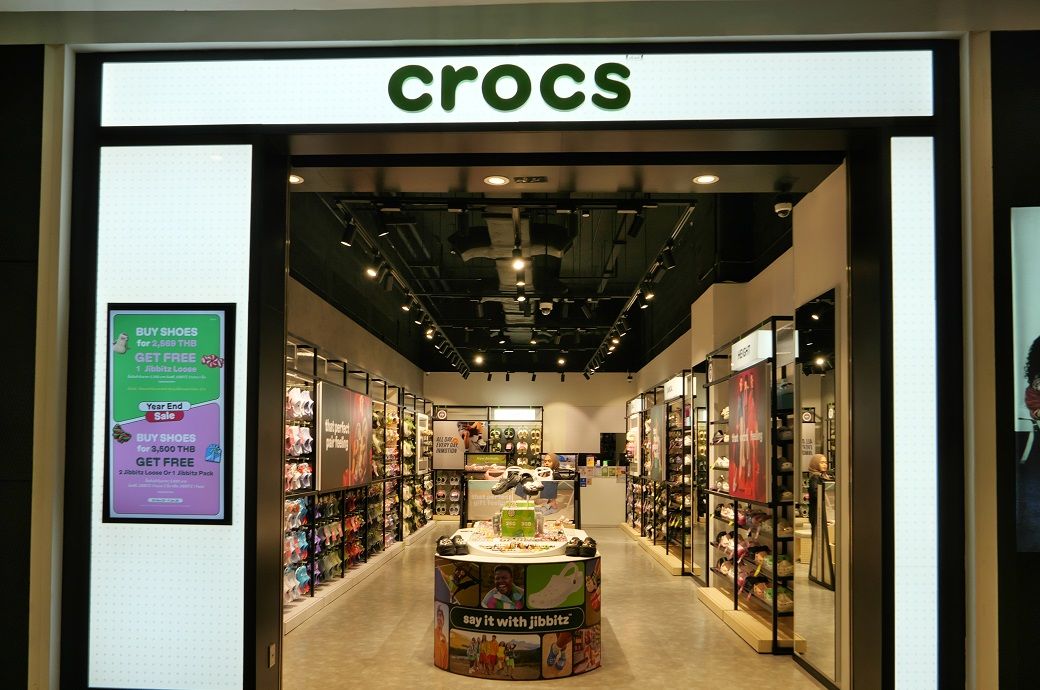
The gross margin stood at 58.3 per cent, marginally lower than 58.8 per cent in 2024. Selling, general and administrative (SG&A) expenses rose sharply to $2,208 million, largely due to non-cash impairment charges related to the Heydude brand, including $430 million tied to the trademark and $307 million to goodwill. On an adjusted basis, SG&A increased a more moderate 6.8 per cent to $1,456 million.
Crocs Inc has reported full-year 2025 revenue of $4.04 billion, down 1.5 per cent, as wholesale weakness offset DTC growth.
Impairment charges linked to Heydude hit reported profit, though adjusted operating income remained strong.
The Crocs brand grew internationally, while Heydude declined.
Strong cash flow supported debt reduction and share buybacks.
The company expects modest revenue trends in 2026.
Reported operating income fell 85.4 per cent to $150 million, resulting in an operating margin of 3.7 per cent. Excluding impairments, adjusted operating income reached $901 million, with an adjusted operating margin of 22.3 per cent. Crocs posted a diluted loss per share of $1.50 for the year, compared to earnings per share (EPS) of $15.88 in 2024. Adjusted diluted EPS declined 5.0 per cent to $12.51, Crocs said in a press release.
For the full year, the Crocs brand grew revenues 1.5 per cent to $3,326 million, supported by an 11.9 per cent rise in international sales. Heydude revenues declined 13.3 per cent to $715 million, reflecting continued pressure in wholesale channels.
Strong cash generation remained a highlight. Operating cash flow reached approximately $700 million, enabling the company to repay $128 million of debt and repurchase around 6.5 million shares for $577 million during the year.
As of December 31, 2025, cash and cash equivalents stood at $130 million, inventories at $369 million, and total borrowings declined to $1,231 million. Capital expenditure for the year was $51 million.
Commenting on the annual performance, Andrew Rees, chief executive officer of Crocs, said: “We ended 2025 on a strong note with a better-than-expected Holiday quarter. For the year, revenue exceeded $4 billion, led by low-double digit international growth for the Crocs Brand. At the same time, we accelerated our strategic actions to strengthen the long-term health of both the Crocs and Heydude brands.”
“Our powerful value creation model drove operating cash flow of approximately $700 million which enabled us to return shareholder value as we repurchased approximately 10 per cent of our shares outstanding and paid down $128 million of debt,” added Rees.
For the fourth quarter (Q4) of 2025, consolidated revenues declined 3.2 per cent to $958 million, or 4.2 per cent on a constant currency basis. DTC revenues increased 4.7 per cent, while wholesale revenues dropped 14.5 per cent.
The gross margin declined to 54.7 per cent from 57.9 per cent a year earlier. SG&A expenses rose slightly to $377 million, representing 39.4 per cent of revenues, while adjusted SG&A declined 2.7 per cent to $363 million.
Income from operations decreased 26.8 per cent to $146 million, with operating margin narrowing to 15.3 per cent. On an adjusted basis, operating income reached $161 million, translating into an adjusted operating margin of 16.8 per cent. Diluted EPS fell sharply to $2.03, while adjusted diluted EPS declined 9.1 per cent to $2.29.
In Q4, the Crocs brand delivered revenues of $768 million, up 0.8 per cent YoY. DTC revenues increased 6.1 per cent, while wholesale revenues declined 6.7 per cent. International markets remained a key growth driver, with revenues rising 14.1 per cent, offsetting a 7.4 per cent decline in North America.
Heydude brand revenues fell 16.9 per cent to $189 million in the quarter, with wholesale revenues declining over 40 per cent, while DTC revenues remained flat.
During the quarter, Crocs repurchased approximately 2.2 million shares for $180 million and repaid $90 million of debt.
Looking ahead, Crocs expects a challenging start to 2026 but sees improving efficiency and disciplined investment supporting earnings growth. For the first quarter of 2026, revenues are expected to decline between 5.5 per cent and 3.5 per cent YoY, with adjusted operating margin of around 21.5 per cent and adjusted diluted EPS between $2.67 and $2.77.
For full-year 2026, the company expects revenues to range from down 1 per cent to slightly higher than 2025. The Crocs brand is projected to be flat to up 2 per cent, while Heydude revenues are expected to decline between 9 per cent and 7 per cent. Adjusted diluted EPS are forecast in the range of $12.88 to $13.35.
“We enter 2026 with greater confidence around our growth engines which are diversified across channels, geographies, brands, and product categories. We have identified and actioned $100 million of cost savings in 2026 aimed at driving greater efficiency while providing the flexibility to continue to invest behind our brands and deepen our connection with consumers,” said Rees.
Fibre2Fashion News Desk (SG)









Turkiye’s apparel exports fell 2.88 per cent YoY to $2.599 billion in January-February 2026, pressured by weak EU demand, which accounts for nearly 70 per cent of shipments.
Knitted exports dipped 1.6 per cent, while woven declined 4.6 per cent.
Rising costs and currency volatility continue to erode competitiveness, extending a three-year export decline trend.
Source link
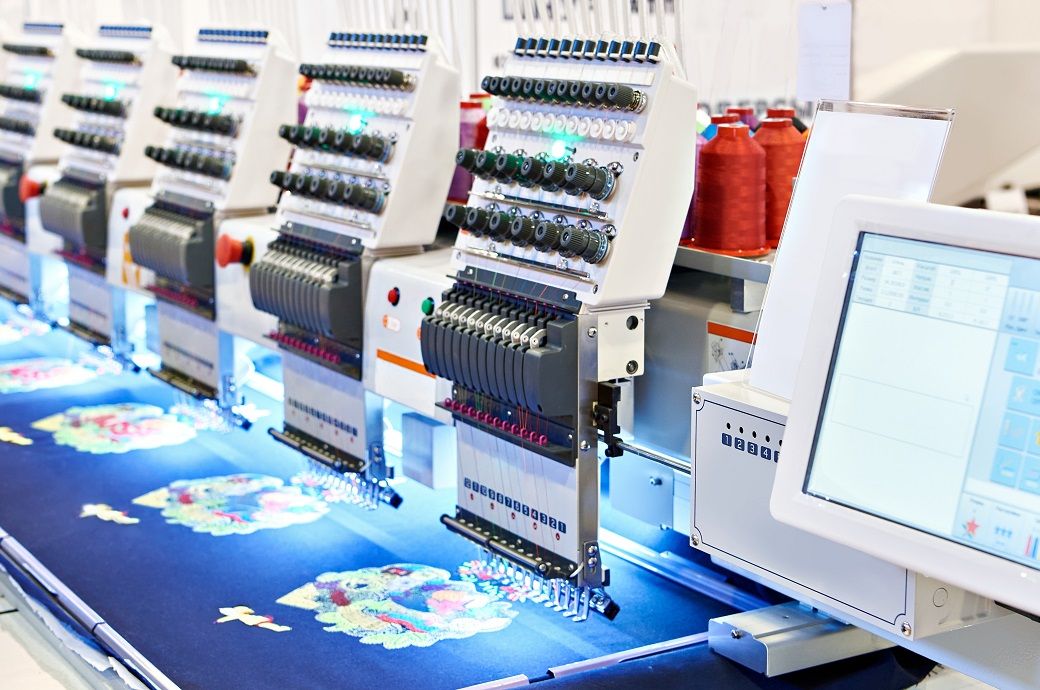
During a session conducted jointly by the Tiruppur Exporters’ Association (TEA) and Adani Total Gas, K. M. Subramanian, President, TEA, highlighted that gas connectivity will become an essential requirement for industries in the coming years, adding that Adani Total Gas is prepared to accelerate PNG rollout in Tiruppur.
Tiruppur’s textile industry is accelerating its shift towards PNG as LPG shortages and rising energy costs disrupt operations.
With production costs up nearly 15 per cent and ESG compliance tightening, PNG is emerging as a reliable and cleaner alternative, helping exporters ensure supply stability, meet global standards, and sustain competitiveness.
He also pointed to upcoming Digital Product Passport (DPP) regulations which will mandate stricter digital monitoring and sustainability compliance across production processes under European ESG norms.
Kumar Duraiswami, Joint Secretary, TEA underscored PNG as a strategic necessity rather than a temporary alternative. He stated that the adoption of PNG is not merely a response to any temporary geopolitical situation, but an essential step as the global industry moves towards sustainable production.
He further noted that exporters to Europe will be required to comply with ESG norms within the next two years, necessitating a gradual shift away from fuels such as LPG and coal.
According to a TEA press release, industry concerns over rising costs were also flagged, with Subramanian noting that energy shortages have already pushed production costs up by nearly 15 per cent, creating operational challenges. He stressed the need for a stable and reliable gas supply to sustain Tiruppur’s large manufacturing ecosystem and urged faster implementation of PNG infrastructure.
Providing operational insights, K. R. Venkatesan, Cluster Head at Adani Total Gas, outlined PNG connectivity availability, registration procedures, and industrial pricing, while Karthik B, Joint Marketing Manager, elaborated on practical applications and addressed industry queries during the session.
Tiruppur’s move towards PNG reflects a broader transition in India’s textile sector, where cleaner energy adoption is becoming central to ensuring supply security, cost stability, and compliance with evolving global sustainability standards.
Fibre2Fashion News Desk (KUL)
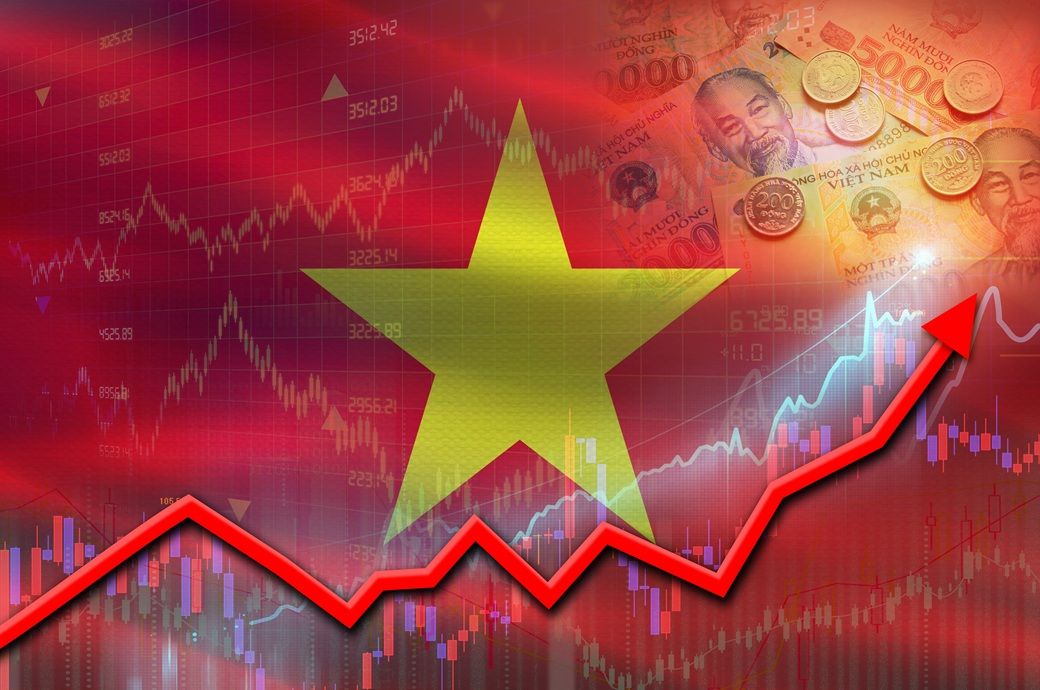
NSO director Nguyen Thi Huong told a press conference that the solid start offers a foundation to achieve full-year growth target even as global uncertainties loom.
Vietnam’s economy expanded by 7.83 per cent in Q1 2026 compared to 7.07 per cent in Q1 2025, as strong consumer demand and resilient manufacturing underpinned growth despite mounting global uncertainties.
Growth was broad-based across all major sectors.
Foreign trade activity picked up sharply.
Growth pressures could intensify in Q2 as the Middle East conflict drives up oil prices and input costs.
Growth was broad-based across all major sectors. The industry and construction sector grew by 8.92 per cent year on year (YoY), contributing 44.08 per cent to overall expansion, with processing and manufacturing continuing to act as the main engine after posting 9.73 per cent growth.
Foreign trade activity picked up sharply, with exports of goods and services rising by 19.85 per cent YoY and imports rising by 24.27 per cent YoY, reflecting stronger demand for raw materials, a domestic media outlet reported.
NSO, however, cautioned that growth pressures could intensify in the second quarter as the Middle East conflict drives up oil prices and input costs, increasing risks to supply chains and production.
Fibre2Fashion News Desk (DS)


Turkiye’s apparel exports ease 2.8% in Jan-Feb 2026

The importance of being Pakistan

India’s Tiruppur shifts to PNG amid LPG shortage in textile units

-
Uncategorized4 days ago
[CinePlex360] Please moderate: “Trump signals p
-
Uncategorized1 week ago
[CinePlex360] Please moderate: “Further tariff
-

 Tech3 days ago
Our Favorite iPad Is $50 Off
-

 Entertainment3 days ago
Joe Jonas shares candid glimpse into parenthood with Sophie Turner
-
 Fashion6 days ago
China’s Anta Sports posts record $11.62 bn revenue in 2025
-

 Politics1 week ago
Trump considers asking Arab allies to help to pay for Iran war
-

 Entertainment1 week ago
Demystifying the PTI
-

 Sports1 week ago
How Arizona beat Purdue and Illinois defeated Iowa in Saturday’s Elite Eight