

Politics
US declares Iran offensive over, warns force remains an option

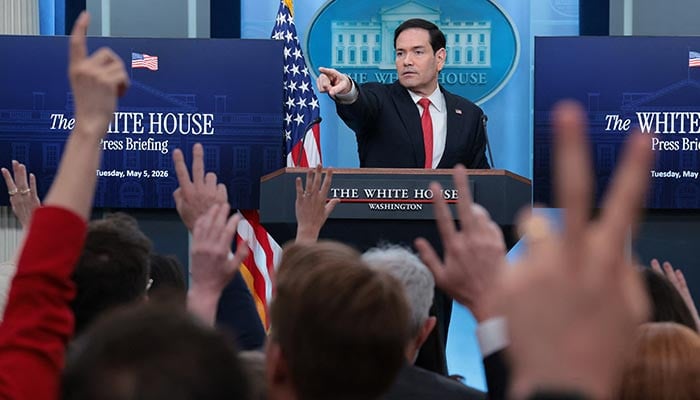
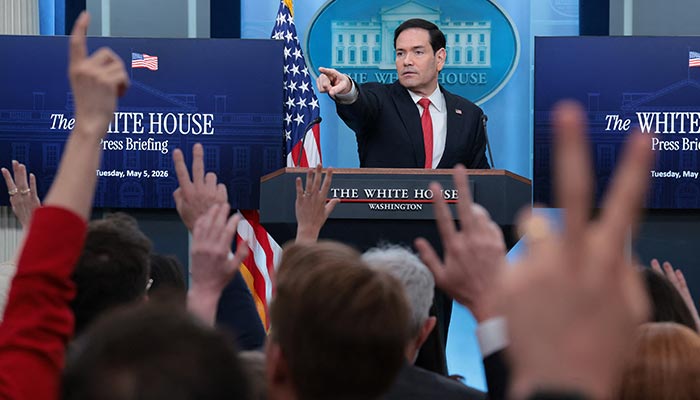
- US, Gulf allies drafted UNSC resolution over Iran laying of mines.
- Rubio calls Hormuz resolution test for UN, urges against vetoes.
- US says ready to unleash “devastating” response to any new attacks.
The United States has completed its offensive operations against Iran, Secretary of State Marco Rubio said Tuesday, even as Washington warned it was ready to unleash a “devastating” response to any new attacks on shipping in the Strait of Hormuz.
Rubio’s remarks came after Washington’s top military officer said American forces remain ready to resume combat operations if ordered, as clashes in the vital waterway threatened to unravel a fragile ceasefire.
Iran’s Revolutionary Guards navy warned of a “firm response” if ships deviated from its approved route through the strait, as the country’s chief negotiator said Tehran “had not even started yet,” following a spate of attacks in the crucial trade route.
The United Arab Emirates announced it was intercepting a barrage of missiles and drones from Iran for a second day — a claim Tehran “categorically” denied.
“The armed forces…did not launch any missile or drone operation,” Iran’s Khatam al-Anbiya command said.
Iran fired missiles and drones at US forces on Monday, while Washington said it struck six Iranian boats it accused of threatening commercial shipping, in the sharpest escalation since a month-long truce.
US Central Command remains “ready to resume major combat operations…if ordered,” General Dan Caine told reporters.
“No adversary should mistake our current restraint with a lack of resolve.”
President Donald Trump urged Iran to “do the smart thing” and make a deal, saying he did not want to kill more Iranians even as the ceasefire teetered.
He earlier dismissed the conflict as “a little skirmish,” adding: “Iran has no chance.”
Pentagon chief Pete Hegseth had said the United States was “not looking for a fight” but warned attacks would face “overwhelming and devastating” force.
‘Malign presence’
Iran’s parliament speaker Mohammad Bagher Ghalibaf said the status quo was “intolerable,” warning the US “malign presence will diminish” as Tehran vowed to retain control of Hormuz.
Monday’s exchange of fire came as the rivals enforced dueling maritime blockades following Trump’s plan to guide ships out of the Gulf.
The war, sparked more than two months ago by US-Israeli strikes, has battered the global economy despite a weeks-long ceasefire.
Israel’s air force chief Omer Tischler said the military was ready to “deploy the entire air force eastward if required.”
Military chief Eyal Zamir added that the army remained on “high alert” and ready to respond to threats in the Gulf.
Iran denied any naval losses but accused Washington of killing five civilians aboard boats.
Despite tensions, Danish freight giant Maersk said one of its ships had transited Hormuz under US escort.
The UAE called the attacks “a dangerous escalation,” while Saudi Arabia urged efforts toward a political solution.
Rubio accused Iran of “holding the world’s economy hostage” through threats to shipping and the laying of sea mines, and said Washington and Gulf allies had drafted a UN Security Council resolution demanding Tehran halt attacks and disclose the location of mines.
The proposed measure would also require Iran to end efforts to charge tolls in the strait and support a humanitarian corridor, with a vote expected in the coming days, Rubio said.
European and US stocks advanced Tuesday while fears that the ceasefire could fall apart weighed on Asian equities.
Talks remain deadlocked, with only one round of direct negotiations so far.
Iran’s President Masoud Pezeshkian said Tehran remained open to dialogue, but rejected US “maximum pressure” demands as “impossible.”
Rising energy costs are adding to economic strain and creating a political headache for Trump ahead of midterm elections.
European allies warned prolonged disruption would hit their economies.
“These attacks are unacceptable,” EU chief Ursula von der Leyen said on X, warning that Gulf security has “direct consequences for Europe.”
German Chancellor Friedrich Merz urged Iran to return to talks, echoing calls from French President Emmanuel Macron and British Prime Minister Keir Starmer.


Italian Prime Minister Giorgia Meloni said on Tuesday that fake images of her generated by artificial intelligence were circulating online, warning that such false photos could deceive the public and target people unable to defend themselves.
Meloni said in a statement that several fake photos of her had been created with AI and passed off as real by political opponents.
She posted one such image appearing to show her sitting on a bed wearing underwear. The original post included an outraged comment that the photo was shameful and unworthy of an Italian prime minister.
“I must admit that whoever created them, at least in the attached case, has also improved me quite a bit,” Meloni said, adding that the episode showed how “anything at all” was now being used to attack people and spread falsehoods.
“The point, however, goes beyond me,” she said. “Deepfakes are a dangerous tool because they can deceive, manipulate, and strike anyone. I can defend myself. Many others cannot.”
Meloni urged people to check the authenticity of online content before accepting or sharing it.
“One rule should always apply: verify before believing, and think before sharing,” she said.
Meloni launched a libel suit two years ago against a man from Sardinia who is accused of making deepfake pornographic images using her face and posting them online. The case continues.


- CM accuses election commission of bias.
- Banerjee’s term as CM set to end on Thursday.
- Commission calls CM’s allegations ‘baseless’.
An Indian chief minister who was swept from power by Prime Minister Narendra Modi’s Bharatiya Janata Party (BJP) in state elections said on Tuesday that she had “not been defeated” and would not resign, in an unprecedented political twist.
Modi’s BJP defeated Chief Minister Mamata Banerjee’s Trinamool Congress (TMC), which has been in power in West Bengal state since 2011, securing more than two-thirds of the 294 seats when votes were counted on Monday.
BJP has never ruled West Bengal, a populous eastern state that borders Bangladesh, and its victory is considered a political milestone as the party now controls almost all states in eastern India.
The TMC tally fell to 80 seats from its earlier 215, with Banerjee herself losing her seat.
Banerjee said about 100 seats were “forcibly taken” from her party, which also had to contend with a “biased” Election Commission. She did not back her accusation with evidence.
“I will not resign, I did not lose… officially, through the Election Commission, they (the BJP) can defeat us, but morally, we won the election,” she told a news briefing.
West Bengal’s Chief Electoral Officer Manoj Kumar Agarwal termed the allegations “baseless”. The BJP’s Suvendu Adhikari, who defeated Banerjee, said “everything is mentioned in the constitution”.
Banerjee can appeal result in court
According to the Indian constitution, the state’s governor can demand Banerjee’s resignation or wait for her term to expire, after which newly elected lawmakers would be sworn in and the process of forming a new government would begin.
Banerjee’s term is set to end on Thursday.
A defeated candidate in an Indian state election can challenge the result in court on grounds including corrupt practices, improper acceptance or rejection of nominations or votes, candidate disqualification, or non-compliance with election laws that affected the outcome.
Banerjee did not say if she would go to court.
Modi, his closest aide and Home Minister Amit Shah, and several senior BJP leaders campaigned for weeks in the state, focusing on what they called illegal immigration from Bangladesh and the weak local economy under Banerjee.
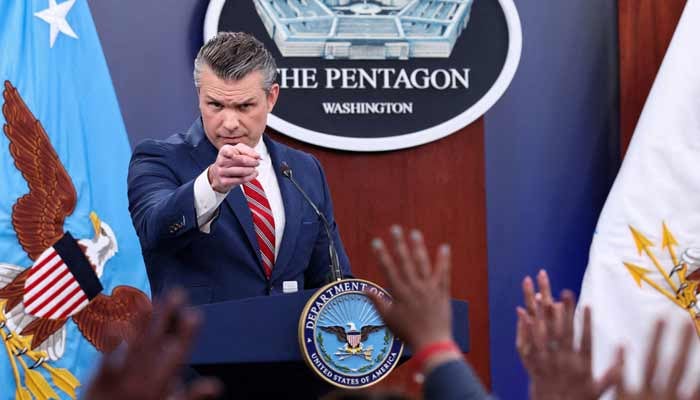
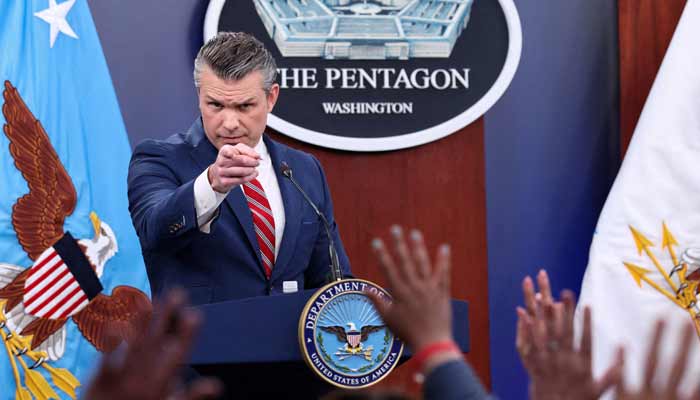
- US successfully secures path through Hormuz: Hegseth
- Pentagon chief says Iran “doesn’t” control Hormuz.
- Iran attacked US forces over 10 times: General Caine.
US Defense Secretary Pete Hegseth said on Tuesday that the ceasefire with Iran was not over, even as the US and Iran exchanged fire in the Gulf as they wrestled for control of the Strait of Hormuz.
Hegseth said the US had successfully secured a path through the critical waterway and that hundreds of commercial ships were lining up to pass through, as Washington seeks to break a chokehold Iran has asserted on the Strait of Hormuz since the conflict began on February 28.
“We know the Iranians are embarrassed by this fact. They said they control the strait. They do not,” Hegseth told a Pentagon news conference.
The US military says it sank six Iranian small boats and intercepted Iranian cruise missiles and drones, after President Donald Trump sent the navy to escort stranded tankers through the Strait of Hormuz in a campaign he called “Project Freedom.”
Several merchant ships in the Gulf reported explosions or fires on Monday, and an oil port in the United Arab Emirates, which hosts a large US military base, was set ablaze by Iranian missiles.
General Dan Caine, the chairman of the Joint Chiefs of Staff, said that since the ceasefire was announced on April 7, Iran had fired at commercial vessels nine times and seized two container ships.
He said Iran has attacked US forces more than 10 times.
However, the attacks fell “below the threshold of restarting major combat operations at this point,” Caine told reporters.
Asked whether the ceasefire with Iran still held, Hegseth said: “The ceasefire is not over.”
“We said we would defend and defend aggressively, and we absolutely have. Iran knows that, and ultimately, the president can make a decision whether anything were to escalate into a violation of a ceasefire,” he said.
The operation is Trump’s latest effort to force an end to the disruption of international energy supplies caused by Iran’s blockade of the strait, which carried a fifth of global oil and liquefied natural gas before the war.
The US Navy is also enforcing a maritime blockade of Iran, which prevents ships from going to Iran or departing Iranian territory.


Cotton price surge lifts yarn rates sharply in South India

Oil prices fall as Trump pauses Project Freedom to seek final peace deal with Iran

US’ Crocs’ Q1 strong on DTC growth; margins, EPS decline

A Brain Implant for Depression Is About to Be Tested in Humans

Pro wrestling star Steph De Lander reveals how colleague’s advice helped lead her to title triumph at ACW

‘I had £20,000 stolen and had to fight a 13-month fraud reporting rule to get it back’

-
 Tech1 week ago
A Brain Implant for Depression Is About to Be Tested in Humans
-
 Sports1 week ago
Pro wrestling star Steph De Lander reveals how colleague’s advice helped lead her to title triumph at ACW
-
Business1 week ago
‘I had £20,000 stolen and had to fight a 13-month fraud reporting rule to get it back’
-

 Entertainment1 week ago
Norway joins Type 26 Frigate Programme to boost NATO naval power
-

 Tech1 week ago
Are tech leaders risking a cyber resourcing crisis? | Computer Weekly
-

 Entertainment1 week ago
Melania Trump says ABC should ‘take a stand’ on late-night host Kimmel
-
 Business6 days ago
PSX plunges over 4,800 points | The Express Tribune
-
 Business1 week ago
Starmer says ‘tide could be turning’ on shoplifting epidemic