

Politics
US eases oil sanctions on Venezuela after reforms


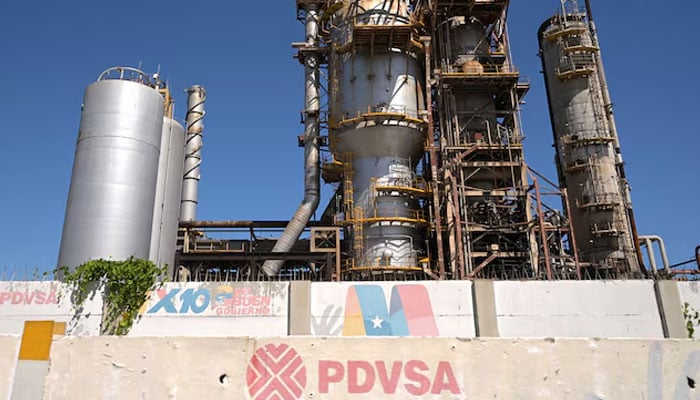
Caracas: The United States on Thursday eased sanctions on Venezuela’s oil industry, expanding the ability of US companies to operate in the country after the lifting of state controls on the sector.
Within an hour of Venezuelan MPs voting to open the oil industry to private investment, the US Treasury Department greenlit a range of activities by US energy companies.
The department issued a general licence allowing transactions relating to “the lifting, exportation, reexportation, sale, resale, supply, storage, marketing, purchase, delivery, or transportation of Venezuelan-origin oil.”
The activities authorised include the refining of oil, the licence said.
Venezuela’s acting president Delcy Rodriguez hailed the reform as a “historical leap.”
“We are taking important steps,” Rodriguez said after a call with US President Donald Trump.
For the future
Trump pressured Caracas to open up its oil fields to US investors after overthrowing his socialist arch-foe Nicolas Maduro in a deadly US bombing raid on Caracas on January 3.
The US president backed Maduro’s deputy Rodriguez to take over, on the proviso that she give Washington access to the world’s largest proven oil reserves.
Rodriguez has appeared eager to comply with his demands, arguing that an influx of foreign capital is needed to revive the battered Venezuelan economy.
The reform adopted Thursday paves the way for the return of US energy majors, two decades after socialist firebrand Hugo Chavez seized foreign oil fields.
It modifies a law dating to 2006 that forced foreign investors to form joint ventures with state oil company PDVSA, which insisted on a majority stake.
Jorge Rodriguez, head of parliament and brother of Venezuela’s new acting president, said the reform will help the country recover from years of living under US sanctions.
“Only good things will come after the suffering,” he said as he gavelled through the law “for history, for the future.”
Trump has said Washington is now “in charge” of Venezuela and Rodriguez will be “turning over” millions of barrels of oil to be sold at market price.
Rodriguez has already ploughed $300 million from a first US sale of Venezuelan crude into shoring up the country’s struggling currency, the bolivar.
Slow recovery
Venezuela sits on about a fifth of the world’s oil reserves.
It was once a major crude supplier to the US, and multiple American firms operated in the country until 2007, when Chavez led a new wave of nationalisations.
The industry is undergoing a slow recovery after being walloped by years of underinvestment, corruption, mismanagement and six years of US sanctions.
It reached production of 1.2 million barrels per day in 2025, a milestone compared to the 300,000 per day extracted in 2020, but far from the 3 million achieved at the start of the century.
Trump, who has lavished praise on Rodriguez, has been pressing oil executives to invest in Venezuela.
Exxon Mobil and ConocoPhillips exited in 2007 after refusing to cede majority control to the state.
Chevron is the only US firm still operating in Venezuela, under a special sanctions exemption.
The revised law offers greater guarantees to private players, relinquishes state control of exploration, and lowers taxes and royalties.
“This obviously completely dismantles Hugo Chavez’s oil model,” said oil analyst Francisco Monaldi, while pointing out that the state will retain some discretion over the issuing of contracts to private players.
New fields
The US Department of Energy has already unveiled a plan to develop Venezuela’s oil industry and begun marketing Venezuelan crude.
Rodriguez says the reform will bring money for “new fields, to fields where there has never been investment, and to fields where there is no infrastructure.”
The changes are cause for optimism for many in a country battling economic collapse and mass emigration.
“This hydrocarbons reform helps restore our dignity,” Karina Rodriguez, a worker at PDVSA, said at a recent rally.
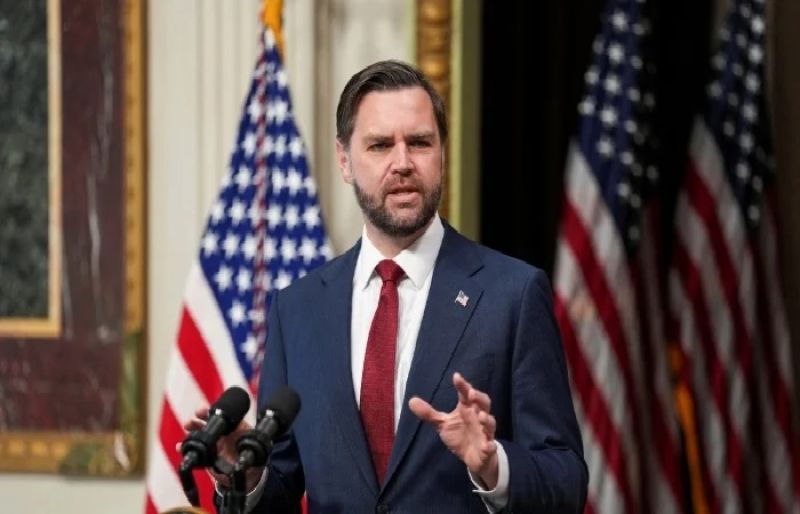
US Vice President JD Vance communicated with intermediaries from Pakistan about the Iran conflict as recently as Tuesday, a person briefed on the matter told Reuters, a sign of his expanding role in efforts to broker an end to the conflict.
At President Donald Trump’s direction, Vance signalled privately that Trump was open to a ceasefire as long as certain US demands were met, the source told Reuters on Wednesday.
Vance also delivered what the source described as a “stern message” that Trump was impatient, warning there would be growing pressure on Iranian infrastructure unless Tehran agreed to a deal.
Pakistan has been acting as an intermediary between the United States and Iran, the source said.
The more than a month-long war between the US, Israel and Iran began on February 28 and has plunged the Middle East into turmoil.
Soon after the initial strikes, Iran blocked the Strait of Hormuz — a key shipping route — and launched retaliatory attacks on Israel and US bases across the region.
The development comes at a time when Pakistan has stepped up its diplomatic push to help end the US-Israel war on Iran.
In this regard, Pakistan hosted key regional ministers — from Saudi Arabia, Turkiye, and Egypt — and relayed messages between Washington and Tehran.
On Tuesday, Pakistan and China also jointly urged the US, Israel, and Iran to stop the strikes and initiate “peace talks as soon as possible”.
The call came following a high-level meeting between Deputy Prime Minister and Foreign Minister Ishaq Dar and China’s Foreign Minister Wang Yi in Beijing.
The meeting’s five-point initiative for peace in the region included the call for an immediate end to hostilities, an urgent start to peace talks, security of non-military targets and shipping lanes, and the primacy of the United Nations Charter.
Vance has taken a greater role in trying to negotiate an end to the war, now in its fifth week. Widely viewed as a potential successor to Trump in the 2028 presidential election, Vance has taken a cautious approach on the conflict, reflecting his long-held skepticism of prolonged US military involvement overseas.
The source said the team that Trump has said are involved in negotiations — Vance, Secretary of State Marco Rubio, and US envoys Steve Witkoff and Jared Kushner — remain involved.
Trump has warned the US would attack Iranian infrastructure, but has delayed launching such attacks on Iran’s power grid until April 6 in hopes of reaching a deal with Tehran.
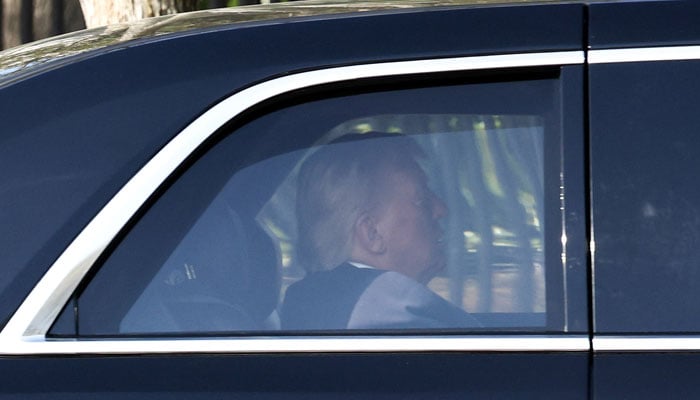
- Trump first president to attend Supreme Court arguments.
- Babies born in the US are recognised as American citizens.
- Trump’s policy targets children of certain immigrants.
With President Donald Trump present, US Supreme Court justices signalled scepticism on Wednesday toward the legality of his directive to restrict birthright citizenship in the US, part of his hardline immigration approach that would upend the long-held understanding of a key constitutional provision.
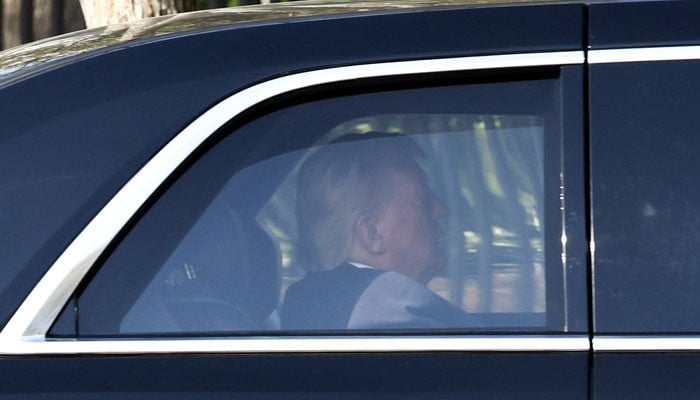
In his historic visit to the top US judicial body, Trump, wearing a red tie and dark suit, sat in the front row of the public gallery of the ornate courtroom after arriving by motorcade from the White House. The Republican president then left midway through the proceedings not long after the Justice Department lawyer arguing for his administration completed his presentation.
Most of the nine justices, conservatives and liberals alike, grilled the lawyer with questions about the legal validity of Trump’s executive order and its practical implications. The court has a 6-3 conservative majority.
The justices heard more than two hours of arguments in the administration’s appeal of a lower court’s decision that blocked his directive. Trump’s order had instructed US agencies not to recognise the citizenship of children born in the United States if neither parent is an American citizen or legal permanent resident, also called a “green card” holder.
Trump became the first sitting president to attend a Supreme Court oral argument, according to Clare Cushman, the Supreme Court Historical Society’s resident historian. Joined by White House Counsel David Warrington, Commerce Secretary Howard Lutnick and Attorney General Pamela Bondi, Trump was at the courthouse for a bit more than an hour and a half.
‘Priceless and profound gift’
US Solicitor General D John Sauer, representing the administration, told the justices that most nations do not grant automatic birthright citizenship.
“It demeans the priceless and profound gift of American citizenship,” Sauer said. “It operates as a powerful pull factor for illegal immigration and rewards illegal aliens who not only violate the immigration laws but also jump in front of those who follow the rules.”
The United States is among 33 countries with automatic birthright citizenship policies, according to the Pew Research Centre. Trump wrote on social media after the arguments that the United States is “STUPID” for having birthright citizenship.
The lower court found that Trump’s directive violated citizenship language in the US Constitution’s 14th Amendment as well as a federal law codifying birthright citizenship rights, acting in a class-action lawsuit by parents and children whose citizenship is threatened by the directive.
The 14th Amendment has long been interpreted as guaranteeing citizenship for babies born in the United States, with only narrow exceptions such as the children of foreign diplomats or members of an enemy occupying force.
The provision at issue, known as the Citizenship Clause, states: “All persons born or naturalised in the United States, and subject to the jurisdiction thereof, are citizens of the United States.”
The administration has asserted that the phrase “subject to the jurisdiction thereof” means that being born in the United States is not enough for citizenship, and excludes the babies of immigrants who are in the country illegally or whose presence is lawful but temporary, such as university students or those on work visas.
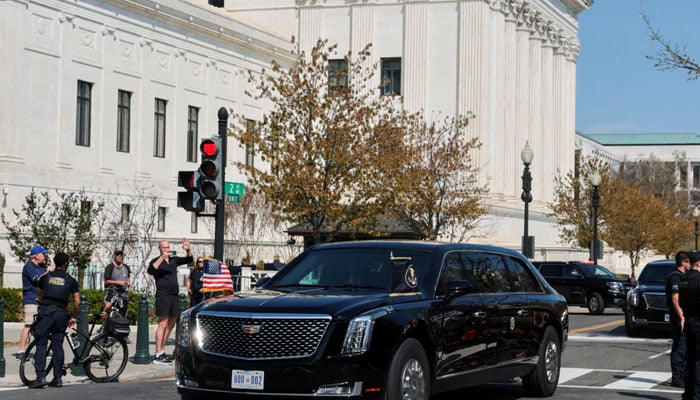
Conservative Chief Justice John Roberts told Sauer that his arguments limiting who qualifies for citizenship at birth seemed “quirky.”
Noting that historically the phrase “subject to the jurisdiction thereof” excluded the children of ambassadors or enemies during a hostile invasion, Roberts said Sauer is trying to expand those examples to everyone in the US illegally.
“I’m not quite sure how you can get to that big group from such tiny and sort of idiosyncratic examples,” Roberts said.
Roberts also challenged Sauer to provide evidence for the administration’s stated concern over “birth tourism,” by which foreigners travel to the United States to give birth and secure citizenship for their children.
“Do you have any information about how common that is or how significant a problem it is?” Roberts asked.
“No one knows for sure,” Sauer replied, while citing media reports of birth tourism companies abroad.
The 14th Amendment was ratified in 1868 in the aftermath of the Civil War of 1861-1865 that ended slavery in the United States, and overturned a notorious 1857 Supreme Court decision that had declared that people of African descent could never be US citizens.
Liberal Justice Elena Kagan said the administration’s interpretation of the 14th Amendment is not supported by the provision’s text.
“You’re using some pretty obscure sources to get to this concept,” Kagan told Sauer.
American Civil Liberties Union attorney Cecillia Wang, arguing for the challengers, told the justices Trump’s order was unlawful.
“Ask any American what our citizenship rule is and they will tell you, ‘Everyone born here is a citizen, alike,'” Wang said. “That rule was enshrined in the 14th Amendment to put it out of the reach of any government official to destroy.”
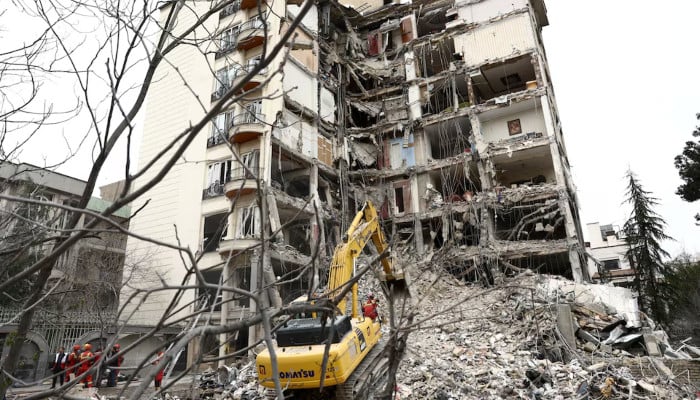
For Tehran resident Fatemeh, the highlight of her day in a city beset by deadly daily US-Israeli strikes in the now month-long war is to make the short journey to her local cafe.
“When I make it to a cafe table, even for a few minutes, I can almost believe the world hasn’t ended,” said the 27-year-old dental assistant.
“It feels like stepping out of this damn war and into an ordinary day, or at least imagining a world that isn’t filled with the constant fear of losing your life, or where you stay alive but lose a loved one or everything you have,” she told AFP.
If a lull in the bombing allows a better night’s sleep, Fatemeh said she will put on make-up and dress up to make her visit to the cafe extra special.
“And then I go back home, back to the reality of living through war, with all its darkness and weight,” she said.
Residents of Tehran who spoke to AFP’s team covering the war in Paris painted a picture of a city that is still clinging to some routine, with cafes and restaurants open, no shortages reported in supermarkets or petrol stations, and people trying to keep up some vestige of a social life.
But they know that life is anything but normal with the US and Israel maintaining a relentless pace of bombardment on the capital since the war started on February 28 with the martyrdom of Supreme Leader Ayatollah Ali Khamenei and other top officials.
There are security checkpoints on what were peaceful streets, the internet has been blocked or drastically slowed for everything except domestic services, and windows are taped up to prevent them shattering in case of attack.
As well as fear of being killed or losing a loved one in an attack, people are gripped by anxiety over the future, over what kind of country they will live in and how they will make ends meet amid a collapsing economy.
The people who agreed to share messages with AFP gave only their first names for fear of the consequences were they to be identified by authorities.
‘Only thing left’
“These days, I mostly stay at home and only go out if I absolutely have to. The only thing left from my life routine before the war that helps me keep my spirit up is cooking,” said Shahrzad, 39.
But she added: “Sometimes I find myself crying in the middle of it. I miss ordinary days… A life where I didn’t have to constantly think about explosions, death, or losing my loved ones.
“I try to stay strong for my daughter… But when I think about the future, I can’t form any clear picture in my mind that I can hold on to with hope.”
People in Tehran have, over the last week, been trying to make the best they can out of the main traditional Persian holiday of Nowruz, a festival that normally sees people leave the city or celebrate at home with family.
“There is no famine, everything is available. Cafes are open, and we still go out to cafes,” said Shayan, 40, a photographer. “There is gasoline, water and electricity.”
“But there is a sense of helplessness in all of us. We don’t know what to do, and there’s really nothing we can do.
“There was no real Nowruz atmosphere at all, but we tried to force ourselves,” he said.
While shops and restaurants are open until 9pm, “many people don’t go out after the afternoon”, he added.
‘I miss a peaceful night’s sleep’
Elnaz, 32, a Tehran-based painter, said when attacks did relent and she had time to think, she remembered how much she missed “living a simple life”.
“We miss the simplest things, going out at night, or just being able to go to another part of the city.
“I miss something as ordinary as shopping somewhere other than the small grocery store or bakery on my street.
“I miss reading in a cafe, going to the park… all those very, very simple things.”
She added: “And more than anything, I miss a peaceful night’s sleep.”
Elnaz said that on some nights the attacks are so intense it feels like “all of Tehran is shaking”.
“Everything goes back to one state — survival. Thinking only about staying alive with all the people I love. My friends, my family, and the people of my city, who look kinder than ever in this difficult time,” she said.
Kaveh, 38, a visual artist, said a piece of a missile struck about 50 metres from his house a few days ago.
“I brought it home with me. I want to make something out of it when I get the chance,” he said, recalling that dust was falling from the sky and several windows were shattered immediately.
He described how, at night in some areas, groups of people who back the clerical system drive around, honking and gathering, “while just a few streets away, there are checkpoints where cars and phones of normal people are being searched”.
“If you have something to do in the city, you’ll likely pass through multiple checkpoints in a single day — each run by different groups. Cars are searched, phones are checked, and months of accumulated frustration are taken out on people at these checkpoints.
“These are just parts of our daily reality under these circumstances,” he said.
The morose atmosphere, residents say, has been compounded by unseasonably rainy weather that contrasts with the spring sunshine people are used to enjoying at Nowruz.
Portraits of children killed in attacks are displayed in squares, while giant flags of the Islamic Republic cover buildings that have been reduced to ruins.
“In the end, for many people, the most important concern is the future of Iran and its people, and what might actually improve the situation,” said Kaveh.


Artemis II crew member had heartbreaking talk with daughters before launch

Samsung’s Best OLED From Last Year Is Priced as Low as I’ve Seen It on Amazon

US VP Vance tells Pakistani intermediaries Trump open to ceasefire: source

-

 Politics1 week ago
Afghanistan announces release of detained US citizen
-

 Sports1 week ago
Broadcast industry CEO says consolidation is ‘essential’ to compete for NFL soaring media rights prices
-

 Entertainment1 week ago
UN warns migratory freshwater fish numbers are spiralling
-

 Tech1 week ago
Can a Home Appliance Fix the Problem of Soft-Plastic Waste?
-
 Business1 week ago
Property Play: Home flippers see smallest profits since the Great Recession, real estate data firm says
-
 Business1 week ago
Gold prices soar in Pakistan – SUCH TV
-

 Fashion1 week ago
ICE cotton slips on weaker crude, profit booking
-
 Business1 week ago
More women are entering wealth management, but few are in advisory roles, study finds