

Business
US ignites Iran war, but Gulf Arab states pay the price | The Express Tribune

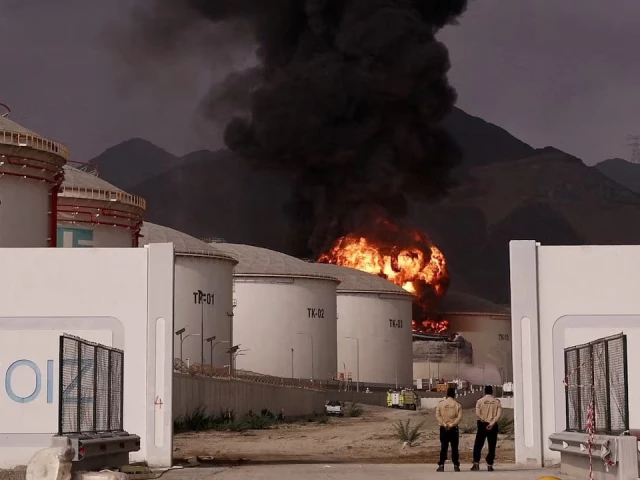
Resentment mounts in Gulf states as Iran strikes hit key infrastructure, causing economic and military strain: sources
Fire and smoke rise in the Fujairah oil industry zone, caused by debris after interception of a drone by air defences amid the US-Israel conflict with Iran, in Fujairah, United Arab Emirates on March 4, 2026. PHOTO: REUTERS
The US may have pulled the trigger on the Iran war, but it is the oil-producing Gulf that will pay the price, Gulf sources and analysts say, signalling unease in ties between a region under Iranian attack and the superpower it relies on for protection.
Behind the scenes, resentment is mounting in Gulf Arab capitals at being drawn into a war they neither initiated nor endorsed but are now paying for economically and militarily, with airports, hotels, ports and military and oil installations hit by Iranian strikes, said three regional sources, who declined to be identified as they were not authorised to speak publicly.
“It is not our war. We did not want this conflict, yet we are paying the price in our security and our economy,” Ebtesam Al-Ketbi, President of the Emirates Policy Center, told Reuters.
That doesn’t mean Iran is “innocent”, she said. Gulf governments had assured Tehran they would not allow their territories or airspace to be used by Washington in the war. Yet Iran has unleashed waves of drone and missile strikes across the region despite those assurances, denting business confidence in the process.
‘Injured lion’ post-war scenario is another Gulf worry
While disquiet about US President Donald Trump is growing over a conflict many believe he launched without consultation, some regional sources argue that having started the war, Washington should now see it through to eliminate what they see as a persistent Iranian threat on their doorstep.
“If America leaves the war now without achieving victory, it will be like abandoning an injured lion,” Ketbi said. “Iran will remain a threat to the region, capable of striking again. And if the regime collapses, leaving a power vacuum, neighbouring states will suffer the consequences.”
Asked for comment, the White House said US and Israeli strikes had reduced Iran’s retaliatory missile attacks by 90 per cent, “crushing their ability to shoot these weapons or produce more”.
White House spokeswoman Anna Kelly added that Trump was in close contact with Middle East partners and that Iran’s attacks on its neighbors underscore why the threat had to be eliminated.
There was no immediate response from Gulf states to requests for comment.
Iran’s Supreme Leader, Ayatollah Ali Khamenei, was killed on the first day of the war. Tehran responded by hitting Israel and Gulf states hosting US military installations, effectively halting oil and gas shipments through the Strait of Hormuz — a conduit for roughly a fifth of the world’s petroleum and LNG.
Across the region, airspace closures have resulted in airlines cancelling some 40,000 flights, the largest disruption to global air travel since the Covid-19 pandemic. Gulf tourism meanwhile is also taking a hit, putting at risk the region’s carefully crafted image as a safe and high-end vacation hotspot.
Gulf states project resolve, reassess security
Amid the turmoil, Gulf states have sought to project calm and resolve. The president of the United Arab Emirates, Sheikh Mohammed bin Zayed Al Nahyan, said on Friday his nation was in a time of war but was well and told his enemies it was no easy prey, in his first public comments since Iran fired missiles at the UAE.
At the same time, analysts say the war has left Gulf states reassessing both their security dependence on Washington and the prospect of eventually engaging Tehran on new regional security arrangements — even as trust in Iran has collapsed.
For decades, relations between Washington and the Gulf states rested on an implicit trade-off: Gulf energy and capital — including hundreds of billions of dollars spent on US arms, advanced technology and goods and services — in return for US protection, said Fawaz Gerges of the London School of Economics.
Gerges said the war had shaken those assumptions. Now, he said, Gulf states would accelerate efforts to diversify their foreign and security partnerships, realising “they cannot really rely on the United States to protect their energy, oil, gas, their people and their sovereignty.”
The Gulf’s latest misgivings about Washington echo disquiet felt in Saudi Arabia at the US failure to retaliate against Iran after drone and missile attack in 2019 on the kingdom’s Abqaiq and Khurais oil facilities. Washington and Riyadh blamed the attacks on Tehran, which denied responsibility.
Abdulaziz Sager, Chairman of the Saudi-based Gulf Research Center, said Washington had failed to prepare safeguards for its regional allies or ensure oil and gas flows during wartime, saying the cost on the Gulf states’ economies is “horrendous”.
Businessman decries ‘dragging the Gulf into a conflict’
Sager said the war had demonstrated the limits of relying solely on external security guarantees, particularly from the United States, adding that Gulf countries need to strengthen their own defense capabilities and prepare for future crises.
“External powers also tend to make decisions based on their own strategic interests rather than those of the Gulf. As a result, Gulf states will likely pursue a more cautious and balanced approach in their relations with both Iran and major international partners,” added Sager.
In a rare public rebuke, prominent Emirati businessman Khalaf Al Habtoor questioned the objectives of the US-Israeli war on Iran.
“If the strikes were aimed at containing Iran, did they take into account the regional consequences — or was the cost of dragging the Gulf into a conflict it was not party to simply ignored?” said Al Habtoor, founder of the Al Habtoor Group.
Saudi Aramco CEO Amin Nasser warned on Tuesday that continued disruption to shipping through Hormuz would have “catastrophic consequences” for oil markets.
Iran’s Revolutionary Guards, however, said they would not allow “one litre of oil” to be shipped from the Middle East if US and Israeli attacks continued. Trump has warned Washington would strike Iran harder if it blocked oil exports.
Sources close to Gulf Arab government circles say frustration with Trump privately runs deep across the region. Many believe he dragged the Gulf into a war shaped heavily by Israel, without sharing a plan and acting hastily and without fully weighing the political and economic fallout for allies.
One Gulf source familiar with US policymaking said key decisions were crafted by a small inner circle around Trump operating largely outside traditional US policy channels. “They are businessmen and dealmakers, not career policymakers,” the source said, adding this approach left Gulf partners exposed to the consequences of this circle’s decisions.
Last Updated:
HOCL said the disruption stems from a Government of India directive requiring public sector oil companies to channel LPG supplies exclusively toward domestic consumers.




HOCL cautioned that a prolonged LPG shortage could result in significant production losses.
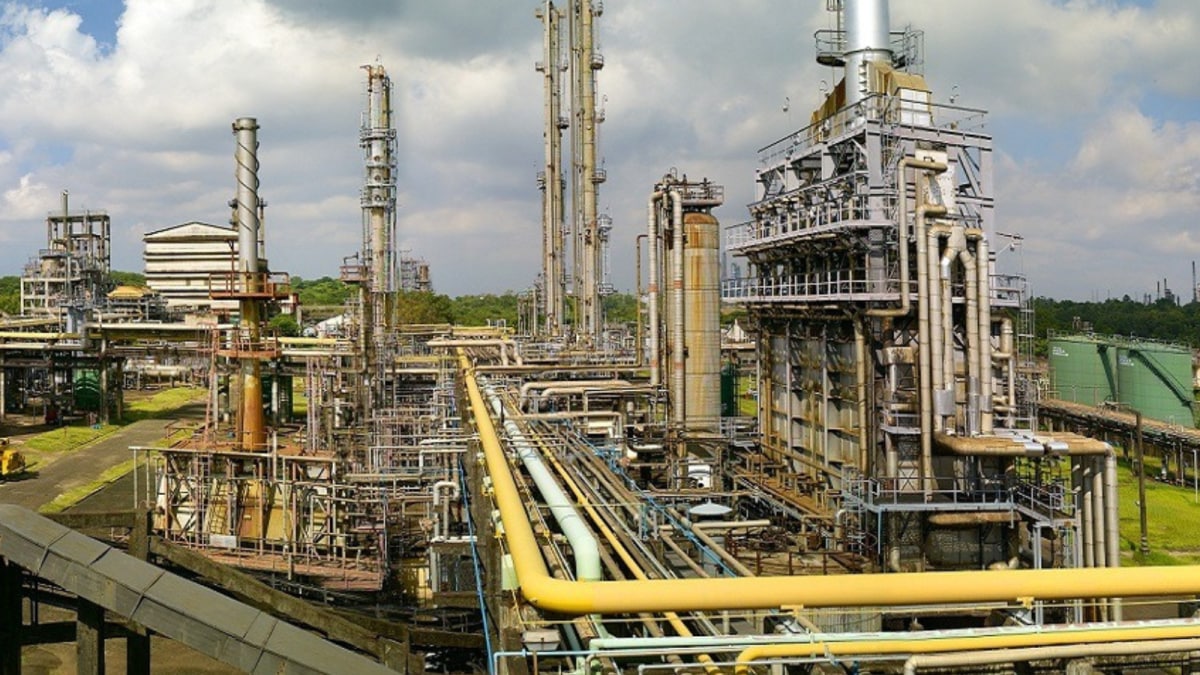
Hindustan Organic Chemicals Ltd (HOCL) said it has been forced to reduce production at its Kochi manufacturing facility after a disruption in bulk liquefied petroleum gas supply from Bharat Petroleum Corporation Ltd (BPCL)- the latest industrial casualty of a government directive prioritising domestic LPG consumers amid tightening supply conditions.
Read more: Gas Stations Shut In Bengaluru, 75% Drop In Hyderabad: How Cities Are Coping With LPG Crisis Today
In a regulatory filing, HOCL said the disruption stems from a Government of India directive requiring public sector oil companies to channel LPG supplies exclusively toward domestic consumers. Acting on the directive, BPCL- which supplies bulk LPG to HOCL under an existing agreement- informed the chemical manufacturer that a force majeure event had occurred, effectively suspending its supply obligations.
Read more: ‘Massacre Of Girls’: Italian PM Meloni Condemns Deadly Iran School Strike
Buffer Stock Running Out
HOCL warned that its LPG buffer stock at the Kochi facility- its sole manufacturing unit- would be exhausted by Monday evening. In response, the company has already reduced the production load at its Phenol and Cumene plants and said it would temporarily shut down its PRU unit the same day. If supplies do not resume, other downstream units are expected to follow within two days. The Kochi plant manufactures phenol, acetone and hydrogen peroxide. The company said its hydrogen peroxide plant would continue to operate normally despite the supply disruption.
Read more: ‘Don’t Panic, Don’t Hoard’: Centre To Ensure 100% Domestic LPG Supply Amid West Asia Crisis
Warning Of Cascading Costs
HOCL cautioned that a prolonged LPG shortage could result in significant production losses, as well as additional costs associated with safely shutting down and subsequently restarting plant operations- expenses that could weigh on the company’s financials if the situation is not resolved quickly.
Delhi, India, India
March 11, 2026, 18:21 IST
Read More
Business
Govt says crude oil supplies secure, LPG distribution prioritised for households – The Times of India
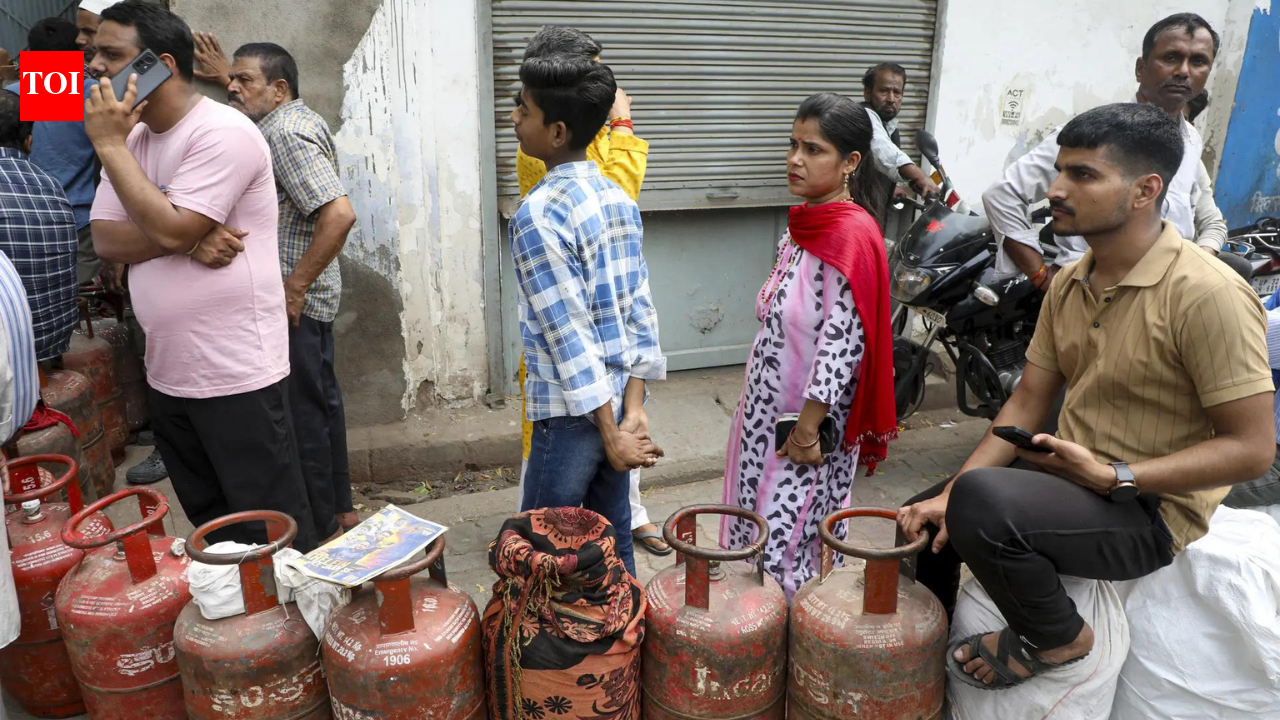
The government on Wednesday said India’s crude oil supplies remain secure and urged consumers not to panic over LPG availability, noting that steps have been taken to ensure fair distribution amid geopolitical disruptions.Sujata Sharma, Joint Secretary (Marketing & Oil Refinery) in the Ministry of Petroleum and Natural Gas, said domestic LPG supplies are currently being prioritised, ANI quoted . “Currently, LPG is being directed to the domestic sector. For non-domestic LPG, priority is being given to essential sectors such as hospitals and educational institutions. The committee is consulting with state authorities and industry bodies to finalise the plan to ensure that available LPG is distributed fairly and transparently,” she said.“Our gas companies have procured LNG cargos from new sources. Two LNG cargos are on their way to India,” Sujata Sharma added.The ministry oficial also said there is no need for panic booking of LPG cylinders as the normal delivery cycle for domestic households remains about 2.5 days. It added that government measures have resulted in a 25 per cent increase in LPG production.Officials further noted that crude oil is being sourced through routes other than the Strait of Hormuz, and overall supplies are now more secure than the volumes that were earlier disrupted, according to the ministry.
Business
8th Pay Commission: How Much Will Central Govt Employees’ Salaries Rise? What We Know So Far

Last Updated:
The government has begun consultations for the 8th CPC to review salaries, pensions, and allowances for central employees and retirees. Suggestions are open until April 30.
8th Pay Commission.
8th Pay Commission: The government has started the consultation process for the 8th Central Pay Commission, which will review salaries, pensions and allowances for millions of central government employees and retirees.
The Ministry of Finance has invited suggestions from employees, pensioners, staff unions and other stakeholders as part of the exercise. Inputs can be submitted through an online portal until April 30, 2026.
The Terms of Reference for the commission were notified on November 3, 2025, and the panel has been given 18 months to submit its recommendations. Once the report is submitted and approved by the government, it could lead to a revision in pay structures and pension benefits.
The proposed revision is expected to affect around 50 lakh central government employees and nearly 69 lakh pensioners.
What Is The 8th Pay Commission?
Pay commissions are constituted periodically by the government to review the salary structure of central government employees and recommend changes based on inflation, economic conditions and fiscal capacity.
India’s first pay commission was set up in 1946, and since then seven such panels have revised pay and allowances.
Under the 7th Pay Commission, implemented in 2016, the minimum basic salary of central government employees was increased to Rs 18,000 per month, while the maximum basic salary was fixed at Rs 2.5 lakh.
How Salaries Have Changed Over Time
Each pay commission has significantly revised government salaries over the decades.
The 1st Pay Commission (1946-47) fixed the minimum basic salary at Rs 55, while the maximum salary was Rs 2,000.
The 2nd Pay Commission (1957-59) raised the minimum salary to Rs 80, with the maximum reaching Rs 3,000.
The 3rd Pay Commission (1972-73) increased the minimum pay to Rs 196, while the maximum salary was set at Rs 3,500.
The 4th Pay Commission (1986) raised the minimum basic salary to Rs 750 and the maximum to Rs 8,000.
Under the 5th Pay Commission (1996), the minimum salary increased to Rs 2,550, while the maximum rose to Rs 26,000.
The 6th Pay Commission (2006) pushed the minimum basic pay to Rs 7,000, with the maximum salary reaching Rs 80,000.
Finally, the 7th Pay Commission (2016) raised the minimum basic salary to Rs 18,000 and the maximum basic pay to Rs 2.5 lakh.
Will Minimum Salary Rise To Rs 46,000?
There has been speculation that the minimum basic salary could rise significantly under the 8th Pay Commission, depending on the fitment factor used to revise pay.
Some estimates suggest that if the fitment factor is set at a higher level, the minimum basic salary could increase substantially from the current Rs 18,000, potentially crossing Rs 40,000.
However, government officials have clarified that no final decision has been taken on the revised pay levels.
Long Process Before Pay Hike
The government has also said that financial provisions for implementing the new pay structure will only be made after the commission submits its report and the recommendations are approved.
For now, the consultation phase marks the first step in what is expected to be a lengthy process before any changes in salaries or pensions are implemented.
March 11, 2026, 16:34 IST
Read More


Stats behind Spurs GK Kinsky’s shocking early sub off vs. Atlético

Meta Developed 4 New Chips to Power Its AI and Recommendation Systems

Eid ul Fitr 2026 in Pakistan likely to fall on March 21: Suparco

-

 Sports5 days ago
Pakistan set for FIH Pro League debut | The Express Tribune
-
 Politics4 days ago
India let Iran warship dock the day US sank another off Sri Lanka, say officials
-

 Entertainment4 days ago
Harry Styles kicks off new era with ‘One Night Only’ comeback show
-
 Business4 days ago
Restaurant group changes name after bid to buys pubs across the UK
-
 Business5 days ago
Home heating oil: ‘Most of my pension has gone on home heating oil’
-

 Sports5 days ago
Winners and losers of the 2026 NHL trade deadline
-

 Entertainment4 days ago
Kanye ‘Ye’ West trips during trial: ‘Is he asleep?’
-

 Tech7 days ago
Google’s Pixel 10a May Not Be Exciting, but It’s Still an Unbeatable Value