

Politics
US military studying ‘very strong options’ for Iran: Trump

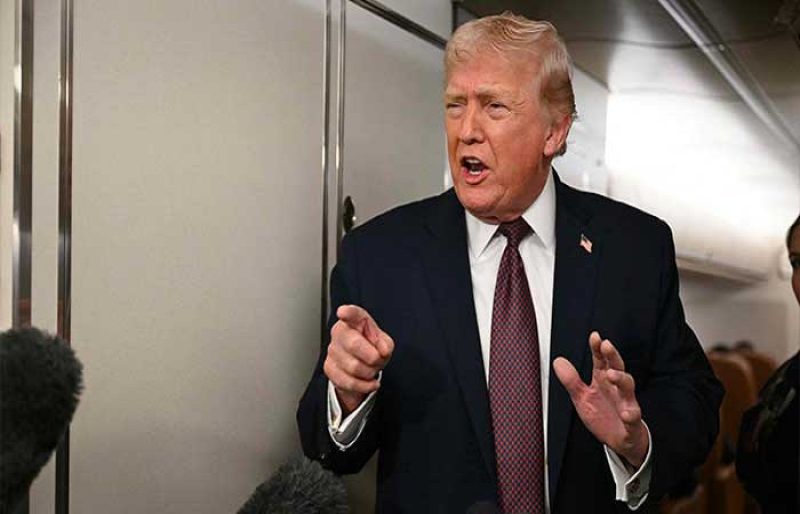

US President Donald Trump said on Sunday he was considering potential military action against Iran, amid mounting mass anti-government protests in the country.
“They’re starting to, it looks like,” Trump said, when asked by reporters aboard Air Force One if Iran had crossed his previously stated red line of protesters being killed.
“We’re looking at it very seriously. The military is looking at it, and we’re looking at some very strong options. We’ll make a determination,” he said.
He also said that Iran’s leadership had called seeking “to negotiate” after his threats of military action.
“The leaders of Iran called” yesterday, Trump said, adding that “a meeting is being set up… They want to negotiate.”
However, Trump added that “we may have to act before a meeting.”
Trump to meet senior advisers
Trump was to meet with senior advisers on Tuesday to discuss options for Iran, a US official told Reuters on Sunday.
The Wall Street Journal had reported that options included military strikes, using secret cyber weapons, widening sanctions and providing online help to anti-government sources.
Earlier, Iranian Parliament Speaker Mohammad Baqer Qalibaf warned Washington against “a miscalculation.”
“Let us be clear: in the case of an attack on Iran, the occupied territories (Israel) as well as all US bases and ships will be our legitimate target,” said Qalibaf, a former commander in Iran’s elite Revolutionary Guards.
Iranian president calls for ‘national resistance march’
The Iranian government declared three days of national mourning for “martyrs” including members of the security forces killed in two weeks of protests, state television reported on Sunday.
The government described the fight against what it has termed “riots” as an “Iranian national resistance battle against America and the Zionist regime”, using the clerical leadership’s term for Israel, which the Islamic republic does not recognise.
President Masoud Pezeshkian urged people to take part in a “national resistance march” of nationwide rallies on Monday to denounce the violence, which the government said was committed by “urban terrorist criminals”, state television reported.
Protests have swelled in recent days despite an internet blackout that has lasted more than 72 hours, according to monitor Netblocks.
Activists have warned that the shutdown is limiting the flow of information and that the actual toll risks being far higher.
Meanwhile, unrest in Iran has killed more than 500 people, a rights group said on Sunday
According to its latest figures – from activists inside and outside Iran-US-based rights group HRANA said it had verified the deaths of 490 protesters and 48 security personnel, with more than 10,600 people arrested in two weeks of unrest.
Iran has not given an official toll and Reuters was unable to independently verify the tallies.
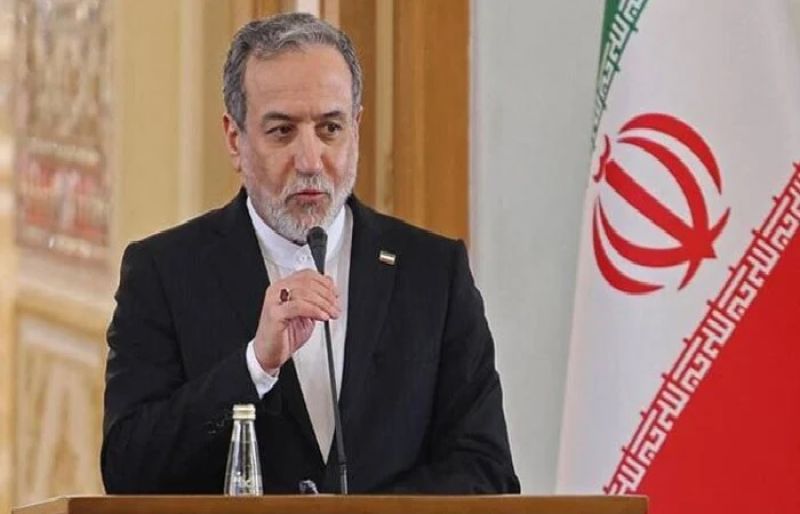

Iranian Foreign Minister Abbas Araghchi has blasted Washington’s reaction to President Masoud Pezeshkian’s extension of the hand of friendship to neighbors, saying that the gesture was almost immediately killed by US President Donald Trump.
“President Pezeshkian’s openness to de-escalation within our region — provided that our neighbors’ airspace, territory, and waters are not used to attack the Iranian People — was almost immediately killed by President Trump’s misinterpretation of our capabilities, determination and intent,” Araghchi wrote in a post published on his X account on Sunday.
He added that “If Mr. Trump seeks escalation, this is precisely what our Powerful Armed Forces have long been prepared for, and what he will get.”
Araghchi noted that responsibility for any intensification of Iran’s exercise of self-defense will lie squarely with the US administration.
The top Iranian diplomat highlighted that Trump’s week-long misadventure has already cost the US military $100 billion, in addition to the lives of young soldiers.
“When markets reopen, that cost will balloon, and directly be transferred to ordinary Americans at pumping stations,” he said.
Araghchi emphasized that Trump’s own National Intelligence Council, representing input from the 18 intelligence agencies of the US, determined that war on Iran is destined to fail.
The Iranian foreign minister went on to state that he had warned Trump’s envoys that war won’t improve Washington’s bargaining position, wondering whether such warnings were conveyed.
“The American People voted to end involvement in costly quagmires in the Middle East. Instead, they have ended up with an Administration that Netanyahu, after decades of failed attempts, finally managed to dupe into fighting Israel’s wars,” he said.
Araghchi finally described the ongoing US-Israeli aggression against Iran as “a war of choice pursued by a small cabal of ‘Israel Fighters,’ and ‘Israel First’ always means ‘America Last’.
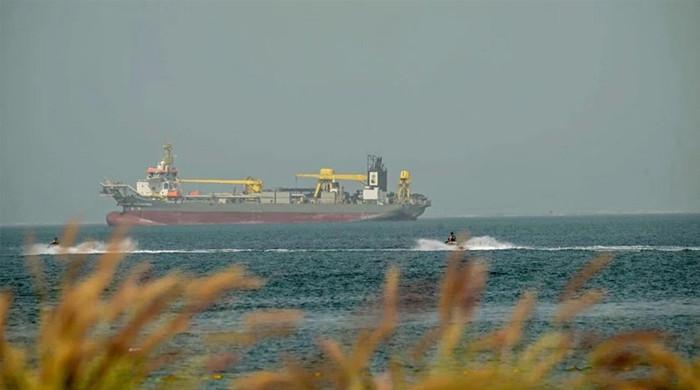
The global positioning system (GPS) capabilities of cargo ships, oil tankers and other vessels stuck in the Middle East because of the widening war are likely worse than those in your cell phone.
Experts say this deficiency explains why since the start of US-Israeli strikes, the jamming of satellite navigation signals has left about 1,000 ships in the Gulf and the Gulf of Oman unable to determine their location, either momentarily or continuously.
Dimitris Ampatzidis, a senior risk and compliance analyst for the energy market intelligence firm Kpler, told AFP the number represents about half of the vessels in the area.
The vast majority of those ships are located off the United Arab Emirates and Oman.
A satellite navigation system is made up of a constellation of satellites that send signals with the time to Earth, allowing the receiver to determine its precise location.
Modern smartphones receive signals from four groups of satellites: the American, European (Galileo), Russian (GLONASS) and Chinese (BeiDou) Global Navigation Satellite Systems (GNSS).
Most cell phones now use two GPS frequency bands — one that is older and fainter, and a second that is newer and stronger.
But “many ships only listen to the original civilian GPS signal, which is called the L1 C/A signal. It’s the one that’s been around since the early 1990s for civilian use,” Todd Humphreys, an engineering professor at the University of Texas at Austin, told AFP.
Most ships are thus unable to rely on the BeiDou or Galileo systems in the event that a GPS is jammed.
The situation is even worse for airplanes, due to aviation regulations.
“You will not find any aircraft flying in the world today whose built-in GPS receiver is capable of tracking and interpreting signals other than the GPS L1 C/A. So it´s out of date by 15 years,” Humphreys said.
Spoofing
Jamming a GPS signal is “not that complicated,” said Katherine Dunn, the author of an upcoming book of the history of GPS, “Little Blue Dot.”
All one needs is “another radio transmitter that can broadcast on the same frequency, but louder,” she said, which creates “a wall of mush.”
Spoofing is more sophisticated — and more dangerous, affecting a ship’s Automatic Identification System, or AIS.
Every vessel transmits a message per second over a universal radio frequency that announces its identity, destination and position.
Spoofing manipulates that system, causing the affected ship to send a fake, or even nonsensical, location — meaning that ships could appear to be on land in Iran or the Emirates.
Clocks
Today, GPS signals are not just used to determine location; they also power onboard clocks, radar systems and speed logs, Dunn said.
So even if the ships off the Emirates or Kuwait were protected from drone fire and escorted through the Strait of Hormuz, navigating without a GPS would be perilous.
“Given the size of the ships, electronic assistance has become necessary to steer them,” said one merchant marine captain who has sailed on cargo ships around the world.
Crews must “resort to using 20th-century instruments — radar or visible landmarks,” he told AFP on condition of anonymity.
Defensive jamming
Signal jamming is undoubtedly being used both offensively and defensively. Gulf states are directing their systems towards their own shores to ward off Iran’s satellite-guided Shahed drones — at the cost, deemed acceptable, of disrupting their own lives.
Israel did the same thing in 2024, as did Iran after its 12 days of conflict with Israel last year.
“Even if their own air traffic or maritime traffic or their delivery drivers or their dating apps are affected by GPS jamming and spoofing, they’ll do it, just like Israel did. Israel did it for a year in 2024,” Humphreys said.
For air and sea navigation, start-ups are developing alternative technologies using Earth’s magnetic field or inertial navigation.
But for ships today, navigating without a GPS is still far in the future.
- Iran was warned of possible retaliation, sources say.
- Saudi foreign minister spoke to Iranian counterpart.
- Iran’s president apologises to Gulf states for ‘actions’.
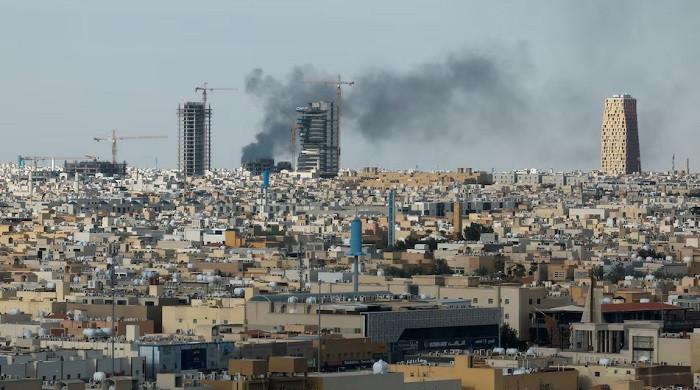
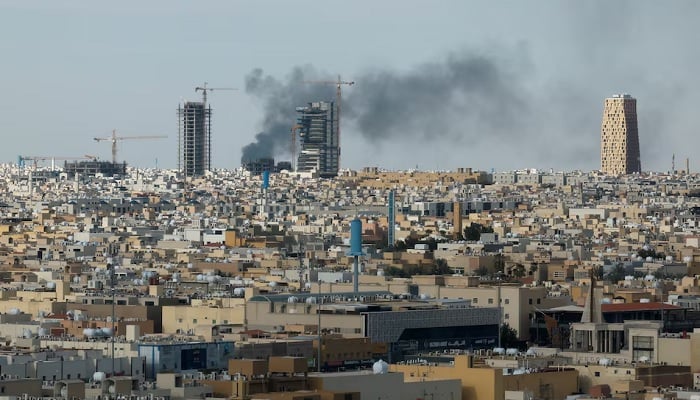
Saudi Arabia has told Tehran that while it favours a diplomatic settlement to Iran’s conflict with the United States, continued attacks on the kingdom and its energy sector could push Riyadh to respond in kind, four sources familiar with the matter told Reuters.
The message was conveyed before a speech on Saturday in which Iranian President Masoud Pezeshkian apologised to neighbouring Gulf states for Tehran’s actions — an apparent attempt to defuse regional anger over Iranian strikes that hit civilian targets.
Two days earlier, Saudi Foreign Minister Prince Faisal bin Farhan spoke to Iranian Foreign Minister Abbas Araqchi and set out Riyadh’s position with clarity, the sources said.
Saudi Arabia is open to any form of mediation aimed at de‑escalation and a negotiated settlement, the sources quoted the minister as saying, underlining that neither Riyadh nor other Gulf states had let the US use their airspace or territory to launch airstrikes on Iran.
But Prince Faisal was also quoted by the sources as saying that if Iranian attacks persisted against Saudi territory or energy infrastructure, Saudi Arabia would be forced to permit US forces to use their bases there for military operations. Riyadh would retaliate if attacks on the kingdom’s critical energy facilities continued, he said.
The sources said the kingdom had remained in regular contact with Tehran through its ambassador since the US and Israeli military campaign against Iran began on February 28, following the collapse of talks on Iran’s nuclear programme.
The Saudi and Iranian foreign ministries did not respond to requests for comment.
Drone, missile attacks on Gulf States
The United Arab Emirates, Kuwait, Qatar, Bahrain and Saudi Arabia have all come under heavy drone and missile fire from Iran over the past week.
Iran’s Supreme Leader, Ayatollah Ali Khamenei, was killed on the first day of the war. Tehran responded by hitting Israel and Gulf Arab states hosting US military installations, and Israel has attacked Lebanon’s Iran-backed Hezbollah armed group.
Araqchi said in an interview on Saturday that he remained in constant contact with his Saudi counterpart and other Saudi officials, adding that Riyadh had assured Tehran it was fully committed to not allowing its territory, waters or airspace to be used for attacks against Iran.
Pezeshkian said Iran’s temporary leadership council had approved suspending attacks on nearby countries – unless an attack on Iran came from those nations.
“I personally apologise to neighbouring countries that were affected by Iran’s actions,” he said.
To what extent Pezeshkian’s remarks signal a change is unclear. There were further reports of strikes directed at Gulf states on Saturday.
Also, in a sign of possible divisions within Iran’s leadership, Khatam al-Anbiya Central Headquarters – the unified combatant command of the Iranian armed forces – said in a statement afterwards that US and Israeli bases and interests across the region would remain targets.
The command said Iran’s armed forces respected the sovereignty and interests of neighbouring states and had not taken action against them so far. But it said US and Israeli military bases and assets on land, at sea and in the air across the region would be treated as primary targets and face “powerful and heavy” strikes by Iran’s forces.
US President Donald Trump said in a social media post that Iran had “apologised and surrendered to its Middle East neighbours, and promised that it will not shoot at them anymore. This promise was only made because of the relentless US and Israeli attack.”
Two Iranian sources confirmed that a call had taken place in which Riyadh warned Tehran to halt attacks on Saudi Arabia and neighbouring Gulf states. Iran, they said, reiterated its position that the strikes were not aimed at Gulf countries themselves but at US interests and military bases hosted on their territory.
One Iranian source said that Tehran had, in response, demanded that US bases in the region be closed and that some Gulf states stop sharing intelligence with Washington that Iran believes is being used to carry out attacks against it.
Another Iranian source said some military commanders were pressing to continue the strikes, accusing the US of using bases in Gulf states and these countries’ airspace to conduct operations against Iran.
Iran had in recent years mended fences with its Gulf neighbours, including former regional arch-rival Saudi Arabia. The diplomatic campaign imploded in the blitz of drones and missiles launched by Iran’s Revolutionary Guards in the past week.


President Pezeshkian’s gesture to neighbors immediately killed by Trump: Iran FM

Christian Bale makes shocking confession about Jacob Elordi’s ‘Frankenstein’

UFC 326 takeaways: Is this the end of the BMF title?

-

 Sports1 week ago
LPGA legend shares her feelings about US women’s Olympic wins: ‘Gets me really emotional’
-

 Fashion1 week ago
South Korea’s Misto Holdings completes planned leadership transition
-

 Entertainment1 week ago
Pakistan’s semi-final qualification scenario after England defeat New Zealand
-

 Entertainment1 week ago
Bobby J. Brown, “The Wire” and “Law & Order: SUV” actor, dies of smoke inhalation after reported fire
-
 Business1 week ago
Greggs to reveal trading amid pressure from cost of living and weight loss drugs
-
 Business1 week ago
CNBC To Merge TV And Digital News Operations, Nearly A Dozen Jobs To Be Cut: Report
-

 Entertainment1 week ago
What’s new in Pokémon? Every game, update, surprise from 30th anniversary event
-

 Fashion1 week ago
Italy’s Moncler FY25 revenue reaches $3.69 bn with resilient margins