

Politics
US mulls new Russia sanctions, urges Europe to ramp up pressure over Ukraine war

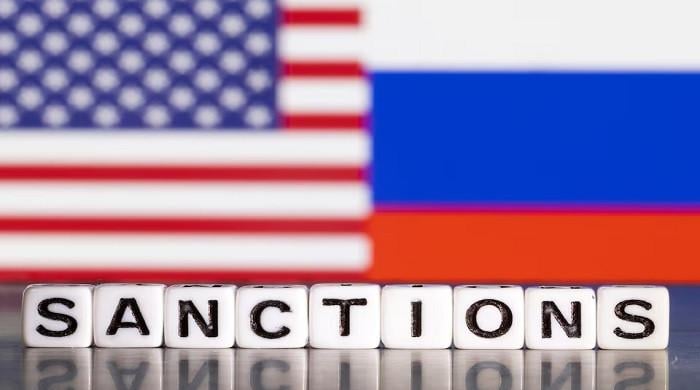
- Washington could apply more banking, oil sanctions, sources say.
- Some US officials say Trump wants Europe to make next move.
- Trump: won’t meet with Putin unless there’s a peace deal.
US President Donald Trump’s administration has prepared additional sanctions it could use to target key areas of Russia’s economy if President Vladimir Putin continues to delay ending Moscow’s war in Ukraine, according to a US official and another person familiar with the matter.
US officials have also told European counterparts that they support the EU using frozen Russian assets to buy US weapons for Kyiv, and Washington has held nascent internal conversations about leveraging Russian assets held in the US to support Ukraine’s war effort, two US officials said.
While it is not clear whether Washington will actually carry out any of those moves in the immediate term, it indicates that the administration has a well-developed toolkit to escalate further after Trump imposed sanctions on Russia on Wednesday for the first time since returning to office in January.
Trump has positioned himself as a global peacemaker, but has admitted that trying to end Russia’s more-than-three-year war in neighbouring Ukraine has proven harder than he had anticipated.
His meeting with Putin in Alaska in August failed to make progress. Trump told reporters in Doha on Saturday that he would not meet with Putin again unless a peace deal appeared likely. “I’m not going to be wasting my time,” Trump said.
European allies — buffeted by Trump’s swings between accommodation and anger toward Putin — hope he will continue to increase pressure on Moscow.
One senior US official told Reuters that he would like to see European nations make the next big Russia move, which could be additional sanctions or tariffs. A separate source with knowledge of internal administration dynamics said Trump was likely to hit pause for a few weeks and gauge Russia’s reaction to Wednesday’s sanctions announcement.
Those sanctions took aim at oil companies Lukoil and Rosneft. The moves spiked oil prices by more than $2 and sent major Chinese and Indian buyers of Russian crude looking for alternatives.
Trump said on Saturday that when he meets with President Xi Jinping on Thursday, China’s purchases of Russian oil may be discussed. But China is cutting back “very substantially” on Russian oil and “India is cutting back completely,” Trump told reporters.
Banking sector, oil, and infrastructure
Some of the additional sanctions prepared by the United States target Russia’s banking sector and the infrastructure used to get oil to market, said a US official and another person familiar with the matter.
Last week, Ukrainian officials proposed new sanctions that the US could levy, said one source with knowledge of those conversations. Their ideas included measures to cut off all Russian banks from the dollar-based system with US counterparts, two sources said. It is not clear, however, whether Ukraine’s specific requests are being seriously considered by US officials.
Some US senators are renewing a push to get a long-stalled bipartisan sanctions bill over the line. The person with knowledge of internal administration dynamics said Trump is open to endorsing the package. The source warned, though, that such an endorsement is unlikely this month.
The Treasury Department did not respond to a request for comment.
Kirill Dmitriev, Russian President Vladimir Putin’s special envoy for investment and economic cooperation, said on Friday he believes his country, the United States and Ukraine are close to a diplomatic solution to end Russia’s war in Ukraine.
Halyna Yusypiuk, Ukrainian Embassy spokesperson in Washington, said the recent sanctions decision was appreciated, but did not otherwise comment.
“Dismantling Russia’s war machine is the most humane way to bring this war to an end,” Yusypiuk wrote in an email.
A week of whiplash
Trump’s decision to hit Russia with sanctions capped a tumultuous week with respect to the administration’s Ukraine policy.
Trump spoke with Putin last week and then announced the pair planned to meet in Budapest, catching Ukraine off guard.
A day later, Trump met with Ukrainian President Volodymyr Zelenskiy in Washington, where US officials pressed Zelenskiy to give up territory in the Donbas region as part of a lopsided land swap to end the war. Zelenskiy pushed back, and Trump left the meeting with the position that the conflict should be frozen at its frontlines.
Then last weekend, Russia sent a diplomatic note to Washington reiterating previous peace terms. A few days later, Trump told reporters the planned meeting with Putin was off because “it just didn’t feel right to me.”
Speaking to CNN on Friday after arriving in Washington for talks with US officials, Dmitriev said a meeting between Trump and Putin had not been cancelled, as the US president described it, and that the two leaders will likely meet at a later date.
Two US officials argued privately that, in hindsight, Trump’s abortive plan to meet with Putin was likely the fruit of irrational exuberance. After sealing a ceasefire in Gaza, those officials said, Trump overestimated the degree he could use momentum from one diplomatic success to broker another one.
Trump ultimately decided to slap Russia with sanctions during a Wednesday meeting with Treasury Secretary Scott Bessent and Secretary of State Marco Rubio, a senior White House official said.
- State Department says removal of ambassadors is standard.
- Foreign service association calls it “institutional sabotage”.
- Lawmaker says move damages US leadership.
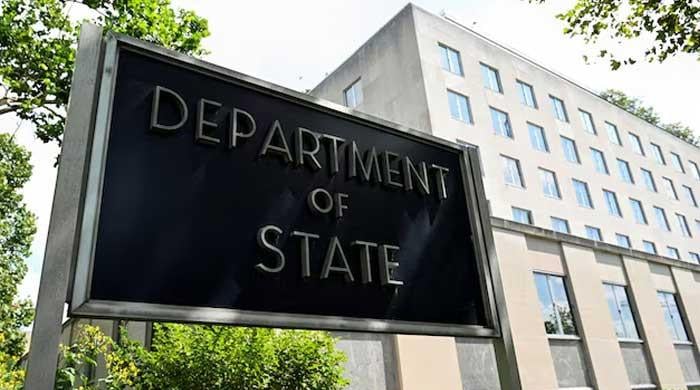
The Trump administration is recalling nearly 30 ambassadors and other senior career diplomats to ensure embassies reflect its “America First” priorities, a move critics said would weaken US credibility abroad.
The State Department declined to provide a list of the diplomats being recalled. A senior department official said on Monday the move was “a standard process in any administration”, but critics said that was not so.
“An ambassador is a personal representative of the president, and it is the president’s right to ensure that he has individuals in these countries who advance the America First agenda,” said the official, who spoke on condition of anonymity.
Nearly 30 senior diplomats were among those ordered back to Washington, people familiar with the matter said.
They were posted to smaller countries where the top US representative has traditionally been from the Foreign Service, which is made up of career officials not aligned with a political party, the people said.
The recalled diplomats were encouraged to find new roles in the State Department, a second US official said.
The American Foreign Service Association, representing foreign service officers, said it was working to confirm which members were recalled after some reported being notified by phone with no explanation — a process its spokesperson called “highly irregular.”
“Abrupt, unexplained recalls reflect the same pattern of institutional sabotage and politicisation our survey data shows is already harming morale, effectiveness, and US credibility abroad,” spokesperson Nikki Gamer said in an email.
The State Department declined to respond to Gamer’s comments.
Trump has sought to place loyalists in senior roles since starting his second term after encountering resistance during his first term, advancing his foreign policy priorities within the US national security establishment.
Jeanne Shaheen, ranking Democrat on the US Senate Committee on Foreign Relations, assailed the Republican administration’s removal of the diplomats while about 80 ambassadorial posts remain vacant.
“President Trump is giving away US leadership to China and Russia by removing qualified career Ambassadors who serve faithfully no matter who’s in power,” Shaheen posted on X. “This makes America less safe, less strong and less prosperous.”
- Agartala assistant mission services also halted.
- Suspension remains until further official notice.
- Dhaka says closures due to “unavoidable circumstances”.
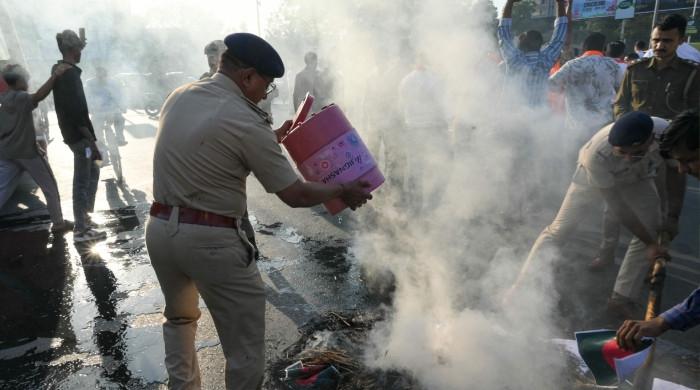
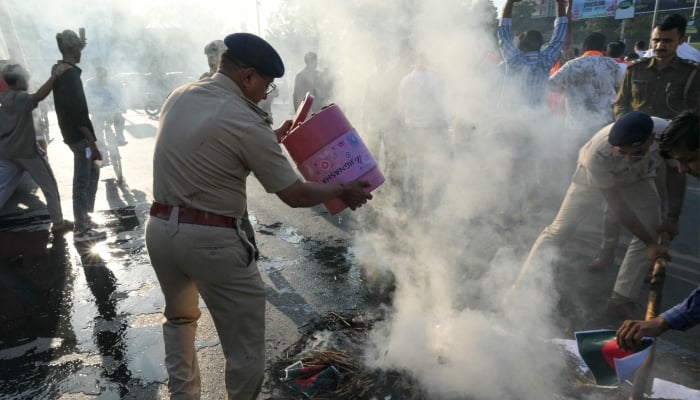
Bangladesh has suspended consular services and visa operations at its High Commission in India’s New Delhi, following a protest which Dhaka described as “unjustifiable” and “highly regrettable”.
In addition to suspending services at its High Commission in New Delhi, Bangladesh has also stopped consular services at the Assistant High Commission in Agartala, according to Bangladesh’s Dhaka Tribune.
The services will remain suspended until further notice by the Bangladeshi officials, the publication reported.
India’s ANI also reported a formal notice posted at the High Commission in Delhi regarding the closure.
“Due to unavoidable circumstances, all consular and visa services at the Bangladesh High Commission in New Delhi have been temporarily suspended until further notice,” the publication quoted the notice as saying.
The closure of the consular services comes following a protest held outside the Bangladesh HC under the banner of “Akhand Hindu Rashtra Sena”, which New Delhi said was against the killing of Dipu Chandra Das and for the protection of minorities in Bangladesh.
Das, a garment factory worker, was beaten to death on December 18 in Bangladesh’s Mymensingh, on allegations of blasphemy, after which his body was also set ablaze, reported Prothom Alo.
Bangladesh’s Ministry of Foreign Affairs rejected India’s explanation, saying that the protest cannot be labelled “misleading propaganda”.
“The miscreants were allowed to carry out their activities right outside the perimeters of the HC, creating panic among the personnel inside the complex,” said Bangladesh’s foreign office.
Relations between the two nations worsened after the killing of prominent Bangladeshi student leader Sharif Osman Hadi.
Hadi, 32, was shot in the head by masked assailants in Dhaka while launching his campaign for the elections. He was a spokesperson for the Inquilab Mancha, or Platform for Revolution, and participated in the protests that overthrew Hasina.
Following his death, mobs attacked the Indian Assistant High Commission in Chittagong, as well as setting fire to multiple newspapers’ outlets in Dhaka, accusing them of favouring India, where Bangladesh’s ousted PM Sheikh Hasina has taken refuge since fleeing Dhaka in the wake of the 2024 uprising.
- Iran’s defence capabilities designed to deter aggressors: official.
- Israel expresses concern over Iran’s missile production: report.
- Israel seeks to attack it again to curtail those efforts, says report.
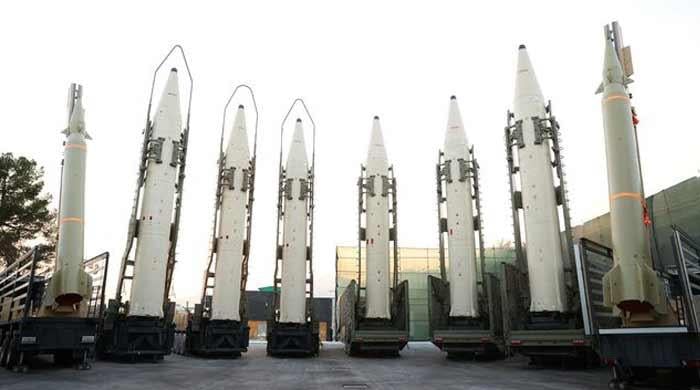
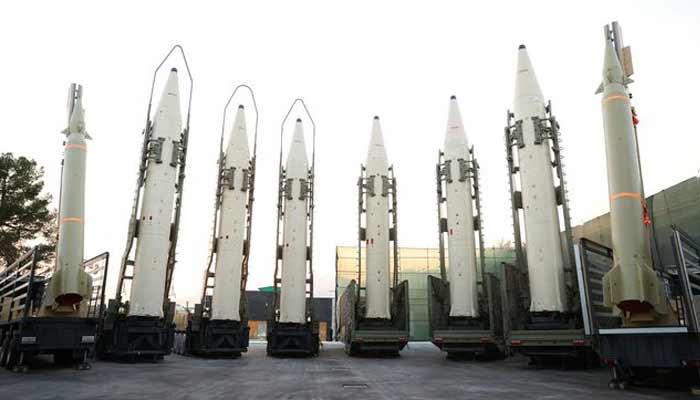
Iran insisted on Monday that its missile programme was defensive in nature and designed to dissuade attack, while adding that the existence of its arsenal was not up for debate.
Israel had presented Iran’s ballistic missiles, along with its nuclear programme, as the two main threats it sought to neutralise during the 12-day war the foes fought in June.
“Iran’s missile programme was developed to defend Iran’s territory, not for negotiation,” foreign ministry spokesman Esmaeil Baqaei said at a weekly press conference.
“Therefore, Iran’s defence capabilities, designed to deter aggressors from any thought of attacking Iran, are not a matter that could be talked about.”
Iran’s ballistic capabilities put Israel within striking distance, and after Israel’s unprecedented attacks that sparked the war in June, Tehran responded with waves of missiles and drones launched at Israeli cities.
According to US broadcaster NBC, Israel is growing increasingly concerned that Iran is seeking to rebuild and expand its missile production following the war, and may seek to attack it again to curtail those efforts.
During a planned visit to the US later this month, Israeli Prime Minister Benjamin Netanyahu “is expected to present US President Donald Trump with options for the US to join or assist in any new military operations”, NBC reported, citing an unnamed source with direct knowledge of the plans and former US officials briefed on them.
Over the course of the recent war, Israel struck military sites, nuclear facilities and residential areas, killing more than 1,000 people.
Israel reported more than 50 Iranian missile strikes inside its territory that killed 28 people.
The US briefly joined its ally in striking Iran’s nuclear facilities before declaring a ceasefire.
Iran once procured much of its weaponry from the United States, but following the break in diplomatic relations after its 1979 Islamic revolution, it had to develop its own domestic arms industry.


Trump pulls 30 envoys in ‘America First’ push, critics say it weakens US abroad

LIV Golf’s Mito Pereira makes stunning decision to retire at 30

The Justice Department Released More Epstein Files—but Not the Ones Survivors Want

-
 Business1 week ago
Studying Abroad Is Costly, But Not Impossible: Experts On Smarter Financial Planning
-
 Business1 week ago
KSE-100 index gains 876 points amid cut in policy rate | The Express Tribune
-

 Fashion5 days ago
Indonesia’s thrift surge fuels waste and textile industry woes
-

 Sports1 week ago
Jets defensive lineman rips NFL officials after ejection vs Jaguars
-
 Business5 days ago
BP names new boss as current CEO leaves after less than two years
-

 Tech1 week ago
For the First Time, AI Analyzes Language as Well as a Human Expert
-

 Entertainment1 week ago
Prince Harry, Meghan Markle’s 2025 Christmas card: A shift in strategy
-

 Tech5 days ago
T-Mobile Business Internet and Phone Deals