

Politics
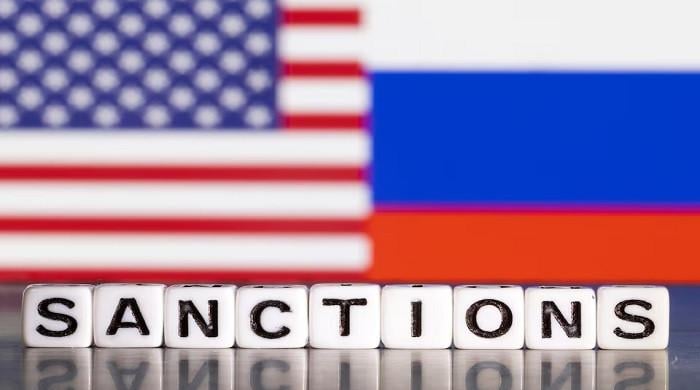
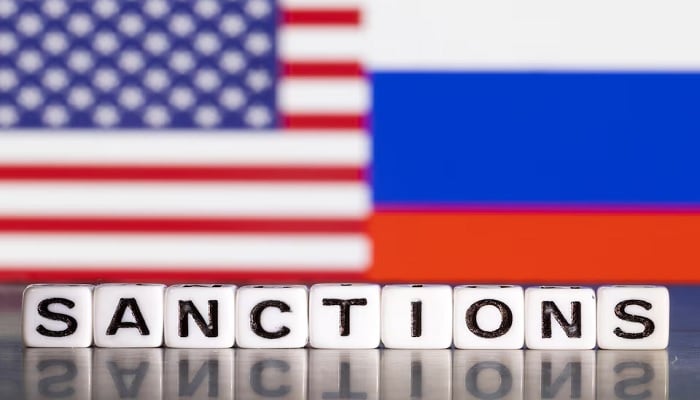
US mulls new Russia sanctions, urges Europe to ramp up pressure over Ukraine war

- Washington could apply more banking, oil sanctions, sources say.
- Some US officials say Trump wants Europe to make next move.
- Trump: won’t meet with Putin unless there’s a peace deal.
US President Donald Trump’s administration has prepared additional sanctions it could use to target key areas of Russia’s economy if President Vladimir Putin continues to delay ending Moscow’s war in Ukraine, according to a US official and another person familiar with the matter.
US officials have also told European counterparts that they support the EU using frozen Russian assets to buy US weapons for Kyiv, and Washington has held nascent internal conversations about leveraging Russian assets held in the US to support Ukraine’s war effort, two US officials said.
While it is not clear whether Washington will actually carry out any of those moves in the immediate term, it indicates that the administration has a well-developed toolkit to escalate further after Trump imposed sanctions on Russia on Wednesday for the first time since returning to office in January.
Trump has positioned himself as a global peacemaker, but has admitted that trying to end Russia’s more-than-three-year war in neighbouring Ukraine has proven harder than he had anticipated.
His meeting with Putin in Alaska in August failed to make progress. Trump told reporters in Doha on Saturday that he would not meet with Putin again unless a peace deal appeared likely. “I’m not going to be wasting my time,” Trump said.
European allies — buffeted by Trump’s swings between accommodation and anger toward Putin — hope he will continue to increase pressure on Moscow.
One senior US official told Reuters that he would like to see European nations make the next big Russia move, which could be additional sanctions or tariffs. A separate source with knowledge of internal administration dynamics said Trump was likely to hit pause for a few weeks and gauge Russia’s reaction to Wednesday’s sanctions announcement.
Those sanctions took aim at oil companies Lukoil and Rosneft. The moves spiked oil prices by more than $2 and sent major Chinese and Indian buyers of Russian crude looking for alternatives.
Trump said on Saturday that when he meets with President Xi Jinping on Thursday, China’s purchases of Russian oil may be discussed. But China is cutting back “very substantially” on Russian oil and “India is cutting back completely,” Trump told reporters.
Banking sector, oil, and infrastructure
Some of the additional sanctions prepared by the United States target Russia’s banking sector and the infrastructure used to get oil to market, said a US official and another person familiar with the matter.
Last week, Ukrainian officials proposed new sanctions that the US could levy, said one source with knowledge of those conversations. Their ideas included measures to cut off all Russian banks from the dollar-based system with US counterparts, two sources said. It is not clear, however, whether Ukraine’s specific requests are being seriously considered by US officials.
Some US senators are renewing a push to get a long-stalled bipartisan sanctions bill over the line. The person with knowledge of internal administration dynamics said Trump is open to endorsing the package. The source warned, though, that such an endorsement is unlikely this month.
The Treasury Department did not respond to a request for comment.
Kirill Dmitriev, Russian President Vladimir Putin’s special envoy for investment and economic cooperation, said on Friday he believes his country, the United States and Ukraine are close to a diplomatic solution to end Russia’s war in Ukraine.
Halyna Yusypiuk, Ukrainian Embassy spokesperson in Washington, said the recent sanctions decision was appreciated, but did not otherwise comment.
“Dismantling Russia’s war machine is the most humane way to bring this war to an end,” Yusypiuk wrote in an email.
A week of whiplash
Trump’s decision to hit Russia with sanctions capped a tumultuous week with respect to the administration’s Ukraine policy.
Trump spoke with Putin last week and then announced the pair planned to meet in Budapest, catching Ukraine off guard.
A day later, Trump met with Ukrainian President Volodymyr Zelenskiy in Washington, where US officials pressed Zelenskiy to give up territory in the Donbas region as part of a lopsided land swap to end the war. Zelenskiy pushed back, and Trump left the meeting with the position that the conflict should be frozen at its frontlines.
Then last weekend, Russia sent a diplomatic note to Washington reiterating previous peace terms. A few days later, Trump told reporters the planned meeting with Putin was off because “it just didn’t feel right to me.”
Speaking to CNN on Friday after arriving in Washington for talks with US officials, Dmitriev said a meeting between Trump and Putin had not been cancelled, as the US president described it, and that the two leaders will likely meet at a later date.
Two US officials argued privately that, in hindsight, Trump’s abortive plan to meet with Putin was likely the fruit of irrational exuberance. After sealing a ceasefire in Gaza, those officials said, Trump overestimated the degree he could use momentum from one diplomatic success to broker another one.
Trump ultimately decided to slap Russia with sanctions during a Wednesday meeting with Treasury Secretary Scott Bessent and Secretary of State Marco Rubio, a senior White House official said.
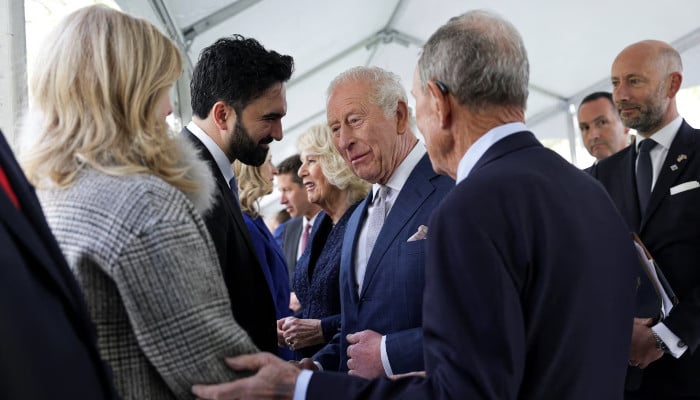
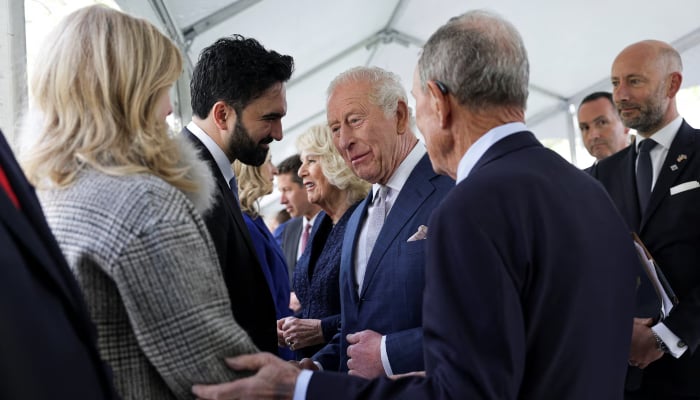
New York City Mayor Zohran Mamdani said on Wednesday he encourages Britain’s King Charles to return the Koh-e-Noor Diamond, with his comments coming during the British monarch’s ongoing US visit.
“If I were to speak to the king separately from that, I would probably encourage him to return the Koh-e-Noor Diamond,” Mamdani, who is Indian American, said when asked at a press conference hours before a ceremony that commemorated victims of the deadly September 11, 2001, attacks.
Later in the day, the king spoke with Mamdani at the ceremony. Buckingham Palace declined to comment. Mamdani’s office did not respond to a request to comment on whether Mamdani brought up the issue with the king.
India has previously repeatedly demanded that Britain return the 105-carat diamond.
Britain’s then colonial governor-general of India arranged for the huge diamond to be presented to Queen Victoria in 1850 after the East India Company had annexed the region of Punjab in 1849 and taken the diamond from a deposed Indian leader.
Charles on Wednesday commemorated victims of the September 11, 2001, attack on New York City, laying a floral bouquet at the memorial where the World Trade Centre’s twin towers once stood.
India received independence from British rule in 1947. The British colonisation of India and the widespread atrocities committed against people during that period remain sensitive issues in the country.
India has previously said the diamond was a “valued piece of art with strong roots in our nation’s history.” The diamond’s possession by the British is seen by many Indians as a symbol of colonial atrocities during British rule.
The diamond has been previously owned by India’s Mughal emperors, shahs of Iran, emirs of Afghanistan, and Sikh maharajas, according to the Historic Royal Palaces charity.
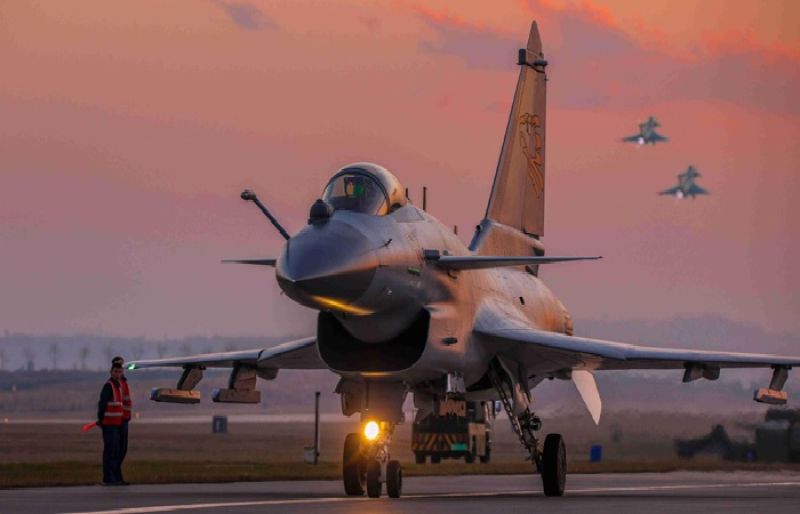
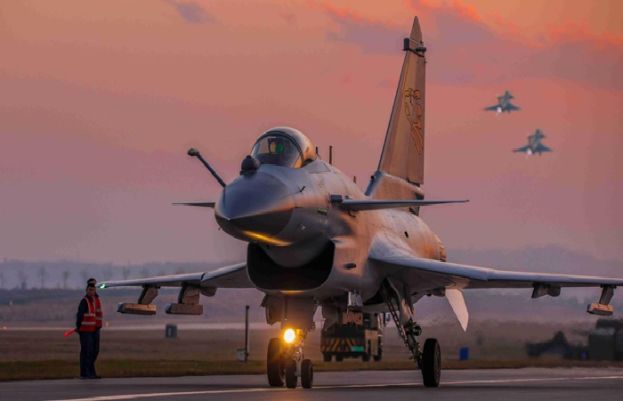
China’s AVIC Chengdu Aircraft Corporation, the maker of J-10C aircraft used by Pakistan to down India’s French-made planes in May last year, has reported a significant surge in profits, according a report by Bloomberg.
Revenue increased by 15.8% to 75.4 billion yuan ($11 billion) in 2025, with profit up 6.5% to 3.4 billion yuan in 2025, the publication cited the jetmaker as saying in a statement.
The numbers are the highest-ever for the company, Bloomberg reported, adding that Chengdu’s first-quarter sales rose almost 80% on year.
The Pakistan Air Force (PAF) inducted J-10C in March 2022, in a major boost to the country’s military capabilities to defend airspace.
At the time, the government said that the fighter jet could carry more advanced, fourth-generation air-to-air missiles, including the short-range PL-10 and the beyond-visual-range PL-15.
The fighter jet saw its first combat use in May 2025 when India launched an unprovoked attack on Pakistan on May 6, following an attack on tourists in the Indian Illegally Occupied Jammu and Kashmir.
Pakistan, during the 87-hour conflict, downed seven Indian fighter jets, including French-made Rafale, and dozens of drones.
The four-day war saw Pakistan successfully employing the Chinese-made HQ-9 air-defence system, PL-15 air-to-air missiles, and J-10C fighter aircraft, credited with downing multiple Indian aircraft.
The PAF also used its JF-17 Thunder jets to destroy India’s S-400 air defence system in Adampur by using hypersonic missiles.
The war between the two nuclear-armed nations ended on May 10 with a ceasefire agreement brokered by the US.
Months after the conflict, Inter-Services Public Relations (ISPR) Director-General (DG) Lieutenant General Ahmed Sharif Chaudhry praised the performance of Chinese-made weapons, saying they performed “exceptionally well. “Of course, lately, recent Chinese platforms, they’ve demonstrated exceptionally well,” Lt Gen Chaudhry said in an interview in October last year.
In November last year, a report presented to the United States Congress acknowledged Pakistan’s “military success over India” in the war.
The US-China Economic and Security Review Commission report — reviewing US-China security and foreign affairs — stated that Pakistan employed advanced Chinese weaponry to enhance its military edge over India.
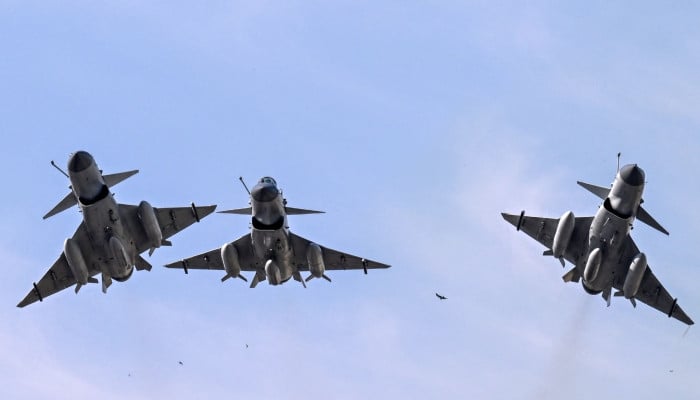
- Revenue up by 15.8% to 75.4 billion yuan in 2025: report.
- Company’s profits up by 6.5% to 3.4 billion yuan in 2025.
- Chengdu sales in first-quarter rose almost 80% on year.
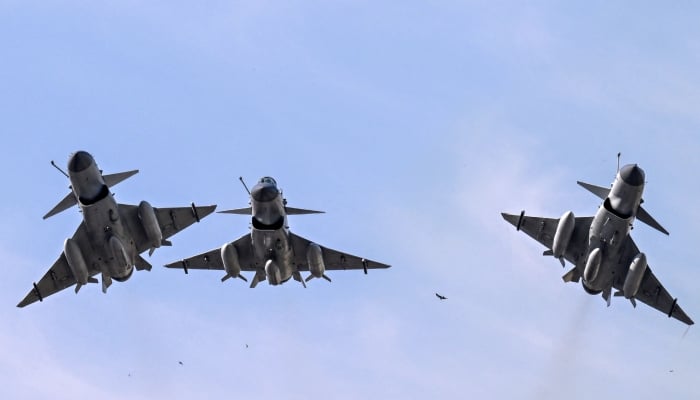
China’s AVIC Chengdu Aircraft Corporation, the maker of J-10C aircraft used by Pakistan to down India’s French-made planes in May last year, has reported a significant surge in profits, according a report by Bloomberg.
Revenue increased by 15.8% to 75.4 billion yuan ($11 billion) in 2025, with profit up 6.5% to 3.4 billion yuan in 2025, the publication cited the jetmaker as saying in a statement.
The numbers are the highest-ever for the company, Bloomberg reported, adding that Chengdu’s first-quarter sales rose almost 80% on year.
The Pakistan Air Force (PAF) inducted J-10C in March 2022, in a major boost to the country’s military capabilities to defend airspace.
At the time, the government said that the fighter jet could carry more advanced, fourth-generation air-to-air missiles, including the short-range PL-10 and the beyond-visual-range PL-15.
The fighter jet saw its first combat use in May 2025 when India launched an unprovoked attack on Pakistan on May 6, following an attack on tourists in the Indian Illegally Occupied Jammu and Kashmir.
Pakistan, during the 87-hour conflict, downed seven Indian fighter jets, including French-made Rafale, and dozens of drones.
The four-day war saw Pakistan successfully employing the Chinese-made HQ-9 air-defence system, PL-15 air-to-air missiles, and J-10C fighter aircraft, credited with downing multiple Indian aircraft.
The PAF also used its JF-17 Thunder jets to destroy India’s S-400 air defence system in Adampur by using hypersonic missiles.
The war between the two nuclear-armed nations ended on May 10 with a ceasefire agreement brokered by the US.
Months after the conflict, Inter-Services Public Relations (ISPR) Director-General (DG) Lieutenant General Ahmed Sharif Chaudhry praised the performance of Chinese-made weapons, saying they performed “exceptionally well,” The News reported, citing Bloomberg.
“Of course, lately, recent Chinese platforms, they’ve demonstrated exceptionally well,” Lt Gen Chaudhry said in an interview in October last year.
In November last year, a report presented to the United States Congress acknowledged Pakistan’s “military success over India” in the war.
The US-China Economic and Security Review Commission report — reviewing US-China security and foreign affairs — stated that Pakistan employed advanced Chinese weaponry to enhance its military edge over India.

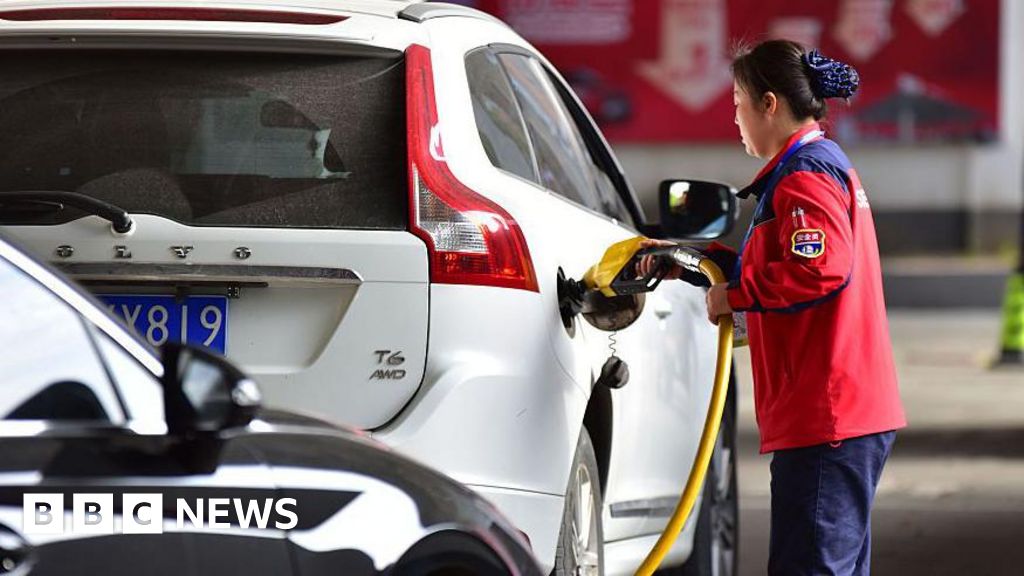
Oil jumps to highest price since 2022 after report Trump to be briefed on new Iran options

Trützschler to showcase advanced textile tech at ITM 2026 in Istanbul
Gold, silver price prediction: Will gold head down to Rs 1.40 lakh/10 grams & silver hit Rs 2.20 lakh/kg? – The Times of India

-
 Business1 week ago
Us-India Trade Talks: US–India trade deal: Where do talks stand & what to expect – explained – The Times of India
-
 Fashion1 week ago
Global energy growth slows to 1.3% in 2025: Report
-
 Business1 week ago
UK inflation accelerates after Iran war drives sharp rise in fuel prices
-

 Tech1 week ago
Nation states responsible for ‘nationally significant’ cyber attacks against UK, says NCSC chief | Computer Weekly
-
 Tech1 week ago
Microsoft faces court battle in £2bn Windows Server class action | Computer Weekly
-

 Sports1 week ago
PSL 11: Hyderabad Kingsmen opt to field after winning toss against Multan Sultans
-
 Business1 week ago
Trump administration in advanced talks for a rescue package for Spirit Airlines, source says
-
 Business1 week ago
Gold prices in Pakistan Today – April 23, 2026 | The Express Tribune