

Fashion
US’ Ralph Lauren’s Q2 FY26 revenue surges 17% on strong global demand

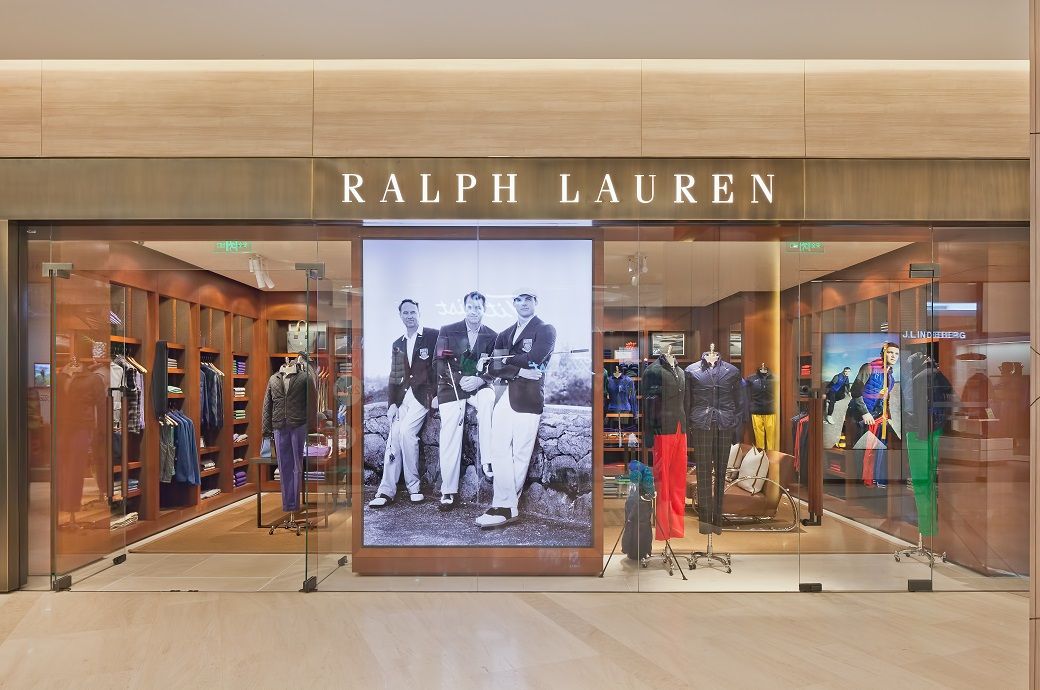
The gross profit of the company reached $1.37 billion, with gross margin expanding 100 basis points (bps) to 68 per cent, driven by higher average unit retail (AUR), favourable product mix, and lower cotton costs. These gains offset inflationary and tariff-related pressures.
Ralph Lauren Corporation has reported better-than-expected Q2 FY26 results, with revenue rising 17 per cent YoY to $2 billion, driven by double-digit growth across all regions and strong DTC demand.
Gross margin expanded 100 bps to 68 per cent, while adjusted operating margin rose 270 bps to 14.1 per cent.
EPS increased 49 per cent to $3.79.
The company raised its FY26 revenue and margin outlook.
The operating income rose to $246 million, translating to a 12.2 per cent operating margin on a reported basis. Adjusted operating income stood at $283 million, with a margin of 14.1 per cent, up 270 basis points from last year. Europe led margin improvement with a 360-basis-point increase, while North America and Asia improved by 290 and 230 basis points respectively, Ralph Lauren said in a press release.
The operating expenses totalled $1.1 billion, up 15 per cent YoY. The company maintained strong cost discipline, with adjusted operating expenses rising 13 per cent and the expense ratio improving to 53.9 per cent from 55.5 per cent.
The earnings per diluted share climbed 44 per cent to $3.32 on a reported basis and 49 per cent to $3.79 on an adjusted basis, excluding restructuring and other charges. This compares with $2.31 reported and $2.54 adjusted in Q2 FY25. Net income totalled $207 million, while adjusted net income reached $237 million.
The revenue in North America grew 13 per cent to $832 million. Comparable store sales rose 13 per cent, driven by a 12 per cent increase in physical retail and a 15 per cent surge in digital commerce. Wholesale revenue also improved by 13 per cent.
Revenue in Europe advanced 22 per cent to $688 million on a reported basis and 15 per cent in constant currency. Comparable store sales increased 10 per cent, including 8 per cent growth in physical stores and 17 per cent in online sales. Wholesale sales jumped 26 per cent.
Revenue in Asia climbed 17 per cent to $446 million, or 16 per cent in constant currency. Comparable store sales improved 16 per cent, with brick-and-mortar up 14 per cent and digital commerce soaring 36 per cent. China was a key growth driver, posting over 30 per cent revenue growth, maintaining the pace seen in the first quarter.
The company continued to strengthen its brand equity, adding 1.5 million new customers through its DTC channels and achieving high-single-digit growth in social media followers to 67 million globally.
The company’s ‘always-on’ marketing approach drove robust consumer engagement, with activations around key global events such as Wimbledon, the US Open, and the Ryder Cup. The brand also drew attention through the Spring 2026 Women’s Collection show in New York, an immersive Goodwood Revival experience in England, and prominent celebrity moments featuring Taylor Swift, Travis Kelce, and Selena Gomez, the release said.
Core categories such as Women’s Apparel, Outerwear, and Handbags grew at strong double-digit rates, outpacing total company growth. The company launched several high-impact initiatives, including the Polo Ralph Lauren for Oak Bluffs collection in partnership with Morehouse and Spelman Colleges, the Ralph’s Club New York fragrance campaign featuring Usher, and an AI-powered styling tool ‘Ask Ralph’, showcasing its blend of heritage and innovation.
The brand furthered its ‘Win in Key Cities’ strategy by opening 38 new owned and partner-operated stores during the quarter, including new locations in Munich (Germany), Plano (Texas, US), Hangzhou (China), and Nagoya (Japan). It also completed the purchase of its Newbury Street store in Boston, reinforcing its long-term retail footprint.
Ralph Lauren ended the quarter with $1.6 billion in cash and short-term investments and $1.2 billion in total debt. Inventory stood at $1.3 billion, up 12 per cent YoY and aligned with demand trends. The company also retired $400 million in senior notes due in 2025 and repurchased $63 million of Class A common stock in Q2, totalling $313 million year-to-date (YTD).
So far in FY26, Ralph Lauren has returned approximately $420 million to shareholders through dividends and share buybacks.
“We are off to a strong start in the execution of our Next Great Chapter: Drive strategic plan introduced at our Investor Day in September, with second quarter performance outpacing our expectations across geographies, channels and consumer segments,” said Patrice Louvet, president and chief executive officer (CEO) at Ralph Lauren. “Our iconic brand and timeless products continue to resonate with consumers around the world, across generations and cultures, and we are reinforcing our inclusive luxury lifestyle position with disciplined investments to drive sustainable long-term growth and value creation well beyond this fiscal year.”
Ralph Lauren has raised its FY26 guidance, as the company now expects revenue growth of 5–7 per cent on a constant currency basis. The operating margin expansion of 60–80 basis points (bps), driven by cost efficiency and margin leverage. Foreign currency to provide a 30–50 bps tailwind to gross and operating margins.
For the third quarter, the company projects mid-single-digit revenue growth in constant currency, with operating margin expected to expand 60–80 basis points (bps).
“As we continue to navigate a highly dynamic global operating environment with agility, we are encouraged by our brand’s continued momentum through the start of the important Fall/Holiday season, enabling us to once again raise our fiscal 2026 outlook,” added Louvet.
Fibre2Fashion News Desk (SG)









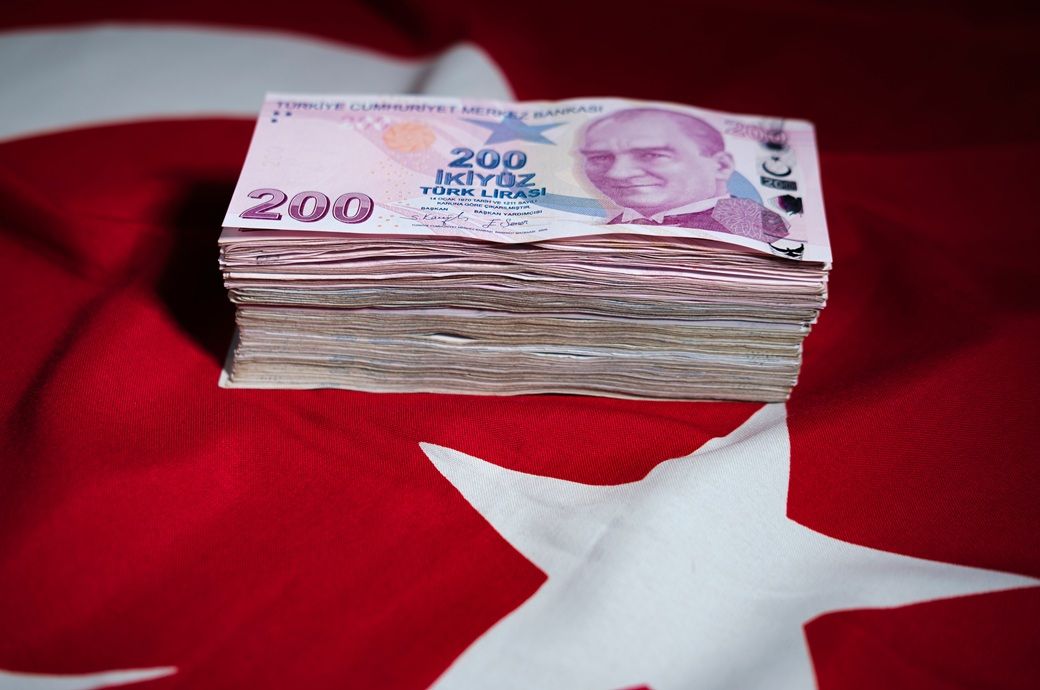
Current account excluding gold and energy indicated net deficit of $3.9 billion, while goods saw a deficit of $9.5 billion.
Turkiye recorded a current account deficit (CAD) of $9.6 billion in March, the country’s central bank said.
Treasury and Finance Minister Mehmet Simsek said the CAD is expected to widen this year, due to high energy and non-energy commodity prices.
Simsek said the deterioration is likely to remain temporary and manageable, thanks to stronger macroeconomic fundamentals and policy gains.
According to annualised data, current account deficit recorded as $39.7 billion (2.6 per cent of gross domestic product) in March, while the goods deficit recorded as $77.8 billion.
Simsek said the deterioration is likely to remain temporary and manageable thanks to stronger macroeconomic fundamentals and policy gains, domestic media outlets reported.
Turkiye is heavily reliant on imported energy, whose prices spiralled due to the Middle East conflict.
Simsek said elevated global commodity prices would put pressure on the external balance, but emphasised that the government’s economic programme had improved resilience against such shocks.
He said foreign direct investment (FDI) inflows totalled $1 billion in March, bringing annualised foreign direct investment to $12.6 billion.
The new investment incentive package under discussion in parliament now is expected to strengthen the country’s financing structure and support long-term capital inflows, he added.
Fibre2Fashion News Desk (DS)
During the first quarter of ****, the UK’s imports of textile fabrics eased down *.** to £*,*** million (~$*,*** million), against £*,*** million in January-March **** but slightly higher from £*,*** million in the fourth quarter of ****. Its imports of fibre were noted at £** million (~$***.** million) steady as £** million in Q*, **** but slightly lower than £** million in Q*, ****.
During the third month of this year, the country’s clothing imports declined *.** per cent to £*.*** billion (~$*.*** billion), compared with £*.*** billion in March ****. But the inbound shipment was slightly higher month on month compared with £*.*** billion in February ****.

Higher rents, utility bills and fuel prices are eating away at already thin profit margins, it found.
High inflation is cutting deep into Bangladesh consumer spending, with weak demand turning one of the biggest concerns for businesses, DCCI said.
Higher rents, utility bills and fuel prices are eating away at already thin profit margins.
DCCI’s economic position index revealed that consumers have sharply reduced spending as the cost of living continues to rise.
SMEs are feeling the pressure the most.
The chamber’s economic position index (EPI) revealed that consumers have sharply reduced spending as the cost of living continues to rise, putting pressure on retailers, transport operators and other service providers.
Small and medium enterprises (SMEs) are feeling the pressure the most as they struggle to manage higher operating costs without losing customers.
Businesses also cited difficulties in obtaining bank loans, while delays in licensing and other regulatory procedures are adding to costs.
The DCCI report identified a shortage of skilled workers, particularly in technical and customer service roles, as another challenge for the sector.
The country’s inflation rose to 9.04 per cent in April from 8.71 per cent in March, according to official statistics.
Fibre2Fashion News Desk (DS)


Turkiye’s current account deficit expected to widen in 2026: Minister

UK’s clothing imports fall 3% in Q1, sharply lower than Q4 2025
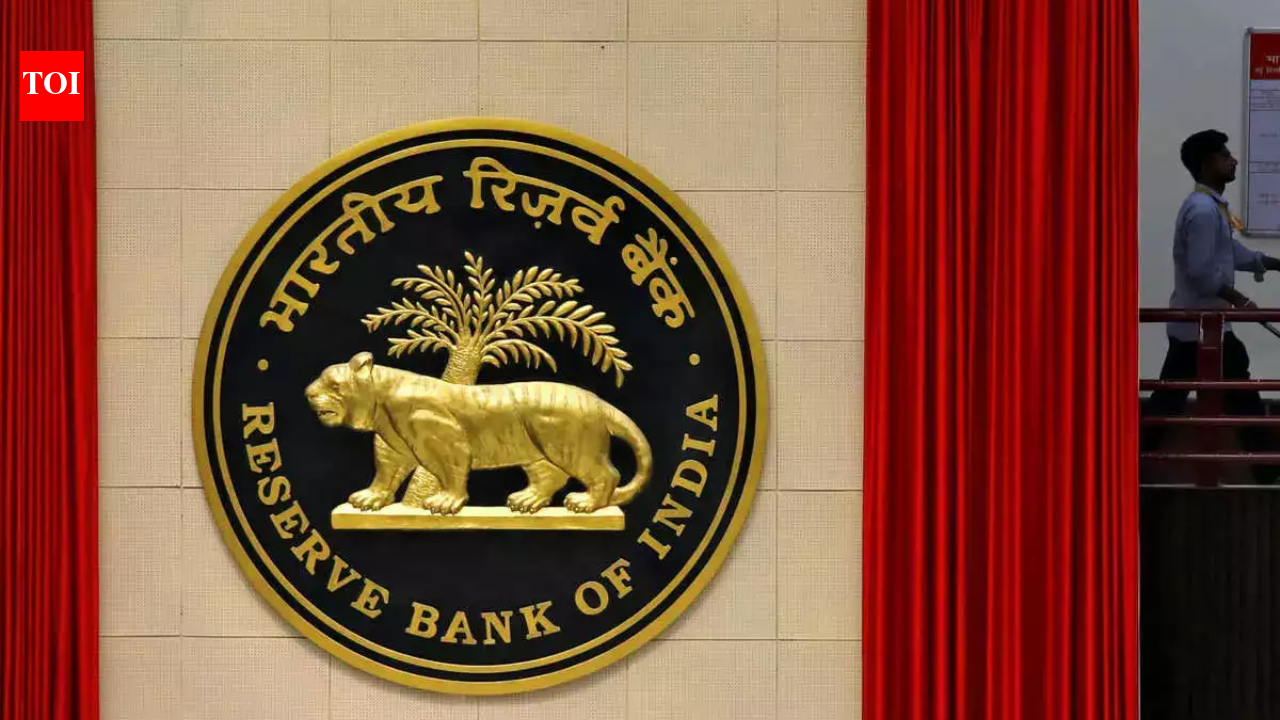
RBI sees no signs of excess credit risk, keeps countercyclical capital buffer inactive

-

 Entertainment6 days ago
Conan O’Brien hat tricks as Oscar host
-

 Tech1 week ago
Could Contact-Tracing Apps Help With the Hantavirus? Not Really
-

 Fashion5 days ago
Italy’s Zegna Group’s Q1 growth boosted by strong organic performance
-

 Sports1 week ago
Bobby Cox, legendary Atlanta Braves manager who led 1995 World Series champions, dead at 84
-

 Entertainment1 week ago
Martin Short: Facing tragedy with joy
-

 Entertainment1 week ago
Tom Brady gets back at Kevin Hart during Netflix roast
-

 Sports1 week ago
Jacob Fatu unleashes vicious assault on Roman Reigns after World Heavyweight Championship loss at WWE Backlash
-

 Entertainment1 week ago
Martha Stewart: How to make an omelet