

Business
US slashes proposed tariffs on Italian pasta imports


Italian pasta is set to be spared from high-level US tariffs that the Trump administration had threatened against 13 producers.
The move could have resulted in American importers being taxed at a rate greater than the value of the actual pasta itself, and prices rising sharply for US consumers.
But on Thursday, the Italian foreign ministry said the proposed rate had now been drastically cut back.
In a statement of its own, the US said the 13 firms had addressed many of its concerns. It previously accused the companies of selling their products at unfairly low prices and threatened tariffs of almost 92%.
Tariffs are a type of tax paid by a consumer who imports a product.
Since returning to the White House last year, US President Donald Trump has unleashed a wide-ranging programme of these taxes, though some have since been softened.
The president has sought to address trade practices that he sees as harmful to the US and boost American manufacturing.
But economists have consistently warned that such moves can ultimately drive up costs for consumers, worsening cost-of-living issues.
In the case of pasta, the US alleged that Italian-made goods were being sold at “less than normal value” in the US, which undercut local producers. This pricing policy is sometimes known as dumping.
The commerce department was planning to charge a tariff rate of 91.74% for American imports of pasta made by the 13 Italian producers.
Given that there is now an underlying 15% tariff on most products bought into the US from the European Union, the plan would have resulted in the rate of tax on pasta exceeding 100% of its value.
It sparked fears of consumers experiencing major price increases, although the produce made by the 13 companies represents only a small share of total Italian pasta imported into the US.
The plan would have also represented a political headache for Italian Prime Minister Giorgia Meloni, who enjoys a relatively close relationship with Trump among European leaders.
On Thursday, the Italian foreign ministry announced that the US had wound back its plan, saying this represented “an acknowledgement by the US authorities of the constructive co-operation shown by Italian companies”.
In the case of one brand, La Molisana, the tariff rate had been dropped as low as 2.26%, the Italian statement added. Others will face slightly higher rates, up to 13.98%.
In a statement of their own, which was given to the BBC’s US partner CBS News, a US commerce department spokesperson said: “[Our] post-preliminary analysis indicates that Italian pasta makers have addressed many of Commerce’s concerns raised in the preliminary determination.
“Commerce will continue to engage with interested parties to take into account all information before issuing the final determination.”
Other Trump tariffs that have recently been softened include a planned increase in the tax charged on imports of furniture items – which was postponed for 12 months shortly before it was due to take effect on New Year’s Day.
And in November, the president signed an order that allowed certain key food products – including coffee, bananas and beef – to escape his tariffs.
Archie MitchellBusiness reporter
 Getty Images
A series of concessions on Labour’s flagship workers’ rights reforms will cut the cost to firms adopting them by billions of pounds, a government impact assessment shows.
An initial analysis by officials found that implementing the party’s measures to bolster workers’ rights would cost firms up to £5bn a year.
However, an updated analysis on Wednesday, which took into account major concessions made by ministers, said it will now cost companies £1bn a year.
The concessions were welcomed by business groups, but faced fierce criticism from some left-wing Labour MPs and union leaders.
The Employment Rights Act will give workers access to sick pay and paternity leave from the first day on the job and introduce new protections for pregnant women and new mothers.
In November, Labour dropped plans to give all workers the right to claim unfair dismissal from their first day in a job. Instead, it will bring in enhanced protections after six months in employment, the bill’s most significant measure.
Alongside concessions on unfair dismissal, the government will phase in the overall package over several years, with many of the measures still subject to consultation and secondary legislation.
The revised impact assessment also said the lower cost estimate reflected “clearer implementation timelines” and more available evidence about the policies.
But the British Chambers of Commerce said the £1bn figure “is likely to be a massive underestimate”.
Policy director Kate Shoesmith said: “The impact figure doesn’t adequately account for the harder to quantify costs. Those include staff time for understanding and implementing new processes or explaining these to colleagues.
“Concessions such as introducing the six-month qualifying period will reduce costs – but not on the scale this latest assessment suggests.”
The shadow business and trade secretary, Andrew Griffith, said: “The government spent a whole year denying it, but even after they fudged the figures to favour them, the truth is clear: their Unemployment Act will cost businesses billions.
“They have also been forced to admit it will cost young and vulnerable people their jobs – just as we always warned.”
The latest impact assessment also said the Employment Rights Act would have a small positive impact on employment, boosting the amount of people in work by 0.1%.
It also said the new measures could have a “small, positive direct impact on economic growth”.
Meanwhile, stronger workers’ rights could benefit about 18 million workers, up from an earlier estimate of around 15 million, the analysis showed.
Trade unions welcomed the latest impact assessment, saying it would bring “significant benefits to UK workers, our economy and wider society”.
The Trades Union Congress (TUC) said stronger rights at work are “good for workers and employers – driving up labour market participation, improving health, raising productivity and boosting demand”.
Its general secretary Paul Nowak called for ministers to “finish the job as soon as possible”, warning that secondary legislation to bring in the measures must be “watertight”.
Mike Clancy, general secretary of the Prospect trade union, said: “This impact assessment is clear that the Employment Rights Act is good for workers, good for growth, and good for wider society.
“The sensible compromises agreed between Government, businesses, and trade unions were intended to make this legislation more workable for all parties, while still delivering robust protections for workers, and this report clearly demonstrates the success of that approach.”
The Department for Business and Trade (DBT) said the Employment Rights Act will “transform the world of work, delivering stronger protections and higher living standards”.
A spokesperson said: “By making work pay, and more secure, this new analysis demonstrates how it will boost productivity, cut staff turnover, and put more money in the pockets of working people.”
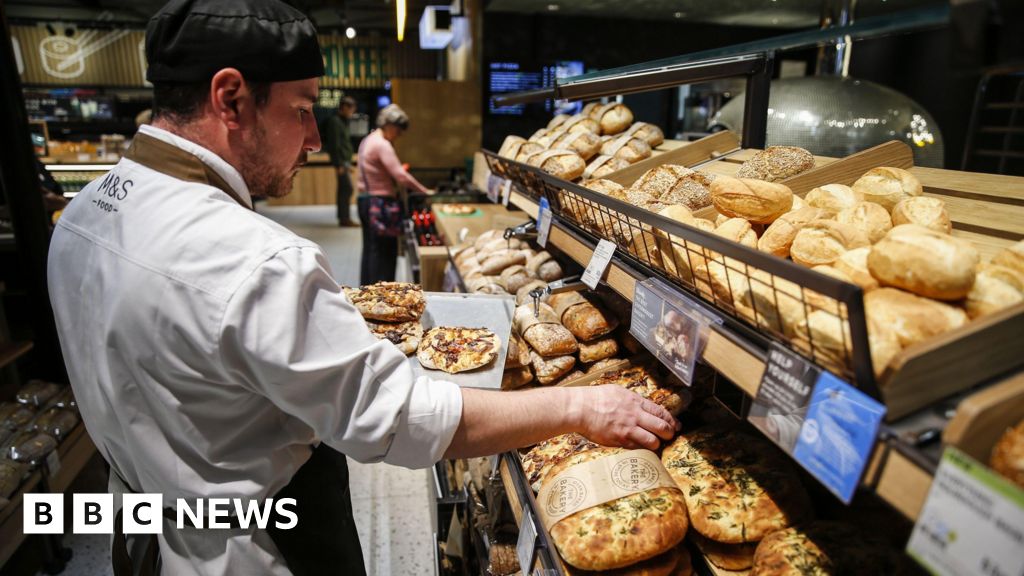
Retail giants Tesco and Marks & Spencer both saw a bump in food sales over the vital Christmas period despite both mentioning a challenging economic backdrop.
Tesco said sales in the UK were up 3.2% from last year and it had now notched up its highest market share in more than a decade.
M&S said that it had seen a record number of customers over Christmas and its food sales were “strong”.
However, sales at its clothing, home and beauty business fell, with M&S blaming the decline on lower footfall on the High Street and lingering issues from last year’s cyber-attack.
M&S suffered a sales fall of almost 3% in its fashion, home and beauty products which it said was still suffering from stock and inventory issues following the cyber-attack.
Chief executive Stuart Machin said: “Food sales were strong and the business continues to outperform, hitting a new market share milestone in the period.
“Fashion, Home & Beauty is getting back on track as we work through the tail end of recovery,” he added.
Tesco boss Ken Murphy said he was “delighted” with the supermarket’s performance over Christmas amid “intense” competition.
He highlighted the performance of the Tesco Finest range, which saw sales growth of 13%.
The supermarket is now expecting to report annual operating profits at the upper end of the £2.9bn-£3.1bn range it predicted in October.
“Tesco has seen a consistently strong performance over the last couple of years really, where it’s really focused on price,” said Sofie Willmott, associate director at GlobalData Retail.
She said that by price-matching Aldi, and offering lower prices to its Clubcard holders, Tesco had “managed to retain its number one position at the top of the market”, despite heavy discounting on some of its products to compete with rivals.
“It also saw very good performance in its Finest range where shoppers are maybe not eating out as much or treating themselves,” she added.

When people stop taking the new generation of weight-loss drugs they pile back on the kilos four times faster than they would after ending diet and exercise regimes, new research found Thursday.
But this was mostly because they lost so much weight in the first place, according to the British researchers who conducted the largest and most up-to-date review of the subject.
A new generation of appetite-suppressing, injectable drugs called GLP-1 agonists have become immensely popular in the last few years, transforming the treatment for obesity and diabetes in many countries.
They have been found to help people lose between 15-20 percent of their body weight.
“This all appears to be a good news story,” said Susan Jebb, a public health nutrition scientist at Oxford university and co-author of a new BMJ study.
However, recent data has suggested that “around half of people discontinue these medications within a year,” she told a press conference.
This might be because of common side effects such as nausea or the price — these drugs can cost over $1,000 a month in the US.
So the researchers reviewed 37 studies looking at ceasing different weight-loss drugs, finding that participants regained around 0.4 kilograms a month.
Six of the clinical trials involved semaglutide — the ingredient used in Novo Nordisk’s brands Ozempic and Wegovy — and tirzepatide used for Eli Lilly’s Mounjaro and Zepbound.
While taking these two drugs, the trial participants lost an average of nearly 15 kilograms.
However, after stopping the medication, they regained 10 kilograms within a year, which was the longest follow-up period available for these relatively new drugs.
The researchers projected that the participants would return to their original weight in 18 months.
Measurements of heart health, including blood pressure and cholesterol levels, also returned to their original levels after 1.4 years.
People who were instead put on programmes that included diet and exercise — but not drugs — lost significantly less weight. However it took an average of four years for them to regain their lost kilos.
This meant that people taking the drugs regained their weight four times faster.
Starting point, not a cure
“Greater weight loss tends to result in faster weight regain,” lead study author Sam West of Oxford University explained.
But separate analysis showed that weight gain was “consistently faster after medication, regardless of the amount of weight lost in the first place,” he added.
This could be because people who have learned to eat more healthily and exercise more often continue to do so even as they regain weight.
Jebb emphasised that GLP-1 drugs “are a really valuable tool in obesity treatment — but obesity is a chronic relapsing condition.”
“One would expect that these treatments need to be continued for life, just in the same way as blood pressure medication,” Jebb said.
If this was the case, it would impact how national health systems judge whether these drugs are cost-effective, the researchers emphasised.
“This new data makes it clear they are a starting point, not a cure,” said Garron Dodd, a metabolic neuroscience researcher at the University of Melbourne not involved in the study.
“Sustainable treatment will likely require combination approaches, longer-term strategies, and therapies that reshape how the brain interprets energy balance, not just how much people eat,” he said.


India targets global textile hub status at Ministers’ Conference 2026
Workers’ rights reforms will cost billions less after concessions, analysis shows

Skims expands to four stores in Mexico

-
Sports1 week ago
Tom Wilson’s New Year’s Eve: Two goals, a fight, a win and an Olympic nod
-

 Fashion3 days ago
Jacquemus hires new COO from Parisian label Lemaire
-
 Business3 days ago
Aldi’s Christmas sales rise to £1.65bn
-

 Entertainment1 week ago
France president ‘wants to ban under-15s from social media’
-

 Sports3 days ago
VAR review: Why was Wirtz onside in Premier League, offside in Europe?
-
 Business3 days ago
Gold prices record a big increase, what is the price per tola? – SUCH TV
-

 Entertainment3 days ago
French and Malaysian authorities probe sexualised deepfakes
-

 Fashion3 days ago
2025 container handling by Bangladesh’s Chattogram Port up 4.07% YoY