

Business
US supply chain strain: FAA flight cuts, cargo jet grounding hit US logistics; FedEx and UPS brace for holiday rush – The Times of India


The US air cargo industry is bracing for fresh turbulence as the Federal Aviation Administration’s (FAA) 10% reduction in flight capacity across 40 major airports collides with the grounding of UPS and FedEx’s McDonnell Douglas MD-11 fleets, deepening pressure on supply chains ahead of the crucial Thanksgiving and holiday shipping season.The FAA ordered airlines to cut domestic flight operations by 10% between 6 a.m. and 10 p.m. local time, citing air traffic controller shortages caused by the prolonged government shutdown, AP reported. The decision affects key hubs with major parcel distribution centres — including FedEx’s Memphis and Indianapolis bases and UPS’ Worldport hub in Louisville, Kentucky, where a deadly cargo plane crash this week killed 14 people, including three crew members.Both companies announced they were grounding their MD-11 aircraft “out of an abundance of caution”, removing a significant chunk of capacity — roughly 9% of UPS’ fleet and 4% of FedEx’s. The double blow has prompted concerns about rising strain on logistics networks just weeks before the peak shopping period.“This is such a stressful time for both companies,” said Patrick Penfield, supply-chain management professor at Syracuse University, quoted AP. “You’ve got a surge in demand, and then you just lost some of your capacity. They’re already scrambling, and now they’re going to scramble even more.” Penfield warned that shoppers could face delivery delays of up to two days in mid-December, urging consumers to order early.While most air freight is international — and thus largely unaffected by the FAA directive — the cutback in domestic passenger flights, which carry about 35% of global trade by value, is expected to cause short-term constraints.FedEx said it had made “operational modifications” to keep shipments moving “safely and swiftly,” while UPS assured customers that its network remains “safe, resilient and reliable.” Both carriers said most of their flights operate outside the restricted hours, reducing immediate impact on overnight deliveries.Still, industry leaders warned of ripple effects. Mike Short, president of global freight forwarder C.H. Robinson, said the reduction in commercial flights could tighten domestic air capacity and extend transit times. “Trucks and expedited ground networks can absorb some displaced volume, but not without challenges,” he said.Smaller high-value goods such as smartphones, chips and consoles rely heavily on air transport, and experts say those shipments may face mild disruption. However, ground transport networks are expected to offset part of the capacity loss for domestic parcels.“Air cargo depends on every part of the aviation ecosystem working in sync,” said Brandon Fried, executive director of the Airforwarders Association. “When capacity is cut and federal employees are stretched thin, the supply chain slows — and the longer this shutdown continues, the worse it will get.”Despite the turbulence, logistics experts say the sector has become more resilient and adaptive after years of pandemic-related shocks. “Airlines have become very good at consolidating loads and rerouting via secondary hubs,” said Eytan Buchman, chief marketing officer of Freightos. “In the near term, space may feel tighter, but this isn’t a one-to-one loss in capacity.”For now, industry watchers expect limited delays — but warn that if the shutdown drags into December, America’s holiday deliveries could face their biggest stress test in years.

Panic selling returned to the Pakistan Stock Exchange (PSX) on Thursday as President Donald Trump said the United States would continue to attack Iran, with the benchmark KSE-100 Index sinking by about 5,500 points during the opening minutes of business.
At 9:35am, the benchmark index was hovering at 150,022, down by 5,489 points or 3.45%.
However, by 11:00 the equities recovered some losses and the index was trading at 151,621.26 points down by 3,890.30 or 2.57 percent.
Experts opined that the jubilation of yesterday’s market halt has been completely wiped out as the ‘ceasefire rally’ crashed into a harsh geopolitical reality.
Offloading was observed in key sectors, including automobile assemblers, cement, commercial banks, oil and gas exploration companies, OMCs and power generation.
Index-heavy stocks, including MARI, OGDC, POL, PPL, MCB, MEBL, NBP and UBL, traded in the red.
On Wednesday, the PSX had staged a powerful rally with the benchmark KSE-100 Index surging past the key psychological barrier of 150,000 points as improving investor sentiment.
The KSE-100 Index closed at 155,511.57 points, registering a sharp gain of 6,768.25 points or 4.55%.
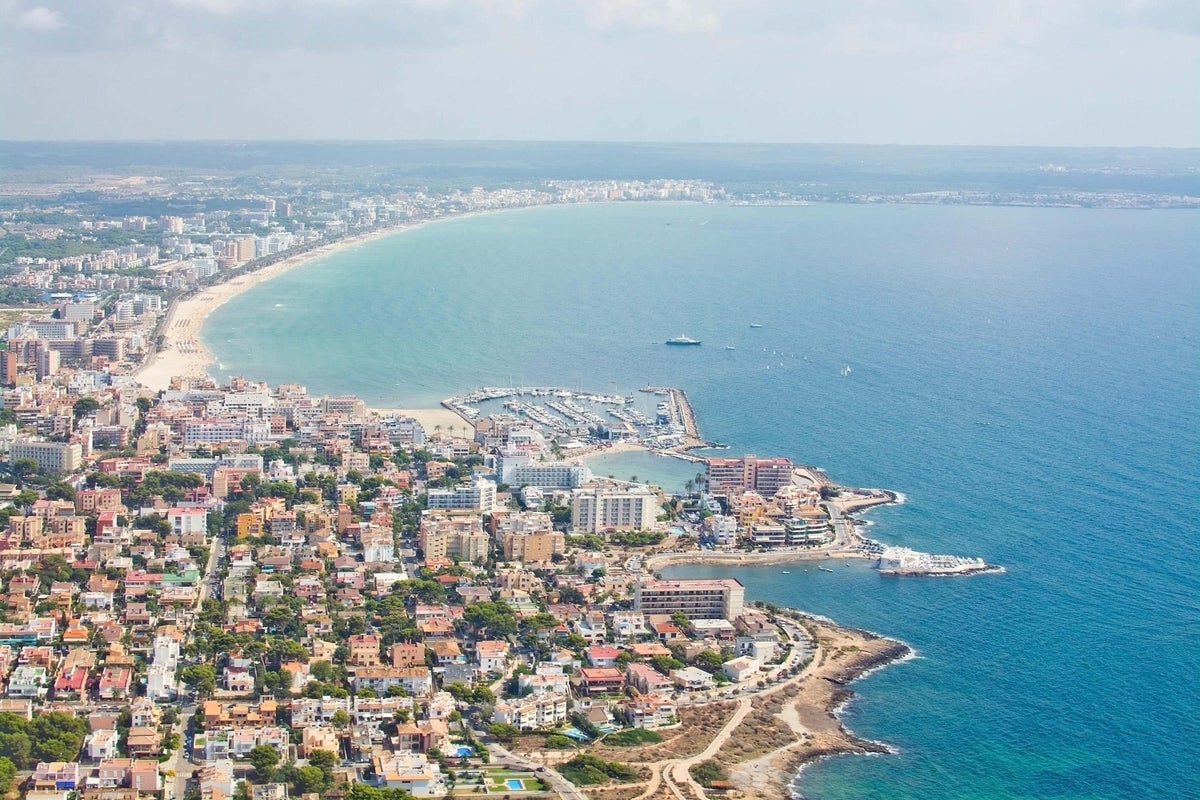
Travel agent Lastminute.com said war in the Middle East has impacted some 17,000 bookings, while holidaymakers are shifting towards alternative destinations like the Canary Islands and Sardinia.
The website, which offers holiday packages to destinations including Dubai and Abu Dhabi, said it was having to “adapt quickly” to travellers changing their preferences in light of the conflict.
The US-Israeli war with Iran, which escalated at the end of February, led to disruption and cancellations of some flights to Gulf states including the United Arab Emirates, Saudi Arabia and Qatar.
The airspace closures, coupled with consumer sentiment when it comes to travel taking a hit, affected approximately 17,000 bookings, Lastminute revealed.
It said the total volume of affected travel around the region is currently the equivalent of about a day and a half of its normal daily operations.
Despite the conflict influencing where and when people choose to book trips, the “overall intent to travel remains high”, according to Lastminute.
Consumers have been seeking reassurance and flexibility, and early booking patters indicate a shift in the preferences of travellers.
It noted increased demand toward alternative destinations such as Spanish archipelagos the Canary and Balearic Islands, Italian islands Sicily and Sardinia, and other European city breaks.
Lastminute’s chief executive Alessandro Petazzi said: “We continue to closely monitor the evolving situation in the Middle East, with supporting our customers remaining our top priority.
“At the same time, Lastminute.com’s flexible, pan-European model enables us to adapt quickly as travel patterns evolve, with demand naturally rebalancing across destinations.”
The Netherlands-based company reported a 15% jump in revenues to 361 million euro (£315 million) for the 2025 financial year, compared with the year before.
Adjusted earnings before tax and other costs increased by a third to 55 million euro (48 million).
The company said it was remaining “vigilant” against the geopolitical situation in the Middle East, but added that it was sticking to forecasts of a roughly 10% increase in revenues and profits in the year ahead.

Oven Pride household goods group McBride has revealed “temporary” price hikes to cover increased costs from the Iran war and warned it was seeing the first signs of supply shortages caused by the conflict.
The group, which makes branded and white label household and cleaning products for the likes of Tesco and Sainsbury’s, said until now it had only seen a small impact from higher haulage costs due to fuel price rises, but said “these conditions have now started to change”.
It said the “most heavily impacted” chemical and packaging suppliers are pushing through price increases as they face rising costs for petrochemical-derived feedstocks and higher energy costs in chemical and packaging production.
“The first signs of possible shortages in supply chains around the world are beginning to emerge,” it added.
McBride said its costs are increasing this month and will rise further due to the war, and is set to lift prices to offset the hit.
“The group has already informed all customers about temporary price adjustments, or surcharges to current pricing, to recover these higher, beyond our control, cost impacts from the Middle East conflict,” McBride said.
The warnings come amid mounting worries over the impact of the conflict on supply and costs, having sent oil prices surging above 100 US dollars a barrel and causing widespread disruption to global shipping.
Supermarkets met with Chancellor Rachel Reeves and Energy Secretary Ed Miliband at No 11 on Wednesday to look at issues caused by the war and agreed to explore together how to ease the cost-of-living impact for consumers.
McBride’s comments came in an update as it also announced a £34.5 million deal to buy Eurotab – a French-based specialist in cleaning tablets, such as for dishwashers.


China-Kenya trade corridor relaunched to boost SME participation

Meghan Markle receives glam support after shocking live blast

15 Design-Forward DIY Tools Worth Upgrading to This Year

-

 Entertainment1 week ago
UN warns migratory freshwater fish numbers are spiralling
-

 Politics1 week ago
Afghanistan announces release of detained US citizen
-

 Sports1 week ago
Broadcast industry CEO says consolidation is ‘essential’ to compete for NFL soaring media rights prices
-
 Business1 week ago
Property Play: Home flippers see smallest profits since the Great Recession, real estate data firm says
-
 Business1 week ago
More women are entering wealth management, but few are in advisory roles, study finds
-

 Fashion1 week ago
ICE cotton slips on weaker crude, profit booking
-

 Fashion1 week ago
Ho Chi Minh City bizs adjust production plans, seek new supply chains
-

 Entertainment1 week ago
Prince William shares message as Meghan tests future King’s patience