

Fashion
US’ Tailored Brands names Mike Baughn CFO, elevates Karla Gray to COO


Mike Baughn will join the Company as its new Executive Vice President, Chief Financial Officer (CFO), effective December 1, 2025. Mr. Baughn brings almost 20 years of retail financial experience, most recently with Foot Locker, Inc. where he served as CFO. In that role, he was instrumental in leading the multi-national retailer, including through its successful combination with Dick’s Sporting Goods. He previously spent 15 years in multiple roles at Kohl’s Corporation across FP&A, Sales Analysis, Business Unit Finance and Treasury, completing his time there as Executive Vice President, Finance & Corporate Treasurer.
Tailored Brands announced leadership changes to support long-term growth.
Mike Baughn, with nearly 20 years of retail finance experience at Foot Locker and Kohl’s, will become executive vice president and CFO from December 01, 2025.
The company also elevated Karla Gray to executive vice president and COO, expanding her remit to include supply chain and technology as it advances operational excellence.
On joining the Company, Mr. Baughn said, “I am thrilled about joining Tailored Brands at such an exciting time for the Company. The fundamentals are incredibly strong, and these amazing brands are positioned well for long-term growth.” Adding, “Throughout the process of getting to know the Company and its leaders, it was clear that its values are deeply ingrained in how the team operates and I am ready to become a part of this dynamic organization and its forward momentum.”
The Company is also announcing the elevation of Karla Gray to Executive Vice President, Chief Operating Officer (COO). Ms. Gray joined Tailored Brands in May 2021 as Executive Vice President, Chief Stores Officer. Prior to joining Tailored Brands, she served as VP and GM of North American Factory Stores at Nike. As COO, Ms. Gray will continue to lead the Stores organization, Real Estate and our Customer Contact Center, now adding the Company’s Supply Chain and Technology functions.
Ms. Gray shared, “This is an exciting time for the Company, and I couldn’t be happier to be partnering more closely with the leaders of these functions. Being ‘Better Every Day’ is one of our core values and I believe we have tremendous opportunity to build on what is an incredibly strong foundation as we move into a new era of efficiency and growth.”
Reflecting on these changes, CEO John Tighe remarked, “As our Company looks to the future, our ability to perform with financial and operational rigor will be critical to our success. In Mike we have found someone who not only brings an extraordinary background to be our next CFO, but who is a strong reflection of our Company’s values.” Mr. Tighe went on to say, “And as Karla steps into the role of COO, I am confident she will bring a next level of operational excellence across the enterprise as we open new stores and propel our strategic growth plans.”
Note: The headline, insights, and image of this press release may have been refined by the Fibre2Fashion staff; the rest of the content remains unchanged.
Fibre2Fashion News Desk (RM)












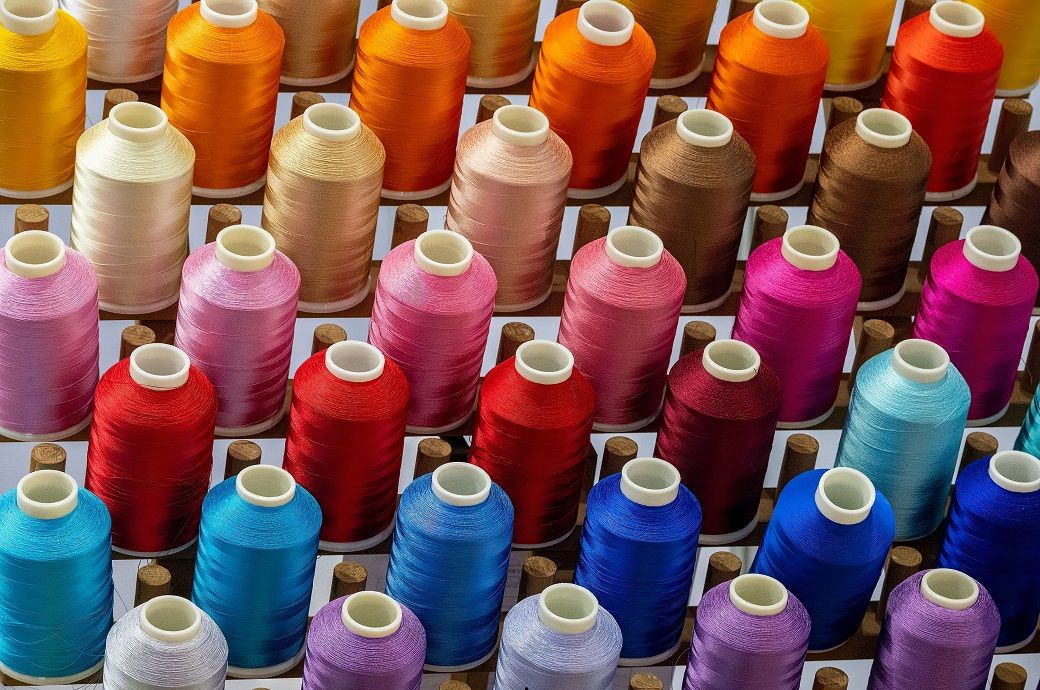
Following earlier increases in purified terephthalic acid (PTA), melt and PSF, Indian producers have now raised PFY prices. POY, FDY and PTY prices have been increased by ****;* per kg across all deniers and lustres with effect from March *, reflecting rapid cost pass-through amid heightened volatility in crude-linked value chains, according to the market sources.
In the previous weekly revision effective February **, ****, PTA was increased by ****;*.** per kg to ****;**.** per kg, while monoethylene glycol (MEG) was retained at ****;**.** per kg. Polyester melt prices were raised by ****;*.** per kg to ****;**.** per kg. Downstream PSF prices were also revised upward by ****;*.** per kg from March *.

May 2026 cotton settled at 64.59 cents per pound, down 1.02 cents. This marked the lowest settlement price for May contract since February 20, effectively erasing all gains made over that period.
Cotton futures on Intercontinental Exchange (ICE) fell over 1 per cent, with May 2026 settling at 64.59 cents/lb, the lowest since Feb 20, amid Middle East tensions and a stronger US dollar.
Rising inventories and risk aversion pressured prices.
Speculators cut net shorts, while crude oil surged.
ICE cotton traded mixed in early Indian hours today.
Total trading volume for the session came in at 73,225 contracts. ICE-certified deliverable No. 2 cotton inventory rose to 126,178 bales as of February 26, up from 119,457 bales the previous trading day.
The US dollar climbed to its highest level in over a month, making dollar-denominated commodities like cotton more expensive for international buyers and reducing export demand.
Market analysts stated that the Middle East conflict is putting significant pressure on cotton and that a broader risk-aversion tone is affecting the market.
On March 2, Iran continued launching attacks on US military bases across multiple countries in the Middle East, with explosions reported in several locations. An advisor to the Iranian Islamic Revolutionary Guard Corps commander announced that the Strait of Hormuz had been closed, with Iran threatening to strike any vessels attempting to pass through it.
US President Trump indicated that military action against Iran could last four to five weeks, while also expressing readiness for operations to extend considerably longer.
Major Wall Street indices declined on Monday as the conflict raised fears of disrupted global trade routes and renewed inflationary pressures. Analysts warned that investors appear to be rebuilding short positions in cotton, suggesting continued downward price pressure in the near term. The earlier May contract low of 62.86 cents per pound as a key support level that could be tested again.
CFTC data released the prior Friday showed that speculators reduced their net short positions in ICE cotton futures and options by 26,508 contracts in the week ending February 24, bringing net shorts to 48,922 contracts.
International crude oil and natural gas prices surged sharply on Monday following US and Israeli strikes on Iran, with retaliatory actions forcing the closure of several energy facilities in the region.
This morning (Indian Standard Time), ICE cotton for May 2026 was traded at 64.75 cents per pound (up 0.16 cent), cash cotton at 62.59 cents (down 1.02 cent), the March 2026 contract at 62.59 cents ((down 1.02 cent)), the July 2026 contract at 66.75 cents (up 0.14 cent), the October 2026 contract at 68.18 cents (down 0.49 cent) and the December 2026 at 69.04 cents (up 0.12 cent). A few contracts remained at their previous closing levels, with no trading recorded so far today.
Fibre2Fashion News Desk (KUL)
If the US administration imposes a 15-per cent levy, the US ETR would rise to 11.3 per cent.
President Donald Trump reinstated tariffs immediately following the US Supreme Court’s February 20 ruling that invalidated the reciprocal tariffs imposed under the International Emergency Economic Powers Act (IEEPA). The new blanket 10-per cent tariff rate is authorised under Section 122 of the Trade Act of 1974 and expires in 150 days unless extended by Congress.
The 10-per cent blanket reciprocal tariff imposed by the US on most trading partners has reduced the US effective tariff rate (ETR) to 9.4 per cent from 12.7 per cent, Fitch Ratings said.
If a 15-per cent levy is imposed, the ETR would rise to 11.3 per cent.
China has the highest ETR among trading partners, followed by Vietnam, Japan and Brazil.
China’s ETR is around 19 per cent from 29 per cent earlier.
Section 122 permits a maximum rate of 15 per cent but does not allow for tariff adjustments for individual countries.
Prior to the court decision, China was subject to two reciprocal tariffs: a fentanyl tariff of 10 per cent that applied to all imports and a 10-per cent reciprocal tariff on an import base subject to carveouts. The two tariffs have been consolidated into the 10-per cent blanket tariff, reducing China’s ETR to around 19 per cent from 29 per cent, Fitch said in a release.
China still has the highest ETR among major trading partners, followed by Vietnam, Japan and Brazil. Of the United States’ 31 largest trading partners, 26 will see their ETRs decline. Brazil benefits the most, with its ETR decreasing by 18 percentage points (pp) to 11 per cent from 29 per cent.
ETRs for most countries largely remain unchanged following the switch in tariff regimes, and no country will see an increase in its ETR if the Section 122 tariff rate remains at 10 per cent.
Fibre2Fashion News Desk (DS)


Petrol, Diesel Fresh Prices Announced: Check Rates In Your City On March 4

Eileen Gu reflects on decision to leave Team USA for China: ‘A lot of people just don’t understand’

Gold Prices: Gold retreats on strong dollar after four-day rally – The Times of India

-

 Politics6 days ago
What are Iran’s ballistic missile capabilities?
-

 Politics6 days ago
US arrests ex-Air Force pilot for ‘training’ Chinese military
-
 Business1 week ago
Households set for lower energy bills amid price cap shake-up
-

 Sports1 week ago
Top 50 USMNT players of 2026, ranked by club form: USMNT Player Performance Index returns
-
 Business5 days ago
Attock Cement’s acquisition approved | The Express Tribune
-

 Sports6 days ago
Sri Lanka’s Shanaka says constant criticism has affected players’ mental health
-

 Fashion5 days ago
Policy easing drives Argentina’s garment import surge in 2025
-
 Business1 week ago
Lucid widely misses earnings expectations, forecasts continued EV growth in 2026