

Sports
USA Basketball names Heat’s Spoelstra as coach through 2028 | The Express Tribune

MIAMI:
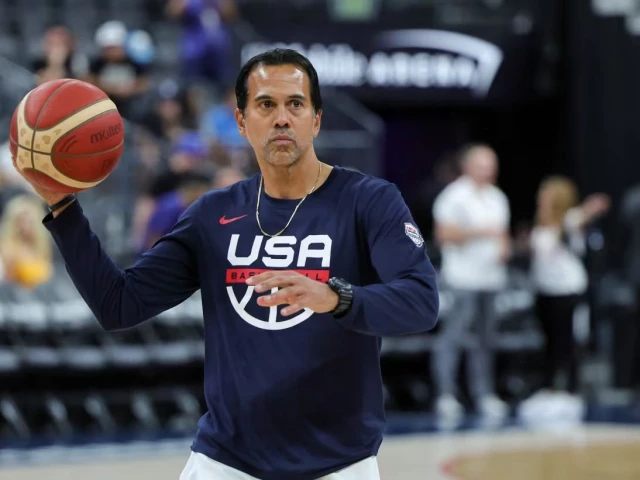
Miami Heat head coach Erik Spoelstra was named head coach of the US men’s team through the 2028 Los Angeles Olympics on Tuesday by USA Basketball.
American teams of NBA stars have won the past five Olympic gold medals, giving the US men 17 Olympic titles in all as well as five FIBA World Cup titles.
Spoelstra was selected by US men’s national team director Grant Hill and approved by USA Basketball’s board of directors. The US Olympic and Paralympic Committee must still approve his selection.
“It’s an incredible honor,” Spoelstra said. “Representing our country and leading world-class athletes to marquee competitions is one of the greatest privileges in sport. I look forward to carrying on the tradition of excellence and teamwork that defines USA Basketball.”
Spoelstra, 54, was an assistant coach on last year’s Paris Olympic championship squad and an assistant to Steve Kerr on the US 2023 World Cup squad that finished fourth.
Spoelstra coached a US Select squad in 2021 that trained alongside the US Olympic squad that won gold in Tokyo.
With the Heat, Spoelstra was an assistant coach on the 2006 NBA championship team and as a head coach he guided Miami to the 2012 and 2013 NBA titles.
In addition to the 2028 Olympics on home hardwood, Spoelstra will direct the US men at the 2027 FIBA World Cup in Doha and at training camps and exhibitions ahead of both major global events.
“I’ve known Erik Spoelstra for the better part of two decades and have gotten to know him better throughout our time with USA Basketball,” Hill said.
“Spo is not only an outstanding coach, but a great colleague, friend and father, all of which make him the perfect choice to continue the USA Basketball men’s national team coaching legacy through 2028.”
Next week, Spoelstra will open his 18th season as head coach of the Heat, making him the longest tenured NBA coach with one team.
Spoelstra played and coached in Germany before going to Miami in 1995 as a video coordinator.
“Erik Spoelstra is one of the most widely respected head coaches around the game,” USA Basketball chief executive officer Jim Tooley said.
“As the longest tenured coach with one team, along with his involvement with USA Basketball the past several years, he’s well positioned to lead the USA men’s national team.”







Sports
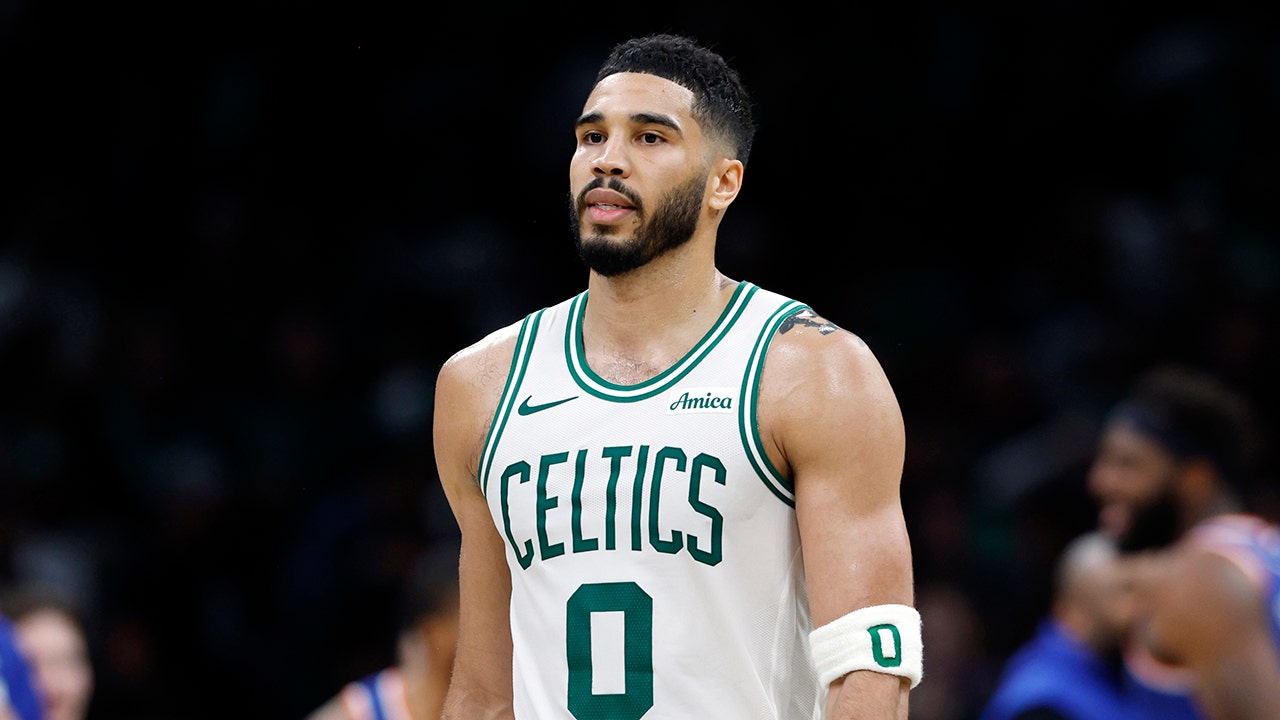
Jayson Tatum, 10 months after Achilles injury, expected to return to Celtics Friday vs Mavericks: report
NEWYou can now listen to Fox News articles!
Jayson Tatum’s return to an NBA court appears to be coming much sooner than anyone expected.
The Boston Celtics superstar could be suiting up as early as Friday, which marks nearly 10 months since he tore an Achilles against the New York Knicks in the Eastern Conference semifinals last season, per ESPN.
The Celtics will face Cooper Flagg and the Dallas Mavericks Friday at TD Garden, and Tatum is expected to be out there with his teammates for the first time since his injury.
Tatum was officially listed as questionable on the Celtics’ injury report.
CLICK HERE FOR MORE SPORTS COVERAGE ON FOXNEWS.COM
Boston Celtics forward Jayson Tatum applauds from the bench in the second quarter against the Charlotte Hornets at TD Garden March 4, 2026. (Danielle Parhizkaran/The Boston Globe)
Brad Stevens, the Celtics’ president of basketball operations, noted that his star guard wouldn’t be cleared until he was definitely ready to play, both physically and mentally.
That’s especially the case considering the Celtics don’t need Tatum to rush back. They’re 41-21, which gives them the No. 2 seed in the Eastern Conference.
Tatum also noted he would want to return for a home game.
Boston has had players stepping up in the absence of Tatum, including his counterpart Jaylen Brown. Brown has taken on the scoring load, averaging 28.9 points per game with 7.2 rebounds and five assists.
Derrick White has added 17.3 points per game, while doing work on the defensive end with 1.2 steals.
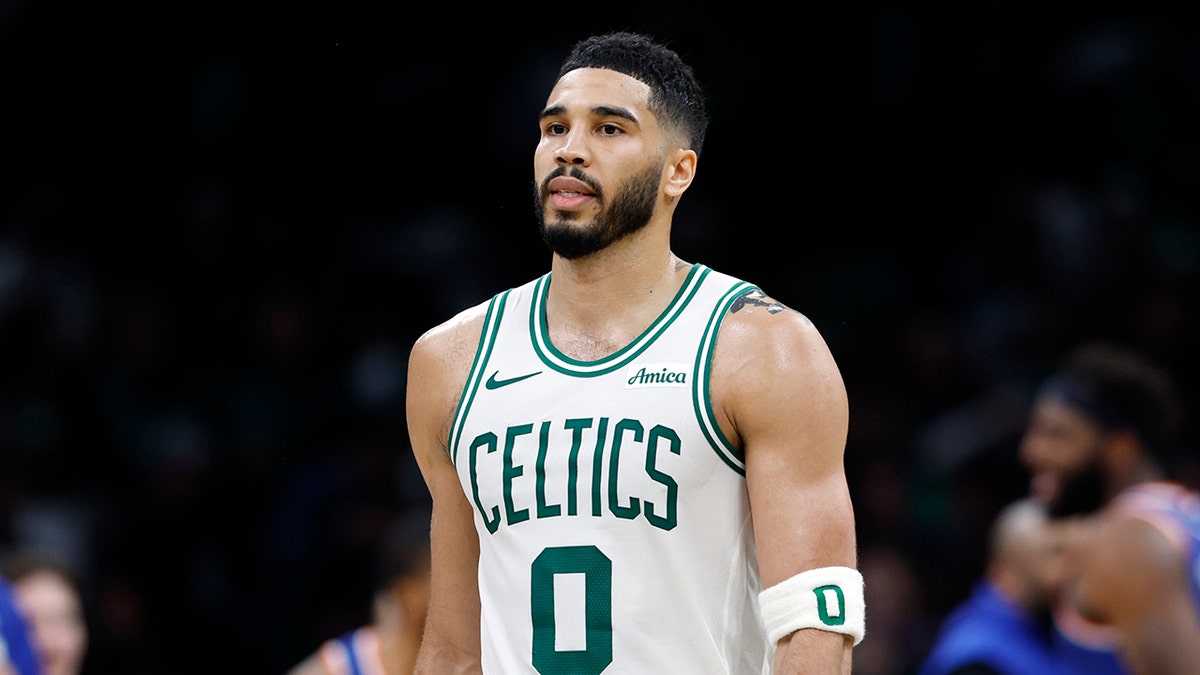
Boston Celtics forward Jayson Tatum walks off the court after Game 1 of the NBA Eastern Conference semifinals against the New York Knicks at TD Garden. (Danielle Parhizkaran/The Boston Globe)
And the Celtics have had Payton Pritchard (16.8 points, 5.3 assists) and Anfernee Simons (14.2 points) helping the team every night.
The 28-year-old Tatum returning is nothing short of remarkable considering the average window for Achilles rehab is 9-12 months, and it’s usually on the later end of the timeline.
As Tatum looks to return, he was well aware of how good his team has been in his absence. He has been spotted on the bench cheering his teammates on all season, and he wants to seamlessly work his way back into the rotation.
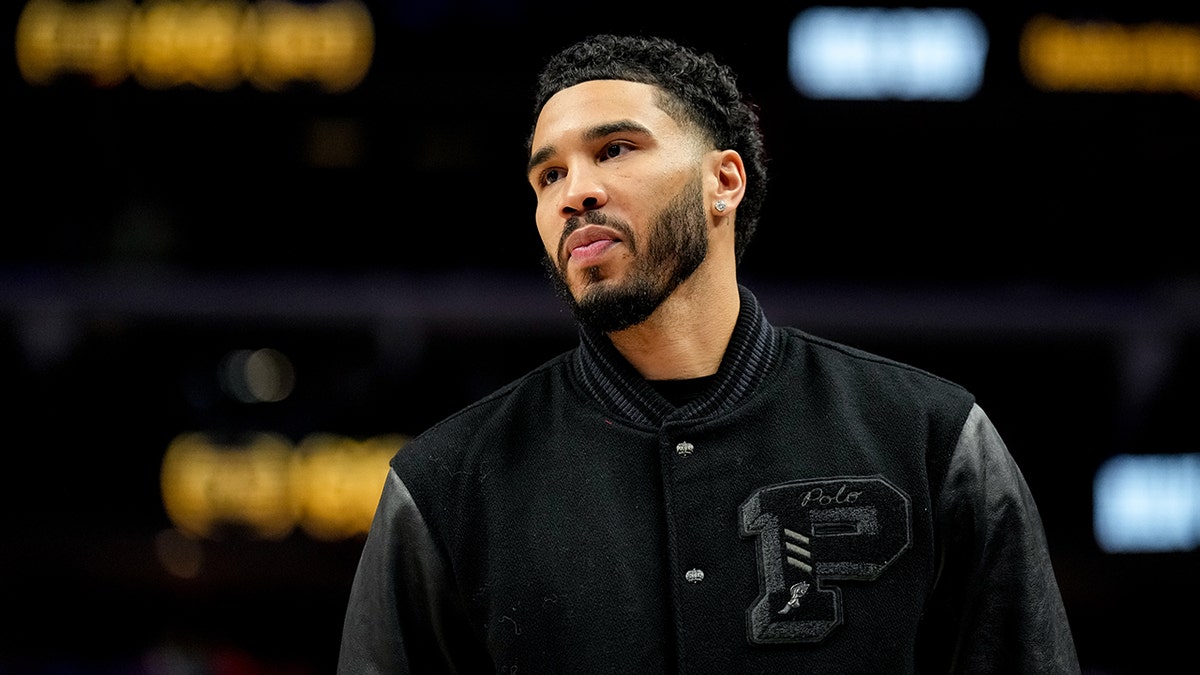
Jayson Tatum of the Boston Celtics against the Detroit Pistons at Little Caesars Arena Jan. 19, 2026, in Detroit. (Nic Antaya/Getty Images)
CLICK HERE TO GET THE FOX NEWS APP
“I’m just hyper aware of what’s going on. I think it would just stem from that,” he said, according to NBA.com. “Obviously, I know what I bring to the table and bring to the team. But I’m also aware that these guys have been playing extremely well.”
Follow Fox News Digital’s sports coverage on X and subscribe to the Fox News Sports Huddle newsletter.
Related Article

NEWYou can now listen to Fox News articles!
President Donald Trump paid respects to late legendary football coach Lou Holtz Thursday after Holtz’s death Wednesday at the age of 89.
Trump shared a tribute to Holtz in a Truth Social post.
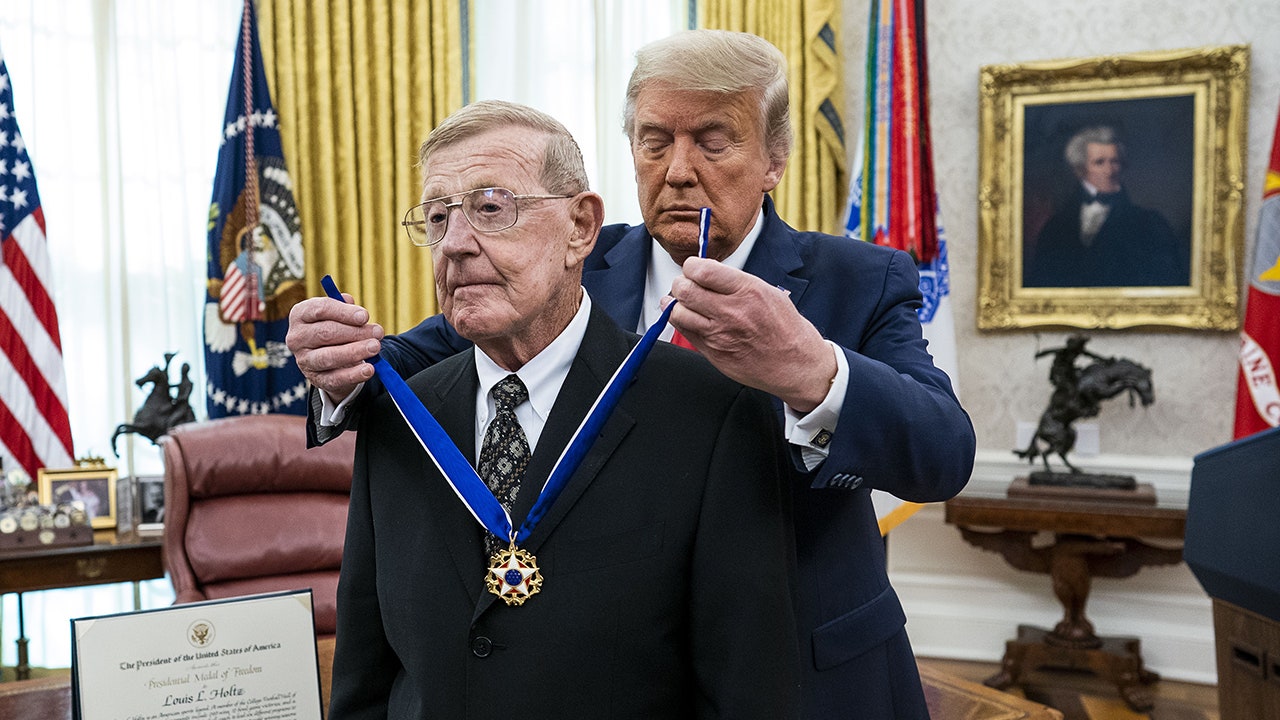
Former Notre Dame football coach Lou Holtz listens before being presented with the Presidential Medal of Freedom at the White House in Washington, D.C., Dec, 3, 2020. (Doug Mills/The New York Times/Bloomberg via Getty Images)
“The wonderful Lou Holtz passed away yesterday, so sad. Lou was an absolute WINNER both on and off the field. Not only did he spearhead Notre Dame’s HISTORIC undefeated season in 1988 (including the legendary 31-30 ‘Catholics v. Convicts’ Victory against Miami), he raised Millions upon Millions for struggling student-athletes, and the AMAZING University of Notre Dame (Go Irish!),” Trump wrote.
CLICK HERE FOR MORE SPORTS COVERAGE ON FOXNEWS.COM
“He was also a true American Patriot, supporting me through thick and thin, and consistently speaking out against Democrat Insanity, including ‘Transgender for Everybody,’ and the Illegal Alien Invasion.
“It is for all this incredible work that I gave Lou Holtz our Nation’s Highest Civilian Honor, the Presidential Medal of Freedom. Rest in Peace, Lou. Because of Patriots like you, we have made America GREAT AGAIN! President DONALD J. TRUMP.”
Holtz was a known supporter of Trump, even saying in February 2024 that Trump needed to “coach America back to greatness!”
Near the end of Trump’s first term, shortly after former President Joe Biden defeated him in the 2020 election, Trump awarded Holtz with the Presidential Medal of Freedom, the highest civilian award of the United States. Holtz, who also spoke at the 2020 Republican National Convention, was humbled by the honor.
“It’s the highest honor or award you could possibly receive, and I receive it with mixed emotions. First of all, I’m humbled,” Holtz told “Fox & Friends” afterward. “There are many more people far worthy than me, I can assure you.
“Nobody is more appreciative than me. So, I’m excited to have this opportunity and, at the same time, I’m excited to receive it from President Trump. The president I admire and respect. I think he did a tremendous job.”
At the time, Holtz also called Trump “one of the great presidents of my lifetime.”
CLICK HERE TO DOWNLOAD THE FOX NEWS APP
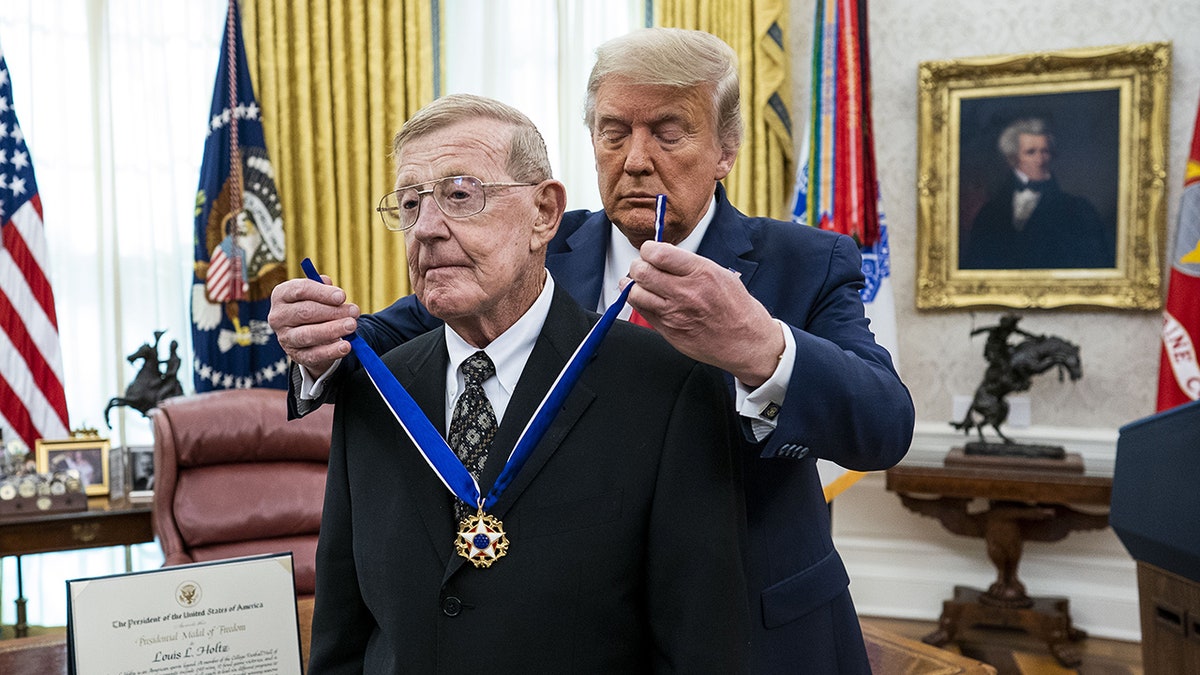
President Donald Trump presents the Presidential Medal of Freedom to former Notre Dame football coach Lou Holtz at the White House in Washington, D.C. Dec. 3, 2020. (Doug Mills/The New York Times/Bloomberg via Getty Images)
Holtz was the first coach in NCAA history to take six different football programs to bowl games, including William & Mary (1969-71), N.C. State (1972-75), Arkansas (1977-83) and South Carolina (1999-2004). The only team he wasn’t able to accomplish the feat with was Minnesota, which he led from 1984-85.
Holtz finished his coaching career with a 249-132-7 record in 388 games. He was inducted into the College Football Hall of Fame in 2008.
Follow Fox News Digital’s sports coverage on X and subscribe to the Fox News Sports Huddle newsletter.
Related Article
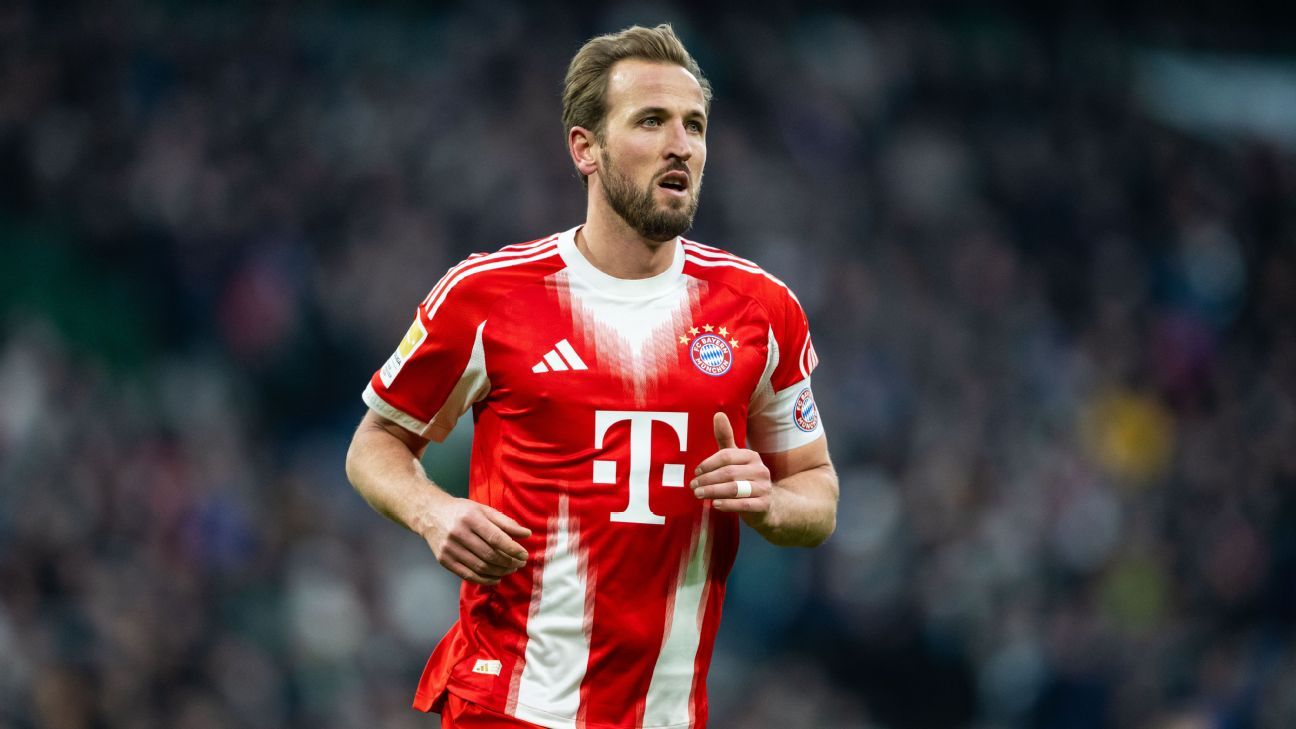
Harry Kane will miss Bayern Munich‘s game against Borussia Mönchengladbach on Friday with a calf injury in a blow to his hopes of breaking the Bundesliga record for most goals in a season.
Bayern coach Vincent Kompany said on Thursday the problem wasn’t serious but means Kane will play no part in Friday’s game, which could see Bayern open up a 14-point lead at the top of the table.
“He got a knock on his calf and hasn’t recovered yet,” Kompany said. “It’s nothing serious for the time being but we’d need maybe another a day for him to be involved. We’re pretty relaxed. Of course we would have liked Harry to be involved but these things happen.”
Kompany didn’t express concern Kane would miss Bayern’s visit to Atalanta in the Champions League round of 16 next week.
Kane has scored 30 goals in the Bundesliga and is 11 short of Robert Lewandowski‘s record of 41, with 10 games remaining.
Bayern will also be without Hiroki Ito and Alphonso Davies for Friday’s game, Kompany said.
Bayern, the defending Bundesliga champions, have an 11-point lead at the top of the table after beating second-placed Borussia Dortmund 3-2 last Saturday.
“We’ve had an 11-point lead before and we know how quickly that can change,” said Kompany.
“We’re just looking at our performance and our victories. I looked at the table once after the game against Dortmund and it looked good. But after that, once again the only thing that mattered was Gladbach. It sounds like a cliche, but it’s a way of life for me.”
The Associated Press and PA contributed to this report.


Jayson Tatum, 10 months after Achilles injury, expected to return to Celtics Friday vs Mavericks: report

Maisie Peters surprises fans in Australia with Ed Sheeran

Trump pays tribute to Lou Holtz after legendary football coach’s death

Policy easing drives Argentina’s garment import surge in 2025

What are Iran’s ballistic missile capabilities?

India Us Trade Deal: Fresh look at India-US trade deal? May be ‘rebalanced’ if circumstances change, says Piyush Goyal – The Times of India

-
 Fashion1 week ago
Policy easing drives Argentina’s garment import surge in 2025
-
 Politics1 week ago
What are Iran’s ballistic missile capabilities?
-
Business7 days ago
India Us Trade Deal: Fresh look at India-US trade deal? May be ‘rebalanced’ if circumstances change, says Piyush Goyal – The Times of India
-
 Business1 week ago
Attock Cement’s acquisition approved | The Express Tribune
-

 Politics1 week ago
US arrests ex-Air Force pilot for ‘training’ Chinese military
-
 Business6 days ago
Greggs to reveal trading amid pressure from cost of living and weight loss drugs
-

 Sports6 days ago
LPGA legend shares her feelings about US women’s Olympic wins: ‘Gets me really emotional’
-

 Fashion7 days ago
Texwin Spinning showcasing premium cotton yarn range at VIATT 2026