

Sports
USMNT 2026 World Cup Big Board 2.0: Balogun, Zendejas on the rise

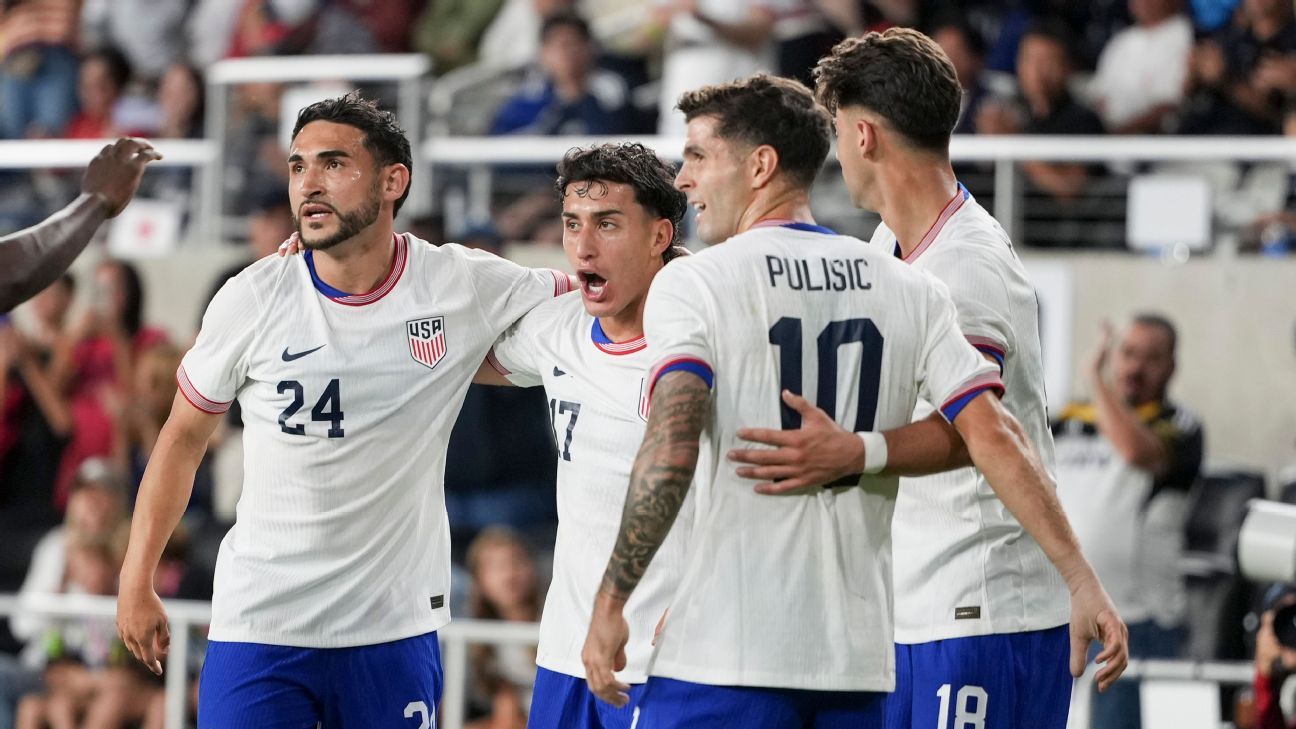
The September international window was a bit all over the place for the U.S. team, though it did finish on an upbeat note. A poor first-half performance Saturday against South Korea condemned the Americans to a 2-0 defeat, but the team rebounded Tuesday against Japan as attackers Folarin Balogun and Alex Zendejas made the most of their rare starts, contributing a goal each in a 2-0 victory. A change in formation — let’s call it a 3-4-3, with the presumed wingers taking up positions in the pockets underneath the center forward — provided increased defensive stability, though there is still room for improvement.
Such performances, combined with injuries and some players changing clubs, mean there has been movement in the second edition of ESPN’s USMNT World Cup Big Board. There’s also the fact that U.S. manager Mauricio Pochettino has said that the time for looking at new players is over, and that he’ll be bringing in a closer approximation of his first-choice squad for the next international window in October.
So let’s take a look at the predicted 26-man squad and which bubble players might still find a way through.
Goalkeepers (3)

Matt Freese | 27 years old | New York City FC
Freese was solid in the two September friendlies, so it’s not a stretch to think that he’s the starting goalkeeper until further notice. However, that’s not to say his role as the No. 1 keeper is completely sewn up. Pochettino’s insistence that no starting spot is safe must be believed given some of the players omitted from recent rosters, but Freese has strengthened his position.

Matt Turner | 31 | New England Revolution (on loan from Lyon)
Turner recently told ESPN, “[I’m] confident that I’ll be back in October if I continue the level I’m playing at.” His form has cooled off a bit after his impressive start to his second stint with the New England Revolution, with his goals prevented per 90 minutes dropping from 0.50 earlier this season to 0.06. He’ll need to return to top form if he is to get back to the top of the U.S. goalkeeping heap.
– Carlisle: Zendejas’ starring role has come at the right time for himself and the USMNT
– O’Hanlon: Top 50 USMNT players, ranked by club form
– Hernandez: With nine months until World Cup, does Pochettino know his best XI?

Zack Steffen | 30 | Colorado Rapids
Steffen has remained consistent throughout the season, and his underlying numbers are slightly better than Freese’s in terms of goals prevented per 90 (0.20 to 0.15), though Freese has been better in terms of save percentage (74.3% to 68.2%). Either way, Steffen figures to be in the mix when October rolls around.
Center backs (5)

Chris Richards | 25 | Crystal Palace
Richards cemented his status as a one of the starting center backs during the September window, as he wasn’t on the field for the Americans’ poor first half against South Korea. The move to a three-center-back system seems to suit him given that he plays in a similar alignment with Palace, though with the U.S. he’s in a slightly different role as the most central of the three.

Tim Ream | 37 | Charlotte FC
Ream is another player for whom the three-back alignment seems a good fit. The formation means there’s less chance he’ll be exposed in terms of pure foot speed, and his leadership and steady passing can be emphasized. Ream’s age has been brought up often as making him a possible liability at next year’s World Cup. But until someone pushes him out, his spot is secure, and he has the trust of Pochettino. At club level, he has helped Charlotte to eight straight wins.

Mark McKenzie | 26 | Toulouse
McKenzie and Toulouse were off to a good start in Ligue 1, posting shutouts in their first two matches. That is, until they ran into the goal-scoring machine that is Paris Saint-Germain, who hammered Les Violets 6-3 in a match that was essentially over at halftime.
PSG have done that to a lot of teams lately, so no shame there. But McKenzie will be one of the players looking to reestablish themselves over the next few weeks.

Cameron Carter-Vickers | 27 | Celtic
Though Carter-Vickers wasn’t responsible for the flameout in the qualifying round of the UEFA Champions League to lightly regarded Kairat Almaty from Kazakhstan — Celtic didn’t concede a single goal and were beaten via a penalty shootout — the fact that he’ll be playing in the Europa League instead doesn’t necessarily help his cause in terms of the level of competition he’ll face. We’ll see how much his previous history with Pochettino helps or hurts him.

Miles Robinson | 28 | FC Cincinnati
Robinson just signed a new long-term contract, so he’s obviously held in high regard in Cincinnati, but he has yet to really make many inroads under Pochettino. An injury saw him omitted from the September window, and he didn’t play much during the Gold Cup, either. Will the likes of Tristan Blackmon supplant him?
Outside backs (4)

Sergiño Dest | 24 | PSV Eindhoven
Dest has been excelling at club level for PSV Eindhoven, but the September window showed the highs and lows of his game. He looked dynamic going forward, but his positioning contributed directly to the two South Korea goals. That said, the change in alignment should suit him well, emphasizing his strengths in attack while mitigating his defensive weaknesses.

Antonee Robinson | 28 | Fulham
Robinson’s recovery from offseason knee surgery came too late for the September window even as he finally saw the field for Fulham. The expectation is that by October, he will be back to his marauding best, regardless of how the U.S. team lines up.

Alex Freeman | 21 | Orlando City SC
Freeman continues to get reps from Pochettino and looked solid in the Japan victory. But his inclusion on the final roster might come down to whether Pochettino prefers Yunus Musah in a wing back spot. If that’s the case, the Atalanta player looks set to get the nod given his greater level of experience.

Max Arfsten | 24 | Columbus Crew
Arfsten continues to get steady playing time under Pochettino, and the change in formation puts him in a role nearly identical to the one he fills with his club. The fit was evident against Japan, as it was his cross that Alejandro Zendejas hammered home for the first U.S. goal. With Robinson returning to full fitness, Arfsten’s minutes should decrease. But he has still come a long way in terms of World Cup consideration, and his defending has shown steady improvement.
Midfielders (5)

Tyler Adams | 26 | AFC Bournemouth
Adams finished the window better than he started it. Good thing, because questions were beginning to be asked given his recent performances in a U.S. shirt, particularly against Mexico in the Gold Cup final and Saturday against South Korea. The season has started well for Adams at club level, and his form should continue to improve.

Weston McKennie | 26 | Juventus
Of all the players that Pochettino left home in September, McKennie is one whom the U.S. manager seems most intent on lighting a fire beneath. Right now, the midfielder is very much a squad player for Juventus, having been a late-game substitute in both of Juve’s league matches. He was also part of the Nations League debacle in March, which Pochettino admits caused him to rethink the national team.
McKennie remains a talented player, but he needs to break through (again) at Juve to make sure he retains his spot.

Johnny Cardoso | 23 | Atlético Madrid
Last month, the Big Board called Cardoso an “enigma” because of how he’s been unable to replicate his club form with the U.S. Nothing has changed in that regard. Cardoso makes the cut because of the club he plays for, and the potential that he carries. So far, he has been used consistently by Atletico manager Diego Simeone, but at some point, Cardoso will need to deliver for Pochettino. October would be the perfect time for him to pull a Zendejas or a Balogun and stake his claim for more minutes.

Yunus Musah | 22 | Atalanta (on loan from AC Milan)
Musah’s desire to stay with AC Milan finally gave way to reality, as he completed his loan to Atalanta just before the closing of the summer European transfer window. The irony is that Musah was starting to get some decent playing time with Milan at wing back, but the hope is that his versatility will see him get minutes in Bergamo. That trait also sees him go from bubble player in the last version of the Big Board to making the squad now.

Tanner Tessmann | 23 | Lyon
Tessmann was another omission for the September window, which was confounding since he seemed to be the next man up to replace McKennie. He’s off to a solid start with Lyon, most recently in an impressive 1-0 win over Olympique Marseille.
Attackers (5)

Christian Pulisic | 26 | AC Milan
“All is forgiven” was the message coming out of the window regarding Pulisic and Pochettino’s relationship. The new formation also seemed to fit the Milan attacker well — he was back to running in the open field against Japan, and he benefitted from having Zendejas by his side. He’s one of the few players whose spot on the roster is written in ink, not pencil.

Tim Weah | 25 | Marseille
Could Zendejas’ gain be Weah’s loss? It’s possible. The Marseille defender/winger has been rather ordinary of late with the U.S. and squandered some decent chances against South Korea. He was an unused sub against Japan, clearing the way for Zendejas to shine. Weah’s pace is not easily replaced, so he’ll likely have a spot on the roster, but there’s real competition now for his spot in the starting lineup.

Malik Tillman | 23 | Bayer Leverkusen
Tillman was another injury casualty, though he returned to the Leverkusen lineup right before the start of the window. He even scored his first goal for the club in a wild 3-3 draw with Werder Bremen on Aug. 30. Tillman appears to be a Pochettino favorite, but he’ll need to continue to deliver for Leverkusen for him to keep that label.

Diego Luna | 22 | Real Salt Lake
Has Luna hit his ceiling at the international level? He might very well have, given his inability to influence the South Korea game much in a starting role. He fared better coming on as a sub against Japan, and that might be his best role going forward: a late-game chaos agent who can change the tempo of a match. For now, it’s time to retrench with his club.

Alejandro Zendejas | 27 | América
Zendejas was probably the biggest winner of the window for the U.S., parlaying a rare start into a Man of the Match performance against Japan. Pochettino himself said Zendejas is “in the race” for a World Cup roster spot. But Zendejas knows now is no time to take his foot off the gas, and a stellar month with Club América would further cement his spot.
Forwards (4)

Folarin Balogun | 24 | AS Monaco
Balogun was the other player (next to Zendejas) who did plenty to raise his stock in September. The U.S. attack just looks so much more dynamic with him on the field thanks to his ability to stretch defenses, as well as hold the ball up and give teammates an outlet. Pochettino would never say this, but the starting striker spot is now Balogun’s to lose, as long as he can stay healthy.
Ricardo Pepi | 22 | PSV Eindhoven
Like for Robinson, the September window came a little bit too soon for Pepi, as he had just returned to the field after a lengthy recovery from knee surgery. The goal for Pepi this month is to build on the 49 minutes he has logged so far this season, as well as get on the scoresheet. That would make it difficult for Pochettino to leave him at home.
Champions League tilts against Union Saint-Gilloise on Tuesday and Bayer Leverkusen on Oct. 1 should reveal plenty about where Pepi’s form is.

Josh Sargent | 25 | Norwich City
The club vs. country conundrum continues for Sargent. He leads the English Championship with five goals but can’t for the life of him find the net for the U.S. team. Now he looks to have fallen down the depth chart underneath Balogun and could fall further if Pepi regains his form. All Sargent can do is continue to toil away for Norwich City and hope he finally breaks his international streak at some point. One wonders, though, if he has run out of chances with the U.S. team.

Haji Wright | 27 | Coventry City
Wright is hot on the heels of Sargent for the goal-scoring lead in the Championship, having tallied four times in the league this season. His ability to play on the wing helps his case, but he’s another player whose spot looks vulnerable.
On the bubble
Patrick Schulte | Goalkeeper | 24 | Columbus Crew
Timing has proved to be everything for Schulte, with Freese seizing the starting spot after Schulte got injured before the Gold Cup. Columbus has been scuffling a bit of late too (just 1-3-2 in their past six games). Barring someone else getting hurt, he figures to be on the outside looking in.
Auston Trusty | Center back | 27 | Celtic
Celtic’s aforementioned elimination from the Champions League hit Trusty the hardest. The center back already lost his starting spot to Liam Scales, and while the Europa League still beckons for the Hoops, it’s not the same platform as the Champions League. He’s basically waiting for others to falter so he can get another look.
2:38
Nicol: Pochettino’s comments were mind-blowing
Steve Nicol questions Mauricio Pochettino’s approach as USMNT manager but finds positives in Japan victory.

Tristan Blackmon | Center back | 29 | Vancouver Whitecaps
Blackmon rebounded from having shaky moments against South Korea to a solid, if unspectacular, performance against Japan. It’s possible he gets called back in, but that is in many ways dependent on the performances of others. A strong finish to the club season will give Pochettino something to ponder.

Joe Scally | Outside back | 22 | Borussia Mönchengladbach
This is one player whom the formation change doesn’t help. It’s not that Scally can’t play as a wing back at all — he has done so at times in the past for Gladbach — it’s just that players such as Dest, Musah and Freeman seem better suited to the role. Scally wouldn’t be an ideal fit as one of the three central defenders, either. Hence a move to the bubble list.

Caleb Wiley | Outside back | 20 | Watford (on loan from Chelsea)
Wiley was in line to be the primary backup to Robinson at left back, but a back injury has delayed his start to the season. With other candidates stepping up, he’s got some serious catching up to do.

Cristian Roldan | Midfielder | 30 | Seattle Sounders
Roldan’s 90-minute stint against Japan was the surprise of the window, given that he was a late addition. In that match, he provided tenacity and range — his seven recoveries were a team high — and was involved in the buildup to Zendejas’ goal. Is there more to come? That seems a reach given the likely return of several players, but Pochettino is now known to be an admirer, so anything is possible.

Luca de la Torre | Midfielder | 27 | San Diego FC
De la Torre was expected to get more time in September, but Pochettino opted to deploy Sebastian Berhalter and Roldan alongside Adams instead. The San Diego midfielder is still in contention for a World Cup place because of how he keeps possession, but he seems to be sliding down the depth chart and thus moves to bubble status.
Sebastian Berhalter | Midfielder | 24 | Vancouver Whitecaps
It was always going to be an uphill battle for Berhalter given the candidates he was going to have to get past, but he slid further down the pecking order during the September window, mostly because of his performance against South Korea. It’s one thing to succeed in the Gold Cup, and quite another to do it against World Cup-caliber opposition. Aside from his ability on set pieces, there’s not enough else in his game to warrant getting called up in October.
Gio Reyna | Attacker | 22 | Borussia Mönchengladbach
Reyna finally secured a move away from Borussia Dortmund and has been reunited with childhood friend Scally at Gladbach. Good for him. The relationship with Dortmund was bad for both parties. Now comes the hard part: actually getting onto the field and then staying healthy once that happens. Neither of those things is guaranteed, but succeeding on both counts will determine whether Reyna gets called in for the October friendlies.

Patrick Agyemang | Forward | 24 | Derby County
Agyemang’s move to Derby County was hailed as a necessary step in his development. We haven’t seen him since the move was completed in July because of hernia surgery. Meanwhile, other forwards are either finding form (Balogun) or healing up (Pepi). There still seems a need for a battering-ram type of forward, but Downs seems further ahead at the moment.

Damion Downs | Forward | 21 | Southampton
Downs looked lively coming on as a sub against Japan and probably should have scored late after working a slick one-two with Luna. He’s still waiting for his first goal with new club Southampton, and he needs to make an impression now with other forwards healing.
NEWYou can now listen to Fox News articles!
No. 12 High Point put everyone on notice for the second time in as many games this March Madness, but could not find the same success.
After advancing to the Round of 32 following an upset victory over No. 5 Wisconsin, the Panthers’ season ended after No. 4 Arkansas ran away from them late Saturday night.
High Point led by as many as five early in the game, and they were up 56-52 with 14:17 to go after going on a 12-2 run.
Both teams exchanged buckets for several minutes, with no one expanding their respective leads by more than three points for a little while.
CLICK HERE FOR MORE SPORTS COVERAGE ON FOXNEWS.COM
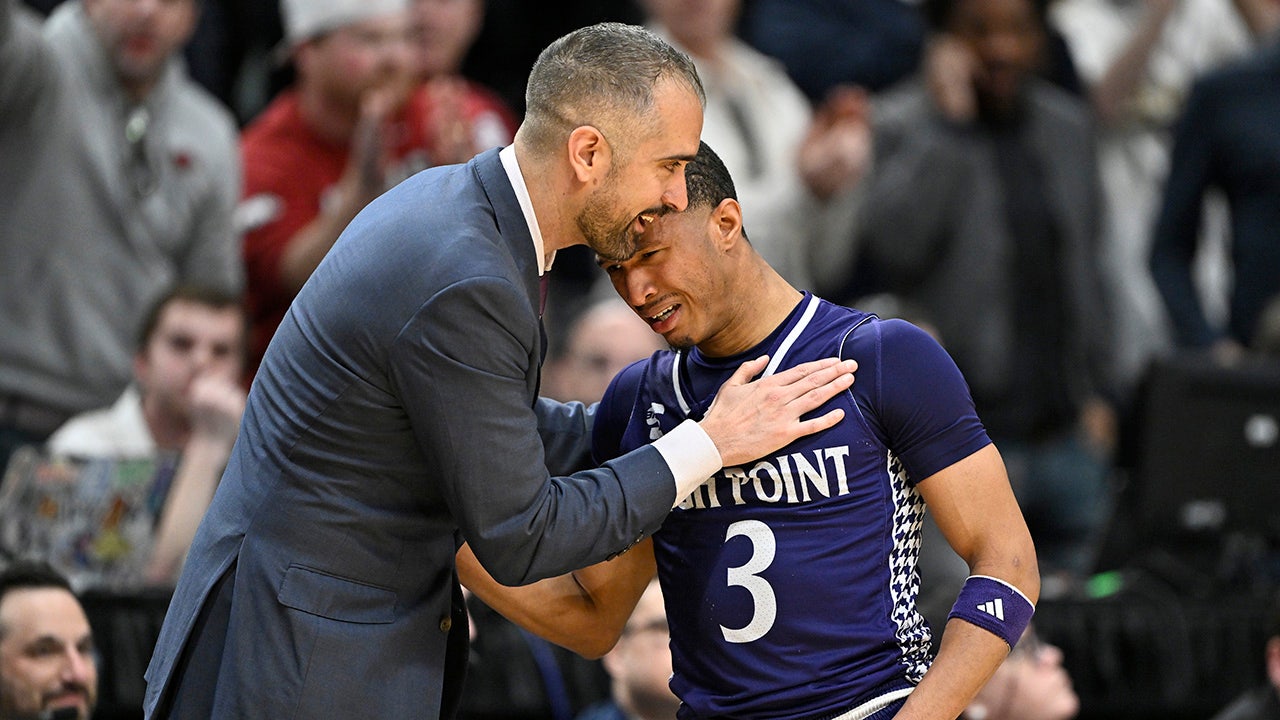
High Point Panthers head coach Flynn Clayman and guard Rob Martin (3) react in the second half against the Arkansas Razorbacks during a second round game of the men’s 2026 NCAA Tournament at Moda Center. (Craig Strobeck/Imagn Images)
With 7:04 to play, the Panthers took a 72-71 lead, to which the Razorbacks responded with a 10-2 run, putting them up by seven and giving them their largest lead of the night.
The game was then quickly tied at 83 after a wild run by High Point, but over the final 3:19, Arkansas outscored High Point, 11-5, to snatch the victory, despite a valiant effort from the Panthers.
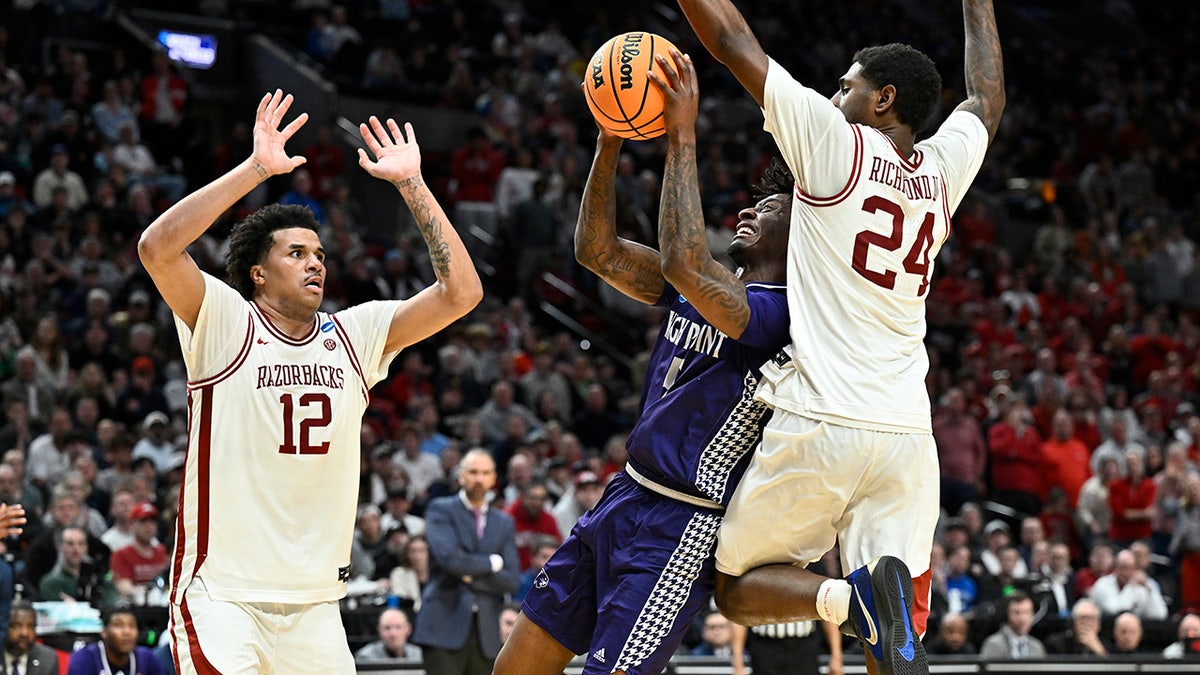
High Point Panthers forward Terry Anderson (5) drives against Arkansas Razorbacks forward Malique Ewin (12) and forward Billy Richmond III (24) in the second half during a second round game of the men’s 2026 NCAA Tournament at Moda Center. (Craig Strobeck/Imagn Images)
Arkansas was favored by 11.5, and while they couldn’t cover, it was another Sweet 16 appearance for legendary head coach John Calipari.
Two Panthers, Rob Martin (30) and Cam’Ron Fletcher (25), combined for 55 points, but Darius Acuff Jr. of Arkansas trumped everyone by dropping 36.
Arkansas will face the winner of No. 1 Arizona and No. 9 Utah State in the Sweet 16.
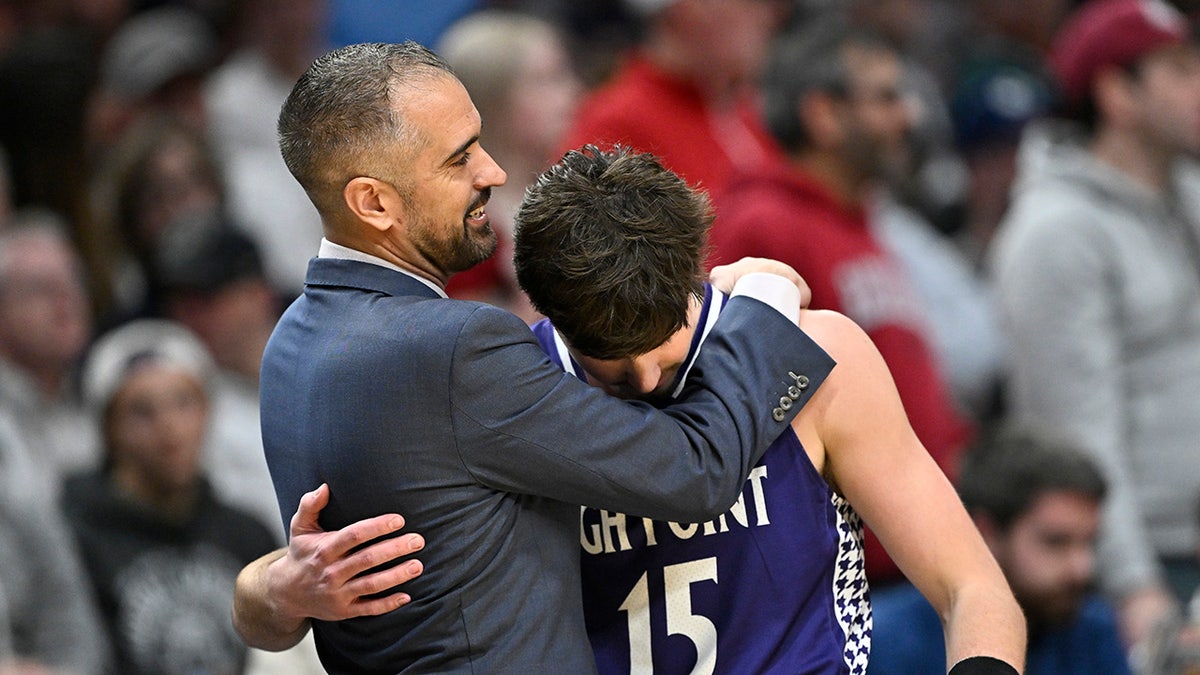
High Point Panthers head coach Flynn Clayman and forward Braden Hausen (15) react in the second half against the Arkansas Razorbacks during a second round game of the men’s 2026 NCAA Tournament at Moda Center. (Craig Strobeck/Imagn Images)
CLICK HERE TO GET THE FOX NEWS APP
High Point’s victory over Wisconsin on Thursday marked their first ever in March Madness after making the tournament last year for the first time.
Follow Fox News Digital’s sports coverage on X, and subscribe to the Fox News Sports Huddle newsletter
The 2026 men’s basketball tournament rolls into the second round Saturday with some giant matchups. Which are the games to bet on?
Throughout the tourney, I will provide my best bets for each round as well as my picks for the new ESPN Men’s Tournament Challenge Eliminator game.
Saturday’s picks went 2-0, with Mark predicting Michigan State to cover and Duke to reach the over on their team total.
Note: Odds by DraftKings Sportsbook at time of Friday’s publication and subject to change.
Sunday’s best bets
Note: Odds by DraftKings Sportsbook at time of Saturday’s publication and subject to change.
(1) Arizona -11.5 (-110) vs. (9) Utah State
Game time: 7:50 p.m. ET (truTV)
The Wildcats were beyond impressive against Long Island, dominating both offensively and defensively. Utah State, on the other hand, needed to shoot 55% from the field — combined with Villanova scoring just three total points over the last 6:04 of the game — to steal a come-from-behind win in its first game. What stands out to me here is that this line feels short. Arizona was laying this same 11.5 to BYU, a better team in KenPom’s adjusted efficiency margin, which says a lot. The Wildcats were also favored by 9.5 over Kansas, which is 21st in adjusted efficiency margin. Add in the Aggies’ poor 3-point shooting defense (214th in the nation), and Arizona should overwhelm them over the course of 40 minutes.
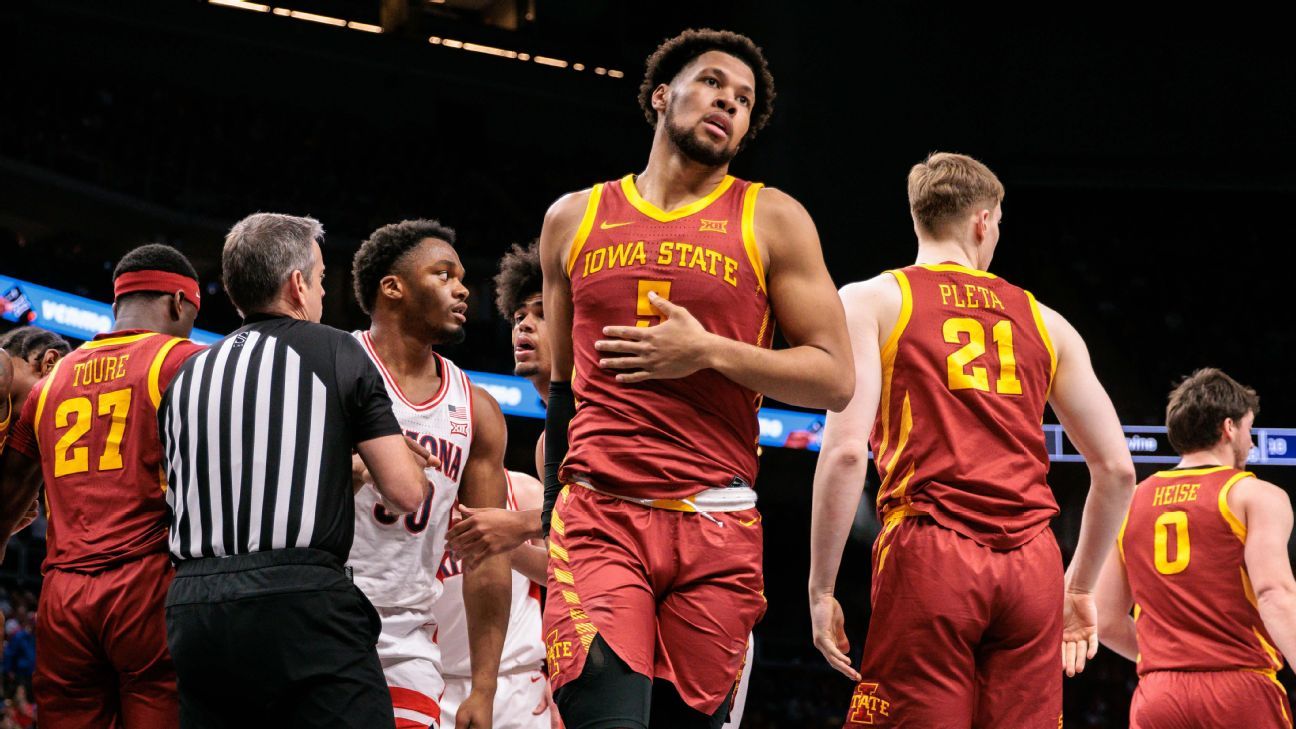
(7) Kentucky vs. (2) Iowa State OVER 145.5 (-110)
Game time: 2:45 p.m. ET (CBS)
Kentucky needed overtime to escape Santa Clara, and Iowa State won easily over Tennessee State but likely lost All-American forward Joshua Jefferson in the process. Even without Jefferson, I still like the Iowa State offense here. The Cyclones are excellent from 3-point range, making 38.9% from beyond the arc, and I don’t see Kentucky being able to slow them down. Santa Clara shot 41% from the field and still managed to score 73 points in regulation against the Wildcats.
Led by Otega Oweh, who is coming off a 35-point performance, Kentucky will use its pace and size to score. And while the Cyclones don’t play fast overall on offense, they average just 16.6 seconds per offensive possession, which is 68th in the country. Kentucky will do the rest on offense here. If these teams shoot to their season average, they should get over this number.
Sunday’s Eliminator pick
Iowa State
The Cyclones are a question mark as we go forward because of Jefferson’s injury status, so it’s best to use them now. If they get deeper, the possible loss of Jefferson would loom even larger. Plus, I don’t see Iowa State coming out of this bracket.
How to play ESPN Eliminator Challenge.
Saturday’s best bets in review
Best bets
(3) Michigan State -4.5 (-112) vs. (6) Louisville
Game time: 2:45 p.m. ET
The Spartans’ defense is the key here. Offensively, I don’t expect Michigan State to duplicate its 59% shooting from the field recorded against North Dakota State. But the Spartans’ defense will be equally menacing. It should be no surprise that Louisville shot 54% from the field and 52% from the 3-point range, but that won’t be the case against the Spartans’ D, which is 13th in adjusted efficiency. Louisville has played against a team in the top 20 in defensive efficiency six times this season and it has lost five times, with the only win coming over offensively inept Cincinnati. The Cardinals almost blew a 23-point lead in the second half. I’ll play against the 3-point variance of Louisville here and back the Spartans.
(1) Duke team total OVER 75.5 (-125) vs. (9) TCU
Game time: 5:15 p.m. ET
Eliminator pick
The Commodores’ elite shooting and inside presence are worth backing. It’s telling that the lower-seeded team is favored here. I’m also willing to play against Nebraska’s 3-point variance and the high of its first-ever NCAA tournament win.
Which teams are moving on to the Sweet 16?
ESPN reporters across the country are recapping how each second-round game is decided Saturday.
How Nebraska won: Until Thursday, Nebraska had never won a single NCAA tournament game. Two days later, thanks to Braden Frager‘s layup with 2.2 seconds left, the Cornhuskers are Sweet 16-bound. They traded blows with Vandy until the very end, even surviving a buzzer-beating heave from beyond halfcourt by Tyler Tanner that ricocheted into the rim and then popped out to seal the victory in front of a deafening, raucous arena packed to the brim with Nebraska fans. The Huskers muscled their way to the second weekend of the tournament with a balanced scoring attack with four players in double figures, including 15 each from Frager and Pryce Sandfort. Nebraska controlled the paint, outscoring Vanderbilt 38-22 down low while shooting 56% from the floor. — Brooke Pryor
Illinois’ Sweet 16 opponent: Winner of (1) Florida vs. (9) Iowa
How the Cornhuskers can advance to Elite Eight: Nebraska picked up its first NCAA tournament win in program history on Thursday, then doubled its total in drama-filled fashion on Saturday. What will the Cornhuskers need to do to win a third — likely against Florida? Their success this season has been primarily predicated on two factors: 3-point shooting and defense. They rank top-15 nationally in 3-pointers made per game, 3-point attempt rate and percentage of points generated off 3-pointers. They have four players who made 50 or more 3s this season, and they’ll likely have to make double-digit 3s to win next week. Nebraska was No. 1 in the Big Ten in adjusted defensive efficiency, holding opponents to below 30% from 3-point range and forcing turnovers on nearly 20% of possessions. — Jeff Borzello
How Illinois won: Another potential Cinderella saw its glass slipper shattered, as VCU’s run came to an end at the hands of a dominant Illinois team. Andrej Stojakovic had 21 points to lead the Illini, who turned a two-point deficit with 3:09 to go in the first half into an easy win, outscoring the Rams by 23 over the final 23 minutes. Zvonimir Ivisic stole the show with a monster dunk in the second half that signaled an unofficial end to VCU’s hopes; he finished with 14 points and 11 rebounds. — David Hale
Illinois’ Sweet 16 opponent: Houston
How the Fighting Illini can advance to Elite Eight: After Illinois got off to a 14-5 start against VCU, it seemed as if the Illini might enter halftime with a substantial edge, but the Rams slowed the game down and upped their defensive pressure to enter the break down just seven points. Ten minutes of regulation later, however, VCU trailed by 22 points and seemed to know its Sweet 16 dreams had been deferred. That’s how quickly the game can turn against Illinois, which owns the best offense in America. That’s the Illini’s advantage against a Houston team prone to extensive scoring droughts.
They already have wins over Tennessee and Nebraska, both top-15 defenses nationally. Yet, Houston and its pressure are unique. Illinois will hit difficult offensive stretches against the Cougars. Illinois has proven that it never stays cold, though. When the shots stop falling for Houston, as they have multiple times this season, Illinois will advance if it capitalizes with its impeccable offense to extend a lead. Houston isn’t built for comebacks. Illinois is equipped to widen the gap against its opponents. Whenever that opportunity arises against the Cougars, the Illini have to seize it. — Myron Medcalf
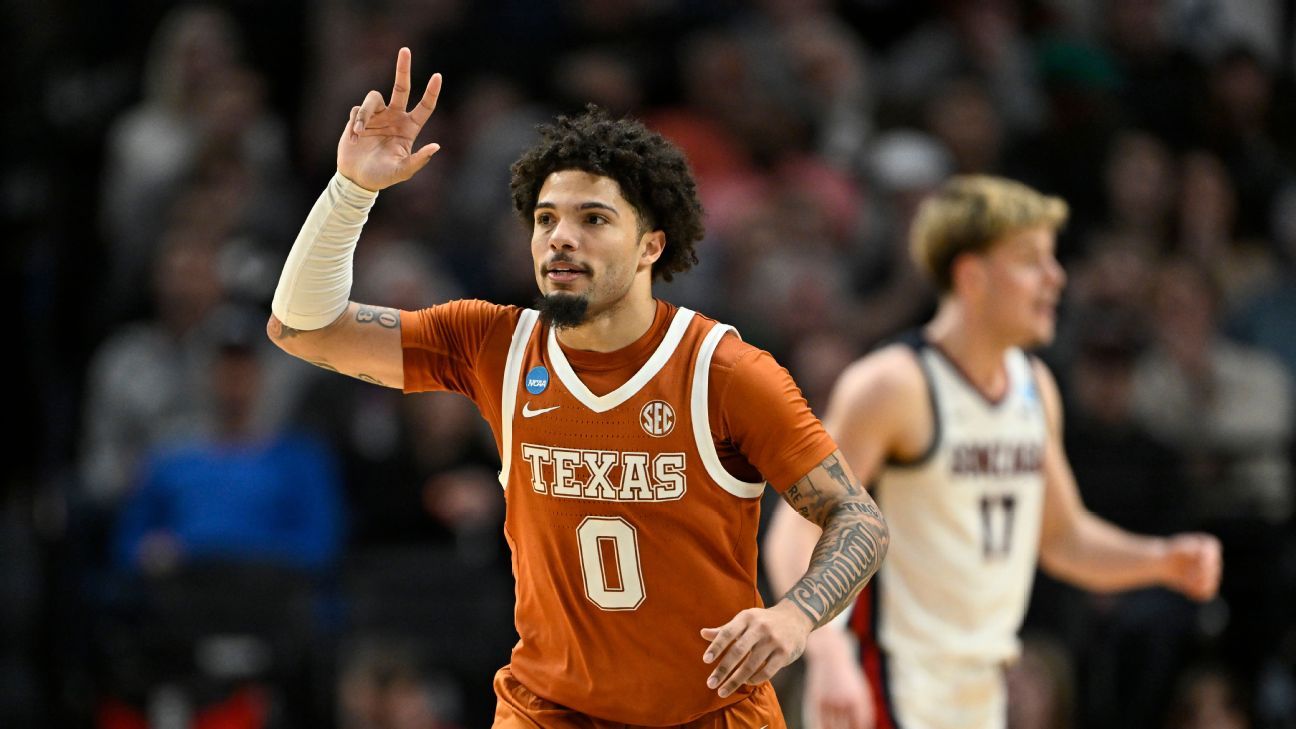
How Texas won: With 2:31 to go in regulation, Longhorns guard Jordan Pope hit a clutch 3-pointer from the top of the key, a shot that proved to be the difference-maker in Texas’ upset victory over Gonzaga. The Longhorns were held scoreless for two minutes after Pope’s basket. Camden Heide ended the drought with a 3-pointer, and Matas Vokietaitis‘ transition layup secured the win. Pope and Vokietaitis led Texas in scoring with 17 points each. For Gonzaga, Graham Ike led the game with 25 points. Texas has 11 NCAA tournament wins as a double-digit seed, the most of any program since seeding began in 1979. — Ryan McFadden
Texas’ Sweet 16 opponent: Winner of (2) Purdue vs. (7) Miami
How the Longhorns can advance to Elite Eight: Texas is suddenly one of the hottest teams in the field, winning three games in five days to go from the First Four to the Sweet 16. Sean Miller has made Matas Vokietaitis a focal point on the offensive end, and the Lithuanian native responded by averaging 20.0 points and 12.5 rebounds in his last two NCAA tournament games. Over his last 12 games, Vokietaitis is now averaging 17.6 points and 8.1 rebounds. Both Purdue and Miami have the size to cause issues for the 7-foot-1 big man, so he will have to continue his terrific run of form. The Longhorns also have to continue their defensive resurgence, which has truly come out of nowhere after ranking No. 159 in adjusted defensive efficiency in their final six games entering the NCAA tournament. They’re allowing just 1.03 points per possession in three tournament games. — Myron Medcalf
How Houston won: The last time Houston and Texas A&M met in the NCAA tournament (second round in 2024), the Cougars outlasted the Aggies in a high-flying classic in which the two teams combined for 195 points. This time, though, Houston won convincingly — thanks in large part to a 19-4 run that occurred after Texas A&M cut the Cougars’ lead to one point with 7:40 left in the first half.
Though Kelvin Sampson has lamented his team’s inexperience at times, Cougars freshman Chris Cenac Jr. continued to play well, finishing with 17 points and nine rebounds, as they outrebounded the Aggies 46-29. Freshman point guard Kingston Flemings unsurprisingly played a mature, balanced game with nine points, five rebounds, four assists and one turnover. And Big 12 all-defensive selection Emanuel Sharp put together a complete performance with a game-high 18 points, helping force the Aggies into 11 turnovers and just 35% shooting from the floor. — Brooke Pryor
Houston’s Sweet 16 opponent: Illinois
How the Cougars can advance to Elite Eight: Their defensive strength is their advantage when they force opponents to play the way they want to play: Methodical and measured. Texas A&M entered its second-round matchup against Houston having played one of the fastest tempos in America, but the Cougars locked the Aggies into a 65-possession affair and recorded a subpar 87 points per 100 possessions. Houston will have to deploy the same method against Illinois.
Yes, Kelvin Sampson will need efficient efforts from star guards Kingston Flemings and Emanuel Sharp. And Joseph Tugler, last season’s Big 12 Defensive Player of the Year, has spent the last portion of his campaign as an emerging offensive threat. But to beat the best offense in the country, Houston will have to utilize the same gritty style that’s anchored its current 7-1 streak in its last eight games. One of the best defensive units in America will have to gain the edge against an Illinois team that can turn a trickle of shots into a fire hose. Houston’s defensive strengths will have to be the difference against Brad Underwood’s squad. — Myron Medcalf
 (1) Duke 81, (9) TCU 58
How Duke won: It was the tale of two halves for Cameron Boozer. In the first: two points, 0-for-1 from the field and a plus-5 in 15 minutes on the court. In the second? Seventeen points on 7-of-9 shooting and a plus-20 in 19 minutes. TCU did a nice job early of denying his shots by playing a physical, attacking style underneath. But after Xavier Edmonds, Tanner Toolson and Liutauras Lelevicius all landed in serious foul trouble, things opened up for Duke’s superstar. The end result was a dominant second half in which the Blue Devils, after falling behind by two points with 16:15 to play, outscored the Horned Frogs 43-18 the rest of the way, finishing with a blowout victory to advance to the Sweet 16. — David Hale
Duke’s Sweet 16 opponent: Winner of (4) Kansas vs. (5) St. John’s
How the Blue Devils can advance to Elite Eight: Duke has two areas of advantage on every team in college basketball: its defense and having Cameron Boozer. When the Blue Devils turned up the heat defensively against TCU and began playing through Boozer on the offensive end, they began to dominate the Horned Frogs and completely changed the game. Boozer is the most productive player on the floor every time he plays, although it will be interesting to see if either Kansas’ Flory Bidunga or St. John’s Zuby Ejiofor could slow him down. Duke’s defense, the top-ranked unit in adjusted defensive efficiency at KenPom, has very few weaknesses, and neither the Jayhawks nor Red Storm are built in the ideal fashion to cause consistent problems for the Blue Devils. — Jeff Borzello
How Michigan State won: Jeremy Fears Jr. cemented his place in Michigan State history as the Spartans marched on to the Sweet 16 with a win over Louisville. With his 16 assists, Fears became the first Big Ten player in the last 50 years with 27 dishes over a two-game NCAA tournament span, passing Michigan State’s Magic Johnson (25 in the 1979 Sweet 16 and Elite Eight). Fears’ 16 assists also is the most by a Big Ten player in an NCAA tournament game in the last 50 years.
Forward Coen Carr also played a significant role in the win, recording his first career double-double (21 points and 10 rebounds). He joins Carson Cooper, who had 20 points and 10 rebounds against North Dakota State in the first round, to become the first Michigan State duo with 20-point double-doubles in an NCAA tournament since 1979 (Johnson and Greg Kelser).
The absence of guard Mikel Brown Jr. caught up to Louisville as Michigan State was able to limit the Cardinals’ offense, which had averaged 79 points per game without him (41.3% from the field). Louisville also sent Michigan State to the foul line a significant amount, with the Spartans making 14 of 19 (Cardinals were 4-of-6 from line). — Alaina Getzenberg
Michigan State’s Sweet 16 opponent: Winner of (2) UConn vs. (7) UCLA
How the Spartans can advance to Elite Eight: Personnel matchups generate the most headlines during the NCAA tournament, but coaching matchups are equally — if not more — impactful. Over the course of a head coaching tenure that began in 1995, Tom Izzo developed an uncanny ability to zero-in on an opposing team’s top players and create problems for them. That’s the Spartans’ ticket to another Elite Eight appearance.
Izzo is a master of removing the cape draped over the shoulders of NCAA tournament heroes. In the second round, J’Vonne Hadley and Isaac McKneely — who have both averaged double figures for Louisville — to a combined 4 for 17 clip. Last month, Purdue’s Braden Smith went 4-for-10 with four turnovers in a loss to Michigan State. Way back in November, Denzel Aberdeen and SEC Preseason Player of the Year Otega Oweh were a combined 5-for-20 in Kentucky’s loss to Michigan State. And Arkansas’ Darius Acuff Jr.? He went 5-for-16 against the Spartans in a loss early this season. Izzo, a man with few hobbies, is going to spend the days ahead devouring film, preparing to turn an opposing star into a bystander. Because that’s what he’s done best both this season and throughout his career. That’s also why he’s reached the Final Four eight times. — Myron Medcalf
How Michigan won: Led by Yaxel Lendeborg, Michigan pulled away in the second half of its game against Saint Louis to advance to its 16th Sweet 16 with a 95-72 win. While the Billikens kept up with the Wolverines in the first half and early in the second, Michigan’s shooting (55.7% from the field) and defense forced Saint Louis to take a significant number of 3s, but it struggled to make them fall, going 10-for-32 from deep. Billikens center Robbie Avila went 3-for-10 from the perimeter but had five assists and left the court to “Robbie” cheers.
The Wolverines had nine blocks, their most in an NCAA tournament game since blocks were first tracked in 1985-86, and outrebounded the Billikens 42-27. Lendeborg scored 25 points and became the first Michigan player with 25-plus points and no turnovers in an NCAA tournament game since Glen Rice (1989). Michigan is now the first Big Ten team to record back-to-back NCAA tournament games with 90-plus points since title-winning 1989 Michigan. — Alaina Getzenberg
Michigan’s Sweet 16 opponent: Winner of (4) Alabama vs. (5) Texas Tech
How the Wolverines can advance to Elite Eight: When Michigan leans into its strengths — its frontcourt, size and ability to dominate the paint at both ends of the floor — there are few teams in the country capable of competing with the Wolverines for 40 minutes. Aday Mara is a force at the rim defensively, and is becoming a more consistent option on offense, while Yaxel Lendeborg has shown he can take over games on offense. Neither Alabama nor Texas Tech has the skill and talent up front to match Michigan. The other key for the Wolverines against either team will be whether Roddy Gayle Jr. and Nimari Burnett can slow down All-Americans Christian Anderson of Texas Tech or Labaron Philon Jr. of Alabama. — Jeff Borzello


Journalist points out major flaws in new scathing Prince Harry, Meghan book

Muslims celebrate Eid ul Fitr with joy, togetherness across the globe

Three weeks in, Iran war escalates beyond Trump’s control

-

 Fashion1 week ago
Chinese firm to invest $15.34 million in garment factory at BEPZA
-

 Fashion1 week ago
US unemployment rate 4.4% in Feb 2026, LFPR 62%: BLS
-

 Tech1 week ago
Tips and Advice for Buying Used or Refurbished Electronics
-
 Business1 week ago
UAE savings strategies 2026 explained: Best apps, tools, budget rules and smart money hacks to beat rising cost of living in emirates – The Times of India
-

 Politics1 week ago
Iran threatens US-linked oil facilities after Kharg Island bombed
-

 Entertainment7 days ago
Strategic oil stocks to be released ‘immediately’ in Asia and Oceania: IEA
-

 Sports1 week ago
College Basketball Invitational abruptly cancels 2026 tournament
-

 Tech1 week ago
An Air Fryer That Makes Juicy Steak? Yes. It’s Nearly Half Off