

Politics
Venezuela to export $2bn worth of oil to US in deal with Washington

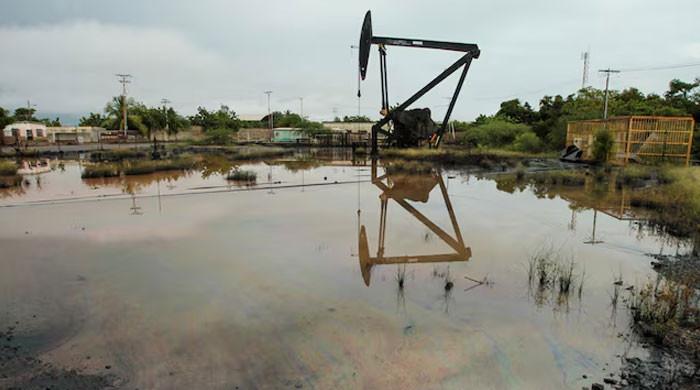
- Trump says agreed volume to supply is 30-50 million barrels.
- Exports expected to stem further cuts to Venezuelan output.
- US interior secretary says US Gulf refiners would take advantage.
HOUSTON/WASHINGTON: Caracas and Washington have reached a deal to export up to $2 billion worth of Venezuelan crude to the United States, US President Donald Trump said on Tuesday, a flagship negotiation that would divert supplies from China while helping Venezuela avoid deeper oil production cuts.
The agreement is a strong sign that the Venezuelan government is responding to Trump’s demand that they open up to US oil companies or risk more military intervention. Trump has said he wants interim President Delcy Rodriguez to give the US and private companies “total access” to Venezuela’s oil industry.
Venezuela has millions of barrels of oil loaded on tankers and in storage tanks that it has been unable to ship due to a blockade on exports imposed by Trump since mid-December.
The blockade was part of rising US pressure on the government of Venezuelan President Nicolas Maduro that culminated in US forces capturing him this weekend. Top Venezuelan officials have called Maduro’s capture a kidnapping and accused the US of trying to steal the country’s vast oil reserves.
Venezuela will be “turning over” between 30 and 50 million barrels of “sanctioned oil” to the US, Trump said in a social media post.
“This Oil will be sold at its Market Price, and that money will be controlled by me, as President of the United States of America, to ensure it is used to benefit the people of Venezuela and the United States!,” he added.
US Energy Secretary Chris Wright is in charge of executing the deal, Trump said, adding that the oil will be taken from ships and sent directly to US ports.
Supplying the trapped crude to the US could initially require reallocating cargoes originally bound for China, two sources had told Reuters earlier on Tuesday. The Asian country has been Venezuela’s top buyer in the last decade, and especially since the United States imposed sanctions on companies involved in oil trade with Venezuela in 2020.
“Trump wants this to happen early so he can say it is a big win,” an oil industry source said.
Venezuelan government officials and PDVSA did not provide comment.
Chevron in control of Venezuelan oil flows to US
US crude prices fell more than 1.5% after Trump’s announcement, with the agreement expected to increase the volume of Venezuelan oil exported to the US.
That flow of oil is currently controlled entirely by Chevron, PDVSA’s main joint venture partner, under a US authorisation.
Chevron, which has been exporting between 100,000 and 150,000 barrels per day (bpd) of Venezuelan oil to the US, is the only company that has been loading and shipping crude without interruption from the South American country in recent weeks under the blockade.
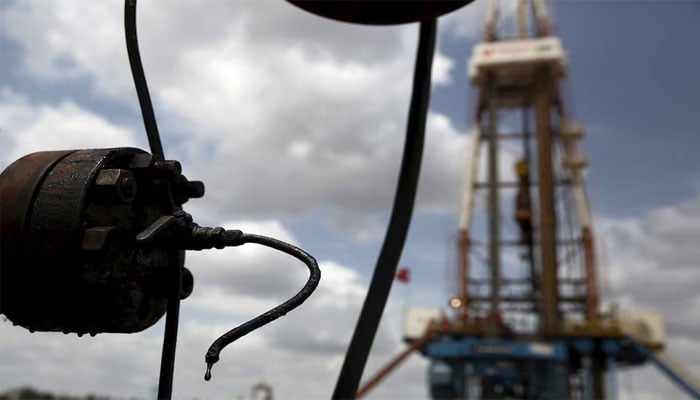
It was not immediately clear if Venezuela would have any access to proceeds from the supply. Sanctions mean PDVSA is excluded from the global financial system, its bank accounts are frozen, and it is blocked from executing transactions in US dollars.
Venezuela has been selling its flagship crude grade, Merey, at around $22 per barrel below Brent for delivery at Venezuelan ports, giving a value for the deal at up to $1.9 billion.
Rodriguez, sworn in as interim president on Monday, is herself under US sanctions imposed in 2018 for undermining democracy.
Talks involve possible auctions with US buyers
Venezuelan and US officials this week discussed possible sales mechanisms, including auctions to allow interested US buyers to bid for cargoes, and issuing US licenses to PDVSA’s business partners that could lead to supply contracts, two sources told Reuters.
Those licenses have in the past allowed PDVSA’s joint venture partners and customers, including Chevron, India’s Reliance, China National Petroleum Corporation (CNPC), and European Eni and Repsol, to have access to Venezuelan oil to refine or to resell to third parties.
This week, some of those companies have begun making preparations for receiving Venezuelan cargoes again, two separate sources said.
The US and Venezuela have also discussed whether Venezuelan oil can be used in the US Strategic Petroleum Reserve in the future, one of the sources said. Trump did not refer to this possibility.
Increased oil flows would be ‘great news’
US Interior Secretary Doug Burgum said on Tuesday that an increased flow of Venezuelan heavy oil to the US Gulf would be “great news” for job security, future gasoline prices in the US and for Venezuela.
“Venezuela has an opportunity now to actually have capital come in and rebuild their economy and take advantage,” he told Fox News, when asked about talks between the governments on oil exports. “With American technology, American partnership, Venezuela can be transformed.”
US refineries on the Gulf Coast can process Venezuela’s heavy crude grades and were importing some 500,000 barrels per day (bpd) before Washington first imposed energy sanctions on Venezuela.
PDVSA has already had to cut production due to the embargo, because it is running out of storage for the oil. Without a way to export oil soon, it would have to cut production more, one of the sources said.
Oil traders reacted to news of the deal talks on Tuesday. Differentials for some heavy oil grades in the US Gulf slipped around 50 cents per barrel on Tuesday on the prospect of more Venezuelan supplies.
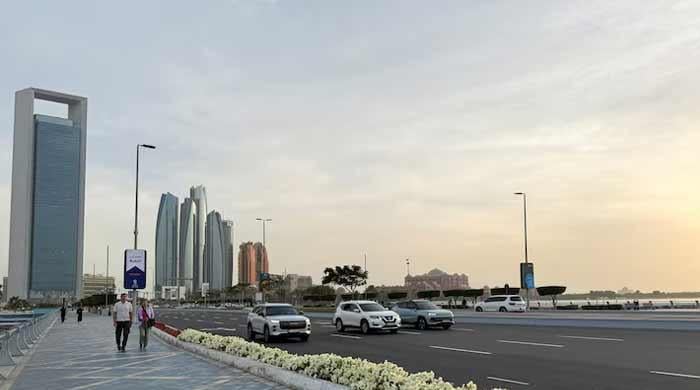
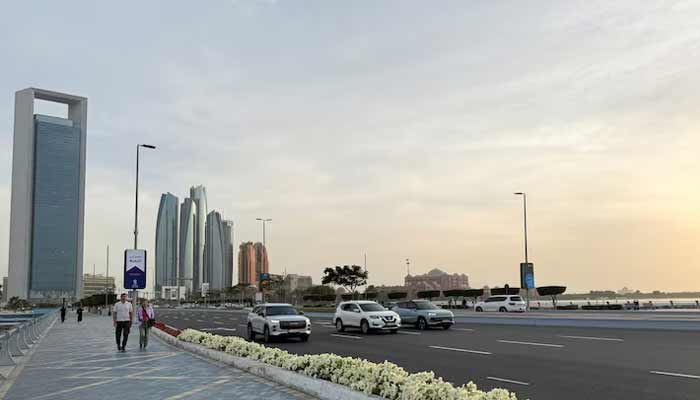
DUBAI: Dubai has announced the implementation of a new public safety law introducing stricter regulations for public spaces and events, with fines ranging from AED500 ($136) to AED1 million ($272,000), authorities said.
Under the legislation, repeat violations within one year could result in fines of up to AED2 million, officials added.
The new law, which takes effect across the emirate on June 1, sets out enhanced safety requirements for public venues and gatherings.
The rules were issued by Dubai’s Ruler, Vice President and Prime Minister of the UAE, Sheikh Mohammed bin Rashid Al Maktoum.
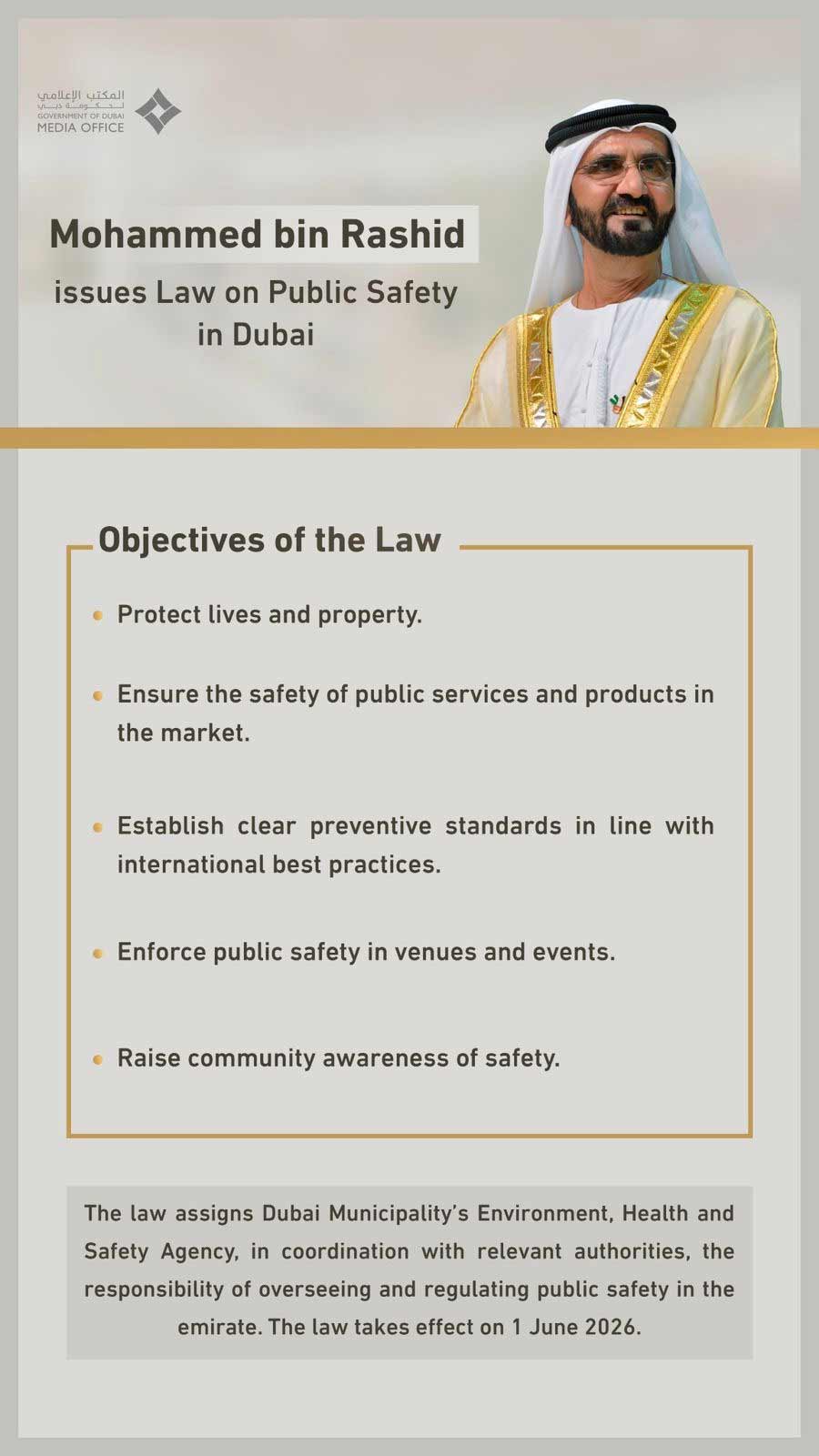
According to the regulations, public venues and events must ensure safe entry and exit routes, adequate lighting, and capacity limits to prevent overcrowding.
Event organisers will be required to provide firefighting equipment, emergency evacuation plans, first aid facilities, and trained security personnel.
Compliance with safety instructions at public venues has been made mandatory.
The law also requires adherence to designated swimming times at beaches and prohibits access to restricted areas.
Possession of explosives or fireworks without a permit is banned, as is the use and transport of hazardous or flammable materials.
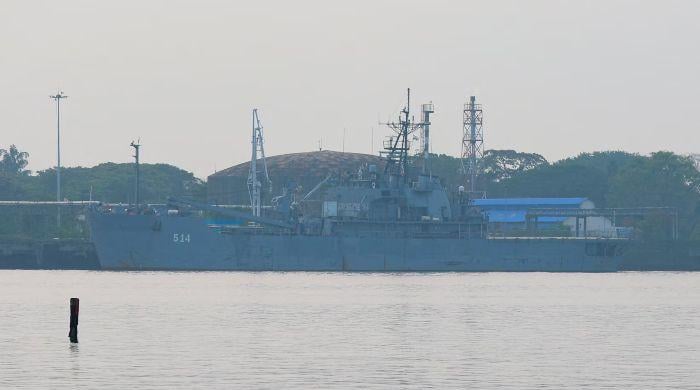
India has allowed an Iranian warship to dock as a humanitarian gesture, Foreign Minister Subrahmanyam Jaishankar said on Saturday, after the US sank another Iranian navy vessel off neighbouring Sri Lanka.
The Lavan docked at India’s southern port of Kochi on Wednesday, the same day the US submarine struck Iranian navy frigate Dena, after an urgent request from Tehran, an Indian government source told Reuters.
US President Donald Trump has said destroying the Iranian navy is one aim of the war he and Israel launched against the Islamic Republic a week ago.
The Lavan – an amphibious landing vessel, according to the US Naval Institute’s online news site – and two other ships “were coming in for a fleet review and then they got, in a way, caught on the wrong side of the events,” Jaishankar told the annual Raisina Dialogue event.
“I think we really approached it from the point of view of humanity, of other than whatever the legal issues were,” he said. “I think we did the right thing.”
At least 87 people were killed in the US attack on the Dena in Sri Lanka’s exclusive economic zone, 19 nautical miles off the coast, outside its maritime boundaries.
India received the docking request for the Lavan on February 28, the day the Iran war started, the source said late on Friday, adding that the request “was urgent as the vessel had developed technical issues”.
Its 183 crew members have been accommodated at naval facilities in Kochi, said the source, who asked not to be identified citing confidentiality.
The Dena was on its way back from a naval exercise organised by India, according to the drill’s website and Sri Lankan officials.
Sri Lankan authorities said on Friday that they were escorting the Iranian naval ship Booshehr to a harbour on the eastern coast and moving most of its crew to a navy camp near Colombo.
- Iran to suspend strikes on neighbours unless attacks from them.
- Putin calls for immediate halt to Iran conflict.
- Iran envoy says 1,332 Iranian civilians killed in war.
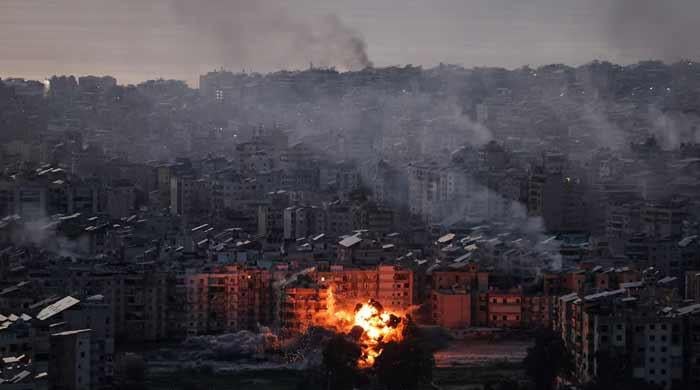
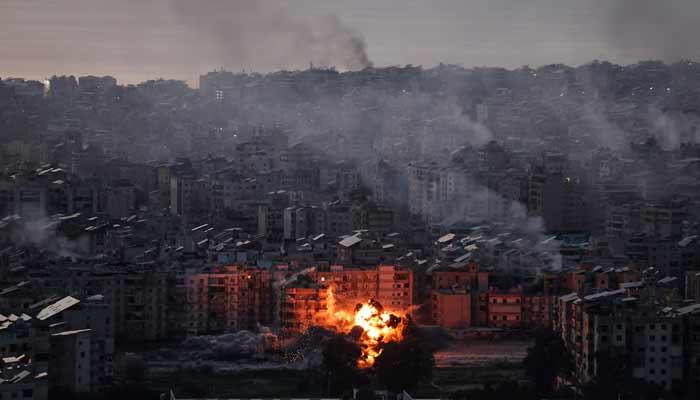
Israel and Iran traded attacks on Saturday as the war entered a second week, while the Islamic Republic made an unusual apology to neighbouring states for its “actions”, apparently seeking to calm regional anger at Iranian strikes on Gulf civilian targets.
“I personally apologise to neighbouring countries that were affected by Iran’s actions,” Iranian President Masoud Pezeshkian said, urging them not to join US-Israeli attacks on Iran.
He said Iran’s temporary leadership council had agreed to suspend attacks on nearby states unless strikes on Iran originated from their territory.
Hours later, Iran’s Revolutionary Guards said their drones struck a US air combat centre at Al Dhafra Air Base, near Abu Dhabi, capital of the United Arab Emirates. Reuters could not independently verify that report.
Huge explosions were heard in several parts of the Iranian capital, state media reported.
Gulf states hit by drones and missiles
The US-Israeli war on Iran has already spilled beyond Iran’s borders, as Tehran has responded by hitting Israel and Gulf Arab states hosting US military installations and Israel has launched fresh attacks in Lebanon.
The UAE, Kuwait, Qatar, Bahrain and Saudi Arabia have all reported drone and missile attacks over the past week.
Gulf states voiced immediate outrage that their civilian infrastructure — hotels, ports and oil facilities — were struck despite their having had no part in the US-Israeli attacks.
How far Pezeshkian’s statement reflects a decision to back off by Iran, or if it should be read as a warning that Tehran remains ready to strike across the region, is not yet clear, with some strikes still reportedly directed at Gulf states on Saturday morning.
Iran had mended fences with its Gulf neighbours in recent years, including with former regional arch-rival Saudi Arabia — a diplomatic campaign that imploded as the Revolutionary Guards launched a blitz of drones and missiles over the past week.
No deal without surrender, says Trump
While Gulf states host US military bases, they had told Washington they would not allow these to be used for any attacks on Iran.
Iran’s apparent strategy of maximum chaos has driven up the costs of the conflict by raising energy prices, hurting global business and logistics links and shaking trust in the stability of a critical region for the world’s economy.
Pezeshkian’s remarks come as diplomatic prospects for an end to hostilities appear bleak, with US President Donald Trump demanding Tehran’s “unconditional surrender”.
“There will be no deal with Iran except UNCONDITIONAL SURRENDER!” Trump wrote on his Truth Social platform on Friday.
“After that, and the selection of a GREAT & ACCEPTABLE Leader(s), we, and many of our wonderful and very brave allies and partners, will work tirelessly to bring Iran back from the brink of destruction, making it economically bigger, better, and stronger than ever before,” he added.
The US-Israeli attacks have killed at least 1,332 Iranian civilians and wounded thousands, according to Iran’s UN ambassador, Amir Saeid Iravani.
Iranian attacks have killed 11 people in Israel, and at least six US service members have been killed.
Russian President Vladimir Putin expressed his condolences to Pezeshkian over the numerous civilian casualties resulting from “the armed Israeli-American aggression against Iran” and called for an immediate halt to hostilities, the Kremlin said.


Timothee Chalamet’s ‘insensitive’ joke sparks response from Met Opera

UAE president says country is well and ‘no easy prey’ in first public comments since Iran strikes

Go Digit General Insurance gets GST demand notice of Rs 170 cr – The Times of India

Attock Cement’s acquisition approved | The Express Tribune

Policy easing drives Argentina’s garment import surge in 2025

India Us Trade Deal: Fresh look at India-US trade deal? May be ‘rebalanced’ if circumstances change, says Piyush Goyal – The Times of India

-
Business1 week ago
Attock Cement’s acquisition approved | The Express Tribune
-
 Fashion1 week ago
Policy easing drives Argentina’s garment import surge in 2025
-
Business1 week ago
India Us Trade Deal: Fresh look at India-US trade deal? May be ‘rebalanced’ if circumstances change, says Piyush Goyal – The Times of India
-

 Sports1 week ago
LPGA legend shares her feelings about US women’s Olympic wins: ‘Gets me really emotional’
-

 Entertainment1 week ago
Bobby J. Brown, “The Wire” and “Law & Order: SUV” actor, dies of smoke inhalation after reported fire
-

 Fashion1 week ago
South Korea’s Misto Holdings completes planned leadership transition
-

 Entertainment1 week ago
Pakistan’s semi-final qualification scenario after England defeat New Zealand
-

 Fashion1 week ago
Texwin Spinning showcasing premium cotton yarn range at VIATT 2026