

Business
Vets under increasing pressure to make money for corporate owners, BBC told

Richard Bilton,BBC Panoramaand
Ben Milne,BBC News
 Getty Images
Vets have told BBC Panorama they feel under increasing pressure to make money for the big companies that employ them – and worry about the costly financial impact on pet owners.
Prices charged by UK vets rose by 63% between 2016 and 2023, and the government’s competition regulator has questioned whether the pet-care market – as it stands – is giving customers value for money.
One anonymous vet, who works for the UK’s largest vet care provider, IVC Evidensia, said that the company has introduced a new monitoring system that could encourage vets to offer pet owners costly tests and treatment options.
A spokesperson for IVC told Panorama: “The group’s vets and vet nurses never prioritise revenue or transaction value over and above the welfare of the animal in their care.”
More than half of all UK households are thought to own a pet.
Over the past few months, hundreds of pet owners have contacted BBC Your Voice with concerns about vet bills.
One person said they had paid £5,600 for 18 hours of vet-care for their pet: “I would have paid anything to save him but felt afterwards we had been taken advantage of.”
Another described how their dog had undergone numerous blood tests and scans: “At the end of the treatment we were none the wiser about her illness and we were presented with a bill of £13,000.”


Mounting concerns over whether pet owners are receiving a fair deal prompted a formal investigation by government watchdog, the Competition and Markets Authority (CMA).
In a provisional report at the end of last year, it identified several issues:
- Whether vet companies are being transparent about the ownership of individual practices and whether pet owners have enough information about pricing
- The concentration of vet practices and clinics in the hands of six companies – these now control 60% of the UK’s pet-care market
- Whether this concentration has led to less market competition and allowed some vet care companies to make excess profits
‘Hitting targets’
A vet, who leads one of IVC’s surgeries (and who does not want to be identified because they fear they could lose their job), has shared a new internal document with Panorama. The document uses a colour code to compare the company’s UK-wide tests and treatment options and states that it is intended to help staff improve clinical care.
It lists key performance indicators in categories that include average sales per patient, X-rays, ultrasound and lab tests.
The vet is worried about the new policy: “We will have meetings every month, where one of the area teams will ask you how many blood tests, X-rays and ultrasounds you’re doing.”
If a category is marked in green on the chart, the clinic would be judged to be among the company’s top 25% of achievers in the UK.
A red mark, on the other hand, would mean the clinic was in the bottom 25%. If this happens, the vet says, it might be asked to come up with a plan of action.
The vet says this would create pressure to “upsell” services.
For instance, the vet says, under the new model, IVC would prefer any animal with suspected osteoarthritis to potentially be X-rayed. With sedation, that could add £700 to a bill.
While X-rays are sometimes necessary, the vet says, the signs of osteoarthritis – the thickening of joints, for instance – could be obvious to an experienced vet, who might prefer to prescribe a less expensive anti-inflammatory treatment.
“Vets shouldn’t have pressure to do an X-ray because it would play into whether they are getting green on the care framework for their clinic.”
IVC has told Panorama it is extremely proud of the work its clinical teams do and the data it collects is to “identify and close gaps in care for our patients”.
It says its vets have “clinical independence”, and that prioritising revenue over care would be against the Royal College of Veterinary Surgeons’ (RCVS) code and IVC policy.
The vet says a drive to increase revenue is undermining his profession.
Panorama spoke to more than 30 vets in total who are currently working, or have worked, for some of the large veterinary groups.
One recalls being told that not enough blood tests were being taken: “We were pushed to do more. I hated opening emails.”
Another says that when their small practice was sold to a large company, “it was crazy… It was all about hitting targets”.
Not all the big companies set targets or monitor staff in this way.
The high cost of treatment
UK pet owners spent £6.3bn on vet and other pet-care services in 2024 – equal to just over £365 per pet-owning household, according to the CMA.
However, most pet owners in the UK do not have insurance, and bills can leave less-well-off families feeling helpless when treatment is needed.
Many vets used not to display prices and pet owners often had no clear idea of what treatment would cost, but in the past two years that has improved, according to the CMA.
Rob Jones has told Panorama that when his family dog, Betty, fell ill during the autumn of 2024 they took her to an emergency treatment centre, Vets Now, and she underwent an operation that cost almost £5,000.
Twelve days later, Betty was still unwell, and Rob says he was advised that she could have a serious infection. He was told a diagnosis – and another operation – would cost between £5,000-£8,000.

However, on the morning of the operation, Rob was told this price had risen to £12,000. When he complained, he was quoted a new figure – £10,000.
“That was the absolute point where I lost faith in them,” he says. “It was like, I don’t believe that you’ve got our interests or Betty’s interests at heart.”
The family decided to put Betty to sleep.
Rob did not know at the time that both his local vet, and the emergency centre, branded Vets Now, where Betty was treated, were both owned by the same company – IVC.
He was happy with the treatment but complained about the sudden price increase and later received an apology from Vets Now. It offered him £3,755.59 as a “goodwill gesture”.
Vets Now told us its staff care passionately for the animals they treat: “In complex cases, prices can vary depending on what the vet discovers during a consultation, during the treatment, and depending on how the patient responds.
“We have reviewed our processes and implemented a number of changes to ensure that conversations about pricing are as clear as possible.”
Value for money?
Independent vet practices have been a popular acquisition for corporate investors in recent years, according to Dr David Reader from the University of Glasgow. He has made a detailed study of the industry.
Pet care has been seen as attractive, he says, because of the opportunities “to find efficiencies, to consolidate, set up regional hubs, but also to maximise profits”.
Six large veterinary groups (sometimes referred to as LVGs) now control 60% of the UK pet care market – up from 10% a decade ago, according to the CMA.
They are:
- Linnaeus, which owns 180 practices
- Medivet, which has 363
- Vet Partners with 375 practices
- CVS Group, which has 387 practices
- Pets at Home, which has 445 practices under the name Vets for Pets
- IVC Evidensia, which has 900 practices
When the CMA announced its provisional findings last autumn, it said there was not enough competition or informed choice in the market. It estimated the combined cost of this to UK pet owners amounted to £900m between 2020-2024.
Corporate vets dispute the £900m figure.
They say their prices are competitive and made freely available, and reflect their huge investment in the industry, not to mention rising costs, particularly of drugs.
The corporate vets also say customers value their services highly and that they comply with the RCVS guidelines.

A CMA survey suggests pet owners are happy with their vets – both corporate and independent – when it comes to quality of service.
But, with the exception of Pets at Home, customer satisfaction on cost is much lower for the big companies.
“I think that large veterinary corporations, particularly where they’re owned by private equity companies, are more concerned about profits than professionals who own veterinary businesses,” says Suzy Hudson-Cooke from the British Veterinary Union, which is part of Unite.
Proposals for change
The CMA’s final report on the vet industry is expected by the spring but no date has been set for publication.
In its provisional report, it proposed improved transparency on pricing and vet ownership.
Companies would have to reveal if vet practices were part of a chain, and whether they had business connections with hospitals, out-of-hours surgeries, online pharmacies and even crematoria.
IVC, CVS and Vet Partners all have connected businesses and would have to be more transparent about their services in the future.
Pets at Home does not buy practices – it works in partnership with individual vets, as does Medivet. These companies have consistently made clear in their branding who owns their practices.
The big companies say they support moves to make the industry more transparent so long as they don’t put too high a burden on vets.
David Reader says the CMA proposals could have gone further.
“There’s good reason to think that once this investigation is concluded, some of the larger veterinary groups will continue with their acquisition strategies.”
The CMA says its proposals would “improve competition by helping pet owners choose the right vet, the right treatment, and the right way to buy medicine – without confusion or unnecessary cost”.
For Rob Jones, however, it is probably too late.
“I honestly wouldn’t get another pet,” he says. “I think it’s so expensive now and the risk financially is so great.”
Business
Goldman Sachs bond traders stumbled as Wall Street rivals thrived: ‘A fire is being lit under’ them

David Solomon, CEO Goldman Sachs, speaking on CNBC’s Squawk Box at the World Economic Forum in Davos, Switzerland on Jan. 22nd, 2026.
Oscar Molina | CNBC
When Goldman Sachs executives were asked about disappointing results in the firm’s fixed income division this week, they made it sound as though the trading environment was simply not in their favor.
Fixed income revenue fell 10% in the first quarter, coming in $910 million below analysts’ expectations, according to StreetAccount data. It was an unusually large miss for one of Goldman’s flagship Wall Street businesses.
“It was basically just a function of the overall environment making markets,” CFO Denis Coleman told an analyst on Monday after the bank’s earning report. “We remain actively engaged with clients, but our performance in rates and mortgages was relatively lower.”
But as nearly all of Goldman’s rivals, including JPMorgan Chase, Morgan Stanley and Citigroup, posted blockbuster results for first-quarter fixed income in the days that followed, one thing became clear to Wall Street: Goldman Sachs’ vaunted fixed income traders had underperformed.
JPMorgan saw fixed income trading revenue jump 21% to $7.1 billion, the bank’s second-biggest haul ever. Morgan Stanley, where fixed income is less a priority than equities, posted a 29% jump in the bond business. Citigroup saw bond trading revenue jump 13% to $5.2 billion.
Since before the 2008 financial crisis, when Lloyd Blankfein led Goldman Sachs, the firm’s fixed income division had been the envy of Wall Street. Goldman was known for its trading prowess, a reputation forged in periods of dislocation when its desks generated outsized gains. The bank’s identity as a trader’s firm — one expected to outperform in turbulent times — has endured in the decade-plus since.
That makes the first-quarter stumble particularly notable.
“It seems that something went wrong at Goldman in fixed income,” said veteran Wells Fargo analyst Mike Mayo, who called the bank’s results “worst-in-class.”
“I’d imagine that at Goldman, a fire is being lit under the traders, managers and risk overseers in FICC after such an underperformance,” Mayo said in an interview with CNBC, using an acronym standing for fixed income, currencies and commodities, the formal name for that business.
The prevailing theory is that Goldman was caught offsides on trades tied to interest rates in the first quarter, according to several market participants who asked for anonymity to speak candidly.
That’s because of the positioning that many Wall Street firms had at the start of this year, when markets were expecting the Federal Reserve to cut interest rates at least twice in 2026, these people said.
But after the price of oil surged with the advent of the Iran war, roiling expectations for inflation, the markets began pricing those cuts out, with some investors even bracing for the possibility of rate hikes this year.
Fixed income was the sole blemish on a quarter in which Goldman Sachs exceeded expectations handily, thanks to the firm’s equities traders and investment bankers. Despite the earnings beat, the firm’s shares dropped as much as about 4% on Monday following the report.
Goldman Sachs declined to comment. But on Monday, CEO David Solomon sought to put the quarter’s performance into context:
“When I look at the scale and the diversity of the business, it’s performing very, very well,” Solomon said during the company’s conference call. “Some quarters, it’s going to be stronger here, stronger there.”
Business
Pakistan considering buying LNG on spot market to offset supply disruptions caused by Iran war: petroleum minister – SUCH TV
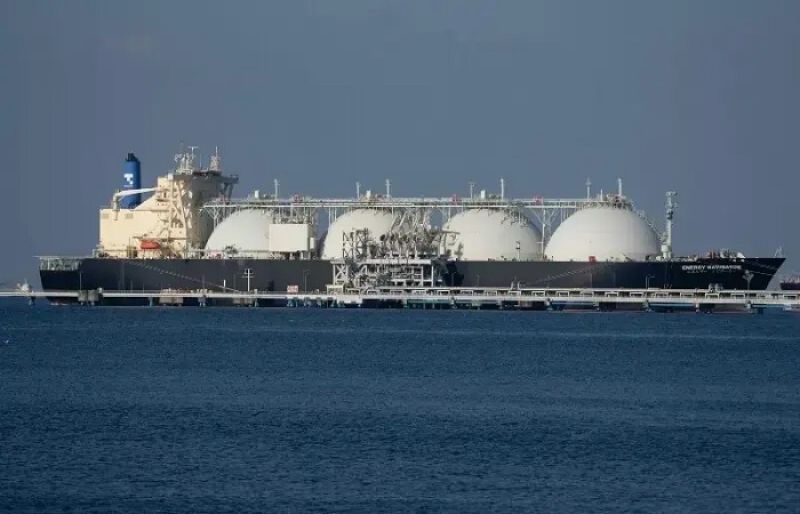
Pakistan is considering buying liquefied natural gas (LNG) on the spot market to offset supply disruptions caused by the Iran war, but would favour government-to-government deals to avoid having to pay steep premiums, Petroleum Minister Ali Pervaiz Malik has told Reuters.
Qatar’s force majeure forced Pakistan to make costly spot purchases or find alternative fuels ahead of summer demand.
Spot LNG cargoes have surged to $20 to $30 per mmBtu amid the Middle East conflict, Malik says, adding that purchases would depend on whether prices are acceptable to the power sector, including under existing government-to-government arrangements with Azerbaijan’s Socar.
Pakistan has also been routing some crude supplies via Saudi Arabia’s Red Sea port of Yanbu to bypass the Strait of Hormuz, with Malik saying insurance costs on that route were lower than routes crossing or near Hormuz.
Pakistan imports nearly all of its oil, much of it via the Strait of Hormuz, and remains exposed to supply shocks despite cutting its LNG reliance in recent years, as gas is still needed to meet the country’s peak summer power demand.
It has begun commercial output from its highest-ever producing oil and gas well, as it shores up domestic supply.
“We have arrangements in place to meet domestic and industrial requirements,” Malik said, adding that gas disruptions have not led to major curbs, with eight of 10 fertiliser plants operating.
Officials are also considering the use of costlier fuels such as furnace oil to limit load shedding, although at the expense of higher tariffs. Malik warned that prolonged shortages could threaten food security.
The Baragzai X-01 well in Khyber Pakhtunkhwa is producing about 15,000 barrels of oil per day and 45 million cubic feet of gas, with output expected to rise further, the state-run operator Oil and Gas Development Company Ltd (OGDC) said.
The well could reach up to 25,000 barrels per day and 60 million cubic feet per day of gas, making it Pakistan’s highest-producing well, and may contribute around 10 per cent of crude output while cutting the country’s import bill by about $329 million annually, OGDC said.

The Carnival Miracle cruise ship is anchored in the Pacific Ocean near Kailua Bay during a 15-day cruise, in Kailua-Kona, Hawaii, on Jan. 14, 2024.
Kevin Carter | Getty Images
The global cruise industry is reporting record demand and renewed consumer enthusiasm, but the leaders helming the world’s largest cruise companies say the sector is also facing some of the most complex challenges it has seen in decades.
“We are not an alternative vacation anymore. We are a vacation,” Carnival Corporation CEO Josh Weinstein said during a keynote panel Tuesday at Seatrade Global, a cruise industry conference.
As demand rises, passengers are getting younger; one-third of cruise travelers are now under 40, according to the 2026 State of the Cruise Industry report released by Cruise Lines International Association (CLIA). One-third of trips are multi-generational, often families traveling together. And nearly a third of cruisers take vacations by ship multiple times a year, according to the report.
The cruise industry hosted 37 million passengers worldwide last year and anticipates reaching 42 million annually by 2029, CLIA found.
“That mainstream demand sets us up very well for volatility,” Weinstein said.
A resilient business in an uncertain world
At least six cruise ships remain stranded in the Persian Gulf by the impasse at the Strait of Hormuz. One of them is the MSC Euribia.
Though roughly 1,500 passengers were safely evacuated amid Dubai airport shutdowns and missile warnings after the U.S. and Israel launched an attack on Iran in late February, there are still some crew on board to maintain the vessel.
“Obviously, we live day by day. The situation is very fluid,” said MSC Cruises Executive Chairman Pierfrancesco Vago during the Seatrade Global keynote.
Already the shutdown of marine traffic in the Strait has disrupted itineraries in the Middle East and southern Europe. Threats of blockades, mines on the sea floor and on-and-off-again negotiations are keeping cruise executives guessing about when they can move their ships.
“Morning is one thing, lunchtime is another, dinner is another again,” Vago said of the numerous and often conflicting announcements from government leaders. “We need to stay cool and actually be ready to move out as soon as the possibility and opportunity comes back.”
Despite these challenges, cruise executives argue the industry has never been better positioned to absorb shocks.
“Every crisis we’ve faced — financial, geopolitical or health-related — we adapted,” Carnival’s Weinstein said. “There’s no reason to believe it will be different this time.”
Fuel costs, sustainability and the push to use less
Fuel price volatility has once again put energy strategy front and center for the cruise industry, particularly for Carnival, which does not hedge fuel prices.
“Nobody asks us about hedging when prices are low,” Weinstein said. “But our strategy has been consistent: use less fuel.”
The cruise industry aims to have net zero emissions by 2050, but CEOs agree that they can’t achieve that goal solely by conserving fuel.
Industry leaders see biofuels, green methanol and synthetic liquid natural gas (produced by combining captured carbon with hydrogen) as the most promising solutions to meet their fuel needs.
Royal Caribbean Group CEO Jason Liberty said cruise lines are already investing hundreds of millions of dollars annually in technology and energy innovation, but availability of alternative fuels remains the bottleneck.
“It’s not about what we want to use,” Liberty said. “It’s about what’s scalable and available.”
“We’re going to have heavy competition with other sectors for those fuels as well. There’s no guarantee we get them,” added Bud Darr, president and CEO of Cruise Lines International Association.
Tailwinds for growth
Even as the industry navigates choppy seas, cruise companies are looking for their next avenues for growth.
Technological advances in artificial intelligence are being used to reduce food waste, plot routes and itineraries and increase efficiency. Cruise line executives say the most important application is to reduce friction in the guest experience.
“A more flexible work environment has been a big demand driver for us,” Liberty said. Most Royal Caribbean ships now host a Starlink connection for fast internet aboard.
Private destinations, the exclusive ports or islands owned or controlled by a cruise line, continue to be a priority for investment. Royal Caribbean, for instance, currently has three private destinations on its itineraries but will have eight by 2028.
It’s developing a major land-based hub in Puerto Williams, Chile, to reduce or eliminate the amount of time passengers to Antarctica have to spend transiting the punishing seas of the Drake Passage.
And the luxury segment, though a small percentage of the overall industry, is growing rapidly. Customers are increasingly interested in exploring health, wellness and longevity — and those trends are showing up in their vacation habits, too.
Smaller ships and river cruising accommodate specialized interests in eco-tourism, off-the-beaten path (not yet discovered by social media influencers) locales and culinary or artistic aficionados.
Social-media driven demand in tourism has also sparked backlash from some destinations, overwhelmed by the crowds. The cruise industry is working with destinations on what it calls managed, predictable tourism.
Vago said MSC worked with Dubrovnik, Croatia, for example, to coordinate the flow of visitors to the medieval town, which wants the tourism spending but without destruction of quality of life for residents.
“Many of these coastal communities actually appreciate that. We plan in advance. We create itineraries three years in advance,” Vago said.
“The strength of this industry is its ability to evolve without losing its soul,” Liberty said. “That soul is hospitality.”
Leadership change and fresh perspective
At Norwegian Cruise Line Holdings, the challenge for new CEO John Chidsey is righting the ship.
In his first earnings call, just days after taking the helm, Chidsey acknowledged the company had committed numerous missteps.
Margins are under pressure. Shares have been volatile. Critics have questioned a push to expand cruise itineraries in the Caribbean before Norwegian’s private island was fully completed.
Earlier this year, Elliott Investment Management took an activist stake in Norwegian, which may have provided impetus for the board to make a leadership change.
Chidsey told CNBC Elliott’s goals align with his own and that he intends to create a culture of accountability and urgency where teams are working together rather than separated into silos.

The Seatrade conference was a cruise industry debut for Chidsey, formerly the CEO of Subway, Burger King and Avis.
When asked what a “sandwich guy knows about cruising,” Chidsey didn’t miss a beat, insisting he’s a “turnaround guy not a sandwich guy.”
“I knew nothing about fast food when I went there. I think having a fresh set of eyes is really what Norwegian needs. And it’s all about execution,” he said.


Tigers, rookie Kevin McGonigle reach 8-year, $150M extension
Goldman Sachs bond traders stumbled as Wall Street rivals thrived: ‘A fire is being lit under’ them

A culinary thriller with explosive star power

-

 Fashion1 week ago
India’s exports face reset as EU links trade to carbon metrics: EY
-

 Entertainment1 week ago
Queen Elizabeth II emotional message for Archie, Lilibet sparks speculation
-

 Entertainment1 week ago
Lamar Odom shocking response to Khloé Kardashian account of his overdose
-

 Tech1 week ago
Azure customers up in arms over ‘full’ UK South region | Computer Weekly
-

 Tech1 week ago
As the Strait of Hormuz Reopens, Global Shipping Will Take Months to Recover
-

 Fashion1 week ago
CII submits 20-pt agenda to Indian govt to back firms hit by Iran war
-

 Tech7 days ago
This AI Button Wearable From Ex-Apple Engineers Looks Like an iPod Shuffle
-

 Politics6 days ago
Indian airlines hit hardest after Dubai limits foreign flights until May 31