

Sports
Victor Conte, mastermind behind BALCO steroids scandal, dead at 75


NEWYou can now listen to Fox News articles!
Victor Conte, the central figure in one of the biggest performance-enhancing drug scandals in sports history, has died at age 75.
Conte’s company, Scientific Nutrition for Advanced Conditioning (SNAC), announced his death in a post on X, saying he had been battling pancreatic cancer.
“We are Heartbroken by the Passing of our Fearless Leader,” the post stated. “We will Honor his Wishes. SNAC and his Legacy will Carry Forward, Strong and Forever. We LOVE you, Conte!”
CLICK HERE FOR MORE SPORTS COVERAGE ON FOXNEWS.COM
Victor Conte, BALCO founder, has passed away at 75 years old. His company, SNAC, announced his death on social media. (IMAGN)
Conte’s prior venture, BALCO, made national headlines in 2003 when federal agents raided the business as well as his Northern California home as part of an investigation into the steroids scandal that rocked multiple sports leagues, most notably Major League Baseball.
He later pleaded guilty in 2005 to conspiracy to distribute steroids and money laundering, admitting to supplying performance-enhancing drugs to several high-profile athletes, including Barry Bonds, baseball’s home run king, and Olympic gold medalist Marion Jones.
MARLON BYRD NO QUALMS ABOUT WORKING WITH CONTE
While Conte expressed remorse for his role, he also reflected on his controversial legacy in a Netflix documentary:
“When Marion Jones hit the finish line and won the gold medal, when Barry Bonds hit all these home runs, you know, any of these great accomplishments, those are things that I’ll always be proud of.”

Victor Conte, founder of BALCO speaks with the media at the Federal Courthouse after his sentencing in the BALCO steroid case on October 18, 2005, in San Francisco, California. The case, which brought international attention to the steroid use by athletes, came to a close today with Victor Conte receiving four months jail time and four months of house arrest. (David Paul Morris/Getty Images)
Conte ended up serving four months in a low-security federal prison in California as part of his sentencing.
Conte’s SNAC developed and sold natural supplements, but he wasn’t completely blackballed from sports. He was an advisor in the boxing world, with clients including Terence “Bud” Crawford and Claressa Shields.
That doesn’t mean Conte didn’t still have detractors, as Crawford’s most recent fight against Canelo Alvarez brought about skeptics who believed he might be cheating with Conte on his team.
“Please don’t stress the negativity of my past too much,” Conte said, via USA TODAY before Crawford’s unanimous victory over Alvarez to make him a three-belt champion.

Founder and president of BALCO, Victor Conte speaks at the “Tribeca Talks: Injecting The American Dream” panel discussion during the 2008 Tribeca Film Festival on May 3, 2008 in New York City. (Scott Wintrow/Getty Images)
CLICK HERE TO GET THE FOX NEWS APP
Conte was diagnosed with pancreatic cancer in May, but continued working with athletes from his hospital bed in his final months.
Follow Fox News Digital’s sports coverage on X and subscribe to the Fox News Sports Huddle newsletter.









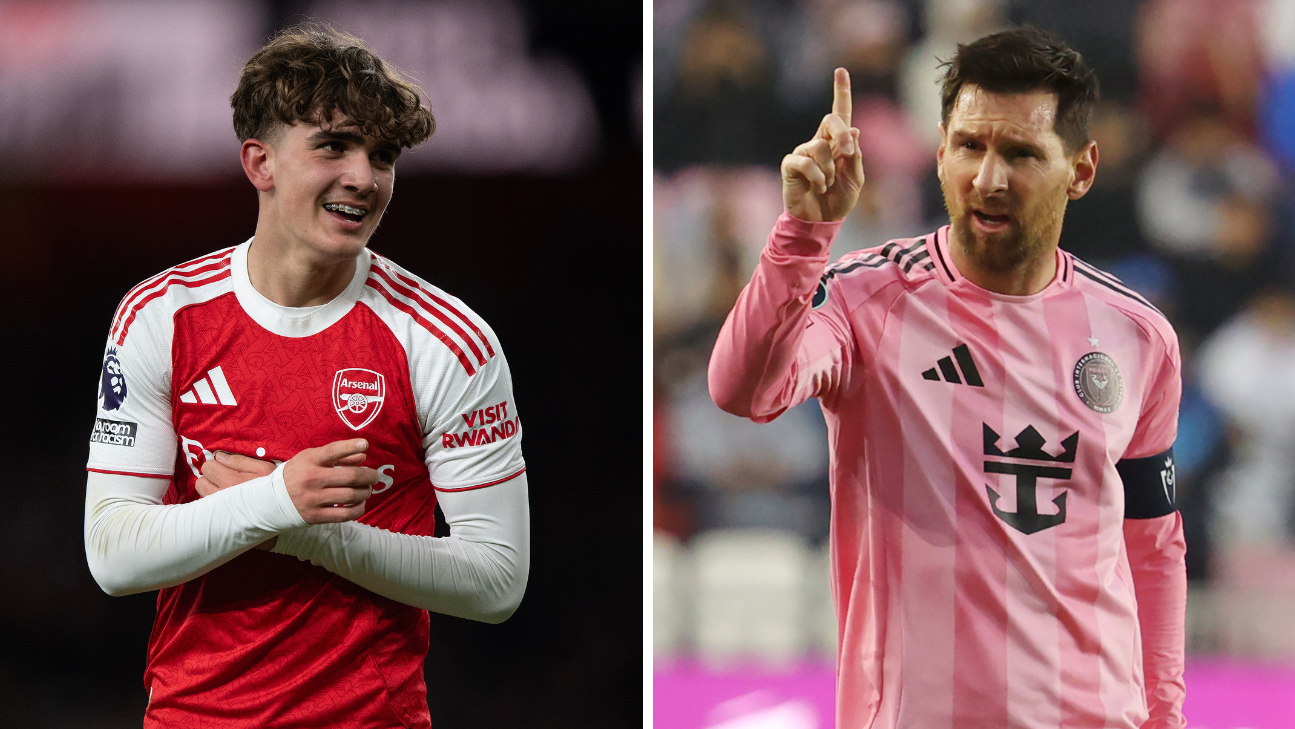
“Who is the best soccer player in the world?” used to be an easy question to answer.
It was Lionel Messi.
Now, even though every year a player at either Real Madrid or Barcelona will act like they’ve been smited by God because they didn’t finish first in Ballon d’Or voting, it’s a little more fun to try to figure that out. The world’s best player isn’t obvious, and it changes every year, if not every month.
But there will be plenty of time to debate this, especially because it’s a World Cup year. As always, we will do whatever we can to convince ourselves of two contradictory truths: (1) that soccer is a complex, dynamic game driven by the interplay of the various skill sets of a given team’s 11 players, and (2) that the team that wins the World Cup must have the best soccer player in the world.
For now, though, I want to ask a different question: Who is the best player in the world — at every age?
To give this analysis a little more longevity and coherence, I’ve grouped everyone together by their birth year. So, from the players born in 2009 through those born in 1987, which player is the top of each group?
 2009: Max Dowman, winger, Arsenal
This one might seem obvious because, uh, yeah …
Not only is 16-year-old Max Dowman the youngest goal scorer in Premier League history but he did it by scoring that goal for the best team in England and perhaps the best team in the world. He went coast-to-coast against a team that just beat Chelsea 3-0, and he has the same wispy mustache that I had when my dad joked, “Did you just drink grape soda?” and thus condemned me to years of therapy.
Given that Dowman is two full World Cup cycles away from the beginning of his prime — he will be 24 in 2034 — there can’t be anyone in his age group close to where he is … right?
Well, there’s a 16-year-old in Germany named Kennet Eichhorn who has already played 20 times as many first-team minutes as Dowman and is doing it at a much more demanding position.
One reason we tend to see so many of the youngest players break out as attackers is because mistakes don’t matter as much higher up the field. But a mistake at, say, center midfield, could immediately lead to a counter-attack for the other team. Even though attackers are the most valuable players in the sport, the barriers to a coach’s trust are simply much higher the closer you get to your own goal.
Eichhorn, though, has played 800-plus minutes at defensive midfield for Hertha Berlin this season — and he has been injured since January. Maybe if Dowman were playing for a second-division team, he’d be playing way more minutes than he has played for Arsenal. Maybe if Einchorn came through the academy at a Champions League club, he’d still be getting more minutes than Dowman.
There’s no way to know, and it doesn’t really matter beyond the purposes of this specific exercise. But if there’s one manager who obsesses over the risks his attackers pose, it’s Mikel Arteta, and he’s still giving Dowman minutes. So, we’re giving Dowman the slight nod.
0:53
Mikel Arteta calls for calm around ‘incredible’ Max Dowman
Mikel Arteta speaks about Max Downman after his performance for Arsenal against Everton in the Premier League.
 2008: Lennart Karl, attacking midfield, Bayern Munich
This one is way more straightforward. Bayern Munich might be the best team in the world, and Karl has started 20 games across the Bundesliga and Champions League. Karl, who turned 18 last month, scored eight goals and assisted seven more.
We don’t really need advanced data here; playing that many minutes at that age for Bayern is the most powerful indicator of future success. But Karl is averaging 0.79 non-penalty expected goals plus assists per 90 minutes — a world-class rate for an attacking midfielder.
 2007: Lamine Yamal, winger, Barcelona
What more is there to say about 18-year-old Yamal that hasn’t already been said?
1:20
How Yamal reached 50 career goals quicker than Ronaldo and Messi
Gab & Juls react to Lamine Yamal scoring his 50th career goal in Barcelona’s win over Athletic Club.
 2006: Warren Zaïre-Emery, midfielder, Paris Saint-Germain
The 2006-born players show just how volatile young-player projection can be. There are so many different factors that go into how any individual person develops, and we can see it in a bunch of the guys born 20 years ago.
Remember when Endrick was going to be the next Pele? And then none of the Real Madrid managers wanted him? And then he went on loan to Lyon and immediately started scoring and assisting goals again?
Or how about Myles Lewis-Skelly? He was starting for Arsenal and England at this time last year, then Arsenal signed a couple more gigantic fullbacks over the offseason, the Premier League became obsessed with being big and fast and scoring on set pieces almost overnight, and now MLS has started one Premier League game and is very unlikely to even make Thomas Tuchel’s World Cup roster.
In the other direction, we’ve got Yan Diomande, who was playing high school in Florida four years ago and now might be the most in-demand player in his age group on planet Earth. In his first year with RB Leipzig, Diomande is doing the thing that everybody wants: scorching defenders off the dribble on the wing and then turning it into actual goals and assists. In a vacuum, he’d probably command the biggest salary on the open market of anyone born in 2006.
But given everything we’ve just mentioned, I prefer to be a little more conservative when I do any kind of player projection and evaluation, so we’re going with the 20-year-old who is second on the list of most career minutes played in the Europe’s Big Five top leagues among everyone in the world who is currently 20 or younger:
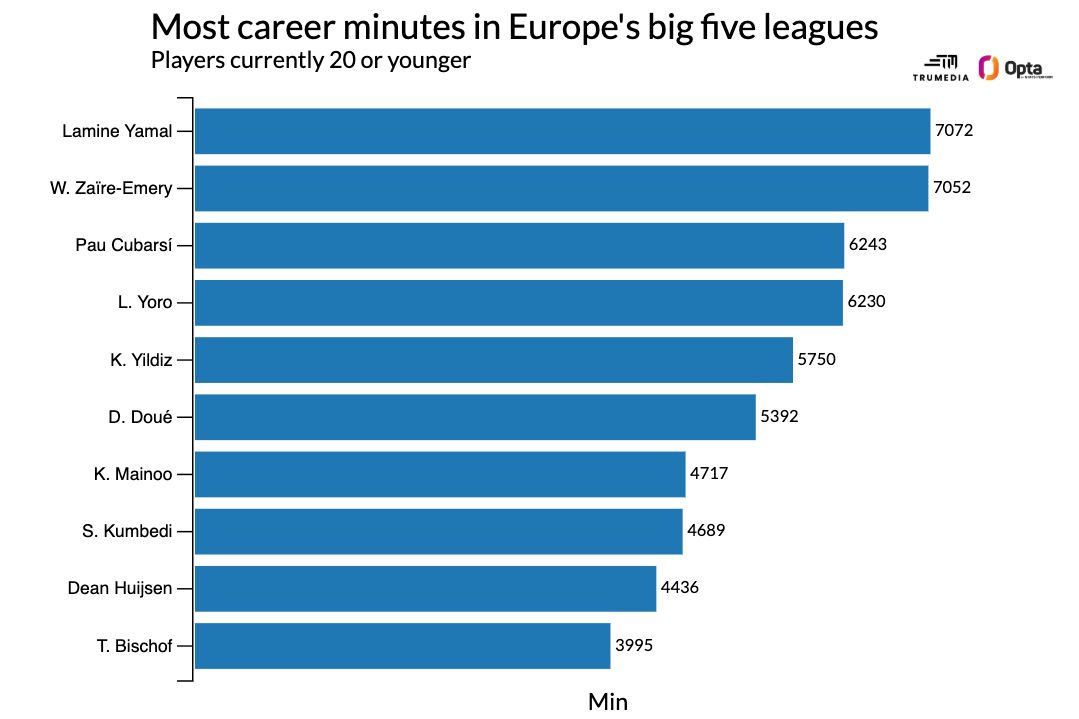
Playing for PSG in Ligue 1 isn’t the same thing as playing for Real Madrid or Manchester City, thanks to the general lack of competitiveness in the French league. But WZE — is this a thing? This should be a thing. Anyway, WZE broke into the PSG rotation three years ago, and he’s played more minutes with each successive season. Maybe, sometimes, development actually is linear.
2005: Désiré Doué, winger, Paris Saint-Germain
I came really close to not choosing the guy who had two goals and an assist in last season’s Champions League final.
Doué, who will turn 21 this summer, played only 900-ish minutes in Ligue 1 this season and he’s started just four more games in the Champions League. His longer track-record of production hasn’t quite matched what we saw against Inter last year, but he’s steadily been stacking really good minutes for four seasons now and we already know he’s good enough to start for a truly elite team.
I’m not quite sure the same is true about Arda Güler because I’m still not quite sure how good Real Madrid have actually been at any point this campaign, but he’s having a breakout season and is already one of the best passers in the world. Passing is generally an old-man skill, and the players who move the ball well at his age tend to go on to have really good careers.
2004: João Neves, midfielder, Paris Saint-Germain
The 21-year-old Neves first joined PSG in 2024 on a five-year deal. A couple of stats:
• Champions League title win rate for PSG in all of the full seasons before they signed João Neves: 0%
• Champions League title win rate for PSG in all of the full seasons since they signed João Neves: 100%
 2003: Jude Bellingham, midfielder, Real Madrid
I don’t know if he’ll ever match his first season in Madrid. In fact, I don’t think he ever will. Despite playing as a de facto midfielder, he scored or assisted a goal every 90 minutes, as Madrid won LaLiga and their 15th Champions League title.
In other words, we’ve seen Jude Bellingham be the best player on the best soccer team in the world. There’s a very small group of people we can say that about, and an even smaller group we can say who did it when they were only 20 years old. Bellingham is now 22 though, so he still has plenty of time to try again.
2002: Pedri, midfielder, Barcelona
Here’s the list of players across the Big Five leagues this season who have a 90-or-better grade from Gradient Sports for passing and carrying:
• Pedri
That’s it. That’s the entire list.
At 23, Pedri hasn’t hit his peak yet.
2001: Michael Olise, winger, Bayern Munich
Bayern have entered the PSG zone: they’re so much better than everyone else in their league that we need to be skeptical of the performance of all of their players in the Bundesliga until we see it translate to dominance in Europe.
PSG exited this zone last season — in large part due to the arrival of Khvicha Kvaratskhelia, who himself is a 2001. But Bayern are still there, in part because they got dominated earlier in the season by Arsenal, who are led by Bukayo Saka, another member of the class of 2001.
So, why is 24-year-old Olise ahead of both of them? Well, averaging more than a goal-plus-assist per 90 minutes immediately puts you into the Messi-Ronaldo realm. Olise did that last year, and he’s doing it again this year, at a higher rate: from 1.04, up to 1.28. The latter is tops in Europe at the moment.
Those stats, of course, are heavily boosted by Bayern’s Bundesliga dominance, but guess what happened the last time we saw Olise playing in a different league? He averaged 1.06 goals+assists per 90 minutes — for Crystal Palace, in the Premier League. That was across only about 1,200 minutes, but the last two seasons are showing that it wasn’t a fluke.
A simpler answer for why I’m slotting in Olise: There’s a chance that he’s the best soccer player in the world right now, and I wouldn’t say the same about Kvara or Saka.
0:52
Michael Olise whips in opening goal for Bayern
Michael Olise whips in opening goal for Bayern
 2000: Erling Haaland, forward, Manchester City
Something is clearly wrong with 25-year-old Haaland. His career has been a near-robotic, march of efficient goal-scoring — undeterred by the talent of his teammates, the difficulty of his competition, or anything other than his own body temporarily failing him.
But he’s scored only five goals since the start of 2026, and the easiest explanation — and the most likely explanation — is that he has an injury.
Even with a slight slowdown in output, though, he’s still lapping the field:
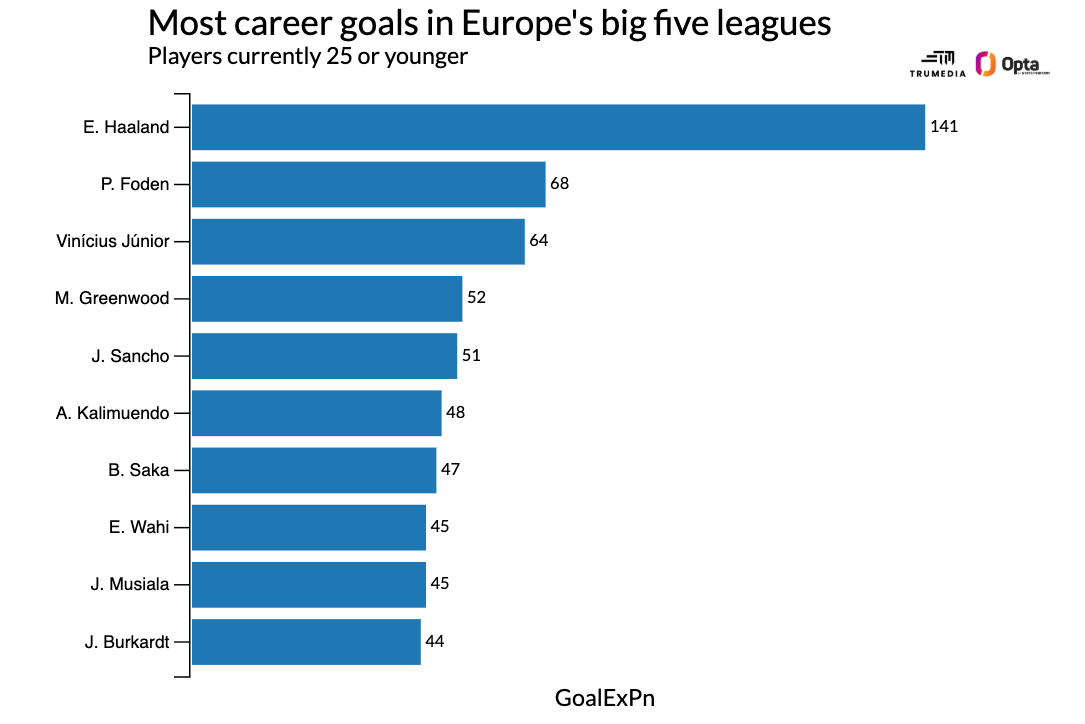
Vitinha, Vinícius Júnior, and Dominik Szoboszlai are all great players, but c’mon. Goals win games and he’s twice the goalscorer of anyone else his age.
1999: Declan Rice, midfielder, Arsenal
This might’ve been a fun conversation if Alexander Isak hadn’t broken his leg, but this is the easiest choice since Lamine Yamal. No other midfielder is this good at every aspect of playing midfield, let alone any other 27-year-old:
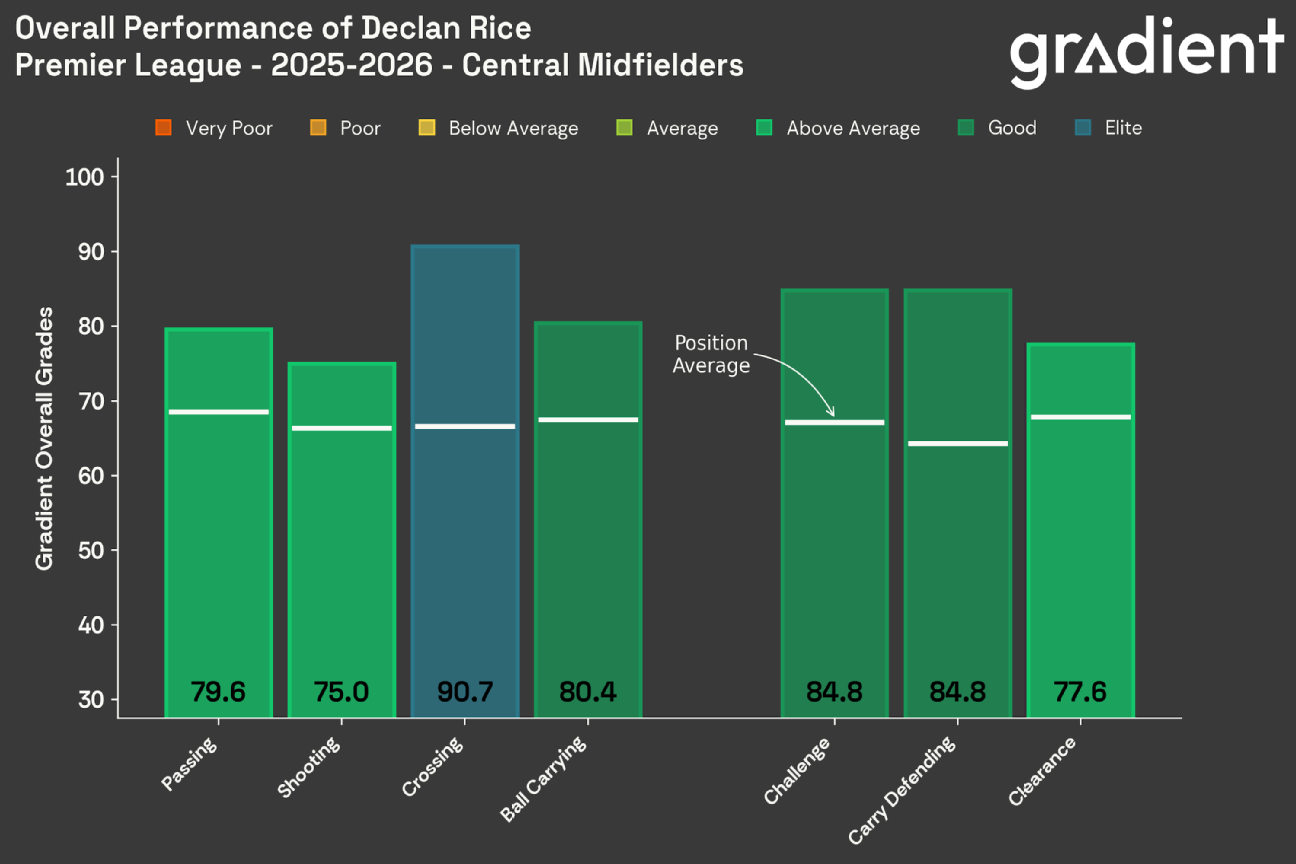
On top of that, he’s also one of the most physically dominant players at his position, too.
Gradient tracks an “Athleticism” score — a combination of speed, stamina, and explosiveness, modified by position and size — and Rice comes in at a 90.6 out of 100.
1998: Kylian Mbappe, forward, Real Madrid
OK, fine. I love Federico Valverde as much as anyone outside of his nuclear family, but this one was easier than Declan Rice. At 27 years old, Mbappe has been one of the best players in the world since he was a teenager.
I keep picking France to win the World Cup whenever someone asks me. An easy way to sum it up: Michael Olise, Kylian Mbappe, and Ousmane Dembélé are French. Dembélé, 28, is the reigning Ballon d’Or winner and you could make a pretty good argument that he’s the worst of those three players.
Now, I wouldn’t make that argument. When he’s healthy, he’s the best player in the world — an argument I made last year. He’s elite with both feet, his off-ball movement, dribbling, passing, and finishing are world-class, and he’s willing to press like a maniac. He’s, of course, just almost never healthy.
1996: Raphinha, winger, Barcelona
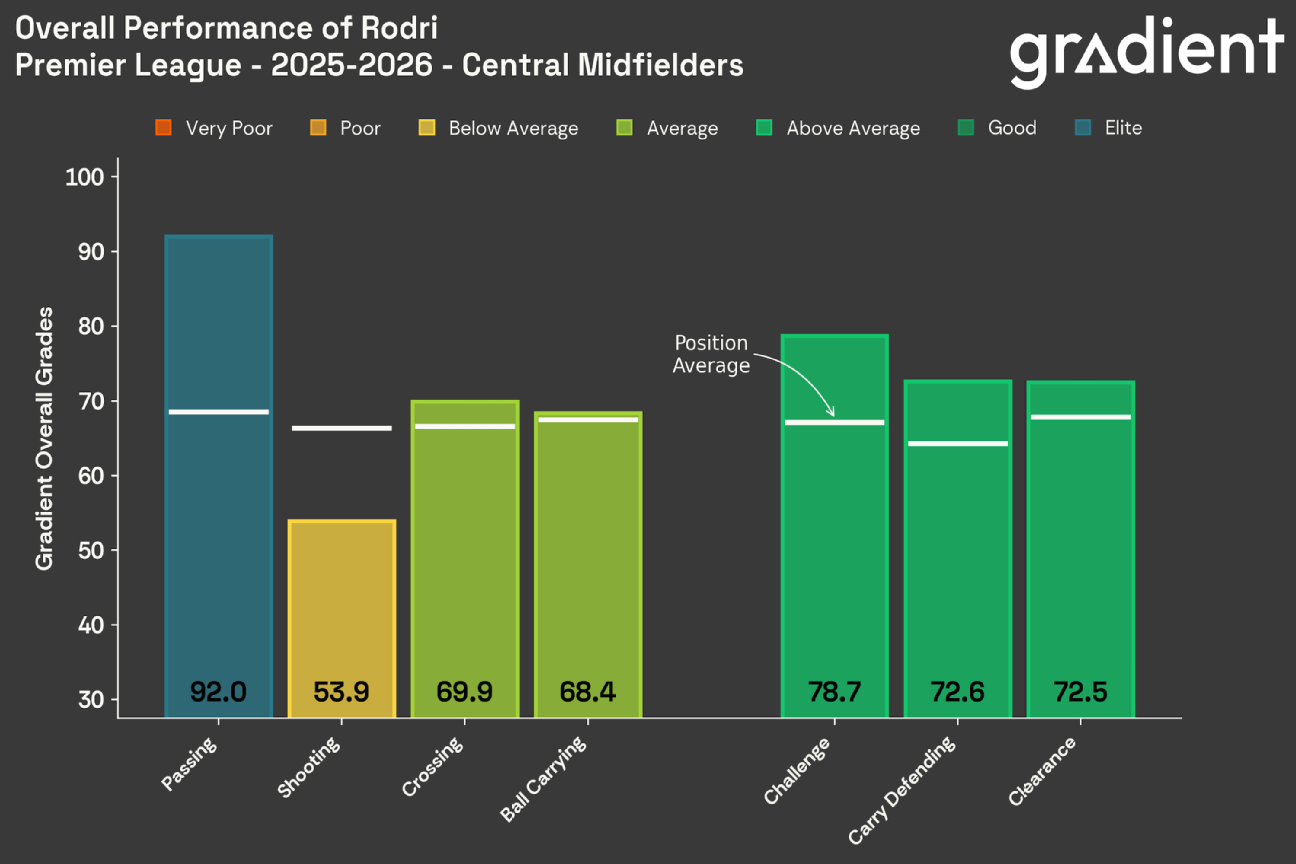
This really depends on where you think Rodri is at right now. Let’s compare his Gradient numbers from this season …
… to his Ballon d’Or-winning season:
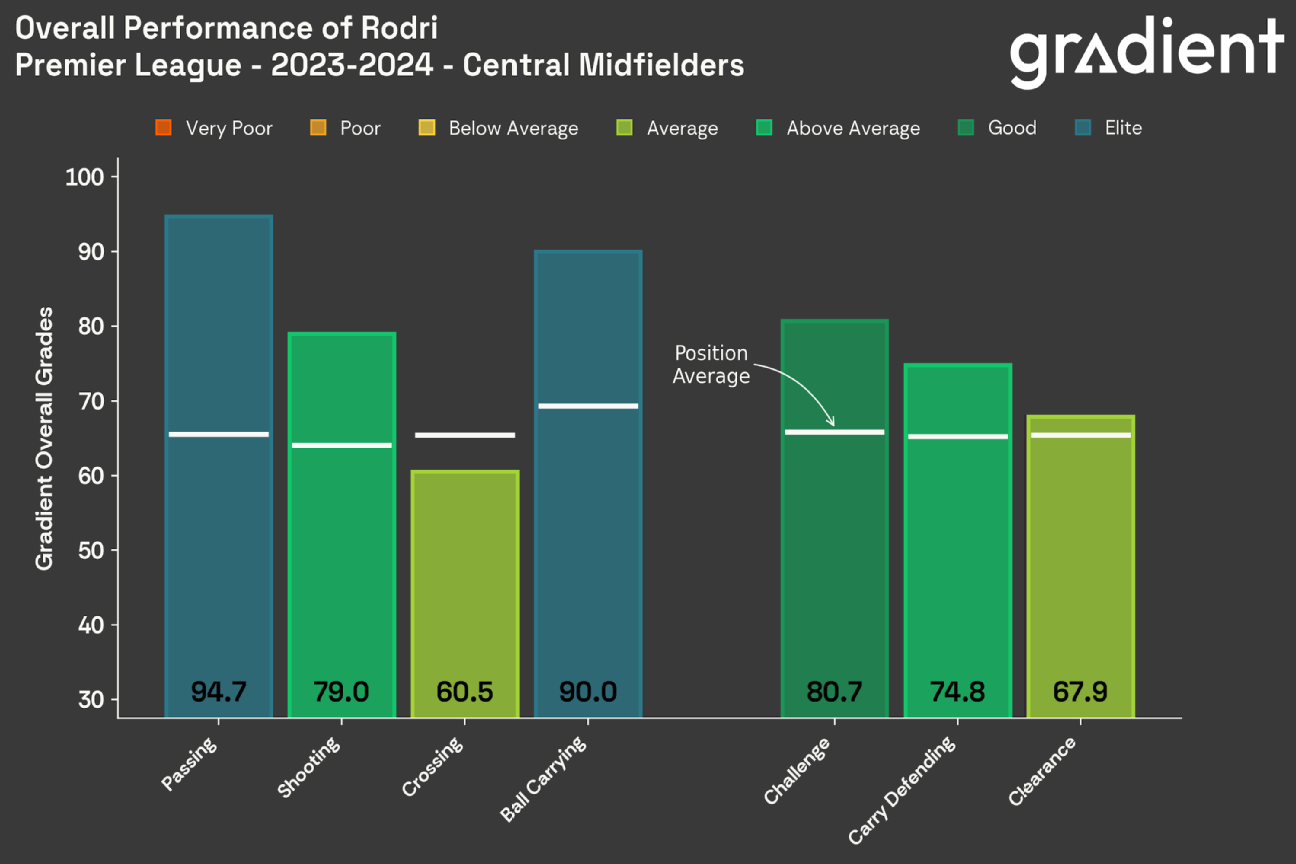
That’s about what you’d expect, right? The passing is still there, but all of the more physical aspects of his game haven’t recovered.
Raphinha, meanwhile, is still a 98th percentile athlete according to Gradient’s physical metrics, and he’s scoring and assisting goals at the same rate as last season, when he finished fifth in Ballon d’Or voting.
What I love about 29-year-old Raphinha is that he can fit into pretty much any team in the world: he can be your primary scorer and creator, he can be the weakside winger who makes runs off the ball, and he’s one of the best pressers in the world, so you don’t have to make any systematic changes to your structure to fit him into the team.
1995: Joshua Kimmich, midfielder, Bayern Munich
There’s a pretty big drop-off from 1996 to 1995. That’s perhaps because we’re now talking exclusively about players who are in their 30s, which is right about when everyone officially enters the downslopes of their career. But it’s also just random; sometimes the highest-end talent clusters in a few different years.
After 31-year-old Kimmich, these are the five highest-value 1995 players according to Transfermarkt: David Raya, Ollie Watkins, Frank Anguissa, Jack Grealish, and Mike Maignan. Kimmich is still one of the best passers in the world, and per Gradient, only four other midfielders have covered more ground per game in the Champions League so far this season.
 1994: Bruno Fernandes, attacking midfielder, Manchester United
He’s been the best player in the Premier League this season, and although he’ll turn 32 in September, he hasn’t really shown any signs of slowing down. Of course, players who are multiple years into their 20s suddenly and abruptly slow down all of the time.
To give you a sense of how impressive Bruno’s performance is, at this age — and with as many minutes as he plays for club and country every season — here are some other guys born in 1994: Rodrigo de Paul, John Stones, Mateo Kovacic, Andy Robertson, Aymeric Laporte, João Cancelo, Memphis Depay, Raheem Sterling…
1993: Harry Kane, forward, Bayern Munich
This is the part of the exercise where I start to feel really old because all of these guys feel like weathered, wizened old veterans whose bodies could fall apart at any moment. They’ve seen some stuff. And these people are all five years younger than me.
Anyway, the answer is obviously Harry Kane.
0:57
Harry Kane curls in a beauty for Bayern
Harry Kane curls in a beauty for Bayern Munich.
I wrote an article in 2019 about how Kane’s world-class ability to get shots had declined, how he’d put so many minutes on his body, and how it might be time to worry, given how he’d entered the latter half of his peak years and given how many other great young English attackers seemed to peak early.
In response, one Spurs fan sent me an email, vaguely threatening my health by signing off with the message: “Don’t forget. We’re always watching.” I hope he — it’s always a “he” — is handling Tottenham’s current season with an equal level of equanimity.
Kane, of course, offset the decline in shots by becoming a world-class playmaker and extending his stay among the game’s elite. Few players have had both his peak and his longevity. The 32-year-old England captain has scored 21 non-penalty goals in the Bundesliga this season — two more than anyone else in Europe’s Big Five leagues.
I can make a decent case for 33-year-old Mohamed Salah‘s season not being as bad as you think. He looks terrible — that is undeniable. He frequently looked terrible against Galatasaray last week, and yet he ended the match with a fantastic goal, a beautiful assist, and more shots on target and touches inside the penalty area than anyone else on the field. Domestically, he has more goals+assists than Saka, and among players with at least 1,500 minutes played, he ranks seventh in the Premier League in expected goals+assists per 90 minutes.
That said, Salah is being paid like he’s the best player in the league — not just a pretty good winger.
Courtois, meanwhile, also 33, is probably still the best goalkeeper in the world. If we were battling aliens for the future of Earth or whatever, if your life depended on one guy saving a shot, etc., we’d all pick Courtois.
In a strange way, this season is making me appreciate just how good Van Dijk used to be. There have been a bunch of little moments where his positioning has been slightly off, he hasn’t recovered quickly enough, or a difficult touch goes slightly awry that it makes you realize: (1) how much Liverpool have needed him to be perfect for the defense to work, and (2) how easy he made being perfect look.
With a little more protection, 34-year-old Van Dijk can still play at a really high level for a few more years. And what, you want me to pick Kevin De Bruyne or Antoine Griezmann over him?
Welbeck played 2,000-plus minutes for Manchester United in 2011-12. He is a forward, always has been. This is his 19th Premier League season. He has 42 England caps and made his debut for his country in 2011.
Guess what his career best for non-penalty goals in a season is? It’s 11. And guess when he did it? He’s doing it this year at age 35.
Both 1990 and 1989 are how it should be: everyone is just hanging on for dear life. None of these guys are starting for Real Madrid or Bayern Munich. It’s all players who used to start for those teams and are now providing valuable minutes to the likes of Girona or PSV.
Henrikh Mkhitaryan was the other option here — he’s still playing for Inter Milan, who have a six-point lead atop Serie A — but I went with his former Borussia Dortmund teammate instead. Aubameyang has more goals+assists than anyone on Marseille’s biggest rivals PSG. And unlike earlier in his career, the 36-year-old is providing a good deal of value beyond just the shots he gets.
And here’s the guy Aubameyang replaced at Dortmund. This is the worst year of 37-year-old Lewandowski’s career … and he’s averaging 0.83 non-penalty goals+assists per 90 minutes. That’s still good enough for fourth-best in LaLiga, just slightly behind Mbappe.
 1987: Lionel Messi, attacking midfielder, Inter Miami
Stats Perform has MLS data going all the way back to the 2012 season. That’s 14 full seasons, plus about a month of matches for the current campaign. Over that stretch, 38-year-old Messi ranks 29th in total non-penalty goals+assists. He has played 66 total games, and he joined the league when he was 36.
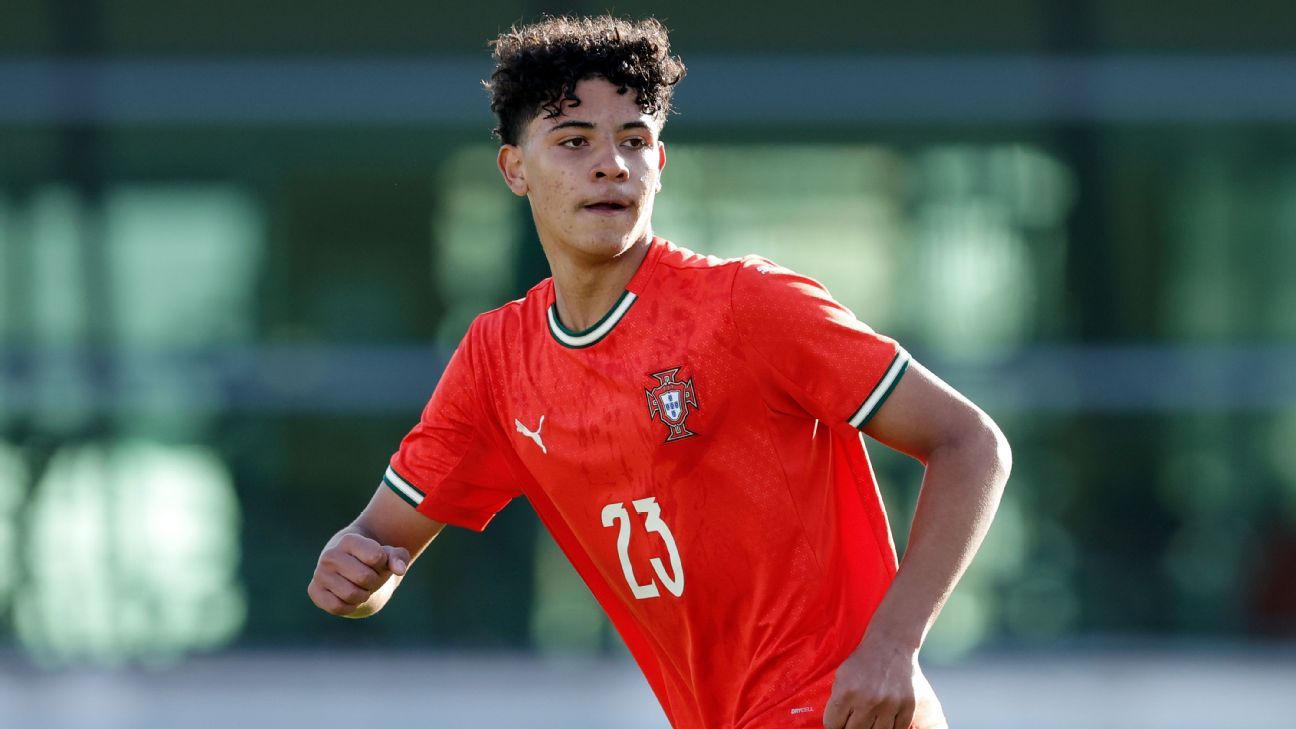
Cristiano Ronaldo‘s eldest son, Cristiano Ronaldo Jr., has trained with Real Madrid‘s under-16 team this week, sources have told ESPN.
Ronaldo Jr., 15, plays for Al Nassr with his father in Riyadh, Saudi Arabia, but the family are currently in Madrid as Ronaldo Sr. recovers from a muscular injury suffered last month in the Saudi Pro League.
Ronaldo Sr. has not been called up for Portugal‘s friendlies against the United States and Mexico during this international break as he continues his recovery.
He posted photos of himself working in the gym on Tuesday, with the message “improving every day.”
A source told ESPN that Real Madrid had opened its doors to their former player’s son to train with them during this period of uncertainty in the Middle East, due to the conflict in Iran.
He trained with the ‘Cadete A’ — or U16 — side on Tuesday.
However, it was still too early to know if the situation could lead to his signing with the club’s academy, the source said.
Another source wouldn’t entirely rule out a possible move to Real Madrid in the future, but admitted that the reports they have on Ronaldo Jr. are not positive.
– Cristiano Ronaldo injury ‘more serious’ than expected
– Saudi Pro League table
Cristiano Ronaldo is Madrid’s all-time record scorer, winning 16 trophies with the club between 2009 and 2018.
He joined Al Nassr in 2023 and was injured on Feb. 28, suffering a hamstring problem, and travelling to Madrid after the issue was discovered to be “more serious” than first thought according to coach Jorge Jesus.

Where do all 30 teams stand in the final March edition of ESPN’s NBA Power Rankings? So far, 10 teams have clinched at least a postseason berth, with the full playoff picture beginning to take shape. And with the pool of top 20 teams nearly set, the next few weeks are all about jockeying for position.
In the Western Conference, the Los Angeles Lakers are making the loudest statement among the logjam of teams behind the Oklahoma City Thunder and San Antonio Spurs. The 3-seeded Lakers, healthy again and settling into an offensive hierarchy between Luka Doncic, LeBron James and Austin Reaves, have won nine of 10 games in their pursuit of home court in the first round.
The Atlanta Hawks have made their own push as an attempt to break free from the Eastern Conference play-in picture. Atlanta is 13-1 over the past month, albeit during a weaker portion of its schedule. Things get tougher starting Wednesday, when the 6-seeded Hawks face the East-leading Detroit Pistons and Boston Celtics three times in six days.
Which playoff contenders and lottery-bound teams are making moves up and down our latest rankings? Check out our updated 1-30 list and what lies ahead for each team as the regular season winds down.
Note: Team rankings are based on where members of our panel (ESPN’s Anthony Slater, Dave McMenamin, Jamal Collier, Michael C. Wright, Bobby Marks, Tim Bontemps, Tim MacMahon, Vincent Goodwill and Zach Kram) think teams belong.
Previous rankings: Preseason | Oct. 29 | Nov. 5 | Nov. 12 | Nov. 19 | Nov. 26 | Dec. 3 | Dec. 10 | Dec. 17 | Dec. 24 | Dec. 31 | Jan. 7 | Jan. 14 | Jan. 21 | Jan. 28 | Feb. 4 | Feb. 11 | Feb. 25 | Mar. 4 | Mar. 11 | Mar. 18
Jump to a team:
ATL | BOS | BKN | CHA | CHI | CLE
DAL | DEN | DET | GS | HOU | IND
LAC | LAL | MEM | MIA | MIL | MIN
NO | NY | OKC | ORL | PHI | PHX
POR | SAC | SA | TOR | UTAH | WAS
1:04
OKC looking to young talent for repeat championship run
Zach Kram breaks down Ajay Mitchell and Jared McCain’s impact in the Thunder’s pursuit of another chip this season.

-
2025-26 record: 54-15
-
Previous ranking: 1

-
Next games: @ BOS (Mar. 25), vs. CHI (Mar. 27), vs. NYK (Mar. 29), vs. DET (Mar. 30)
In his return to the lineup, Jalen Williams had 18 points and six assists over only 20 minutes in Philadelphia on Monday night. There’s little unknown about the defending champions entering the playoffs. They’ve won 12 straight and appear poised to grab home court throughout the postseason. But their ultimate ceiling will be based on whether Williams can shake off an injury-riddled season and find his best version in the next two months. Monday was a positive start. — Anthony Slater

-
2025-26 record: 52-19
-
Previous ranking: 3

-
Next games: vs. ATL (Mar. 25), vs. NO (Mar. 26), @ MIN (Mar. 28), @ OKC (Mar. 30), vs. TOR (Mar. 31)
Seven days ago, the top of the East appeared to be open with news of Cade Cunningham’s punctured lung, seemingly leaving the Pistons vulnerable. But many Pistons staffers believed a hard reset was needed to get back to their defensive identity, which had experienced slippage over the last few weeks. Four wins later, they sit firmly back atop the standings with 11 games left and back to second in defense. And from a two-way player to a two-year deal revelation, Daniss Jenkins has rediscovered his mojo after a monthlong slump, averaging 26 on 60% shooting in wins over the Warriors and Lakers. — Vincent Goodwill

-
2025-26 record: 47-24
-
Previous ranking: 4
-
Next games: vs. OKC (Mar. 25), vs. ATL (Mar. 27), @ CHA (Mar. 29), @ ATL (Mar. 30)
It’s been an up-and-down first couple of weeks for Jayson Tatum since returning to the lineup for the Celtics on March 6. One thing that has been consistent, however, is Tatum’s usage rate, which entering Wednesday’s showdown with Oklahoma City is 30.8 — right in line with where it has been each of the past five seasons. — Tim Bontemps

Victor Wembanyama became the fifth player to reach 4,000 points and 600 blocks in his first three seasons since blocks became an official stat in 1973-74, according to ESPN Research. The Frenchman joins the company of Shaquille O’Neal, Alonzo Mourning, David Robinson and Hakeem Olajuwon as the only players to achieve the feat.
San Antonio enters Wednesday’s clash with Memphis on a six-game winning streak, including victories in 22 of the past 24 since Feb. 1, with an opportunity to finish with its first 60-win campaign since the 2016-17 season. The toughest portion of the remaining schedule starts April 1 at Golden State, followed by road outings against the Clippers and Nuggets. — Michael C. Wright

-
2025-26 record: 46-26
-
Previous ranking: 6
-
Next games: @ IND (Mar. 25), vs. BKN (Mar. 27), vs. WSH (Mar. 30), vs. CLE (Mar. 31)
After L.A.’s nine-game winning streak was snapped in Detroit on Monday, coach JJ Redick reflected on what he took from the hot stretch.
“We’re a good basketball team,” he said. “I believe that we’re a good basketball team. I thought we could be a good basketball team the entire season. We saw flashes of it. We saw short stretches of it, but we’re a good basketball team.”
Two out of the Lakers’ final 10 games are against a great basketball team in the Oklahoma City Thunder, which L.A. should treat like playoff games before the real thing begins. — Dave McMenamin

While the Celtics were looking up at the 1-seed, the Knicks were eyeing the Celtics in that second spot in the East, and the two playoff combatants are eye-to-eye following a six-game winning streak. It’s a break in the schedule the Knicks have been waiting for, with the combined record of 104-255 (.289 winning percentage), and short of a scare against the Nets, the Knicks have taken care of business. Getting Mikal Bridges back on track is an objective before the playoffs. Since scoring 25 against the Spurs on March 1, he’s averaging 8.9 points on 37% shooting in his last 11 games — not a sustainable playoff formula. — Vincent Goodwill

-
2025-26 record: 45-27
-
Previous ranking: 7
-
Next games: vs. MIA (Mar. 25), vs. MIA (Mar. 27), @ UTAH (Mar. 30), @ LAL (Mar. 31)
The Cavs have some cushion as the No. 4 seed in the East, and they could also have an impact on their potential first-round opponent. After Tuesday’s 136-131 win over Orlando — the team’s fourth straight — Cleveland still has two games each remaining with both Miami and Atlanta, two of the other teams chasing the Raptors for the No. 5 slot in the East and a likely first-round date with the Cavs. — Jamal Collier

Forward Peyton Watson returned Sunday after missing more than six weeks due to a hamstring strain, scoring 14 points in 20 minutes off the bench in a win over the Portland Trail Blazers. Watson is in the midst of a breakout season as he approaches restricted free agency, averaging career bests of 14.9 points, 4.9 rebounds, 2.0 assists and 1.0 steals per game for a Nuggets team that needs to get healthy. — Tim MacMahon

Minnesota is trying to claim a top-four seed in the Western Conference while missing Anthony Edwards (knee) for an extended period. If Edwards misses three more games he will be ineligible for All-NBA honors at season’s end due to the 65-game rule. The Nuggets, Rockets and Timberwolves are all vying for home court in the first round of the playoffs. — Bontemps

-
2025-26 record: 43-28
-
Previous ranking: 9

-
Next games: @ MIN (Mar. 25), @ MEM (Mar. 27), @ NO (Mar. 29), @ NYK (Mar. 31)
The loss at Chicago marked Houston’s 12th to a team with a losing record, tying the Hornets for the most of any team this season with a winning record. Houston owns a 23-12 mark against teams currently below .500 with a crucial matchup on deck Wednesday at Minnesota.
Despite the team’s overall inconsistency recently, center Alperen Sengun is rounding into postseason form with four straight double-doubles. The rest of the supporting cast needs to step up for the Rockets to salvage a season soured by injuries to key leaders on the team. — Wright

-
2025-26 record: 40-32
-
Previous ranking: 14
-
Next games: @ DET (Mar. 25), @ BOS (Mar. 27), vs. SAC (Mar. 28), vs. BOS (Mar. 30)
The Hawks continue to play their best basketball at the right time of the season. Despite the loss at Houston last Friday that snapped an 11-game winning streak, Atlanta has won 13 out of 15 and trails only Oklahoma City for the league’s top offense. Twelve of those wins have come by double digits. In two wins against Golden State and Memphis, Atlanta won by a combined 55 points. Against the Grizzlies, the Hawks set a franchise record with 25 3-pointers. — Bobby Marks

After Phoenix followed a tough 2-4 road trip with a home loss to the struggling Milwaukee Bucks, the Suns got back on track with a 22-point win over the Toronto Raptors this past weekend. Six of their final 10 games are on the road, where they’re 17-18. But seeing as they’re 3.5 games back of Houston for No. 6 and four games up on the L.A. Clippers in No. 8, their No. 7 spot is likely secure. — McMenamin

-
2025-26 record: 40-31
-
Previous ranking: 15
-
Next games: @ LAC (Mar. 25), vs. NO (Mar. 27), vs. ORL (Mar. 29), @ DET (Mar. 31)
With one game to go on their last big road trip of the season, the Raptors are 2-2 on their current stretch away from home. They beat the teams with losing records (Chicago and Utah) and lost to the teams with winning records (Denver and Phoenix), continuing a seasonlong trend. With important upcoming games against Orlando and Miami (twice), who are rivals with the Raptors for playoff seeding, Toronto must hope it can eke out a few wins against upper-tier competition. — Zach Kram

-
2025-26 record: 38-34
-
Previous ranking: 17
-
Next games: vs. NYK (Mar. 26), vs. PHI (Mar. 28), vs. BOS (Mar. 29), @ BKN (Mar. 31)
Blowout wins over Miami and Orlando have Charlotte still in the running for the first division title in franchise history. With a few weeks to go in the regular season, the Southeast Division hosts a four-team race: As of Tuesday, Atlanta has 32 losses, Orlando has 33, and Miami and Charlotte both have 34. Even better: With Philadelphia sitting at 33 losses as well, there’s a chance the East’s play-in tournament is an all-Southeast affair. — Kram
1:40
Paul George apologizes for suspension, looks forward to return
Paul George speaks about his suspension and his mindset going into the rest of the season.

After weeks with several players sidelined due to injury and suspension, Philadelphia is finally getting back to normal again. Paul George is returning from a 25-game suspension Wednesday, Joel Embiid (knee) is questionable to play and Tyrese Maxey (finger) might not be far behind, as well. They’ll need all hands on deck for the home stretch of the season after falling to No. 7 in the Eastern Conference and into the play-in. — Bontemps

-
2025-26 record: 38-34
-
Previous ranking: 13
-
Next games: @ CLE (Mar. 25), @ CLE (Mar. 27), @ IND (Mar. 29), vs. PHI (Mar. 30)
A late-March skid — the Heat have followed a season-high seven-game winning streak with five consecutive losses — has derailed Miami’s push to avoid a fourth consecutive trip to the play-in. In all five losses, the Heat allowed at least 120 points, the longest streak in franchise history. Miami trails only Milwaukee, Washington and Indiana for the worst defense in that stretch. — Bobby Marks

The Magic have lost a season-high six games in a row and are now tied with Charlotte and Miami in the East play-in field. The schedule does not get easier, as five out of their next eight opponents have a record above .500. A bright spot in the losing streak is the play of Jamal Cain, however. Signed to a two-way contract in the offseason, Cain had his contract converted on March 20. He has scored double-digit points in three out of the past four games, including a season-high 17 points against Cleveland. — Marks

-
2025-26 record: 36-36
-
Previous ranking: 16
-
Next games: vs. TOR (Mar. 25), @ IND (Mar. 27), @ MIL (Mar. 29), vs. POR (Mar. 31)
Darius Garland has found his shooting stroke with the Clippers, averaging 20.8 points on 50% from the field and 50.7% from 3 in his first 10 games with the franchise. The two-time All-Star exploded for 41 points on 15-for-24 shooting (8-for-12 from 3) in an overtime win over the Dallas Mavericks on Saturday and the Clippers are firmly in the playoff picture, two games up on No. 10 Golden State with 10 games left. — McMenamin

-
2025-26 record: 36-37
-
Previous ranking: 20
-
Next games: vs. MIL (Mar. 25), vs. DAL (Mar. 27), vs. WSH (Mar. 29), @ LAC (Mar. 31)
A recent Clippers skid has cracked open the door for the Blazers to sneak into the eighth seed, which provides a much more realistic path for them to get into the playoffs through the play-in bracket. Portland is one back in the loss column, but faces the Clippers twice in the final three weeks of the season and has five lottery teams on the schedule over the last nine games. Even if the Blazers have little chance to upset the Spurs or Thunder, they’d benefit from some first-round playoff experience for their young core. — Slater
0:37
Kerr: Warriors will play Curry in play-in tourney if healthy
Steve Kerr provides an update on Stephen Curry’s availability for the Warriors this season.

An adverse Warriors season continues to turn catastrophic. Starting wing Moses Moody — having a career season in his fifth year — suffered a gruesome noncontact leg injury late in overtime Monday night in Dallas. The timing and severity put all of next season in jeopardy for Moody, who is in the first season of a three-year, $39 million extension. The Warriors already anticipate that Jimmy Butler III, rehabbing from a torn ACL, will miss a chunk of next season. Tough times in San Francisco. — Slater

Following wins in five of their last seven contests, the Pelicans start a three-game road trip Tuesday against the Knicks, followed by matchups at Detroit and Toronto. The team’s performance over that stretch could ultimately determine interim coach James Borrego’s future.
Zion Williamson is now up to 132 career 25-point games after Saturday’s loss to Cleveland, which ranks third in New Orleans history behind Anthony Davis (220) and Brandon Ingram (133), according to ESPN Research. The defeat to the Cavs was the Pelicans’ sixth this season after leading by 15 points or more. — Wright

-
2025-26 record: 29-42
-
Previous ranking: 21
-
Next games: @ POR (Mar. 25), vs. SAS (Mar. 28), vs. LAC (Mar. 29), vs. DAL (Mar. 31)
When the Bucks signed Cam Thomas shortly after the trade deadline, they believed they were adding a player who could help them make a playoff push. Doc Rivers went so far as comparing Thomas to great bench scorers he’s coached in the past, such as three-time Sixth Man of the Year Jamal Crawford with the Clippers. But less than two months later, Thomas was released after struggling to score efficiently and providing little else to a Bucks team sputtering toward the finish line. — Collier

-
2025-26 record: 29-42
-
Previous ranking: 22
-
Next games: @ PHI (Mar. 25), @ OKC (Mar. 27), @ MEM (Mar. 28), @ SAS (Mar. 30)
The Bulls dismantled their roster at the trade deadline because, as team vice president Arturas Karnisovas explained, they didn’t want to remain in the middle. At that point, Chicago had the 21st-best record in the league at 24-31. Fast forward to this week, and the Bulls still have the 21st-best record in the league at 29-42. Chicago will almost certainly require some lottery luck to change its immediate future. — Collier

-
2025-26 record: 24-47
-
Previous ranking: 24
-
Next games: vs. SAS (Mar. 25), vs. HOU (Mar. 27), vs. CHI (Mar. 28), vs. PHX (Mar. 30)
The losses continue to pile up along with the team’s injury update announcements. Star guard Ja Morant hasn’t played since Jan. 21 and missed his 29th consecutive game Monday in Atlanta for a squad that is now 6-23 in his absence. The 36-point setback against the Hawks on Monday registered as Memphis’ largest margin of loss this season. The Grizzlies host San Antonio on Wednesday to tip off a six-game homestand that closes out April 3 against Toronto. — Wright

-
2025-26 record: 23-49
-
Previous ranking: 25
-
Next games: @ DEN (Mar. 25), @ POR (Mar. 27), vs. MIN (Mar. 30), @ MIL (Mar. 31)
It has been more than two months since the Mavericks won a home game, losing 12 consecutive games at the American Airlines Center since a Jan. 22 win over the Warriors. The home losing streak was extended with Monday’s overtime loss to the Warriors, when rookie Cooper Flagg recorded his eighth 30-point performance, trailing only LeBron James and Carmelo Anthony for the most ever in a season by a teenager. — MacMahon

-
2025-26 record: 21-51
-
Previous ranking: 26
-
Next games: vs. WSH (Mar. 25), @ DEN (Mar. 27), @ PHX (Mar. 28), vs. CLE (Mar. 30)
Rookie Ace Bailey, the fifth overall pick in the 2025 draft, has been a bright spot as the Jazz head toward securing another high lottery pick. He’s scored at least 25 points in the last three games, becoming the fifth-youngest player ever to record such a streak. His 95 points in that span is the most by a Jazz rookie over a three-game stretch since Darrell Griffith during the 1980-81 season. Bailey, 19, scored a career-high 37 in Monday’s loss to the Raptors. — MacMahon

Arkansas coach John Calipari sat courtside in Sacramento on Sunday afternoon, catching a Kings game between NCAA tournament stops in Portland and San Jose. The appearance was notable.
Calipari coaches Darius Acuff Jr., an electric scoring guard for the Razorbacks who is rising into the top-five conversation for June’s draft. League sources confirm the Kings have a growing level of interest in Acuff, and he will be a real option for them near the top of the draft. — Slater

-
2025-26 record: 17-55
-
Previous ranking: 28
-
Next games: @ GS (Mar. 25), @ LAL (Mar. 27), vs. SAC (Mar. 29), vs. CHA (Mar. 31)
It’s been miserable and stays that way for the Nets, who are waiting for May 10, lottery night, to see if all this losing is worth the pain. It wasn’t a surprise to see them compete in a cross-borough Knicks matchup on Friday, taking double-digit leads and almost squeaking out a win. The spiciest note of the night came from Josh Minott, who hit six triples in a game for the first time this season, calling out former teammate Karl-Anthony Towns, “I love KAT, but he don’t like physicality. That’s my boy, too. I hope this angers him.” — Goodwill

-
2025-26 record: 16-55
-
Previous ranking: 29
-
Next games: @ UTAH (Mar. 25), @ GS (Mar. 27), @ POR (Mar. 29), @ LAL (Mar. 30)
With 15 consecutive losses, Washington has fallen into a tie with Indiana for the fewest wins in the NBA. At this point, the Wizards have more than guaranteed they’ll keep their top-eight-protected pick; now, they’re on the verge of finishing with the NBA’s worst record and landing the No. 1 spot entering lottery night. — Kram

With a 37-point effort from Pascal Siakam, the Pacers snapped a 16-game losing streak in Orlando on Monday — their first win since the All-Star break.
The victory gave Indiana 16 wins on the season, tying them with Washington for the fewest in the league — but if the Pacers finish with the No. 1, 2, or 3 positions in the lottery, they’ll have identical 52.1% odds of keeping their pick, which will go to the Clippers if it lands outside the top four. — Kram


Oil prices volatile as Trump talks up Iran negotiations

What small businesses need to know

My Favorite Air Fryer Is at Its Lowest Price Since Black Friday

-

 Fashion1 week ago
Sales at US apparel, clothing accessories stores up 4% YoY in Jan 2026
-

 Tech1 week ago
Justice Department Says Anthropic Can’t Be Trusted With Warfighting Systems
-
 Business1 week ago
Stocks and pound rise as US rate call approaches
-

 Entertainment1 week ago
Val Kilmer revived 1 year after death through AI
-

 Sports1 week ago
March Madness 2026 – How to watch in SA, start time, schedule, TV channel for NCAA championship basketball tournament
-
 Business1 week ago
Brits cashing in jewellery as gold price hits record high
-

 Fashion1 week ago
Spain’s Inditex FY25 sales rise 3.2% to $46.28 bn amid strong demand
-

 Entertainment1 week ago
With few new leads 45 days after Nancy Guthrie’s disappearance, investigation “becomes much harder,” expert says