

Business
Wall Street banked on a flurry of deals under Trump in 2025. It wasn’t that simple


The Wall Street Bull statue covered in snow on Nov. 15, 2018.
Erik Mcgregor | Lightrocket | Getty Images
Wall Street expected U.S. mergers and acquisitions to roar back in 2025. The reality was something closer to fits and starts.
Following the election of President Donald Trump more than a year ago, executives and bankers prepared for a looser regulatory environment and a robust pipeline for mergers and acquisitions. Instead, they were met with tariff uncertainty, high interest rates, and an unpredictable process for winning over the Trump administration and getting deal approval.
While the year saw high-profile megadeals inked — Union Pacific’s proposed acquisition of Norfolk Southern for $85 billion; Netflix’s proposed takeover of Warner Bros. Discovery’s streaming and studio assets for $72 billion; the pending take-private of Electronic Arts for roughly $50 billion — generally, U.S. deal volume was down year over year, according to Pitchbook data.
“When you read the headlines they seem to suggest there has never been a better M&A market in the history of the planet. And while that’s true in some ways, when you get underneath the front page headlines and these massive transactions … you see a less active market,” said Benjamin Sibbett, co-head of the Americas M&A practice at Clifford Chance.
Through Dec. 15 this year, there were roughly 13,900 transactions in the U.S., compared with 15,940 deals during the same period in 2024, the last year of the Biden administration, according to Pitchbook data.
Deal value, however, was up, boosted by high-dollar-figure agreements: The 2025 deals tracked by Pitchbook totaled roughly $2.4 trillion in value, compared with roughly $1.83 trillion in 2024. The data represents both corporate M&A and private equity buyout activity and considers both announced and closed transactions.
In particular, middle-market deal volume was low this year with those large M&A transactions padding the stats, according to a S&P Global analysis of deal-making as of November.
“This has been a decade-high level of megadeals, double the number of deals from last year. When you look at the importance of scale, it’s been an all-time record in terms of the premium that the market has given to scale,” said Anu Aiyengar, JPMorgan‘s global head of advisory and M&A, on a recent JPMorgan podcast episode.
Over the last 10 years, 2021 remains the biggest year on record for U.S. deal activity, a reflection of low interest rates at the time. By this point in the year in 2021, there were 19,666 deals recorded with a total valuation of roughly $5.55 trillion, according to Pitchbook.
Executives, lawyers and bankers like Aiyengar note that the sluggishness in deal-making this year took place primarily in the first half of the year as Trump’s rolling tariff announcements roiled the financial markets and industry leaders tried to make sense of the effects.
Uncertain times
U.S. President Donald Trump delivers remarks at the White House in Washington, D.C., on April 2, 2025.
Brendan Smialowski | Afp | Getty Images
Early in the year, consultants and bankers across sectors agreed that the Trump administration would make for smoother deal-making and a friendlier regulatory environment after a number of big consumer deals were squashed by President Joe Biden’s Federal Trade Commission.
Then came Trump’s trade war and his so-called liberation day tariffs.
Trump’s April announcement of “reciprocal tariffs” on more than 180 countries left executives with an unclear path forward. “Macroeconomic uncertainty” became an often-used phrase in company updates and on investor calls as executives were hesitant to make plans or offer guidance without a clear understanding of how the future with tariffs would play out.
“We knew there was going to be some disruption with tariffs, but probably not to the extent that sort of slowed things down,” KPMG partner and U.S. automotive leader Lenny LaRocca told CNBC of deal-making in that sector. “With all that uncertainty around where things were going to land, I think it just put a big pause on M&A in general.”
In addition to automakers, retail and consumer companies bore the brunt of the uncertainty as they navigated whether and how to pass on undetermined higher costs to already-burdened shoppers.
Overall deal value in the consumer space was 17% lower during the first three quarters of 2025 than the same period a year prior, according to an October report from Boston Consulting Group. Meanwhile transactions by deal value grew in the industrials, energy and health-care sectors, the study found.
Through mid-December, there were 227 U.S. deals in the retail space, compared with 296 in the prior year period, according to Pitchbook. The combined valuation of deals, however, was more than $40 billion year to date, compared with roughly $28.4 billion at the same point in 2024, Pitchbook found.
Add in the rise of artificial intelligence, which has commanded major spending by companies across the board, and still-high Federal Reserve interest rates that make borrowing more expensive, and the deal-making equation was even trickier for much of the year.
“That has felt like a bit of a roller-coaster ride,” said Kevin Foley, JPMorgan’s global head of capital markets, on its recent podcast. “We went through that six-week pause post-liberation day … and then after that, the level of uncertainty, at least the perception of it, started to fade.
“The sentiment became more positive, benefiting from the fact that you’ve got the secular tail winds of what’s happening with AI investments, the anticipation of the Fed being more supportive, along with a pro-business fiscal policy out of this administration,” Foley said. “All of that had a very positive impact on sentiment in both the equity and debt markets.”
Last week the Fed approved its third rate cut this year, but the central bank committee’s vote signaled a tougher road ahead for more reductions.
While Trump continues to pressure the Fed to bring rates down further, he’s also exerting his influence in other arenas and keeping industries guessing.
Policy playbook
Ahead of Trump taking office for his second term, automotive industry insiders and onlookers believed the auto supplier industry was ripe for consolidation. The sector was coming off years of turmoil due to parts shortages and an industrywide move toward electrification.
But the end of federal tax credit programs for all-electric vehicles caused many companies to reverse course on EVs and redesign their lineups yet again. Ford Motor on Monday said it would take a $19.5 billion write-down tied to changing plans on electric vehicles.
That policy shift and need for automakers to adjust to tariffs and higher costs slowed transactions in the sector.
There were more than 8,800 deals globally last year involving industrial manufacturing, which includes automotive, totaling $303.7 billion, according to advisory firm KPMG. The number of deals increased 3.1% from the prior year but notably fell during the fourth quarter of last year – a trend that continued into 2025.
Through the third quarter of this year, deals in the automotive industry represented the largest decline by volume of KPMG’s industrial manufacturing sectors, off 19.9% year over year compared with a 3.6% decline in the broader category, which also includes aerospace, transportation and logistics and other manufacturing sectors.
LaRocca said he believes the broad pullback in EVs, as well as slowing industry sales and a need for diversification, will drive an uptick in deals in the coming year following this year’s lull.
“If volumes aren’t growing, you can’t sit still, you’ve got to think about what other deals you can do,” LaRocca said. “Everybody needs to, I think, be thinking very strongly around consolidation to continue to grow.”
In media, it’s a similar story.
Media companies are antsy for consolidation but have faced choppy seas in trying to get deals approved by the Trump administration.
Broadcast stations owner Nexstar Media Group is awaiting federal regulation changes (or substantial waivers) to complete its proposed $6.2 billion acquisition of Tegna. While Federal Communications Commission Chairman Brendan Carr has shown support for removing the decades-old rules, change has been slow to come, and Trump has more recently come out against broadcast tie-ups.
Earlier in the year, Trump’s crusade against diversity, equity and inclusion programs also appeared to play a role in winning regulatory approvals.
Verizon ended its DEI policies to usher through FCC approval of its $20 billion acquisition of broadband provider Frontier Communications.
David Ellison, chairman and chief executive officer of Paramount Skydance Corp., center, outside the New York Stock Exchange (NYSE) in New York, US, on Monday, Dec. 8, 2025.
Michael Nagle | Bloomberg | Getty Images
The merger of Paramount Skydance closed this summer after nearly a year in limbo. In the official blessing of approval from the FCC, Carr noted that Skydance didn’t have any DEI programs and had agreed not to establish any such initiatives as a new company. Paramount had previously ended its DEI politics due to Trump’s executive order to ban such initiatives.
The Paramount Skydance deal also notably received regulatory approval shortly after Paramount agreed to pay $16 million to Trump after he sued the company’s CBS over the editing of a “60 Minutes” interview with former Vice President Kamala Harris.
Paramount Skydance is now endeavoring another tie-up, this time with Warner Bros. Discovery. Paramount launched a hostile bid for WBD shortly after Netflix announced a deal to buy the legacy media company’s streaming and studio assets after a monthslong bidding war.
Paramount Skydance has argued it has a higher likelihood of receiving regulatory approval from the Trump administration than Netflix. WBD told shareholders to reject the offer this week.
‘The window is open’
In the second half of the year, deal activity picked up and Wall Street leaders appeared to settle into a new normal under the Trump administration.
Even in the biotech and pharmaceutical industry — which spent most of the year reeling from various Trump administration policies, including tariffs and a sweeping upheaval of federal agencies under Robert F. Kennedy Jr. — there was more activity in middle-market transactions into the final months of 2025.
Tim Opler, a managing director in Stifel’s global health-care group, noted more buyouts of smaller biotech firms by large drugmakers. And while activity didn’t reach the frenzied heights of 2021, several factors have driven a resurgence in deal-making. That includes big pharma’s need to fill revenue gaps from expiring drug patents toward the end of the decade, strong company cash reserves and promising innovation.
Many of the “big uncertainties” around geopolitical issues also “seem to be all priced in now to a large extent,” Arda Ural, EY’s Americas life sciences leader, told CNBC.
US Secretary of Health and Human Services Robert F. Kennedy Jr. speaks in the Oval Office during an event with President Donald Trump at the White House in Washington, DC on Nov. 6, 2025.
Andrew Caballero-Reynolds | AFP | Getty Images
Pharmaceutical companies have also shown an increased interest in deals with Chinese biotechs, even as Trump and U.S. policymakers pursue protectionist policies in technology like AI and semiconductors.
Pfizer, for example, struck an up to $6 billion deal with Chinese biotech 3SBio to license its cancer drug.
Meanwhile, pharmaceutical companies are keen to expand in red-hot areas such as obesity, including the drugmakers that already dominate that space. Pfizer recently won a takeover war with Novo Nordisk over the obesity biotech Metsera, whose pipeline includes potential once-monthly treatments.
A busier end to the year is leading many to predict a more active 2026 for M&A across the board. This is particularly true of the banking sector, which showed the most signs of life outside of megadeal activity.
“Clients began the year with cautious optimism, quickly adapting to persistent tariff, macroeconomic and geopolitical uncertainties,” said Dorothee Blessing, JPMorgan’s global head of investment banking coverage on a recent podcast. “But as the year progressed, uncertainty became more part of the business-as-usual environment.”
The number of announced deals among banks surged by 88% in the second half of this year, while the total size of transactions nearly quadrupled to $39 billion, according to Stephens banker Frank Sorrentino, who cited S&P Global Market Intelligence data.
A consolidation in regional banks especially has been driven in part by the arrival of activist investors like HoldCo, who this year has taken on lenders with more than $200 billion in combined assets so far, CNBC has reported. The hedge fund pressured Comerica to find a buyer in the weeks before it agreed to sell itself to rival Fifth Third for $10.9 billion in the biggest bank merger of the year.
“There was a lot of enthusiasm at the end of last year that the regulatory environment was finally going to loosen up, and that absolutely happened,” Sorrentino said. “The time it takes to get a deal approval has probably been cut in half; I’ve never seen anything like it.”
The window for healthy deal activity could last another year or two, according to Sorrentino, who said that he expects some banks will even pull off two or three acquisitions over the next 12 months.
“Deals are getting approved at record speed, and the types of deals getting approved now would never have gotten approval under the last administration,” he said.
Investors are now wondering if big banks will announce deals of their own, either to plug holes in their product offerings, or even attempting the combination of two large institutions, said Truist analyst Brian Foran.
“The window is open,” Foran said. “It feels like everyone’s looking at their options right now.”
— CNBC’s Gabrielle Fonrouge, Michael Wayland, Annika Kim Constantino and Hugh Son contributed to this article.




Business
Govt orders faster city gas project clearances, hikes commercial LPG allocation to ease supply stress – The Times of India
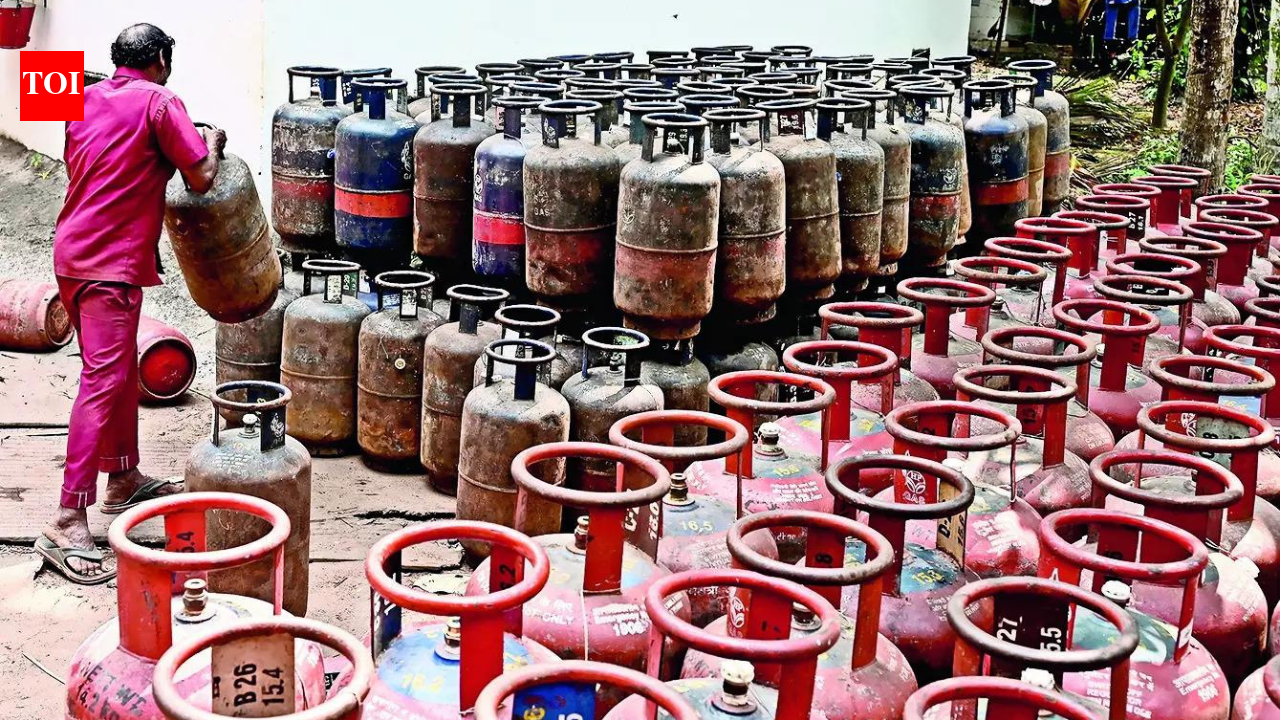
The government has stepped up efforts to streamline gas distribution and ease supply pressures, directing faster processing of city gas projects while increasing allocations of commercial LPG to key sectors amid a challenging geopolitical environment.The Petroleum and Explosives Safety Organisation (PESO) has instructed its offices to dispose of City Gas Distribution (CGD) applications within 10 days, aiming to accelerate the rollout of piped natural gas (PNG), an official statement said.Commercial LPG consumers in major cities and urban areas have also been advised to shift to PNG as part of a broader strategy to reduce dependence on liquefied petroleum gas. Domestic LPG supply remains stable, with no reported dry-outs at distributorships and normal delivery patterns across the country, the statement said, adding that most deliveries are being carried out through the Delivery Authentication Code (DAC) while panic bookings have subsided, PTI reported.On the commercial LPG front, the government has progressively increased allocations. After restoring 20 per cent supply earlier, an additional 10 per cent allocation linked to PNG expansion reforms was announced on March 18. A further 20 per cent allocation was cleared on March 21, taking total commercial LPG supply to 50 per cent.The latest increase prioritises sectors such as restaurants, dhabas, hotels, industrial canteens, food processing units, dairy operations, community kitchens and subsidised food outlets run by state governments and local bodies. Provision has also been made for 5 kg cylinders for migrant workers.Around 20 states and Union Territories have implemented the revised allocation guidelines, while public sector oil marketing companies are supplying commercial LPG in the remaining regions. In the past eight days, about 15,440 tonnes of LPG have been lifted by commercial entities.Educational institutions and hospitals continue to receive priority, accounting for nearly half of the total commercial LPG allocation. Despite global uncertainties affecting supply, the government indicated that domestic availability remains under control while efforts continue to transition urban consumers towards PNG.

Experts have warned of another “twist” to the cost-of-living story in the months ahead, as war in the Middle East is set to send energy bills soaring.
The rate of Consumer Prices Index (CPI) inflation has been gradually easing back towards the Bank of England’s two per cent target level since last summer.
Some analysts are expecting CPI to have held relatively steady in February, or dipped slightly, from the three per cent level recorded in January.
Official figures for last month will be published on Wednesday.
Economists for Deutsche Bank and Pantheon Macroeconomics said they are anticipating CPI to hold steady at three per cent in February, with lower fuel and services inflation being offset by higher clothes prices and air fares.
Edward Allenby, senior economist for Oxford Economics, said he thinks CPI inflation fell to 2.8 per cent in February, largely thanks to a predicted fall in petrol prices and slower inflation in the services sector.
Analysts for Barclays said they are expecting the headline rate to dip to 2.9 per cent, also partly because of lower pump prices during the month.
But Sanjay Raja, Deutsche Bank’s chief UK economist, said the inflation outlook has “rarely been more uncertain than it is now”.
He wrote in a research note: “We expect the UK’s disinflation story will take another twist on its (eventual) way down to target.
“The good news is that CPI is still expected to slide down in the coming months.
“The bad news? Higher energy prices appear poised to lift CPI meaningfully over the summer, adding yet another hump in the inflation profile.”
Economists have been ripping up previous projections in recent days and warning that the US-Israel war with Iran has muddied the outlook for the economy.
The Bank of England said on Thursday that recent increases in wholesale energy costs would delay the return of CPI inflation to target, as it was already seeing higher fuel prices.
It is now expecting inflation to be around three per cent in the second quarter of 2026, up from the 2.1 per cent that had been forecast in February.
The central bankers stressed that the situation is volatile and events over the next six weeks could shed light on the scale of the disruption and impact on prices.
Economists have weighed in with their own projections of where inflation could go if things persist.
Mr Allenby said he is now expecting CPI inflation to exceed four per cent during the second half of 2026.
“Under our updated assumptions, we now anticipate a much sharper rise in petrol prices, while higher wholesale gas prices cause a 19 per cent increase in the Ofgem energy price cap in July,” he said.
Pantheon Macroeconomics agreed that, if the latest spike in gas prices is sustained, then CPI could be headed to four per cent later this yar.
Business
Sky‑high losses: Iran war drives airlines to biggest crash since Covid – $50bn gone – The Times of India
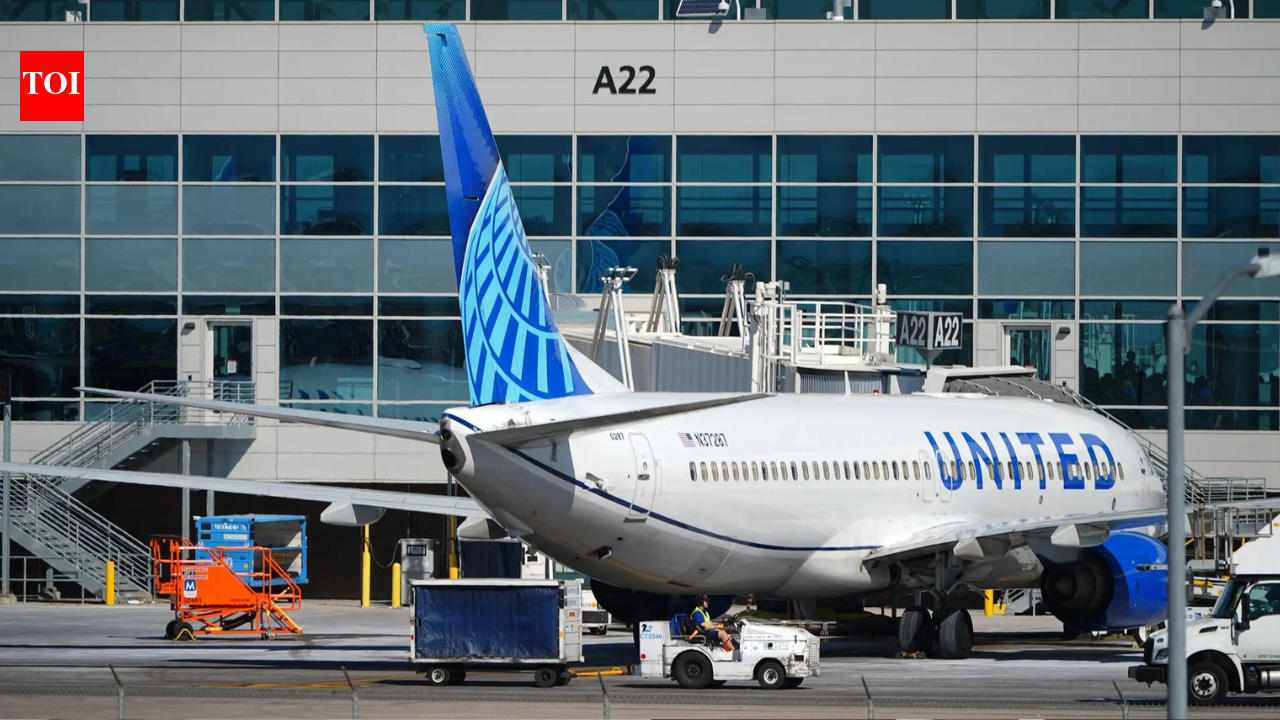
Global airlines have suffered their worst financial shock since the COVID‑19 pandemic as the ongoing war involving US Israel and Iran has disrupted industry operations, wiping more than $50 billion off the market value of the world’s largest carriers amid rising fears of fuel shortages.The conflict, now entering its fourth week, has grounded flights, disrupted key Gulf hub airports and driven jet fuel prices sharply higher, compounding pressure on an industry that was rebounding strongly following pandemic‑related losses.According to Financial Times calculations, the 20 largest publicly listed airlines have collectively lost about $53 billion in market capitalisation since the war began. In response, airline executives have warned of a potential rise in ticket prices as carriers seek to protect shrinking profit margins.Jet fuel, which accounts for roughly a third of operating costs for airlines, has doubled in price since the United States and Israel launched attacks on Iran at the end of February. Many carriers had hedged against fuel price swings, but the rapid rise is expected to force airlines to pass on costs to passengers.“Fuel spiked quite heavily after the Ukraine invasion in 2022 as well, but this has gone further north,” easyJet chief executive Kenton Jarvis told FT, describing the current crisis as the most significant upheaval since the pandemic closed global skies in 2020.Executives also point to broader structural challenges, including the risk that sustained high fares may dampen demand. Carsten Spohr, CEO of Lufthansa, said higher ticket prices were unavoidable but expressed concern that they could weaken long‑term demand. “Our average profit is about €10 per passenger, there’s no way you can absorb the additional cost,” he said.In addition to passenger traffic pressures, airlines are preparing contingency plans for possible jet fuel shortages. Air France‑KLM CEO Ben Smith said the carrier is drawing up measures to cope with potential supply squeezes, including scaling back services on some Asian routes.The crisis has hit Middle Eastern carriers particularly hard. Carriers such as Emirates, Etihad and Qatar Airways have had to sharply reduce schedules due to airspace closures and a collapse in regional tourism, industry officials say. Despite the severity of the current disruption, Willie Walsh, head of the International Air Transport Association (IATA), noted that it still falls short of the pandemic’s impact but is reminiscent of the downturn in transatlantic demand after the 9/11 attacks, according to FT.
Poll
What should airlines prioritize during the current crisis?
The conflict’s ripple effects are also visible in cargo operations, as freight traffic shifts from disrupted shipping routes to air cargo, straining airport facilities. At Geneva airport, for example, freight re‑routing has led to overflow onto services bound for Paris.Industry observers remain hopeful that airline valuations and demand will rebound once the conflict abates. “The share price has moved against all airlines since the start of the conflict,” Jarvis said, adding that short sellers would likely close positions quickly if a ceasefire is announced.


Princess Eugenie husband springs in action for Fergie, Andrew: ‘Unexpected’
Govt orders faster city gas project clearances, hikes commercial LPG allocation to ease supply stress – The Times of India

Steal from Sheep: Merino Wool Clothes Keep You Warm, Wherever

Tips and Advice for Buying Used or Refurbished Electronics

UAE savings strategies 2026 explained: Best apps, tools, budget rules and smart money hacks to beat rising cost of living in emirates – The Times of India

Iran threatens US-linked oil facilities after Kharg Island bombed

-
 Tech1 week ago
Tips and Advice for Buying Used or Refurbished Electronics
-
Business1 week ago
UAE savings strategies 2026 explained: Best apps, tools, budget rules and smart money hacks to beat rising cost of living in emirates – The Times of India
-

 Sports1 week ago
Japan suffers shocking collapse to Venezuela in World Baseball Classic
-
 Politics1 week ago
Iran threatens US-linked oil facilities after Kharg Island bombed
-
 Entertainment7 days ago
Strategic oil stocks to be released ‘immediately’ in Asia and Oceania: IEA
-

 Entertainment1 week ago
Iran at war
-

 Entertainment1 week ago
Meet one of the last true paparazzi
-

 Sports1 week ago
College Basketball Invitational abruptly cancels 2026 tournament