

Tech
Want This Hearing Aid? Well, Who Do You Know?

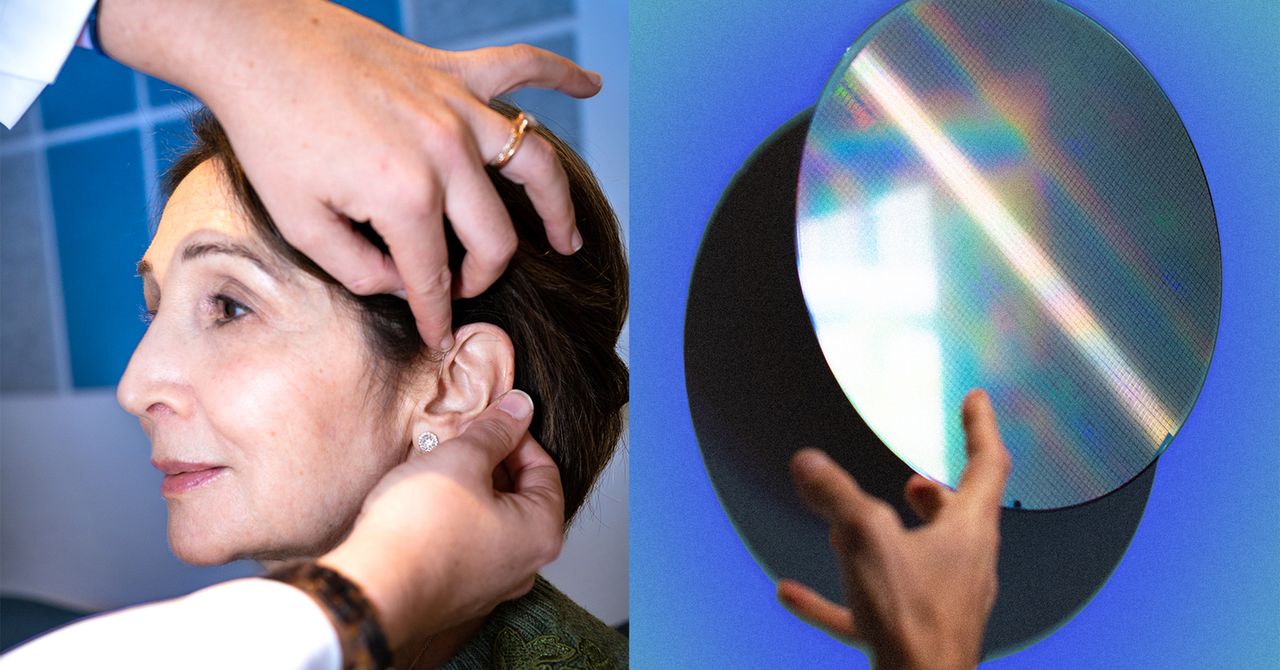
“I’ve tried different brands of hearing aids, and they’re good, but they’re not this good,” says Martin in a Zoom interview. He visited the team in Soho, did the street test, and was delighted when he tried it with his wife and daughter at their favorite restaurant, with de Jonge sitting with the laptop several tables away. But the clincher for Martin was a cocktail party.
“I was here in our building, and I was at a party upstairs, and I had my old hearing aids in,” he says. “I’m sitting talking to four people, and I realized I can’t understand any of them, and I go, wait, I have these new hearing aids. I went downstairs, put them in, came back, and I could hear everyone.” Now he wears them all the time, and even made a joke about hearing aids on Saturday Night Live’s 50th anniversary special. “I don’t really think about the way it used to be,” he says. “I used to dread going to a restaurant, and now I don’t.” His friend Balaban, once he got into the beta test, is similarly smitten. “This is a significant improvement over the absurdly pricey devices I’d been using,” Balaban says.
Other machers aren’t public, but de Jonge assures me they are mostly names invoked in boldface type. Since there are only a few dozen beta units, this means that some powerful people have been shuttled to a waiting list. Balaban’s wife, Lynn Grossman, recounts attending a Labor Day dinner with over 100 people, generally of a certain age, in a private room in a restaurant, thinking that her husband and another guy—a famous CEO in the fashion world—were the only ones who could hear, because of Fortell. “After, I think Bob got 12 or 14 emails saying, ‘How do I get those hearing aids?’”
Now that the product is launched, Fortell will sell hearing aids in a single clinic on Manhattan’s Park Avenue. It’s decked out like a posh lounge, with the devices on display in a tasteful presentation that’s straight out of the Apple retail playbook. Hanging on the wall is a silicon wafer with the circuitry of the custom chips. In the early stages, his staff of four audiologists will serve only a couple of dozen customers a week, to make sure everything goes smoothly. In any case, while ramping up production, the supply will be limited.
This is great for Fortell, but it seems de Jonge’s initial impulse to usher everyone’s grandparents into the land of the hearing is in danger of being limited to the one percent, which doesn’t exactly qualify him for a Salk medal. When I ask de Jonge how his invention can scale to change life for the masses, his replies, whether due to secrecy on future plans or just not having a good answer, seem hand-wavy. In his defense, Fortell has resisted the temptation to jack up the traditional price of premium hearing aids—the $6,800 is actually a bit less than some other medically prescribed hearing aids. (As with other high-end hearing aids, the price is part of a package that includes fitting and support from professional audiologists.) Still, even that defensible price tag limits adoption; it’s a sad fact that some Medicare and many health insurance plans do not cover hearing aids, a policy that dooms millions to an aural bardo of conversational exclusion, isolating them from loved ones and hastening dementia.
It’s unclear whether Fortell technology might find its way into the less expensive over-the-counter hearing aids available today, which became possible via a Biden-era shift in regulation. These include Apple’s AirPods Pro 2 devices and entries from other consumer electronics brands, which are generally known to help those with hearing loss but not as much as high-end devices that are paired with professional support. The Fortell proposition requires careful testing and tuning, continuing for some time as wearers get used to the devices. In any case, that white-glove approach will consume Fortell’s efforts for the next year and more. Expansion will come by opening clinics in a few select cities, and only later will Fortell consider scaling to allow others to sell the technology.










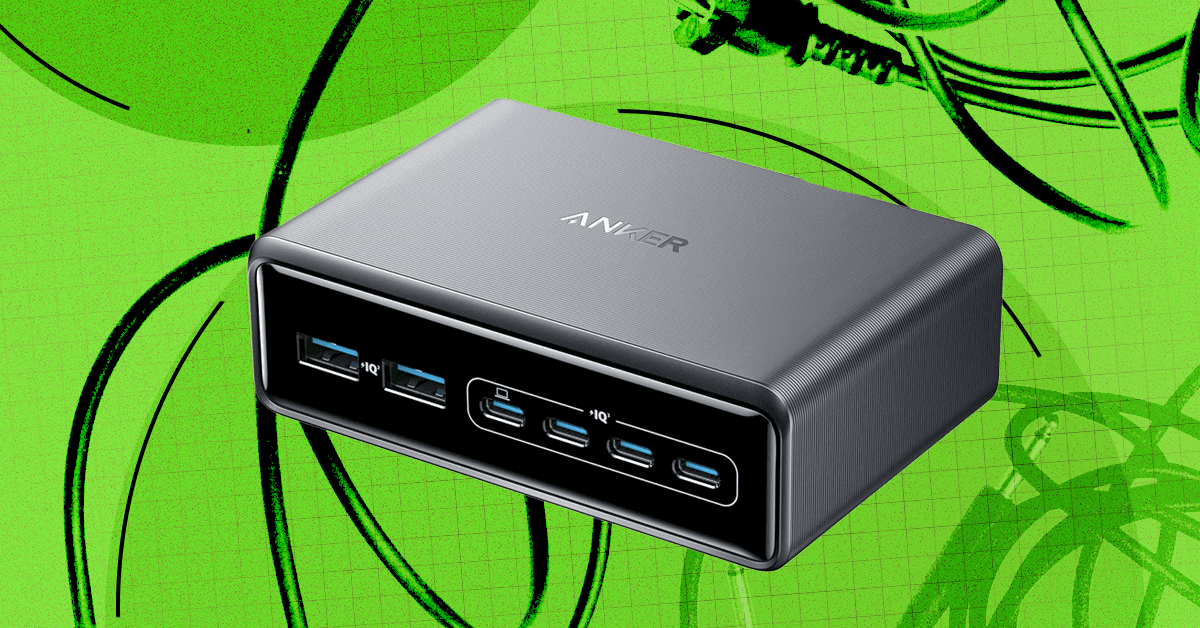
There’s a reason we’re called WIRED. If there’s one thing most of today’s gadgets have in common, it’s that they typically need to be plugged in from time to time. But all those cables, cords, and wires can be tough to manage. They don’t have to end up in a tangled nest under your desk; you can bring order to the cable chaos.
As a gadget reviewer, I have more cords than most people, which is why I also have a regimented cable management strategy to keep everything orderly. Here are my tips and product recommendations for hiding those cords and power strips, and keeping your desktop tidy.
Jump To:
Planning and Prep
Start by surveying the scene, unplugging and untangling everything, and removing anything that doesn’t need to be there. You might be surprised to find a stray USB-B or Micro-USB you haven’t used in years in the mix. Before you get started on cable management, take a slightly damp microfiber cloth and wipe down all the surfaces and cables. Now, you can start planning routes and figuring out which cables it would make sense to bundle together.
Ideally, cables will be the exact required length, so if you have spares or you don’t mind snagging some new cables, it’s worth switching and getting as close as possible to exact lengths to reduce the excess cable you have to hide. If you have a standing desk, remember to take into account the cable length required for a standing position (trust me, dear reader, it’s no fun when you hit stand on the desk and it pulls your PC tower into the air by a DisplayPort cable that is now forever stuck in that port).
Cable Management
Tidying your tech often comes back to cable management, but there are several ways to keep those cords neatly out of sight. Many desks have channels, grommets, and power strip trays built-in, so have a quick look to make sure you’re using what’s available. Some monitor arms also have built-in cable management. You also likely have a bunch of cable ties in your junk drawer or toolbox, so gather them together.

Ikea
Trixig 150-Piece Cable Management Set
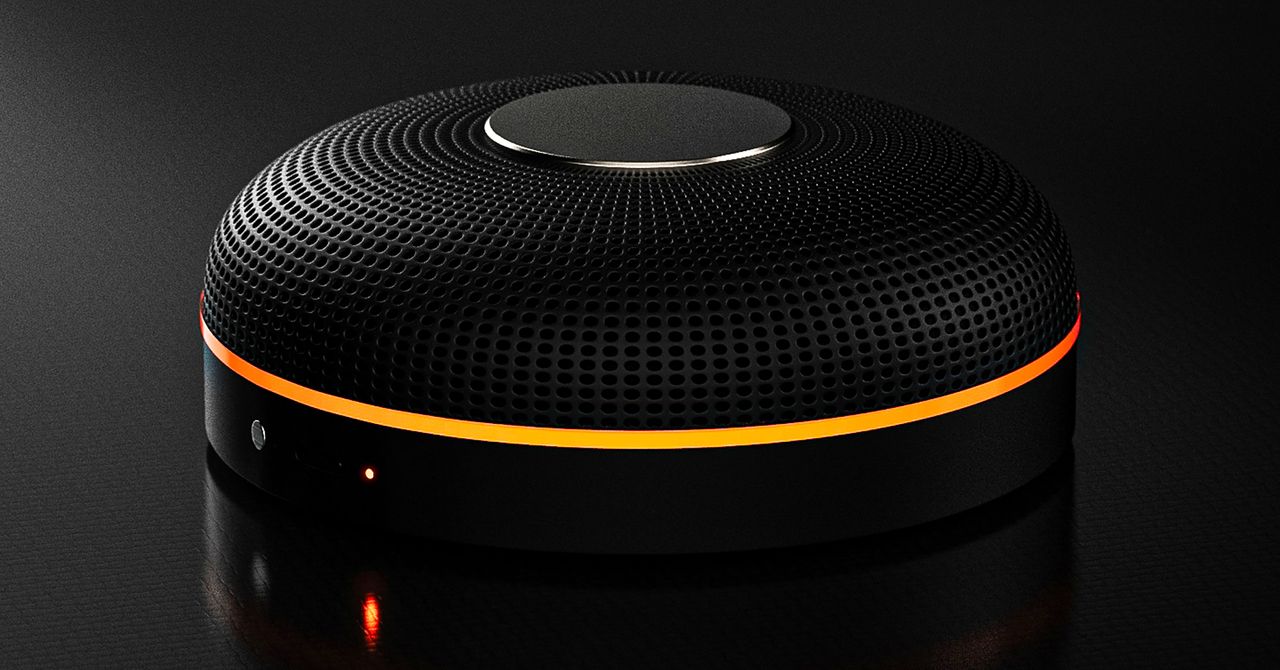
Deveillance also claims the Spectre can find nearby microphones by detecting radio frequencies (RF), but critics say finding a microphone via RF emissions is not effective unless the sensor is immediately beside it.
“If you could detect and recognize components via RF the way Spectre claims to, it would literally be transformative to technology,” Jordan wrote in a text to WIRED after he built a device to test detecting RF signatures in microphones. “You’d be able to do radio astronomy in Manhattan.”
Deveillance is also looking at ways to integrate nonlinear junction detection (NLJD), a very high-frequency radio signal used by security professionals to find hidden mics and bugs. NLJD detectors are expensive and used primarily in professional contexts like military operations.
Even if a device could detect a microphone’s exact location, objects around a room can change how the frequencies spread and interact. The emitted frequencies could also be a problem. There haven’t been adequate studies to show what effects ultrasonic frequencies have on the human ear, but some people and many pets can hear them and find them obnoxious or even painful. Baradari acknowledges that her team needs to do more testing to see how pets are affected.
“They simply cannot do this,” engineer and YouTuber Dave Jones (who runs the channel EEVblog) wrote in an email to WIRED. “They are using the classic trick of using wording to imply that it will detect every type of microphone, when all they are probably doing is scanning for Bluetooth audio devices. It’s totally lame.” Baradari reiterates that the Spectre uses a combination of RF and Bluetooth low energy to detect microphones.
WIRED asked Baradari to share any evidence of the Spectre’s effectiveness at identifying and blocking microphones in a person’s vicinity. Baradari shared a few short videoclips of people putting their phones to their ears listening to audioclips—which were presumably jammed by the Spectre—but these videos do little to prove that the device works.
Future Imperfect
Baradari has taken the critiques in stride, acknowledging that the tech is still in development. “I actually appreciate those comments, because they’re making me think and see more things as well,” Baradari says. “I do believe that with the ideas that we’re having and integrating into one device, these concerns can be addressed.”
People were quick to poke fun at the Spectre I online, calling the technology the cone of silence from Dune. Now, the Deveillance website reads, “Our goal is to make the cone of silence become reality.”
John Scott-Railton, a cybersecurity researcher at Citizen Lab, who is critical of the Spectre I, lauded the device’s virality as an indication of the real hunger for these kinds of gadgets to win back our privacy.
“The silver lining of this blowing up is that it is a Ring-like moment that highlights how quickly and intensely consumer attitudes have shifted around pervasive recording devices,” says Scott-Railton. “We need to be building products that do all the cool things that people want but that don’t have the massive privacy- and consent-violation undertow. You need device-level controls, and you need regulations of the companies that are doing this.”
Cooper Quintin, a senior staff technologist at the Electronic Frontier Foundation, echoed those sentiments, even if critics believe Deveillance’s efforts to be flawed.
“If this technology works, it could be a boon for many,” Quintin wrote in an email to WIRED. “It is nice to see a company creating something to protect privacy instead of working on new and creative ways to extract data from us.”
Portrait Light: You can change up the lighting in your portrait selfies after you take them by opening them up in Google Photos, tapping the Edit button, and heading to Actions > Portrait Light. This adds an artificial light you can place anywhere in the photo to brighten up your face and erase that 5 o’clock shadow. Use the slider at the bottom to tweak the strength of the light. It also works on older Portrait mode photos you may have captured. It works only on faces.
Health and Accessibility Features
Cough & Snore Detection (Tensor G2 and newer): On the Pixel 7 and newer, you can have your Pixel detect if you cough and snore when sleeping, provided you place your Pixel near your bed before you nod off. This will work only if you use Google’s Bedtime mode function, which you can turn on by heading to Settings > Digital Wellbeing & Parental Controls > Bedtime Mode.
Guided Frame (Tensor G2 and newer): For blind or low-vision people, the camera app can now help take a selfie with audio cues (it works with the front and rear cameras). You’ll need to enable TalkBack for this to work (Settings > Accessibility > TalkBack). Then open the camera app. It will automatically help you frame the shot.
Simple View: This mode makes the font size bigger, along with other elements on the screen, like widgets and quick-settings tiles. It also increases touch sensitivity, all of which hopefully makes it easier to see and use the screen. You can enable it by heading to Settings > Accessibility > Simple View.
Safety and Security Features
Theft Protection: This is a broader Android 15 feature, but essentially, Google’s algorithms can figure out if someone snatches your Pixel out of your hands. If they’re trying to get away, the device automatically locks. Additionally, with another device, you can use Remote Lock to lock your stolen Pixel with your phone number and a security answer. To toggle these features on, go to Settings > Security & privacy > Device unlock > Theft protection.
Identity Check: If your Pixel detects you’re in a new location, Identity Check will require your fingerprint or face authentication before you can make any changes to sensitive settings, offering extra peace of mind in case you lose your phone or if it’s stolen. You can enable this in Settings > Security & privacy > Device unlock > Theft protection > Identity Check.
Courtesy of Google
Private Space: Another Android 15 addition, Pixel phones finally have a feature that lets you hide and lock select apps. You can use a separate Google account, set a lock, and install any app to hide away. To set it all up, head to Settings > Security & privacy > Private space.
Satellite eSOS (Pixel 9 and Pixel 10 series, excluding Pixel 9a): Like Apple’s SOS feature on iPhones, you can now reach emergency contacts or emergency services even when you don’t have cell service or Wi-Fi connectivity. It’s not just available in the continental US, but also in Hawaii, Alaska, Canada, and even Europe.


Ball State fires Michael Lewis after 3 straight losing seasons

Paul McCartney's overlooked work

Timothee Chalamet’s ‘insensitive’ joke sparks response from Met Opera

India Us Trade Deal: Fresh look at India-US trade deal? May be ‘rebalanced’ if circumstances change, says Piyush Goyal – The Times of India

LPGA legend shares her feelings about US women’s Olympic wins: ‘Gets me really emotional’

Bobby J. Brown, “The Wire” and “Law & Order: SUV” actor, dies of smoke inhalation after reported fire

-
Business1 week ago
India Us Trade Deal: Fresh look at India-US trade deal? May be ‘rebalanced’ if circumstances change, says Piyush Goyal – The Times of India
-
 Sports1 week ago
LPGA legend shares her feelings about US women’s Olympic wins: ‘Gets me really emotional’
-
 Entertainment1 week ago
Bobby J. Brown, “The Wire” and “Law & Order: SUV” actor, dies of smoke inhalation after reported fire
-

 Fashion1 week ago
South Korea’s Misto Holdings completes planned leadership transition
-

 Fashion1 week ago
Texwin Spinning showcasing premium cotton yarn range at VIATT 2026
-

 Entertainment1 week ago
Pakistan’s semi-final qualification scenario after England defeat New Zealand
-

 Entertainment1 week ago
What’s new in Pokémon? Every game, update, surprise from 30th anniversary event
-
 Business1 week ago
Greggs to reveal trading amid pressure from cost of living and weight loss drugs