

Fashion
War shock hits textiles: Costs surge, exports face April crunch


The West Asia conflict has triggered a multi-layer disruption across India’s textile value chain, with sharp input cost inflation, logistics shocks, and production cuts converging simultaneously.
As demand weakens and margins tighten, the sector faces a critical inflection, with April likely to set the tone for sustained operational and export challenges.
Source link












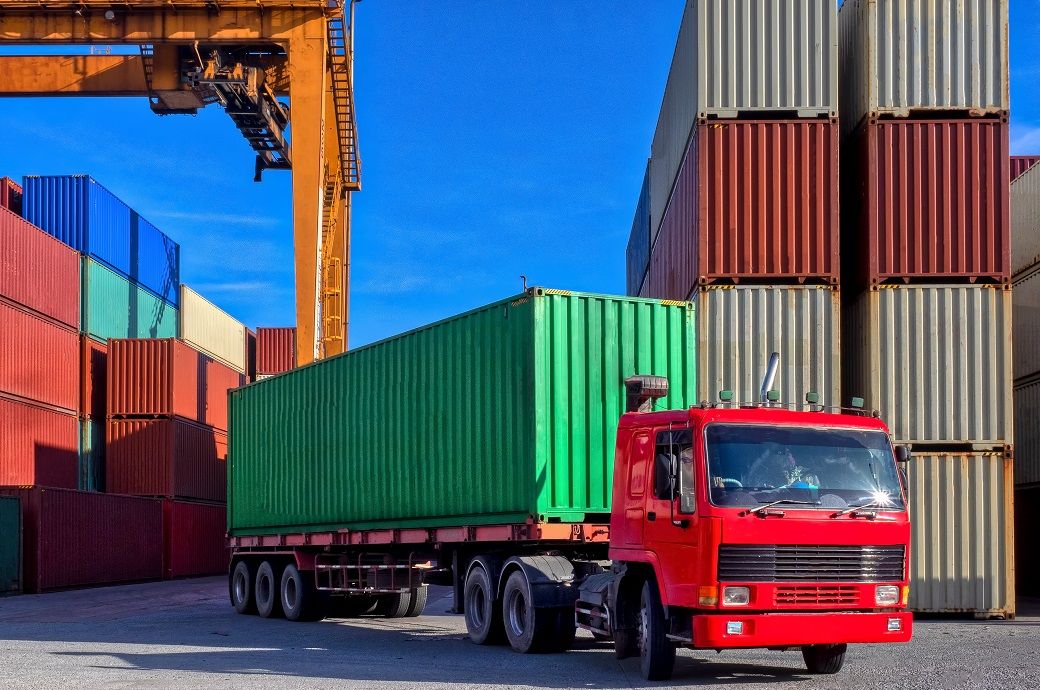
Rates on Asia–Europe trades have remained relatively stable despite ongoing tensions in the Middle East. Spot rates on Shanghai–Genoa inched up 2 per cent to $3,529 per 40ft container, while Shanghai–Rotterdam stayed unchanged at $2,543 per 40ft container. According to Drewry’s Container Capacity Insight, only 4 blank sailings have been announced for next week on the Asia–Europe trade, suggesting stable capacity. Meanwhile, Drewry expects spot rates to increase in the coming weeks as higher bunker fuel costs prompt carriers to implement emergency bunker fuel surcharges.
The Drewry WCI rose marginally to $2,287 per FEU, marking a fifth weekly gain, though overall freight trends remain stable across key routes.
Asia–Europe and Transpacific lanes saw limited movement, while bunker fuel surcharges may push rates higher.
Middle East-linked routes show sharper spikes, but disruption remains contained versus COVID-19 peaks.
On the Transpacific route, spot rates from Shanghai to New York increased 1 per cent to $3,434 per 40ft container, while those to Los Angeles decreased 1 per cent to $2,663. Maersk is seeking US regulatory approval to waive the 30-day notice period and introduce an emergency bunker surcharge, citing elevated and volatile fuel costs amid Middle East tensions. The proposed surcharge is $200 per Twenty-foot Equivalent Unit (TEU) for head-haul and $100 per TEU for backhaul dry shipments. With carriers continuing to push for rate increases, Drewry expects spot rates to increase further in the coming weeks.
Rates from New York to Rotterdam increased 3 per cent to $1,001 per FEU, while Rotterdam-New York increased 2 per cent to $1,579 per FEU. Rotterdam-Shanghai rose 2 per cent to $605 per FEU, and Los Angeles–Shanghai grew 2 per cent to $742 per 40-foot container.
Ongoing disruptions in the Strait of Hormuz, a key route for nearly 20 per cent of global oil, have tightened bunker fuel availability and pushed prices higher. In Asia, fuel supplies in key hubs like Singapore and China are starting to tighten, prompting carriers to adopt operational measures such as slow steaming, alternative refuelling strategies and emergency fuel surcharges to manage costs. These measures are expected to keep freight rates elevated in the short term.
A recent analysis by Drewry suggests not to panic as freight rates have surged amid the Middle East conflict but the situation remains relatively contained compared to the COVID-era spike. Capacity has largely held steady across most global routes, barring disruptions in Gulf-linked lanes, helping prevent extreme volatility. However, routes connected to the Middle East are witnessing sharper fluctuations, with elevated bunker surcharges adding to cost pressures.
Drewry data indicated that freight rate increases vary sharply by route. On non-Middle East routes, spot rates rose a relatively moderate 16 per cent between February and March 2026, far below the 35 per cent spikes seen during the COVID-19 peak. However, Middle East-linked routes have seen far steeper increases, with some lanes surging by as much as 316 per cent in March, alongside earlier gains of nearly 49 per cent. This divergence highlights a concentrated disruption, with bunker surcharges and route-specific risks significantly inflating logistics costs for affected trade corridors.
Fibre2Fashion News Desk (KUL)

The expansion builds on a steady upward trend, with exports at $**.*** billion in **** and $**.*** billion in ****, indicating consistent, if moderate, growth despite global demand volatility, according to *fashion.com/market-intelligence/texpro-textile-and-apparel/” target=”_blank”>sourcing intelligence tool TexPro.
Spain remained the largest export destination, importing apparel worth $*.*** billion and accounting for **.** per cent of total shipments in the last year. The United States followed at $*.*** billion (**.** per cent), while France ($*.*** billion, **.** per cent), Germany ($*.*** billion, *.** per cent), and Italy ($***.** million, *.** per cent) completed the top five. Collectively, these five markets absorbed nearly ** per cent of Africa’s total apparel exports, as per *fashion.com/market-intelligence/texpro-textile-and-apparel/” target=”_blank”>TexPro.
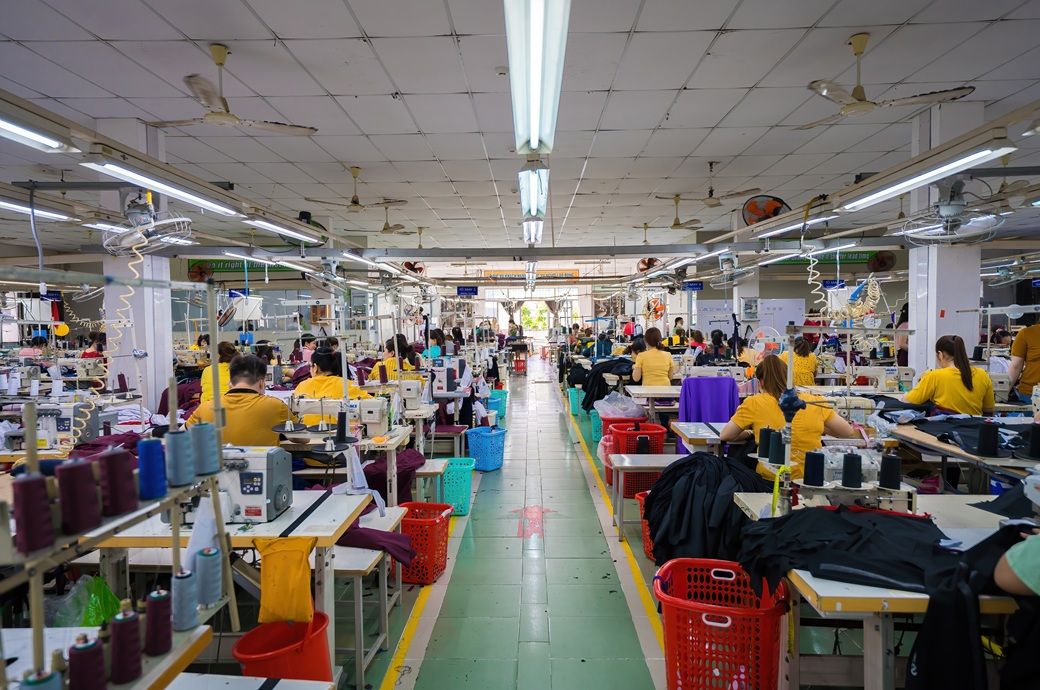
A key feature of the month was a sharp surge in inflation. Rising oil prices pushed up freight and transportation costs, leading to the fastest increase in input costs since April 2022. In response, manufacturers raised selling prices at the steepest pace in nearly 15 years, S&P Global said in a press release.
The surge in prices began to weigh on demand. While total new orders continued to rise, growth slowed significantly, partly supported by advance purchasing by clients seeking to avoid further price increases. Export orders, however, declined markedly after stabilising in February.
Vietnam’s manufacturing sector expanded for a ninth month in March 2026, with PMI at 51.2, though growth slowed amid surging inflation.
Rising oil prices drove input costs to a two-year high, prompting the steepest rise in selling prices in nearly 15 years.
Demand weakened, exports declined, and firms cut hiring.
Supply delays worsened, while business confidence fell to a six-month low.
Production growth also moderated, recording its weakest expansion since June 2025, even as output continued to rise for the eleventh consecutive month. Firms responded to rising costs and softer demand by cutting back on purchasing activity, ending an eight-month expansion phase, and reducing employment for the first time in six months.
Supply chain pressures intensified, with suppliers’ delivery times lengthening to the greatest extent in four years, largely due to higher fuel costs and transportation delays. Backlogs of work increased slightly as firms struggled with labour shortages and material constraints.
Andrew Harker, economics director at S&P Global Market Intelligence, said: “Given the country’s reliance on oil imported from the affected region, the impact on prices and supply chains would have been expected to some extent. The rate at which input cost inflation accelerated though, and the subsequent increase in selling prices shows the immediate and marked effects that firms are experiencing.”
“Output and new orders remained in expansion territory in March, but rates of increase were well down on February and at least some of the growth seen was due to customers placing advanced orders to try to get ahead of price rises. The near-term outlook therefore appears bleak, unless a speedy resolution to the war and the disruption through the Strait of Hormuz can be achieved,” added Harker.
Business confidence fell to a six-month low amid concerns over inflation, supply disruptions and weakening global demand, although firms continued to expect output growth over the coming year, supported by underlying demand trends.
Fibre2Fashion News Desk (SG)


Iran says downing of US jets proves its defence capabilities

Drewry WCI edges up, freight outlook remains stable

Yamal, Güler, Neves lead best U21 men’s soccer players

-

 Entertainment1 week ago
Lee Sang-bo dies at 45: Funeral details revealed
-

 Sports1 week ago
Illinois defense gets tough, ousts Houston to reach Elite Eight
-

 Sports6 days ago
USMNT handed reality check by Doku, Belgium ahead of World Cup
-

 Sports6 days ago
2026 NCAA men’s hockey tournament: Schedule, results
-

 Fashion1 week ago
China rolls out tariff cuts on Congo imports from April 1
-

 Fashion7 days ago
EU apparel imports slump 15.48% YoY in Jan; Bangladesh hardest hit
-
 Business1 week ago
How do you spot a fake online review?
-

 Sports6 days ago
Man City show why they are worthy WSL title winners as tired United wilt