

Sports
Week 14 Anger Index: Why Notre Dame deserves the benefit of the doubt

We don’t talk nearly enough about luck in sports.
It’s only reasonable to want to believe the best team always wins, that the outcome of a game is the reward for a better process, that, in the end, we all get what we deserve.
But then you watch 10 minutes of Florida State football and it’s impossible to deny that there are football gods at work and they can be awfully vengeful.
And so it is that, at this late point in the season, the College Football Playoff rankings still hinge, in no small part, on a botched extra point at the end of Notre Dame-Texas A&M.
We can look back at Miami‘s game against SMU on Nov. 1 — a game that, with 2 minutes to go the Canes had a 90% chance of winning, according to ESPN’s metrics — and consider it a bad loss, then a week later, see Oregon — with less than a 40% chance of beating Iowa with 2 minutes remaining — pull off a comeback and have it constitute a critical point on the Ducks’ résumé.
Alabama nearly doubled Oklahoma‘s yardage but lost, Ole Miss gave up 526 yards to Arkansas and won, Georgia has trailed in the second half five times this year but has just one loss to show for it.
These things happen, and while there’s clearly valuable data involved — Georgia wins those games, because the Dawgs are really good — any time we’re discussing a one-game sample size, there’s room for ample debate over what matters and what doesn’t.
The committee’s job is to counterbalance the fickleness of luck with a calculated, rational, repeatable process of evaluation that, if applied again and again by dozens of different people, would largely yield the same results; something akin to scientific testing, a way to filter out the noise and get to what matters most. “The process,” as everyone from Nick Saban to Michael Lombardi have called it.
And yet, it’s hard to say exactly what the committee’s process really is. Even when it’s explained — Miami isn’t in the same bucket as Notre Dame, so they can’t be compared directly, for example — the logic often crumbles under the slightest bit of scrutiny.
Instead, the committee has mostly relied on its own luck, and each year, by the time the final rankings are revealed, the 13 games played on the field provide enough clarity that most reasonable people will proclaim the committee got things right, save for the occasional reminder to Florida State that, yes, the football gods are not Seminoles fans.
This year though, it’s increasingly likely the committee’s luck could run out.
We have one full weekend of games left. There are reasonably 16 teams who’ll make a case as to why they should earn one of the seven coveted at-large spots. Without a little luck in Week 14, the committee’s going to have some incredibly hard choices to make.
And that means we’ve got plenty of outrage left to send the committee’s way.


This past week seemed to be the apex of the biggest rankings debate: Notre Dame or Miami?
The argument here is easy to understand. The committee has consistently had the Irish well ahead of the Hurricanes, despite both teams having the same record and Miami holding a head-to-head win.
But you know what’s even easier to understand? BYU has a better record than both.
In fact, let’s look at some résumés.
Team A: Best win vs. SP+ No. 19, next best vs. No. 21. Loss to SP+ No. 2. Two wins vs. teams 7-4 or better. No. 5 strength of record.
Team B: Best win vs. SP+ No. 9, next best vs. No. 25. Loss to SP+ No. 3. Six wins vs. teams 7-4 or better. No. 6 strength of record.
Both look like pretty obvious playoff teams, right?
Well Team A just moved up a spot in the rankings, seems assured not just of making the playoff, but of hosting a home game, and no one seems to be arguing about its spot in the rankings. That’s Oregon at No. 6.
Team B would currently be our first team out, a team with a résumé that shows equally impressive wins, an equally understandable loss and a far more impressive breadth of quality opponents. And yet, no one seems to be arguing much about BYU’s spot in the rankings either.
Why is it that the Cougars — the forgotten one-loss team with a higher ranked win than Oregon or Notre Dame and a better loss than Alabama or Oklahoma — sit at No. 11 and no one seems to care?
We get the frustration over Miami’s placement. There’s plenty of anger to go around. But don’t let BYU get lost in the shuffle. The Cougars’ résumé holds up against all the two-loss teams and is on par with Oregon and Ole Miss. Somehow, the committee — and nearly everyone else outside of Provo — seems to be ignoring it.

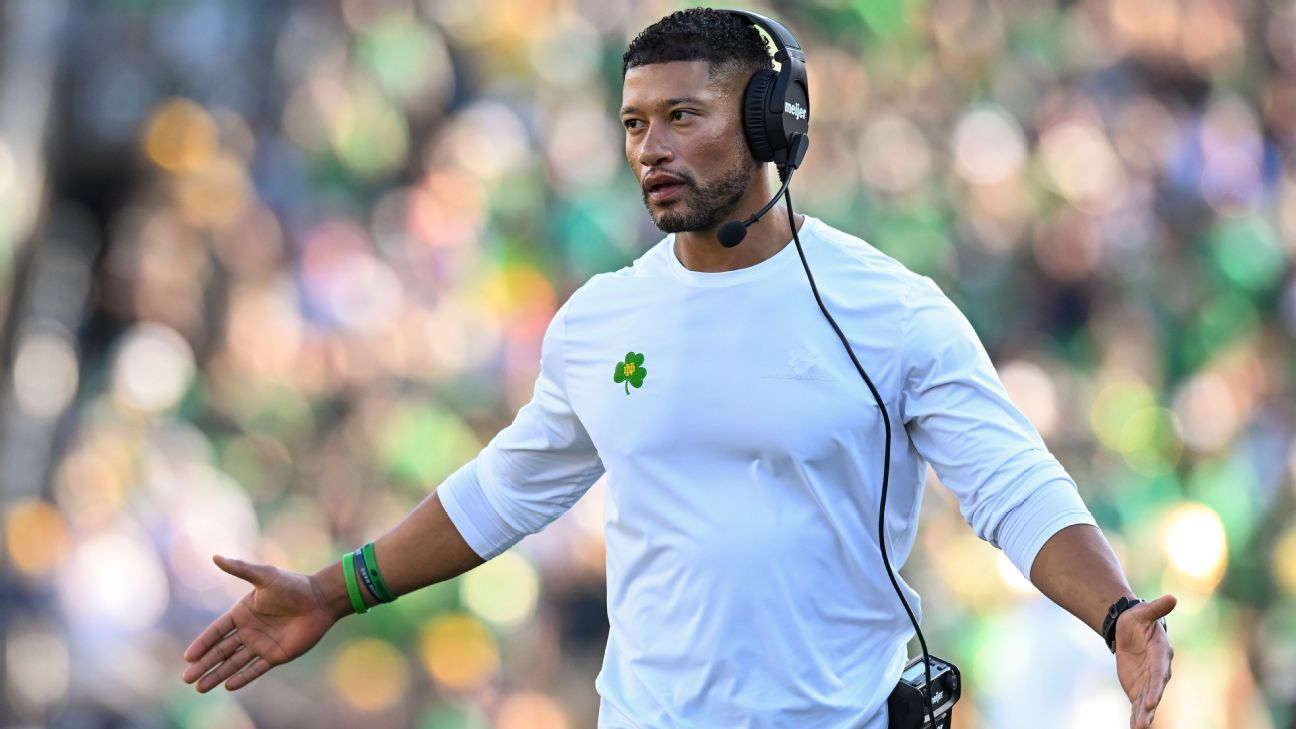
Wait, are we really defending Notre Dame here? Hey, somebody’s got to do it.
Let’s take a closer look at the Irish, who’ve become the punching bag for every fan frustrated with the committee’s rankings.
Right now, Notre Dame is effectively the golfer who wrapped up his round early and is waiting in the clubhouse, hoping no one else makes too many birdies. The Irish are safely in the field, and only a road trip to lowly Stanford is left on the docket.
But as the committee’s rankings hold steady week after week, there has been more and more time to debate the merits of Notre Dame’s résumé, and when we reach the end of championship week, it’s hard to ignore that one team aiming for a playoff bid doesn’t actually play in a conference.
So, does Notre Dame really deserve the benefit of the doubt?
In short: Heck yeah.
The Irish have five wins against bowl-eligible opponents — more than Georgia, Ole Miss, Vanderbilt or Texas Tech.
Both of Notre Dame’s losses were one-possession affairs against top-12 opponents. The loss to Texas A&M came down to a fluke occurrence, as the Irish flubbed a point after try.
Notre Dame’s game control — about as good an estimation as we have for the eye test — puts the Irish ahead of everyone but Ohio State, Indiana, Texas Tech and Oregon.
In four games since Nov. 1, Notre Dame has beaten its opposition by a combined score of 181-42, lambasting Syracuse so badly in Week 13 that Fran Brown might not shower for a month.
Look at any of the underlying metrics — explosive play rates, defensive stop rates, Jeremiyah Love being awesome rates — and Notre Dame is as good as anyone in the country.
So yes, we get the more logical debates about Miami’s Week 1 win or Alabama’s superior schedule, but the bottom line is, outside of Ohio State, there’s probably no team in the country playing better, more balanced football than the Irish. That probably shouldn’t be the only consideration, but as we debate which teams ought to be docked a few points in the rankings, Notre Dame probably shouldn’t be at the front of the line either.

Yes, Miami has a good argument against the committee’s treatment of the Hurricanes. The committee, too, seems to acknowledge under-appreciating Miami early on, and is adjusting by slowly moving the Canes up one spot each week, hoping that’ll be enough to appease the masses.
But here’s a question: What if Miami’s real beef should be with the ACC, not with the committee?
For each of the past two years, there has been widespread consensus that the ACC’s best team is Miami. But, barring some truly high-level chaos in Week 14 — something the ACC is apt to provide — the Canes won’t be playing for a conference championship again.
When leagues were smaller and had two divisions, the idea of pitting one division champ against the other made intuitive sense. But with expansion and the end of division play, what we’ve gotten is wildly diverse scheduling and the potential for confounding tiebreakers to ultimately decide which two teams get to play for a conference title.
In the Big Ten and SEC, where winning the league isn’t a do-or-die proposition, that’s fine. In the ACC, where only the champion might get a playoff bid and there’s a real chance that six different teams will tie atop the conference with a 6-2 league record — well, that’s a big issue.
So, why not just tweak the rules of how a conference championship game is seeded? What if one spot goes to the team with the best conference record and the other spot goes to the next highest ranked team? Doing so would ensure both the most deserving team (best record) and best team (highest ranked) got a shot, and it would’ve ended any concerns about the ACC being passed by multiple Group of 5 leagues, because a mediocre team like Duke would’ve had no shot at winning the league.
The ACC has bent over backward to try to find unique solutions to potentially existential problems in recent years. This is a change that would be forward thinking, easy and beneficial to the league’s playoff prospects.
It just won’t come in time to save Miami in 2025.

Remember last week when Tulane was also No. 24, just ahead of Arizona State, and behind Illinois, Houston and Missouri, who all lost? It might seem reasonable, given that precondition, that Tulane would then move up, say, three spots or so, while remaining a tick ahead of Arizona State.
But no, a week later, the Green Wave still check in at No. 24, a spot the committee seems to have set aside as “Where we put a Group of 5 team,” like the junk drawer in your kitchen that holds packing tape and birthday candles and those weird scented oils your mother-in-law ordered for you off TV — a placeholder for all the stuff you don’t know what else to do with.
In the big picture, it probably doesn’t matter. As long as Tulane stays ahead of its compatriots in the Group of 5 — winning the American, out-ranking James Madison — the Green Wave will make the playoff. And perhaps that’s all that matters.
But of the teams that jumped Tulane in the rankings this week are Arizona State — still with a chance to win the Big 12 — and Pitt and SMU, who have decent odds of making the ACC title game. Georgia Tech, despite a miserable loss to Pitt, also held firm ahead of the Green Wave.
A year ago, the ACC’s championship game implosion earned Clemson a bid into the playoff, but also shifted the ACC behind Boise State, the best Group of 5 champion, allowing the Broncos to land a bye. The stakes have changed for 2025-26 — the top four conference champs are no longer guaranteed an off week — but that doesn’t mean Tulane should be fine settling for the 12-seed either.
Tulane’s strength of record is ahead of Georgia Tech, Virginia and Pitt. If one of those teams claims the ACC’s playoff berth, what’s the rationale for putting them ahead of the Green Wave? And the difference between the No. 11 seed and the No. 12 seed might be about traveling to the SEC or the Big 12 for a playoff game.
The Group of 5 has largely been set to the side by this committee all year, so none of this comes as a surprise. But Tulane — or JMU or Navy or North Texas or San Diego State — all deserve to be judged on the merits of their résumés, not by which conference they’re affiliated with.

The bottom of the top 25 seems to be prime real estate for the ACC, but the one ACC team who might most deserve one of those coveted spots between 20 and 25 is nowhere to be found.
Wake Forest has the same record as SMU, and it beat the Mustangs head-to-head.
Wake Forest has a better overall résumé than Georgia Tech, and it only lost to the Yellow Jackets (in overtime) as a result of an officiating call the ACC later apologized for.
Wake Forest is a game behind Virginia in the standings, and the Deacons have a head-to-head win over the No. 18 Cavaliers, too.
Look, Wake Forest doesn’t ask for much. The Deacons are like the friend who’s always willing to pick you up from the airport, only better because they’ll probably bring along a box of Krispy Kreme. So if some ACC team that no one respects is going to be ranked 23rd regardless, why not Wake? Because the next time a committee member’s connection gets delayed out of CLT, it won’t be Pitt offering to pick them up and give them an air mattress to crash on. That’s strictly a Wake Forest thing.
Also angry this week: James Madison Dukes (10-1, unranked), North Texas Mean Green (10-1, unranked and now losing their coach), Navy Midshipmen (8-2, unranked), Utah Utes (9-2, No. 13 after being this week’s team that somehow isn’t as good as Miami anymore), Alabama Crimson Tide (9-2, No. 10 and far too close to the edge of the playoff for comfort)
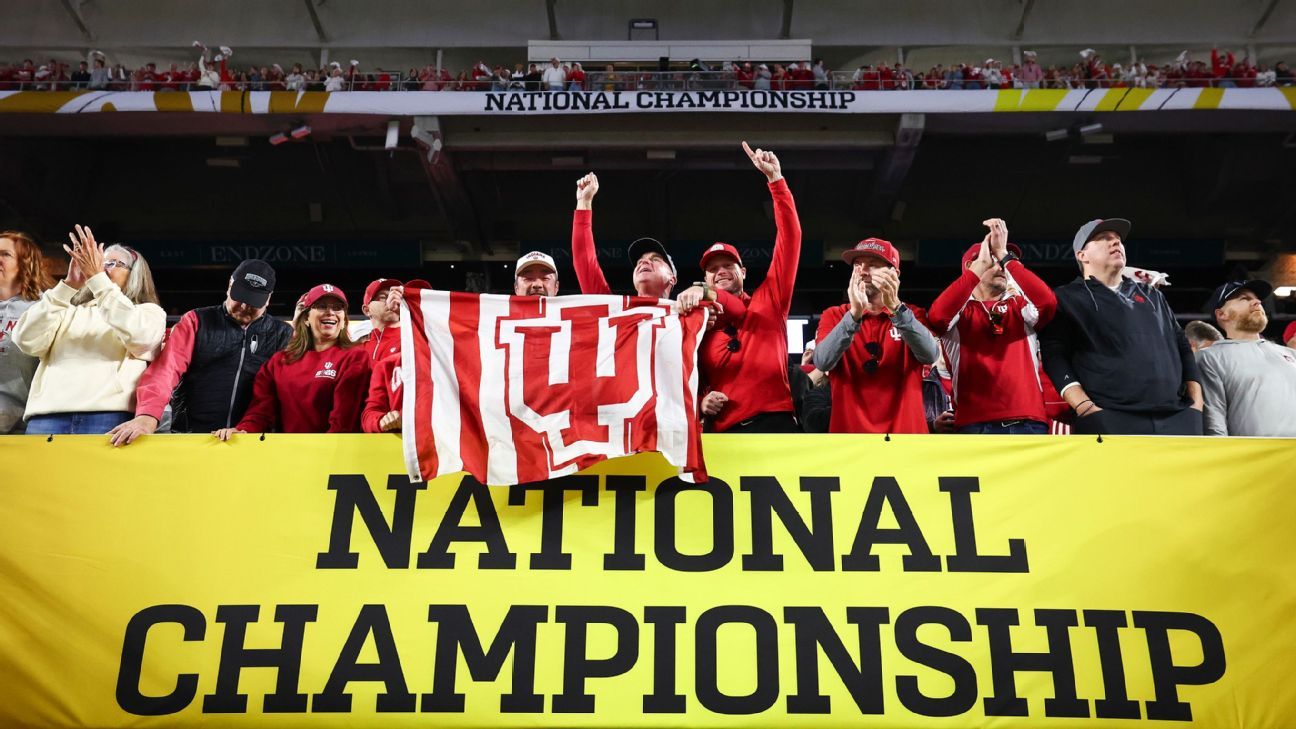
MIAMI GARDENS, Fla. — The distance between the frozen 50-yard line at Memorial Stadium, home to the Hoosiers of Bloomington, Indiana, to the center of the field of Miami’s Hard Rock Stadium, where those Hoosiers did snow angels in red and white confetti celebrating a College Football Playoff National Championship on Monday night, is 1,166 miles.
But it’s a hell of a lot of further than that.
It is also 715 losses, which was the most recorded by any team in the 156 years of college football. Was. It was an all-time bowl record of 3-8. Was. It was zero double-digit win seasons since 1887. Was. It was the promise of so many coaches hired — nine from 1982 to 2023 — brought to town with so much energy, from Lee Corso and Cam Cameron to Gerry DiNardo to Kevin Wilson to Tom Allen. All flirted with winning, all teased the fan base with signs of success, but all ultimately left town as just another letdown with another folder full of losing records.
Was no outright Big Ten titles since 1945. Was no appearances in the Big Ten championship game. Zero weeks atop the AP Top 25 poll. No Heisman winners. No Rose Bowl wins. No national titles.
Was. Was. Was. Was.
All that came before — more accurately, all that never came before — was swept away in a wave of was Monday night. So many years. So many games. So many moments of acceptance that, well, hell, Indiana is just never going to be good at football. Gone. Erased by way of a thrilling 27-21 victory over a resurgent college football blue blood, the Miami Hurricanes, and in Miami’s home stadium. The kid who won that Heisman won the game not with the arm that earned his accolades, but with a bulldozer 12-yard touchdown run. And a team that made its living breathlessly outscoring teams iced the victory with a red zone interception in the closing seconds.
People argue that the multiverse isn’t real. But we now live on a college football timeline in which the worst program in the game’s history is one of the most memorable national champions that history has ever witnessed.
“I know Indiana’s football history has been pretty poor with some good years sprinkled in there,” said coach Curt Cignetti, who removed his team from the top of the all-time loss rankings with a 16-0 season. “It was because there wasn’t an emphasis on football, plain and simple. It’s a basketball school. Coach [Bob] Knight had great teams. The emphasis 1768925918 is on football. It’s on basketball, too. But you’ve got to be good in football nowadays. … We’ve got a fan base, the largest alumni base in the country, Indiana University. They’re all-in. We’ve got a lot of momentum.”
Indiana. Football school. It is a truth that is hard to accept. But none of us should feel guilty about that, because the Hoosiers themselves also are having a hard time with it.
“What I want to do right now is go back to the 1990s and tell everyone that this is going to happen, because they won’t believe it. And I know that because honestly, it’s hard for me to believe it, and I’m standing out here on the field right now,” said Adewale Ogunleye, perhaps the perfect one-man encapsulation of the Indiana football story — a three-time All-Big Ten defensive end and Indiana Athletics Hall of Famer who had an 11-year NFL career that included a first-team Pro Bowl selection. And yet from 1996 to 1999, his four Indiana teams went 13-31 with zero bowl appearances and never finished higher than eighth in the conference.
The former captain of his team and honorary captain of this team paused and pointed toward the crowd as the fans serenaded that Heisman-winning quarterback, Fernando Mendoza, with ABBA’s “Fernando.”
“I love all the people who have gotten onboard with Indiana football this year and last. But what I really wish is that every single one of those old-school fans who stuck it out with us back in the day, I wish we could have them all here tonight,” Ogunleye said as he sneaked a peak at his phone and grinned. The texts were rolling in from his NFL friends who attended the so-called football schools, including a few of the Miami legends who had been on the Hurricanes’ sideline but were already headed home. “The fans who showed up on a cold Saturday in November, knowing we were going to lose to Ohio State or Michigan, all the schools these guys are texting me from right now. Those fans, the ones who showed up then, they earned this just as much as those guys up on that stage with that trophy. They deserve to be here.”
So many were. They made that 1,166-mile drive south over the weekend, many at the last minute and more than a few without a ticket. It was a modern-day version of those classic images from the film “Hoosiers.” A conga line of cars and trucks rolling down I-95 into South Florida as if they were following the Hickory High bus to Indianapolis for the state championship. They were inspired by their team’s postseason run through the throne rooms of college football royalty, beating Ohio State, Alabama, Oregon, and now a chance to topple The U in its own backyard.
Like Harry Davis of Indianapolis, wearing a red-and-gold Hickory High T-shirt that he bought from the gym in Knightstown, Indiana, where many of the game scenes for the movie were shot. In giant lettering on the back was the quote from Norman Dale (Gene Hackman): “My team is on the floor.”
“I ain’t telling you how much I paid for this ticket because I don’t want my wife to read this and divorce me for irresponsible spending,” Davis said from his seat four rows from the top of Section 345. Secondary market ticket prices for the game reached record levels thanks to the participation of the hometown Hurricanes, but according to one streetside ticket seller outside of the Indiana team hotel Sunday afternoon, “It’s because of the Indiana people.”
“But what the hell was I supposed to do?” Davis continued. “Wait and hope the prices came down next year? Do you know how long I’ve been waiting on next year to happen? You think I’m gonna wait for another one?”
Davis politely told this nosy reporter that he didn’t want to talk anymore because, well, there was game going on. Same for the Indiana fraternity guys wearing vintage 1991 Final Four T-shirts. “I took mine from my dad’s closet. The other guys got theirs on the internet.” Same for the Johnson brothers from Terre Haute, who wore the jerseys of arguably the two greatest pre-Mendoza Hoosiers, the quarterback from Ogunleye’s era, pre-internet dual-threat sensation Antwaan Randle El and the pride of Terre Haute, running back Anthony Thompson, who finished second in the 1989 Heisman race. “We went with our dad to Wisconsin and saw Anthony run for four TDs and almost 400 yards,” one of the brothers shouted over the crowd singing “Mr. Brightside” by the Killers. The other brother added: “That team went 5-6. Welcome to Indiana football.”
Was. What Indiana football was.
It was, like Thompson’s career, all about great moments that added up to great disappointments. Pretty good. Never great. No offense to Corso’s 1979 Holiday Bowl champs or Vaughn Dunbar’s heroics in the 1991 Copper Bowl, but that’s as good as it ever was. The good people of Bloomington content to let Notre Dame be the state’s football school with occasional loan-outs to Purdue, while everyone in red waited for hoops season to finally tip off.
“Even last year, it was like, that was amazing, but you could feel people saying, well, will they just settle back into what they always do?” acknowledged Alberto Mendoza, Fernando’s younger brother and backup quarterback, as that CFP title confetti settled on his shoulders in the same stadium where the Miami natives used to attend Hurricanes games. He was speaking of 2024, he and Cignetti’s first season in Bloomington, a year that produced a then-school record 11 wins and a playoff berth that ended with a first-round exit. “I get it. When you’ve been beat down, you have to be careful about your expectations. Now I think those expectations have changed, don’t you?”
Yes sir. What we thought — what everyone outside of the Indiana locker room thought — was just a Cinderella in high-top sneakers, a one-season wonder, now feels like the origin story of a Midwestern monster.
“I will have a beer and I will give myself a day to enjoy this. Maybe. A day sounds too long, doesn’t it?” Cignetti said as a smile finally cracked his now-internet-famous scowl. “No one expected this. Even if they are a believer tonight, I know they aren’t expecting Indiana to keep rolling. So let’s get to work on that.”
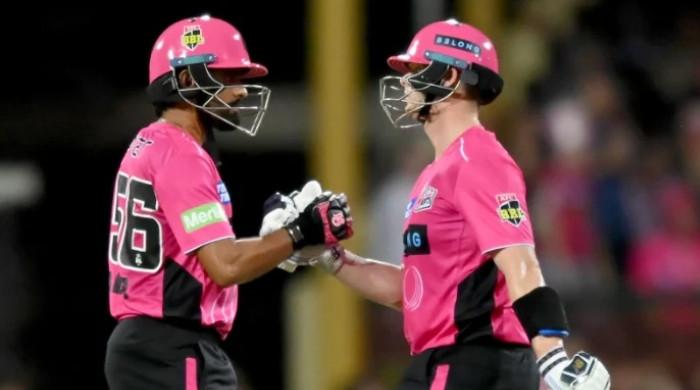
Sydney Sixers captain Moises Henriques has revealed it took team management a couple of days to resolve a “misunderstanding” between Babar Azam and Steve Smith following a denied single during their Big Bash League (BBL) game against Sydney Thunder last week.
The incident occurred on the final delivery of the 11th over when Smith declined a single offered by Babar to ensure he would be on strike for the Power Surge — a tactical phase where only two fielders are allowed outside the circle.
Henriques said that the incident was a result of the cultural difference between Australian and Pakistani players.
“It took a couple of days for that to settle down,” Henriques said during the Qualifier final against Perth Scorchers. “To be honest, think it’s just a bit of a misunderstanding of culture of each other.”
“It’s a pretty common thing in our culture, and maybe for him (Babar) he wasn’t used to it and didn’t quite understand. Once it was explained to him he was absolutely fine. They’ve kissed and made up and it’s two of the greats back friendly again.”
Smith had reportedly informed Babar an over earlier that he intended to take the first ball of the surge during the game. Babar, who was dismissed for 47 off 39 balls, appeared visibly unhappy with the decision.
Speaking during the post-match presentation, Smith said that the captain and coach had told him to take the Power Surge at the ten-over mark.
“I was like, ‘Nah, give it one over. I want to hit to the short boundary. I don’t want to screw up the first over. I’ll try to get 30 off that over’. [I] think we got 32, so it was a good result. Not sure Babar was too happy with me knocking back that single,” he added.
Meanwhile, Henriques said that head coach Greg Shipperd took the lead role in talking to Babar.
“[We are] always trying to understand…we could visibly see he was quite upset with what happened on the field, so we needed to try and understand why he felt that way. Once we got to the bottom of it, it was okay.”
It is pertinent to mention that Babar, who was roped in as a direct signing by the Sixers for the BBL 15, has been struggling in the ongoing tournament as he has thus far managed to accumulate 202 runs in 11 innings at a modest average of 22.44 and a dismal strike rate of 103.06.
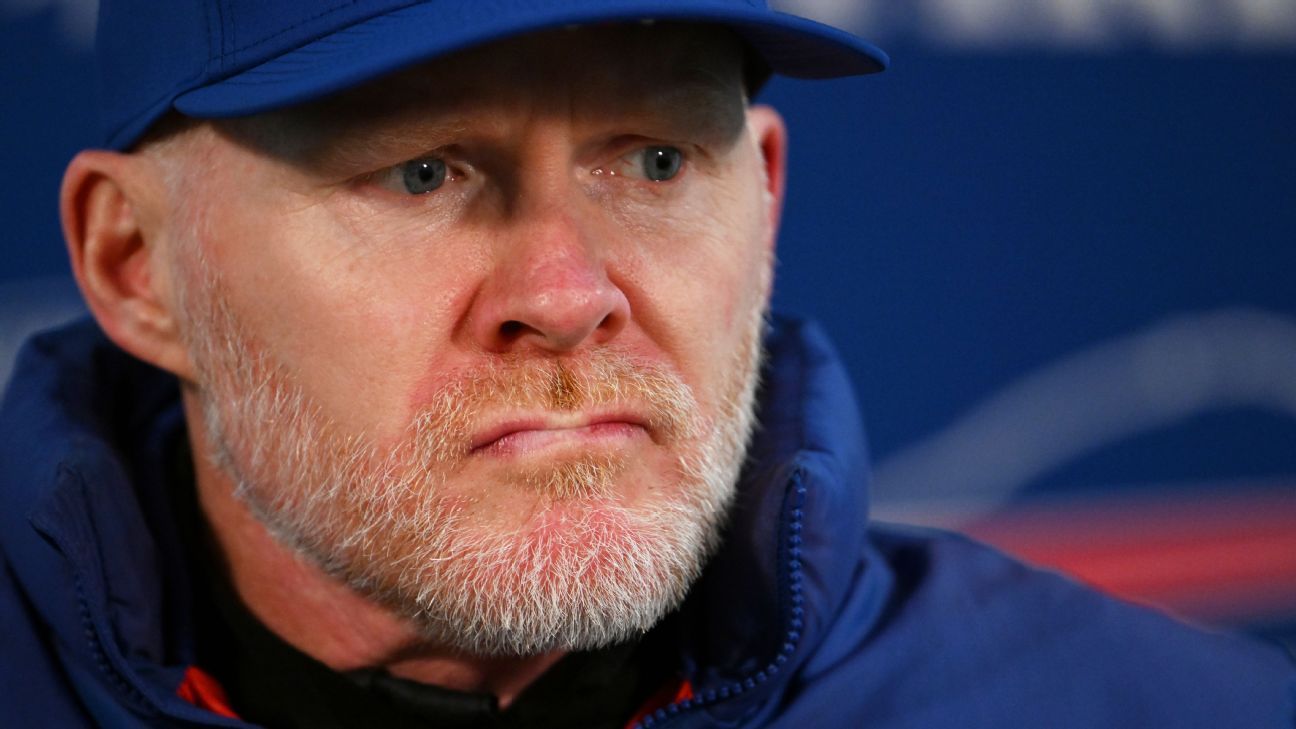
Sean McDermott’s tenure as the Buffalo Bills‘ head coach ended Monday despite his time with the team featuring a historic playoff streak and a complete transformation of the organization’s culture.
The Bills, led by McDermott for nine years, had the second-most wins (98-50) of any franchise since 2017. He took Buffalo to the playoffs in eight of those seasons, reaching the AFC Championship Game twice but coming up short of a Super Bowl appearance.
To take the next step with 2024 MVP quarterback Josh Allen and find a way to the franchise’s elusive first Super Bowl title, the Bills will have to hire a new coach, and that responsibility will fall on general manager Brandon Beane. Bills owner Terry Pegula announced Monday that Beane has been promoted to president of football operations, giving him an increase in responsibilities, including overseeing the coaching search.
So how did the Bills get here — firing McDermott and promoting Beane two days after the 33-30 divisional round loss to the Denver Broncos — and what does it mean?
Bills reporter Alaina Getzenberg, senior NFL reporter Jeremy Fowler and NFL analyst Ben Solak answer all the pressing questions in the wake of Monday’s news that the Bills are moving in a new direction.
Why was Sean McDermott fired? Was the loss in Denver a major reason for the decision?
He didn’t finish the job. In a results business, McDermott was incredibly successful, winning 10 or more games in seven straight seasons, the longest active streak in the NFL. The Bills are one of six teams in the Super Bowl era to have a streak that long.
The firing comes down to what McDermott didn’t do, but perhaps more substantially, a clear decision by Pegula to go with Beane’s vision for the team moving forward and the general manager winning out in receiving the owner’s faith in building the vision for the future. Beane and McDermott together were not accomplishing the combined goal in leading the football side of the team, and that’s winning the franchise’s first Super Bowl or even reaching the big game. Instead, the Bills are the only one of those six teams to not have multiple Super Bowl appearances during those winning stretches. Buffalo’s past three playoff losses were all by three points.
Moving on from McDermott was not a one-game or one-season decision. This is a coach who came to embody western New York and become one of its fiercest advocates. He built a culture that many flocked to and loved with several players joining (or returning to) Buffalo to play for McDermott, as seen in the shocked and dismayed responses to his firing.
Pegula made clear in his statement that he believes that the organizational structure was not the most effective and that giving just one person — Beane — control of the entire football operation is the best move to try to reach a Super Bowl title. — Getzenberg
How does Allen feel about McDermott and how much of a role did the QB play in this decision?
McDermott isn’t being fired if quarterback Josh Allen doesn’t have a certain awareness. Allen’s importance in the building cannot be underestimated, and maximizing his prime is a large part of making this move. After a very emotional Saturday evening for the franchise quarterback, for the first time, Allen did not have a news conference during the team’s locker room clean out on Sunday, a sign that something was afoot.
While Allen has spoken well of McDermott publicly, earlier in his career their relationship was not in the best place, but that has improved over the years. Allen is also very close with Beane and that will be a key relationship moving forward here.
The quarterback’s input to the coaching search will also be a big one to watch as he has spoken very highly of and had strong relationships with multiple names that could be involved, chiefly current Bills offensive coordinator Joe Brady, former Bills offensive coordinator Brian Daboll and former Bills quarterback Davis Webb. — Getzenberg
Does this immediately become the best job available? And should John Harbaugh and Kevin Stefanski regret already taking jobs?
Though the Bills job is extremely attractive for MVP-related reasons, I’m not convinced it’s clearly better than the other options. The new head coach will enter Buffalo with astronomical expectations, as the outgoing coach made the playoffs seven consecutive times, including the divisional round six straight years. There is no teardown and rebuild on the horizon in Buffalo, no one-year grace period. The next coach needs to hit the ground running and win in January immediately.
With that said, I imagine both Harbaugh and Stefanski would have taken long looks at this job — Stefanski especially, as he hasn’t coached an elite quarterback like Allen before, and that duo could have found offensive success together. I’d wager the Bills job goes fast because of the Allen allure, but it seems like a bit of a trap to me. — Solak
Which candidates make sense for Buffalo?
This is a primo job that will attract several strong candidates. It’s not a perfect job — the roster has a few holes, and the expectations will be immense — but the chance to coach Allen and get the best out of him will be a serious draw. An in-house option, offensive coordinator Joe Brady, and former Giants head coach Brian Daboll, few former Buffalo OC, could get looks. Daboll, in particular, has western New York roots and a long-standing rapport with Allen.
But this is also a chance for the Bills to reinvent themselves in a new image with a younger coach. Los Angeles Rams defensive coordinator Chris Shula, Los Angeles Chargers defensive coordinator Jesse Minter and Seattle Seahawks offensive coordinator Klint Kubiak are among intriguing options still on the board.
A trio of even younger offensive coaches — Jacksonville Jaguars offensive coordinator Grant Udinski, Rams pass-game coordinator Nate Scheelhaase and Broncos pass-game coordinator Davis Webb — are worth interviewing, too. — Fowler
1:59
Rex Ryan wants the Bills to hire Bill Belichick
Dan Orlovsky and Rex Ryan share who they believe the best replacements are for Sean McDermott in Buffalo.
Why did the Bills retain GM Brandon Beane, and will he be on the hot seat next year?
With Buffalo showing long-term confidence in Beane, not only has he received more responsibilities but the move illustrates Pegula’s trust in his abilities and his view of the organization. Beane’s promotion will also put more of a spotlight on the work he is doing if the team falls short again as he has full control.
This is a change as McDermott previously reported to Pegula directly. Beane, 49, now runs the football side of the team, which is a sign that he will have more time with the new coach to put in place whatever changes he sees fit.
The general manager has been under considerable criticism because of the strength of the weapons around Allen and the fact that many recent Day 1 and 2 draft picks and free agency additions have not lived up to expectations.
Beane, who had reported directly to Pegula as well, has been able to build his own trust and relationship with the owner. Pegula clearly believes Beane is the person to guide the team moving forward. — Getzenberg
What are Buffalo’s big offseason roster decisions?
Wide receiver is the chief consideration. The position group has major question marks around it with 2024 No. 33 draft pick Keon Coleman falling down the roster in his second season, and free agency additions such as Joshua Palmer and Curtis Samuel not working out. Fixing that group will be among Beane’s biggest tasks.
There are also several positions in free agency flux, especially along both lines. Starting center Connor McGovern and left guard David Edwards are set to become free agents, which would be major losses up front. Pass rusher is also an area in need of work as Joey Bosa and AJ Epenesa are free agents, and finding a consistently strong presence at the spot has been an issue for this team.
With McDermott’s departure, the defensive question marks that present themselves overall are also significant as the unit was built to fit the coach’s scheme specifically. Positions like safety and linebacker only become bigger holes to fill.
The real challenge is rebuilding the roster once again under a new head coach — one who can make the team competitive again right away next season with a 30-year-old Allen at quarterback and the current cap limitations the Bills have. — Getzenberg
Where could McDermott land, and does he move to the top of the list of available HC candidates?
McDermott’s presence will make a few front offices rethink their plans. Tennessee comes to mind.
The Titans are eyeing finalists Matt Nagy, Robert Saleh and Jeff Hafley. Will they get McDermott involved? It’s at least worth considering. He carries instant credibility. Even if Tennessee and Miami (with Hafley in sight) stay the course with their current searches, McDermott has five openings to pursue — the Raiders, Browns, Steelers, Ravens and Cardinals.
Those first two are not natural fits at this stage. Both teams are rebuilding and positioned to take a swing with an outside-the-box hire. McDermott’s coaching style would fit in seamlessly in the AFC North. Baltimore, which isn’t shying from the retread model in its search, looks like a better option than Pittsburgh. Arizona falls somewhere in the middle but is hardly a destination job at this point.
So, yes, McDermott is now the most decorated candidate, but much will depend on a team’s current trajectory and preference. — Fowler


India–Oman CEPA: A New Chapter for Textiles & Apparel

Indiana erases forgettable history with unforgettable title

Millie Bobby Brown teams up with Walmart for new fashion line

-

 Tech1 week ago
New Proposed Legislation Would Let Self-Driving Cars Operate in New York State
-

 Entertainment1 week ago
X (formerly Twitter) recovers after brief global outage affects thousands
-
 Sports5 days ago
Pak-Australia T20 series tickets sale to begin tomorrow – SUCH TV
-
 Business4 days ago
Trump’s proposed ban on buying single-family homes introduces uncertainty for family offices
-

 Fashion3 days ago
Bangladesh, Nepal agree to fast-track proposed PTA
-

 Politics3 days ago
Saudi King Salman leaves hospital after medical tests
-

 Tech5 days ago
Meta’s Layoffs Leave Supernatural Fitness Users in Mourning
-

 Tech6 days ago
Two Thinking Machines Lab Cofounders Are Leaving to Rejoin OpenAI