

Business
Wells Fargo Active Cash Card Review


Unlimited 2% cash rewards — Cardholders earn an unlimited 2% cash rewards on purchases, with no categories to activate or earnings limits to track.
There are other cards that offer higher cash back rates on certain categories, and while they can be worth it, they do require more effort. And they often are also subject to a cap and limited in what purchases they apply to. The Wells Fargo Active Cash® Card is perfect for someone that wants an easy-to-use card that still offers high rewards: you’ll earn a best-in-class flat rewards right away on your purchases — with no limits or hoops to jump through.
$200 cash rewards welcome offer — New Wells Fargo Active Cash® Card holders can earn a $200 cash rewards welcome offer for spending just $500 in purchases in the first 3 months. Not only is this a very competitive sign-up bonus for a card with no annual fee, but it’s also one of the things that sets this Wells Fargo credit card apart from other 2% back cards. We’ve yet to come across another credit card with 2% unlimited cash rewards that also has a sign-up bonus.
12 months from account opening 0% APR intro offer — New cardholders can enjoy 0% intro APR on both new purchases and eligible balance transfers for a full 12 months from account opening. (After that period, a go-to rate of 19.24%, 24.24%, or 29.24% Variable APR applies.) That’s a great offer, even when compared to cards marketed just for a 0% intro APR. It means that this card will allow you to avoid interest on purchases and balance transfers for a full year!
Keep in mind that balance transfers need to be made within the first 120 days to qualify for a reduced interest rate and a lower balance transfer fee.
No annual fee — In many cases, high rewards rates mean high annual fees. Not with the Wells Fargo Active Cash® Card, which sports a $0 annual fee.
Cell phone protection — With the price of a typical cell phone in the hundreds of dollars, having some sort of insurance is a good idea. With this Wells Fargo card, you can get built-in cell phone protection of up to $600 just by paying your cell phone bill with your card. Coverage is subject to a $25 deductible.
Greggs is to shed light on demand from customers as the high street bakery chain contends with the rise of weight loss treatments and cost of living pressures on shoppers.
The high street chain is also wrestling with other factors including increases to labour costs and tax changes.
As a result, on Tuesday March 3, Greggs is expected to reveal pre-tax profits of around £173 million for the year to December 27, representing a 9% drop.
In its previous update shortly after Christmas, Greggs pointed to a strong finish to 2025 as sales growth accelerated in the final quarter of the year.
Like-for-like sales growth rose from 1.5% in the third quarter to 2.9% in the final months of 2025.
Totals sales were up 7.4% in the final quarter amid a boost from the group’s continued store opening programme.
The company opened 121 stores last year.
However, analysts at Deutsche Bank said expectations “have already been set low” for 2026 and are “unlikely to change”.
In January, Greggs said it was “cautious but hopeful” about its outlook for 2026, highlighting “subdued” consumer confidence.
Roisin Currie, chief executive of Greggs, also warned alongside its previous update that there was “no doubt” appetite-suppressing medication is having an impact on the bakery chain’s business.
It may provide more detail on how this continues to change customer eating habits.
Meanwhile, the group also announced that inflation was likely to be shallower than last year.
The group increased the price on a number of products and deals last year, so shareholders will also be keen to see how these changes have continued to impact trading.
Aarin Chiekrie, equity analyst at Hargreaves Lansdown, said: “Investors are keen to hear how 2026 is shaping up in the early months.
“While the picture on the cost front is beginning to look more favourable, Greggs has plenty of other challenges still to wrestle with.
“Unhelpful changes to tax rules and minimum wages, slowing UK economic growth, and cost-conscious consumers are all weighing on the outlook.”
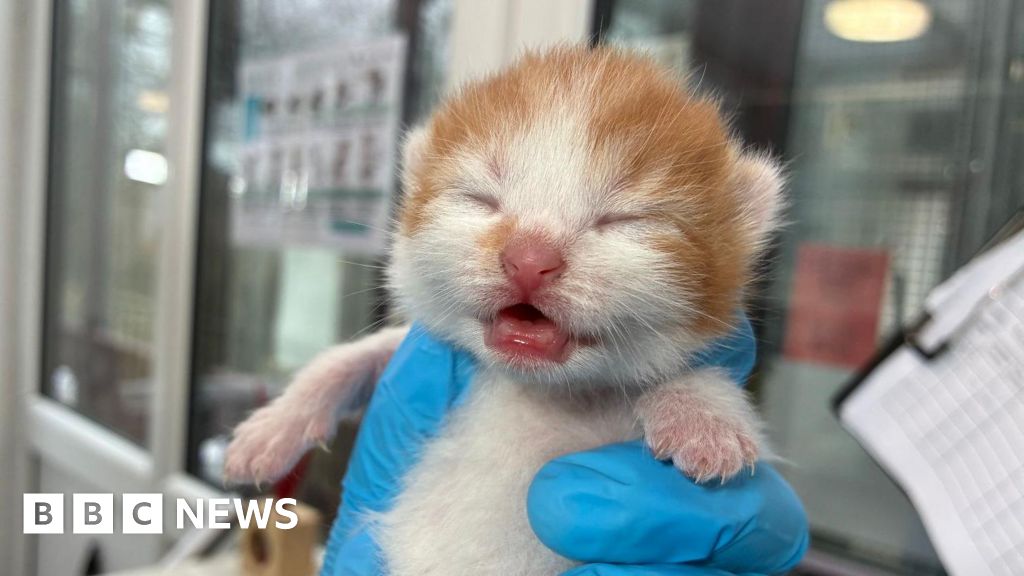
Yorkshire Cat Rescue in Haworth says it paid £282,000 in vet bills in 2025 and rescued 925 animals.
Source link

Last Updated:
Ashish Chauhan confirms National Stock Exchange will list its IPO on Bombay Stock Exchange, as Indian regulations bar self-listing.




The NSE operates the world’s busiest derivatives market by number of contracts traded.
The National Stock Exchange will look at other prominent exchanges like Bombay Stock Exchange (BSE) to list its upcoming IPO when it goes public. Managing Director and Chief Executive Officer Ashish Chauhan told ANI that Indian regulations prohibit the exchange from self-listing.
The NSE operates the world’s busiest derivatives market by number of contracts traded.
Regulatory Framework Bars Self-Listing
Chauhan said Indian regulations prohibit a stock exchange from regulating and listing itself, requiring it to seek admission on another recognised platform. “It’s a regulation of India, and we have to abide by that,” he told ANI.
The comments follow the Securities and Exchange Board of India’s (SEBI) no-objection certificate, which clears a key hurdle for the exchange’s long-pending initial public offering (IPO). Chauhan confirmed that the NSE would pursue listing on an alternative exchange such as the Bombay Stock Exchange (BSE).
Under India’s regulatory framework, exchanges cannot list on their own trading platforms due to conflict-of-interest concerns. Chauhan noted that while some global exchanges, such as Intercontinental Exchange (ICE), the parent of the New York Stock Exchange (NYSE), are listed on their own platforms, India’s rules do not permit such arrangements.
Offer For Sale Structure And Timeline
Chauhan said the IPO would be structured entirely as an Offer for Sale (OFS), with no fresh capital raised. “We are not going to raise money for ourselves,” he told ANI, adding that existing shareholders would be invited to indicate their interest in selling shares.
The exchange, which has nearly 195,000 shareholders collectively owning 100 percent of the company, will take a few months to prepare and file its Draft Red Herring Prospectus (DRHP). SEBI will then review the document before granting further clearance.
On valuation estimates of around USD 50 billion circulating in the market, Chauhan advised caution. Pricing, he said, would be determined closer to launch, based on financial performance, industry comparables, growth trends, and broader economic and geopolitical conditions. Merchant bankers appointed to the issue will advise the IPO committee on the offer price.
Transparency, Governance, And SME Inclusion
Chauhan described the IPO as procedural, aimed at providing liquidity to shareholders rather than funding expansion, noting that the exchange remains profitable.
He said public listing enhances transparency and governance through wider ownership and real-time disclosure requirements. Citing the example of Life Insurance Corporation (LIC), he said governance standards improved following its listing.
In the same interview, Chauhan said India has positioned itself as a cost-effective and inclusive capital market, particularly for small and medium enterprises (SMEs). He contrasted domestic listing costs with those in developed markets such as the United States, where expenses can range between USD 20 million and USD 30 million.
“In India, people are raising USD 1–2 million also. So how much they are spending is probably 5 to 10 per cent of that money to list,” he told ANI, adding that India’s ecosystem of merchant bankers, legal advisers and compliance professionals supports SME participation.
 Click here to add News18 as your preferred news source on Google.
Follow News18 on Google. Join the fun, play games on News18. Stay updated with all the latest business news, including market trends, stock updates, tax, IPO, banking finance, real estate, savings and investments. To Get in-depth analysis, expert opinions, and real-time updates. Also Download the News18 App to stay updated.
March 01, 2026, 09:10 IST
Read More


Make the Most of Chrome’s Toolbar by Customizing It to Your Liking

Holly Willoughby could be next big digital star after Gordon Ramsay

The Piracy Problem Streaming Platforms Can’t Solve

-
 Business1 week ago
US Top Court Blocks Trump’s Tariff Orders: Does It Mean Zero Duties For Indian Goods?
-

 Fashion1 week ago
ICE cotton ticks higher on crude oil rally
-

 Entertainment1 week ago
The White Lotus” creator Mike White reflects on his time on “Survivor
-
 Business1 week ago
Eye-popping rise in one year: Betting on just gold and silver for long-term wealth creation? Think again! – The Times of India
-

 Politics1 week ago
Pakistan carries out precision strikes on seven militant hideouts in Afghanistan
-

 Sports1 week ago
Brett Favre blasts NFL for no longer appealing to ‘true’ fans: ‘There’s been a slight shift’
-

 Entertainment1 week ago
Viral monkey Punch makes IKEA toy global sensation: Here’s what it costs
-

 Sports1 week ago
Kansas’ Darryn Peterson misses most of 2nd half with cramping