

Business
What Are Bulk And Block Deals? Here’s How They Can Change A Stock’s Price Overnight


Last Updated:
While bulk deals may reflect emerging interest in a stock, block deals are usually pre-planned and involve large institutional investors



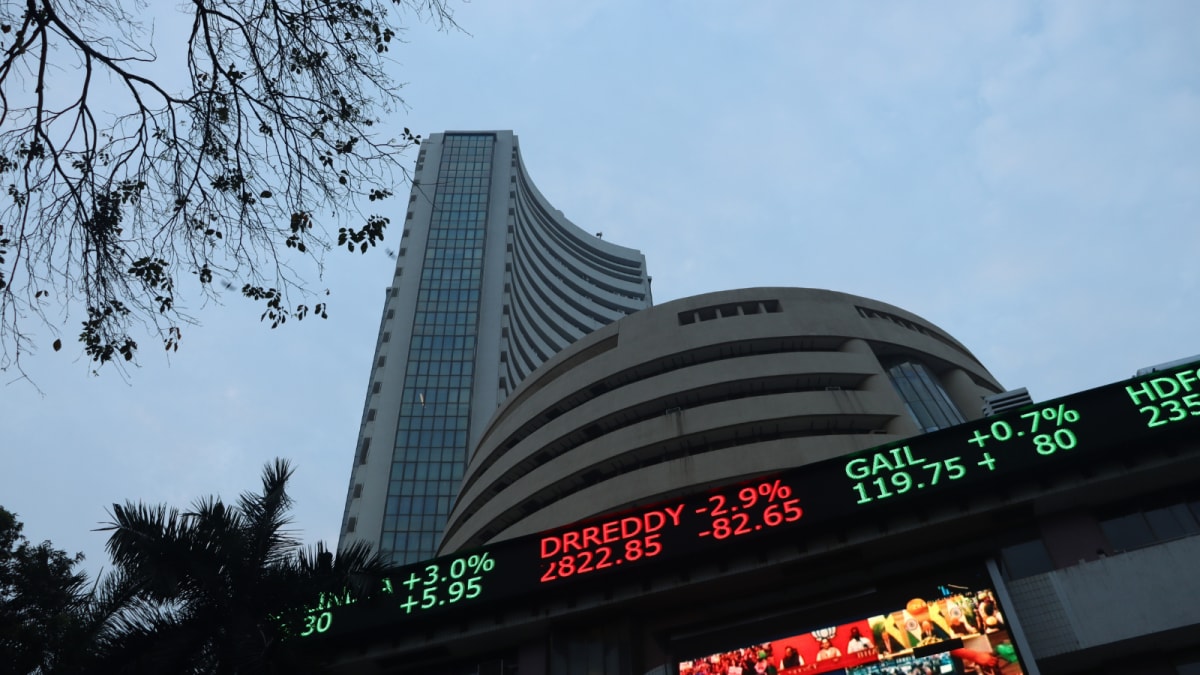
Market experts say tracking bulk and block deals can offer useful insights into the actions of large investors and institutions. (Representational Photo)
Investors tracking stock market movements often come across terms such as ‘bulk deal’ and ‘block deal’ in daily trading updates. At times, a sharp rise or fall in a stock price can be traced back to these large transactions. Understanding what these deals mean, how they differ, and why they matter can help investors make better sense of market activity.
Bulk Deal
A bulk deal occurs when an investor or institution buys or sells 0.5% or more of a company’s total equity shares in a single trading day. Such transactions take place during normal market hours and are disclosed by the stock exchanges after the market closes.
Bulk deals can have an immediate impact on a stock’s price, as heavy buying or selling often signals strong interest or exit by a large investor. Retail investors sometimes view bulk purchases by institutional players as a vote of confidence in the company.
Block Deal
A block deal is executed through a special trading window provided by the stock exchanges. To qualify as a block deal, the transaction must involve at least 5 lakh shares or be valued at more than Rs 5 crore. These deals are carried out during a specific time slot known as the block deal window, and both the buyer and seller are identified beforehand.
The main objective is to facilitate large transactions without causing excessive volatility in the open market. Unlike bulk deals, block deals are reported to the exchanges immediately.
Differences Between Bulk and Block Deals
Bulk deals are executed during regular trading hours and typically involve relatively smaller quantities compared to block deals. They are disclosed at the end of the trading session. Block deals, on the other hand, are meant for very large transactions, take place in a designated time window, and are reported in real time.
While bulk deals may reflect emerging interest in a stock, block deals are usually pre-planned and involve large institutional investors.
Types of Deals in the Stock Market
There are broadly four types of transactions in the equity market. Regular trading deals involve routine buying and selling by investors on the exchange. Bulk deals refer to large trades crossing the 0.5% threshold of a company’s equity in a day. Block deals are high-value or high-volume transactions conducted through a special window.
Off-market deals involve the transfer of shares outside the exchange platform, such as inter-promoter transfers or strategic stake sales.
What Should Investors Keep in Mind?
Market experts say tracking bulk and block deals can offer useful insights into the actions of large investors and institutions. However, they caution against making investment decisions based solely on these transactions. Investors are advised to also consider a company’s fundamentals, financial performance, management quality and long-term growth prospects.
 Click here to add News18 as your preferred news source on Google.
January 16, 2026, 20:26 IST
Read More




The federal government announced a Rs26.77 per litre hike in the price of petrol and high-speed diesel each on Friday, according to a notification issued by the Petroleum Division.
The new prices will be effective from April 25, 2026 for a week, the notification stated.
Following the increase, the price of HSD has jumped from Rs353.42 to Rs380.19, while the petrol price now stands at Rs393.35.
The government has been reviewing petroleum prices every Friday night following the now-paused US-Israel war on Iran, which began on February 28.
In the previous weekly review, the prime minister announced a reduction of Rs32.12 per litre in the price of high-speed diesel, while the petrol price remained unchanged.
The government jacked up petrol and diesel prices despite oil prices falling globally on Friday after it appeared a second round of Middle East talks was back on, bolstering prospects for an end to a war that has crippled energy shipments from the Gulf.
Oil prices had been climbing earlier as investors worried about a lack of progress in ending the Middle East crisis, with Tehran keeping the Strait of Hormuz closed and the US maintaining a blockade of Iranian ports.
But they dropped on reports that Iran’s Foreign Minister Abbas Araghchi was to arrive in Islamabad on Friday night.
Brent crude, the international benchmark contract, fell back below $100 a barrel.
facebook twitter
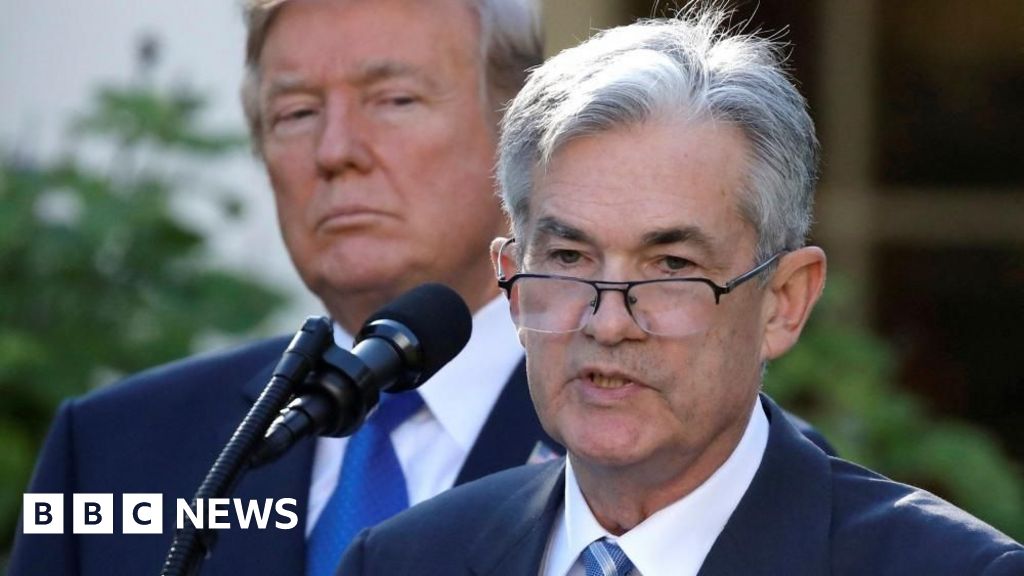
Powell’s term is nearing its end and the US Senate is considering Trump’s nominee for his replacement, Kevin Warsh. A key Republican, Thom Tillis, has withheld his support for Warsh unless the Trump administration would drop its investigation into Powell.
Business
Intel bags big gains! Chipmaker’s shares jump 26% on blockbuster results; how Trump admin benefits – The Times of India
Intel share price soared sharply on Friday after the chipmaker delivered a first-quarter performance that exceeded market expectations. And the win was not just for the chipmaker, but also the whole of US!The stock climbed 26.7% during trading on Friday, marking what could be its strongest single-day gain since 1987. Momentum continued after the closing bell, with shares rising a further 20% in after-hours trading as investors reacted to signs of a sustained turnaround driven by artificial intelligence.Intel reported revenue of $13.58 billion (€11.6bn) for the quarter, ahead of the $12.3 billion (€10.5 bn) forecast and up 7.2% from a year earlier. Adjusted earnings per share came in at $0.29, far exceeding expectations of $0.01.A key contributor to this performance was the company’s Data Centre and AI (DCAI) division, which delivered revenue of $5.05 billion (€4.2bn), up 22.4% year-on-year and well above analyst estimates of $4.41 billion (€3.77bn). The results indicate strong demand for Intel’s Xeon 6 processors and Gaudi 3 AI accelerators, particularly among enterprise clients and cloud service providers.Chief executive Lip-Bu Tan pointed to a broader shift in artificial intelligence usage as a major factor behind the growth. He said, “the next wave of AI will bring intelligence closer to the end user, moving from foundational models to inference to agentic.” He added, “This shift is significantly increasing the need for Intel’s CPUs and wafer and advanced packaging offerings.”The company also issued an upbeat outlook for the second quarter, forecasting revenue in the range of $13.8 billion (€11.8billion) to $14.8 billion (€12.6billion), surpassing investor expectations of $13 billion (€11.1billion).
But how is Washington winning?
The rally has had a direct impact on the US administration’s investment in Intel. In 2025, during a period of severe financial strain for the company, the administration of Donald Trump acquired a 9.9% stake in a move aimed at stabilising the business. The government invested $8.9 billion (€7.8bn) at a share price of $20.47 (€18.01), with $5.7 billion (€5bn) of that amount coming from previously approved but unpaid grants, according to the Euro News.At the time, Intel was facing multi-billion dollar losses and operational challenges, prompting concerns over its viability. As part of the intervention, the company cancelled planned factory projects in Germany and Poland, redirected focus towards US-based manufacturing, and reduced its global workforce by 25%, cutting around 25,000 jobs.Following the latest jump, Intel’s shares are now trading at $81.3 (€71.5), representing an increase of nearly 300% since the government first took its stake. The sharp rise highlights how the company’s improved financial performance has translated into substantial gains for the US administration.


NASCAR makes major change in front office, including new CEO in unprecedented move: report

Extended interview: Don Cheadle – CBS News

Charlie Sheen updates on relationship with old pal Jon Cryer

-

 Fashion1 week ago
France’s LVMH Q1 revenue falls 6%, shows resilience amid Iran war
-

 Tech1 week ago
CYBERUK ’26: UK lagging on legal protections for cyber pros | Computer Weekly
-

 Sports5 days ago
WWE WrestleMania 42 Night 2: Live match results and analysis
-

 Sports1 week ago
Faheem Ashraf backs Islamabad United’s push, calls league a ‘career-changing platform’
-

 Sports5 days ago
NCAA men’s gymnastics championship: All-time winners list
-
 Business1 week ago
PepsiCo earnings beat estimates as North American food business improves
-

 Tech1 week ago
Anthropic Plots Major London Expansion
-

 Entertainment4 days ago
Lee Anderson, Zarah Sultana kicked out of UK Parliament for calling PM ‘liar’