

Business
What is the Santa Rally and how do investors make money from it?


Knowing where the stock market is going next for certain would be a superpower that puts wealth in the palm of your hand. While not even Warren Buffett would claim to have such an ability, there are many factors to draw on which offer clues to people starting investing as to what is likely to happen.
For a start, major stock markets all consistently rise over long timeframes of multiple years. There are short-run falls along the way, but over the course of five years in most cases, and certainly over ten years, the leading markets such as the United States’ and United Kingdom’s have always made their way higher.
The so-called Santa Rally is also an example which provides a good steer on how the stock market could move.
As the name suggests, it occurs close to Christmas. To be precise, the Santa Rally is a rise in the stock market that often happens across the last five days of trading in December and the first two in January.
The S&P 500, which is the top stock market index for the US, has risen by 1.3 per cent on average across just these seven days since 1960.
Sometimes it is more and sometime less. In fact, it is crucial to note that it only rises at all in around four out of five years (79 per cent). A return of that size in seven days is very attractive, given it would take months to earn 1.3 per cent from cash savings.
The other times (21 per cent) the Santa Rally has not occurred, and stock markets have fallen across these days. So, it is far a guarantee.
Why does the Santa Rally happen?
There is significant debate over why the Santa Rally happens so often. A mixture of practical reasons and human nature is believed to be at play.
One theory is that at the end of the year, analysts who forecast stock prices begin to revise predictions for the year ahead, and often raise their expected numbers. This feeds into investors’ decisions making.
Get a free fractional share worth up to £100.
Capital at risk.
Terms and conditions apply.
ADVERTISEMENT

Get a free fractional share worth up to £100.
Capital at risk.
Terms and conditions apply.
ADVERTISEMENT
Next, there are tax obligations. Many investors sell shares as the year end approaches and then re-enter positions at the start of a new year, according to their own particular tax positions and the performance of their investments.
There can also be some “balancing of the books” towards the year end where fund managers lock in profitable positions, by selling, to make their annual performance look as good as possible – and then buy back in as the year ticks over.
Another factor is reduced trading volume as traders and fund managers take time off over the Christmas period. This means less money is moving around, and so prices can be pushed higher, or lower, more easily.

Expectations and psychology likely play a role too. The fact that the Santa Rally has consistently occurred over many decades means people expect it to happen, and therefore buy into the market: it becomes a self-fulfilling prophecy to some degree.
On the psychological side, it is possible that the optimism that many people experience as a new year begins filters through into their financial decisions, so they are more inclined to buy than sell around this time.
One other thing that may play a role is January as a whole often being a strong month for the stock market. The S&P 500 has risen 73 per cent of the time in January since 1950 and the FTSE 100 has been up 64 per cent of the time.
Investors therefore try to take advantage of this by buying-in as soon as the month begins, or even slightly before.
How do investors make money from the Santa Rally?
It is relatively straightforward to make money from the Santa Rally – on the years it occurs.
As mentioned though, it is by no means certain to happen in any given year, and the stock market could also fall in this period.
Investing is a long-term endeavour and trying to time when to buy and sell perfectly is extremely difficult. The best way to approach the Santa Rally is to view it as a potentially nice bonus as part of a long-held, diversified investment portfolio.
That said, the simplest way to take advantage of the Santa Rally is to buy a stock market tracker such as an S&P 500 ETF or passive fund. Another option is a FTSE 100 ETF or passive tracker fund, given the rise often occurs in the UK stock market as well.
Either one will give you exposure to all the companies in the chosen index so the value of your investment will rise, or fall, in line with the market.
Both S&P 500 and FTSE 100 trackers are available via all the major UK investment platforms from providers including BlackRock’s iShares, Vanguard, Legal and General and many others.
When investing, your capital is at risk and you may get back less than invested. Past performance doesn’t guarantee future results.
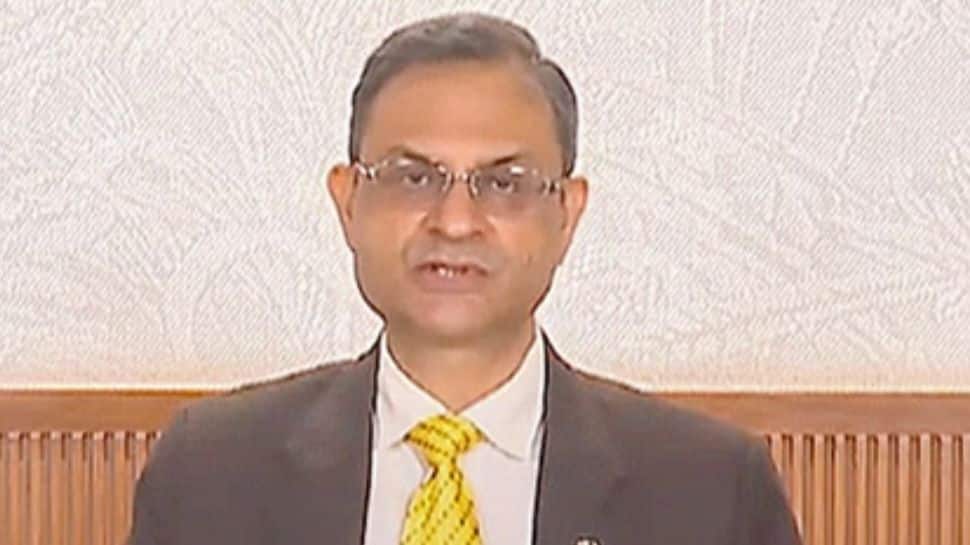
New Delhi: The Reserve Bank of India (RBI) has kept the repo rate unchanged at 5.25 PERCENT in its February 2026 monetary policy review, maintaining a neutral policy stance as inflation pressures remain under control and economic growth stays stable.
The decision was announced by RBI Governor Sanjay Malhotra after the three-day meeting of the Monetary Policy Committee (MPC), which began on February 4 and concluded on February 6.
Focus on Inflation and Growth
The MPC chose to pause after a series of rate cuts over the past year, preferring to evaluate how earlier policy changes are affecting borrowing costs, liquidity, and overall economic activity.
Inflation has remained within the RBI’s comfort range, giving policymakers room to maintain the current rate while monitoring global economic conditions and domestic demand.
The RBI’s monetary policy framework aims to keep inflation close to 4 PERCENT with a tolerance band of 2–6 PERCENT, which continues to guide interest-rate decisions.
Impact on Loans, EMIs, and Markets
Since the repo rate directly influences borrowing costs for banks, the decision to keep rates unchanged means loan EMIs are unlikely to change immediately. However, banks and financial markets will continue to watch RBI signals on liquidity and future rate moves.
The central bank has already reduced rates by about 125 basis points since early 2025, which helped support economic growth while inflation eased.
What Happens Next
Economists believe the RBI may now focus more on policy transmission and liquidity management rather than further rate cuts in the near term.
Governor Malhotra is expected to outline the RBI’s outlook on inflation, growth, and financial stability in the coming quarters during the post-policy press conference.
Business
$2 trillion wiped off crypto markets! Bitcoin halves since October; investor company shares sink to multiyear lows – The Times of India
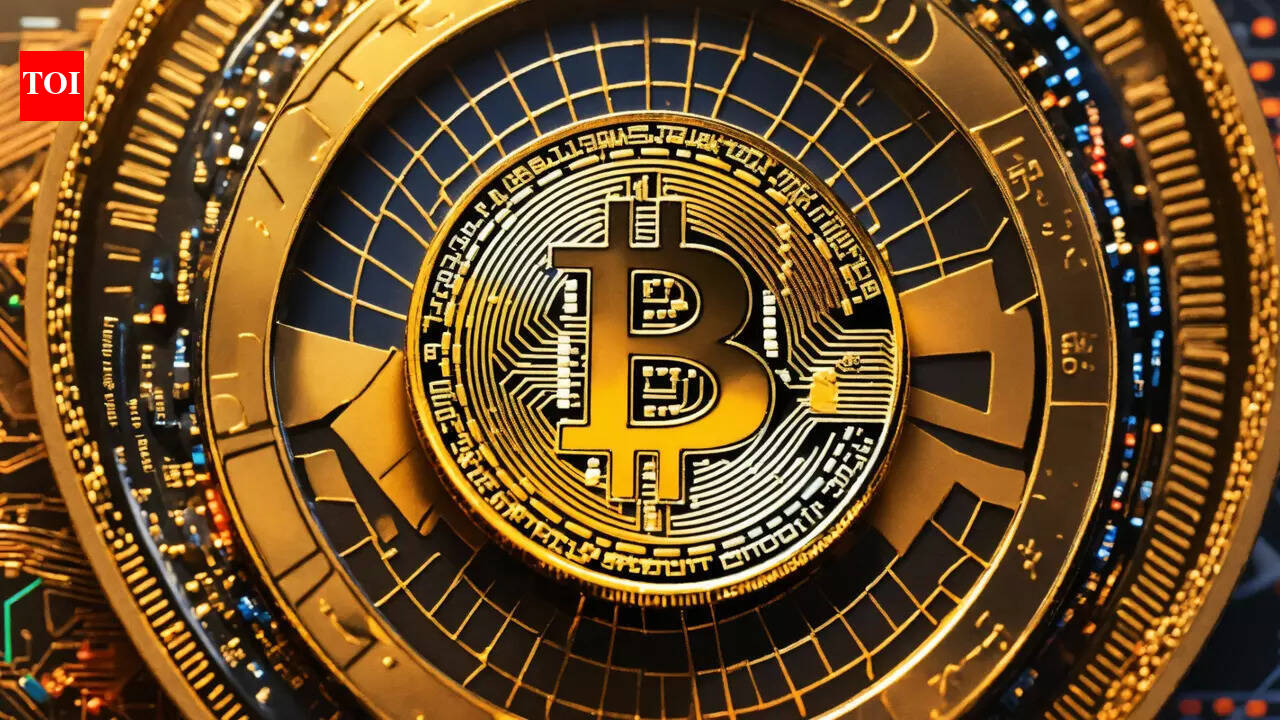
Cryptogiant Bitcoin has suffered sharp losses since the beginning of 2026, tumbling over 20%. The digital currency has given up almost half of its value since October’s record peak of over $124,000, sliding to $67,000, now worth less than it was at the start of President Donald Trump’s second term. Bitcoin is often pitched as “digital gold” as its returns are just like gold, offering no dividends or profits and price driven by what investors are willing to pay. The world’s largest cryptocurrency was last trading 1.64% higher at $64,153.24 after a volatile session that saw prices swing between gains and losses, having earlier touched a low of $60,008.52. The global crypto market has lost $2 trillion in value since peaking at $4.379 trillion in early October, with $800 billion wiped out in the last month alone, Reuters reported. Bitcoin has declined 28% so far this year, while ether has lost nearly 38% over the same period.As the asset slid, shares of companies holding bitcoin and other digital assets also came under heavy pressure amid ongoing turbulence in the cryptocurrency market, fuelling concerns about stress across the sector. Publicly listed firms that piled into crypto last year, encouraged by US President Donald Trump’s supportive stance, are now grappling with intensifying market challenges.The decline comes as uncertainty over Federal Reserve rate cuts and concerns over AI company valuations weigh on risk assets, pushing bitcoin to its lowest level since November 2024.Strategy shares plunge to multi-year lowsMicroStrategy’s bitcoin-focused arm, Strategy, has seen shares tumble from $457 in July to $111.27 on Thursday, marking their lowest level since August 2024. The stock was last down more than 11%, according to Reuters.In December, Strategy cut its 2025 earnings forecast, citing weak bitcoin performance, and announced plans to create a reserve to support dividend payments. The company now expects full-year earnings between a $6.3 billion profit and a $5.5 billion loss, down from its earlier forecast of $24 billion.Other notable bitcoin buyers have also been hit. UK-based Smarter Web Company (SWC.L) fell nearly 18%, Nakamoto Inc (NAKA.O) lost almost 9%, and Japan’s Metaplanet (3350.T) dropped over 7%.Bitcoin wipes out gains since Trump’s electionBitcoin itself is down nearly 28% since the start of the year, with recent selling accelerating after Trump nominated Kevin Warsh as the next Federal Reserve chair. Analysts cited by Reuters say that Warsh’s appointment could lead to a smaller Fed balance sheet, a negative for speculative assets like crypto.Bitcoin has erased all gains made since Trump’s election, when he pledged to overhaul policies toward digital assets. The cryptocurrency last traded at $67,651.“As Bitcoin continues its slide below the psychological barrier of $70,000, it’s clear the crypto market is now in full capitulation mode,” said Nic Puckrin, investment analyst and co-founder of Coin Bureau. “If previous cycles are anything to go by, this is no longer a short-term correction, but rather a transition… and these typically take months, not weeks,” Reuters cited the expert.Broader digital asset holdings also hitCompanies holding other tokens have been affected as well. Alt5 Sigma, which stocks the Trump family’s WLFI token, fell 8.4%. SharpLink Gaming, holding ether, dropped 8%, while Forward Industries, which holds solana, fell nearly 6%.Bitcoin fell to a low of $63,295.74 on Thursday, its weakest since October 2024, before rebounding slightly to $63,525, marking its largest one-day drop since November 2022. Approximately $1 billion in bitcoin positions were liquidated over 24 hours, according to CoinGlass data.Fed concerns and investor outflowsTrump’s Fed pick, Kevin Warsh, has added to market fears. Analysts say investors worry that a smaller balance sheet will remove liquidity support for speculative assets.“The market fears a hawk with him,” Manuel Villegas Franceschi from Julius Baer told Reuters. “A smaller balance sheet is not going to provide any tailwinds for crypto.”Deutsche Bank analysts highlighted massive outflows from institutional ETFs as a key driver of the decline. US spot bitcoin ETFs saw over $3 billion withdrawn in January, following $2 billion and $7 billion outflows in December and November, respectively. “This steady selling in our view signals that traditional investors are losing interest, and overall pessimism about crypto is growing,” they said.Tech sector weakness piles pressure on crypto segmentThe slide in cryptocurrencies has been compounded by a broader downturn in tech stocks, particularly software companies linked to AI. Bitcoin and other tokens have historically tracked risk appetite in technology markets, and the current weakness has intensified losses.“Concerns are being raised around the crypto miners and whether we could be looking at forced liquidations if prices continue to fall, which could lead to a vicious cycle,” said Jefferies strategist Mohit Kumar, as cited by Reuters. The analyst further added that crypto “should never be more than a very small portion of a portfolio, but its heavy retail ownership adds to overall market risk.”
Business
RBI MPC Meeting 2026 Live Updates: Gov Sanjay Malhotra To Announce Decision On Repo Rate Today

RBI MPC Meeting February 2026 Live Updates: All eyes are on the Reserve Bank of India (RBI) governor, Sanjay Malhotra, today as he is going to announce the decision of the Monetary Policy Committee (MPC) February policy meeting, which started on February 04. The outcome, due shortly, will set the tone for interest rates, liquidity conditions, and market sentiment at a time when growth is steady but inflation risks haven’t fully disappeared.
The six-member MPC, headed by RBI Governor, has deliberated on domestic inflation trends, global uncertainty, crude oil prices, and the evolving growth outlook.
The decision will be announced by RBI Governor Sanjay Malhotra amid a supportive domestic backdrop of a growth-oriented Union Budget, easing inflation pressures and a major easing of external uncertainty following the long-awaited India-US trade deal.
RBI Governor will begin his speech at 10:00 AM. The Central bank had cut the repo rate by 25 bps to 5.25 per cent from 5.50 per cent with a ‘neutral stance’ in its December monetary policy.
This time, expectations are mixed. While retail inflation has shown signs of cooling, it remains close to the RBI’s comfort zone. At the same time, global central banks are turning more cautious on rate cuts, which could influence RBI’s tone and forward guidance.
Markets will closely track not just the rate decision but also the RBI’s commentary on inflation risks, growth projections, liquidity management, and its stance going forward.
Stay tuned with us to watch the live coverage of RBI MPC February Meeting 2026


Is India the next big luxury fashion market?

Epstein fallout triggers resignations, probes
RBI holds repo rate steady at 5.25% in February 2026 MPC meeting

-
 Business1 week ago
PSX witnesses 6,000-point on Middle East tensions | The Express Tribune
-

 Tech1 week ago
The Surface Laptop Is $400 Off
-

 Tech1 week ago
Here’s the Company That Sold DHS ICE’s Notorious Face Recognition App
-
 Business1 week ago
Budget 2026: Defence, critical minerals and infra may get major boost
-

 Tech4 days ago
How to Watch the 2026 Winter Olympics
-

 Tech6 days ago
Right-Wing Gun Enthusiasts and Extremists Are Working Overtime to Justify Alex Pretti’s Killing
-
 Business6 days ago
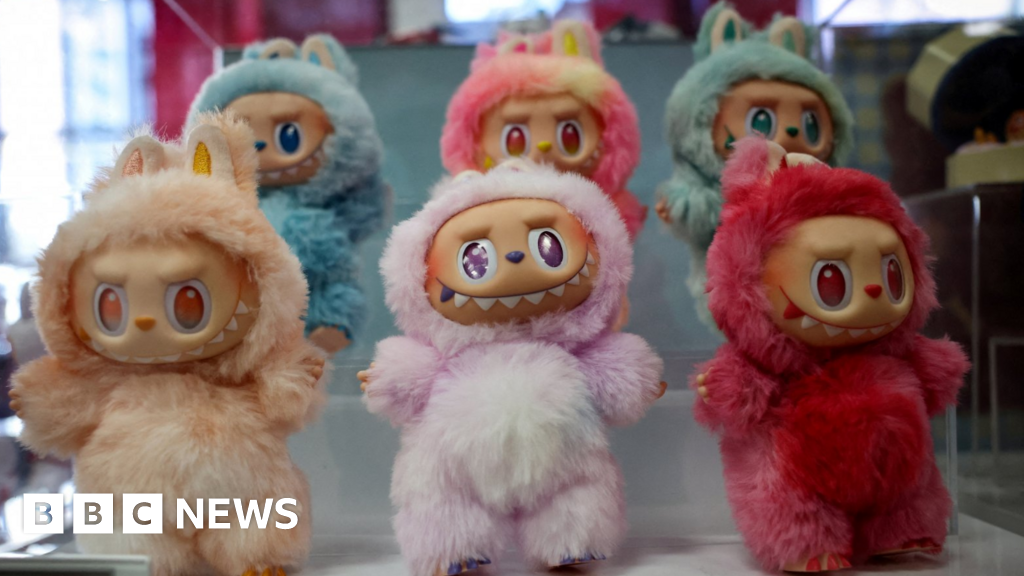
Labubu to open seven UK shops, after PM’s China visit
-

 Sports1 week ago
Darian Mensah, Duke settle; QB commits to Miami