

Politics
What is Trump’s ‘Board of Peace’ and how have nations responded to it?

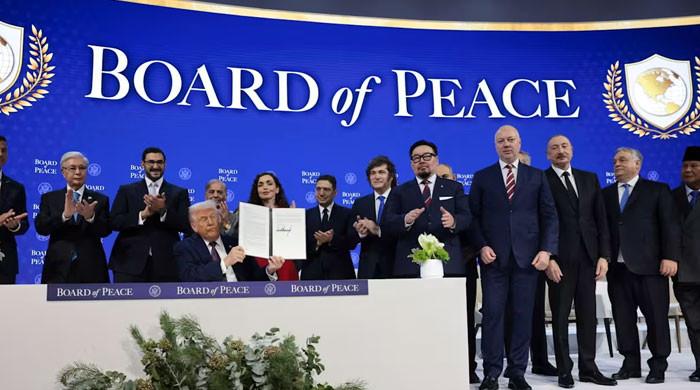
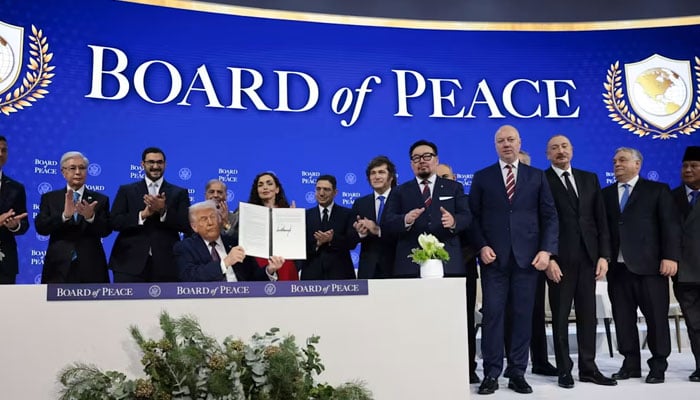
WASHINGTON: US President Donald Trump on Thursday (today) will preside over the first meeting of his “Board of Peace,” an initiative that has drawn praise from Trump allies but also criticism from countries worried that it will undermine the United Nations.
What is ‘Board of Peace’?
Trump first proposed the board last September when he announced his plan to end Israel’s war in Gaza. He later made clear the board’s remit would be expanded beyond Gaza to tackle other conflicts worldwide, with Trump as its chair.
Such efforts have traditionally been a role for the United Nations.
Member states would be limited to three-year terms unless they pay $1 billion each to fund the board’s activities and earn permanent membership, its charter said.
The White House in January named US Secretary of State Marco Rubio, Trump’s special envoy Steve Witkoff, former British Prime Minister Tony Blair and Trump’s son-in-law Jared Kushner as members of the initiative’s founding Executive Board.
Which countries have joined so far?
The board’s official X account has listed over two dozen countries as founding members of the initiative, including Washington’s main Middle Eastern allies.
They include Israel and Saudi Arabia, along with Egypt and Qatar, which helped mediate talks for the Israel-Hamas ceasefire. Others in the region include Bahrain, Jordan, Kuwait, Morocco, Turkey and the United Arab Emirates.
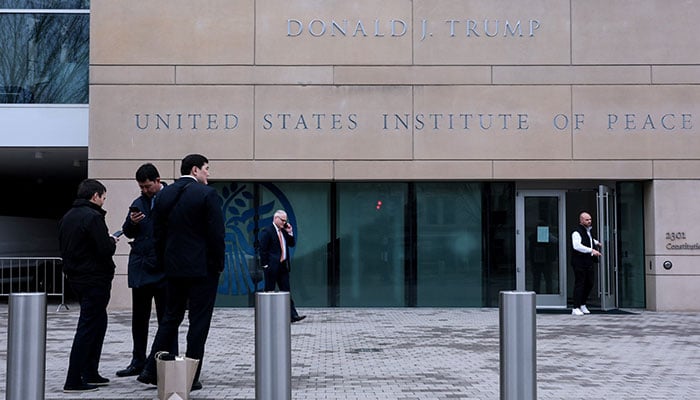
From elsewhere in the world, there are Albania, Argentina, Armenia, Azerbaijan, Belarus, Bulgaria, Cambodia, El Salvador, Hungary, Indonesia, Kazakhstan, Kosovo, Mongolia, Pakistan, Paraguay, Uzbekistan and Vietnam.
Remaining nations
Washington’s key Western allies, as well as major powers of the Global South such as Brazil, India, Mexico and South Africa, have not accepted an offer to join.
Leaders of Britain, the European Union, France, Germany, Norway and Sweden have said they will not join the board.
President Trump rescinded an invitation for Canada last month after he took issue with Prime Minister Mark Carney’s speech in Davos.
Brazil and Mexico have said they will not join the initiative, citing the Palestinian absence from the board. The Vatican has not joined, saying efforts to handle crisis situations should be managed by the United Nations.
China and Russia, both veto-wielding members of the United Nations Security Council, have not joined.
Board’s powers
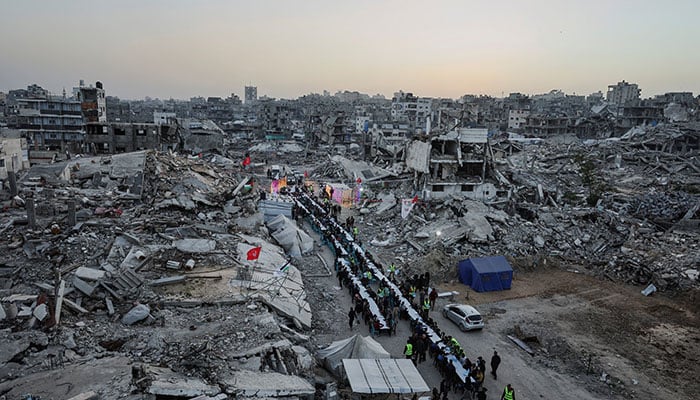
The UN Security Council passed a US-drafted resolution recognising the board in November, welcoming it as a transitional and temporary administration “that will set the framework, and coordinate funding for the redevelopment of Gaza” under Trump’s plan until the Palestinian Authority has satisfactorily reformed.
The resolution authorised the board to deploy a temporary International Stabilisation Force in Gaza, while limiting its scope to only Gaza and only through 2027.
The board is required to report on its progress to the 15-member Security Council every six months.
China and Russia abstained, saying the resolution did not give the US a clear role in Gaza’s future.
Beyond Gaza, it remains unclear what legal authority or enforcement tools, if any, the board will have or how it will work with the US and other international organisations.
Under the board’s charter, it will undertake “peace-building functions in accordance with international law.” Its chairman, Trump, will have extensive executive power, including the ability to veto decisions and remove members, subject to some constraints.
Critics take
Rights experts said that Trump overseeing a board to supervise a foreign territory’s affairs resembles a colonial structure, and have criticised the board for not including a Palestinian representative, even though it is meant to supervise the temporary governance of a Palestinian territory.
Critics also pointed out Blair’s inclusion, given his role in the Iraq war and the history of British imperialism in the Middle East.
The board has drawn scrutiny for including countries whose human rights track records have been widely condemned by rights groups, such as some Middle Eastern powers, as well as Belarus and El Salvador.
There has been particular criticism over the inclusion of Israel on a board meant to oversee Gaza’s temporary governance, given that the Palestinian territory has been left devastated by an Israeli military assault that killed tens of thousands, caused a hunger crisis, internally displaced Gaza’s entire population and led to accusations of war crimes and genocide.
Inaugural meeting
Almost all nations that have joined the board will be at Thursday’s meeting.
More than 20 other nations will attend as observers, a senior US official said. These include close Asian allies Japan and South Korea, along with India and Thailand from elsewhere in the region.
Other observers include Britain and the EU, along with individual member states Austria, Croatia, Cyprus, Czech Republic, Finland, Germany, Greece, Italy, the Netherlands, Poland, Romania and Slovakia.
Norway and Switzerland will also participate in that capacity, as will Mexico and Oman.
Topics to be discussed include Gaza’s reconstruction, humanitarian assistance efforts and deployment of a stabilisation force.
Politics
‘Sprit of resistance will continue’: Iran officials condemn Israeli assassination of IRGC intel. chief
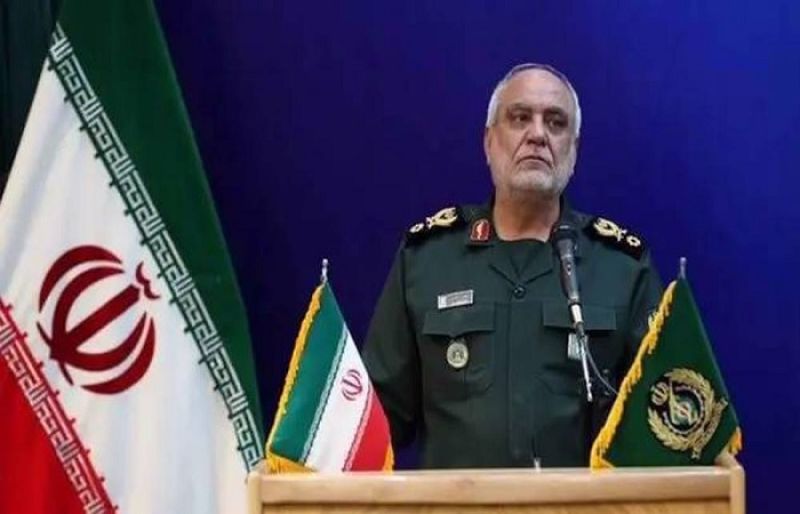
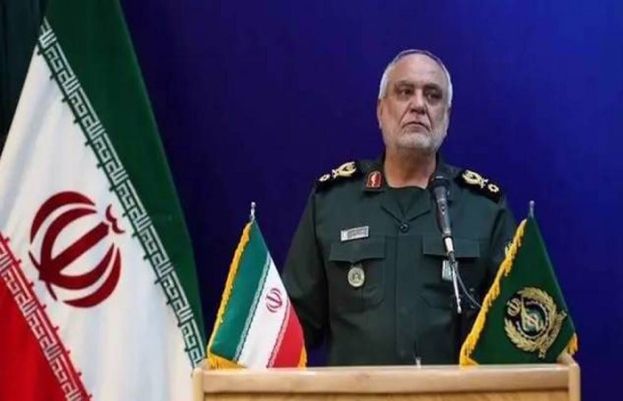
Messages of condolences pour in after the head of the Intelligence Organization of the Islamic Revolution Guards Corps (IRGC), Major General Majid Khademi, was assassinated in a US-Israeli terror strike in Tehran.
In a statement on Monday, the IRGC Public Relations Department said General Khademi, an elite commander, was martyred in the terrorist attack in the early hours of the day.
Major General Ali Abdollahi, commander of Iran’s Khatam al-Anbiya Central Headquarters, praised Khademi for his great endeavors to protect Islamic values and defend national security. He was martyred, Abdollahi said, by the “most vicious American-Israeli terrorists”.
The American and Zionist enemies must know that the martyrdom of such devoted commanders will make the Iranian nation and armed forces even “more resilient and determined” to keep on the path of the martyrs, General Abdollahi said.
‘Assassination will not undermine Iran’s national coherence’
Commander-in-chief of the Iranian Army Major General Amir Hatami said the barbarism put on global display by the American-Israeli enemy will fail to influence the “spirit of resistance of the proud Iranian nation”.
Iran’s adversaries, he said, are under the delusion that they can make any achievement through such wicked and blind moves. But the blood of martyrs only strengthens national will.
“This painful loss will not weaken the morale of the great Iranian people but rather strengthen national resolve and unity toward safeguarding independence and dignity”.
‘Enemies must await harder blows’
Parliament Speaker Mohammad Baqer Qalibaf said the martyrdom of the head of the IRGC Intelligence Organization is proof that the Israeli regime and the US are desperate.
The US-Israeli enemies are going to great lengths to make up for their weakness on the battlefield through cowardly assassinations, he said.
“This blind conspiracy of global arrogance is always doomed to failure, and even harsher blows await them”.
The illegal, imposed war of aggression by the United States and Israel began on February 28 when they assassinated Leader of the Islamic Revolution Ayatollah Seyyed Ali Khamenei, along with several senior military commanders.
In response, Iranian Armed Forces have launched decisive, devastating attacks against US and Israeli interests in the occupied territories and across West Asia.
As the war entered its sixth week, Iran continues to have an upper hand on the battlefield. The enemy is looking for an off-ramp amid heavy human and material loss.


A growing number of lawmakers, experts, and commentators have called for Trump’s immediate removal from office by invoking the 25th Amendment, denouncing him for launching an unprovoked and unnecessary war against the Islamic Republic of Iran.
The 25th Amendment to the US Constitution, ratified in 1967, establishes the process for removing a president who is unable to perform his duties. Section 4, which has never been invoked, allows the vice president and a majority of the cabinet to declare the president “unable to discharge the powers and duties of his office.”
The US president’s Easter message, posted on the completion of one-month of the US-Israeli war on Iran, has drawn sharp rebuke for its content and tone.
US politicians, including some of Trump’s former allies and staunch opponents, described the statement as “psychotic,” “unhinged,” and evidence of a severe mental decline.
Senator Bernie Sanders (I-Vt.) was among the first to sound the alarm, saying the president’s words on the war against the Islamic Republic were more than just troubling.
“One month after starting the war in Iran, this is the statement of the President of the United States on Easter Sunday,” Sanders wrote. “These are the ravings of a dangerous and mentally unbalanced individual. Congress has got to act NOW. End this war.”
Representative Jim McGovern (D-Mass.) echoed Sanders’ concerns with even stronger language, directly questioning the president’s mental state.
“This is psychotic,” McGovern stated bluntly. “The President of the United States needs to get help. Totally unhinged and extremely dangerous.”
The calls for action were not limited to the US Congress. Several commentators and former political figures focused on the 25th Amendment to have Trump removed from office.
Former Republican Congressman Joe Walsh, once a Trump supporter turned fierce critic, pointed to the irony of the timing.
“His Easter morning post. And just 2 days ago, one of his ‘religious advisors’ compared him to Jesus Christ,” Walsh wrote. “He will forever be a stain on this country. And the world. 25th Amendment. Now. And to everyone else who, unlike Trump, understands & celebrates today – Happy Easter.”
The sentiment was shared by author and attorney Seth Abramson, who posed a straight question about the Republican Party’s inaction.
“I’m not saying this rhetorically—I’m speaking literally here,” Abramson said. “At what point do Republicans admit that Trump has lost his mind and replace him with Vance through the 25th Amendment? Never? Do we need to see a nuclear weapon dropped on a city of 10 million innocent civilians first?”
Concerns about the president’s mental fitness also came from medical professionals. Harry Sisson cited the reaction of Dr. Vin Gupta, a respected pulmonologist and health expert.
“Dr. Vin Gupta, a highly respected medical expert, has reacted to Trump’s insane Easter message amid ongoing questions about his health,” Sisson posted.
“‘The President is exhibiting all the signs of dementia.’ Trump has gone crazy and he’s showing it on the world stage.”
Other Democratic lawmakers and political activists questioned why the president’s own cabinet has remained silent so far, pointing to complicity in his actions.
Representative Yassamin Ansari (D-Ariz.) did not mince words, unequivocally calling the US president a threat to American national security.
“The 25th Amendment exists for a reason,” Ansari wrote. “The President of the United States is a deranged lunatic, and a national security threat to our country and the rest of the world.”
Representative Melanie Stansbury (D-N.M.) also weighed in, invoking a classic metaphor to describe the US president’s apparent lack of self-awareness.
“The emperor has no clothes,” Stansbury wrote. “Time for the #25thAmendment. Congress and the Cabinet must act.”
Senator Chris Murphy (D-Conn.) addressed the gravity of the situation as the US losses in the war against Iran pile up, emphasizing the deadly consequences of Trump’s erratic behavior.
“If I were in Trump’s Cabinet, I would spend Easter calling constitutional lawyers about the 25th Amendment,” Murphy wrote. “This is completely, utterly unhinged. He’s already killed thousands. He’s going to kill thousands more.”
Activist Melanie D’Arrigo said the Trump cabinet’s inaction in the face of war against Iran is a deliberate choice, pointing to potential personal gain as a motive for their silence.
“If you’re wondering why Trump’s cabinet isn’t invoking the 25th Amendment after yet another unhinged post announcing war crimes in the war he started that his family and donors are personally profiting from…” D’Arrigo wrote.
“It’s because they’re happily complicit and compromised.”
Journalist and social media influencer Candace Owens called it “a satanic administration.”
“We all realize that satanic Zionists occupy the White House and Congress needs to move to have the Mad King Trump removed,” she wrote.
“All of our lives may depend upon other countries realizing that Trump is deeply unwell and surrounded by religious fanatics who have convinced him that he is a messiah. We are in uncharted territory. Leaders worldwide need to act accordingly.”
Former San Jose Mayor Sam Liccardo said the American public has now seen enough to demand action, placing the burden squarely on the Trump cabinet.
“Our President posted this message to the world on Easter Sunday,” Liccardo said.
“The public now clearly knows that Trump is no longer mentally fit to hold office. Each member of his cabinet has a moral and professional duty to act under the authority of the 25th Amendment; remove him.”
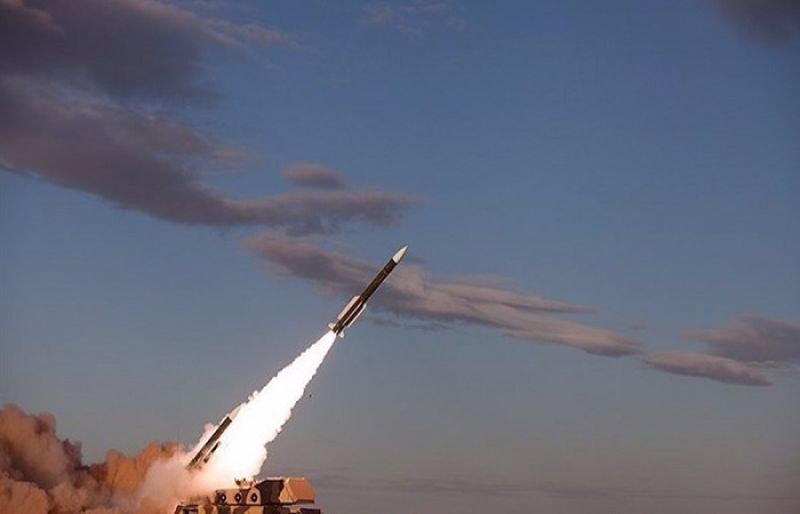

The Islamic Revolution Guards Corps (IRGC) has launched the 98th wave of the decisive Operation True Promise 4, targeting command, operational and logistics centers, as well as military-industrial infrastructure used by the United States and Israel in the region.
In a statement released on Monday, the IRGC’s Public Relations Department said during the first phase of the combined operations, IRGC naval forces precisely targeted the Israeli-owned container ship SDN7 with a cruise missile.
Meanwhile, the statement said, Iranian ballistic missiles struck northern and southern areas of Tel Aviv, strategic sites in Haifa, chemical companies and factories in Beersheba, and a gathering point of Israeli forces in Petah Tikva.
The elite Iranian military force also said the American amphibious helicopter carrier LHA7, transporting more than 5,000 sailors and marines, came under Iran’s attack and was forced to retreat deeper into the southern Indian Ocean.
In another phase of the operation, a drone production center jointly operated by the United Arab Emirates and Israel, along with several military aircraft stationed at Ali al-Salem air base in Kuwait, was hit by Iranian missiles and drones, the IRGC said.
The IRGC said its naval forces are monitoring transit in the Strait of Hormuz and the Persian Gulf while remaining prepared to act decisively against even the slightest movement by the enemies.
The illegal, imposed war of aggression by the United States and Israel began on February 28 with airstrikes that assassinated senior Iranian officials and commanders.
Iran has responded by carrying out 98 waves of retaliatory attacks against US and Israeli military and business assets across the region, using ballistic missiles and drones.
Iran also keeps the Strait of Hormuz shut to oil and gas tankers affiliated with the aggressors and those cooperating with them. This is to maintain security at the strategic waterway.


UNC set to hire Michael Malone as next men’s basketball coach after firing Hubert Davis: report

Border Patrol Agents Sold Challenge Coins With ‘Charlotte’s Web’ Characters in Riot Gear

New norms for NH & bridge works: Longer timelines, realistic deadlines – The Times of India

-

 Sports1 week ago
USMNT handed reality check by Doku, Belgium ahead of World Cup
-
Uncategorized4 days ago
[CinePlex360] Please moderate: “Trump signals p
-

 Sports1 week ago
2026 NCAA men’s hockey tournament: Schedule, results
-
Uncategorized1 week ago
[CinePlex360] Please moderate: “Further tariff
-

 Entertainment3 days ago
Joe Jonas shares candid glimpse into parenthood with Sophie Turner
-

 Tech3 days ago
Our Favorite iPad Is $50 Off
-

 Entertainment1 week ago
Demystifying the PTI
-

 Politics7 days ago
Trump considers asking Arab allies to help to pay for Iran war