

Fashion
What legal challenges does the fashion industry face in the age of generative AI?


Published
December 10, 2025
From safeguarding intellectual property to securing their own use of artificial intelligence, the fashion industry is still finding its feet with AI. Unsurprisingly, the topic took centre stage at the Assises Juridiques de la Mode, du Luxe et du Design, held in Paris on December 9 and organised by Lexposia.
“In 2024, we submitted 2.5 million reports of counterfeit content to platforms,” explained Nicolas Lambert, LVMH’s director of online brand protection. “That’s nothing new, but AI has made it increasingly easy to generate infringing content. At the moment, for example, we’re seeing a proliferation of online ads for counterfeit Advent calendars from Sephora, Dior and other group brands.”
Alexandre Menais, general counsel for the L’Oréal group, was also on hand to bear witness to this acceleration. In his view, the growing presence of this new technology calls for fresh thinking about interactions between the company and the machine, and in particular how those interactions are used.
“With an intelligent agent, the question arises of who owns that interaction,” stressed the legal expert. “One of the risks I see is that the rules companies set, which mandate the use of closed AI, will be widely flouted. Many employees will be tempted to test AI outside the established framework.”
Christiane Féral-Schuhl, a lawyer specialising in this field, identified this risk as well. For the former bar chair and former president of the Conseil National des Barreaux, it is urgent to raise employees’ awareness of the differences between a closed AI, trained on creations and data for which rights‑holders have given their consent, and an open AI system. The latter dispenses with rights‑holders’ consent by relying on the “text and data mining” (TDM) exception.

“These AIs are ogres that swallow up all this ‘training data’, and to counter this you can build your own AI system, using protected data within a controlled framework. If an employee prefers to use an open system, they feed the machine and, in effect, share their work and creations with others — including their competitors — who may exploit it to produce infringing works.”
Féral-Schuhl also emphasised the questions to be asked of AI tool suppliers. Some stipulate in their terms that a customer’s work may be used to improve the service for all customers — which, in a creative context, should obviously be prohibited.
Frédéric Rose runs IMKI, which designs bespoke generative AI for brands such as The Kooples and G-Star. The specialist notes that AI is becoming more sophisticated. “It will soon be able to draft patterns and technical execution files,” he estimates. “It’s already getting more and more precise, and is becoming capable of specifying materials, fabric weights (grammage) or stitching types.”
This level of detail now makes it possible to spot counterfeits — for rights‑holders and consumers alike.
“Some AIs have safeguards and refuse to respond, but others give you suggestions on where to find the best dupes,” said Lambert. “Between the AI and the customer, it’s a private channel that I can’t investigate. But maybe tomorrow AI will be able to identify suspicious behaviour. Perhaps we need to imagine, as with YouTube, a DMCA‑style mechanism (a rights‑holder takedown mechanism, editor’s note) preventing an AI from pointing users to a counterfeit product.”
“And if AI is exploited for creative purposes, we also need to define red lists of iconic elements, specific signatures, which could lead a creation to resemble that of an established brand,” said Féral-Schuhl.
She also points to the emergence of “watermarking” (or digital tattooing) of data used to train AI, which could in time be subject to copyright protection and prevent its use in AI agents’ creative processes. This comes on top of “information tagging” that records the date and place of AI‑generated creations.
The vice‑president of French unicorn Mirakl, which develops marketplaces for major retailers, Hugo Weber, for his part, spoke about the contribution AI could make to already highly efficient algorithms.
“Amazon Prime is not a logistics issue: if you’re delivered the next day, it’s because in 95% of cases your purchase was already in shipping, because the algorithm is very efficient,” summarised the specialist.
He also cautioned against turning the Shein case into a trial of marketplaces, pointing out that European, American and Chinese players all have different notions of responsibility.
The Shein case was also raised by Benoît Loutrel, chair of the online platforms working group at ARCOM (Autorité de Régulation de la Communication Audiovisuelle et Numérique).
“We’re moving from preventive action by regulators to enforcement action by the courts. I think that the next stage will involve civil law, particularly in the case of artificial intelligence,” said the specialist.
Faced with the rise of ARCOM equivalents in other European countries, he hopes to see French digital sovereignty anchored within the broader European Union framework now taking shape.
This article is an automatic translation.
Click here to read the original article.
Copyright © 2025 FashionNetwork.com All rights reserved.









These countries are particularly vulnerable to rising oil prices and potential supply disruptions, it noted in a recent article.
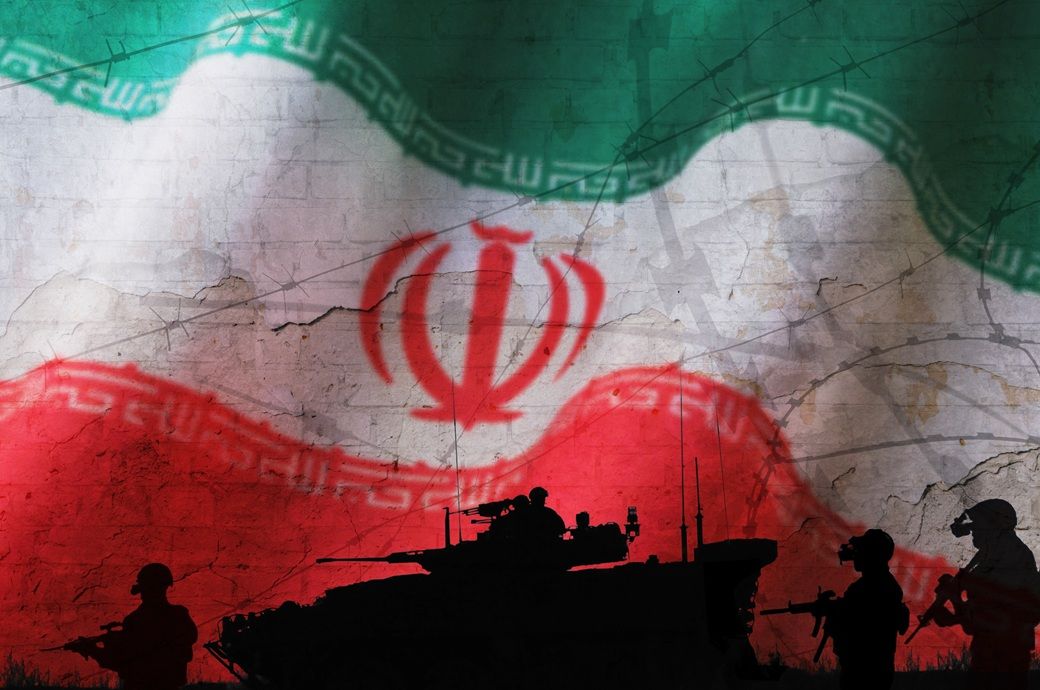
The Iran war poses a greater risk to Bangladesh, Pakistan and Sri Lanka, and to a lesser extent Laos, due to their high dependence on imported energy and limited reserves, S&P Global Ratings said.
These countries are particularly vulnerable to rising oil prices and potential supply disruptions.
All four governments are likely to see significant credit metric deteriorations, if the conflict is prolonged.
In our base case scenario, the war is unlikely to have a material impact on our sovereign ratings on these countries, but a more prolonged price and supply shock in global energy markets could cause more pronounced credit damage.
Pakistan, Sri Lanka, and Bangladesh are showing signs of economic recovery. The three countries have made progress, but sustained high energy prices and potential disruptions to trade and remittances could derail their fragile economies.
S&P Global Ratings believes the higher-income Asia-Pacific (APAC) economies are better placed to weather temporary disruptions to oil and gas supply from the Middle East.
Even where they are highly dependent on imported energy, they generally have more significant oil reserves to meet the shortfall in imports. They also have financial resources to acquire available supply in the spot oil and gas markets to secure needed energy, the rating agency noted.
Lower-income economies in the region do not enjoy such flexibility. The sovereign ratings on some may face pressure if the supply disruption persists longer than our assumptions. Bangladesh, Laos, Pakistan and Sri Lanka are among this group. These economies have one thing in common: a high dependence on imported energy products.
The Middle East war is likely to have a more severe impact on these economies, due to their fuel import bills, and generally weaker fiscal and external reserves to withstand supply shortages and high oil prices.
Among the four sovereigns, Laos is likely to fare better due to the dominance of hydropower in its energy mix.
Bangladesh, with government revenues at only around 9 per cent of gross domestic product, has fewer options to cap electricity and fuel prices through fiscal means.
All four governments are likely to see significant credit metric deteriorations, through inflation and currency channels, if the Middle East conflict is prolonged. However, the impact on the agency’s ratings on these sovereigns may be limited, as the generally low rating levels have already captured a significant share of the risks.
S&P Global Ratings’ base case for the Middle East war assumes that elevated hostilities will persist into early April, with the Strait of Hormuz facing material disruptions.
Fibre2Fashion News Desk (DS)
On July 27, 2025, in Turnberry, Scotland, US President Donald Trump and European Commission President Ursula von der Leyen reached a deal on tariff and trade issues, outlined in a joint statement published on August 25.
EU Parliament members have adopted their position on two proposals implementing the tariff aspects of the EU-US Turnberry trade deal.
The texts, if agreed with EU members, will eliminate most tariffs on US industrial goods and offer preferential market access for many US seafood and agricultural goods.
The members strengthened the proposed suspension clause, and introduced ‘sunrise’ and ‘sunset’ clauses.
The texts, if agreed with EU member states, will eliminate most tariffs on US industrial goods and provide preferential market access for a wide range of US seafood and agricultural goods, in line with the commitments made in summer 2025 between the EU and the United States.
The MEPs strengthened the proposed suspension clause, which would allow the tariff preferences with the US to be suspended under a number of conditions.
For instance, the Commission would be able to propose suspending all or some trade preferences if the US were to impose additional tariffs exceeding the agreed 15-per cent ceiling, or any new duties on EU goods, a release from the Parliament said.
The suspension clause could also be activated if the US undermines the objectives of the deal, discriminated against EU economic operators, threatened member states’ territorial integrity, foreign and defence policies, or engaged in economic coercion, it noted.
The MEPs have introduced a ‘sunrise clause’ that means the new tariffs would only become effective if the US respects its commitments. These conditions include the US lowering its tariffs on EU products with a steel and aluminium content below 50 per cent, to a tariff of maximum 15 per cent.
Furthermore, for EU products with a steel and aluminium content of above 50 per cent, unless the US reduces its tariffs to a maximum of 15 per cent, EU tariff preferences for US exports of steel, aluminium and their derivative products would cease to apply six months after the entry into application of the regulation.
The members also agreed on an expiry date for the main regulation on March 31, 2028. This could only be extended via a new legislative proposal, to be submitted following a thorough impact assessment of the effects of the regulation.
The European Commission would be tasked with monitoring the impact of the new rules and would be able to suspend the new tariffs temporarily, should US imports reach a level that could cause serious harm to EU industry.
Fibre2Fashion News Desk (DS)

The uncertainty has increased noticeably, with the ongoing conflict involving Iran weighing heavily on corporate confidence. The escalation has effectively stalled hopes of a near-term economic recovery, particularly as energy markets remain volatile, ifo said in a press release.
In the manufacturing sector, sentiment declined after showing improvement in recent months. The drop was driven largely by a significant deterioration in expectations, while firms also reported a less favourable view of their current business situation. Energy-intensive industries were particularly affected, underscoring the pressure from elevated input costs.
Germany’s business sentiment weakened in March, with the ifo business climate index falling to 86.4 from 88.4 amid rising uncertainty and the Iran conflict dampening recovery hopes.
Manufacturing saw a sharp drop in expectations, especially in energy-intensive sectors.
Trade sentiment also declined due to inflation concerns, although current conditions remained relatively stable across sectors.
The trade sector also registered a decline in sentiment, primarily due to a more pessimistic outlook. Concerns over rising inflation among German consumers have led to weaker expectations in both wholesale and retail segments, signalling subdued demand conditions ahead.
Despite the gloomier outlook, businesses in the trade sector reported a slightly improved assessment of their current situation. This suggests that while present activity remains relatively stable, confidence in future performance is deteriorating.
Fibre2Fashion News Desk (SG)


It has never been easier to start investing. As more take advantage, should you?

Skip the TSA Line: Where to Find Travel by Bus, Train, and Boat

Illinois defense gets tough, ousts Houston to reach Elite Eight

-

 Entertainment1 week ago
Val Kilmer revived 1 year after death through AI
-

 Fashion6 days ago
China’s textile & apparel exports surge 17% to $50 bn in Jan-Feb 2026
-
 Business7 days ago
Flipkart group CFO to leave co amid IPO plans – The Times of India
-
 Business1 week ago
Video: The Effects of High Oil Prices
-

 Sports7 days ago
Rating Adidas’ 2026 World Cup away shirts: Argentina, Spain, Mexico and more
-

 Sports7 days ago
American Conference Commissioner Tim Pernetti thanks Trump for Army-Navy game executive order
-
Tech1 week ago
The Corsair 4000D RS PC Case Keeps Your System Cool
-

 Tech1 week ago
‘Uncanny Valley’: Nvidia’s ‘Super Bowl of AI,’ Tesla Disappoints, and Meta’s VR Metaverse ‘Shutdown’