

Business
What obesity drugmakers see next in the market: More pills, easier access and drug combinations


A pharmacist displays a box of Wegovy pills at a pharmacy in Provo, Utah, Jan. 15, 2026.
George Frey | Bloomberg | Getty Images
The future of the booming obesity drug market won’t hinge on drugs that deliver greater weight loss alone.
Top executives from drugmakers big and small told CNBC that the next phase of the space will be defined by a broader range of treatment options and improved access for patients. Those were among the themes that emerged at the annual JPMorgan Healthcare Conference in San Francisco during interviews with top brass from Eli Lilly, Novo Nordisk, Pfizer and other drugmakers.
“We really see the obesity market going from, in this year, a one-size-fits-all kind of idea to different medicines for different patients. We don’t have a crystal ball to know how that all sorts out,” Dan Skovronsky, Eli Lilly’s chief scientific officer, told CNBC in an interview at the conference.
“But I think by presenting people with options, they’ll pick for themselves with their doctors, and I think we want to have something for everyone,” he continued. “And we’re not done yet.”
Over the coming years, executives expect an expanding menu of obesity treatments that can be tailored to an individual patient’s needs — from pills and less-frequent injections to combination regimens and drugs designed to preserve muscle mass while promoting weight loss. Some also expect the direct-to-consumer market to become an even larger slice of the market, while hoping that hurdles preventing patients from getting treatment continue to fall.
Novo Nordisk and Eli Lilly are widely credited with establishing the market through their weekly GLP-1 injections for obesity and diabetes, which have surged in popularity in recent years. The next chapter is already taking shape, with Novo launching the first GLP-1 pill for obesity earlier this month and Lilly preparing to bring an oral option of its own to market later this year.
While those companies will play a critical role in how the space evolves, other players from pharma titan Pfizer to little-known upstarts could also enter the market — both threatening the two rivals’ sales dominance and offering more treatment alternatives for consumers.
While access remains a challenge for many patients, the ability to get GLP-1s has improved notably over the past year. Both Novo and Lilly have slashed cash prices for their injections and struck deals with President Donald Trump in November that will, for the first time, introduce Medicare coverage for obesity drugs later this year.
More treatment options and wider access could boost the case for analyst projections that say the weight loss and diabetes drug market could be worth almost $100 billion annually by the end of the decade.
In an interview at the conference, Novo Nordisk CEO Mike Doustdar said the company and Lilly currently have around 15 million people combined who have obesity taking GLP-1s. There is still a “long tail” to reaching the 110 million that are reportedly suffering from the condition, along with those who are overweight, he added.
In a May report, McKinsey said it expects a range of 25 to 50 million U.S. patients to use GLP-1s by 2030.
Here’s what executives say the future of the space could look like.
The pill potential
Pills have not yet proven more effective than injections.
Still, the consensus among executives is that oral options could expand the market, reaching entirely new patients. That may include people who are afraid of needles, as well as people who could benefit from existing injections but don’t view their condition as severe enough to warrant a weekly shot.
In an interview at the conference, Doustdar said it could also include people who travel frequently and can’t easily refrigerate injections.
“There is so much aligned exactly with this market expansion story … because there is a huge number of patients that are simply not interested in losing weight at the cost of injecting themselves,” Doustdar said.
The “real growth” and uptake of the pills is going to come from primary care physicians, who write the majority of prescriptions for Americans and typically prefer pills to injections, said Ray Stevens, the CEO of obesity market hopeful Structure Therapeutics.
He said he believes his company’s GLP-1 pill, aleniglipron, will be the third to enter the market after Eli Lilly’s and Novo Nordisk’s. Structure’s oral drug will enter Phase 3 trials this year.
Daily pills can offer more flexibility to patients. For example, Stevens said a patient could cut a pill in half to mitigate side effects on a day when they have an important meeting to attend.
Lilly’s Skovronsky said pills will also serve as a way for patients to “deescalate their therapy” after taking injections. The company in December released data showing that patients who initially took Wegovy or Zepbound shots maintained the majority of their weight loss after switching to Lilly’s pill.
“They say, ‘I’ve lost the weight, I’ve got this, so I can maintain this on my own with something less strong,'” Skovronsky said.
Structure is also developing an oral drugs that targets amylin, an emerging form of weight loss treatment that mimics a hormone co-secreted with insulin in the pancreas to suppress appetite and reduce food intake. Novo is developing a medicine called amycretin, which targets both GLP-1 and amylin to offer potentially enhanced weight loss.
Mixing and matching drugs
Stevens said combination regimens are “going to be the next phase of the field.”
For example, Structure hopes to combine its oral GLP-1 and amylin drugs to achieve even greater weight loss than one alone would, which he said will likely be “one of the best combos of the future.” It’s too early to say which patients would be the best fit for that regimen, but Stevens said it could achieve “good tolerability, really good patient experience and good efficacy.”
He said the company is already working on manufacturing the two ingredients together in a single pill, which is similar to what Novo’s amycretin achieves.
But he said combination regimens can also help treat certain obesity-related conditions better than one product alone. That could look like combining a GLP-1 with one of the existing treatments for fatty liver disease.
“I feel like the winners are now starting to emerge for the monotherapy” treatments, he said. But Stevens said the treatment patients take will segment according to the other health conditions a person has on top of obesity, such as fatty liver disease, chronic kidney disease and cardiovascular disease.
Lilly’s upcoming pill is an oral GLP-1, but Skovronsky said the company can see the potential for a pill that targets that hormone along with another called GIP, since that’s a “preferred formulation.”
That’s how tirzepatide, the active ingredient in Lilly’s blockbuster obesity and diabetes injections, works. That drug has proven to be more effective than semaglutide, the active ingredient in Novo Nordisk’s rival injections, which only targets GLP-1.
Skovronsky said, “we’re working hard to create those medicines” in an oral form, but aren’t ready to disclose any details.
Pfizer inherited several experimental injections and pills with combination potential from its roughly $10 billion acquisition of the obesity biotech Metsera last year.
But Pfizer CEO Albert Bourla said the company is also developing an in-house oral drug that blocks the GIP receptor, which can significantly reduce side effects when combined with GLP-1.
“I have very high hopes that it will also differentiate,” Bourla said.
One biotech, Wave Life Sciences, also sees combinations as part of its broader strategy, its CEO Paul Bolno said in an interview at the conference.
Different weight loss methods
Wave is taking a different approach to weight loss, targeting how the body burns fat rather than suppressing appetite. The goal is to achieve comparable weight loss to GLP-1s, without the associated muscle loss, and with less frequent dosing of once or twice a year rather than weekly.
That push comes amid growing focus on the quality of weight loss with next-generation obesity drugs, as GLP-1 treatments have raised concerns around muscle loss, side effects and patient drop-offs.
Wave has an experimental injection that uses RNA technology to lower levels of a protein called activin E – a liver-produced protein that slows fat burning. By reducing that protein, Wave believes the drug can increase fat loss, particularly harmful visceral fat, while preserving lean muscle mass.
Bolno said the company is developing the injection, called WVE-007, as a monotherapy or a potential maintenance treatment that patients can switch to and take far less frequently after being on GLP-1s.
But he also sees the opportunity to combine the company’s injection with GLP-1s to “continue to drive benefits.”
“We can double the weight loss on GLP-1s in combination,” Bolno said, referring to what the company is seeing in preclinical research.
He said adding Wave’s injection on top of a GLP-1 won’t make it more difficult for patients to tolerate the treatment regimen, so it makes the company’s drug “very amenable to combination” options.
As for who can use Wave’s injection, Bolno said it will work for any patient since “this happens to be a target that’s actually in human genetics.”
The future of the industry will likely also include drugs that can achieve even greater weight loss than the current treatments on the market.
Lilly in December released the first late-stage data on an injectable drug called retatrutide, the highest dose of which achieved more than 28% weight loss at 68 weeks among patients who stayed on the treatment. Lilly will read out data on seven other Phase 3 trials on the drug this year.
Dubbed the “triple G” drug, retatrutide works by mimicking three hunger-regulating hormones — GLP-1, GIP and glucagon — rather than just one or two. That appears to have more potent effects on a person’s appetite and satisfaction with food than other treatments.
Skovronsky said the drug could serve patients who need additional weight loss or have other severe health conditions on top of obesity, such as arthritis knee pain.
Novo Nordisk is racing to catch up: In March, it agreed to pay up to $2 billion for the rights to an early experimental drug from Chinese drugmaker United Laboratories International. The newly acquired treatment is a clear potential competitor to retatrutide because it similarly uses a three-pronged approach to promoting weight loss and regulating blood sugar.
Patient access to drugs
The industry has made strides toward improving drug access for patients, and executives expect that will continue. The cash price of Novo’s pill is already the lowest seen on the market, at $149 for the starting dose and up to $299 for the higher doses.
GLP-1 injections are roughly $1,000 per month before insurance and without recent cash discounts.
Both Pfizer’s Bourla and Lilly’s Skovronsky said upcoming Medicare coverage of obesity drugs should also move the needle with coverage.
“Once the government starts covering it in Medicare, it probably will become more and more uncomfortable for employers to not — it’s that societal pressure,” Skovronsky said.
He also pointed to an “activation of consumers,” where patients are starting to call their employers and ask why their benefits don’t cover obesity drugs.
Drugmakers, researchers and scientists are also generating more data about the benefits of obesity drugs for health-care spending, which could help spur more employer coverage, Skovronsky said.
“So for employers, is there less absenteeism? Is there better productivity? Is there better medical costs?” he said. “The data’s coming in, and we’re seeing more and more of that.”
In terms of the direct-to-consumer channel, Skovronsky said it may become the “fastest-growing segment” of the space given the recent push for drugmakers to launch cash offerings.
Lilly was among the first companies to launch a direct-to-consumer platform in 2024 offering its obesity drug Zepbound at a discount, and Novo followed more than a year later.
Bourla estimated that the direct-to-consumer channel already makes up 30% of the obesity and diabetes drug market in the U.S. It could become closer to 90% or more of that market abroad, he added.
When asked about what the broader market will look like by 2030, Structure’s Stevens said he hopes access and affordability are no longer issues.
“I’m okay with the cost dropping because, to me, this has always been about volume and really trying to address a very large unmet need globally itself,” he said.



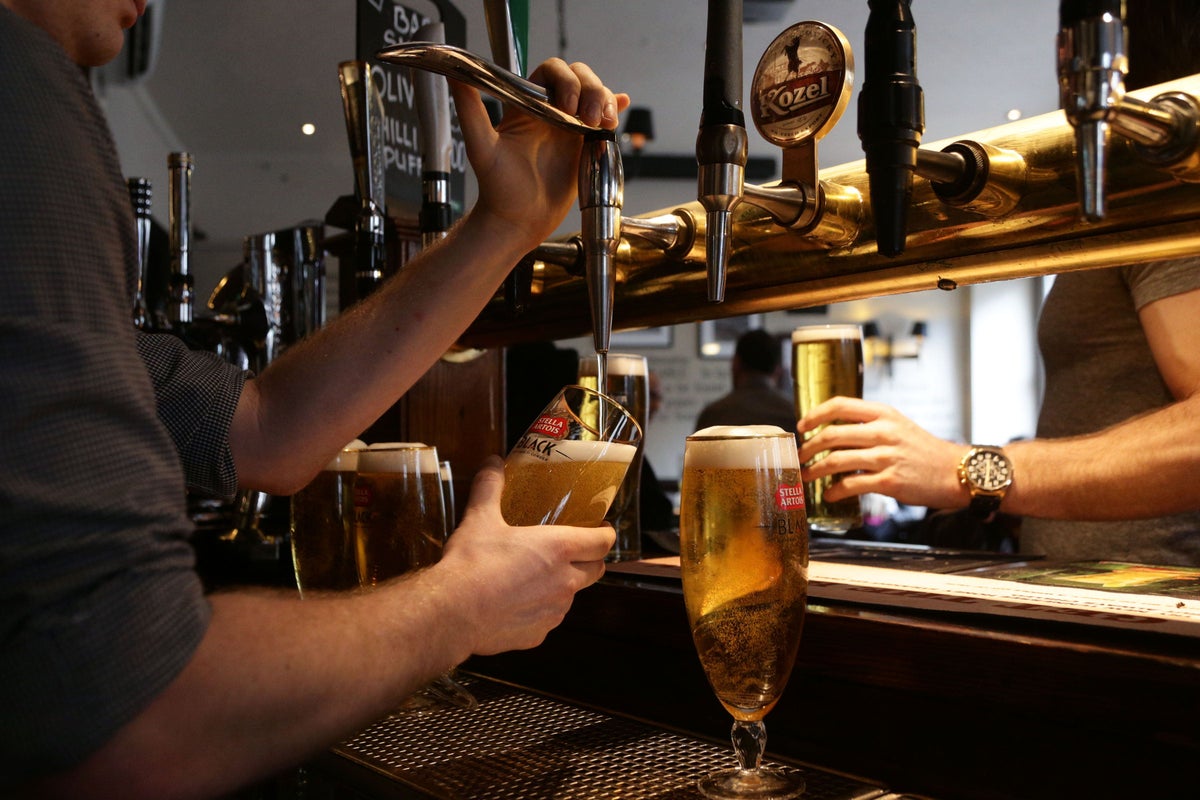
Growth in the UK’s services sector rebounded last month with business activity picking up, but firms face a “short-lived” recovery amid surging costs and lower demand linked to war in the Middle East, a new survey has shown.
Experts cautioned that the outlook for firms may be weaker after a rush of activity in April.
The S&P Global UK services PMI survey showed a reading of 52.7 in April, up from 50.5 the previous month.
Any reading above 50.0 means the sector is growing while any reading below signals it is contracting.
Activity across the industry, which spans businesses from hospitality and leisure to healthcare and transport, has been increasing for almost a year.
But while the latest reading marked an improvement from March – when the US-Israel’s conflict with Iran escalated – it signals a slower rate of growth than at the start of the year.
Businesses taking part in the survey, which is watched closely by economists, cited worries about intensifying pressures on inflation, global supply shortages and elevated borrowing costs as factors holding back business and consumer demand in April.
Some firms said export sales were lower due to disruptions to business travel and weaker demand in the Middle East.
Nevertheless, others pointed out resilient global demand for technology services while backlogs of work also decreased.
But the survey revealed that cost pressures ramped up for businesses in the service industry last month.
Costs for companies rose at the fastest pace since November 2022, with firms widely attributing the increased bills to fuel costs and higher prices for raw materials including metals and plastics, which have been driven up by soaring energy prices since the start of the war.
Many firms also cited pressure from higher wages, following the increase to the national minimum wage at the start of April.
Tim Moore, economics director at S&P Global Market Intelligence, said April’s “modest recovery” for the industry could “easily prove short-lived as new business intakes remained subdued in comparison to the start of 2026”.
Mr Moore said: “Survey respondents widely noted that the Middle East conflict and subsequent global supply chain disruptions had weighed heavily on business and consumer confidence.”
Matt Swannell, chief economist for the Item Club, agreed that there were “already some signs that this jump will be short-lived as businesses reported little improvement in new work amidst weak domestic and foreign demand”.
“We think that the outlook for private sector activity is gloomier,” he went on.
“A sharp rise in inflation will cause households’ real incomes to fall and spending growth to slow.
“Supply chain disruption, rising costs and lingering geopolitical uncertainty will cause some businesses to put their investment plans on hold.”
Mr Swannell added that the survey suggests the Bank of England will prefer to keep interest rates held steady for the rest of the year, but that there was the potential for a hike in the summer.
Thomas Pugh, chief economist at RSM UK, said firms showed “resilience” last month, adding: “However, the rebound is partly fuelled by a rush of activity before price rises and supply shortages start to bite.”
He said future interest rate hikes were “more likely” as a result, but that “everything depends on how energy prices move going forward”.

Oil prices fell and Asian stock markets surged to record highs on Wednesday after Donald Trump said negotiations with Iran were making “great progress” toward a final agreement and announced a brief pause in US operations escorting ships through the Strait of Hormuz.
Brent crude tumbled 1.2 per cent to $108.51 a barrel, still well above its roughly $70 price before the war began, but lower than the highs of recent weeks.
Wall Street had already set records on Tuesday, with the S&P 500 rising 0.8 per cent to a new all-time high and the Nasdaq gaining 1 per cent, as oil pulled back sharply after briefly crossing $115 on Monday.
Strong corporate earnings underpinned the Wall Street rally. DuPont surged 8.4 per cent after the chemical giant reported better-than-expected first-quarter profits and raised its full-year forecasts, even as it acknowledged some impact from logistics disruptions in the Middle East.
Pinterest jumped 6.9 per cent after its number of active monthly users rose 11 per cent to 631 million, beating Wall Street’s sales and profit targets. AB InBev climbed 8.7 per cent after topping profit forecasts on growth for its Corona, Stella Artois and Michelob Ultra brands. “Cheers to beer,” chief executive Michel Doukeris said.
Palantir fell 6.9 per cent despite beating expectations, as its stock continued to struggle on worries about increased competition. American Electric Power rose 1.8 per cent and Cummins added 2.8 per cent after both reported stronger-than-expected results.
In Europe, markets were mixed. The CAC 40 rose 1.1 per cent in Paris while the FTSE 100 fell 1.4 per cent in London. Hong Kong’s Hang Seng fell 0.8 per cent. Many Asian markets were closed for holidays.
The momentum carried into Asia on Wednesday, where MSCI‘s broadest index of Asia-Pacific shares outside Japan jumped 2.3 per cent to a fresh all-time high. South Korea’s Kospi surged 5.1 per cent, clearing the 7,000 mark for the first time, as Samsung Electronics jumped 12 per cent and crossed a $1 trillion market valuation, overtaking Berkshire Hathaway.
The AI trade drove much of the enthusiasm. Advanced Micro Devices jumped 16.5 per cent in extended trading after forecasting second-quarter revenue above Wall Street expectations on strong demand from cloud computing companies accelerating spending on AI infrastructure.
“Due to the capital expenditure we are seeing from hyperscalers in the US, the earnings growth trajectory for sectors such as semiconductors, tech hardware, industrials and materials in Asia exceeds anything I have seen in a long time,” Rushil Khanna, head of equity investments for Asia at Ostrum, an affiliate of Natixis Investment Managers, told Reuters. “This capex is leading to material value creation in Asia as the provider of the picks and shovels to the AI ecosystem.”
The diplomatic backdrop of US-Iran talks also helped the markets. Mr Trump said he would briefly pause US operations escorting ships through the strait, which has been effectively closed since Iran blockaded it in late February, triggering a global energy shock. US defence secretary Pete Hegseth confirmed the ceasefire remained in place despite the US and Iran exchanging fire the previous day.
“Markets embraced a sense of calm and stability overnight, with the risk of escalation in the Middle East conflict viewed as having diminished,” analysts from Westpac wrote in a note.
Despite the optimism, analysts cautioned that significant uncertainties remained this week.
“A fragile ceasefire, a novel blockade, Friday’s NFP and diminishing odds of a US-Iran peace deal are all converging this week,” said Lukman Otunuga, head of market research at trading broker FXTM.
“Gold may find itself on the losing end of conflict-induced inflation fears, even as uncertainty grips markets.”
Gold rose 1.2 per cent to $4,609.59. The dollar index slipped 0.1 per cent, snapping a three-day winning streak, with the euro rising to $1.1724 and sterling to $1.3577.
The Australian dollar climbed 0.6 per cent to its highest since June 2022, buoyed by improved risk appetite and underpinned by a third consecutive interest rate rise from the Reserve Bank of Australia, which cited the Middle East conflict’s impact on fuel and commodity prices. The ten-year US Treasury yield held flat at 4.424 per cent.

Josh D’Amaro, chairman of Disney Experiences, speaks during the grand opening ceremony of Shanghai Disney Resort’s Zootopia-themed land on December 19, 2023 in Shanghai, China.
Vcg | Visual China Group | Getty Images
Disney will release its fiscal second-quarter results before the bell Wednesday. It will mark the first earnings call led by Josh D’Amaro since the former parks executive took over as CEO in March.
Under the new CEO, who replaced Bob Iger after his two turns at the helm totaling roughly 20 years, Disney has already been through a round of layoffs and has faced mounting political pressure surrounding its late night TV host Jimmy Kimmel.
“This earnings call marks Disney’s first real gut‑check under D’Amaro’s leadership, and a test of how his theme‑parks roots translate, or don’t, into the rest of the business,” said Mike Proulx, research director at Forrester. “Streaming is still the main event, but the market is consolidating. A potential combination of Paramount+ and HBO Max would reset the competitive calculus for Disney+.”
Streaming and TV results have gobbled up much of the focus for media investors across the board as the industry faces significant upheaval and consolidation.
Here’s how Disney is expected to perform in its fiscal second quarter, according to LSEG:
- Earnings per share: $1.49 expected
- Revenue: $24.78 billion expected
Last quarter Disney stopped reporting some details for the entertainment segment — which is comprised of its traditional TV, streaming and theatrical releases — including the breakdown of revenue and operating income for each segment. The company has also stopped reporting quarterly streaming subscriber numbers.
The consumer shift from pay TV bundles to streaming has weighed on media companies for years, with both distribution and advertising profits continuously decreasing. Still, traditional TV remains a cash cow, and investors have been keen to see how and when streaming can make up for the declines.
Updates on the state of Disney’s theme parks, which are part of its experiences unit and the profit driver of the company, will also be of particular interest on Wednesday.
In February, Disney provided second-quarter guidance that called for “modest” growth in operating income for the experiences division due to international visitation headwinds at domestic parks. That forecast was issued before the U.S. and Israel launched attacks on Iran roughly two months ago, causing a surge in oil prices.
This story is developing. Please check back for updates.


Apple Will Pay $250 Million to Settle Lawsuit Over Siri’s AI Features
UK services industry faces ‘short-lived’ rebound as costs rise sharply

Moody’s raises Vietnam’s outlook to ‘positive’ from ‘stable’

A Brain Implant for Depression Is About to Be Tested in Humans

Pro wrestling star Steph De Lander reveals how colleague’s advice helped lead her to title triumph at ACW

‘I had £20,000 stolen and had to fight a 13-month fraud reporting rule to get it back’

-
 Tech1 week ago
A Brain Implant for Depression Is About to Be Tested in Humans
-
 Sports1 week ago
Pro wrestling star Steph De Lander reveals how colleague’s advice helped lead her to title triumph at ACW
-
Business1 week ago
‘I had £20,000 stolen and had to fight a 13-month fraud reporting rule to get it back’
-

 Entertainment1 week ago
Norway joins Type 26 Frigate Programme to boost NATO naval power
-

 Entertainment1 week ago
Melania Trump says ABC should ‘take a stand’ on late-night host Kimmel
-

 Tech1 week ago
Are tech leaders risking a cyber resourcing crisis? | Computer Weekly
-
 Business6 days ago
PSX plunges over 4,800 points | The Express Tribune
-
 Business1 week ago
Starmer says ‘tide could be turning’ on shoplifting epidemic