

Business
What taxes apply to electric vehicles and when will new petrol and diesel cars be banned?


Katy AustinTransport correspondent
 Getty Images
A new tax for drivers of electric vehicles (EVs) could be announced by Chancellor Rachel Reeves in her 26 November Budget.
“Fuel duty covers petrol and diesel, but there’s no equivalent for electric vehicles,” a government spokesperson told the BBC. “We want a fairer system for all drivers.”
All new cars will have to be electric or hybrid from 2030, when a ban on the sale of new petrol and diesel cars comes into force.
Why are new petrol and diesel cars being banned?
The move is part of UK government efforts to meet a legally binding aim of achieving “net zero” by 2050. That means not emitting more greenhouse gases than are removed from the atmosphere.
Domestic transport – including cars, buses and trains – was responsible for more than a quarter of emissions in 2023, making it the largest emitting sector.
Ministers have committed to banning the sale of new petrol and diesel cars in 2030.
That means all new cars will have to be electric, or hybrid – with both an internal combustion engine and electric motor.
UK drivers will be able to buy new hybrids until 2035.
The EU won’t ban sales of new fossil fuel-powered cars until 2035.
What taxes apply to electric vehicles?
There is no electric vehicle equivalent of the fuel duty paid by drivers of petrol and diesel cars.
But on 1 April 2025, Vehicle Excise Duty became payable on EVs for the first time.
For new cars, the payment in the first year is £10, rising to the standard rate of £195 in the second year. Those registered between April 2017 and March 2025 pay £195 from the start.
Electric cars registered after that date and costing more than £40,000 are also subject to the “luxury car tax” of £425 per year. This is payable for five years from the second time the vehicle is taxed.
Ahead of the Budget, the Treasury has reportedly been weighing up whether to consult on a “pay-per-mile” tax on EVs from 2028.
The Telegraph reported that EV drivers could be charged 3p per mile, on top of other road taxes, amounting to an extra £12 on a journey from London to Edinburgh.
It is unclear how such a scheme would be enforced, with reports that motorists would pay according to their own estimate of how much they expected to drive.
The AA said the government needed to “tread carefully” to avoid slowing down the transition to EVs. Ford said taxes on electric vehicles may put drivers off buying them at a time when demand has “lost momentum”.
In London, drivers of electric vehicles will have to pay the congestion charge from 2026.
How many electric cars are on UK roads?
UK sales of new fully electric cars have been growing steadily.
The number registered rose from 29,800 in October 2024 to 36,800 in October 2025, car industry trade association the SMMT said.
The figure was equivalent to a quarter of new car registrations. The goal is to increase this to 80% by 2030.
The second hand market is also growing, but from a low base. SMMT data shows that about 80,600 used electric cars were purchased between July and September. That’s 4% of second hand sales.
Analysis by ZapMap, an electric charger mapper and data provider, suggests that there are now at least 1.7 million fully electric cars on UK roads, about 5 per cent of the total.
Cars with combustion engines still make up the vast majority of cars and people will still be able to drive them after 2035.
How much do electric cars cost to buy and run?
The government recently announced a subsidy scheme for new EVs. Grants are available of up to £3,750 for eligible models priced at £37,000 or below.
It is hoped the scheme will make it easier for people to switch to electric.
The AA said drivers “frequently tell us that the upfront costs of new EVs are a stumbling block to making the switch to electric”.
For second hand cars, online marketplace Autotrader says it’s “seeing plenty of examples where electric cars are the same price or lower than similar petrol models, specifically in the three to five-year age group”.
In addition, about 680,800 electric cars are now being leased, the British Vehicle and Leasing Association (BVRLA) said. That’s nearly half of all leases.


When it comes to running costs, electric charging can be cheaper than petrol or diesel. But it depends where you charge.
Charging at home – for those who have the option – is significantly cheaper, especially on an off-peak tariff.
Home charging qualifies for the 5% rate of VAT on domestic energy, compared to the standard rate of 20% for public charging.
Prices can vary a lot when using public charge points, depending on factors including the speed of the charger and the time of day. Certain apps offer discounted charging rates.
The fastest, “Ultra-rapid” charging on the public network may even work out as more expensive per mile than fossil fuels.
Motoring groups say electric cars are generally cheaper to maintain.
Is there enough charging infrastructure?
The range of electric cars has improved, as has the number of public charge points. But concerns remain about having enough of them around the country.
Data from Zapmap shows almost 87,000 across the UK, in about 44,000 locations. Those include places like supermarket car parks and lamppost chargers.
In March, a report by the Public Accounts Committee of MPs said availability on motorways was still “patchy”.
It said the government was on track to reach the minimum 300,000 points needed by 2030. However, it added that “too few have been installed outside of the South East and London, which currently host 43% of all charge points”.
The report also raised “concerns around the impact on drivers with disabilities, those without access to off street parking and disadvantaged groups”.

GST collections: India’s net Goods and Services Tax (GST) collections increased to Rs 1.78 lakh crore in March 2026, marking a rise of 8.2% compared to the previous month, according to official figures released on Wednesday.Gross GST revenue for March stood at Rs 2 lakh crore, which is an 8.8% increase over the same month last year.Abhishek Jain, Indirect Tax Head & Partner, KPMG says, “GST collections continue to show steady 9% annual growth, supported by strong import activity this month and consistent compliance. While export refunds have eased this month but remain healthy overall for the year”Refunds during the month totalled Rs 0.22 lakh crore, up 13.8% on a year-on-year basis, which resulted in net GST collections of Rs 1.78 lakh crore.Domestic GST revenue reached Rs 1.46 lakh crore, registering a growth of 5.9%, while revenue from imports was recorded at Rs 0.54 lakh crore, rising sharply by 17.8% during the period.Post-settlement GST figures across states presented a varied trend. While industrially advanced states recorded strong growth, several others reported a decline.Maharashtra contributed the highest amount to the overall collections at Rs 0.13 lakh crore on a pre-settlement basis, followed by Karnataka and Gujarat.Among states showing an increase in post-settlement SGST collections were Himachal Pradesh, Punjab, Uttarakhand, Haryana, Rajasthan, Uttar Pradesh, Bihar, Gujarat, Maharashtra, Karnataka, Kerala, Tamil Nadu, Telangana and Andhra Pradesh, among others.On the other hand, states such as Jammu and Kashmir, Chandigarh, Delhi, Arunachal Pradesh, Meghalaya, Assam, West Bengal, Jharkhand, Odisha, Chhattisgarh and Madhya Pradesh, among others, registered a decline in post-settlement SGST revenues.
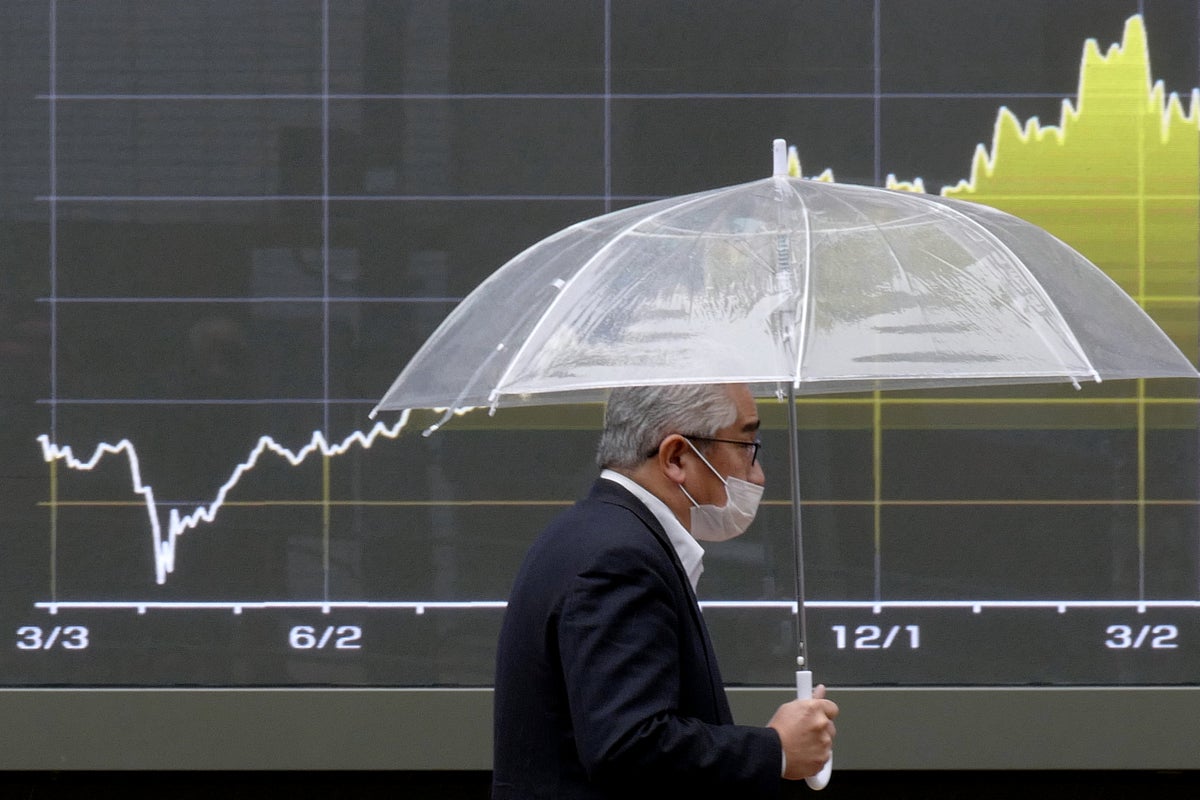
Business sentiment among major Japanese manufacturers rose from 16 to 17 in March, according to the Bank of Japan’s quarterly survey released on Wednesday.
The improvement in the so-called diffusion index in the closely watched “tankan” report, recorded for the fourth quarter straight, comes even as worries grow about Japan’s economic growth and oil supplies because of the US-Israeli war on Iran.
The survey is an indicator of companies foreseeing good conditions minus those feeling pessimistic.
The index for large non-manufacturers, such as the service sector, stood unchanged from the last tankan at 36.
Japan’s inflation has so far remained relatively moderate, but worries are growing about prices at the gas stands and other products. Investors and consumers alike are filled with uncertainty about how much longer the war may last and what US president Donald Trump might say next. Japan’s benchmark Nikkei 225 has gyrated wildly in recent weeks.
Analysts say the Bank of Japan may start to raise interest rates because of concerns about inflation, given the soaring energy costs and declining yen, two elements that greatly affect living costs for the average Japanese consumer.
Historically, Japan has benefited from a weak yen because of its giant exports, exemplified in autos and electronics. A weak yen raises the value of exports’ earnings when converted into yen.
But in recent years, a weak yen is working as a negative, as resource-poor Japan imports much of its energy, as well as other key products such as food and manufacturing components.
The US dollar has been soaring against the yen lately.
Japan’s central bank had a negative interest rate policy for years to fight deflation until it normalised policy in 2024. It kept the rate unchanged at 0.75 per cent in March. The next Bank of Japan monetary policy board meeting is set for April 27 and 28.

The price of Brent crude oil to be delivered in May rose by a record 64% in March as the conflict disrupted energy supplies.
Source link


China’s Anta Sports posts record $11.62 bn revenue in 2025
GST collections rise 8.2% in March 2026 to hit Rs 1.78 lakh crore – The Times of India

UK commits $1.25 mn to trade facilitation programme for 2026–29

Afghanistan announces release of detained US citizen

Property Play: Home flippers see smallest profits since the Great Recession, real estate data firm says

Broadcast industry CEO says consolidation is ‘essential’ to compete for NFL soaring media rights prices

-
 Politics1 week ago
Afghanistan announces release of detained US citizen
-

 Entertainment1 week ago
UN warns migratory freshwater fish numbers are spiralling
-
Business1 week ago
Property Play: Home flippers see smallest profits since the Great Recession, real estate data firm says
-
 Sports1 week ago
Broadcast industry CEO says consolidation is ‘essential’ to compete for NFL soaring media rights prices
-

 Tech1 week ago
Can a Home Appliance Fix the Problem of Soft-Plastic Waste?
-
 Business1 week ago
Gold prices soar in Pakistan – SUCH TV
-

 Fashion1 week ago
ICE cotton slips on weaker crude, profit booking
-
 Business1 week ago
More women are entering wealth management, but few are in advisory roles, study finds