

Entertainment
What was the SCO summit about?


The Shanghai Cooperation Organisation’s summit in Beijing unfolded in a climate of heightened regional expectations.
What has long been viewed as a largely rhetorical platform for Eurasian cooperation is being steadily reshaped by Beijing and Moscow into something more developmentally oriented.
At the meeting, China’s leadership announced steps to establish an SCO development bank and pledged a new line of credit and soft loans spread over the next three years.
The amount may not be impressive in global financial terms, but for member states facing economic distress, including Pakistan, the message was unmistakable: this forum will not only discuss security and multipolarity but also begin to channel funds and investment into tangible projects.
For Islamabad, that promise comes at a moment when breathing space is scarce, and every dollar counts.
The summit was also notable for the contrast in tone between the addresses of Indian Prime Minister Narendra Modi and Pakistan’s Prime Minister Shehbaz Sharif.
Modi, appearing in China for the first time since the violent border standoff in Ladakh in 2020, stuck closely to the themes India has consistently raised in such gatherings. He spoke of terrorism as a universal menace, making it clear that states supporting violent networks would eventually face consequences.
He also repeated India’s reservations about cross-border infrastructure corridors that do not respect sovereignty, a veiled reference to the Belt and Road Initiative and specifically the CPEC alignment through Gilgit-Baltistan.
Modi used the occasion to highlight that India’s preferred model of regional connectivity lies in ventures like the Chabahar port project and the International North–South Transport Corridor, which, in Delhi’s view, builds trust rather than infringes upon contested borders.
Shehbaz Sharif, on the other hand, echoed the language Beijing has made central to the SCO: respect for territorial integrity, mutual development and inclusive cooperation.
By carefully framing Pakistan’s position around sovereignty while simultaneously leaning into the promise of deeper industrial, technological and agricultural cooperation, his speech aimed to neutralise India’s recurring critique and reframe Pakistan as an indispensable partner in the bloc’s new economic chapter.
Beyond the plenary, Sharif’s engagements in Tianjin and bilateral meetings reinforced the message that Islamabad wants to turn the second phase of CPEC into a story not merely of roads and power plants but of skills, factories and innovation.
It was a script designed to cast Pakistan not as a supplicant but as a willing participant in the SCO’s evolution. Both leaders, in their own way, acknowledged the same reality: the SCO is drifting away from its early identity as a security platform and becoming a forum where development, connectivity and financial support take centre stage.
But they diverged sharply on what this should mean. India views the initiative as risky if it legitimises projects that trespass into disputed territory, and it insists that security threats like terrorism must remain the group’s central concern.
Pakistan, by contrast, views the new financing and project-based emphasis as an opportunity to alleviate its fiscal burdens, expand CPEC into sectors that generate exports and jobs, and gain legitimacy as a key corridor state.
For Islamabad, the week offered a rare convergence of opportunity. With Chinese backing, the SCO’s proposed lending mechanisms could allow Pakistan to access alternatives beyond its exhausting cycle of IMF negotiations.
Even relatively small credit lines, if coupled with better governance, could jump-start long-promised special economic zones or fund modernisation in agriculture. The real challenge lies not in announcements but in delivery. To ensure that procurement is transparent, projects are not politicised and infrastructure actually produces productivity gains rather than white elephants.
Sharif’s government now faces the hard task of matching external pledges with internal reform.
India’s approach, in turn, was cautious but uncompromising. By restating its well-known position that connectivity cannot be imposed without consent and by again prioritising terrorism, Modi ensured that Delhi’s record remained intact.
Yet the SCO’s culture of consensus and its China-led orientation mean India’s sharpest concerns are often diluted in final communiques. Delhi risked appearing like a participant whose voice is registered but not amplified. Its answer has been to champion its own corridors – Chabahar and INSTC – but the credibility of these projects depends on cargo flows and timetables, not only summit speeches.
The International North–South Transport Corridor (INSTC) is a multimodal trade route (combining sea, rail and road) designed to connect India, Iran, Russia, Central Asia and Europe in a shorter, faster and more cost-effective manner than traditional maritime routes.
It was first conceived in 2000 through an agreement between India, Iran, and Russia, and later expanded to include more than a dozen member states, including Azerbaijan, Armenia, Kazakhstan and others.
Unless India can demonstrate that its preferred routes can deliver faster and cheaper access to Central Asia, the risk is that the SCO’s economic turn leaves Delhi more marginal than central. The politics around the summit were, as usual, fuelled by optics. Clips of leaders standing together, exchanging brief greetings or attending ceremonial events drew disproportionate attention.
Some Indian outlets celebrated images of Modi in conversation with Xi and Putin. Some Pakistani channels stressed Sharif’s presence alongside the Chinese president at commemorative events.
But the deeper story lay in the speeches and in the chair’s financial announcements. China reinforced its role as the primary architect of the SCO’s new phase, while Pakistan positioned itself as a beneficiary and partner in that design.
India maintained its principled reservations, ensuring it could not be accused of disengagement. What, then, might each country gain or lose from this shift? For Pakistan, the potential gain is twofold: fresh financial commitments that diversify its external options, and diplomatic cover in a bloc that amplifies its partnership with China.
The symbolism of being cast as central to SCO connectivity is valuable at a time when domestic pressures mount. For India, the risk is not immediate isolation but gradual erosion of influence.
Its insistence on sovereignty resonates at home and among some external partners, but within a forum where Beijing sets the tempo, Moscow provides backing and Central Asian states are eager for investment, India’s objections can seem like background noise unless matched with viable alternatives.
Ultimately, the SCO in Beijing underlined that South Asia’s two rivals are playing different games on the same stage. Pakistan seeks capital, legitimacy and partnership through CPEC 2.0, while India insists on principle, sovereignty and caution in security. China, meanwhile, ensures that both arguments must be conducted in an arena it increasingly dominates.
The outcome of this contest will not be decided by summit speeches alone. For Pakistan, success depends on whether external pledges translate into functioning industrial zones, better-managed power systems and skills development. For India, it rests on whether its alternative corridors move from blueprint to functioning trade arteries.
The lesson for Pakistan is to welcome new finance but remain vigilant about the conditions, even when they are not spelt out as explicitly as those in IMF programmes.
Only when external support is tied to internal reform has Pakistan seen sustainable growth. The lesson for India is that repeating its red lines is insufficient; it must prove through real infrastructure and trade that its model of connectivity is more viable than Beijing’s.
Both will have to do more than talk if they are to convert summit presence into a durable advantage. The SCO may not rival BRICS or replace Western financial institutions, but it has outgrown its reputation as a mere photo-op. It is becoming a forum where resources, politics, and strategy intersect just enough to shape outcomes.
Pakistan left Beijing with promises of money and the aura of partnership. India is left with a reiteration of principles that guard its red lines but do not shape the bloc’s trajectory.
In the shifting geometry of Eurasia, one neighbour appears to have gained a little room to manoeuvre, the other a reminder of its constraints. Both, however, still determine their altitude through the work they do at home.
Disclaimer: The viewpoints expressed in this piece are the writer’s own and don’t necessarily reflect Geo.tv’s editorial policy.
The writer holds a PhD from the University of Birmingham, UK. He posts @NaazirMahmood and can be reached at:[email protected]
Originally published in The News
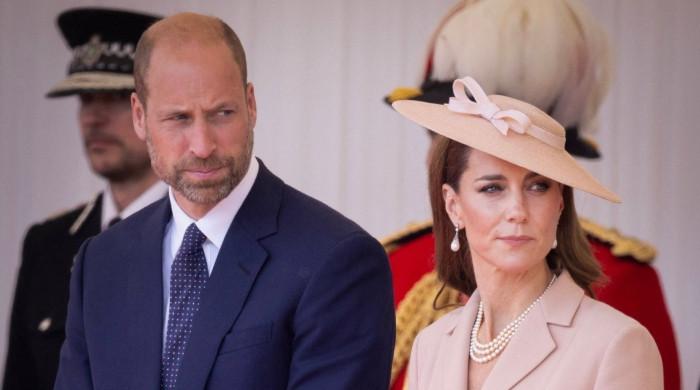
Prince William and Princess Kate made it clear in front of the royal family that they are distancing themselves from Andrew Mountbatten-Windsor and Sarah Ferguson’s daughters.
The future King and Queen plan to lead the royals by focusing on accountability and transparency in their reign.
Princess Beatrice and Princess Eugenie, who were mentioned in shocking emails of Epstein files, have been losing their royal connections just like their parents.
Despite Andrew’s fallout, the sisters were invited by King Charles to celebrate Christmas last year with the royal family at Sandringham.
But the Daily Mail reported that William and Catherine did not give any gifts to Beatrice and Eugenie during the royal gathering.
The source shared, “Notably, there were no presents under the Sandringham tree [this year] for Beatrice and Eugenie from William and Kate – something everyone pretended not to notice.”
It has been confirmed by several royal commentators that William and Catherine are keeping the York sisters at arm’s length.
“William and Kate were apparently polite but stand-offish,” a source said.
Emily Nash said that, like William, the Princess of Wales, “is very aware of public opinion and the risk that this scandal poses to the monarchy’s reputation.”
In order to safeguard the firm, Prince William and Princess Kate aim to go forward with unproblematic royal members.
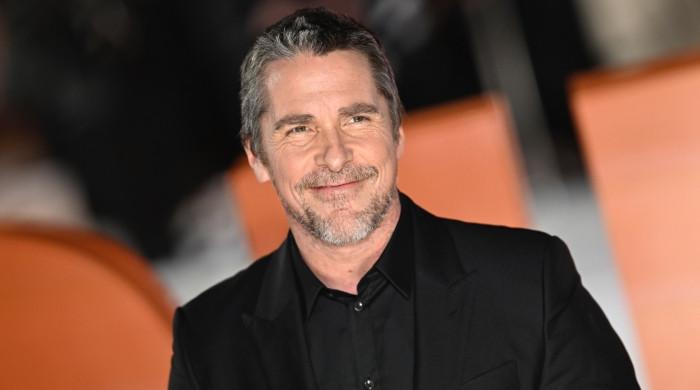
You’d think someone like Christian Bale – an Oscar winner with decades of iconic performances – would spend his downtime watching movies. Turns out… not really.
While attending the New York City premiere of The Bride! On March 3 at The Rose Theater at Jazz at Lincoln Center, the 52-year-old actor made a surprisingly honest confession: he’s actually pretty behind on film watching.
Case in point? He still hasn’t seen Jacob Elordi play Frankenstein in Guillermo del Toro’s upcoming 2025 adaptation of Frankenstein – even though Bale is portraying Frankenstein’s monster himself in The Bride!.
“I hear it’s fantastic,” Bale said.
Then he explained the real reason.
“I just don’t watch that many movies.”
And Elordi’s monster isn’t the only performance he’s missed lately. Bale admitted he also hasn’t seen his The Bride! Co-star Jessie Buckley in Hamnet – a role that’s been generating major awards buzz ahead of the 98th Academy Awards.
“I just know Jessie as The Bride,” he joked.
Buckley, for her part, clearly doesn’t have the same problem keeping up with Blae’s work.
In fact, she’s a full-blown fan.
“I mean, The Fighter, I think, is extraordinary. The Machinist, I mean, I don’t think anybody has created a character like that, that he has,” she said.
Then came the playful compliment every actor probably wishes they’d hear.
“He annoyingly never does a bad performance.”
Buckley added that sharing scenes with Bale raises the bar instantly.
“When you step onto set with Christian, you’re going to work… but I love him dearly.”
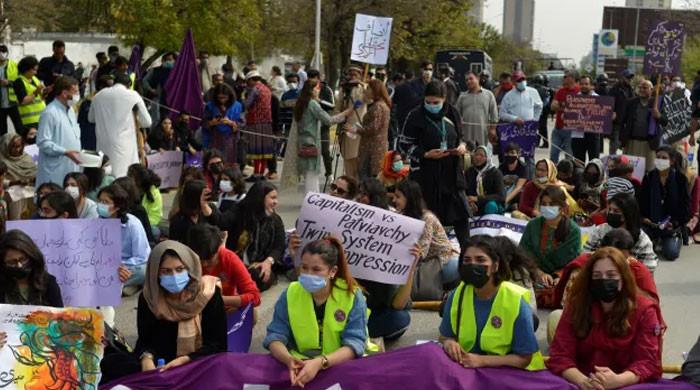
On International Women’s Day 2026, we are reminded that the future of Pakistan and Pakistani women is inseparable from the empowerment of its girls. When we invest in girls, we don’t just change individual lives; we shape the trajectory of economies, societies and nations.
Today, 54 million girls under the age of 18 live in Pakistan, and each day, around 9,200 girls are born into a world where survival, education and protection are far from guaranteed. For too many girls, the journey from vulnerability to opportunity is marked by systemic barriers that begin on day one.
Survival, especially in the early years, is the first barrier.
In Pakistan, 40% of children under five are stunted due to malnutrition, a condition that undermines brain development, weakens immunity and limits lifelong potential. Stunting is linked to nearly three out of four under-five deaths.
Anaemia — affecting over half of adolescent girls and most pregnant women — worsens the consequences of early marriage and pregnancy, increasing the risk of premature and low-birth-weight babies with long-term setbacks for children’s growth and cognitive development. Before many girls ever see the inside of a classroom, their futures are already at risk. The cost of under-investing in maternal and child health is not only measured in lives lost but in potential diminished.
Yet progress is possible. Shabira, a young girl born in Sindh during the devastating 2022 floods, became malnourished and dangerously ill. A mobile health team arrived in her village, screened her and provided essential treatment.
Within two months, her health dramatically improved. Her recovery is proof that timely intervention works. Investing in early childhood health and nutrition is not only lifesaving but also the foundation of human capital and future success.
Once survival is ensured, education becomes the next key to unlocking girls’ futures. Yet, 25 million children in Pakistan remain out of school, half of them are girls, one of the highest rates of educational exclusion in the world.
Even among those who attend, nearly 80% of children cannot read or understand age-appropriate texts by age 10, and many lack opportunities to advance their studies beyond grade 8. This gap reflects entrenched barriers like poverty, gender bias, and underfunded education systems that discourage adolescent girls from attending school.
During a visit to Khyber Pakhtunkhwa, I saw a drawing by an Afghan child: “Let me learn, let me fly”, alongside a white dove of peace. This plea for opportunity resonated deeply as I listened to children, adolescents and parents, all emphasising the central role that education plays in shaping their lives.
Education is not just a right; it is a multiplier. It drives economic growth, creates healthier communities and transforms societies. For Pakistani girls, each additional year of schooling increases their future earnings by up to 10%.
Educated girls marry later, have healthier children, and contribute significantly to their families and communities. Yet, many girls are still denied this fundamental right. Through informal setups, we can expand access to education for those excluded from formal schooling. These flexible, community-based pathways can allow girls to continue their education despite the odds.
But learning alone is not enough. Protection is equally vital.
Nearly one in five girls in Pakistan is married before the age of 18, three times the rate for boys. Early marriage cuts short education, limits economic prospects and traps girls in cycles of poverty.
Adolescence is a critical phase; the right investment can propel girls forward; neglect can leave them permanently behind. Currently, 56% of girls aged 15 to 24 are not in education, employment, or training, a stark contrast to the much lower figure for boys. This disparity represents lost potential at the national level.
The economic case for empowering girls is undeniable. Inclusion is not charity; it is smart economics. As Pakistan’s population is projected to exceed 340 million by 2050, investing in girls is essential to unlocking Pakistan’s demographic dividend. Aligning our policies, budgets and institutions around girls’ health, education and protection is not optional – it is essential for sustainable growth.
Let this decade be remembered not for incremental progress, but for catalytic transformation — systemic, social and sustained. Investing in girls and women is among the most strategic decisions Pakistan can make. It yields returns across generations.
As we mark International Women’s Day, we must move beyond celebration to commitment. The real measure of our resolve will not be in speeches delivered, but in policies enacted, resources allocated, and barriers dismantled. Every girl, regardless of her birthplace or background, deserves the chance to survive, learn, thrive, and lead.
There is reason for hope. Evidence shows that despite systemic barriers, increasing numbers of girls are reaching tertiary education — outperforming expectations and, in many contexts, their male peers. Imagine what would be possible if their potential were matched by equitable investment.
Girls are not born lacking potential; they are born with wings. Too often, it is society that chooses to clip them — through discrimination, neglect and underinvestment. Our task is not to give girls power; it is to remove the barriers that prevent them from using the power they already possess.
The future of Pakistan will be written by the opportunities we choose to create and collectively sustain for girls today. When we give girls the space to soar, we do more than uplift individuals — we elevate a nation.
The writer is the Unicef representative in Pakistan.
Disclaimer: The viewpoints expressed in this piece are the writer’s own and don’t necessarily reflect Geo.tv’s editorial policy.
Originally published in The News


Left-Handed People Are More Competitive, Says Science
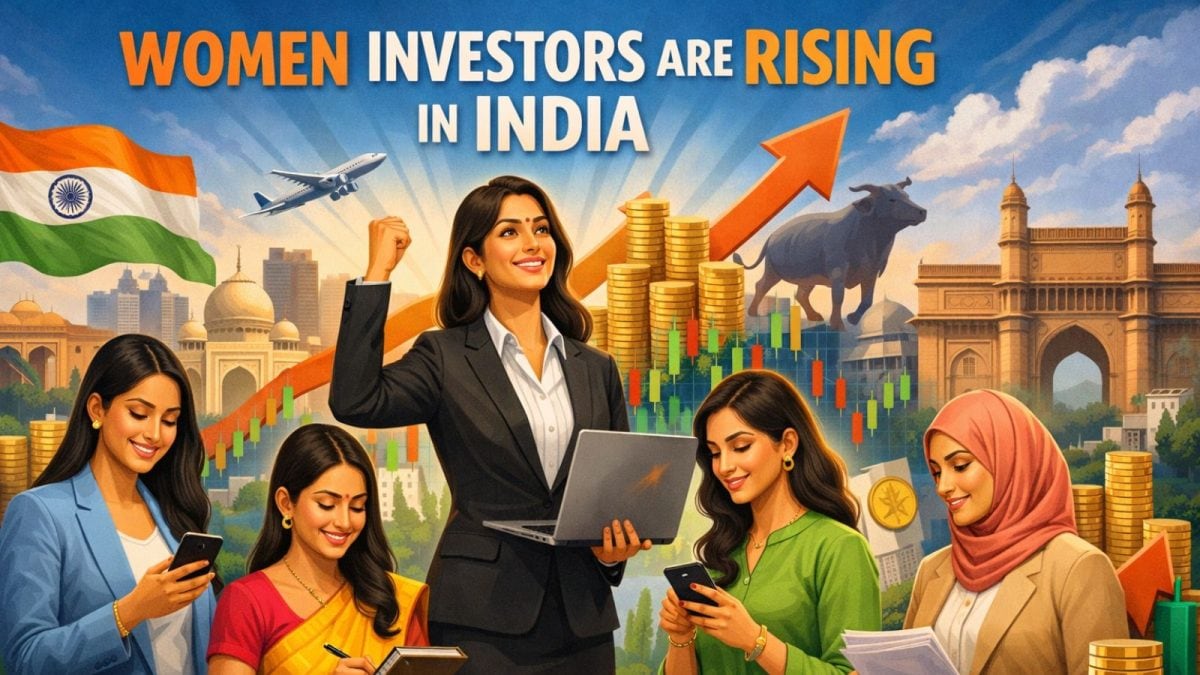
Women’s Day 2026: Female Investors Cut FD Allocation From 45% To 20%, Boost Equity Funds

Prince William, Kate declare distance from Beatrice, Eugenie at royal event

-

 Sports1 week ago
LPGA legend shares her feelings about US women’s Olympic wins: ‘Gets me really emotional’
-
 Entertainment1 week ago
Pakistan’s semi-final qualification scenario after England defeat New Zealand
-
 Fashion1 week ago
South Korea’s Misto Holdings completes planned leadership transition
-

 Entertainment1 week ago
Bobby J. Brown, “The Wire” and “Law & Order: SUV” actor, dies of smoke inhalation after reported fire
-
 Business1 week ago
Greggs to reveal trading amid pressure from cost of living and weight loss drugs
-
 Business1 week ago
CNBC To Merge TV And Digital News Operations, Nearly A Dozen Jobs To Be Cut: Report
-
 Entertainment1 week ago
What’s new in Pokémon? Every game, update, surprise from 30th anniversary event
-

 Fashion1 week ago
Italy’s Moncler FY25 revenue reaches $3.69 bn with resilient margins