

Fashion
What’s next for Vestiaire Collective after its change in leadership?

Published
January 13, 2026
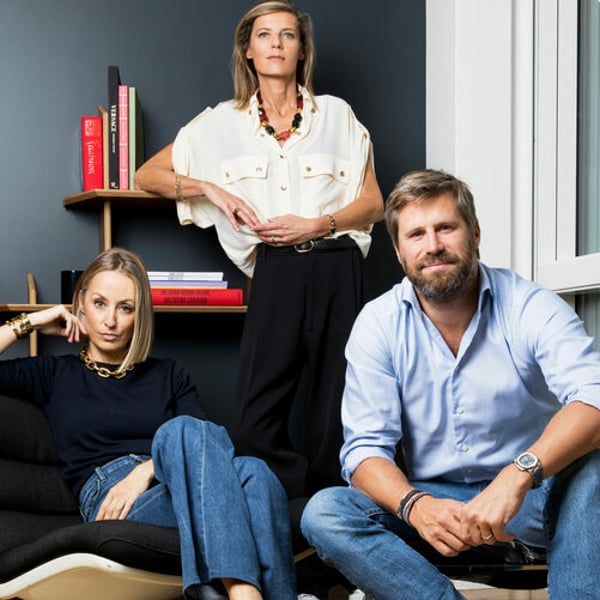
Premium and luxury second-hand platform Vestiaire Collective has parted ways with co-founder and president Fanny Moizant. Of the leadership trio assembled in 2019 with managing director Maximilian Bittner and fashion director Sophie Hersan, only the latter remains- the last co-founder still in post at the company. This changing of the guard raises questions about the strategy of Bernard Osta, who recently took the helm and plans to harness AI and marketing to strengthen the platform’s position.
Vestiaire Collective does not publish its figures. Its revenue was estimated at around €414 million for 2024. Operating in more than 70 countries, the platform claims 30,000 new listings per day and around 23 million members.
This shift in governance comes as the clothing sector undergoes a transition of its own. With demand slowing as consumers redirect spending to other categories, industry players are seeking to adapt. Vestiaire Collective must also contend with an online sales model which, after years of strong growth in the West, is no longer insulated from fluctuations in consumer spending.
Consumer spending, after a health crisis, an energy crisis, the invasion of Ukraine, and worsening geopolitical tensions, is now showing its limits even in the luxury market. This is a segment in which Vestiaire Collective has historically built a strong position against other second-hand fashion players, but where the ubiquitous Vinted is now seeking to compete with dedicated features.
“Vestiaire Collective has established itself as the benchmark marketplace in the highly attractive second-hand luxury fashion sector,” said Bernard Osta upon his appointment. “Together, we will continue to transform fashion by giving a second life to the most coveted pieces, in the service of a more sustainable model.”
A study by the French Federation of Circular Fashion (FMC) estimated last year that the European second-hand fashion market would grow by 8.5% per year to reach €26 billion in 2030, compared with €15.9 billion in 2024. These gains will, more than ever, have to be captured from the new-goods market, underpinned by significant investment in technology and communications.
AI and marketing
Like many marketplaces, the French company is betting heavily on artificial intelligence, both to rationalise costs- at a time when investors are closely scrutinising return on investment (ROI)- and to streamline its processes, as AI tools are now capable of purchasing on third-party sites on behalf of customers.

It is a pivot to AI that Vestiaire Collective has already been preparing. At the end of 2024, the company announced its first two AI-powered features, focused on search and recommendations.
But the move towards AI was marked above all by the hiring of Stacia Carr, previously vice president of Fashion Customer Experience at Zalando, where she led engineering and applied sciences. Another heavyweight, Jim Freeman, a US tech figure with stints at Amazon and Zalando, has also joined the board.
“With the rise of AI, we have an extraordinary opportunity to accelerate our product roadmap, offer a more engaging customer experience and gain market share,” says Bernard Osta, whose company now sets out a “vast product roadmap powered by AI to improve the experience of buyers and sellers at an accelerated pace.”
International campaigns
The company also intends to boost its profile, and address a relative lack of brand awareness versus other second-hand players such as Lithuania’s Vinted and France’s Leboncoin. To this end, campaigns have been announced targeting Europe and the US as well as Asia-Pacific (APAC), under the leadership of Samina Virk, who took over as marketing director last July.

In its communications, the company can notably draw on the environmental benefits of reusing clothing. For several seasons, the site has rolled out hard-hitting campaigns showing global capitals and beaches covered in textile waste, and has even enlisted influencers in its fight against fast fashion, which is banned from its platform.
On the financial side, the company last raised €178 million in 2021, followed by a €75 million debt refinancing subsequently. Around €3.5 million was also raised via crowdfunding in 2024.
Since September, the company has offered a menswear category, and in December it was ranked the seventh-largest cross-border resale platform in Europe by CBCommerce Europe. In this “recommerce” ranking, the company sits alongside eBay, H&M, Back Market, and Vinted.
Against its Lithuanian competitor, Vestiaire Collective fully intends to defend its premium and luxury positioning. And perhaps revive an IPO project which, despite the support of minority shareholder Kering, has yet to come to fruition.
This article is an automatic translation.
Click here to read the original article.
Copyright © 2026 FashionNetwork.com All rights reserved.










The agreement covers the construction and operation of a 360-kilometre railway linking the main mining areas of Al-Shidiya and Ghor Al-Safi to the Port of Aqaba.
The United Aran Emirates and Jordan recently an agreement to develop a railway network in Jordan and establish the UAE-Jordan Railway Company.
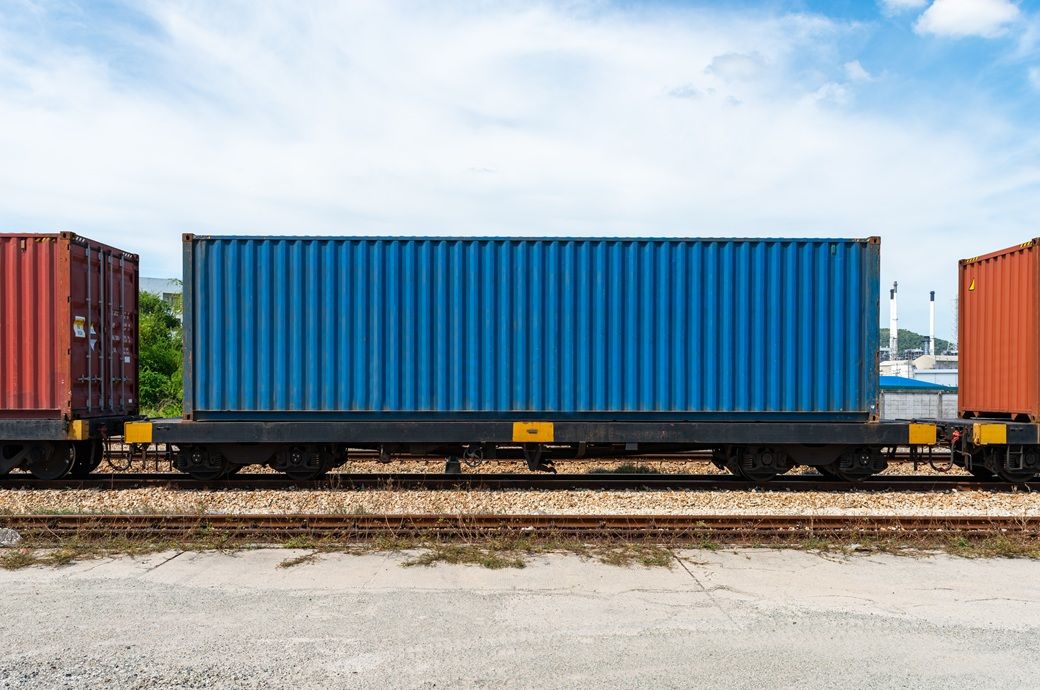
The agreement covers the construction and operation of a 360-kilometre railway linking the main mining areas of Al-Shidiya and Ghor Al-Safi to the Port of Aqaba.
The project aims at transporting 16 million tonnes of phosphate and potash annually.
The project aims at transporting 16 million tonnes of phosphate and potash annually, with a total investment value of $2.3 billion. Both phosphate and potash are chemicals used in the textile industry.
The agreement was signed by UAE Minister of Energy and Infrastructure Suhail bin Mohamed Al Mazrouei and Jordan’s Minister of Transport Nidal Al-Qatamin.
The UAE-Jordan Railway Company was formally established as a joint venture between Abu Dhabi’s L’IMAD Holding Company (L’IMAD) and several Jordanian stakeholders, according to an official release in the UAE.
The joint venture will be responsible for the implementation, operation and maintenance of Jordan’s railway network through its executing arm, Etihad Rail, the developer and operator of the UAE’s national railway network.
The project will enhance Jordan’s export capabilities and logistics efficiency by directly linking phosphate and potash production sites to the Port of Aqaba, significantly reducing transport time and costs.
It will also support comprehensive economic development and open wide prospects for job creation across multiple sectors, leveraging the extensive expertise of Etihad Rail.
Fibre2Fashion News Desk (DS)
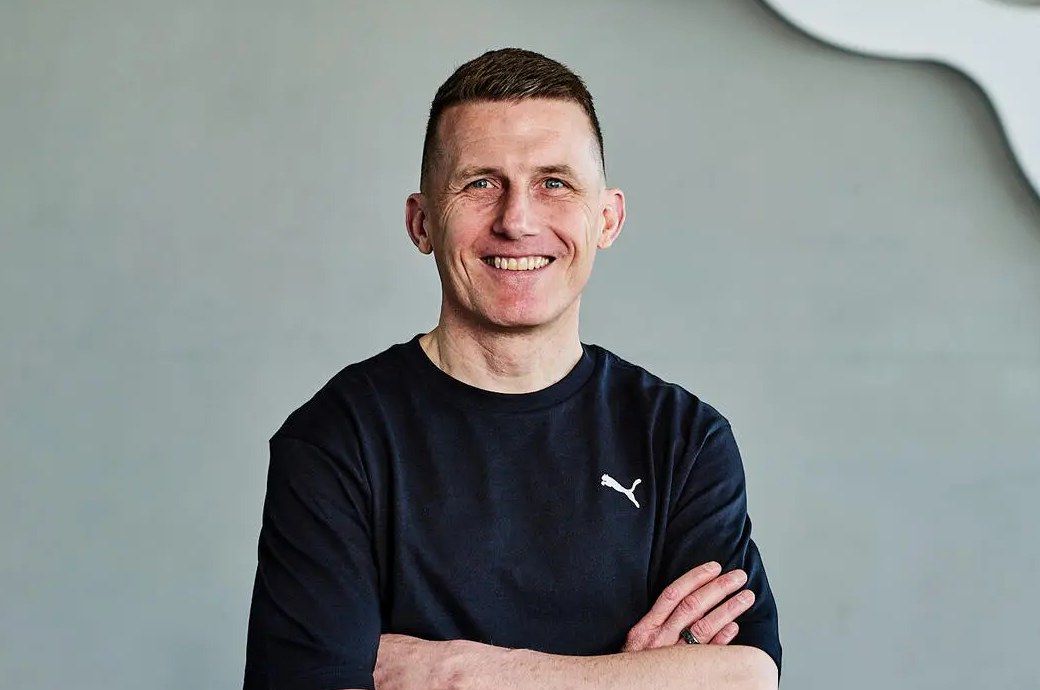
With more than two decades of experience in the sports industry, James brings a unique combination of skills, which will help PUMA use creative direction as an important strategic lever to establish itself as a top-3 global sports brand.
Puma has appointed James Carnes as senior vice president creative direction.
Reporting to Maria Valdes, he will oversee creative direction, innovation, and product excellence.
With over two decades of experience, including leadership roles at Adidas, he will align design strategy with business goals to strengthen Puma’s global brand appeal and market position.
“James is a very highly regarded leader in our industry and he has been instrumental in shaping some of the most influential performance and lifestyle products, labels, and platforms,“ said Maria Valdes. “With a strong background in industrial design and a deep understanding of both athletes and consumers, he will play an important role in getting our customers and consumers excited about PUMA once again.”
Until 2021, James held several leadership positions in design, creative direction and strategy at adidas, both in Herzogenaurach and Portland, Oregon. Most recently he worked as an independent consultant and investor in the wider industry.
At PUMA, James will align creative direction with the company’s overall strategic ambitions, set the seasonal direction for the Business Units and create a long-term look and feel for the brand across consumer touch points.
“Creative Direction is about more than seasonal trends and colours. It is about defining how PUMA holistically presents itself in the market, harnessing the company’s portfolio of world class innovation, and deeply connecting with consumers,” said James Carnes. “We have the amazing opportunity to modernize the image and style of one of the most iconic sports brands in the world and I look forward to leading our teams and collaborating with my colleagues to make this happen.”
Note: The headline, insights, and image of this press release may have been refined by the Fibre2Fashion staff; the rest of the content remains unchanged.
Fibre2Fashion News Desk (RM)

China will step up building a higher-level China-Vietnam community with a shared future that carries strategic significance, Chinese President Xi Jinping said while holding talks with visiting Vietnamese President To Lam.
China and Vietnam are accelerating efforts to navigate bilateral trade towards a more balanced and sustainable course.
President Xi Jinping recently held talks with visiting Vietnamese President To Lam.
During the visit, Vietnamese Minister of Industry and Trade Le Manh Hung called for a restructuring of production, trade and supply chains alongside stronger investment cooperation.
Xi said both countries should work together in their modernisation drive, accelerate the alignment of development strategies and prioritise infrastructure connectivity.
While meeting Chinese Minister of Commerce Wang Wentao during the state visit, Vietnamese Minister of Industry and Trade Le Manh Hung called for a restructuring of production, trade and supply chains alongside stronger investment cooperation.
Wang said both sides should focus on implementing the high-level common perceptions, including raising bilateral trade turnover to $500 billion in future.
Hung urged China to expand imports of Vietnamese goods, broaden the list of products eligible for tariff preferences and further open its market. He also called for the mutual recognition of quarantine results for agro-forestry-fishery products, facilitation of Vietnamese exports via cross-border e-commerce, and expansion of Vietnam’s trade promotion offices across Chinese localities, according to a Vietnamese news agency.
China will continue to support Vietnam in setting up additional trade promotion offices, following those already established in Chongqing, Hangzhou and Haikou, Wang responded.
China also expressed readiness to support Vietnam’s stronger exports through cross-border e-commerce, encouraging greater visibility of the Vietnam National Pavilion on Chinese e-commerce platforms beyond JD.com to better promote Vietnamese products to Chinese consumers.
China has consistently been Vietnam’s largest trading partner and second-largest export market, while Vietnam continues to be China’s biggest trading partner in the Association of Southeast Asian Nations (ASEAN).
Fibre2Fashion News Desk (DS)


Karachi Kings win toss, opt to bowl first against Multan Sultans

As Iran war strains ties with Trump’s US, UK looks to Europe

Rs 20,000 crore gold, silver rush: What will people buy this Akshaya Tritiya? – The Times of India

-

 Entertainment6 days ago
Palace left in shock as Prince William cancels grand ceremony
-

 Sports6 days ago
The case for Man United’s Fernandes as Premier League’s best
-

 Politics1 week ago
Chinese, Taiwanese will unite, Xi tells Taiwan opposition leader
-
 Business1 week ago
100% road tax waiver for electric cars, new rules for 2, 3 and 4 wheelers – what Delhi govt’s draft EV policy says – The Times of India
-

 Entertainment1 week ago
Dua Lipa hits major career high ahead of wedding with Callum Turner
-
 Business6 days ago
UK could adopt EU single market rules under new legislation
-
 Business1 week ago
The FAA wants gamers to apply for air traffic control jobs
-

 Fashion6 days ago
Energy emerges as biggest cost driver in textile margins