

Sports
When Knicks fans are banned from MSG, is there any coming back?

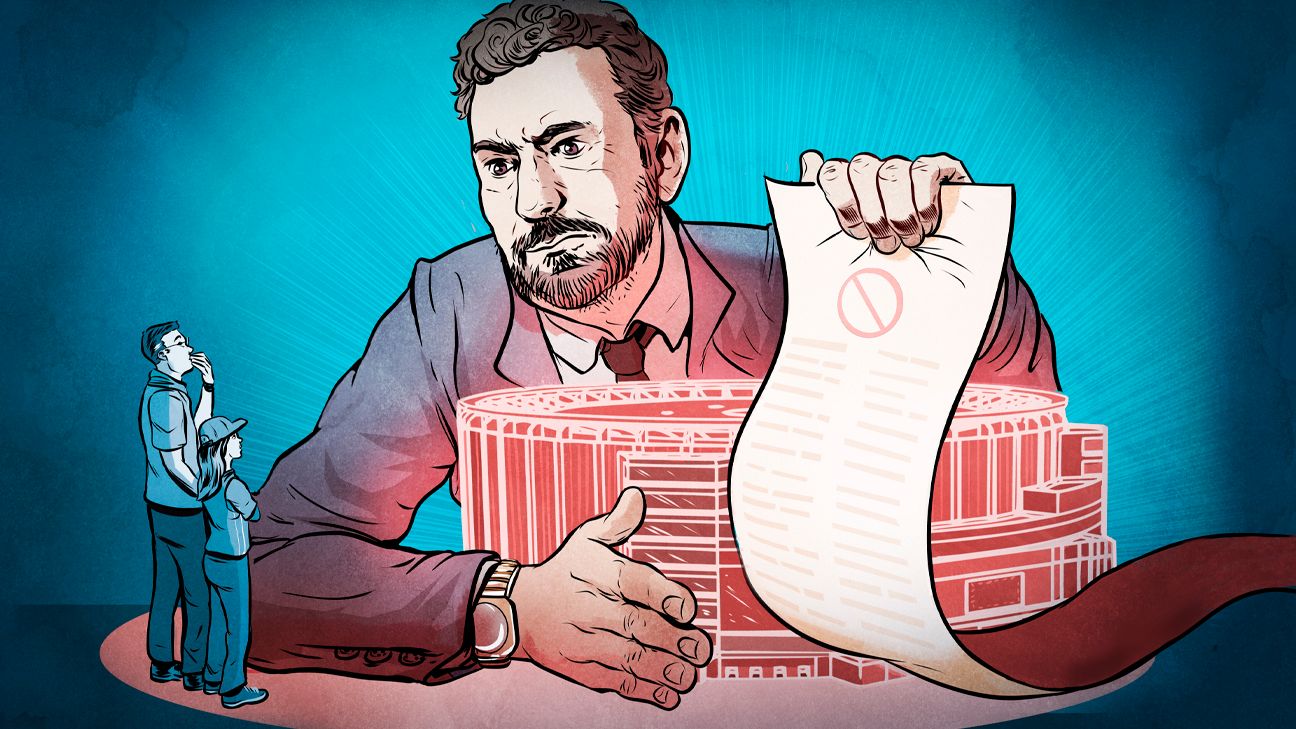
AS THE FINAL SECONDS ticked away on the New York Knicks‘ playoff thrashing of the Boston Celtics in May and the mad revelers of Bing Bong Nation poured out of Madison Square Garden, Justin Brandel sorted through a tangle of emotions. He was watching in amazement from his Manhattan apartment and trying to keep up with the text thread blowing up his phone — his friends, fellow Knicks fans, hazarding guesses about how much the cheapest tickets would cost for Game 1 of the Eastern Conference finals. $800 just to get in the door? $1,000? $1,500? Screw it, it’s worth it, his friends said. The last time the Garden hosted Game 1 of the Eastern Conference finals was 1994. There’s a real chance we’ll all be dead before this happens again. These are the Knicks, after all.
As friends began to commit, Brandel itched to join them. Money wasn’t the issue. He makes a good living as a personal injury lawyer in the city. His problem, however, is that he was legally forbidden from entering Madison Square Garden — banned by James Dolan, the CEO of MSG Sports and MSG Entertainment.
Ah, yes, that. Perhaps you’ve heard a thing or two about this banning habit of Dolan’s. Charles Oakley became the poster child for it in 2017, when Dolan slapped the Knicks legend with a ban from MSG after a physical altercation with Garden security during which Oak made several unkind remarks about Dolan. It flared up again in late 2022, when a New York Times article revealed that MSG Entertainment and Dolan now maintained a list mainly comprised of people who’d gotten in their legal crosshairs and were banned as a result, including some Knicks and Rangers season-ticket holders. Despite backlash, the list is still in effect, and according to reports, over a thousand lawyers across about 90 firms have been banned since 2022.
The vast majority of the names on MSG’s banned list belong to people like Justin Brandel: lawyers who are employed at a firm engaged in active litigation against MSG Entertainment’s properties, which also includes the Beacon Theatre and Radio City Music Hall in Manhattan, the Chicago Theatre, and the recently opened Sphere in Las Vegas. The list has drawn little media coverage outside of New York. But within the city’s legal community, it has become something of a local legend — the vengeful billionaire who deploys the most modern security technologies available, including facial recognition, to facilitate one of the oldest of human pursuits: settling scores.
Brandel, like everyone on the list, was banned from all of Dolan’s venues, not just MSG, and he’d already gotten a dose of the consequences. Earlier this year, his parents surprised him on his birthday with tickets for him and his wife to see two of his favorite comedians, John Oliver and Seth Meyers, at the Beacon Theatre. “I had to explain to them that I couldn’t go,” Brandel says, “because I didn’t want to give the MSG Company the satisfaction of kicking me out without any refunds. They ended up taking a couple that they’re friendly with.” Great seats, too. Orchestra level. “They’re not this nice usually,” he jokes. “It’s typical for my family that the one time they splurge, I can’t go.”
As luck would have it, the lawsuit that got Brandel and his partners banned was settled shortly after the NBA playoffs began in April. So, maybe he wasn’t banned anymore? How was he supposed to know? It’s not like the ban came with instructions from someone at the Garden about how it worked. “If I was sure I wasn’t going to get kicked out, I’d definitely explore the market — there’s still a 12-year-old kid in me that hates Reggie Miller,” he says.
“There’s absolutely no chance, though, that I’m spending $1,000 to even potentially be escorted out of MSG.”
IT BEGINS WITH an official letter from the associate general counsel’s office at the Madison Square Garden Entertainment Corporation, sent via FedEx to the lawyer employed by the offending firm. It’s how Brandel and his partners learned they were banned in the first place.
“Dear Counsel,” the letter begins. “Due in part to the adversarial nature inherent in litigation proceedings, and because of the potential for contact with the Company’s employees and disclosure outside proper litigation discovery channels… this letter shall serve as notice [that] you and all attorneys at your firm… may not enter the MSG Venues defined above until the subject litigation has been resolved.”
Recipients immediately join a special club with no perks, aside from the defiant pride that often accompanies membership. Paralegals and support staff are spared. This ban applies only to lawyers. And any “affected attorneys” hoping to grandfather in some Knicks tickets they bought pre-banishment are in for some bad news: “[A]ny tickets to MSG venues they previously acquired or acquired in the future,” the letter states, “are hereby revoked and deemed revoked, void and invalid…”
Mark Seitelman got his letter late last year, about six weeks after he filed a lawsuit on behalf of an older gentleman who’d stumbled and injured himself at MSG. “Typically, when we get a FedEx delivery, it’s a settlement check,” Seitelman says. “It’s good news. You open it up, there’s a check.” This was not good news, even though the Garden’s legal department issued the letter on Dec. 23, and it arrived on Dec. 24. Merry Christmas!
Seitelman runs a small practice, just him and three other lawyers, but another firm on the list, Morgan & Morgan, is one of the largest in the country, with locations in all 50 states and more than 1,000 lawyers. Dolan’s properties, meanwhile, are live entertainment venues with huge crowds of people tripping over each other in the dark every night of the week. MSG Entertainment is currently defending itself in 19 active lawsuits — most of which involve personal injury claims at the Garden. MSG’s banned list, in other words, is very, very long, and in a constant state of flux as cases get resolved and new ones crop up. Very few of them wrap up quickly, though, and some drag on for years. Most of the lawyers on the list have zero involvement with the cases that landed them there.
There are other ways to get on MSG and Dolan’s list besides suing them — like telling Dolan that he should sell the Knicks — but whatever your sin was, your blackball becomes official the moment his lawyers seal up the FedEx envelope. After Dolan banned Oakley in 2017, a former art director at Hot 97 named Frank Miller Jr. designed a T-shirt that read “BAN DOLAN.” He sold six shirts. More than four years passed. Then, in 2021, one of those six customers got booted out of MSG for wearing the shirt to a Knicks game. The guy posted about it on Twitter, and Stephen A. Smith and Max Kellerman wound up discussing it on ESPN’s “First Take.”
Miller had relocated to Seattle by then, but several months ago, in March, he returned to New York to take his parents to a Cleo Sol concert at Radio City Music Hall for their 47th anniversary. They were all standing together in line for the security checkpoint when suddenly he was surrounded by guards. “They came running over like the ‘Agents of S.H.I.E.L.D.,’ with their fingers on their earpieces,” he says. His mother was panic-stricken, but he told his parents to go inside the theater, and he’d meet them when he could. He never did. He finally connected the dots to his “BAN DOLAN” T-shirt when the security guards presented him with a piece of paper labelled “trespass notice” — the same notice everyone on MSG’s banned list gets served if they defy it, intentionally or otherwise.
Miller’s parents stayed inside the theater for the show, and he wound up meeting a friend at a bar nearby in Rockefeller Center. He didn’t get to see Cleo Sol, but the bartender thoroughly enjoyed his story about getting banned by James Dolan over a T-shirt, so he did get a free martini.
MADISON SQUARE GARDEN Entertainment Corp.’s security department has been using facial recognition technology at its properties to aid with crime prevention and counterterrorism since at least 2018. But MSG and Dolan also had another idea for it.
In Dec. 2022, The New York Times broke the story that MSG Entertainment officials were using the technology to identify people on what was then being called an “attorney exclusion list” and summarily eject them from the premises, including a woman who was taking her 9-year-old daughter’s Girl Scout troop to see the annual “Christmas Spectacular” at Radio City Music Hall. In the coming weeks, the local media filled with stories from New York-area lawyers who had unwittingly shown up with tickets to a concert, or a stand-up comedy show, or a sporting event, only to be swarmed by security and barred from reentry with no refund. On Jan. 24, 2023, the New York attorney general’s office sent MSG Entertainment Corp. a letter demanding more information about the ban and expressing concerns about possible civil rights violations. This seemed to touch a nerve in Dolan. He gave a defiant interview to Fox 5 New York two days later.
“If there’s someone you don’t want to serve, you get to say, ‘I don’t want to serve you,'” he said, citing the Bill of Rights. “And if there’s somebody who is suing you and trying to put you out of business or take your money from you… You have a right to be, yes, a little unhappy about it.”
MSG Entertainment and Dolan eventually prevailed in court, and by this point, so many lawyers have done time on his banned list that most of them know what they’re getting into when they take him to court. The initial letter from FedEx puts the onus on the offending firm to alert all of its lawyers, but that message tends not to get relayed to employees in satellite offices beyond New York. Seth Diamond, an attorney with Morgan & Morgan’s office in Savannah, Georgia, took his family on vacation to New York during school spring break, and he bought Rangers tickets right behind the glass for his hockey-loving 7-year-old son. He didn’t know anything about the ban. If Dolan’s lawyers sent a letter to Savannah, he never received it. But as soon as he passed through security, a few steps before he got his tickets scanned, a Garden official pulled him out of line, verified his identity, and delivered the news. His son cried. He thought maybe he’d done something wrong, or that his parents were in trouble. Either way, he wasn’t seeing the Rangers that day, or any time soon. They wound up at a Build-A-Bear Workshop down the block.
Dolan seems wedded to the policy — he has spent lots of money fighting for it in court, and he continues to dedicate material resources to keep it going — but the company is not so forthcoming about the mechanics of enforcing it. Representatives for MSG Entertainment did not answer questions about the policy, but several hours after this story published, they issued a statement saying the policy exists “to ensure the safety and security of our patrons and employees” and that it applies to law firms or other individuals who engage in behavior deemed violent or threatening. As for the law firms, MSG said those suing the company or its employees “are deemed to be hostile and are prohibited from patronizing our venues until the litigation is concluded. They are predatory in nature … Once their litigation is concluded they are reinstated to regular patron status.”
In the absence of getting answers to questions, what we do know is reverse-engineered from experiences shared in interviews with more than a dozen lawyers who’ve been subject to it. For instance, multiple lawyers recounted that Garden security flashed portraits of them pulled from their firms’ websites before being escorted out. Presumably, someone has to scrape all those thousands of portraits from all those websites and feed them into MSG’s security apparatus. But MSG officials did not answer questions about how it works.
Of course, some firms put little effort into keeping their websites current, and some don’t post portraits at all. It’s why experiences tend to vary so widely, and rumors abound about loopholes — that the ban doesn’t include concerts (it does), or college sports (it does), or the Westminster Kennel Club Dog Show (it does). Some people shared apocryphal tales about bans being appealed and overturned. Some people get the FedEx letter from MSG’s general counsel; some people don’t. Some people get swarmed the moment they step through the scanners, while others breeze right through. And sometimes, an anonymous office worker messes up and puts the right name on the wrong picture. That’s how Dan Watts, an attorney with Morgan & Morgan, discovered he was on the list — and how he managed to elude capture, at least for a little while.
Watts says he first heard “mutterings” about MSG’s exclusion list in early 2023 when accounts of it began popping up in local papers, “but I thought it was just hearsay — rumor.” He knew that Morgan & Morgan had an ongoing lawsuit against MSG Entertainment, but come on, he thought, there’s no way the Garden was banning every lawyer at every firm that sues him.
His next trip to MSG was in July 2023, for a Drake concert. A few steps past the security checkpoint, he got stopped by a few officers, “and I was like, Oh my God, this is real.” Then one of them asked him if his name was David Friedman. “David Friedman is another lawyer at the firm,” Watts says. “I said I wasn’t him. I showed my ID, and he showed me something on an iPad saying that David Friedman was a Morgan & Morgan employee, but it had my face from the website. So I was like, ‘I don’t know who that is.’ And they let me through.” Four months later, on his way into a Knicks game against the Phoenix Suns, he got stopped again, and they thought he was David Friedman again, so he played dumb again. “I was like, ‘Oh, this happened to me before — I think there’s some kind of misidentification here.’ So I showed him my ID and he was like, ‘This is very unusual…’ He shows me his group chat on WhatsApp with all the security guards. He’s like, ‘I’m going to get to the bottom of this. Enjoy the game.'”
This time, the Garden official snapped a photo of Watts’ ID, “and I kind of knew at that point…” He was busted. Game over.
Twenty days later, though, he pressed his luck once more because he couldn’t resist the siren call of his beloved St. John’s Red Storm, whose men’s basketball team plays some home games at Madison Square Garden. Watts is Queens born and raised, from a long line of Johnnies, most influentially his father, who raised Dan on a steady diet of Chris Mullin, Walter “The Truth” Berry, Coach Lou Carnesecca, and his wackadoodle sweaters — Big East basketball at its 1980s zenith. He tried to go to St. John’s Law, but he got wait-listed (“no hard feelings”), so he went to Hofstra instead, then took a job in the city practicing injury law, and he’s been a Red Storm season-ticket holder at Madison Square Garden ever since. He has stuck it out through a lean 21st century during which St. John’s reached the NCAA tournament just four times, never in consecutive seasons, never advancing past the second round. “St. John’s is New York City basketball,” he says. “It’s part of the culture in my household.”
On Dec. 16, 2023, Watts joined his mother and her partner, who’s on the Board of Trustees at St. John’s, for an early-season Red Storm game against Fordham. This time, he made it to his seats on the Garden floor, and he started to think maybe he was wrong — maybe he’d slipped security for good. But then the guards showed up, and this time they knew his name. Even his mother’s boyfriend, the St. John’s trustee, was powerless to overrule them. They answered to a much higher authority.
FROM JAMES DOLAN’S vantage point, the policy is pure common sense. You wouldn’t sue your neighbor and then show up at his house for his annual pool party, would you? The Garden is private property, even if Dolan is glad to blur the lines to keep receiving an estimated $42 million annual property tax break from the City of New York and enjoying all of the free law enforcement assets that come with being located directly above Penn Station, one of the world’s busiest transportation hubs. It’s private property, except when it’s not.
This argument would be more persuasive, though, if the ban covered only lawyers named in lawsuits against MSG and not all of their uninvolved colleagues as well, especially considering paralegals and support staff are still welcome. The initial letter from MSG’s general counsel hints at a legal rationale that sounds reasonable enough, which is that the corporation is merely taking steps to ensure that lawyers at the plaintiff’s firm do not infiltrate one of Dolan’s properties under the guise of being a normal ticket buyer and then use the opportunity to gather evidence, perhaps interview potential witnesses. “Ridiculous,” Seitelman says. “That type of staff keeps changing. What kind of adverse statements are we going to get from anyone? That’s the grounds for why they’re banning us?”
It would also be a clear violation of legal ethics and potential grounds for disbarment — you can’t just sneak onto a defendant’s property under false pretenses and go around digging for evidence. “I like my law license. It wasn’t cheap,” says Joseph DePaola, a lawyer at Greenberg Law P.C., which spent over a year on MSG’s banned list for representing a spectator who got punched at a Rangers game. “I don’t feel like giving it up for one case.” The letter from the general counsel alludes to this legal parameter in the context of a reminder, which seems like a tacit acknowledgement that the ban is needless: It just prevents lawyers from doing something that was already forbidden. Perhaps this is why MSG’s banned list appears to be the only one of its kind — no other major U.S. arena bans lawyers who are suing the building’s owner, at least none that we’re aware of. It’s also a rare instance of a business actively seeking customers to turn away.
Several of the lawyers I spoke with dismissed MSG’s stated reasons for the ban and suggested a more Machiavellian purpose. “It’s basically designed to chill litigation against MSG — to scare lawyers away from taking any case against Madison Square Garden or any of their entities,” DePaola says. “And we think it sets a really bad precedent.” That was one of the arguments that DePaola’s firm made against it in court. A judge initially lifted the ban, but an appellate court reversed the decision. One attorney told me about a lawyer at another firm who wanted to join her lawsuit against the Garden, contesting its use of facial-recognition technology, but his partners made him withdraw from the case — not because they feared Dolan’s wrath, though. They just didn’t want to give up their Rangers tickets. None of the lawyers I spoke with flinched at suing Dolan. If anything, the ban emboldened them.
John Morgan, the founder of Morgan & Morgan, a billionaire in his own right, now semiretired and living winters in Maui, was placed on MSG’s banned list in 2023, and he responded in kind, launching a website, SueMSG.com, for the sole purpose of soliciting personal-injury claims against Dolan properties. “We always are getting notice letters,” Morgan says. “I get letters. My wife gets letters. My kids get letters.” He just throws them in the trash. “The only thing I would’ve cared about is seeing Billy Joel, and I’ve seen him so many times, I don’t need to see him again. The last time I saw him, I was sitting next to him at lunch in Sag Harbor. So it doesn’t bother me. I’m sure it bothers some of my lawyers, but that’s life.”
THE FIRST TIME in my life I went to a concert unchaperoned was at Madison Square Garden. INXS — the Australian rock band — in 1991. I remember taking the Metro-North to Grand Central Terminal with my friends from our town, an hour upstate, and walking through crisp February air over to the Garden. I remember the house lights going black, and over 15,000 people standing up and screaming in anticipation, and the harmonica wail that opens “Suicide Blonde,” INXS’s latest radio hit. “Suicide Blonde” is built on top of a three-chord guitar riff that I’d heard a hundred times before, but never like this — a thick rumble that filled the air so completely it felt like I was bathing in it. I’d heard the term “arena rock” before, but now I understood exactly what it meant, and I was hooked on it.
The best concert I’ve ever seen was U2 at the Garden just over a month after 9/11. I’m not a spiritual person, but that night was the closest I’ve ever come to a religious experience. I saw U2 again at the Garden on their next tour, and this time I surprised my future wife with tickets for her birthday. I saw R.E.M., my favorite band, twice.
Duke, my alma mater, has played at least one men’s basketball game at the Garden every season since I graduated nearly 30 years ago (aside from 2001-02), and I’ve been to most of them. I was there in 1999, No. 2 Duke versus No. 8 St. John’s, Elton Brand versus Ron Artest, when we overcame a 40-point eruption from Marvis “Bootsy” Thornton to win in overtime 92-88. I was there in 2011, when we beat Michigan State for Coach Mike Krzyzewski’s 903rd career win, surpassing his mentor, Bob Knight, who was in the building as well, to become the NCAA Division I’s all-time winningest men’s basketball coach. I was there for Michael Jordan’s second comeback game — my only time watching MJ in person — when he joined the Washington Wizards at age 38. His first game back was at the Garden, and he scored 19 points on 7-of-21 shooting. I was there to watch Derrick Rose silence the Garden during his MVP season against the Melo-led Knicks. And I was there last winter when Duke and Cooper Flagg handed Illinois the most lopsided defeat in the history of its men’s basketball program.
I share all this not just because it has crossed my mind more than once that this article could very well get me (and perhaps my editor — sorry, Justin) banned from Madison Square Garden, as well. I’ve tempted fate in the past — way back in 2011, during the lawless early days of Twitter, before we worried too much about things like digital footprints and facial recognition technology, I tweeted that Dolan was an “imbecile” for surrendering so many assets in the Carmelo Anthony deal (when they could’ve just signed him over the summer) and in 2013, I called him a “d—” for firing a Garden security guard who didn’t recognize him. Rude, I know, but I was also a pebble in an ocean of anti-Dolan agita. I never thought twice about it. (Dolan rehired the guard the next day.)
This is different. It occurred to me several times while Duke was stomping Illinois that this might be my last time in the building. And that thought sent me reeling through decades of memories and contemplating how my life would be different if someone erased them from my brain. No U2 after 9/11. No Michael Jordan in the flesh. No annual catch-ups with old Duke pals who came into the city just for the game. What’s being erased is nothing less than several of the peak moments of my life, when I felt most alive, when the emotions we typically experience in spoonfuls — joy, elation, catharsis, community — got turned up to arena-rock levels.
Nicolette Landi, a personal injury attorney with Harris Keenan & Goldfarb, was one of the original casualties of the policy back when news of it first reached the public. Landi loves Mariah Carey, so for Christmas, her husband bought her floor seats, $375 each on StubHub, for Carey’s annual holiday show at the Garden. It would be Landi’s first time seeing her queen. She didn’t know anything about a banned list. This was late 2022 — no one did. Plus, she says now, “I was at the Garden that October for a concert. I had no problem. I was there in November for a Knicks game — no problem.” Landi was nine months into her job at the firm, and at some point, between that Knicks game in November and the Mariah Carey show in December, she and all the other lawyers at Harris Keenan & Goldfarb got professional photos taken, which then got uploaded to the firm’s website.
Landi didn’t even make it through security at the Mariah Carey show. “As soon as my bag was going through the [conveyor] belt, there were 10 security guards around me,” she says. After she showed one of them her ID, he said into a radio, “Yeah, it’s her.” Her husband turned to her and said, “Oh my God, what did you do?” She had no clue. By happenstance, her father’s best friend is head of security at the Garden — he has helped her with tickets in the past — so she called him while they waited. “I saw them pull your name up,” he told her, but his hands were tied. “They won’t even let me come downstairs. They know I know you.” A few minutes later, she and her husband were out on the sidewalk. “I was like, ‘Well, what do we do now? I guess we just go home.’ I mean, it was like a Tuesday.” She bought a counterfeit Mariah Carey T-shirt outside “because I couldn’t get a real one. And then that was it.”
Her big night was over, but Landi’s private battle with Dolan was just beginning. The next year, she bought tickets to Mariah Carey’s Christmas show again, and this time, she snuck in by wearing a baseball cap and a COVID mask, and by strategically looking down as she went through security. (“If you look up, you’re toast.”) Landi says everyone at her firm defies the ban. “We’ve all snuck into the Garden here.” Two years later, her brother had tickets for a suite at a Rangers-Devils game at the Prudential Center in Newark, New Jersey, and during a trip to the bathroom, he spotted James Dolan, who’d come from another suite nearby and was watching his team in a road arena. “And my brother — he’s Italian, so he just had to open his mouth,” Landi says. He called Dolan an a–hole and blasted him for banning his sister. Dolan’s security followed him back to his suite and demanded his ID or they’d have him thrown out. The very next day, Landi says, her brother got a letter from MSG Entertainment’s general counsel informing him that he’d been banned from all of its properties, too, only his ban was “indefinite.”
This news filled him, his sister says, with a pride unlike any he has ever known.
IT ENDS THE SAME way it begins: with an official letter from the general counsel’s office at MSG Entertainment Corporation, sent via FedEx to every lawyer at the banished firm. “Dear Counsel,” it begins. “The litigation of which your firm represented one or more plaintiffs who were asserting claims against Madison Square Garden Entertainment Corp… has been resolved accordingly [and so] all attorneys employed at your firm may once again attend events at the company venues… We are happy to welcome you back and look forward to seeing you in the future.” MSG Entertainment is glad to take your hard-earned money again. No hard feelings!
It took a year in the wilderness for Joseph DePaola and his firm, but their letter “releasing us from our sentence” finally arrived in August 2023. “Pleasant letter,” he says. “Very nice.” (He still keeps a screenshot of the letter in his phone, just in case.) Brandel’s case has been resolved for months, but he’s still waiting for his letter. Unless he leaves Morgan & Morgan, though, the wait might never end for Dan Watts. That SueMSG.com website is like an open dare, and its existence all but guarantees the firm will always be suing MSG for something.
That goes for Seth Diamond, too, though at least the ban won’t dog him at all back in Savannah. And as unpleasant as the experience was, he views it as a learning opportunity for his 7-year-old son, a life lesson about money, power and decency. “Remember,” he told his boy afterward, “that the person who made this decision — they have more money than probably anyone you’ll ever meet in your life. But they’re doing things that aren’t good. And so what did we learn from this? It doesn’t matter if you have all the money in the world. What really matters is how you treat people.”
His son seemed to get it, he says. “I’m hoping it sticks.”
Amid the wild west of NIL money and transfers, college football is attracting viewership unmatched in its history.
Source link
Sports
Patrick Mahomes says he has to be held back from pushing so hard in injury rehab, shares hopes for Week 1
NEWYou can now listen to Fox News articles!
Patrick Mahomes said Thursday the doctors have been holding him back a bit in his rehab because he’s been pushing hard as he recovers from the knee injury he suffered late in the season.
The Kansas City Chiefs quarterback set a hopeful timeline for when he’ll be ready to go as he addressed reporters while he continues to work on getting back to full strength.
CLICK HERE FOR MORE SPORTS COVERAGE ON FOXNEWS.COM
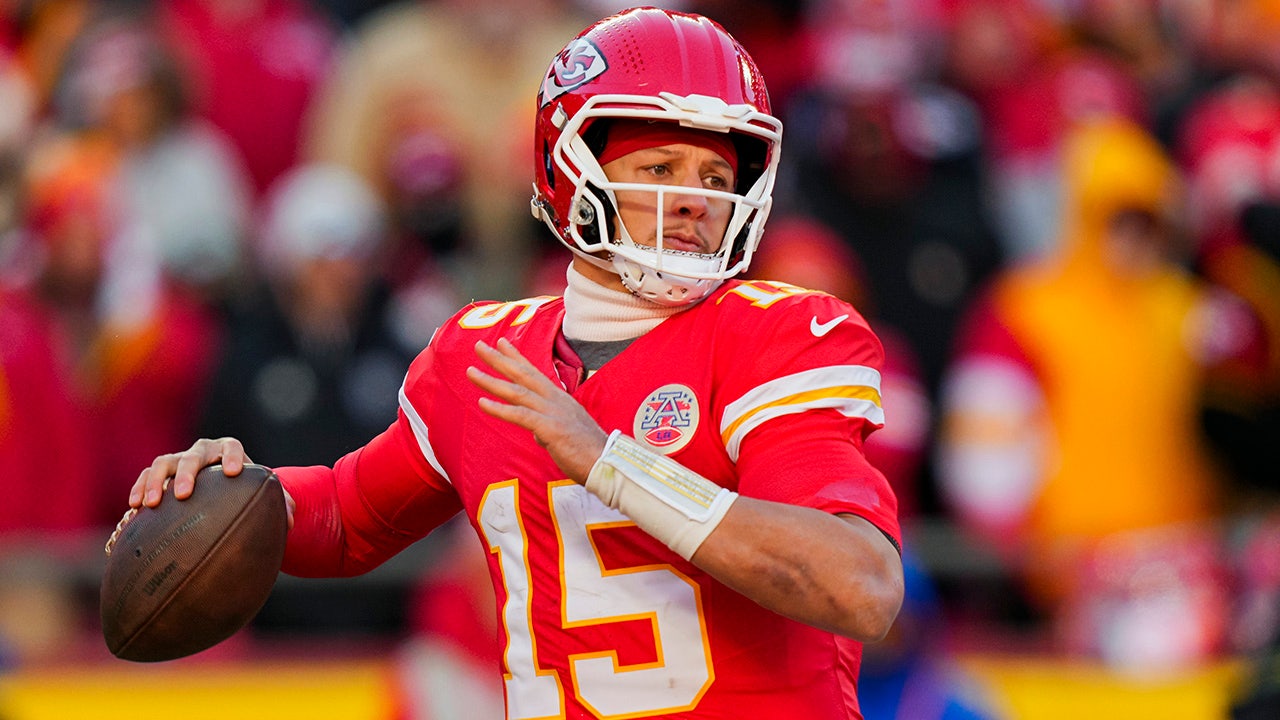
Kansas City Chiefs quarterback Patrick Mahomes (15) throws a pass during the second half against the Los Angeles Chargers at GEHA Field at Arrowhead Stadium on Dec. 14, 2025. (Jay Biggerstaff/Imagn Images)
“First off, rehab is going great so far. I’ve been hitting all the checkpoints that the doctor wants you to do and getting the strength and the range of mobility back,” Mahomes said. “So, that’s been going great. I’ve been doing all of it here in Kansas City so far. (Assistant athletic trainer) Julie (Frymyer) has been crushing it, pushing me. The doctor kind of gives you goals to get to, and I just try to maximize those, and they hold me back because I always want to go a little bit further. It’s been going great.
“I think the long-term I want to be ready for Week 1. The doctor says that I could be, but I can’t predict what’s going to happen throughout the process but that’s my goal, so I’ll try to prepare myself to be ready to play in that Week 1 and have no restrictions. You want to be out there healthy and giving us the best chance to win. Obviously, I hope to be able to do some stuff in OTAs and get to training camp and hopefully be able to do a lot there. I’m excited for the process. It’s a long process, but I’m excited for it.”
Mahomes had 3,587 passing yards and 22 touchdowns in 14 games during the year, but Kansas City’s season was a bit unusual.
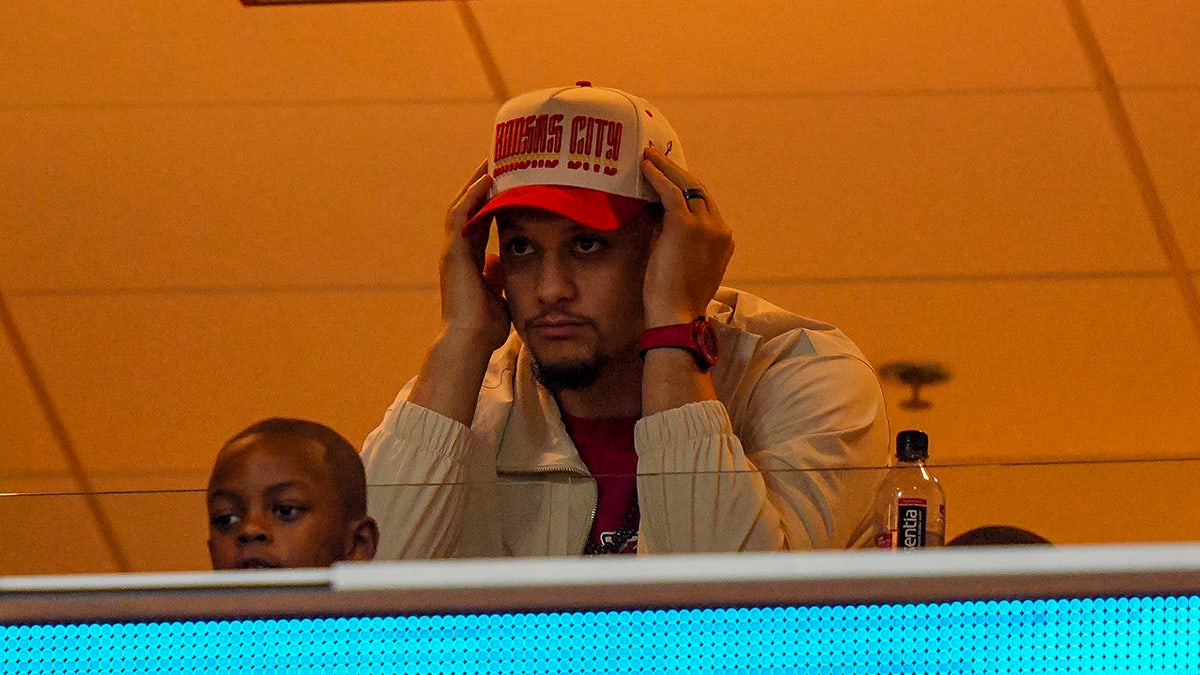
Patrick Mahomes watches the action from a suite during the third quarter at GEHA Field at Arrowhead Stadium on Dec. 25, 2025. (Jay Biggerstaff/Imagn Images)
FOX SUPER 6 CONTEST: CHRIS ‘THE BEAR’ FALLICA’S NFL DIVISIONAL ROUND PREDICTIONS
The one-score games they won in 2024, which helped them to a Super Bowl appearance, turned out to be defeats in 2025. Too many dropped passes and other silly mistakes cost the team multiple times.
“I think just compounding mistakes,” Mahomes said when asked what went wrong in 2025. “You make mistakes throughout a game. For myself, I look at some of the red zone interceptions I threw in kind of bigger moments in the third and fourth quarter of games. That’s stuff that I haven’t done in the past, and so speaking for myself, just trying to be better in those moments. I think offensively we weren’t consistent enough throughout games. We had stretches in games where we played good, we had stretches in the season where we played really good.
“We’ve got to be better and that starts with me and then it kind of has to feed throughout the entire offense. So, I think like I said, guys are motivated, coaches, players, we’re all motivated to be better this next year. Like I said, it sucks watching these games. I want to be out there playing football, especially this time of year, it’s the best time of year to play football. It’ll give us the motivation, hopefully, for us to come back stronger next year.”
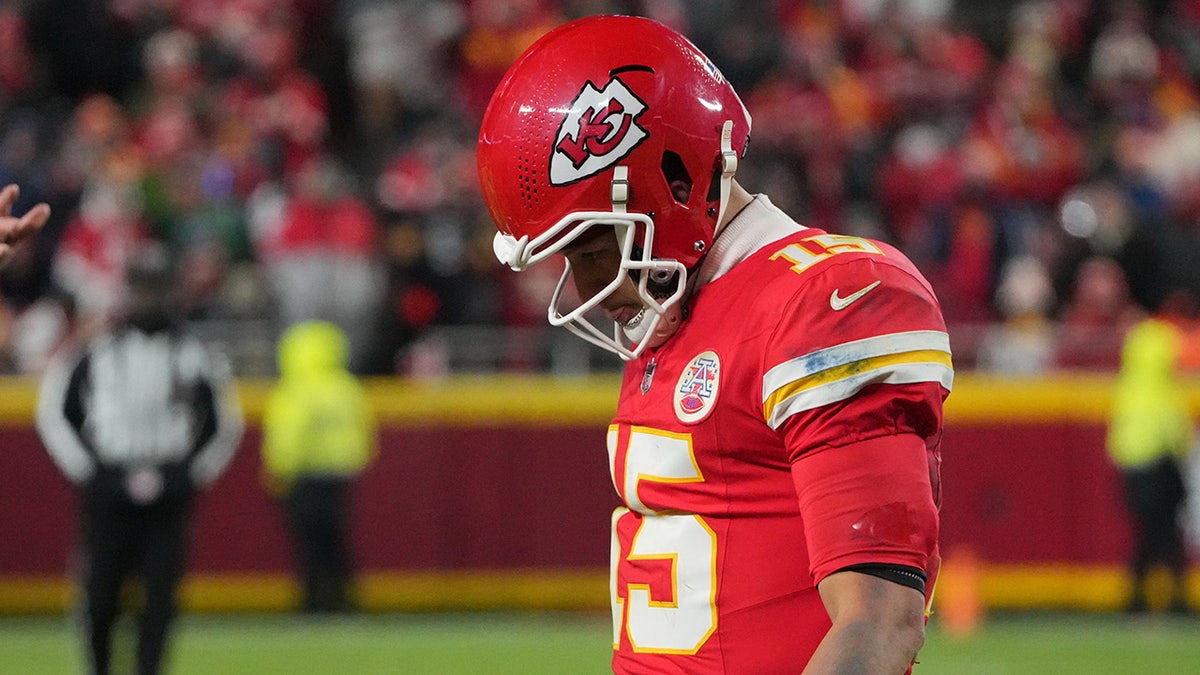
Kansas City Chiefs quarterback Patrick Mahomes (15) lowers his head during the fourth quarter against the Houston Texans at GEHA Field at Arrowhead Stadium on Dec. 7, 2025. (Denny Medley/Imagn Images)
CLICK HERE TO DOWNLOAD THE FOX NEWS APP
The Chiefs finished 6-11 and missed the playoffs for the first time since the 2014 season.
Follow Fox News Digital’s sports coverage on X and subscribe to the Fox News Sports Huddle newsletter.
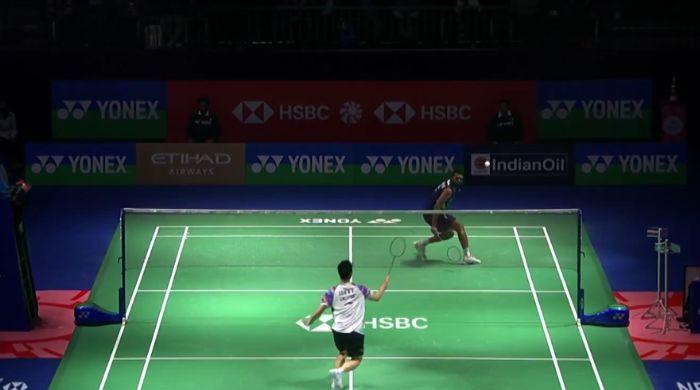
Play at the India Open badminton tournament was halted twice on Thursday after bird droppings were spotted on Court 1 during Indian HS Prannoy’s match against Singapore’s Loh Kean Yew, Indian media reported.
The incident kept the spotlight on conditions at the Indira Gandhi Indoor Stadium for a third straight day and added to questions over the venue’s preparedness for the World Championships in August.
Play was first stopped in the opening game when officials rushed in with tissues to clean the floor, and was halted again in the third after fresh droppings were spotted.
“I think it was bird poop,” Prannoy said after the match.
The disruption followed other incidents reported at the venue in recent days, including birds flying around on the practice courts and a monkey being seen in the stands.
While the Badminton Association of India (BAI) has defended the conditions and arrangements so far, Indian media said Thursday’s episode adds to a growing list of embarrassments for organisers and points of review for the Badminton World Federation (BWF), which is monitoring the venue.
Players have also raised concerns over the city’s pollution and weather conditions, with Loh adding to the issues flagged during the tournament.
Earlier this week, Danish player Blichfeldt raised concerns about what she described as “dirty and unhealthy” conditions, calling on the BWF to intervene, a significant allegation given the same venue will host the World Championships scheduled to be held in August, with India set to host the global showpiece for the first time in 16 years.
Last year’s India Open was held at the smaller KD Jadhav Arena before being moved this season to the larger Indira Gandhi Stadium, while training sessions continue to take place at the KD Jadhav Stadium located around 250-300 metres from the main arena.
Blichfeldt had reiterated her concerns this week, specifically referring to the warm-up halls, saying players were forced to wear multiple layers due to cold conditions and describing the environment as unfit for elite preparation.
She also raised health concerns after claiming to have seen birds inside the warm-up area, including instances of droppings on court surfaces.
“That’s clearly unhealthy and not normal,” she said, adding that falling sick or getting injured due to such conditions would be unfair to players.
While acknowledging organisers’ efforts, she maintained improvements were still needed and urged tournament authorities and the BWF to ensure professional standards are met.


Japan’s Fast Retailing names Francesco Risso as GU creative director
Reliance Industries Q3 Results: Revenue Rises 10% On Digital, Oil-To-Chemicals Growth

Sophie Turner triggers mixed reaction with ‘Tomb Raider’ reveal

-

 Politics1 week ago
UK says provided assistance in US-led tanker seizure
-
 Entertainment1 week ago
Does new US food pyramid put too much steak on your plate?
-
 Entertainment1 week ago
Why did Nick Reiner’s lawyer Alan Jackson withdraw from case?
-
 Sports6 days ago
Clock is ticking for Frank at Spurs, with dwindling evidence he deserves extra time
-
 Business1 week ago
Trump moves to ban home purchases by institutional investors
-
 Sports1 week ago
PGA of America CEO steps down after one year to take care of mother and mother-in-law
-

 Tech4 days ago
New Proposed Legislation Would Let Self-Driving Cars Operate in New York State
-
Sports7 days ago
Commanders go young, promote David Blough to be offensive coordinator