

Politics
Wide-ranging group of US officials pursues Trump’s fight against ‘Deep State’

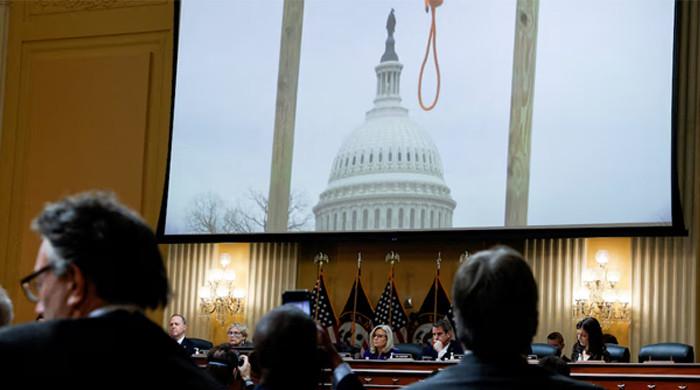
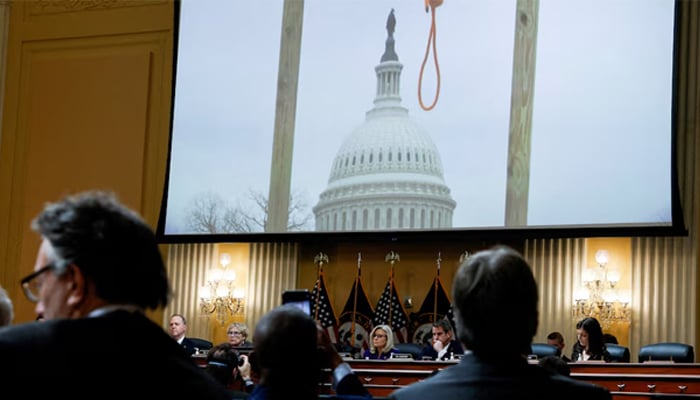
- Focus on retribution for Jan 6, Trump cases, Russia probe: source
- Documents show nearly 40 people involved from across government
- Group created to carry out Trump’s weaponisation order: ODNI
A group of dozens of officials from across the federal government, including US intelligence officers, has been helping to steer President Donald Trump’s drive for retribution against his perceived enemies, according to government records and a source familiar with the effort.
The Interagency Weaponisation Working Group, which has been meeting since at least May, has drawn officials from the White House, the Office of the Director of National Intelligence, the Central Intelligence Agency, the Justice and Defense Departments, the Federal Bureau of Investigation, the Department of Homeland Security, the Internal Revenue Service and the Federal Communications Commission, among other agencies, two of the documents show.
Trump issued an executive order on his inauguration day in January instructing the attorney general to work with other federal agencies “to identify and take appropriate action to correct past misconduct by the federal government related to the weaponisation of law enforcement and the weaponisation of the Intelligence Community.”
Attorney General Pam Bondi and Director of National Intelligence Tulsi Gabbard earlier this year announced groups within their agencies to “root out” those who they say misused government power against Trump.
Shortly after Reuters asked the agencies for comment on Monday, Fox News reported the existence of the group, citing Gabbard as saying she “stood up this working group.” Key details in the Reuters story are previously unreported.
Several US officials confirmed the existence of the Interagency Weaponisation Working Group to Reuters in response to the questions and said the group’s purpose was to carry out Trump’s executive order.
“None of this reporting is new,” said a White House official, speaking on condition of anonymity.
ODNI spokeswoman Olivia Coleman said, “Americans deserve a government committed to deweaponising, depoliticising and ensuring that power is never again turned against the people it’s meant to serve.”
The existence of the interagency group indicates the administration’s push to deploy government power against Trump’s perceived foes is broader and more systematic than previously reported. Interagency working groups in government typically forge administration policies, share information and agree on joint actions.
Trump and his allies use the term “weaponisation” to refer to their unproven claims that officials from previous administrations abused federal power to target him during his two impeachments, his criminal prosecutions, and the investigation into Russia’s interference in the 2016 election.
The interagency group’s mission is “basically to go after ‘the Deep State,’” the source said. The term is used by Trump and his supporters to refer to the president’s perceived foes from the Obama and Biden administrations and his own first term.
Reuters could not determine the extent to which the interagency group has put its plans into action. The news agency also could not establish Trump’s involvement in the group.
Biden, Comey, others reportedly discussed
Among those discussed by the interagency group, the source said, were former FBI Director James Comey; Anthony Fauci, Trump’s chief medical advisor on the COVID-19 pandemic; and former top US military commanders who implemented orders to make COVID-19 vaccinations compulsory for servicemembers. Discussions of potential targets have ranged beyond current and former government employees to include former President Joe Biden’s son, Hunter, the source said.
A senior ODNI official disputed that account and said there was “no targeting of any individual person for retribution.”
“IWWG is simply looking at available facts and evidence that may point to actions, reports, agencies, individuals, etc. who illegally weaponised the government in order to carry out political attacks,” the official said.
Lawyers for Comey and Hunter Biden did not immediately respond to requests for comment, and there was no immediate response from Fauci.
Reuters reviewed more than 20 government records and identified the names of 39 people involved in the interagency group. Five of the records concerned the interagency group, five pertained to the Weaponisation Working Group that Bondi announced in February, and nine referred to a smaller subgroup of employees from DOJ and several other agencies that remain focused on the January 6, 2021, attack by Trump supporters on the US Capitol.
The source said an important player in the interagency group is Justice Department attorney Ed Martin, who failed in May to win Senate support to become US attorney for Washington after lawmakers expressed concern about his support for January 6 rioters. Martin, who also oversees Bondi’s DOJ weaponisation group, is the department’s pardon attorney.
Martin did not immediately respond to a request for comment.
Other people working in or with the group include COVID-19 vaccine mandate opponents and proponents of Trump’s false claims that the 2020 presidential election was stolen from him, according to a Reuters review of their social media accounts and public statements.
A Justice Department spokesperson acknowledged that Bondi and Gabbard were ordered by Trump to undertake a review of alleged acts of “weaponisation” by previous administrations but did not comment specifically on the Interagency Weaponisation Working Group’s activities.
Reuters could not determine whether the group has powers to take any action or instruct agencies to act or if its role is more advisory.
Russia probe and Jan 6 prosecutions were issues
The source said ODNI official Paul McNamara was a leading figure in the interagency group. McNamara is a retired US Marine officer and an aide to Gabbard. Two other sources said McNamara oversees Gabbard’s Directors Initiatives Group (DIG), as first reported by the Washington Post. He is among at least 10 ODNI officials associated with the interagency group, two documents show.
McNamara did not respond to an email making a request for comment.
Senators from both parties have already raised questions about the DIG’s operations, with Republicans and Democrats approving a defense budget bill this month containing a measure requiring Gabbard to disclose the group’s members, their roles and funding and how they received security clearances.
The source recalled the group being told that the ODNI, which oversees the 18-agency US intelligence community, had begun using what they called “technical tools” to search an unclassified communications network for evidence of the “deep state” and hoped to expand its search to classified networks known as the Secure Internet Protocol Router, or SIPRnet, and the Joint Worldwide Intelligence Communications System, or JWICS.
The ODNI official disputed this as inaccurate and “not how the systems operate.” Reuters could not obtain independent information about the tools.
A “big pillar they pushed” at the interagency group, said the source, was purging officials involved in investigating Russia’s meddling in the 2016 election and in compiling a 2017 multi-agency US intelligence assessment that determined Moscow attempted to sway the race to Trump.
Gabbard said in July that the DIG had found documents showing former President Barack Obama ordered intelligence agencies to manufacture the 2017 assessment – charges an Obama spokesperson rejected as “bizarre.”
The 2017 assessment’s conclusion was corroborated by a bipartisan Senate intelligence committee report released in August 2020 and by a review ordered earlier this year by CIA Director John Ratcliffe.
Another focus for the interagency group was retribution for the prosecution of the January 6 rioters, said the source.
Bondi tasked the DOJ Weaponisation Working Group with reviewing the J6 prosecutions. Some of the documents seen by Reuters show that a smaller sub-set of employees from across the government have been convening on the topic. The Justice Department denied in its statement to Reuters that a separate January 6 group exists.
Among other issues the source recalled being discussed were the Jeffrey Epstein files, the prosecutions of Trump advisers Steve Bannon and Peter Navarro, and the possibility of stripping security clearances from transgender US officials. Reuters could not independently confirm these were the subject of discussions.
The White House official said the Epstein files “have not been part of the conversation.” The official also disputed Reuters’ characterisation of what the working group has focused on.
The senior ODNI official also denied the group discussed the Epstein files, revoking security clearance for transgender officials or Bannon and Navarro’s cases.
Bannon did not respond to a request for comment. Navarro said his case was an example of Biden’s weaponisation of government.
Many people involved have been vocal Trump backers
The five documents pertaining to the interagency group indicate the involvement of at least 39 current and former officials from across the government.
In one document written before a spring gathering of the interagency group, ODNI official Carolyn Rocco said she hoped participants could help each other “understand current implications of past weaponisation.”
Reuters could not determine Rocco’s position at the ODNI; the office only makes public the names of top officers.
The source identified her as one of two former US Air Force officers involved with the group who work for Gabbard and have been vocal opponents of the COVID-19 vaccine mandate in the military. Rocco signed a January 1, 2024, open letter pledging to seek court-martials for senior military commanders who made the shots mandatory for service members.
Rocco did not respond to an emailed request for comment.
Some people on the list Reuters compiled from the documents it reviewed related to the interagency group have amplified Trump’s false election fraud claims.
One is former West Virginia secretary of state Andrew McCoy “Mac” Warner, according to two documents. Now an attorney in the Justice Department’s Civil Rights Division, Warner alleged while running for West Virginia governor in 2023 that the CIA “stole” the 2020 election from Trump.
Warner did not respond to a request for comment.
Other names found in two of the documents include at least four White House officials, an aide to Vice President JD Vance, and at least seven Justice Department officials, including former FBI agent Jared Wise, who was prosecuted for joining the January 6 assault and is now on Bondi’s DOJ weaponisation group.
Wise did not immediately respond to a request for comment.
Two of the documents show the involvement of two CIA officers but Reuters could not determine what roles they may have played in the interagency group. The CIA is legally prohibited from conducting operations against Americans or inside the US except under very limited and specific circumstances.
The CIA did not immediately respond to a request for comment.
Officials from other federal agencies that have some involvement in the interagency working group, including the FCC, the FBI and the IRS, did not respond to requests for comment. The DOD did not respond to a request for comment.
A DHS spokesperson said the agency is working with other federal departments to “reverse the harm caused by the prior administration.”
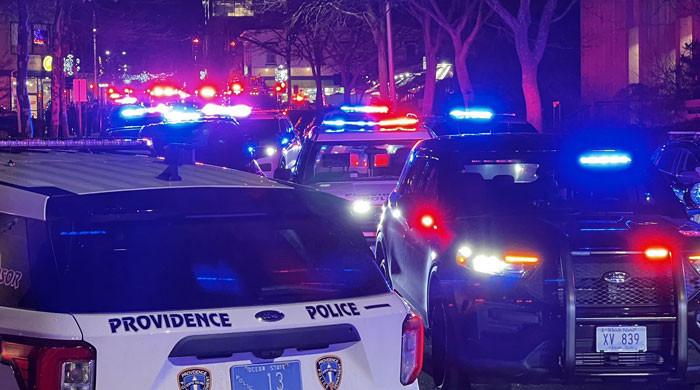
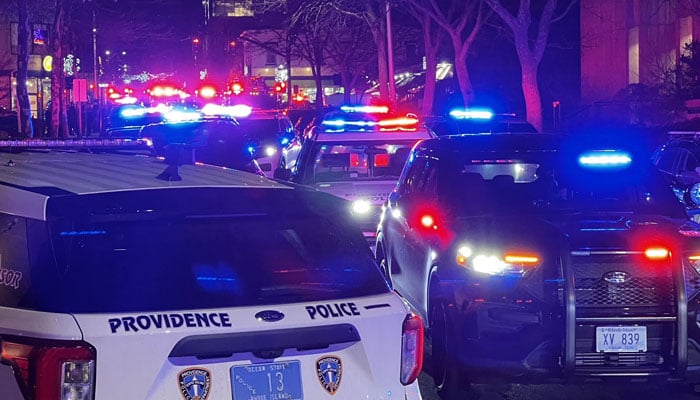
NEW YORK: Two people were killed and eight were critically wounded at a shooting Saturday at Brown University, the prestigious Ivy League school in Rhode Island, the mayor of Providence told reporters.
Mayor Brett Smiley said police were still searching for the shooter, who struck at Brown’s Barus and Holley engineering building, where exams were taking place at the time. Officials at a news conference said police were looking for a male dressed in black.
Smiley said officials could not yet disclose details about the victims, including whether they were students.
Brown is on College Hill in Providence, Rhode Island’s state capital. The university has hundreds of buildings, including lecture halls, laboratories and dormitories. The Federal Bureau of Investigation and other US federal officials were on the scene, said officials.
Officials said there were no suspects in police custody.
In comments to reporters at the White House, US President Donald Trump said he’d been briefed on the situation, which he called “terrible.”
“All we can do right now is pray for the victims and for those that were very badly hurt,” he added.
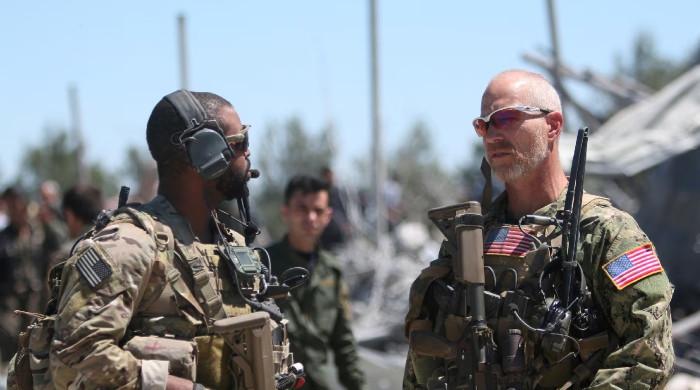
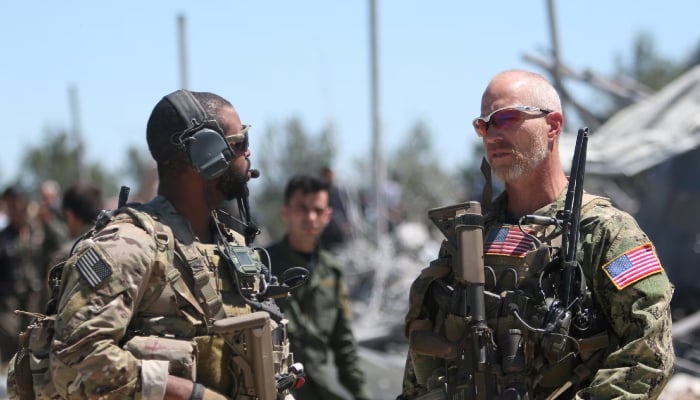
- Convoy targeted during key leader engagement.
- Three US soldiers wounded in attack: Centcom.
- US ambassador to Turkiye condemns attack.
Three US military personnel — two Army soldiers and a civilian interpreter — were killed on Saturday by a suspected Daesh attacker who targeted a convoy of American and Syrian forces, the US military said.
Three other US soldiers were wounded, the US military’s Central Command said.
In a statement, Central Command said the attack by a lone gunman occurred “as the soldiers were conducting a key leader engagement” in the central Syrian town of Palmyra.
“Partner forces” killed the attacker, US Secretary of Defense Pete Hegseth wrote in a social media post.
Daesh did not immediately claim responsibility, but a senior US official said initial assessments indicate the militant group probably carried out the attack. It took place in an area not controlled by the Syrian government, the official said.
The soldiers’ names will be withheld until 24 hours after the next-of-kin notification, the US military said.
Syrian state news agency SANA quoted a security source as saying two Syrian service personnel were injured, without providing further details. The source told SANA that American helicopters evacuated the injured to a US base in Syria’s Al-Tanf region near the Iraqi border.
Tom Barrack, the US ambassador to Turkiye and special envoy to Syria, condemned the attack.
“We mourn the loss of three brave US service members and civilian personnel and wish a speedy recovery to the Syrian troops wounded in the attack,” Barrack said in a statement. “We remain committed to defeating terrorism with our Syrian partners.”
The attack came barely a month after Syria announced it had signed a political cooperation agreement with the US-led coalition against Daesh, which coincided with Syrian President Ahmed al-Sharaa’s visit to the White House.
The coalition has carried out air strikes and ground operations in Syria targeting Daesh suspects in recent months, often with the involvement of Syria’s security forces. Syria last month also carried out a nationwide campaign arresting more than 70 people accused of links to the group.
The United States has troops stationed in northeastern Syria as part of a decade-long effort to help a Kurdish-led force there.
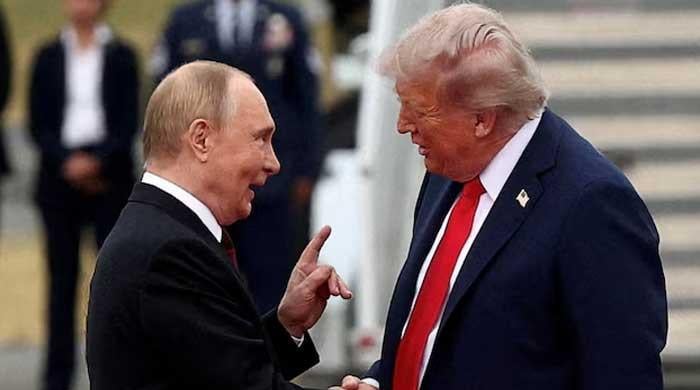
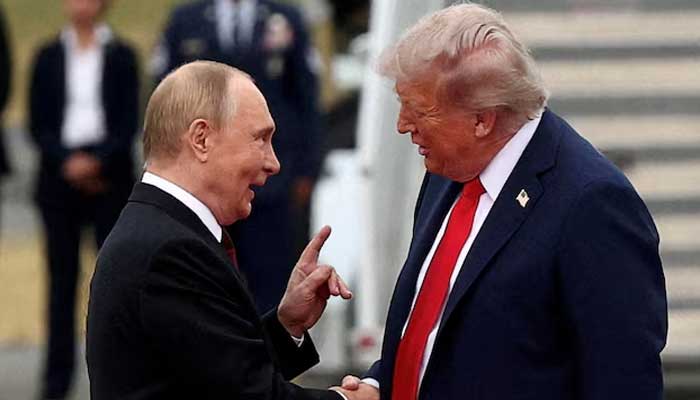
Russian President Vladimir Putin has endorsed his US counterpart Donald Trump for Nobel Peace Prize. It is despite the fact that President Trump has failed to end the Russia-Ukraine war till now.
As the year 2025 ends, it is interesting to look at why Russia is preferring Donald Trump over his predecessor Joe Biden? And, what are the chances that recent peace plan will come to fruition?
In an interview with the Russian Consul General in Karachi Andrey V. Fedorov, Geo.tv tried to understand who let President Trump down as ‘easy to solve’ war is still going on.
Q: How do you see US-Russia relations in the first year of Trump administration?
Andrey V. Fedorov: The new US administration began its work during one of the most strained periods in Russian-American relations since the end of the Cold War. Nevertheless, we note their desire to partially revise the policies of the previous US President and attempt to discuss the accumulated problems. As President Putin has repeatedly stated, we are committed to cooperation and the pursuit of dialogue. This is particularly important now that at least some opportunities for this have emerged.
Q: President Putin said that US-Russia trade is increasing and it is 20% higher. What are the areas where trade is increasing and is there any data for that?
Andrey V. Fedoro: Yes, indeed. We are witnessing an increase in trade volume by more than 20%. Those numbers, however, are still quite humble. Some economic ties have been preserved, but their further development is effectively constrained by the imposed sanctions. It is evident to everyone that without those restrictions, business and investment cooperation between Russia and the United States would have considerable prospects, notably in the energy sector, high technology, and digital solutions.
Q: What are the areas where US and Russia are still cooperating with each other despite bans imposed on Russian companies and individuals?
Andrey V. Fedoro: An indicative example could be our joint projects in space exploration. There is still some cooperation on the operation of the International Space Station and related research. Collaboration on the International Thermonuclear Experimental Reactor (ITER) and potential scientific projects in the Arctic also seem promising. Our country’s leadership has always advocated not politicising science and continuing cooperation in this area for the benefit of all humanity.
Nuclear weapons are another issue on which we need to maintain contact. On the one hand, the current US administration clearly has a better understanding of its responsibility as a nuclear power and is seeking dialogue. On the other hand, there are calls for new nuclear tests. President Putin has suggested an initiative to keep following the quantitative targets under the New START Treaty for another year after it expires in February 2026. Of course, this measure will only be justified if the United States agrees to take the same step. Efforts to normalise bilateral relations and resolve differences in approaches to global security are also necessary for the resumption of substantive strategic dialogue.
Q: What is the impact on the ground after the presidential summit in Alaska?
Andrey V. Fedoro: There have been no Russian-American summit meetings for more than four years. The last one was in Geneva, when President Putin met President Biden. Unfortunately, it did not yield any tangible results: the previous American administration continued its policy of confrontation. The bilateral relations reached their lowest point since the Cold War.
President Trump has demonstrated a willingness to shift away from this course, to attempt to resolve longstanding issues and, more importantly, to address their root causes. No one has any illusions that this process will be easy or swift, but the very possibility of a meeting is an important signal. The talks in Anchorage have certainly given impetus to further dialogue and created a foundation from which we can proceed. As you can see, contacts have continued at the level of foreign ministers, national security aides, special representatives of the two presidents and through other channels.
On December 2, President Putin received US Special Envoy Steve Witkoff and Jared Kushner at the Kremlin. The meeting lasted five hours and was very useful, constructive, and substantive.
Q: President Trump said: ‘’I will call up NATO in a little while. I will call up the various people that I think are appropriate, and I will, of course, call up President Zelensky and tell him about today’s meeting. It is ultimately up to them’’. So, who is calling the shots?
Andrey V. Fedoro: It is only natural that after such talks the presidents discussed the results with their administrations, key departments, and international partners who might be affected by the summit’s outcome. This is not a reason to speculate that other states will have the final say.
After the negotiations in Alaska, a delegation of leaders from European countries, the EU, NATO and Ukraine arrived in Washington. They made no secret of the fact that they wanted to undermine any constructive efforts to resolve the Ukrainian crisis and develop relations with Russia, and that they would like the US to adopt their confrontational logic, as was the case under Joe Biden. Despite these destructive efforts of Europeans, which, incidentally, President Putin assessed quite unequivocally during the last meeting in the Kremlin, the positions of Russia and the US have not grown any further apart. Judging by his subsequent steps and continued contacts with Russia, President Trump is taking a more constructive stance.
Q: What does it mean when President Putin said that ‘fair security balance must be restored in Europe and the rest of the world’?
Andrey V. Fedoro: President Putin has repeatedly stated that everything happening around Ukraine is inextricably linked to fundamental threats to our national security and that Russia is sincerely interested in ending the conflict. However, for a long-term settlement, we need to eliminate the root causes of the crisis, including threats to Russia, and, yes, restore a fair security balance in Europe and the world. For example, at some point Nato intended to include Ukraine in its membership and build bases in Crimea. This is, of course, absolutely unacceptable to Russia, as it violates all agreements on the indivisibility of security that were reached at the highest level in the OSCE. It was specified that no organisation or country in Europe would strengthen its security at the expense of the security of others.
Russia has attempted to put forward constructive initiatives to avert the conflict. For example, in December 2021, we prepared and submitted a draft treaty between the Russian Federation and the United States of America on security guarantees and an agreement on measures to ensure the security of the Russian Federation and member states of the North Atlantic Treaty Organisation (Nato). This was an attempt to confirm the political commitments and principles of the 1999 Charter on European Security, which, incidentally, were reiterated at the OSCE summit in Astana in 2010. Unfortunately, in 2021, President Putin’s initiative was rejected, even though it could have contributed to stabilising the security situation.
Of course, there are alternative paths. It has now become abundantly clear that the period of Western dominance is coming to an end, with the role of the countries of the Global South and East growing ever stronger. Russia supports the idea of transforming Eurasia into a zone of development, peace and stability, and establishing a new security architecture based on the principle of equal and indivisible security. A concrete example is the initiative put forward by Belarus, with Russia’s support, to develop a Eurasian Charter of Diversity and Multipolarity in the XXI Century.
Q: President Trump also said that, “We did not get here, but we have a very good chance of getting there”. And, “there is no deal until there is a deal’’. So, what is stopping both presidents making a deal?
Andrey V. Fedoro: First, it should be noted again that President Trump is inclined to understand the root causes of the conflict. The talks in Alaska were partially structured around this, as well as around taking into account Russia’s interests in ensuring its own security, especially given the Nato factor, and the people who decided to tie their fate to Russia after having been oppressed by the Ukrainian authorities. So now there are better chances than with the last US administration. However, a lot still needs to be clarified and discussed.
Moreover, the European countries are actively trying to undermine the joint efforts of Russia and the US and to compel Ukraine to continue fighting. If at the beginning of the special military operation, they declared that Russia must suffer a ‘strategic defeat’, now they are demanding an immediate ceasefire without preconditions. This implies that they will not stop supplying weapons to Ukraine, which they admit quite openly. Obviously, this will not contribute to the shaping of a new robust security architecture in the world. As stated earlier, resolving a conflict cannot be reduced to a simple ceasefire. There are no easy solutions here, nor will there ever be. That is why we are continuing our dialogue with the US through various channels, trying to reach agreements rather than formalities.
Q: It appears that Russia intends to take over the whole of Donbas and some other regions before agreeing to a ceasefire. And so, a possible meeting in Hungary couldn’t take place. By every passing day, with Russian advancement and Ukrainian actions, don’t you think Moscow is making it more difficult to achieve a ceasefire?
Andrey V. Fedoro: Both our president and the foreign minister have repeatedly stated that it is not the territories that are of fundamental importance, but the fate of the people living there who have expressed their desire to be with Russia. So, such statements in the media are not entirely accurate.
It is worth remembering that in April 2022, following the negotiations in Belarus and Turkey, Ukraine seriously considered accepting a document that could have put an end to the military confrontation. The opening provisions reiterated the fundamentals of Ukraine’s 1990 Declaration of Independence, namely that Ukraine would never become a member of Nato, would never possess nuclear weapons, and would remain neutral. These principles were the foundation of the country’s independence. Unfortunately, under pressure from Western countries, they did not sign the document.
Subsequently, some European countries, the EU, and Nato began to dictate completely opposite goals to Kyiv: to inflict a ‘strategic defeat’ on Russia and restore Ukraine’s sovereignty within the 1991 borders. They also completely forgot about the usual enforcement of democratisation, ignoring the oppression of the Russian-speaking population, the refusal to hold presidential elections, corruption scandals, and other manifestations of the Ukrainian government’s failure. Of course, there have been no attempts to resolve the root causes of the conflict. Through these attempts to disrupt any settlement, they have effectively deprived themselves of a place at the negotiating table. It was primarily because of their influence that a quick resolution of the conflict became impossible. Not to mention the issue of the legitimacy of Zelensky as president, with whom it will also be necessary to sign an agreement.
Q: EU has a slightly different stance. It says, ‘’Russia cannot have a veto against Ukraine’s pathway to the EU and Nato. International borders must not be changed by force’’. And, ‘’We are determined to do more to keep Ukraine strong’’. Don’t you think that Russia should first deal with the EU before making a deal with President Trump?
Andrey V. Fedoro: We have already discussed that the stance of European countries is less constructive. For now, we only see EU countries trying to block a possible agreement and disrupt the conflict resolution. You must have also seen statements by their authorities about the urgent need to revive the military industry and draft more citizens into the army. This hardly looks like an effort to achieve peace. And all this is happening while Russian officials openly declare having no intentions of invading Europe. Recently, President Putin has once again stated that there are no such plans, only determination to protect our country, should Europe attack first.
Russia’s contacts with the new American administration, on the contrary, have shown that President Trump bases his relations with other states on the priority of US national interests. At the same time, he understands that other countries, especially when it comes to great powers, have every right to assert their own national interests. Our country’s top officials know that some disagreements are inevitable, but they always try to find common ground and avoid even a ‘cold’ confrontation. So, it’s mostly about seeking dialogue.
Q: Till now, how far have the US and Russia worked to address the question of the security of Ukraine?
Andrey V. Fedoro: As you know, there is currently a lot of discussion in the media about a certain “leaked” peace plan, which includes a clause on security guarantees. Such “leaks” are almost always aimed at undermining the efforts of negotiators. The fact is that consultations are currently being held with the US through diplomatic channels, which require not only painstaking work on every aspect, but also trust. Therefore, I would like to refrain from any unnecessary speculations on any points of possible agreements.
During the latest meeting in Moscow, both sides had agreed not to disclose the substance of the negotiations. However, it is known that Russia has received a plan comprising 27 points and four other documents. Some of the proposals appear more or less acceptable, some are not. So, a compromise has not been reached yet. All five documents should be further discussed in detail, and the work will continue.


Lady Gaga’s final concert in Sydney interrupted after sudden onstage scare

At least two killed, eight injured in Brown University shooting

François Arnaud hits back at critics of ‘Heated Rivalry’ intimate scenes

-
 Politics6 days ago
Thailand launches air strikes against Cambodian military: army
-

 Tech1 week ago
WIRED Roundup: DOGE Isn’t Dead, Facebook Dating Is Real, and Amazon’s AI Ambitions
-
 Politics6 days ago
Zelenskiy says Ukraine’s peace talks with US constructive but not easy
-

 Sports1 week ago
Australia take control of second Ashes Test | The Express Tribune
-
 Fashion6 days ago
Germany’s LuxExperience appoints Francis Belin as new CEO of Mytheresa
-
 Business1 week ago
Netflix to buy Warner Bros. film and streaming assets in $72 billion deal
-
 Politics1 week ago
17 found dead in migrant vessel off Crete: coastguard
-

 Tech1 week ago
MIT researchers “speak objects into existence” using AI and robotics