

Tech
Winter Is a Great Time for Bird Watching—Here’s How to Attract Them to Your Yard


For many regions, winter feels like a time of dormancy. Trees are bare, mammals are hibernating, people are bed-rotting. While migratory birds do fly south for the winter, many seed- and insect-eating birds do not, and with leaves off the trees, the winter months are often the best time to watch them.
As someone who tests smart bird feeders year-round for WIRED, I’m always interested in ways to ensure I’m attracting the largest and most interesting variety of birds to my yard, no matter the season.
Further, if you received a smart bird feeder for Christmas and your neighborhood flocks haven’t discovered it yet, you may be looking for some ways to speed up the process. I talked to some ornithologists to learn how to boost the attractiveness of the average yard during these cold, windy, rainy, and sometimes icy months.
Mix Your Menu
Though there may be less diversity of bird species around your area due to some migratory birds having moved on (warblers and tanagers, for instance), many seed and insect eaters find enough locally to sustain them. In my West Coast region, this means chickadees, all kinds of sparrows, and even larger birds like flickers. Both ornithologists I spoke to recommended diversifying feed types in winter to appeal to the widest variety of birds.
“To attract the greatest species diversity to your feeders, offer various types of seeds in various styles of feeders,” says Noah Perlut, ornithologist and professor in the School of Marine and Environmental Affairs at the University of New England. “Some species prefer eating mealworms from platform feeders, while others prefer suet, and others feed from seed tubes.”
Suet (rendered animal fat, basically—often tallow) is indeed a staple in my own winter bird-feeding setup. It comes in a variety of styles, including balls or cakes. I like to use cakes mixed with hot pepper, which squirrels don’t like, set in an inexpensive cage feeder. I’ve found it attracts a range of insect-eating birds in my area, including woodpeckers, nuthatches, juncos, and chickadees.
I also like feeders that sport dual feed bays, especially if you aren’t able to site multiple feeders around your yard due to space or the inability to meet the 5-7-9 rule to deter squirrels. (That’s 5 feet off the ground; 7 feet from any structures like fences that could be jumped from; and 9 feet from anything overhanging, like branches.)
Maria Kincaid, head ornithologist at FeatherSnap—whose marquee Scout feeder happens to feature dual feed bays—suggests supplementing regular seed with black-oil sunflower seeds, unsalted peanuts, and mealworms. (Some smart bird feeders come with suet ball holders, while others have them available as an add-on.)
Kincaid also recommends specifically using a smart bird feeder in winter, so that you can note which types of food are the most popular. This can help you calibrate your feeding ratios to prevent waste.

Birdfy
Rookie Smart Bird Feeder
“Most songbirds that will visit our feeders in the winter have different diet requirements than they do in the spring,” Kincaid says. “High-fat and high-protein foods are especially important during the winter, as it takes more energy to keep warm in colder temperatures.”
Sharing Shelter
Sufficient cover—trees, bushes, shrubs, or even a brush pile—keeps birds feeling safe and happy year-round, but it’s especially important from December to March, when less foliage could cause them to feel more exposed or threatened.
“Winter is often the busiest time of the year at bird feeders,” Perlut says. “This increased activity is not necessarily reflective of food scarcity—instead, it is a time of year when songbirds focus on self-care instead of breeding activities.”











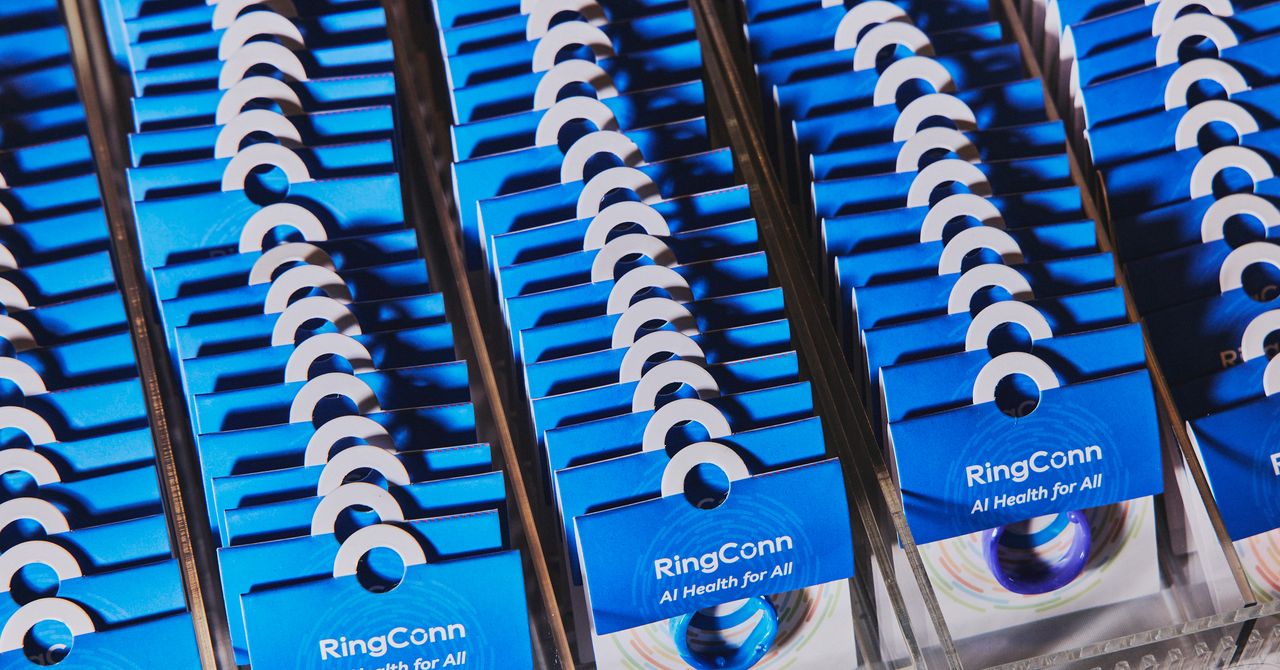
If you’ve been following last year’s smart ring drama, you may have seen that the number of health-tracking rings you can buy has shrunk since October 21, 2025.
As we reported in August, the US International Trade Commission ruled in favor of Oura in a patent case in which Oura alleged that its competitors RingConn and Ultrahuman had infringed on the company’s patent for a smart ring that tracks health and fitness stats. Oura’s victory subsequently led to RingConn and Ultrahuman being banned from importing new rings into the US.
The lawsuit was bad news for both Oura competitors, and especially Ultrahuman, which had planned to expand its US-based manufacturing facility to meet growing market demand (and ostensibly to also get around the new US tariffs). Ultrahuman is distinguished from Oura in that its smart ring does not have a subscription; Oura users pay $6 per month to use its rings.
I caught up briefly with Ultrahuman’s chief business officer, Bhuvan Srinivasan, to clarify the company’s next steps to address the US market, and find out more about the latest smart ring squabbles.
Why Were the Rings Banned?
The ITC ruled that RingConn and Ultrahuman had infringed on the 178 patent, which protects a specific ring hardware design—for example, if the ring has a layered arrangement with internal and external components housing interior electrical components.
If you think this is a surprisingly broad description that can cover … well, pretty much any smart ring, or a wide range of electronic devices in general, you are correct. Over the past few years, many smart ring manufacturers have been embroiled in legal disputes over this patent.
This has panned out in a few different ways. In 2024, Oura announced that it had reached a multi-year licensing agreement with Circular, the French smart ring manufacturer, that would allow Circular to continue selling new rings in the US. (This move looks a little less generous when you consider that my two-week testing period of the Circular Ring 2 was plagued with server and connection issues.)
Also in 2024, Samsung attempted to preemptively sue Oura against future patent infringement claims in a case which a judge dismissed. Samsung’s concerns were not unwarranted. In late 2025, Oura then filed another complaint against Samsung (the Galaxy Ring), Reebok (the Reebok smart ring), Zepp Health (Amazfit ring), and Nexxbase (the Luna Ring). Oura then reached a licensing agreement with RingConn and another competitor, Omate, that would allow the company to continue selling rings in the United States.
When Joseph Pilates developed what he first called Contrology in the early 20th century, there were no dedicated studios or intimidating contraptions. There wasn’t even a reformer yet. (That came later, improvised from leather straps and hospital bed frames.) The idea was simple then, and it still is now: Pilates asks you to work with what you already have. Your body does the work, and a mat just makes it more comfortable.
Pilates is about moving with intention. Total body exercises are rooted in precision and balance, favoring slow, controlled movements over momentum or strength. Full range of motion, emphasizing time under tension, deep core engagement, and uniformity of mind, body, and spirit are emphasized. It sounds peaceful, but it’s not exactly the easiest workout.
The right gear won’t do the workout for you, but it can make it more comfortable, more effective, and frankly, more fun. Below, we’ve gathered the best Pilates equipment worth having for home workouts, whether you’re a beginner or deep in your Pilates princess era. For more wellness recommendations, check out our other guides, including the Best Protein Powders, Best Massage Guns, and Yoga Mats, Props, and Everything Else You Need for Your Practice.
Featured In This Guide


-SOURCE-Forme.jpg)
Jump to
Pilates Clothes
Nothing motivates me to work out quite like a great Pilates outfit. You can technically wear just about anything, but I would stick to more fitted activewear, so your Pilates instructor can check your form. Avoid loose or oversized clothing, and prioritize stretchy fabrics that won’t restrict movement. This lineup of athleisure has been tried and tested in Pilates; they move well, feel comfortable, and hold up every session.
If you buy one thing, make it grippy socks. Whether you’re on a mat or a reformer machine, those rubberized soles help prevent slipping and sliding, giving you better traction and stability during movements. A good pair can also offer light cushioning and arch support. If you’re practicing in a shared studio or using communal equipment, breathable Pilates socks are a hygienic upgrade, too.
We want our bottoms to stay put through roll-ups, leg circles, and long pulses, without digging or losing shape. They also need to be squat-proof. High-waisted leggings (full-length or capri) made from a soft, stretchy fabric are ideal for Pilates and other low-impact workouts. Biker shorts also work, but in a heated class, an extra layer of fabric can help maintain grip on props during leg work.
These are the best leggings for Pilates based on our testing, including a Lululemon biker short we love. For more favorites, check out our Best Leggings guide.
For Pilates, look for low- to medium-impact styles that are typically supportive without feeling compressive. I gravitate toward wide bands with no underwires that won’t dig in during floor work, but I’m also aware that those features might not be supportive for bigger busts. These are our top favorites, including a posture-correcting bra if alignment or lower back pain is a concern. For more picks, check out our Best Sports Bras guide.
An all-in-one jumpsuit with a built-in bra takes the guesswork out of getting dressed for Pilates. Our favorites offer supportive, comfortable coverage that moves with you from warm-up to cooldown.
Pilates-Specific Gear
You can absolutely do Pilates with nothing but yourself, but if you want to turn up the intensity or vary your workout routines, here are a few must-haves.
Exercise mats are essential because they deliver much-needed padding to cushion your joints during floor work. The proper ones are designed with a grippy, textured surface for added traction. They keep you steady, supporting better control. And they serve as a protective barrier between your skin and the yucky floor.
I also always need a towel when working out, and if you’re taking a heated class, this is especially necessary to absorb sweat. Pro tip: You can also turn your towel into a resistance band by twisting it and pulling against it. For more picks, check out our Best Yoga Mats guide.
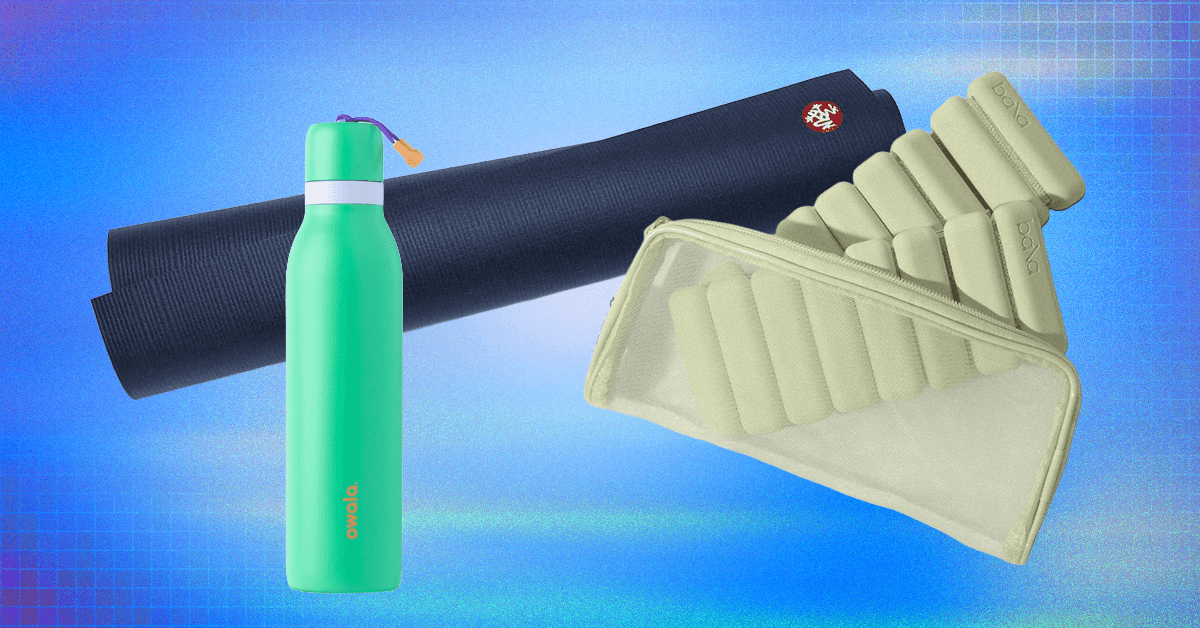
You don’t need to splurge on a $2,000 reformer to practice Pilates at home. I take heated mat Pilates at my local fitness studio twice a week, and we usually use a combination of props: an exercise ball, Pilates ring (aka. a magic circle), and light weights. I like to use 2- or 3-pound dumbbells, but wrist and ankle weights don’t require grip strength and still add extra intensity to your full-body Pilates workout. Core sliders, which go under your hands or feet, add resistance to your movements and are an affordable alternative to the springs of a reformer.
We’ve spotlighted a few of our favorites below, but you can find more tested picks in our Best Reusable Water Bottles guide.
Power up with unlimited access to WIRED. Get best-in-class reporting and exclusive subscriber content that’s too important to ignore. Subscribe Today.

The European Commission has published its implementation strategy for the VAT in the Digital Age (ViDA) package, setting out actions to help businesses and Member States with the practical roll-out of upcoming VAT framework updates.
The European Commission has released its implementation strategy for the ViDA package, outlining actions and timelines for rollout.
ViDA introduces digital reporting, platform economy VAT rules, and single VAT registration to simplify compliance.
Expected benefits include €172– 214 billion (~$201.6–250.9 billion) over ten years, with €51 billion (~$59.8 billion) in business savings.
The ViDA package introduces new digital reporting requirements, targeted VAT adaptations for the platform economy, and a streamlined single VAT registration process, aiming to simplify compliance and reduce administrative burdens. The strategy provides a roadmap with key action points and timelines to ensure coordinated implementation across the EU.
By aligning ViDA measures with broader EU digital policies, the Commission seeks to enhance transparency in digital transactions and support businesses operating across borders, European Commission said in a release.
The approach also emphasises close monitoring of ViDA’s integration with other legislative efforts to maximise efficiency and strengthen the Single Market.
The Commission estimates that the ViDA package could generate economic benefits of €172– 214 billion (~$201.6–$250.9 billion) over ten years, including around €51 billion (~$59.8 billion) in savings for businesses. The strategy underscores the EU’s commitment to modernising its VAT system to meet the demands of the digital economy while boosting competitiveness.
Fibre2Fashion News Desk (HU)


PGA of America CEO steps down after one year to take care of mother and mother-in-law

Bama QB Simpson says he’s headed to NFL draft

Does new US food pyramid put too much steak on your plate?

-

 Entertainment1 week ago
George Clooney, his wife Amal and their twins granted French citizenship
-

 Sports1 week ago
Morocco reach AFCON last 16 | The Express Tribune
-
 Business1 week ago
A major drop in the prices of petroleum products is likely with the arrival of the New Year. – SUCH TV
-

 Fashion1 week ago
UK year-end review 2025: Seeking new avenues
-
 Business7 days ago
Energy price cap rises slightly as temperatures fall
-

 Entertainment7 days ago
France president ‘wants to ban under-15s from social media’
-

 Fashion1 week ago
Saat & Saat acquires Turkish apparel leader Aydinli Group
-
Sports1 week ago
Tom Wilson’s New Year’s Eve: Two goals, a fight, a win and an Olympic nod