

Tech
WIRED’s 3 Favorite Coffee Subscriptions Are Half Off Today


It’s September 29, the day that America celebrates its least guilty vice and addiction, known in the streets as “java” or “joe.” That’s right, it’s National Coffee Day—the day that thousands of people burn $2 worth of gas waiting in a drive-thru to get a free $2 cup of coffee from Dunkin‘.
Or how about this instead? Get free or cheap coffee without leaving your house, like a civilized person in the age of the internet. Take advantage of online coffee subscription deals instead.
WIRED has long considered delivery coffee subscriptions to be the promise of technology fulfilled: The best coffee, from all over the country and world, gets scooted to your door without you lifting more than a finger. Anyway, three of WIRED’s absolute favorite coffee subscriptions are offering big introductory deals for National Coffee Day 2025, so it’s a good day to discover the joys of always having good coffee.
Here are National Coffee Day deals on Atlas Coffee Club, Trade Coffee, and Podium Coffee. Each is 50 percent off for the holiday.
Atlas Coffee Club Deals and Promo Code
-
Photograph: Matthew Korfhage
-
Photograph: Matthew Korfhage
-
Photograph: Matthew Korfhage


Atlas Coffee Club
Coffee Subscription
Atlas is WIRED’s favorite overall coffee subscription for multiple very good reasons. It roasts very good coffee. It also offers reliable, friendly, and swift service—a simple necessity when conducting long-distance relationships over the web. But especially, it offers single-origin coffee from a different country each month, letting you try coffee with flavors you likely haven’t tried before. Arabica coffee from Vietnam, or coffee grown in multiple regions of China or India. It’s cool. It’s kinda what you want showing up at your door, and you can choose your favorite roast level to suit the kind of person you are.
Anyway, Atlas Coffee Club deals are going big for National Coffee Day.
Between September 29 and October 1, 2025, enter the Atlas Coffee promo code FREECOFFEE to get the following discounts and freebies:
National Coffee Day Deals at Trade Coffee

Courtesy of Trade Coffee
If Atlas is our favorite single-origin roaster subscription, Trade Coffee is your ticket to coffee from everywhere—the best and broadest selection of coffee from the best coffee roasters all over the country. I like Trade, especially, as a great way to find roasters I would have never tried, whether chocolatey roasts from Canton, Georgia, or big funky, fruity, light roasts from Portland, Oregon.
And so a Trade Coffee deal is always welcome. On National Coffee Day, Trade Coffee is offering half off a one-month trial subscription.
National Coffee Day Deals from Podium Coffee Club

Photograph: Matthew Korfhage
Podium Coffee Club
Coffee Subscription
Podium Coffee Club is yet another vision of coffee subscription, and also among my favorites. The name says it all: It’s a coffee subscription devoted to only award-winning coffees that have been judged among the best in the country and world in large and credible competitions. Podium picks just one wonderful coffee to send you each month, depending on whether you asked for the Gold or the Platinum subscription.
The Podium Gold subscription is generally very balanced, classic, excellent coffee beans. The Podium Platinum subscription, in part, raises its standards for how prestigious an award a coffee might need to be included. But also, the Platinum picks are often rare, funky, interesting, or just different—coffee that changes your mind about what coffee’s supposed to taste like. Either way, lucky you, it’s cheap today with an exclusive code from WIRED.
Enter the Podium Coffee Club promo code WIREDNTNLCFF50 for half off your first month’s subscription.
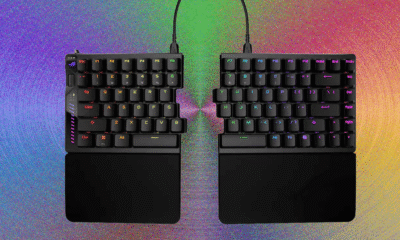








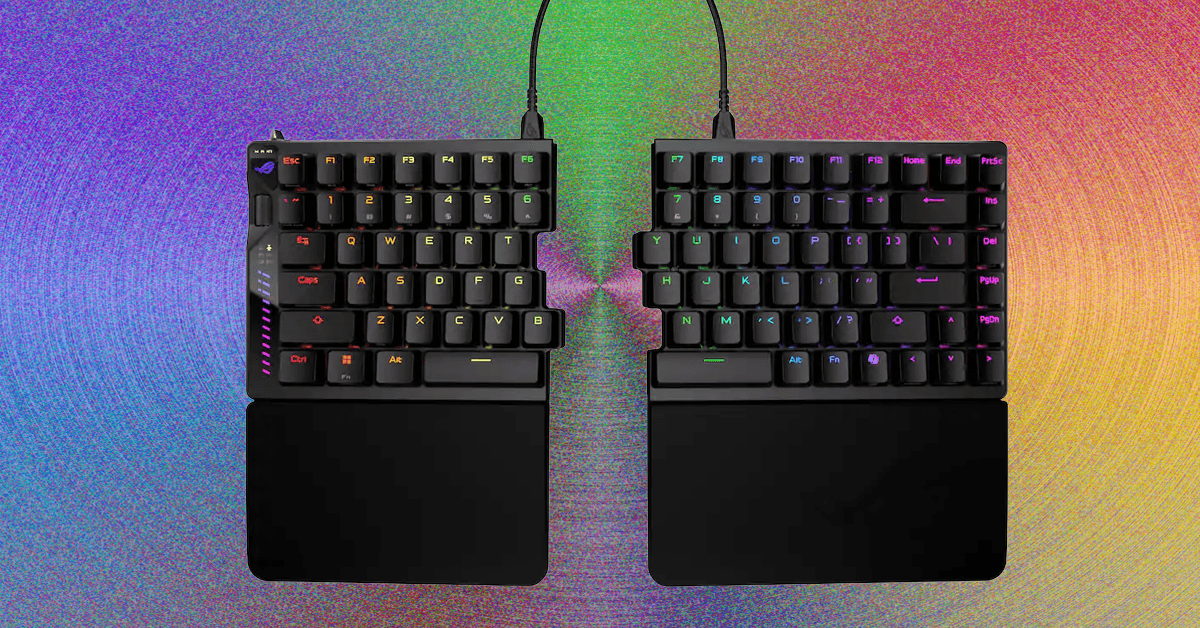
The wheel on the left side has options to adjust actuation distance, rapid-trigger sensitivity, and RGB brightness. You can also adjust volume and media playback, and turn it into a scroll wheel. The LED matrix below it is designed to display adjustments to actuation distance but feels a bit awkward: Each 0.1 mm of adjustment fills its own bar, and it only uses the bottom nine bars, so the screen will roll over four times when adjusting (the top three bars, with dots next to them, illuminate to show how many times the screen has rolled over during the adjustment). The saving grace of this is that, when adjusting the actuation distance, you can press down any switch to see a visualization of how far you’re pressing it, then tweak the actuation distance to match.
Alongside all of this, the Falcata (and, by extension, the Falchion) now has an aftermarket switch option: TTC Gold magnetic switches. While this is still only two switches, it’s an improvement over the singular switch option of most Hall effect keyboards.
Split Apart
Photograph: Henri Robbins
The internal assembly of this keyboard is straightforward yet interesting. Instead of a standard tray mount, where the PCB and plate bolt directly into the bottom half of the shell, the Falcata is more comparable to a bottom-mount. The PCB screws into the plate from underneath, and the plate is screwed onto the bottom half of the case along the edges. While the difference between the two mounting methods is minimal, it does improve typing experience by eliminating the “dead zones” caused by a post in the middle of the keyboard, along with slightly isolating typing from the case (which creates fewer vibrations when typing).
The top and bottom halves can easily be split apart by removing the screws on the plate (no breakable plastic clips here!), but on the left half, four cables connect the top and bottom halves of the keyboard, all of which need to be disconnected before fully separating the two sections. Once this is done, the internal silicone sound-dampening can easily be removed. The foam dampening, however, was adhered strongly enough that removing it left chunks of foam stuck to the PCB, making it impossible to readhere without using new adhesive. This wasn’t a huge issue, since the foam could simply be placed into the keyboard, but it is still frustrating to see when most manufacturers have figured this out.

Don’t call them hearing aids. They’re hearpieces, intended as a blurring of the lines between hearing aid and earbuds—or “earpieces” in the parlance of Lizn, a Danish operation.
The company was founded in 2015, and it haltingly developed its launch product through the 2010s, only to scrap it in 2020 when, according to Lizn’s history page, the hearing aid/earbud combo idea didn’t work out. But the company is seemingly nothing if not persistent, and four years later, a new Lizn was born. The revamped Hearpieces finally made it to US shores in the last couple of weeks.
Half Domes
Photograph: Chris Null
Lizn Hearpieces are the company’s only product, and their inspiration from the pro audio world is instantly palpable. Out of the box, these look nothing like any other hearing aids on the market, with a bulbous design that, while self-contained within the ear, is far from unobtrusive—particularly if you opt for the graphite or ruby red color scheme. (I received the relatively innocuous sand-hued devices.)
At 4.58 grams per bud, they’re as heavy as they look; within the in-the-ear space, few other models are more weighty, including the Kingwell Melodia and Apple AirPods Pro 3. The units come with four sets of ear tips in different sizes; the default mediums worked well for me.
The bigger issue isn’t how the tip of the device fits into your ear, though; it’s how the rest of the unit does. Lizn Hearpieces need to be delicately twisted into the ear canal so that one edge of the unit fits snugly behind the tragus, filling the concha. My ears may be tighter than others, but I found this no easy feat, as the device is so large that I really had to work at it to wedge it into place. As you might have guessed, over time, this became rather painful, especially because the unit has no hardware controls. All functions are performed by various combinations of taps on the outside of either of the Hearpieces, and the more I smacked the side of my head, the more uncomfortable things got.

Thinking Machines cofounders Barret Zoph and Luke Metz are leaving the fledgling AI lab and rejoining OpenAI, the ChatGPT-maker announced on Thursday. OpenAI’s CEO of applications, Fidji Simo, shared the news in a memo to staff Thursday afternoon.
The news was first reported on X by technology reporter Kylie Robison, who wrote that Zoph was fired for “unethical conduct.”
A source close to Thinking Machines said that Zoph had shared confidential company information with competitors. WIRED was unable to verify this information with Zoph, who did not immediately respond to WIRED’s request for comment.
Zoph told Thinking Machines CEO Mira Murati on Monday he was considering leaving, then was fired today, according to the memo from Simo. She goes on to write that OpenAI doesn’t share the same concerns about Zoph as Murati.
The personnel shake-up is a major win for OpenAI, which recently lost its VP of research, Jerry Tworek.
Another Thinking Machines Lab staffer, Sam Schoenholz, is also rejoining OpenAI, the source said.
Zoph and Metz left OpenAI in late 2024 to start Thinking Machines with Murati, who had been the ChatGPT-maker’s chief technology officer.
This is a developing story. Please check back for updates.


Burberry celebrates Year of the Horse 2026 with Shanghai campaign

Chanel emerges as fastest-growing luxury fashion brand in 2025: Report
His starting job slipped away, but this goalie is never going to complain

-

 Politics1 week ago
UK says provided assistance in US-led tanker seizure
-

 Entertainment1 week ago
Does new US food pyramid put too much steak on your plate?
-

 Entertainment1 week ago
Why did Nick Reiner’s lawyer Alan Jackson withdraw from case?
-
 Business1 week ago
Trump moves to ban home purchases by institutional investors
-

 Sports1 week ago
PGA of America CEO steps down after one year to take care of mother and mother-in-law
-

 Sports4 days ago
Clock is ticking for Frank at Spurs, with dwindling evidence he deserves extra time
-
 Business1 week ago
Bulls dominate as KSE-100 breaks past 186,000 mark – SUCH TV
-
 Business1 week ago
Gold prices declined in the local market – SUCH TV