Connect with us

Business

With Trump’s ‘reciprocal’ tariffs struck down, here are the industries still facing higher rates

Published

on

With Trump’s ‘reciprocal’ tariffs struck down, here are the industries still facing higher rates


The Supreme Court during a rain storm in Washington, Feb. 20, 2026.

Annabelle Gordon | Bloomberg | Getty Images

The Supreme Court on Friday ruled that President Donald Trump’s country-specific “reciprocal” tariffs are unconstitutional, delivering a win for many consumer companies facing higher import costs.

But the ruling doesn’t cover all sectors.

The Supreme Court reviewed tariffs enacted under the International Emergency Economic Powers Act of 1977, or IEEPA, which the Trump administration used to justify the sweeping tariff agenda. The act had never before been used by a president to impose tariffs.

In a 6-3 decision, the Supreme Court ruled that IEEPA “does not authorize the President to impose tariffs.”

Still, hours after the ruling, Trump announced a new global 10% tariff, and the Supreme Court’s ruling does not cover tariffs enacted under Section 232 of the Trade Expansion Act of 1962. Those duties are intended to target specific products that threaten national security, and they remain in effect after Friday’s ruling.

Separate from his country-specific rates, Trump has raised tariffs on imports of steel, semiconductors, aluminum and other products deemed to impair national security.

Here are the sectors still facing higher levies even after the Supreme Court decision.

Autos

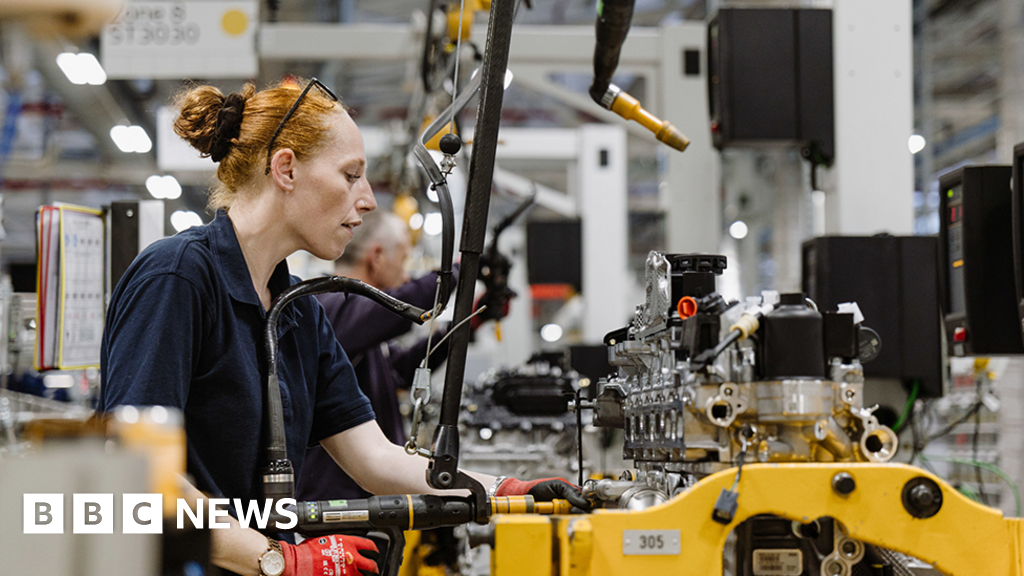
It’s not immediately clear how much the decision will impact the U.S. and global automotive industry. The industry continues to face billions of dollars in tariff costs, depending on where an imported auto part or vehicle originates.

The Trump administration last year broadly implemented 25% tariffs on vehicles and certain auto parts imported into the U.S., citing national security risks. It has since struck independent deals to lower the levies to 10% to 15% with countries such as the United Kingdom and Japan. Others, such as South Korea, have also struck deals for lower rates, but it’s unclear if those changes have actually taken effect.

“With today’s decision out and subsequent developments, there remain many unknowns and important questions still to be answered. This is not a moment to ease up,” said Lenny LaRocca, U.S. automotive lead for consulting firm KPMG. “Automakers should continue planning for multiple scenarios and keep supply chain considerations top of mind as the trade and tariff landscape continues to evolve.”

America’s largest automaker, General Motors, last month said it expects between $3 billion and $4 billion in tariff costs this year, and Ford Motor earlier this month said its net tariff impact is expected to be roughly flat year over year at $2 billion in 2026.

Ford told CNBC in a statement that it is continuing to work with the government on policies that “promote a strong and globally competitive U.S. auto sector.” GM did not immediately respond to a request for comment on the Supreme Court decision.

Pharmaceuticals

The pharmaceutical industry is facing a lot of uncertainty over tariffs. Trump has repeatedly threatened tariffs on pharmaceutical imports, though they haven’t yet taken effect, in part because of negotiated multiyear deals between the administration and drugmakers.

If that were to change, however, pharmaceutical tariffs would still be covered under Section 232.

The administration has floated imposing tariffs on the industry that could eventually reach up to 250%. Last July, Trump threatened 200% tariffs on pharmaceuticals, and the administration has already opened a Section 232 investigation into pharmaceuticals to investigate the impact of imports on national security.

The tariff threats are a move to push drug companies to manufacture in the U.S. instead of abroad.

In December, multiple companies inked a deal with Trump to voluntarily lower their prices in exchange for a three-year exemption from any pharma tariffs — as long as they invest further in U.S. manufacturing. That deal included major players like Merck, Bristol Myers Squibb, Novartis and more.

Furniture

The furniture industry found little relief from Friday’s Supreme Court ruling.

Last fall, items like couches, kitchen cabinets, vanities and more were hit with higher tariffs under Section 232. The roughly 25% duties will remain in place even now that the IEEPA tariffs have been deemed unconstitutional.

The furniture industry is already facing greater uncertainty, with the 25% tariff expected to rise to 50% in 2027, and more broad pressures from higher interest rates and inflation.

Smaller companies are getting hit the hardest, with fewer resources to work with, while larger companies are facing bankruptcy, like Value City Furniture’s parent company, American Signature Furniture, which went out of business late last year.

Food and consumer packaged goods

Under Section 232, steel and aluminum imports into the U.S. are still carry tariffs.

With higher aluminum tariffs, companies like Coca-Cola, PepsiCo, Keurig Dr Pepper and Reynolds will continue to face higher costs associated with manufacturing their products.

Trump hiked aluminum tariffs to 50% last year.

Still, some of the key tariffs for the sector have been rolled back, even before Friday’s ruling.

In November, Trump issued an executive order exempting several hundred agricultural products, including bananas, coffee and spices, from tariffs. And in September, he similarly rescinded a 10% tariff on Brazilian pulp, a key component of paper towels, diapers and toilet paper.

— CNBC’s Mike Wayland, Annika Kim Constantino, Gabrielle Fonrouge and Amelia Lucas contributed to this report.


Source link

Continue Reading
Click to comment

Leave a Reply

Your email address will not be published. Required fields are marked *

Business

PM Modi warns against ‘Digital Arrest’ scams, Urges citizens to keep KYC updated

Published

on

PM Modi warns against ‘Digital Arrest’ scams, Urges citizens to keep KYC updated


New Delhi: In his latest Mann Ki Baat address to the nation, Prime Minister Narendra Modi urged citizens to stay vigilant against growing digital scams that target unsuspecting users — especially those involving fraudulent claims of digital arrests or legal actions.

The Prime Minister also highlighted the importance of keeping Know Your Customer (KYC) information up to date across financial and digital platforms to avoid becoming a victim of fraud and to ensure seamless access to essential services.

What Are Digital “Arrest” Scams?


Add Zee News as a Preferred Source


Digital arrest scams are a type of online fraud where criminals send messages — typically through SMS, email or messaging apps — claiming that the recipient has been “digitally arrested” or faces some legal trouble. These messages often include:

Fake links

Threatening language

Instructions to click or respond immediately

Once a victim interacts with the link, attackers can steal personal data, banking information, or install malware on the device. PM Modi warned that such scams are increasing in frequency, and citizens should be wary of unexpected messages that create panic or urgency.

Why Keeping KYC Updated Matters

KYC — short for Know Your Customer — is a process used by banks, telecom companies, digital payment apps and financial institutions to verify a person’s identity. Updated KYC records help:

Prevent fraud and identity theft

Enable secure access to banking and financial services

Ensure government welfare and subsidy schemes reach the right beneficiaries

The Prime Minister reminded people that keeping KYC details updated makes it harder for fraudsters to misuse personal information and easier for individuals to access services without interruption.

Tips to Avoid Digital Scams

PM Modi shared practical advice for all citizens to protect themselves online:

Don’t click on suspicious links — especially from unknown senders or unexpected messages.

Verify messages claiming legal issues — contact official authorities instead of reacting to urgent claims.

Use secure apps and websites — check URLs carefully and only use trusted platforms.

Regularly update passwords and security settings — avoid sharing OTPs or passwords with anyone.

The emphasis was on caution and common sense — an informed user is a safer user.

Broader Digital Awareness

Digital scams are not limited to arrest threats. Other common fraud tactics include:

Fake investment or win-money schemes

Fraudulent job offers

Phone call impersonations

Fake customer care messages

By staying alert and informed, citizens can spot red flags and report suspicious activity swiftly.

PM’s Message on Digital Safety

In his address, the Prime Minister emphasized that the digital revolution — from online banking to mobile payments and e-commerce — has brought tremendous convenience, but it also requires responsible use. While technology empowers users, it also opens opportunities for misuse if proper precautions aren’t taken.

Citizens were encouraged to educate family members, especially the elderly or less digitally fluent, about common scam patterns and digital safety measures.

Keep KYC Status Current

Updating your KYC might feel like a small administrative task, but PM Modi highlighted it as a key defense against fraud. Many services — such as bank accounts, mobile connections, insurance policies, mutual funds, and digital wallets — require up-to-date KYC to function smoothly.

Failing to update KYC can lead to:

Account blocks or freezes

Inability to receive government transfers or benefits

Greater risk of identity misuse

Regularly checking KYC status and updating it when required protects both your financial accounts and digital credibility.

The Bottom Line

In his Mann Ki Baat message, Prime Minister Narendra Modi delivered a simple but powerful point: stay alert, stay informed, and keep your digital and financial details updated. In an era where scams evolve rapidly, proactive citizens are the first line of defense.

By understanding common threats and following basic security practices — such as avoiding suspicious links and maintaining updated KYC — Indians can enjoy the benefits of digital connectivity without falling victim to fraud.


Source link

Continue Reading

Business

Trump’s tariffs struck down, what’s next? SBI suggests adopting a ‘counter-intuitive’ approach – The Times of India

Published

on

Trump’s tariffs struck down, what’s next? SBI suggests adopting a ‘counter-intuitive’ approach – The Times of India


US Supreme Court’s recent striking down of President Donald Trump’s tariff framework could lift the policy outlook and influence the current climate of uncertainty. A recent report by SBI Research has suggested that countries may have to negotiate with a “counter-intuitive” approach in the interim phase, given that the final say on tariff matters rests with a closely divided US Congress.It further cautioned that the interaction between inter-sovereign treaties and the actions of juristic persons on tariff issues could complicate, and possibly disrupt, the effort to establish a consistent tariff regime.

Trump Raises Worldwide Tariffs From 10% To 15% A Day After Supreme Court Ruling

“Unscrapping of the tariff structure by the Court(s) can upend uncertainty going forward while jurisdictions need to put in place counter intuitive negotiation to position themselves strategically in the intermittent period where ultimate power lies with a delicately balanced US Congress,” the report stated.The assessment comes after a landmark judgment by the US Supreme Court, which invalidated the President’s use of the International Emergency Economic Powers Act (IEEPA), 1977, to levy tariffs. SBI Research pointed out that the statute had never previously been deployed by any President for tariff imposition and has limited grounding during peacetime.Meanwhile, after the verdict, the executive branch has turned to Section 122 of the Trade Act of 1974 to introduce a temporary 10% global tariff on all imports into the United States. The report highlighted that this is the first time Section 122 powers have been exercised. The measure will come into force on 24 February 2026 and is set to run for 150 days, ending in July unless Congress approves its continuation.Under provisions of the Trade Act, the President may impose temporary import surcharges of up to 15% or apply quotas to address balance of payments concerns. Such actions, however, cannot extend beyond 150 days unless lawmakers pass legislation to prolong them.The newly imposed 10% tariff includes carve-outs. Goods from Canada and Mexico that meet the requirements of the US-Mexico-Canada Agreement (USMCA) are exempt, as are certain national security tariffs that are already operational.SBI Research expects the administration to use the interim window to complete investigations and potentially impose tariffs through Section 301 and Section 232 mechanisms.The report also observed that the court’s ruling may not fully block Trump from introducing similar tariffs under other statutory authorities.It further warned of implications for existing trade arrangements. Because IEEPA-related tariffs have supported trade agreements worth trillions of dollars, including those involving China, the United Kingdom and Japan, the judgment could create fresh uncertainty around several current deals, the report said.


Source link

Continue Reading

Business

Trump raises new global tariffs to 15% after hitting out at ‘terrible’ Supreme Court

Published

on

Trump raises new global tariffs to 15% after hitting out at ‘terrible’ Supreme Court


Donald Trump has increased global tariffs to 15 per cent as he hit out at a Supreme Court ruling that struck down his previous import levies, calling the ruling “terrible” and branding the justices who rejected his trade policy as “fools”.

On Friday, the US president said he would replace the tariffs axed by the court with a 10 per cent tax on all goods entering the US. But in a post on Truth Social on Saturday he announced plans to increase this to 15 per cent.

The US president’s “reciprocal tariffs”, imposed on most of the rest of the world last April under an emergency powers law, were overturned by the US Supreme Court on Friday in a major blow to the president’s economic agenda.

But he doubled down on imposing levies following the decision, claiming the court “has been swayed by foreign interests” and other countries were “dancing in the streets, but they won’t be dancing for long, that I can assure you”.

The UK scrambled to respond in the wake of the announcement, with ministers saying they expect the country’s “privileged trading position with the US” to continue following the Supreme Court’s ruling.

The UK received the lowest tariff rate of 10 per cent, and a subsequent deal struck by Sir Keir Starmer and Mr Trump saw further carve-outs for Britain’s steel industry and car manufacturers.

The US president’s latest tariff announcements raise questions over whether those deals still stand, although officials are understood to believe it will not impact on most of the UK’s trade with America, including preferential deals on steel, cars and pharmaceuticals.

Donald Trump holds up a chart of ‘reciprocal tariffs’ during his trade announcement last April (Getty)

Posting on Truth Social on Saturday afternoon, Mr Trump said: “I, as President of the United States of America, will be, effective immediately, raising the 10% Worldwide Tariff on Countries, many of which have been ‘ripping’ the U.S. off for decades, without retribution (until I came along!), to the fully allowed, and legally tested, 15% level.”

It came after a post on Friday evening said: “It is my Great Honor to have just signed, from the Oval Office, a Global 10 per cent Tariff on all Countries, which will be effective almost immediately. Thank you for your attention to this matter! PRESIDENT DONALD J. TRUMP”

He later added in a follow-up post criticising the Supreme Court Justices who ruled against his levies: “Their decision was ridiculous but, now the adjustment process begins, and we will do everything possible to take in even more money than we were taking in before!”

Speaking at the White House earlier, Mr Trump said the Supreme Court decision affirmed his ability to charge more tariffs under different statutes.

He said: “In order to protect our country, a president can actually charge more tariffs than I was charging in the past… period of a year.

“Under the various tariffs authorities, so we can use other of the statutes, other of the tariff authorities, which have also been confirmed and are fully allowed.

“Therefore, effective immediately, all national security tariffs under Section 232 and existing Section 301 tariffs, they’re existing, they’re there, remain in place, fully in place. And in full force.

“Today I will sign an order to impose a 10 per cent global tariff under Section 122, over and above our normal tariffs already being charged.

“And we’re also initiating several Section 301 and other investigations to protect our country from unfair trading practises of other countries and companies.”

A UK government spokesperson said: “This is a matter for the US to determine but we will continue to support UK businesses as further details are announced.

“Under any scenario, we expect our privileged trading position with the US to continue and will work with the administration to understand how the ruling will affect tariffs for the UK and the rest of the world.”

Trump speaks to the press in the White House on Friday

Trump speaks to the press in the White House on Friday (AP)

It was an updated version of a statement released earlier in response to the court ruling, but removed a reference to the UK enjoying “the lowest reciprocal tariffs globally”.

In the wake of the announcement, Liberal Democrat leader Sir Ed Davey said the UK government should sue Mr Trump for $100bn for the damage caused to the UK by trade tariffs, arguing it is “the only language he understands”.

He branded Mr Trump the “most dangerous, damaging US president of modern times” as he welcomed the “brilliant” decision by the US Supreme Court on Friday.

It came after Mr Trump said that some trade deals negotiated after he imposed his reciprocal tariffs will no longer be valid after the US Supreme Court ruling.

“Some of them stand. Many of them stand. Some of them won’t, and they’ll be replaced with the other tariffs,” he said.

When he first announced the 10 per cent “global tariff”, the US president said it would be in place for around five months.

“We’re going straight ahead with 10 per cent straight across the board… and then during that period of about five months, we are doing the various investigations necessary to put fair tariffs, or tariffs period, on other countries.

“So we’re doing that, period, but we’re immediately instituting the 10 per cent provision, which we’re allowed to do. And in the end, I think we’re taking more money than we’ve taken in before.”

The US has collected more than $133bn (£98.4bn) since Mr Trump imposed the tariffs, but now faces the prospect of having to refund that money to importers.

Friday’s decision, approved by a 6-3 majority, found that a 1977 law did not give Mr Trump the power to impose tariffs without the approval of the US Congress.

The British Chambers of Commerce (BCC) said the decision did little to “clear the murky waters for business” around US tariffs.

William Bain, head of trade policy at the BCC, said Mr Trump could use other legislation to reimpose tariffs.

He said: “For the UK, the priority remains bringing tariffs down wherever possible. It’s important the UK government continues to negotiate on issues like steel and aluminium tariffs and reduces the scope of other possible duties.”

Campaign group Best for Britain said the decision “underlines the instability of doing deals with Trump’s USA and the importance of forging deeper, more reliable trade with our EU neighbours”.


Source link

Continue Reading

Trending