

Sports
WNBA CBA Q&A: Nneka Ogwumike, Napheesa Collier on ‘standstill’

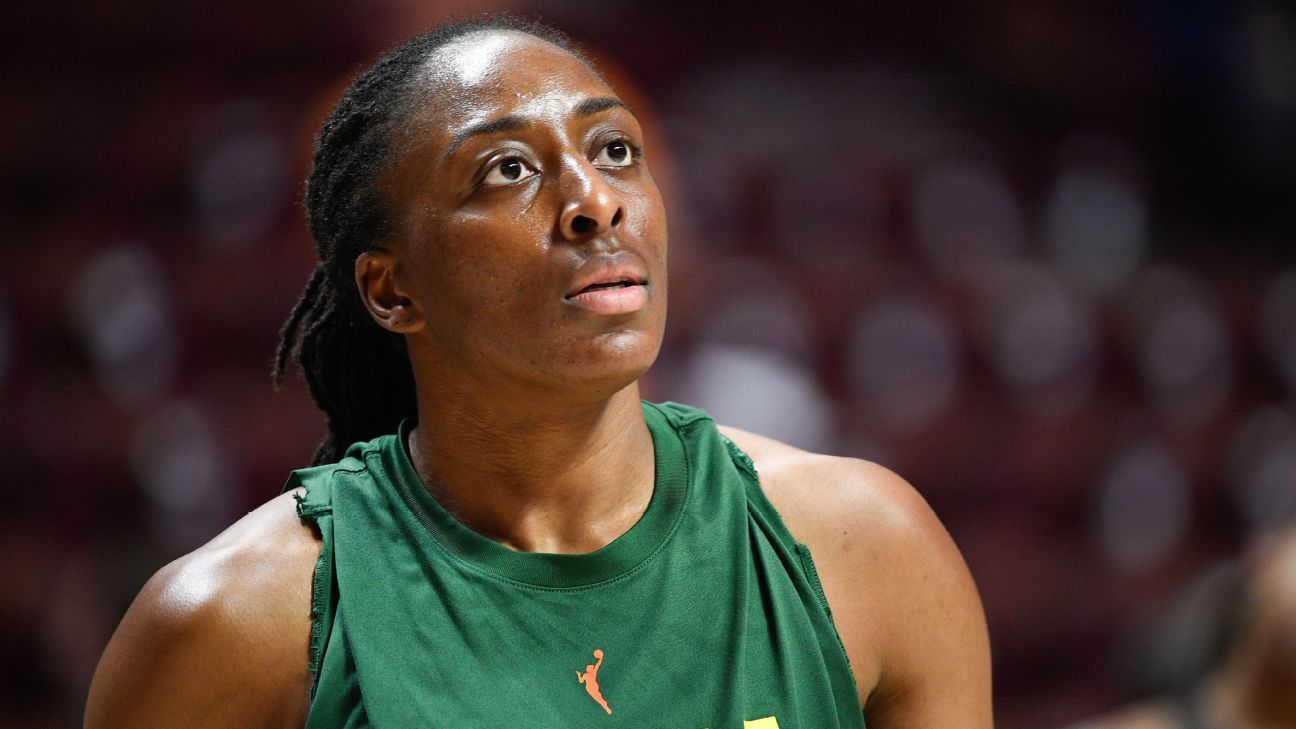
On the eve of the negotiating deadline for a new WNBA collective bargaining agreement, WNBPA president Nneka Ogwumike and vice president Napheesa Collier told ESPN that they are proud of the union’s solidarity and vowed to keep working for a transformational agreement despite their frustrations with the process.
The WNBA CBA is scheduled to expire at 11:59 p.m. ET on Friday, and the league and its players union will likely enter into a stage of “status quo,” where both sides can continue to negotiate, no player benefits are lost and a work stoppage or lockout can be declared without notice.
The WNBPA opted out of the previous CBA in October 2024, and 15 months later, there is no deal in place. According to sources on both sides, negotiations have netted minimal progress.
“We know what we’re asking for,” Collier told ESPN on Thursday. “We know that it’s not too much, like they’re saying.”
Ogwumike and Collier shared their thoughts on the tenor of the negotiations, their relationship with commissioner Cathy Engelbert and why they believe their involvement in other leagues is not a conflict of interest.
This interview has been edited for length and clarity.
ESPN: Over the past few months, more information has been reported about the league’s and the players’ proposals, with numbers and information changing frequently, but as of right now, how would you describe the state of negotiations?
Collier: Obviously, we’d hoped that we would be a lot farther along than we are, because it’s been about [15] months at this point, but at the same time, we have to stay strong in what our values are and what we’re standing for. The players feel really united right now. We’re waiting for the league to come back, and we’re not going to accept a bad deal. We’re waiting for the league to come back and respond to our thoughtful and reasonable proposals.
Ogwumike: Phee’s right. I’m really proud of how professional, and really patient, we’ve been as a collective. But quite frankly, this is my third CBA that I’ve been a part of, so I feel like I’ve been a part of three different eras, and this is by far the most transformational era that we’ve been a part of.
But the progress that we’ve seen, or lack thereof, does not match what the players have built for this league. And I’m just very grateful that our players continue to stay united. Our fight’s been way more than about a paycheck or a headline and higher salaries. It’s definitely for us to be well-represented and valued in this upcoming agreement.
Collier: Yeah, and in terms of where the negotiations are, it’s just been very upsetting and disappointing. The tone of the negotiations coming from the league. It’s very dismissive, very disrespectful. You know, they’ve said over and over again that the players don’t understand the business, and for them to put a blanket statement like that over players who … clearly, we do. We are very smart, educated women. We know what we’re asking for. We know that it’s not too much, like they’re saying. So that’s been very disappointing to have that be the tone of the conversations when we are in such a transformational era. Like Nneka said, where for both sides to be benefiting and reaping the benefits of that.
ESPN: What do you see as the greatest impediment in terms of making the progress that you both say you would like to see?
Ogwumike: We’ve made it very clear for more than a year now that our priority is most certainly a new salary system that is tied to a meaningful share of the revenue. I, as a player, don’t feel like I’ve seen any negotiation in good faith that reflects stepping somewhere closer to the middle, as we have in not just the CBA, but in CBAs before. Phee is right. It’s the tone, it’s the process.
It feels like there’s a bit of a by-the-book, antiquated approach to negotiations that is being used on the league side, and it foils drastically, in comparison to where we are as a league, the types of players that come in here and are changing the game. There’s been a lot of talk and a lot of speculation around the relationship between Cathy and the players, and I really do feel like that’s taking away from the point because our focus is not about feelings about any individuals across the negotiation table but rather the commitment on both sides, as we’ve said many times before, that we want to ensure that we get conversations that lead to something that’s transformational in this new agreement, because we all want to see the league go exactly where we can see it go.
I feel as though in these negotiations there’s kind of a similar approach that we saw in the last CBA negotiations. And of course, you know, the stakes were much different. Our league was in a different place. The union was in a different place. And it doesn’t feel like there’s any kind of innovation or creativity around understanding that we’re in such a different time that can’t lead to something that is more historical. Nothing changes. Nothing changes. And we as players know that first and foremost. And so it doesn’t appear as though that there’s any type of different approach than what we saw back in 2019 and 2020, at least for me, and I’m one of the few players that was, you know, in the situation room. So I would anticipate that with all this group, all of the headlines that the league loves to display around all the revenue that we’re getting, and the amount of viewership that we’re getting, that that would also be applicable to creating a transformational deal in negotiations, and quite frankly, we haven’t seen that.
ESPN: The players are reportedly looking for 30% of gross revenue. What went into the decision to ask for that percentage and ask for gross revenue, as opposed to net revenue?
Collier: Well, we can’t really talk about the numbers that we’re asking for, but in terms of just like we’re looking for: something that we think accurately depicts our value, and especially when it comes to net versus gross revenue. We’re just looking for a new salary system, something that’s going to be a big win for us, that represents our value, and we think that that is represented through gross and not net.
ESPN: It has been reported that the league has said your proposal would result in a $700 million loss over a certain number of years. From your perspective, how does the WNBPA plan balance the players’ desire for compensation with a desire to run a sustainable business in the long term?
Ogwumike: It’s interesting that that was propagated because a lot of players’ first questions to that, that we would be losing, or the league would be losing, money was if that was also money that was inclusive or exclusive of expansion-fee payments in the calculation. Secondly, we’re wondering if those same people have looked at franchise valuations. We can kind of run the numbers on teams that were sold for $10 million years ago, six years ago, and are worth nearly half a billion today. We’re wondering if any of those things are factors. The league and teams saying that they’re losing money is like saying their pockets are empty while you’re also holding the keys to a brand-new Ferrari.
And for us, it doesn’t make sense in any way, especially as we’re reporting so much revenue [growth] and understanding that we are in a position now where, because there is so much growth, we should be making a meaningful share of that while still understanding that we can grow the business. Our staff and board of advisers have done an amazing job of letting us understand exactly where we can get to that, while also still having a very meaningful share of the revenue. And there’s just so many different variables that are omitted, whether it’s the media deal and people seeing metrics from expansion fees that are netting $1 billion plus. But we’re not using whatever information that they’re putting out about losing money as any means for us to stand down. Also if they were losing so much money, there wouldn’t be billionaires racing each other to spend $250 million for the right to own a team. If this is something that’s losing so much money, why does everyone want to be a part of it, and why is it still here 30 years later?
ESPN: Breanna Stewart said earlier Thursday that a formal extension would not be signed before Friday’s deadline and that a status quo would be observed while negotiations are ongoing. What is the benefit of that approach versus doing another extension?
Ogwumike: Hearing Stewie’s point of view, she’s being realistic in her response because we’ve tried to remain optimistic. But with [about] 24 hours remaining, that optimism is not appearing as though we’re going to get anything different from still waiting for the league to respond from more than two weeks ago. Extensions are something that come to fruition when we feel like progress is being made. Now, there’s still time before tomorrow to see if maybe we will get a response, but at this point it’s a question of if they’re willing to get a deal done. Because right now, it appears as though the evidence is showing that the league is trying to run out the clock.
ESPN: And when you say that you’re waiting on the league’s response, does that mean that you’re waiting on a counterproposal in response to your latest proposal?
Ogwumike: Yes, that is what we mean.
ESPN: You’ve talked a lot about the progress that has not been made. Would you say that any progress has been made between the union and the league, and how would you describe that?
Collier: There has been some small progress that has been made, but on all the things that the players have been really vocal about, especially from the very beginning, there’s not been progress made. Those are the big issues that we said from the beginning are our biggest priorities. And with those, we’re at a standstill. We really wish that there were more areas of agreement. There are certainly some areas of agreement — that is a fact. But right now, if we had had fewer areas of disagreement, especially about the things that the players hold as the top priority, we probably would not be nearing the end of another extension. Unfortunately, this is where we are, and this is the nature of negotiations at times, but we are standing firm on getting a good deal done.
ESPN: What are those areas of agreement?
Collier: Things like maternity, childcare, charter planes, maintaining those. But I think, quite frankly, the list is not very long.
ESPN: Both of you are involved in other leagues and have stakes in those leagues to different degrees, and you also sit at the negotiating table for the WNBA players association. How do you respond to those who say that’s a conflict of interest?
Ogwumike: I feel as though the opportunities for women, in a lot of ways, have been limited. When perhaps the one opportunity that we’ve built is now matching the social consciousness, it almost feels as though others can be omitted, or others are not as valid. And I really do; I really do stand against that. You know, we’ve seen so much amazing progress and all the opportunities that we’ve been afforded. We entered this league with our vets telling us to play overseas. [Athletes Unlimited is] in the mix. Two of our union’s leaders have created a league for players that values player compensation and salary, and now we have more opportunity with a global aspect of the game in Project B. I just feel like the threat of change and the threat of something new, especially to women, is always going to shake things up. It’s always going to be disruptive. But anything that is more opportunities for women in sport is good. And I really implore upon others to understand that, because there is no conflict when we’re creating more opportunity.
ESPN: Nneka, you talked about adding opportunities, I think a natural question becomes: Does that lessen the players’ need for the WNBA?
Collier: I think that as players, it just gives us even more leverage. The WNBA is something that everyone has looked up to and has grown up watching, and it’s obviously the height of women’s basketball. No one is trying to get rid of the WNBA. We all want this to work. We just want to be valued in the work that we’re doing. We want to reach that pinnacle together. So that’s all we’re asking for. No one is trying to replace the WNBA or anything like that. We want women to succeed, and I think these other opportunities just give us more leverage basically to make them do the right thing and to pay us what we’re owed. This could be so transformational; we just didn’t have the leverage that we have now. We didn’t have the opportunities to play in other places. And with that, I think it just gives us more leverage to be able to ask what we’re owed.
Ogwumike: Realistically, other professional leagues have never been a new concept since the WNBA has existed. There were leagues that existed prior to the WNBA. There’s people who still today don’t know that we had to play overseas for years, and now these opportunities are bringing themselves to our domestic audience, where we do want to be seen, and to a global audience as we see more players from around the world entering the W. We’re just asking to be paid our worth and treated as elite professional athletes. And if we have Plan A, Plan B, Plan C to do that, then players are going to use that leverage to be able to maximize on the little time that we do have to be professional athletes.
ESPN: At USA Basketball camp last month, Caitlin Clark talked about the importance of both sides needing to compromise, and Stewart said today that “we can come and find a mutual ground.” What do you think about those messages?
Collier: We absolutely agree. We just feel like the league is not agreeing. I mean, I think that we have been very compromising, like we’re not asking for anything crazy. I think we’ve been very respectful, very realistic with what we’re asking, and we are compromising. It just feels like that’s not being reciprocated by the other side.
Ogwumike: I really do feel like the league needs to really pay attention and listen and take notice of exactly what we’re coming to the table with time and time again. Because we’ve been in the room trying to figure out what we can do to get both sides to be closer. We’ve been more than flexible, more than reasonable. And it’s really sad, and disappointing, to see that the league doesn’t see players’ wins and league wins. We’ve shown up in creative ways, innovative ways. And there’s, there’s still resistance that we’re experiencing. There’s still roadblocks from the other side of the table that, in my opinion, is disappointing and a bit surprising, especially as we are here, now approaching a time where everybody wishes that they could be getting ready for free agency. We want to get a good deal done, and we want to play.
ESPN: Where would you say the players have compromised so far?
Ogwumike: The details of these proposals can’t necessarily be discussed in full. When it comes to our priorities, that is not something that we’re moving on, but we’ve been doing some bending on our share of the revenue and understanding how we can face certain things, and even with the new salary structure, we’ve been willing to come up with different ways to be creative about the revenue-sharing model.
ESPN: What I’m hearing from both of you is an element of frustration. You’ve spoken about being disrespected, feeling dismissed, and with this extension expiring and being in a stage of status quo, a work stoppage could happen at any time. And I just wanted to ask you directly, is a strike imminent?
Ogwumike: I think that we’ve been doing a really good job of making sure that players have been informed and ready for whatever. And because of that, all options are certainly on the table. As leadership, our responsibility is not to propose that that’s what’s going to happen. But a union is always prepared for that type of action, and when we, as an executive committee, receive a recommendation from our staff and our legal team that we may determine a strike is warranted, then that’s what’s going to happen. So I think that our membership’s confidence in us as leadership, our unity as a collective, is strong, and we recognize our power and responsibility in that. We are trusted to use that power, but we are first and foremost and always committed to the negotiations.
ESPN: Part of the conversation about these negotiations has been rooted in the unraveling of the relationship between Engelbert and the players over time. How would you describe the current relationship between the commissioner and player leadership today?
Ogwumike: I really do think that our relationship, whatever people speculate or believe, it’s not really the focus, and our feelings aren’t really about he said, she said, they said, any type of back and forth in that way. But I do feel like a relationship can certainly get repaired, as reflected in the CBA, especially when it comes to our top priorities. And so there’s still time. There’s still time for us to answer that question, perhaps a bit more enthusiastically in the future.
Collier: I agree with everything Nneka said.
Ogwumike: It’s not personal. This is business. I feel like we actually got that from Cathy. It’s about the business, right?
ESPN: And lastly, what has it been like to navigate this CBA negotiation while under more scrutiny than ever?
Ogwumike: The growing attention for our league that the fans built, that we built, shows that everything is on notice. You know, we are here. The stakes are high. This is going to be transformational and historical in ways that people don’t understand, that they’re living in as it occurs. So I’m really excited about being able to hear people’s point of view, both public and private, because it just shows, just proves even more that the league and our union is growing. So I appreciate being able to see that type of discourse and activity.
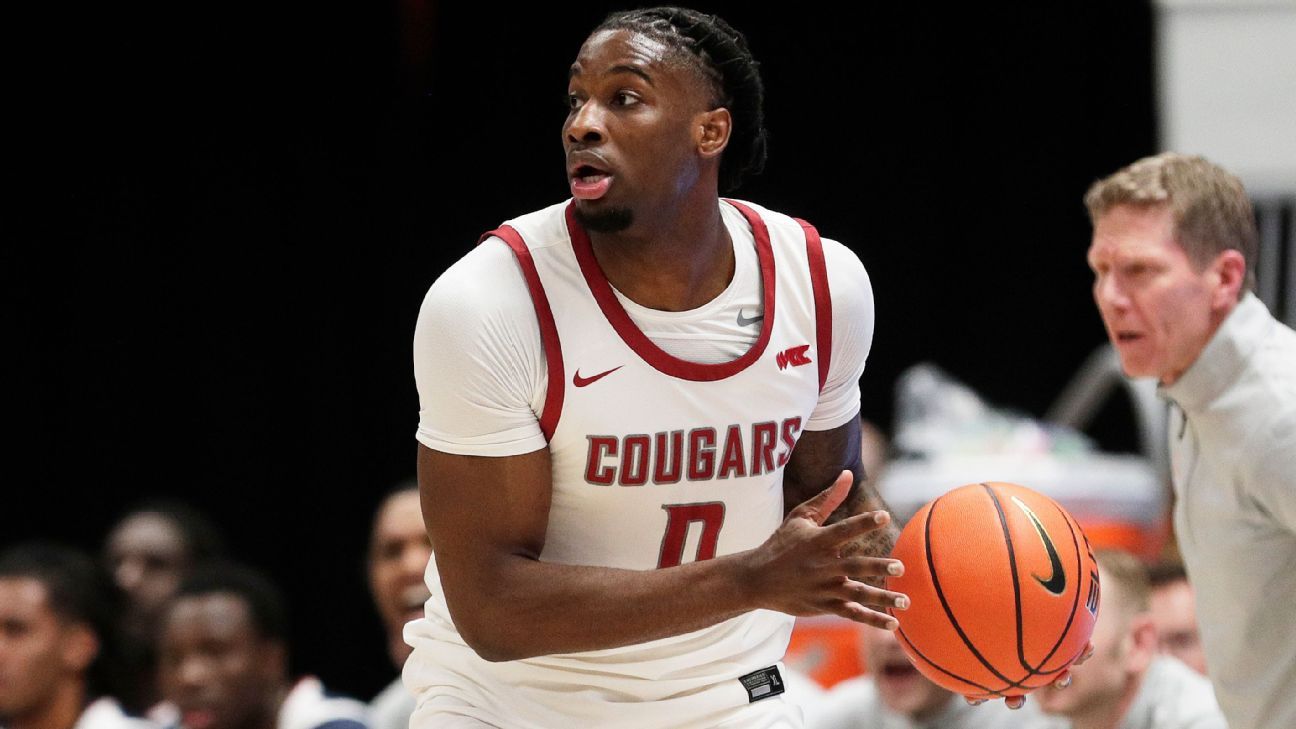
PULLMAN, Wash. — Washington State forward Emmanuel Ugbo, who is currently under a court order resulting from allegations of stalking and harassment, has been suspended for the remainder of the season.
Coach David Riley told reporters this week that Ugbo, who has neither played nor practiced for the Cougars since he was suspended on Jan. 28, will sit out the rest of the way.
“As an institution,” Riley told reporters, “we believe that’s the best course of action.”
Ugbo was accused by a Washington State women’s volleyball player of stalking and harassment after she ended their relationship. Last week, a Whitman County judge granted the woman a full protection order against Ugbo.
Ugbo’s suspension began with Washington State’s home game on Jan. 31, shortly after the woman filed for a temporary protection order. Ugbo averaged 6.7 points and 3.5 rebounds in 18 minutes this season. He previously played for Boise State.
Sports
Anthony Richardson free to seek trade after injury setbacks amid Colts’ shift to Daniel Jones
NEWYou can now listen to Fox News articles!
Anthony Richardson Sr.’s future in Indianapolis faces more uncertainty than ever.
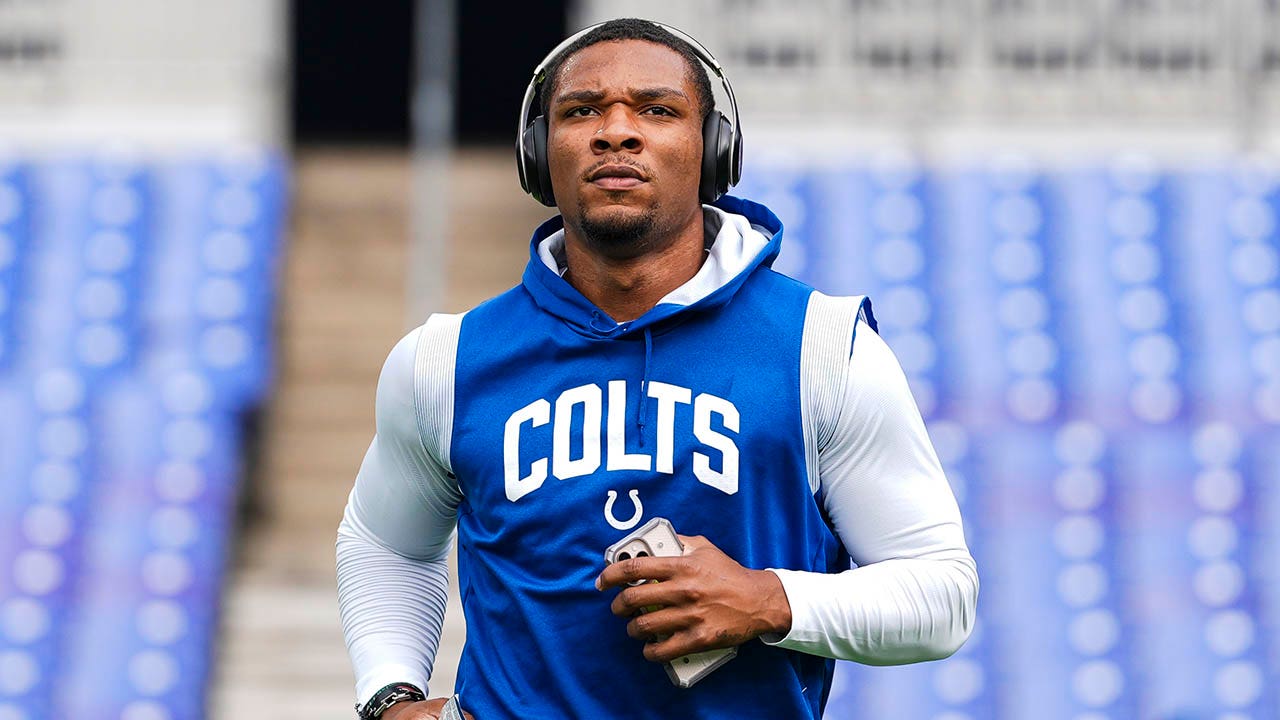
The Indianapolis Colts granted Anthony Richardson, the team that used the fourth overall pick in the 2023 NFL Draft on the quarterback, permission to explore a trade. His agent, Deiric Jackson, confirmed the latest development in the 23-year-old’s tumultuous career to ESPN on Thursday.
Veteran quarterback Daniel Jones beat out Richardson in a preseason competition for the starting job. Jones made the most of another opportunity as an NFL starter, helping the Colts win eight of their first 10 games of the 2025 regular season.
CLICK HERE FOR MORE SPORTS COVERAGE ON FOXNEWS.COM
Indianapolis Colts quarterback Anthony Richardson heads off the field after an NFL football game against the Denver Broncos on Sunday, Dec. 15, 2024 in Denver, Colorado. (AP Photo/David Zalubowski)
However, his season was ultimately derailed by an Achilles injury. The setback came two years after he tore an ACL with the New York Giants. The Colts appear ready to move forward with Jones, clouding Richardson’s future in Indianapolis.
Jones is set to become a free agent in March, meaning the Colts must either use the franchise tag or sign him to a new deal. Richardson has started just 15 games in three seasons with the Colts, his tenure largely shaped by injuries.
A shoulder surgery limited Richardson to four games during his rookie campaign, while a series of setbacks cost him four games in 2024.

Indianapolis Colts quarterback Anthony Richardson (5) looks for an open receiver during the game against the Houston Texans at NRG Stadium. (Troy Taormina/Imagn Images)
Richardson suffered what was described as a “freak pregame incident” during warmups last season, landing him on injured reserve after attempting just two passes in two games in 2025. He has thrown 11 touchdowns against 13 interceptions in his NFL career.
Colts general manager Chris Ballard said Tuesday that the vision problems stemming from Richardson’s orbital fracture last October are “trending in the right direction.” He added that Richardson has been “cleared to play.”
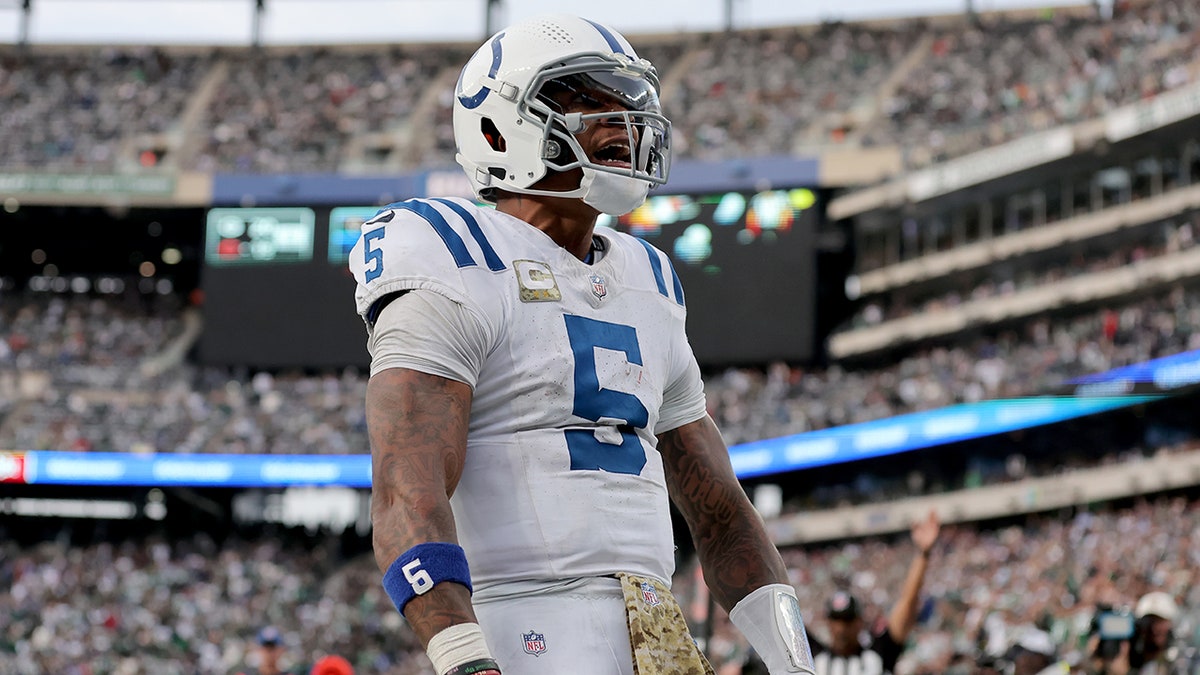
Indianapolis Colts quarterback Anthony Richardson (5) celebrates his touchdown against the New York Jets during the fourth quarter at MetLife Stadium in East Rutherford, New Jersey. (Brad Penner/Imagn Images)
Riley Leonard, a sixth-round pick in the 2025 NFL Draft, is expected to return to the Colts next season.
CLICK HERE TO GET THE FOX NEWS APP
When asked about Richardson’s standing with the Colts moving ahead, Ballard replied, “I still believe in Anthony.”
Follow Fox News Digital’s sports coverage on X, and subscribe to the Fox News Sports Huddle newsletter.
Related Article
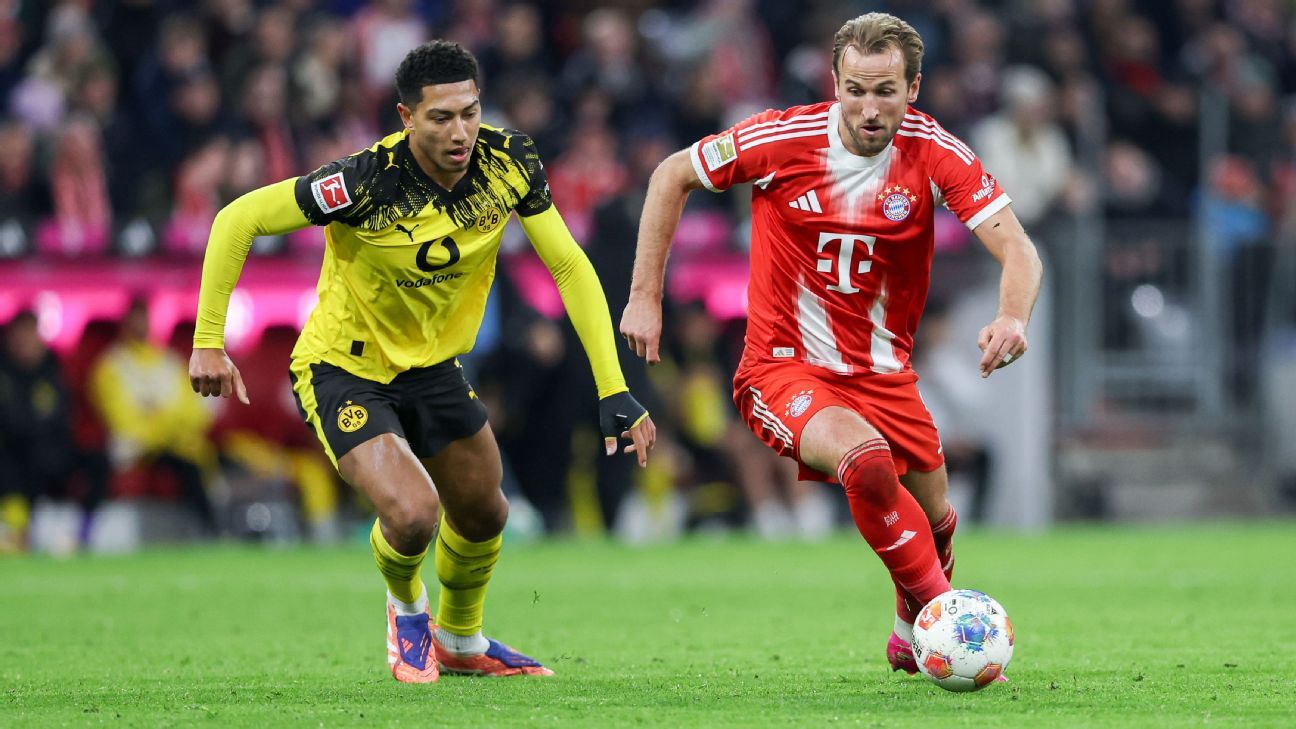
The German word of the week in the Bundesliga ahead of Saturday’s showdown (live at 12:30 p.m. ET, on ESPN+) is not the marketing invention der Klassiker but rather die Aufholjagd (literally, “the hunt to pursue”).
There are in all honesty, very few, even here in the bustling Ruhrpott this week, who believe Borussia Dortmund are likely to make up nine points on leaders Bayern Munich. With the goal difference equation stacked in favor of the Rekordmeister, that is the challenge facing BVB with only 11 games left. But a head-to-head Gipfeltreffen (summit meeting) offers a chance for a new perspective.
Dortmund have spent much of this season under Niko Kovac defying stereotypes: showing a more stable face, grinding out wins, pressing better, reemerging as clearly the second-best team in the Bundesrepublik.
– Why Stuttgart, Celtic’s Europa League opponents, are worth watching
– Meet Noahkai Banks, the outside pick to make USMNT’s World Cup squad
– Harry Kane scores 500th goal: Explaining stats behind red-hot form
But on Wednesday night in Bergamo, the old problems came back to haunt die Schwarz-Gelben, and the team collectively had to Lehrgeld zahlen (literally pay up as a result of being taught a painful lesson) after being eliminated by Atalanta in their knockout round playoff tie in the UEFA Champions League.
Whether Dortmund can translate those lessons — among them, don’t start a big match so passively and Gregor Kobel, don’t give the ball to the opposition with extra time looming — into something successful against a team of Bayern’s sheer quality, is another matter.
Bayern are almost certain to break the Bundesliga’s single-season goal-scoring record (they have 85 goals and need 17 more, a mere bagatelle surely?) Harry Kane requires 14 between now and mid-May to surpass Robert Lewandowski‘s 2020-21 benchmark of 41 league goals. The Englishman has registered a Doppelpack (double) in each of his past three league matches and if he stays fit, you would not bet against him becoming the most goal-rich winner of the Torjägerkanone award ever.
With Michael Olise scoring freely and more importantly, assisting others, and Luis Díaz posing significant problems for opposing sides, Bayern win most games by overwhelming and obliterating. Nobody does it better.
There is, however, a slight glass-jaw quality defensively, which has been evident since January, with only one Bundesliga clean sheet so far this calendar year.
Augsburg for example, have gone to the Allianz Arena and beaten them, Hoffenheim caused them bother even while down to 10 men, and last week Eintracht Frankfurt scored a couple of late goals that Bayern fans, anticipating an easy win, will have seen as nervig (irritating).
At the time of writing, it is unclear who will stand between the posts for the Rekordmeister. Manuel Neuer has been working all week in a bid to get back into the side after sustaining a calf muscle injury at the Weserstadion nearly two weeks ago.
However, Bayern have faith in 22-year-old understudy Jonas Urbig, who looks ever more like the future custodian. Urbig stumbled in the Augsburg game, but his performances have ranged mostly from good to excellent.
If there are any doubts about Neuer’s fitness, it would seem foolish — given the eight-point difference at the top and crunch Champions League matches ahead — to take a chance. Alphonso Davies is out for the foreseeable future with a muscle fiber injury, but with Konrad Laimer available again, Vincent Kompany has plenty of squad depth in the fullback positions with Josip Stanisic and Hiroki Ito.
It almost seems unfair to Dortmund, given the colossal task that they face on Saturday, that right wing back Julian Ryerson is suspended. The Norwegian, once viewed as an honest journeyman, has transformed himself into one of the most valuable players in Kovac’s squad.
Diligent in normal play, Ryerson’s deliveries from open or set play situations can be devilish and he recently crafted all four goals in the same game against Mainz. Yan Couto, more adventurous going forward but less secure defensively, must fulfill that role against Bayern.
At least Nico Schlotterbeck will return to anchor the Dreierkette (back three) in front of Kobel, whose 11 clean sheets top the Bundesliga goalkeeping charts. BVB will require energy and guile in abundance from Marcel Sabitzer and Felix Nmecha in midfield against the formidable duo of Joshua Kimmich and Aleksandar Pavlovic.
Saturday is due to be another day of Verkehrschaos in Dortmund and there have been a few recently. This one is due to industrial action by the trade union, Verdi, knocking out the Stadtbahn (city train/tram service) and bus lines. Fans have been urged to walk the 40 minutes from the Stadtzentrum (city center) to the Signal Iduna Park.
Thereafter, there’s a very real danger that in 90 minutes, Dortmund’s season could effectively disappear in a puff of smoke. Already out of the Champions League and the DFB-Pokal, defeat in the Klassiker would make an Aufholjagd unthinkable.


"Sinners" composer describes personal journey to find his voice in blues music

Bobby J. Brown, “The Wire” and “Law & Order: SUV” actor, dies of smoke inhalation after reported fire

Bangladesh commerce minister seeks Chinese investment in jute sector

-
 Tech1 week ago
A $10K Bounty Awaits Anyone Who Can Hack Ring Cameras to Stop Sharing Data With Amazon
-
 Business1 week ago
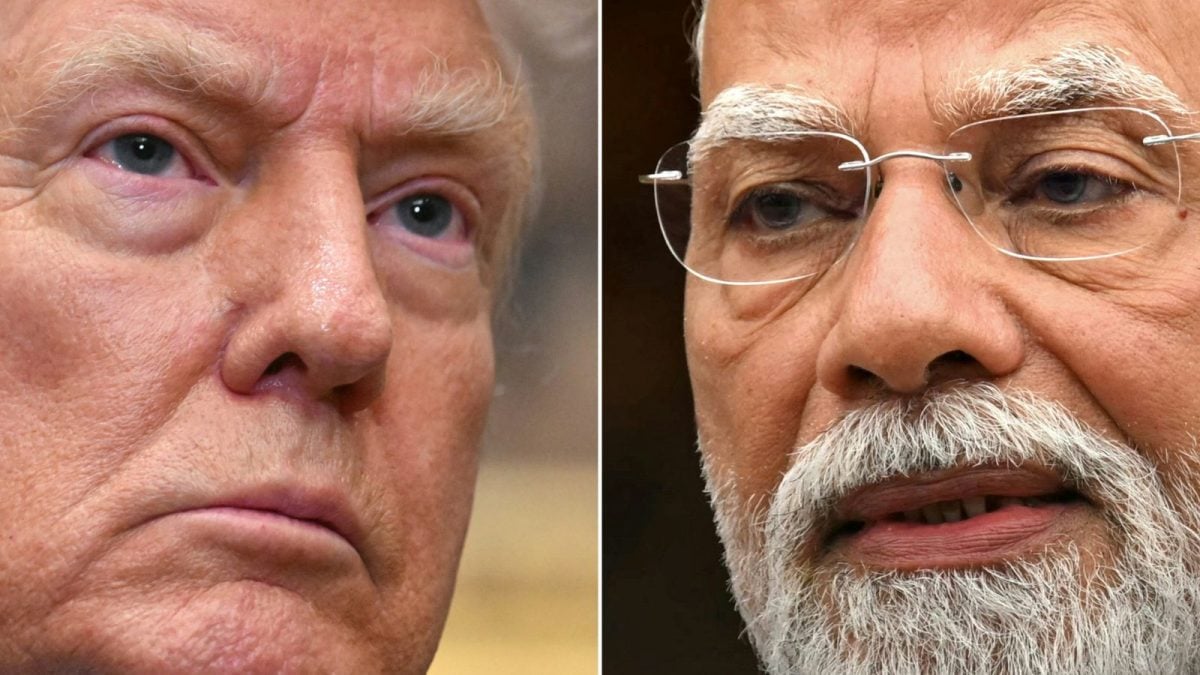
US Top Court Blocks Trump’s Tariff Orders: Does It Mean Zero Duties For Indian Goods?
-

 Fashion7 days ago
ICE cotton ticks higher on crude oil rally
-
 Tech1 week ago
Donald Trump Jr.’s Private DC Club Has Mysterious Ties to an Ex-Cop With a Controversial Past
-

 Entertainment7 days ago
The White Lotus” creator Mike White reflects on his time on “Survivor
-
 Business6 days ago
Eye-popping rise in one year: Betting on just gold and silver for long-term wealth creation? Think again! – The Times of India
-

 Fashion1 week ago
India’s $28 bn reset: How 5 trade deals will reprice its T&A exports
-
 Sports7 days ago
Brett Favre blasts NFL for no longer appealing to ‘true’ fans: ‘There’s been a slight shift’