

Politics
World bids farewell to 2025, a year of Trump, truces and turmoil

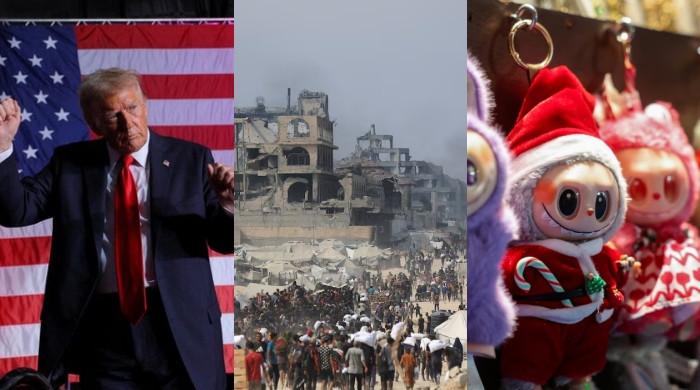
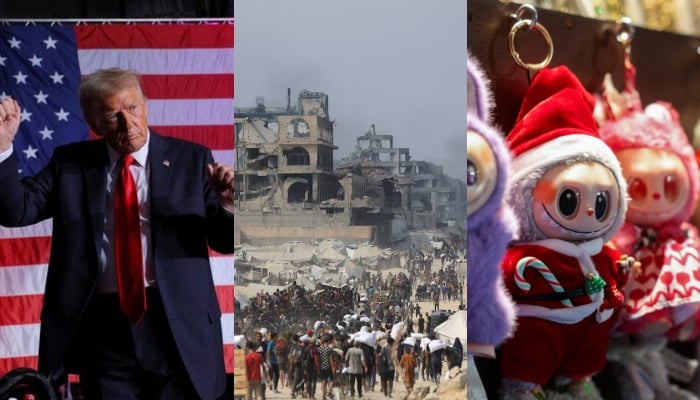
New Year’s Eve revellers toasted the end of 2025 on Wednesday, waving goodbye to 12 months packed with Trump tariffs, a Gaza truce and vain hopes for peace in Ukraine.
It was one of the warmest years on record, the stifling heat stoking wildfires in Europe, droughts in Africa and deadly rains across Southeast Asia.
There was a sombre tinge to party preparations in Australia’s harbour city Sydney, the self-proclaimed “New Year’s capital of the world”.
Barely two weeks have passed since a father and son allegedly opened fire on a Jewish festival at Bondi Beach, killing 15 people in the nation’s deadliest mass shooting for almost 30 years.
Parties will pause for a minute of silence at 11:00pm (1200 GMT) as the famed Sydney Harbour Bridge is bathed in white light to symbolise peace.
“It has been a difficult year for so many people,” said Steph Grant, a 32-year-old Sydney resident.
“Here’s hoping the world looks like a brighter place in 2026,” said Grant, who works in advertising.
Hundreds of thousands of spectators are expected to line Sydney’s foreshore as nine tonnes of fireworks explode on the stroke of midnight.
Security will be tighter than usual, with squads of heavily armed police patrolling the crowds.
Sydney kicks off a chain of celebrations stretching from glitzy New York to the Hogmanay festival on the chilly streets of Scotland.
More than two million people are expected to pack Brazil’s lively Copacabana Beach for what authorities have billed as the world’s biggest New Year’s Eve party.
Truce and tariffs
Labubu dolls became a worldwide craze in 2025, thieves plundered the Louvre in a daring heist, and K-pop heartthrobs BTS made their long-awaited return.
The world lost pioneering zoologist Jane Goodall, the Vatican chose a new pope, and the assassination of right-wing activist Charlie Kirk laid bare America’s deep political divisions.
Donald Trump returned to the White House in January, launching a tariff blitz that sent global markets into meltdown.
The US president used his Truth Social platform to lash out at his sliding approval ratings ahead of midterm elections in 2026.
“The polls are rigged,” he wrote, without providing evidence.
“Our Country is ‘hotter’ than ever before. Isn’t it nice to have a STRONG BORDER, No Inflation, a powerful Military, and great Economy??? Happy New Year!”
But many expect tough times to continue in 2026.
“The economic situation is also very dire, and I’m afraid I’ll be left without income,” said Ines Rodriguez, 50, a merchant in Mexico City.
“All our colleagues are in the same situation: very little work and not very profitable,” said Buenos Aires business owner Fernando Selvaggi, 61.
After two years of war that left much of the Gaza Strip in ruins, US pressure helped land a fragile ceasefire between Israel and Hamas in October.
But with each side already accusing the other of flagrant violations, no one is sure how long the break in hostilities will hold.
Hamas fighters stormed into southern Israel on October 7, 2023, resulting in the deaths of more than 1,200 people.
Israel’s retaliatory assault on Gaza has killed more than 70,000, also mostly civilians, according to the health ministry in the Hamas-run territory, a figure the UN deems credible.
World leaders including China’s Xi Jinping and Russian counterpart Vladimir Putin began exchanging New Year greetings.
Both countries have made much of their presidents’ supposedly close friendship, and Putin was an honoured guest at a spectacular Chinese military parade in September.
Xi said he was “ready to maintain close exchanges with Putin to jointly push for continuous new progress in bilateral ties”, Chinese state news agency Xinhua reported Wednesday.
The war in Ukraine — sparked by Russia’s full-scale invasion in 2022 — meanwhile grinds towards its four-year anniversary in February.
There were hopes a renewed burst of diplomacy might produce a breakthrough this year.
But Russia shot down any notion of a temporary ceasefire in the final days of 2025.
As envoys shuttle between Moscow, Washington and Kyiv, one major obstacle remains: Ukraine is reluctant to give up land, and Russia is unwilling to give it back.
Sports, space and AI
The coming 12 months promise to be full of sports, space travel and serious questions over artificial intelligence.
More than 50 years since the last Apollo lunar mission, 2026 looks to be the year that humankind once again sets its sights towards the moon.
NASA’s Artemis II mission, backed by Elon Musk, plans to launch a crewed spacecraft that will circle that moon during a 10-day test flight.
After years of unbridled enthusiasm, artificial intelligence is starting to face mounting scrutiny.
Nervous investors are already questioning whether the years-long AI boom might be starting to resemble something more like a market bubble.
Athletes will gather on Italy’s famed Dolomites to hit the slopes for the Winter Olympics.
And for a brief few weeks between June and July, nations will come together for the biggest football World Cup in history.
For the first time, 48 teams will compete in the world’s most-watched sports event, playing in venues across the United States, Mexico and Canada.
From the beaches of Brazil to the far-flung reaches of New Zealand, the tournament is expected to draw millions of fans.
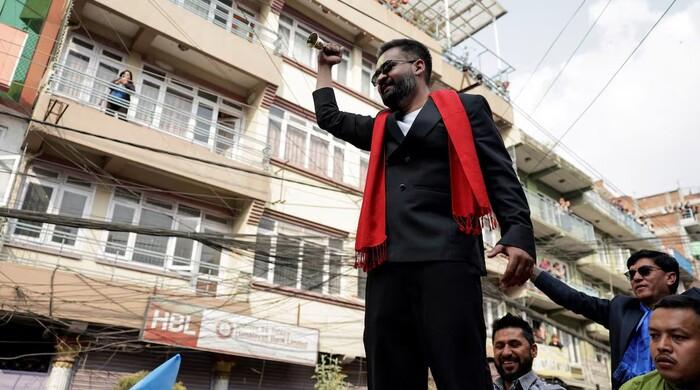
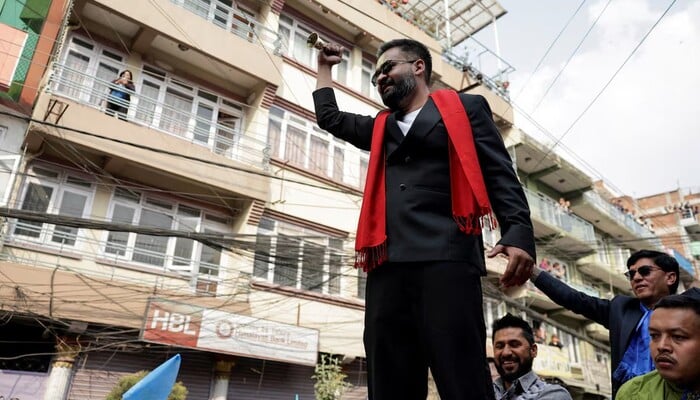
- Shah’s popularity driven by social media and youth connection.
- RSP party’s manifesto promises job creation and economic growth.
- Final results covering 165 seats decided by direct vote expected within days.
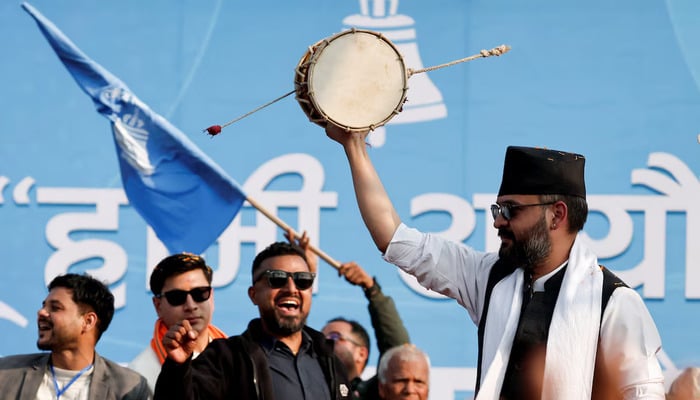
After Nepal’s historic youth-led uprising last September killed 77 people and forced then-Prime Minister KP Sharma Oli to resign, a 35-year-old rapper-turned-politician posted a typically terse message to millions of followers on social media.
“Dear Gen Z, the resignation of your killer has come,” Balendra Shah — popularly known only as Balen — wrote. “Now your generation will have to lead the country. Be prepared.”
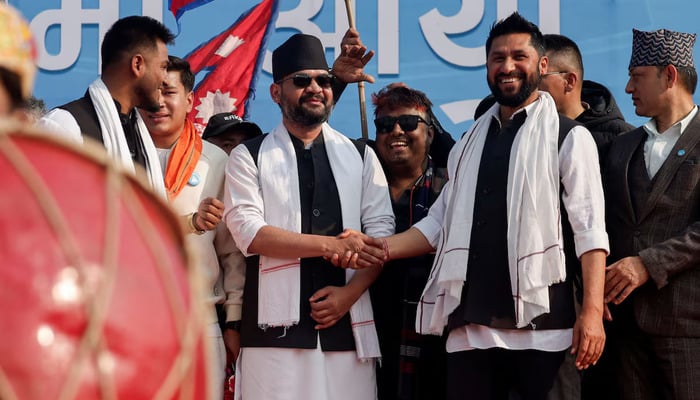
Five months on, the musician who cut his political teeth in 2022 when he became the mayor of the capital Kathmandu, is poised to become Nepal’s next prime minister following the country’s first election since the September uprising.
Shah’s Rastriya Swatantra Party (RSP) was leading in around 100 seats, far ahead of its main rivals, early counting trends from the election commission showed on Friday.
Final results, covering 165 seats decided by direct vote and 110 through proportional representation, are expected within days.
The Nepali Congress, currently in second place, has already conceded defeat, and analysts said the RSP’s dominant showing means it will likely form the next government.
“Balen Shah is so popular that now buses coming to Kathmandu have stickers on them saying, ‘Headed to Balen’s city'”, said Bipin Adhikari, a constitutional law expert who teaches at Kathmandu University.
If Shah is able to take power, it would cap a dramatic rise for a man who entered the public spotlight with rap music critical of the establishment and parleyed his popularity to ascend to high political office.
It would also potentially reshape the politics of Nepal, a small Himalayan nation wedged between China and India, that has long been dominated by a handful of established parties.
‘Not a cakewalk’
Some of Shah’s nationwide appeal is driven by the work he has done as the mayor of Kathmandu, where he focused on improving the urban infrastructure, such as waste management, and ensuring the delivery of services like healthcare.
He has also faced criticism, including from Human Rights Watch, for allegedly using police to seize the properties of street vendors and landless people.
Shah — who resigned as mayor in January to contest the general election — did not respond to requests for an interview and questions from Reuters sent via email.
Unlike much of Nepal’s political elite comprising veterans from older generations, Shah has made it a habit to largely shun the mainstream press.
Instead, it is his prolific social media presence, with over 3.5 million followers on platforms like Facebook, that enables him to connect directly with young Nepalis.
“What makes Balen special is that he stays connected with the youth through his short messages on social media, but it would not be a cakewalk for him after becoming prime minister,” said independent political analyst Puranjan Acharya.
‘Let me speak’
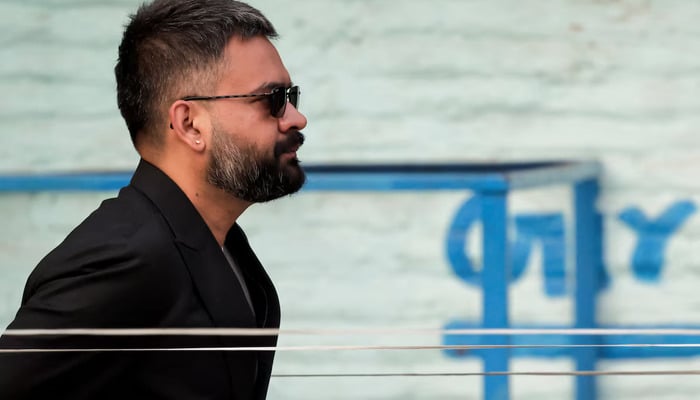
Born to a father who practiced traditional Ayurvedic medicine and a homemaker mother, Shah showed an early inclination towards poetry that evolved into a love of rap music, influenced by American artists including Tupac Shakur and Curtis “50 Cent” Jackson, according to an aide.
After securing an undergraduate degree in civil engineering in Nepal, Shah went on to study for a master’s degree in structural engineering in southern India — by which time he had already emerged as a rap star in his home country.
His songs, often taking on Nepal’s ruling class, struck a chord with many in a country where about 20% of the 30 million population live in grinding poverty.
Released in 2019, one of Shah’s best-known songs, “Balidan” — or sacrifice in the Nepali language — has over 12 million views on YouTube.
Its lyrics read:
“Let me speak, sir, it is not a crime,
Let me open the mind, I am not a curse to the palace,
My mind is not bad, it is not afraid to speak the truth.”
‘Wood attacked by termites’
Last December, Shah joined the RSP, led by former TV host-turned-politician Rabi Lamichhane, as its prime ministerial candidate.
In its manifesto, Shah’s RSP has vowed to create 1.2 million jobs and reduce forced migration, in an effort to tap into frustration over unemployment and low wages that have pushed millions of Nepalis to search for work overseas.
The party has also pledged to raise Nepal’s per capita income from $1,447 to $3,000, more than double the nation’s economy to $100 billion GDP and provide safety nets such as healthcare insurance for the entire population — all within five years.
At the national level, analysts foresee that if he is elected, much of Shah’s success will depend on the talent he surrounds himself with to overhaul a moribund administrative system, riven by corruption.
“It needs a team, experts and support,” Acharya said, “Under the existing state apparatus, he can’t perform and he will be finished like wood attacked by termites.”
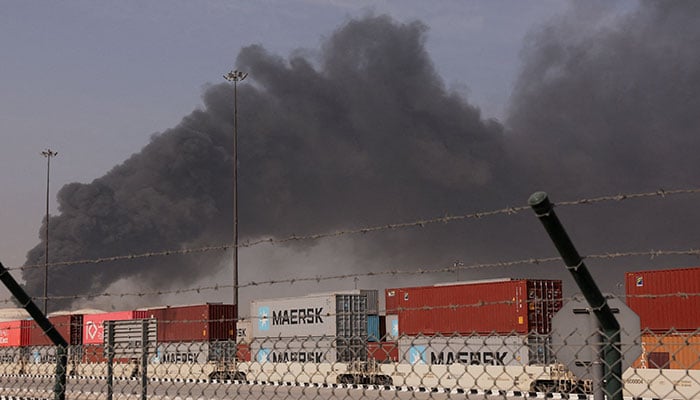
On November 14, 1979 — 10 days after Iranian students seized the US embassy in Tehran — then US president Jimmy Carter signed Executive Order 12170. With a single order, Washington froze roughly $8 billion in Iranian government assets held in the US.
The move was executed through the US Treasury’s Office of Foreign Assets Control — and it marked the beginning of America’s modern sanctions war against Iran.
Citibank, Chase Manhattan, Bank of America, HSBC, Standard Chartered, BNP Paribas, Deutsche Bank, Commerzbank, Credit Suisse and Barclays — along with Shell, Total, ENI, Siemens, General Electric and Boeing — all walked away from Iran as sanctions tightened. One by one, the world’s largest banks, energy companies and industrial giants walked away from Iran, leaving the country financially alone.
Iran needed to convert oil revenues into usable foreign currency. Iran needed to pay for weapons components and missile electronics sourced through global procurement networks. Iran needed to fund proxy operations from Hezbollah to the Houthis. Iran needed to maintain clandestine banking channels to move money across borders.
Iran needed front companies and shadow traders to sell oil despite sanctions. Iran needed drones and cash across Iraq, Syria and Lebanon. In short, Iran did not just need oil revenue, it needed a global sanctions-evasion architecture to turn oil into power.
Red alert: For 47 years, that architecture had an address: Dubai — a neutral trading hub where money was welcome even when its origins were complicated.
For 20 years, the US Treasury tried to close the Iran-Dubai connection and never fully succeeded — not for lack of effort, but because the UAE, for its own sovereign economic reasons, consistently declined to cooperate.
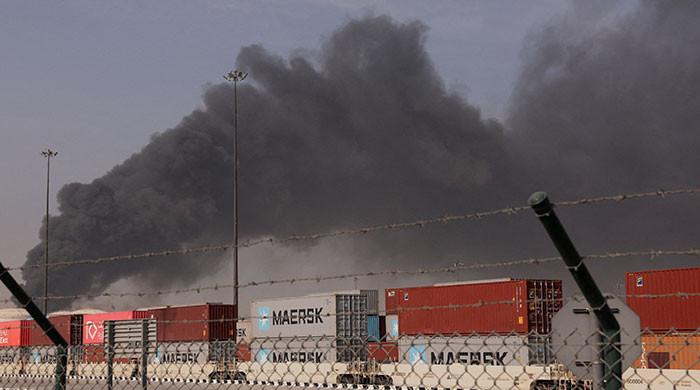
On February 28, 2026, Iran launched ballistic missiles, drone attacks and cruise missiles against the UAE.
Why did Iran attack its own financial pipeline? Perhaps regime survival simply overrode economic logic. Perhaps the relationship was already poisoned; the UAE had been quietly coordinating with Israel since the Abraham Accords of 2020.
Or perhaps the most unsettling explanation is institutional: that the IRGC — a parallel state within a state, with its own enemies list, and its own logic — had simply stopped making decisions in Iran’s national interest. The missile commands didn’t consult a cabinet — they consulted their own calculus.
Between February 28 and March 4, Iran fired 189 ballistic missiles, 941 drones and three cruise missiles at the UAE — 1,133 projectiles in six days.
Red alert: According to The Wall Street Journal, the UAE is considering cutting off Iranian access to billions of dollars held in the Gulf state.
Imagine this: For 47 years, Iran built a financial architecture in Dubai that the US Treasury could never fully dismantle. Now, after more than a thousand missiles and drones, Dubai may do in a single decision what Washington spent two decades trying to achieve.
Iran did not just fire at a city. It may have fired at its own financial pipeline. And in doing so, it may have finally convinced its last banker to pull the plug.
The writer is an Islamabad-based columnist.
Disclaimer: The viewpoints expressed in this piece are the writer’s own and don’t necessarily reflect Geo.tv’s editorial policy.
Originally published in The News
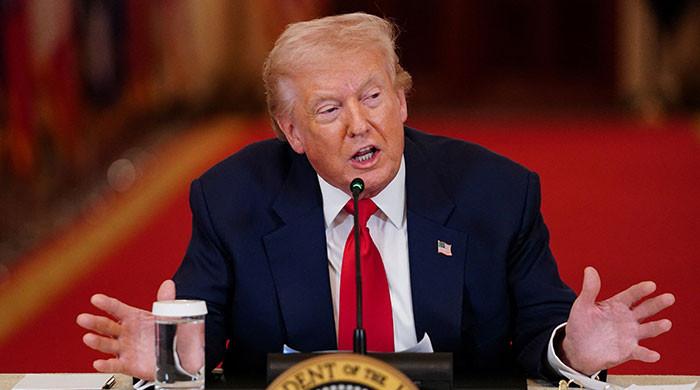
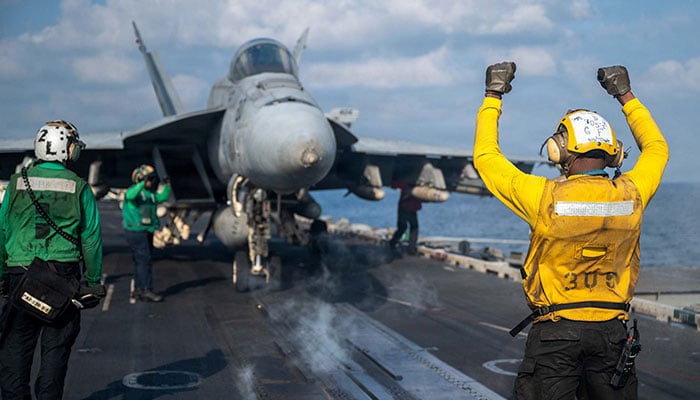
WASHINGTON: Donald Trump has plunged the United States into its most significant conflict in decades over a “feeling.” It’s not his political opponents saying this, but the White House itself.
Throughout the first week of the war with Iran, the US president has prioritised impulse and emotion over explanations and reasoning.
“I hope you’re impressed,” Trump, a former reality TV host, told an ABC News reporter on Thursday. “How do you like the performance?”
Official government accounts are posting clips on social media that present the military operation like a video game, often with sharp captions that would suit a blockbuster war film.
“This could be the first war ever launched based on vibes,” joked American comedian and talk show host Jimmy Fallon this week.
Journalists on Wednesday bombarded White House press secretary Karoline Leavitt with questions about what motivated US military intervention — which Trump oversaw from his luxury Mar-a-Lago residence in Florida.
She replied that the president had acted because he “had a good feeling that the Iranian regime was going to strike US assets and our personnel in the region.”
‘Incoherent, immoral, arrogant’
Experts said the Trump administration has taken a new approach in how it has sought to justify and communicate the military action to the public.
Sean Aday, a public relations professor at George Washington University, said he has “never seen worse messaging in wartime from a US administration.”
“It´s been a combination of incoherent, immoral, arrogant, amateurish, and at times trafficked in outright fabrication,” he told AFP.
Aday contrasted it with ex-president George W Bush’s attempts to justify the 2003 US invasion of Iraq, whose administration spent “nearly a year and a half trying to persuade the public it was necessary.”
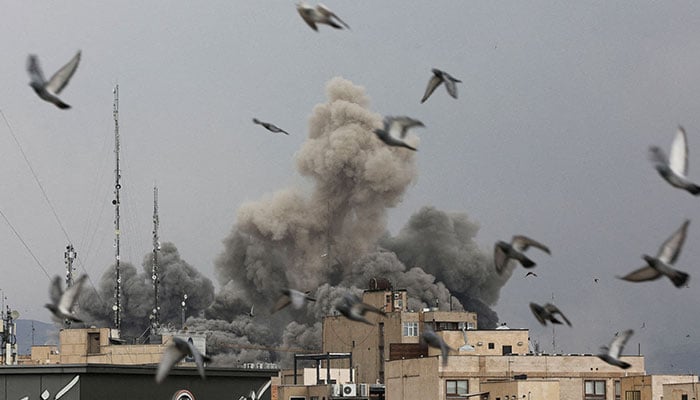
Richard Haass, a former US diplomat, pointed to how Trump has largely ignored formal national security processes, “having spent the better part of the last year hollowing out the national security apparatus.”
The National Security Council, a body that helps the president shape his diplomatic and military strategy, has been significantly downsized since Trump returned to power in January 2025.
Marco Rubio now combines the roles of secretary of state and national security adviser — positions that were previously separate.
Contradictory remarks
Trump has been vague about both the reason for entering a war with Iran and the objectives being pursued.
Instead of holding press conferences he has given several short phone interviews with reporters, producing a mosaic of contradictory comments.
And while his cabinet members state Washington is not seeking regime change, the US president has insisted that he should be involved in choosing Iran’s next supreme leader after the martyrdom of Ayatollah Ali Khamenei.
Trump has also brushed aside economic concerns from the conflict which has driven up the price of gasoline — a potential vulnerability for his Republican party ahead of midterm elections this year.
A poll released Wednesday by NBC shows that 52% of US voters oppose the military action in Iran.
By contrast, the start of the war in Afghanistan in 2001 was met with strong approval, and the public initially supported the offensive launched in Iraq.
But on both Afghanistan and Iraq, negative opinions grew as the conflicts dragged on.


Flipkart Layoffs 2026: Why Has E-Commerce Firm Sacked Around 500 Employees?

Nepal’s rapper-mayor Balendra Shah poised to become prime minister

Stephanie Buttermore, fitness influencer dies suddenly aged 36: What actually happened

-
 Business1 week ago
Attock Cement’s acquisition approved | The Express Tribune
-

 Fashion1 week ago
Policy easing drives Argentina’s garment import surge in 2025
-

 Politics1 week ago
What are Iran’s ballistic missile capabilities?
-
 Business1 week ago
India Us Trade Deal: Fresh look at India-US trade deal? May be ‘rebalanced’ if circumstances change, says Piyush Goyal – The Times of India
-

 Sports1 week ago
LPGA legend shares her feelings about US women’s Olympic wins: ‘Gets me really emotional’
-

 Entertainment1 week ago
Bobby J. Brown, “The Wire” and “Law & Order: SUV” actor, dies of smoke inhalation after reported fire
-

 Fashion1 week ago
South Korea’s Misto Holdings completes planned leadership transition
-

 Fashion1 week ago
Texwin Spinning showcasing premium cotton yarn range at VIATT 2026