

Sports
World Junior Championship guide: Top contenders, key players to watch

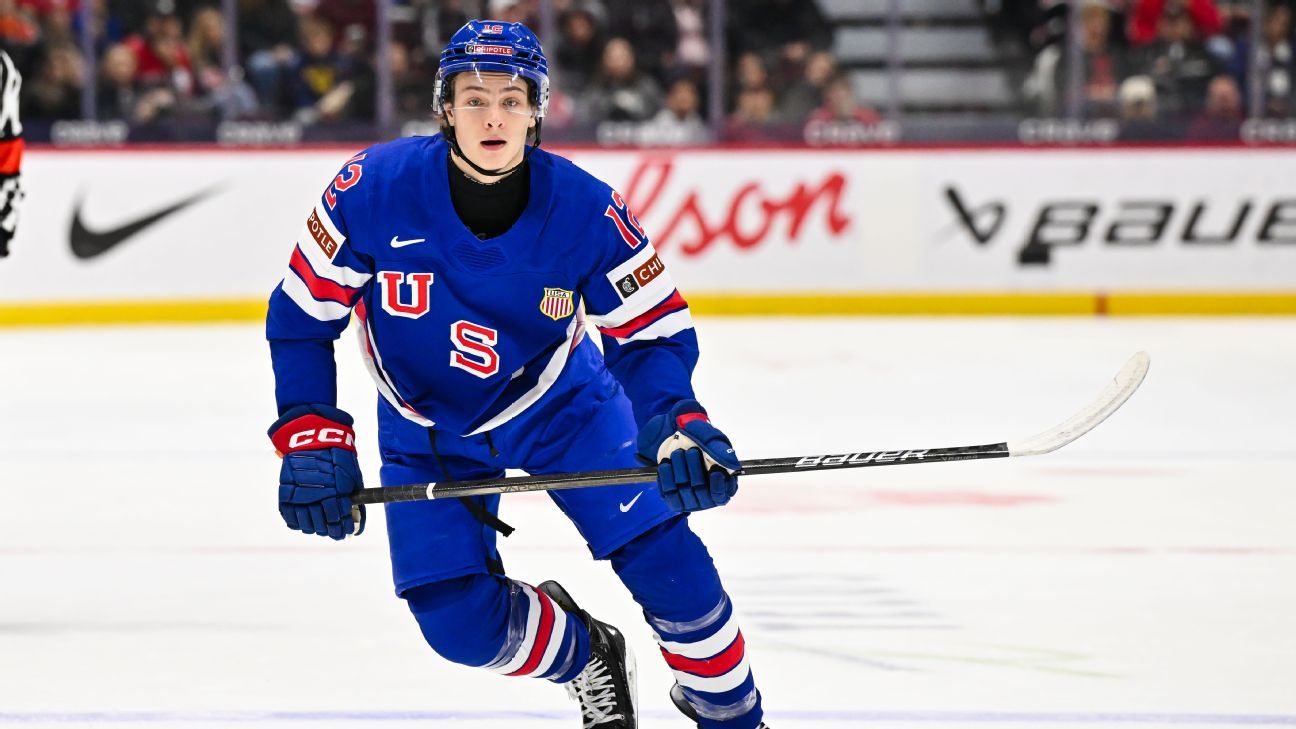
It’s the most wonderful time of the year … the IIHF World Junior Hockey Championship has arrived.
The best players under 20, who are not in the NHL, will play in the annual holiday tournament beginning Friday through Jan. 5 in Minneapolis and St. Paul, Minnesota. It’s a chance for draft-eligible players such as Gavin McKenna, Ivar Stenberg and Juho Piiparinen to make an impression against their international peers, and for drafted prospects to show their development. The U.S. is looking to three-peat on home soil, Canada is looking to get back on track, Denmark wants to avoid relegation, and many other teams have medal hopes.
Both Canada and Finland will be without their best talent, as obligations to professional hockey resulted in Macklin Celebrini, Beckett Sennecke, Sam Dickinson, Berkly Catton, Matthew Schaefer and Konsta Helenius all remaining with NHL and AHL clubs.
NHL teams usually allow prospects playing in the AHL to play in the World Juniors. The most notable player to not be released in recent seasons was Leon Draisaitl who was not made available for Germany in 2015. With Helenius not being released by the Buffalo Sabres, Finland’s chances of medaling take a hit.
Canada is missing an entire line and defense pairing worth of players, which will have an extraordinary impact. Not that anyone expected Celebrini or Schaefer to be released, but there was hope for the other three at various points earlier in the season. With those five, Canada would have been the runaway favorite. As it is, gold is still an expectation, but the competition is much closer.
Group A has the United States, Germany Slovakia, Sweden and Switzerland. Group B has Canada, Czechia, Denmark, Finland and Latvia.
So what can we expect from the upcoming tournament? Look for lots of speed and skill, mistakes, back-and-forth action, emotions running high and some exuberant goal celebrations.
Here’s a look at every country’s top prospects and an overall tournament outlook for each team, starting with the ones least likely to medal:

Denmark
Denmark’s best chance at avoiding relegation is by beating Latvia in its group game on Dec. 30. Denmark will be without one of its best offensive players in Linus Rørth, who is injured.
The team’s only NHL prospect is Mads Kongsbak Klyvø (Florida Panthers), selected in the fourth round of the 2025 draft. He and William Bundgaard will be the players that Denmark leans upon heavily to create offense. The reality is that if Denmark is to avoid relegation, it will need a standout goaltending performance from Anton Emil Wilde Larsen.

Latvia
Latvia upset Canada in last year’s tournament — the country’s biggest result at the junior level — and now hopes to build on that by qualifying for the quarterfinals this year. Given the strength of Group A, Latvia will be in a tough spot regardless of its opponent in the quarterfinal. Latvia’s path to quarterfinal qualification should be smoother because is stronger than Denmark and only needs a victory in their matchup to qualify.
The Latvians have two NHL prospects, Darels Uljanskis (Anaheim Ducks) and Mikus Vecvanags (Montreal Canadiens). Of the returnees on Latvia’s roster, Bruno Osmanis will be its most important. Osmanis has performed admirably in the Swedish league this season, and has play-driving ability that will help Latvia create offense. Albert Smits is a big defender to watch, producing nearly half a point per game in the Finnish league, and will play a prominent role on Latvia’s blue line. Latvia is probably headed for a quarterfinal exit, but it will always be a fun Cinderella to watch, especially after last year.

Germany
It is highly likely that one of Germany or Switzerland will find itself in the relegation round given the toughness of Group A. Both teams always work hard and put a scare into at least one of the powers, but both are shorter on talent than in years past.
The Germans are buoyed by two goaltenders who have performed well in international play, Linus Vieillard and Lukas Stuhrmann. Both are capable of stealing games, with Vieillard expected to get the lion’s share of the work as the returnee.
The reason the goaltending will be relied upon heavily is because the Germans are going to struggle on the blue line. They lack depth and speed, which will lead to elongated defensive zone shifts and issues defending in transition. Because of this, the Germans are more likely to give up odd-man rushes by getting beat in transition.
Up front, Max Penkin is considered to be the next big German prospect, but he’s only 16. Elias Schneider, David Lewandowski (Edmonton Oilers) and Maxim Schäfer (Washington Capitals) are expected to be the top line for Germany, and the one capable of providing offense. If the Germans can get key contributions from those four forwards and excellent goaltending, they might reach the quarterfinals. If not, it should be enough to win the relegation round.

Switzerland
The Swiss had a great run of results in the early 2010s but have been reached that standard of late. Gone are the days of Nico Hischier and Timo Meier up front and what felt like consistently excellent goaltending year after year. The goal is to avoid the relegation round, even if it means a noncompetitive quarterfinal matchup.
Goaltending is critical for the Swiss this year, and they are well set up with Christian Kirsch (San Jose Sharks) and Elijah Neuenschwander (Ducks), who are capable of stealing a game or two. They will be the backbone of the Swiss hopes. Leon Muggli (Capitals) has sat out significant time because of injury but was loaned from Hershey (AHL) to be the Swiss stalwart on defense. His play will be critical to any outcomes for Switzerland, as he and Ludvig Johnson (Utah Mammoth) are expected to play 26-30 minutes each game.
If the Swiss can get quality defending in major minutes and excellent goaltending, it will allow a young forward group with plenty of skill to create chances. Four forwards in particular, Lars Steiner (2026 draft-eligible), Jonah Neuenschwander (2027 draft-eligible), Paul Mottard and Jamiro Reber will be relied upon heavily to create and capitalize on their chances. Switzerland needs to play low-scoring games and capitalize on opponent miscues. Regardless of group play outcome, a Cinderella run feels unlikely this year.

Slovakia
Slovakia is bringing one of its youngest teams in recent memory, with more than 15 players expected to return to the 2027 tournament. A team in that situation will not carry high expectations, but Slovakia has a quality goaltender in Michal Pradel (Detroit Red Wings). He is going to play all of the important games, and his only rest figures to come in a back-to-back situation. If Slovakia is going to make noise at this tournament with a very young team, Pradel is going to be a major reason why.
On defense, Luka Radiovojevic will be looking to prove scouts wrong after he was passed over in the 2025 draft. He will be the offensive catalyst from the back end, and expected to drive play in key situations. The Slovaks have a few quality defenders, which is always important for a Cinderella pick — they are my under-the-radar pick for the tournament. Adam Goljer (2026 draft-eligible), Patrik Rusznyak, Adam Belusko and Michal Capos lack offense, but they are reliable defenders capable of playing shutdown minutes. All of those players will be needed as Slovakia plays in a group with significant offensive talent throughout.
Up front, Slovakia has quite a few offensive talents. The trio of first-time draft-eligible players that should be tons of fun to watch includes Adam Nemec (brother of the Devils’ Simon), Tomas Chrenko and Tobias Tomik. All three players are capable of producing offense, and could be selected in the first few rounds of the 2026 draft. They are going to play a major role at even strength and on the power play for Slovakia. Jan Chovan (Los Angeles Kings) and Michal Svrcek (Red Wings) are not offensively gifted, but they will need to produce and win key matchups for Slovakia to have success. They are veterans of the tournament and should play key roles in all situations.
If Slovakia can defend well in its own zone and not give up a ton in transition, it might put a real scare into one of the contenders.

Finland
Finland’s trajectory changed dramatically with Buffalo’s refusal to release Konsta Helenius from AHL obligations. The Sabres believe Helenius is close to getting a look at the NHL level after bouncing back nicely from a poor rookie season in the AHL. Losing a top-line center is difficult, specifically when he has proved to be a fantastic play driver at the junior level.
Without Helenius, Finland will rely on Aatos Koivu (Canadiens), Julius Miettinen (Seattle Kraken) and Matias Vanhanen (undrafted) to drive offense. Max Westergard (Philadelphia Flyers), who has been excellent against his peers, and Vanhanen should be the creative playmakers that Finland relies on throughout the tournament. Two Dallas Stars draft picks — Emil Hemming and Atte Joki — will be relied upon in heavy matchup roles for Finland while providing secondary offense.
On defense, Aron Kiviharju (Minnesota Wild) is going to play a major role, including on the power play, and will skate close to 25 minutes per game. Veeti Vaisanen (Mammoth) and Daniel Nieminen (Nashville Predators) probably will play significant roles as two-way defenders. Juho Piiparinen (2026 draft-eligible) is rocketing up draft boards, and it will be interesting to monitor how Finland utilizes him. There is a scenario in which he starts in a smaller role and becomes a staple by the end of the group stage.
Petteri Rimpinen (Kings) is back after winning top goaltender honors at last year’s event, and will be the backbone of Finland’s medal hopes. It will not surprise anyone if Finland struggles to manage its lack of depth, but the team has proved to constantly be a thorn in the side of their opponent because of their hard-working, two-way play. Given the depth of potential opponents in the quarterfinal (United States, Sweden), it seems Finland might struggle to get past the quarterfinal without an elite-level goaltending effort from Rimpinen.

Czechia
The Czechs look really good this year, and should challenge for a medal for the fourth consecutive year. They have a quality goaltender in Michal Orsulak, who has been excellent in the WHL this season and should start the key games for Czechia.
On defense, Czechia’s top four is a combination of experience and skill. Adam Jiricek (St. Louis Blues) and Radim Mrtka (Sabres) are going to play major minutes for the Czechs, and will be expected to carry play when on the ice. Both are capable of producing offense, making accurate first passes and defending in transition. They will be key in the group games against Sweden and the United States. Max Psenicka (Mammoth) and Tomas Galvas will also play major roles with shutdown capability. The Czechs are well positioned in goal and on the blue line to defend well and threaten for a medal.
Up front, what they lack in game breakers, they make up for with depth. Adam Benak (Wild) is Czechia’s best playmaker and the power play should run through him. In a tournament in which taking advantage of a mistake can be the difference, Benak is more than capable of that. Vaclav Nestrasil (Chicago Blackhawks) is one of the biggest players (6-foot-6, 185 pounds) in the tournament, and should use his size to be an absolute force. He’s going to be very difficult to defend, and should draw a ton of penalties. Petr Sikora (Capitals) and Vojtech Cihar (Kings) will be two more key forwards for Czechia, and expected to provide offense. Adam Novotny (2026 draft-eligible), Max Curran (Colorado Avalanche) and Adam Jecho (Blues) will provide secondary offense, and give the Czechs offensive depth if their top offensive threats struggle to produce. Their offensive depth might force mismatches in key situations and give Czechia an advantage it has not always had.
This is one the deepest teams Czechia has brought to the tournament, and it bodes well for it to make the semifinal, and perhaps the gold medal game.

Sweden
Three teams are considered “gold or nothing” at this year’s tournament, with Sweden being one of them. Historically, Sweden has struggled in the medal rounds despite excellent group play. Unlike other teams at the tournament, Sweden does not have a prominent starting goalie who can carry it through the tournament. All three goaltenders are capable of performing, but Sweden will have to ride the hot hand between Herman Liv, Love Harenstam (Blues) and Mans Goos (Stars). It is likely to be Liv or Harenstam, with Harenstam having performed well for Sweden at previous international tournaments.
The Swedes might have the best blue-line group in the tournament. They are incredibly deep with defenders who can shut down the best of the best, as well as players who can drive offense from the back end. Leo Sahlin Wallenius (Sharks), Victor Johansson (Toronto Maple Leafs), Alfons Freij (Winnipeg Jets) and Sascha Boumedienne (Jets) are all very adept puck movers. They can retrieve pucks and move them accurately with ease, beating layers of opposing forechecks. Offensively, they can walk the line, find passing lanes and get shots through to create rebounds. Defensively, the group’s footwork is excellent and should allow those players to prevent scoring chances off the rush.
Viggo Gustafsson (Predators) provides more depth for Sweden, and should play a key penalty-killing role. He’s a good puck mover as well and can more than hold his own when defending. Overall, Sweden’s blue line is loaded with excellent skaters with good hockey sense and reliable puck-moving abilities. It is likely to get the Swedes out of trouble on more than a few occasions in the tournament.
Up front, the Swedes are loaded with talent. Anton Frondell (Blackhawks) and Viktor Eklund (New York Islanders) will form Sweden’s top line with Ivar Stenberg (2026 draft-eligible), and could be one of the best trios in the tournament. All three players have more than enough talent to be a force for Sweden throughout the event, and will need to be for Sweden to capture an elusive gold medal.
Lucas Pettersson (Ducks) and Eddie Genborg (Red Wings) would pair well with Viggo Björck (2026 draft-eligible) to provide offense on Sweden’s second line. Sweden also has some quality two-way players in Eric Nilson (Ducks) and Milton Gastrin (Capitals) who will play key roles in shutting down opponents, killing penalties and closing out games. They can provide some secondary scoring, but their primary roles probably will be to shut down the opposition’s best.
Overall, Sweden is as deep as it has been in a long time, with no shortage of offensive firepower and the foundation to be the best defensive team in the tournament. If Sweden is to win the gold medal, this feels like the year it can be done.

Canada
The Canadians should be considered the favorite to win the tournament, regardless of the players missing because of NHL obligations. Canada’s issue has never been a lack of talent — it has always been a lack of discipline, shaky goaltending or a lack of scoring depth because of its team-building mantra of “role players.”
Shaky goaltending should not be an issue at this year’s tournament, as Canada returns Carter George (Kings) and Jack Ivankovic (Predators). George has been good at the AHL level, was good at last year’s tournament and should be the player upon whom Canada relies. Should he falter, Ivankovic is more than capable of stepping in. He’s having a great season at Michigan, and has also been excellent for Canada in international play.
On defense, Zayne Parekh (Calgary Flames) is going to lead the way at even strength and on the power play. He’s a play driver who will be an offensive catalyst for Canada. Beyond Parekh, Kashawn Aitcheson (Islanders), Harrison Brunicke (Pittsburgh Penguins) and Ben Danford (Maple Leafs) will need to effectively shut down the opponent’s best while playing disciplined hockey. Finding the line between defensive physicality and overzealous physicality is of the utmost importance. In particular, Aitcheson’s and Danford’s ability to be “available” for Canada — as opposed to being consistently penalized — will be the team’s best asset.
Cameron Reid (Predators) should get secondary power-play time and be a quality puck mover for Canada in big minutes. Expect those five defenders to play major roles in the tournament with two draft-eligible players (Carson Carels, Keaton Verhoeff) and one reentry (Ethan Mackenzie) rotating into the lineup.
Up front, the trio of Michael Misa (Sharks), Porter Martone (Philadelphia Flyers) and Gavin McKenna (2026 draft-eligible) will be expected to produce offense. Two returnees and an NHL loanee should have all the speed, skill and hockey sense necessary to lead Canada’s offensive threat. Given Canada’s choice to bring role players instead of an overload of offensive firepower, it is imperative that these three players perform.
Michael Hage (Canadiens), Tij Iginla (Mammoth) and Liam Greentree (Kings) will be expected to provide secondary offense for Canada, with all of them likely to get power-play time. Canada has no shortage of two-way forwards on its roster, meaning there is no excuse for penalty killing or checking to be an Achilles’ heel. If anything, the Dale Hunter-led squad should thrive on its defensive play, and hope its offensive talent creates and finishes on enough of its opportunities.
Canada has players at every position that will challenge for the tournament directorate awards. Misa, McKenna, Martone, Parekh and George are all capable of being the best at their position in the tournament. If that happens, “O Canada” probably will be the anthem played at the end of the tournament. Anything less than gold would be disappointing.

United States
Trying to three-peat while on home soil brings enough pressure, without the Swedes and Canadians breathing down their necks. The Americans have a ton of talent, even if they are not as deep as last year’s team. Their advantage is that many of these players came through the National Team Development Program and have built chemistry with one another. They are familiar with the systems that USA Hockey plays, and almost nothing will be new to them.
In a tournament in which mistakes and blown coverage can be the difference between gold and silver, that matters.
In goal, Nick Kempf (Capitals) is expected to be the starter, but the United States bringing Brady Knowling — who could be a first-round selection in the 2026 draft — is a pleasant surprise. Knowling has demonstrated that he can hold firm and make timely saves when called upon. The United States will not have the luxury of Trey Augustine or Jacob Fowler to call on as they had in years past, but Kempf should be able to make key saves throughout the tournament.
With three returnees on defense, the Americans are well set up to create offense and defend well. Cole Hutson (Capitals) is expected to be one of the top defenders in the tournament, will quarterback the power play and drive play from the blue line. Logan Hensler (Ottawa Senators) provides a steady two-way game, and should eat a ton of minutes with EJ Emery (New York Rangers). Adam Kleber (Sabres) and Blake Fiddler (Kraken) add some quality defensive depth to the blue line as capable penalty killers and physically imposing players.
Chase Reid (2026 draft-eligible) and Dakota Rheaume-Mullen will push for minutes, and can play offensive, play-driving roles if needed.
The forward returnees are led by James Hagens (Boston Bruins), Cole Eiserman (Islanders) and 2025 golden-goal scorer Teddy Stiga (Predators). Hagens and Eiserman are going to be counted on, along with Ryker Lee (Predators) to provide game-breaking offense. Each of them has a skill set that lends itself to becoming a top-six NHL forward, so the key will be to make smart, unselfish decisions with the puck and avoid costly turnovers.
The loss of Trevor Connelly (Vegas Golden Knights) to a pre-tournament lower-body injury gives the U.S. one fewer of that type of playmaker.
If LJ Mooney (Canadiens) is given the opportunity to play a top-six role — which is a question given his size (listed at 5-8, 165) — he is among the most skilled players in the tournament, and will wreak havoc in the offensive zone.
The Americans always have an energy line, and this year is no different with AJ Spellacy (Blackhawks) and Shane Vansaghi (Flyers) expected to help fill that role.
The Americans are well rounded, even if they lack the depth from two previous tournaments. They are going to challenge for gold, and the ultimate result will come down to the ability of their top players to break through staunch defending, their own disciplined play and getting a save in a critical moment or two.
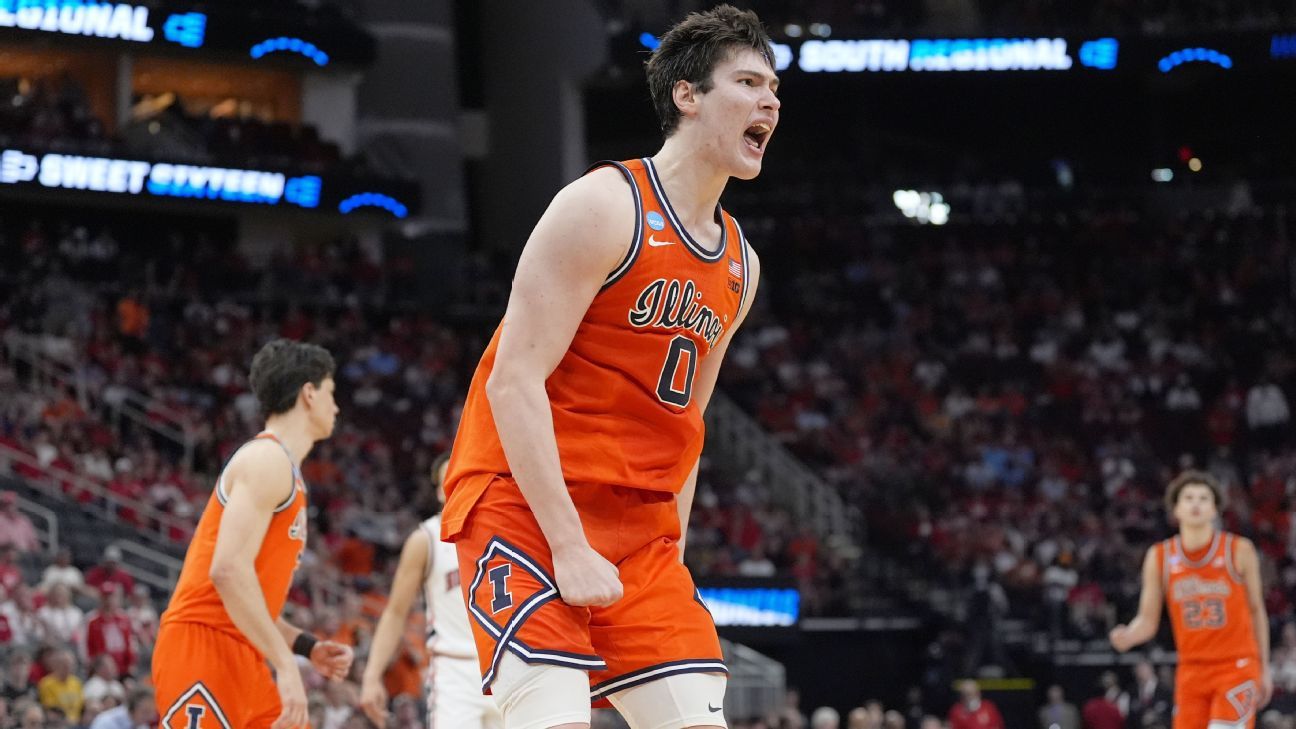
HOUSTON — David Mirkovic had 14 points and 10 rebounds, and third-seeded Illinois flexed its defensive muscles to eliminate last year’s national runner-up from the NCAA tournament, beating Houston 65-55 in the South Region semifinals on Thursday night.
Next up is a meeting Saturday with ninth-seeded Iowa to see which Big Ten team will advance to the Final Four. It will be the 11th Elite Eight appearance for Illinois (27-8) and its second in three seasons under Brad Underwood.
In the Sweet 16 for a seventh consecutive time, the second-seeded Cougars (30-7) were thrilled to be playing just over two miles from their campus. But their poor shooting gave Houston fans little to cheer about and delighted the orange-clad Illini faithful who made the long trip to Texas.
“At the beginning of the game Houston fans were a little louder, but as game was going, [our fans] started being louder in their city,” Mirkovic said. “So it’s just really important for us, I would say just like a wind to our back. They pushed us, and thanks for them.”
Star freshman point guard Kingston Flemings, who is expected to be an NBA lottery pick, had 11 points on 4-of-10 shooting. Milos Uzan made just 2 of 11 shots.
But they were far from the only Cougars who struggled offensively. The team shot just 34% in its lowest-scoring game of the season.
Underwood was asked about his team’s defensive performance.
“I think it’s a mental focus,” he said. “We’ve been very good at times defensively. It’s just sustaining it. We’ve got very capable defenders, we’ve got size and length, and we just got to make shots difficult.”
Illinois finished well under the 84.7 points a game it averaged entering Thursday. But its offense was still plenty powerful enough to send Houston back to its nearby campus. Keaton Wagler had 13 points and a team-high 12 rebounds for the Illini; he and Mirkovic became the first pair of freshman teammates to each have a double-double in the same NCAA tournament game since freshmen became fully eligible in 1972-73, according to ESPN Research.
“Coaches were telling us before the game: ‘It’s going to be a guard game to get rebounds. We need 10-plus out of the guards,'” he said. “So I took that challenge on. I went in there, tried to play as tough as I could, not let them get any second-chance rebounds. I went in there and tried to get every rebound I could.”
Andrej Stojakovic — with his dad, three-time NBA All-Star Peja Stojakovic, in the stands — also scored 13.
By the time the final seconds ticked off the clock, many Houston fans had cleared out and the Illinois supporters stood and cheered as their team celebrated.
“I was proud of our kids’ effort,” Houston coach Kelvin Sampson said. “We just didn’t play good enough.”
The Illini were up by one early in the second half when they broke it open with a 17-0 run for a 44-26 lead with about 12 minutes left. Jake Davis scored five points during the burst, including a 3-pointer, and Mirkovic and Ben Humrichous capped it with consecutive 3s.
The Cougars missed seven consecutive shots as Illinois built its lead. When Uzan finally ended Houston’s drought with a 3-pointer with 11:20 left, it had been almost seven minutes since the team had scored.
“We were getting stops and we were limiting them to one shot, and to tough shots as well,” Wagler said. “Making them shoot tough middies or contested at the rim, 3-pointers, all of that, and then we were going in and grabbing the rebound and offensively we were getting the shots that we wanted, we were knocking them down.”
Consecutive 3-pointers by Chase McCarty got Houston within nine with about six minutes left. But Wagler and Tomislav Ivisic made 3-pointers to fuel an 8-0 run that extended the lead to 58-41.
The Associated Press contributed to this report.
Sports
Trey Kaufman-Renn’s controversial tip-in gives Boilermakers spot in Elite Eight, ends Texas’ Cinderella story
NEWYou can now listen to Fox News articles!
The No. 11 Texas Longhorns’ Cinderella story in the NCAA Tournament came to a heartbreaking end on Thursday night, as Trey Kaufman-Renn’s tip with 0.7 seconds left on the clock gave No. 2 Purdue a 79-77 lead to advance to the Elite Eight.
It was a thriller to the end in this Sweet 16 matchup between a team that needed to play in the First Four to kick off the tournament, and one of the higher seeds in March Madness.
The Longhorns’ Dailyn Swain made a clutch and-one layup with 11 seconds left that allowed him the opportunity to tie the game at 77 apiece if he made his free throw. He nailed it with the pressure on, but the Boilermakers had 11 seconds to get up court and potentially win the game.
CLICK HERE FOR MORE SPORTS COVERAGE ON FOXNEWS.COM
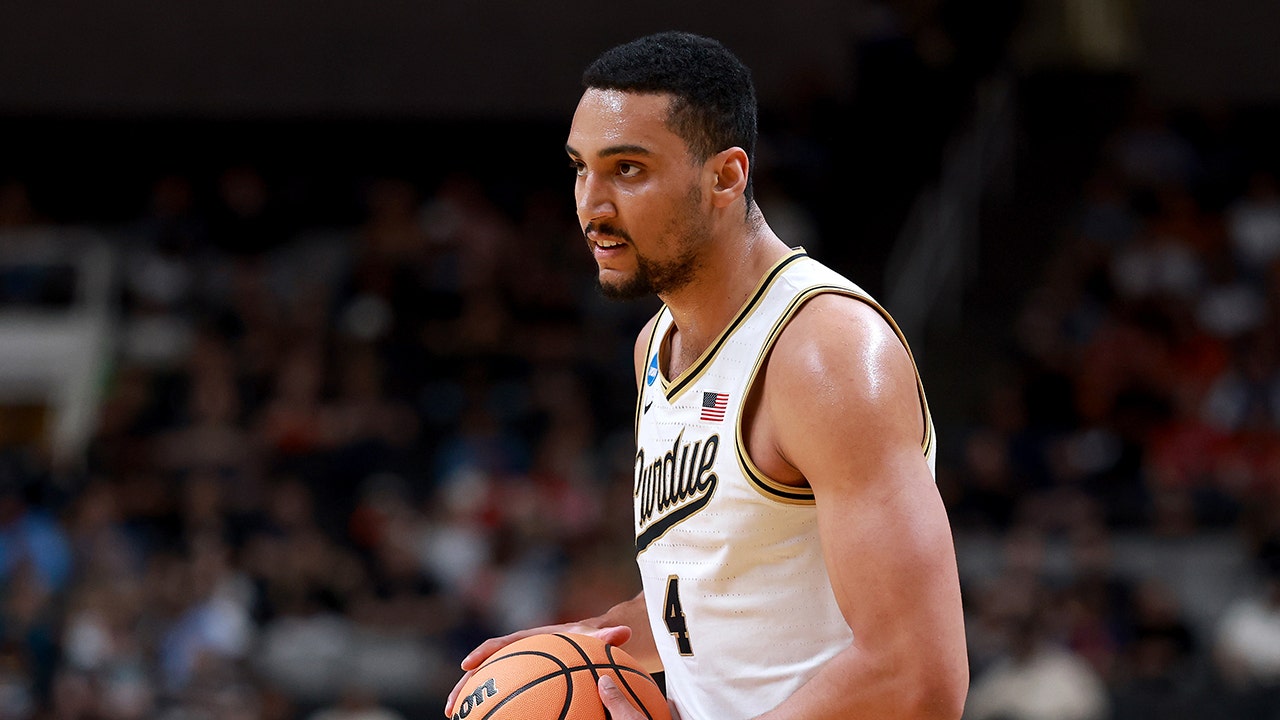
Trey Kaufman-Renn of the Purdue Boilermakers dribbles the ball against the Texas Longhorns during the first half in the Sweet Sixteen of the 2026 NCAA Men’s Basketball Tournament at SAP Center on March 26, 2026, in San Jose, California. (Ezra Shaw/Getty Images)
It was Braden Smith finding his way to the lane and putting up his own layup. However, the ball didn’t have the correct English off the glass, as it started to roll off the rim.
But Kaufman-Renn, who positioned himself underneath the basket, tipped home the game-winning bucket, giving himself 20 total points to help Purdue move on and keep their tournament dreams alive.
8TH-GRADER STANDS ALONE WITH LAST PERFECT WOMEN’S NCAA BASKETBALL BRACKET
There was some discourse on social media, though, as an overhead shot of Kaufman-Renn’s tip showed a potential foul, as he was hooking the arm of the Longhorns player jostling for the rebound.
Either way, no whistle blew, and the Boilermakers were celebrating, while the Longhorns couldn’t believe their season came to a close in that fashion.
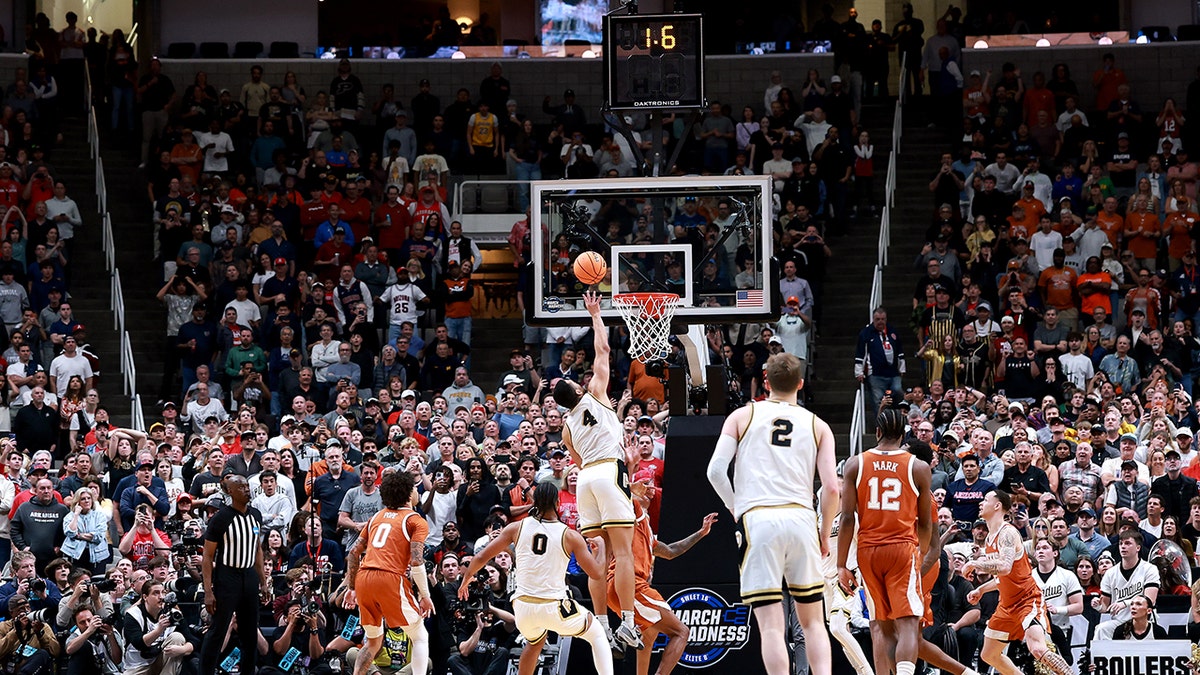
Trey Kaufman-Renn of the Purdue Boilermakers shoots the game-winning shot against the Texas Longhorns during the second half during the second half in the Sweet Sixteen of the 2026 NCAA Men’s Basketball Tournament at SAP Center on March 26, 2026, in San Jose, California. (Ezra Shaw/Getty Images)
This was a back-and-forth game throughout the 40 minutes on the court, as both teams traded the lead, especially in the second half. The largest lead any team had was Purdue at only seven points, while Texas’ lead never got higher than four.
But it’s because both teams were shooting well, with Texas making 52% of its shots (29-of-56), while Purdue poured in 48% (30-of-62).
Looking more into the box score, every Boilermakers starter had at least 10 points, while Fletcher Loyer (18), and Braden Smith (16) doing crucial work in the backcourt to help the winning cause.
Meanwhile, Texas’ Tramon Mark left it all out on the court, shooting 11-of-15 for 29 points, including 5-of-7 made from beyond the arc. Swain also just missed a double-double with nine rebounds, while tallying five assists.
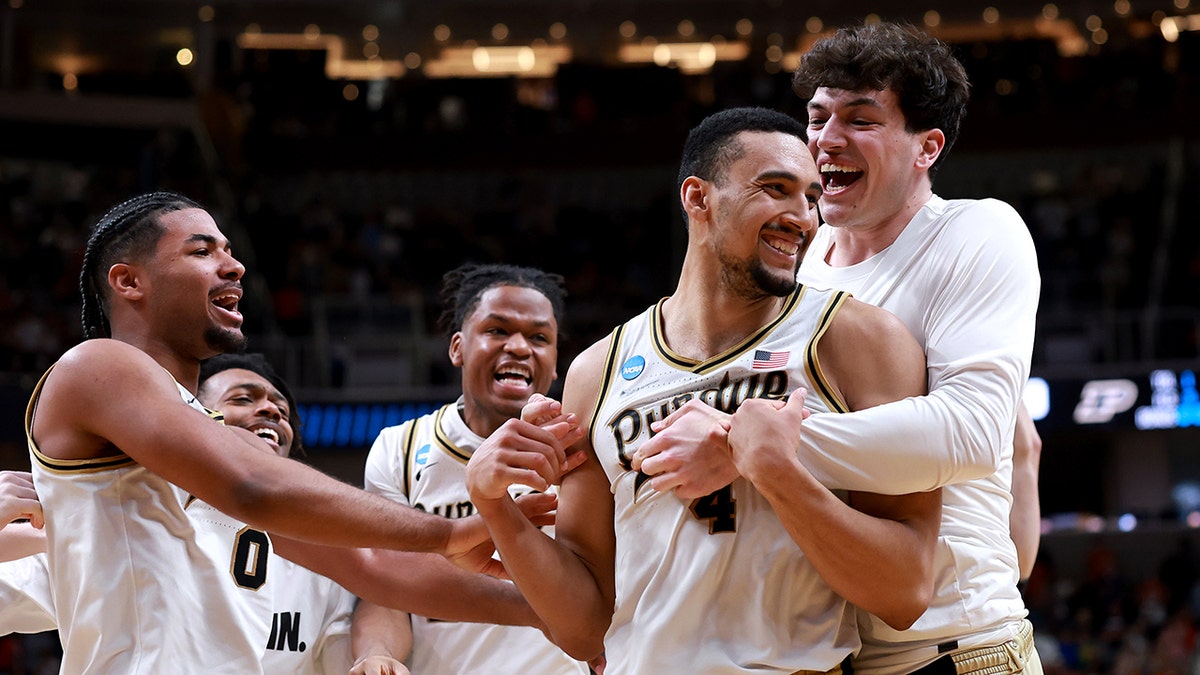
Trey Kaufman-Renn of the Purdue Boilermakers celebrates with teammates after making the game-winning shot against the Texas Longhorns during the second half in the Sweet Sixteen of the 2026 NCAA Men’s Basketball Tournament at SAP Center on March 26, 2026, in San Jose, California. (Ezra Shaw/Getty Images)
CLICK HERE TO GET THE FOX NEWS APP
Purdue now awaits the winner of Arkansas and Arizona to see who they must play to earn a spot in this year’s Final Four, which will be played at Lucas Oil Stadium in Indianapolis.
Follow Fox News Digital’s sports coverage on X and subscribe to the Fox News Sports Huddle newsletter.
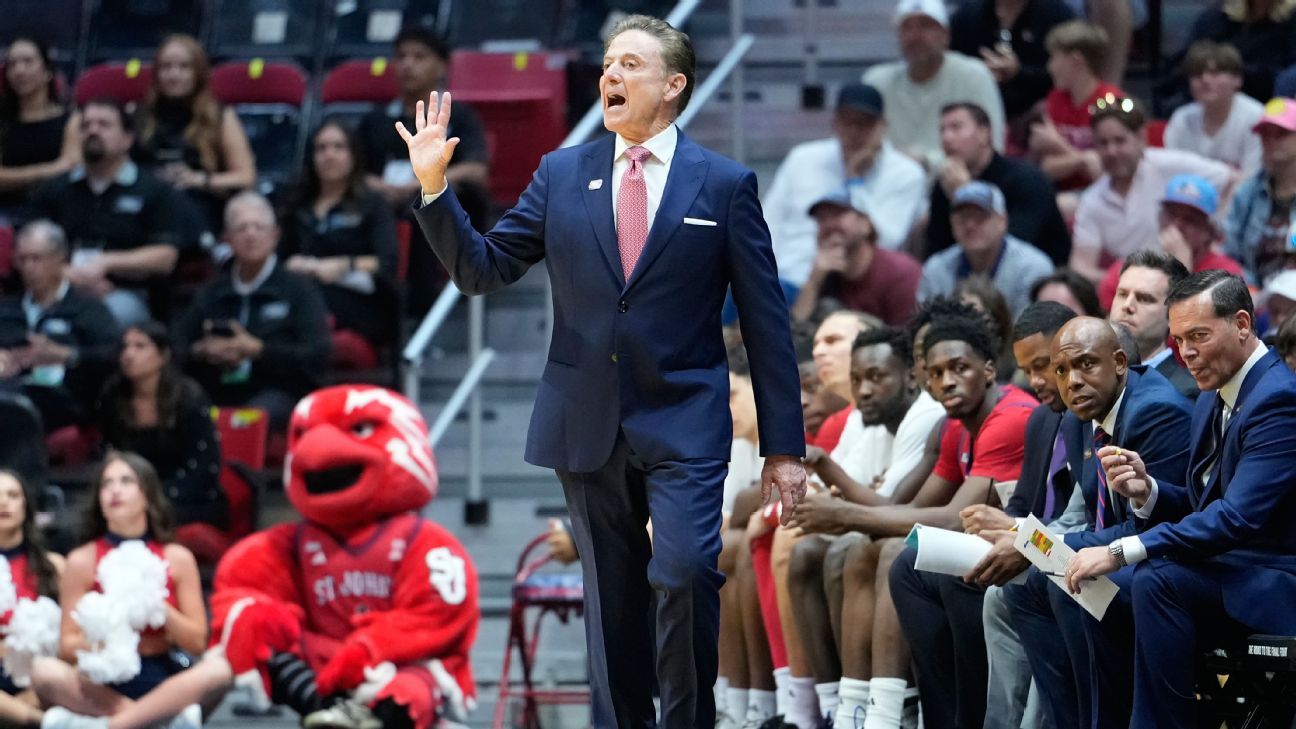
This St. John’s team can’t shoot.
The Red Storm are 182nd nationally in field goal percentage (45.2) and 225th from 3-point range (33.2).
It doesn’t seem to matter. Rick Pitino’s team (30-6) has been opportunistic, physical and fearless in reaching the Sweet 16, where it will play Duke on Friday.
It is reminiscent of Pitino’s 2012-13 Louisville team that shot just 33.3% from behind the arc (216th nationally) yet won the national title. It’s a far cry, however, from his underdog 1987 Providence team, which reached the Final Four thanks to his then-revolutionary idea of prioritizing the newly created 3-pointer. Those Friars hit 42.2% of them.
Pitino can win one way, or the other, or back again; from the Camelot of Kentucky to the late-career rehab of Iona College.
The years change, the teams change. The players, style of play, rules, roster construction, and even the cuts of his neatly tailored suits change.
One thing remains constant.
Pitino wins.
The case for Rick Pitino as the greatest college basketball coach of all time takes some contorting, but each year it gains credence. The 73-year-old coached his first game 50 years ago, in 1976 as an interim at Hawai’i. He now appears better than ever.
Pitino’s 915 victories, .743 winning percentage and two national titles will never compare numerically to, say, Mike Krzyzewski’s 1,202 victories, Adolph Rupp’s .822 win percentage or John Wooden’s 10 championships.
Part of that is by choice — Pitino spent eight seasons in the NBA, including six as head coach in New York and Boston. He also had various NCAA and personal scandals that made him a temporary pariah and, to some, permanently ruined his reputation.
His legacy will always be linked to scandal. He had that Louisville national title, along with 123 victories, “vacated” by the NCAA as a result of its investigation into allegations that a staffer provided escorts at on-campus parties for players and recruits. The program was also at the center of a federal fraud and bribery case involving Adidas.
For a stretch, he was essentially professionally exiled to Greece, where he coached pro ball for two seasons, winning a couple of titles there, too.
Outside the lines, Pitino is one thing. Inside them, though, is a different story. Had he just stayed at Kentucky in 1997 rather than jump to the Celtics — and kept his business in order (perhaps unlikely) — there is no telling what his career totals would be. UK was rolling, after all, winning another national title under Tubby Smith the season after Pitino left.
But he has always bounced around, rescuing six bottomed-out programs (Boston University, Providence, Kentucky, Louisville, Iona and St. John’s). In the season before his arrival, those teams were a combined 76-105 (.419).
No matter.
He led five of them back to the NCAA tournament within two seasons (or in UK’s situation, when a tournament ban concluded). At BU, it took four.
This isn’t to punish other great coaches who built national powers and then stuck with it. Maintaining a juggernaut isn’t simple and deserves credit. Yet, Pitino has proven it was him, not the institution, that made the difference.
Pitino has had talented players (especially the 1996 Kentucky national champions), but he has coached just three future NBA All-Stars — Donovan Mitchell, Jamal Mashburn and Antoine Walker.
This isn’t as impressive as Bob Knight, who won 902 games and three titles despite having just one player who would become an NBA all-star (Isiah Thomas), but it’s also not the Hall of Fame parade that Dean Smith (UNC), Krzyzewski (Duke) or Wooden (UCLA) had.
Pitino, a former New York point guard, is about basketball. He still conducts one-on-one development workouts. He still grinds game footage. He still finds the way to maximize what he has — sometimes with a full-court press, sometimes the old 2-3 zone he learned as an assistant under Jim Boeheim.
He still communicates, harshly but honestly, in a way, for example, that not only empowers current guard Dylan Darling to confidently call for the ball in the waning seconds of Sunday’s victory over Kansas, but allows Pitino to trust “Church Bells” — a nickname stemming from Pitino’s description of Darling’s, uh, fearlessness — to pull it off, even with his off hand.
Pitino’s career has bridged multiple eras; not just in style of play (he coached pre-shot clock and 3-point line), but style of pay. As an assistant at Hawai’i in the mid-1970s, the NCAA dinged him for giving players coupons to McDonald’s. Now, they can own a franchise.
Some of his best work has come recently.
He returned from his Greek purgatory to lead low-major Iona to two NCAAs in three seasons. At age 70, he took over St. John’s, and won consecutive Big East regular-season and tournament titles. Now, the Red Storm are in the Sweet 16 for the first time this century.
The players still listen. They still defend. They still hustle. They still believe.
They still win, even when they can’t shoot all that well.
That’s a pure college basketball coach, perhaps the best there has ever been.


China rolls out tariff cuts on Congo imports from April 1
India-US trade deal update: Piyush Goyal meets USTR Jamieson Greer, discusses next steps in BTA talks – The Times of India

India clears military purchases worth $25bn to buy aircraft, Russian S-400 missile systems

-

 Entertainment1 week ago
Val Kilmer revived 1 year after death through AI
-

 Fashion6 days ago
China’s textile & apparel exports surge 17% to $50 bn in Jan-Feb 2026
-
 Sports7 days ago
Rating Adidas’ 2026 World Cup away shirts: Argentina, Spain, Mexico and more
-
 Business1 week ago
Video: The Effects of High Oil Prices
-
 Business7 days ago
Flipkart group CFO to leave co amid IPO plans – The Times of India
-

 Sports7 days ago
American Conference Commissioner Tim Pernetti thanks Trump for Army-Navy game executive order
-
Tech1 week ago
The Corsair 4000D RS PC Case Keeps Your System Cool
-

 Tech1 week ago
‘Uncanny Valley’: Nvidia’s ‘Super Bowl of AI,’ Tesla Disappoints, and Meta’s VR Metaverse ‘Shutdown’