

Sports
World Series champs — again! Game 7 win cements Dodgers’ dynasty

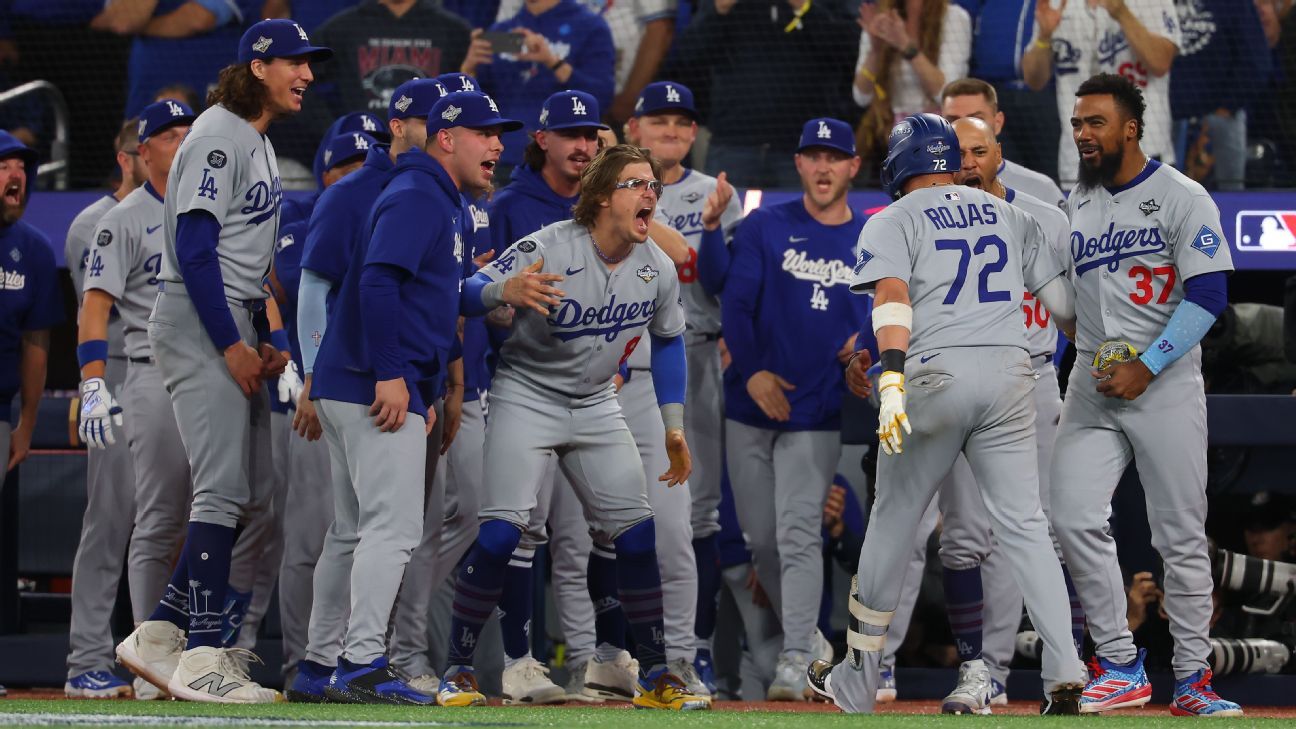
TORONTO — On a night when the Los Angeles Dodgers became the first team in 25 years to repeat as World Series champions, one glorious era in the franchise’s history ended while another one very much looks like it might continue indefinitely.
The Dodgers closed out the Toronto Blue Jays with a 5-4 win in extra innings in Game 7 on Saturday, a fitting finale for what was easily the best World Series of this decade and perhaps much longer than that. As Los Angeles closed in on another crown, it was easy to think about the fourth lefty on the Dodgers’ bullpen depth chart, a 37-year-old who just happens to be a future Hall of Famer and who was watching his last game as an active big leaguer. That end-of-the-bullpen southpaw might very well be the greatest Dodger of them all.
The lefty is Clayton Kershaw, who announced his retirement late in the season and has been on something of a farewell tour ever since, only getting into a couple of postseason games before warming up in the bullpen when Game 7 ended in the 11th inning. Kershaw hasn’t been a mere bystander: His snuffing of a bases-loaded Toronto threat in the Dodgers’ epic 18-inning Game 3 win in this World Series was crucial. And that’s gratifying because it means Kershaw was at least a contributor to the third championship of his storied career. He went out on a high note.
While Kershaw is calling it quits, the team he is leaving behind is as strong as it has ever been. Indeed, it might be as strong as any team has ever been when you consider a multiyear window, and the trajectory of the franchise strongly suggests this already tremendous period of domination is not going to end anytime soon.
As the Dodgers bid adieu to an all-time great, it’s worth considering the Kershaw era as a whole; where the Dodgers were when he arrived in Los Angeles as a touted first-round hotshot; and what they have become since — which is, simply put, one of baseball’s greatest dynasties.
MANY STAR PLAYERS, managers and executives passed through Dodger Stadium over the years, but the post-1988 championship drought stretched on and on. By the time the turmoil during the latter part of the Frank McCourt ownership era gave way to the arrival of the Guggenheim group in 2012, the Dodgers were wallowing in mediocrity even as Kershaw rose to the peak of his profession, winning his first Cy Young award in 2011 and finishing second in 2012.
Kershaw was great, but the Dodgers, overall, lacked an identity. They weren’t even the economic bullies that they’ve become. During Kershaw’s first five seasons, the Dodgers ranked from eighth to 10th in Opening Day payroll, per Cot’s Baseball Contracts.
Then came the Guggenheims, and after the 2014 season, Andrew Friedman arrived from the Tampa Bay Rays as the Dodgers’ lead baseball executive.
“I think when the new ownership group came in, and Andrew came in, I just think it felt very, like, professional,” Kershaw said. “It felt very, like, ‘This is how you do it.’ And I was younger too, so I didn’t understand it. But now … all of us are in it together.”
By the time Friedman arrived, the Dodgers’ climb back to the elite was already underway. They won back-to-back National League West titles in 2013 and 2014, seasons in which Kershaw added two more Cy Young Awards and an MVP trophy. But the Dodgers’ pennant drought persisted.
Since then, the Dodgers have morphed, re-morphed and morphed again into baseball’s most relentless organization. The stars have trickled in nearly every season, either from within or without. For every superstar the Dodgers have acquired — including Shohei Ohtani, Mookie Betts and Freddie Freeman (all former MVPs, like Kershaw) — others such as Manny Machado and Trea Turner have come and gone.
The Dodgers’ payroll reached No. 2 in 2013, and it has remained in the top five ever since. According to Cot’s, L.A. began the season with MLB’s highest payroll seven times, including this one.
Yet all through this rise in revenue and payroll alike, the Dodgers never slacked in scouting, development, analytics, research, medical science or any facet in running an organization. If it exists, the Dodgers are in pursuit of industry leadership in it. And in doing so, they have become what some see as baseball’s newest evil empire.
“There’s always critics,” Dodgers manager Dave Roberts said. “We’re in a big market. We’re expected to win. Our fans expect us to win. I can’t speak to what revenue we’re bringing in, but our ownership puts it back into players, a big chunk of it. That’s the way it should be with all ownership groups.”
Increasingly, the subject of organizational identity seems to come up in conversations about industry trends. The idea is that every organization needs to have a clearly defined set or traits, a style of play that serves as a guiding light for everything from scouting, drafting, development, free agency and the trade market.
What is the Dodgers’ identity? Really, it’s all the above. And more. When Kershaw joined the Dodgers, they were a proud franchise that arguably was defined by a lustrous past. Now, the Dodgers are the one team that can claim to be all things.
“I think that should be everyone’s goal,” L.A. starter Tyler Glasnow said. “Try to build the best playoff team you possibly can. You obviously have to get there, and it’s a little different for the Dodgers. They have done so many things for so many years, from development to signing guys. They’re in a different position than most [teams].”
Whatever their opponents’ strength is, the Dodgers are going to do it better. The brain trust in L.A. remains young. The resources keep growing. And so the chasm between the Dodgers and everyone else keeps getting wider.
Kershaw arrived with a franchise with a proud past trending toward the middle. He leaves with one whose ceiling might be too high to identify.
“It starts with Andrew and [Roberts] and all the way down,” Kershaw said. “There’s no hierarchy here. Everybody does their job in trying to win the game. There’s not one thing that’s more or less important than the other thing.”
ONE THING THAT strikes you when you’re around the Dodgers is the degree of loyalty that their players express to the organization. Certainly Kershaw himself could have left a number of times, and in recent years when he worked on one-year contracts, there were frequent rumors he might want to finish his career with his hometown Texas Rangers.
But Kershaw never left, and the Dodgers never tried to push him out, even though they likely could have replaced his late-career rate of production with a younger, more cost-efficient player. Instead, they let Kershaw linger in his annual decision on whether to keep going and rolled out the red carpet when he wanted to return. Because of that, he will become one of the most precious things in baseball: a one-team Hall of Famer.
But it isn’t just about how they treat their stars. Take Miguel Rojas, once the starting shortstop for the Miami Marlins who has become a fringe player in L.A., a defensive specialist and a sometimes starter when other players are injured. The Dodgers are his original organization, and even as his career has iterated, he remains Dodger blue at heart and it was his home run that knotted Game 7 in the ninth inning.
“The Dodgers gave me an opportunity to go to minor league camp in 2013,” Rojas recalled after Game 6. “Then I got a chance to play in the big leagues in 2014 when I really wasn’t an impact player in the minors. They gave me an opportunity, and I will never forget that.”
Enrique Hernandez cited the communication between the team and the players as what separates the Dodgers from other teams.
“Other organizations, they’re like, ‘We’re going to do things our way, and you’re just a player, you work for us,'” Hernandez said. “But I think these guys just want to make sure that we’re on top of our game at all times.”
That too is what the Dodgers have become: a team that players want to play for, where they feel appreciated.
“Even playing against them, watching, it was just always in the back of my mind: I wanted to be a Dodger and play on that team,” L.A. starter Blake Snell said during the NL Championship Series. “To be here now, it’s a dream come true. I couldn’t wish for anything more.”
The Dodgers don’t sign every free agent, though last winter it felt like it at times. As the Dodgers’ payroll has increased, so has their international influence. Of course, the marquee signing was Ohtani during the 2023-24 offseason. Following in his footsteps have been Yoshinobu Yamamoto and Roki Sasaki, both of whom played vital roles in the Dodgers’ run to the latest championship.
Accompanying the focus on overseas stars has been a tremendous growth in business partnerships looking to capitalize on the overwhelming popularity and attention that is given to the Japanese superstars, particularly Ohtani. So, the Dodgers’ revenue not only keeps growing, but it’s hard to imagine what the ceiling for it could be.
Yet despite the depth of resources, they’ve been able to play footsie with the various luxury tax thresholds because on top of all of the money that goes into their big league roster, they are still cutting no corners in their scouting and development program, either internationally or in the states.
As a proxy to illustrate how consistent the Dodgers’ pipeline is, consider this: According to Baseball America’s annual preseason prospect ratings, the Dodgers have not ranked outside of the top 10 since 2013. This season, which they entered with baseball’s highest payroll and a new World Series trophy in tow, ESPN’s Kiley McDaniel ranked their system No. 1 in the sport.
“People just overlook the fact that every year, we probably have a top-five farm system in baseball,” Roberts said. “This year, I think we probably have the No. 1 or No. 2. We pick at the bottom of the draft every year, towards the bottom, and we still have young guys, whether by way of trade or development, that continue to help and contribute.”
This is what it all comes down to. The Dodgers aren’t beating everyone in just spending or just analytics or just scouting or just development or just free agency. They are beating everyone in everything.
“You see free agents and you see other guys, they want to be a part of something that is built to last,” Kershaw said. “We don’t want to be one-hit wonders as free agents. You know when you sign up to be a Dodger that you’ll be in these [playoff] situations.”
No, the Dodgers aren’t a shoo-in to win the World Series every year. The just-completed World Series was the perfect illustration of that. With a bounce here or there the other way in two of Toronto’s losses, the Blue Jays would be champs and Game 7 would have never happened. That’s always going to be the case in baseball’s current playoff format.
But the Dodgers are a virtual shoo-in to be considered a leading World Series contender every year. The early 2026 title odds began to circulate this week and — spoiler alert — the Dodgers are already prohibitive favorites to win the 2026 World Series.
If you have Dodgers fatigue, you better put on a pot of coffee, because unless something drastic changes, they are not going away for a very, very long time. And if you wonder what that means in the context of baseball history, consider this: The great New York Yankees dynasty, the lineage that stretched from Ruth to DiMaggio to Mantle, lasted from 1921 to 1964.
When a team reaches this ongoing level of organizational success, hovering above all others, it can create a self-reinforcing dynamic that lasts for decades. The Dodgers are in Year 13 of their current postseason streak, with five NL pennants and now three World Series titles, but they very well might just be getting started.
“The mainstays that we have in our lineup, that are going to be here for a long time, and just the continuity, the expectation now is this, every single year, and that’s not easy to do,” Kershaw said. “But that’s what everybody expects.”
THE ARGUMENT THAT Kershaw is the greatest Dodger ever is an easy one to make. Certainly, this is subjective, but it’s a proposition with a statistical defense. This isn’t to diminish the impact of legends such as Jackie Robinson, great for ways far beyond what he did on the field, or Sandy Koufax, whose cometlike career ended at age 30 because of injury. That’s just it: Many of the Dodgers’ all-time greats either had short careers or spent a lot of time with other teams.
Take a bottom-line metric such as the Baseball Reference version of WAR. You can always quibble about the conclusions of WAR, particularly when it comes to pitchers; but when one player has a sizable edge over another, WAR is probably right. Kershaw has a sizable edge over every former Dodger, with his 80.9 bWAR far ahead of second-place Pee Wee Reese (68.5).
Maybe this will change in time, especially if Ohtani plays into a ripe old age. But for now, it’s pretty clear that in terms of cumulative accomplishment, Kershaw is the most prolific Dodger who has ever lived.
Here is where the strength of the Dodgers might be best illustrated: For some teams, the loss of a franchise icon can be a little discombobulating because that player is so entwined with the identity of what the franchise has become. With these Dodgers, there’s no such concern.
It’s not to take away one iota from anything that Kershaw has ever done. It’s just that with Ohtani around as one of the most famous athletes on the planet and Betts and Freeman among the best players of their generation as surefire Hall of Famers, the Dodgers have an identity without Kershaw.
He has been the constant through all of this, the golden link in the great chain that binds an era of one of baseball’s flagship franchises to the next. For much of Kershaw’s career, especially when it came to the postseason, it felt like he was tasked with carrying the Dodgers on his back as he built a legacy and a résumé that stands right alongside that of any other pitcher in the history of an organization that has produced some of baseball’s best, not the least of whom is Kershaw’s close friend Koufax.
Yet by Saturday’s finale, Kershaw’s presence on the Dodgers was really more luxury than necessity, and that’s certainly no insult to the great lefty. It simply speaks to the behemoth that the Dodgers have become.
Once, the Dodgers’ success was attached to the question of how far Kershaw could take them. By the time he celebrated with his teammates for the last time on Saturday, the worm had turned. The Dodgers had become so powerful that as the final chapter came to a close, Kershaw was just a passenger on one of baseball’s most glorious rides, one whose end is so far away that no one can imagine when or where or if it will ever end.

ATLANTA — Texas senior Hubert Kós defended his national title in the 100-yard backstroke with an NCAA record time and the Longhorns held onto their team lead at the national swimming and diving championships Friday.
Texas holds the top spot heading into the final day of competition with 340.5 points. Florida is second at 331 and Indiana has 254. Arizona State sits at 245 — with 120 coming on three relay wins.
California sophomore Yamato Okadome won his second individual title in consecutive nights, sweeping the breaststroke events. He took the 200 in a personal-best 1:48.61 after winning the 100 on Thursday.
Florida senior Josh Liendo also won his second individual title of the championships with a time of 18.06 in the 50 freestyle. Arizona State finished third, fifth and sixth.
Florida went first, second and fifth in the 500 freestyle for 51 team points, led by Ahmed Hafnaoui at 4:06.56.
Missouri senior Collier Dyer took the three-meter diving title in his first-ever final.
Saturday’s events include the 200 IM, 100 freestyle, 200 butterfly, 200 backstroke, 400 freestyle relay and platform diving.
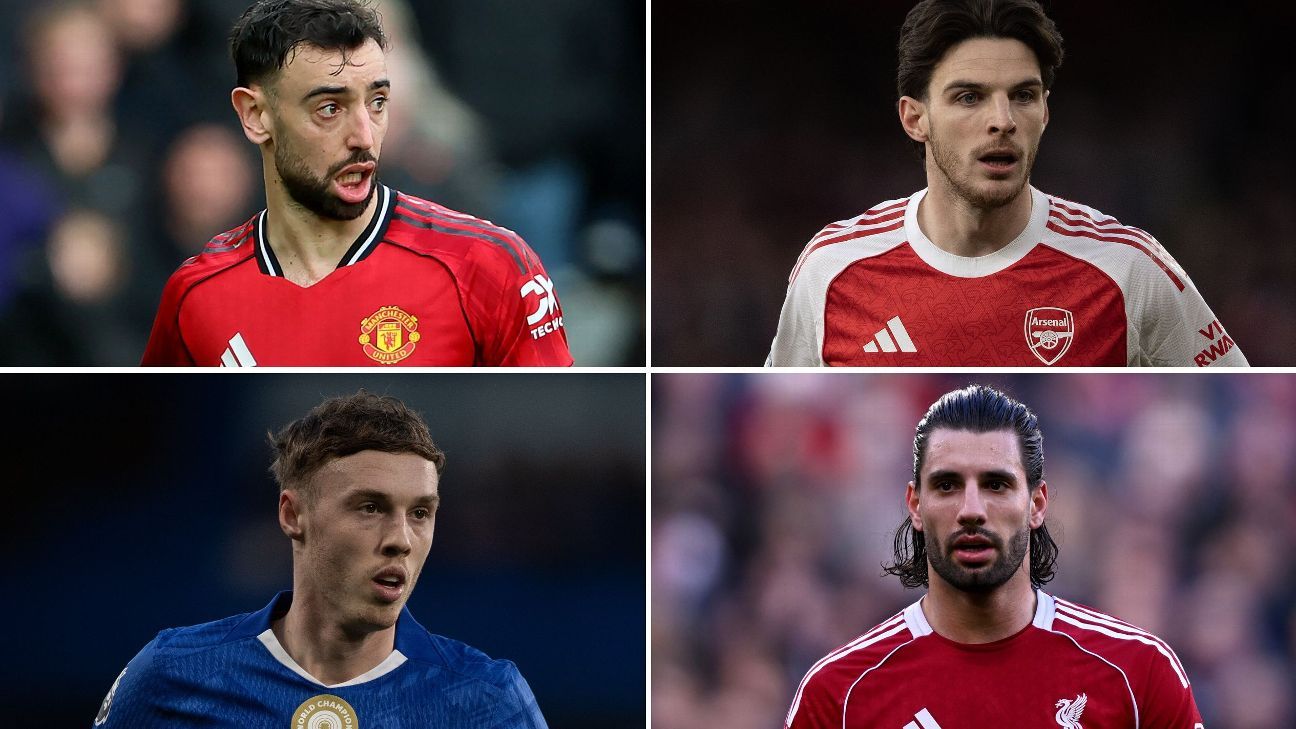
In November 2025, we delivered the fifth installment of our Premier League MVP rankings, aimed at tackling a mighty question: Which players rank as the most important at the division’s top clubs?
We used a simple combination of ability and tactical factors to assess how crucial the players were to their teams and ranked the top 15 accordingly. Naturally, the best, most consistent and most present players filtered toward the top, while also allowing room for the most tactically crucial individuals to receive credit, too.
Now we’ve revisited the subject for a sixth installment, intrigued to see how things have changed. Football teams have to weather plenty of storms over the course of half a year, often changing, tweaking and recalibrating around injuries, absences and fluctuations in form.
So, we’ve reranked the players at England’s traditional “Big Six” clubs (even with Spurs currently embroiled in a relegation battle), checking in on how things have transpired since November. Who has risen to the fore and increased his stock, and who, conversely, has dropped off? To begin, here are a few notes about the methodology.
Why 15? Well, with 11 first-team players starting any given match, this should allow for those squad positions that aren’t 100% cemented. Any long-term injury absences will be noted separately and not considered for the ranking.
Who is eligible? The minimum minutes cut-off is 900 minutes, which isn’t a particularly high bar. Previously, we had considered only Premier League minutes for this ranking, but this season we decided to include the Champions League, too. That’s in recognition of the fact that amid the increasingly congested schedule, even the top teams have to mix and match their XIs across the competitions to stay healthy. Note that in Manchester United’s case, the old rule of 900-plus Premier League minutes applies, as they are not in European competition.
How did you rate the players? A ranking like this will always be somewhat subjective, but efforts were made to consult experts on each club to help shape the rankings in accordance with our methodology.
Are stats involved? Statistics proved a powerful tool in backing up our assertions, with Opta’s data used throughout and Gradient Sports‘ grades and physical data aiding the process, too. Please note that unless stated otherwise, all referenced statistics such as minutes played, goal contributions and tackles, etc. are a combination of Premier League and Champions League play.
How hard is it? Some of the decisions are glaringly obvious, but others not so much. Comparing players across different position groups is a difficult task. Within the context of a squad, though, it’s possible to get a feel for who is the most integral.
I disagree wholeheartedly with your decision to put X below Y. Will you change it? Of course people will disagree, and a lot of this is subjective, but it’s only a bit of fun.
Enough of that. On with the rankings.
2:12
Was Dowman’s impact vs. Everton a season-defining moment for Arsenal?
James Olley reacts to Max Dowman’s performance vs. Everton after becoming the youngest goalscorer in Premier League history and his impact at Arsenal.

Arsenal’s big summer spend looks set to pay dividends. They’ve sat atop the Premier League table since early October and are still in the FA Cup and Champions League — although they did lose the Carabao Cup final 2-0 to Manchester City. Still, considering the injuries they’ve had to weather, it’s great to be heading into April with a treble still a possibility. As Mikel Arteta has tweaked his team’s approach throughout the season, different players have risen to the fore. This edition of the rankings crowns another new No. 1, meaning it has changed three editions in a row!
MISSED THE CUT: Due to the nature of Arsenal’s deep and talented squad, a couple of really good players were always going to have to miss out. With apologies to Gabriel Martinelli and Mikel Merino, they haven’t made it. Merino has been injured for months, but Martinelli has been productive lately — his issue is that at a club packed full of players who can play multiple roles, he can play only one, and that’s reflected in the fact he has started only 20 in all competitions this season.
None of Ben White, Myles Lewis-Skelly, Christian Nørgaard, Gabriel Jesus, Kai Havertz, or 16-year-old sensation Max Dowman have played enough minutes to qualify.
15. Cristhian Mosquera (=)
To get over 1,000 minutes of Premier League and Champions League football from Mosquera, who was signed as a developing backup player for £13 million last summer, is outstanding work from Arsenal. Few considered him to be ready for such a role, yet he has stepped in ably at both center back and right back when required.
14. Riccardo Calafiori (-7)
Calafiori started the season brilliantly and emerged not just as the first-choice left back, but as a player so effective overall, he was given license to dribble and roam wherever he pleased. But in the second half of the campaign he has slowed down. Injury has hit — which is a sadly familiar story for him — and he has started just four games since the turn of the year.
13. Noni Madueke (+1)
Madueke has proved a superb change-of-pace option to Bukayo Saka on the right wing. Not only has he stepped in to protect Arsenal’s homegrown star from burnout, but he has often made a strong case for even more playing time thanks to some zippy, energetic performances.
12. Leandro Trossard (-2)
Back in the summer, when Eberechi Eze signed for an initial £60 million, it felt like Trossard’s days might be numbered. But the Belgium forward has responded to the challenge as he always does: Work hard, take on tactical instruction and, crucially, score goals. His 15 goals and assists in all competition is third-most among Arsenal players. He’s not the shiniest, highest-earning or most talented player in this squad, but he continues to serve a purpose on the left.
11. Viktor Gyökeres (-2)
Expectations were sky high for Gyökeres following a £55 million move in the summer and it’s clear the striker hasn’t met them yet. A goal machine in Portugal for Sporting CP, his numbers at Arsenal have been far more modest: He has scored 11 in the league, the vast majority of which have come against newly promoted sides or teams battling relegation.
But at the very least, he has offered a physical and energetic presence up front and stayed fit. That has allowed him to be a constant fixture in a team that could still win a treble, which certainly counts for something when it comes to deciding his rank.
10. Martin Ødegaard (New!)
Ødegaard missed out on November’s edition of these rankings as he was too injured to qualify, which felt like a bleakly accurate summary of his 2025. He’s back fit now, but not playing much. It’s far too early to say that Arsenal have moved away from the Norwegian’s talents — he’s not only their captain, but one of the best players in this squad in terms of pure talent — but the team have certainly found a way to win in his absence.
That makes him very difficult to rank here; 10th respects his qualities without overstating his current importance to the team.
9. Piero Hincapié (New!)
Hincapié was slow to work his way into this Arsenal team — he started his first Premier League or Champions League game only in November — but now has a firm handle on the first-choice spot at left back, eclipsing Calafiori and Lewis-Skelly, in the pecking order. He’s less adventurous than those two, but certainly more solid and effective in his defensive duties. Arsenal can make his loan deal from Bayer Leverkusen permanent for around £45 million — something Arteta will no doubt be keen to do.
8. Eberechi Eze (+4)
It has taken most of the season, but Eze is now firmly entrenched as a part of this Arsenal side. In the absence of Ødegaard, he’s the one bringing a bit of stardust to the center of the pitch, complementing the hard running and physicality of his colleagues. His stunning strike against Leverkusen in the Champions League showcased what he’s all about. All his teammates need to do is get him the ball within 30 yards of goal and let him do the rest.
7. Jurriën Timber (-1)
It’s a marker of Timber’s quality that he has basically fully ousted White — once a constant on Arsenal’s right side of defense — and made the full back position his own. There is an argument that he has been overplayed at times, leading to a few injury niggles and a few tired performances, but for the most part he has played to a league-leading standard this term.
6. Bukayo Saka (-5)
First to sixth is a hefty drop for Saka, but his fading form and reduced importance to the team must be recognized. Seven Arsenal players have started more games this season than the England winger and while injury has played a part in that, a bigger factor has been Arteta’s willingness to turn to others, as he has a deeper squad to draw upon.
For the first time in half a decade, you could argue this Arsenal team is no longer centered on Saka. That shows in the stats: He’s on track for his worst league season in terms of goals and assists (nine) since 2021.
5. Martín Zubimendi (=)
Arsenal made plenty of notable signings in preparation for this Premier League title charge; Zubímendi might be the one that tips the scales and makes that dream a reality.
The midfielder is a curious mix of grace on the ball and tenacity off it; his 64 combined tackles and interceptions is second only to Timber (83) among Arsenal players in the league, while he has covered more ground (323.57 km, or 201 miles, per Gradient Sports) than anyone else. And he has also popped up with some crucial goals, including a few remarkably springy headers considering his 5-foot-11 frame.
4. William Saliba (=)
Do you ever get the impression that a team just plays better when a certain player is playing? That’s the vibe Saliba has been giving this season. It doesn’t necessarily bear out in results — Arsenal are perfectly capable of winning without him with Mosquera as a backup — but when he’s there, everything just feels a bit safer, a bit calmer.
The France international has been as crucial to the Gunners’ rock-solid defensive form all season as anyone. In fact, while other defenders like Gabriel and Timber have dipped in form, Saliba has stayed the course.
3. David Raya (+5)
Raya has faced the fewest shots of any Premier League goalkeeper to start 20 or more games (234). So from that perspective, he’s not busy.
But what shines through is that roughly once per game, he makes an outstanding stop. It’s what every top team needs: A bailout from a top goalkeeper when that one opportunity slips through. He’s a vocal presence, a good organizer, and has completed the most goalkeeper sweeps (30) of anyone in the division. His on-ball ability is also a massive factor in Arsenal’s style of play.
2. Gabriel Magalhães (=)
Naturally, “Mr. Set Piece” ranks highly for Arsenal. Love it or hate it, the club’s mastery of this art has carried it to the precipice of the title, and Arsenal’s No. 1 threat in dead-ball situations is Gabriel. The combative Brazil defender has two goals and three assists from corners alone in the Premier League this season, highlighting how generally dangerous he is from these situations. Many of Arsenal’s set piece routines are designed to free him up and opponents are left scrambling to stop it.
For the majority of the season he has also been a pillar in defense alongside Saliba, and that has led to some suggesting Magalhães could be in the running for the PFA Player of the Year award.
1. Declan Rice (+2)
Speaking of the PFA Player of the Year award … If the season ended today, Rice might genuinely win it. He’d almost certainly win Arsenal’s version of it.
The midfielder, signed for £100 million, is emblematic not only of the Gunners’ tactical approach and identity, but also the Premier League’s wider meta. To be the best in England’s top tier right now, you have to mix technical ability with a frankly obscene level of athleticism and physicality. And Rice does this better than almost all.
He ranks highly in basically every statistical category, which underlines how vast his influence is. He has delivered the most assists (nine) and big chances (21), recovered the most balls (187), and covered the second-highest league distance (316.99 km or 196.97 miles) among Arsenal players.
1:21
Hislop: Liam Rosenior’s Chelsea future is in danger
Shaka Hislop and Steve Nicol debate Liam Rosenior’s future after Chelsea’s 3-0 loss to Everton in the Premier League.

Chelsea entered the season on the high of winning the 2025 Club World Cup, but also likely knowing that would come at a cost: With no proper break between seasons, they were going to be up against it to maintain fitness and form across another full European campaign. And so it has proved. Even a squad as big as theirs has been stretched by injuries and fitness issues. Add in the fact that manager Enzo Maresca made his own position so untenable that the club had to part ways with him on New Year’s Day, replacing him with former Strasbourg boss Liam Rosenior, and it’s no wonder the club is in danger of even qualifying for the Champions League this term.
MISSED THE CUT: Tosin Adarabioyo and Jamie Gittens drop out of the top 15. The former was someone Maresca turned to in reserve, but Rosenior seems to prefer someone else; the latter has been injured for most of 2026.
Levi Colwill, Benoît Badiashile and Dário Essugo have had injury problems all season and don’t have the requisite minutes to feature. Neither do Josh Acheampong, Filip Jörgensen or Romeo Lavia. Striker Liam Delap has played enough, but doesn’t qualify as he has really struggled to adapt to a higher level so far.
15. Jorrel Hato (New!)
One of the big winners of Rosenior’s appointment as manager has been Hato, whose playing time has increased at the expense of Adarabioyo. The 20-year-old is the next man up when the defense needs cover, and the fact he’s left-footed means he can cover the flank if needed.
14. Alejandro Garnacho (-3)
It felt like Garnacho was starting to get a grip on a spot in this Chelsea XI over Christmas, but since Rosenior took the reins — and perhaps more importantly, in the wake of Estêvão’s rise and Cole Palmer‘s return to fitness — the winger has dropped into a backup role.
13. Andrey Santos (+1)
Santos is in and out of the team on a constant basis, but the Brazil midfielder won’t mind. Simply making the step from Strasbourg to Chelsea, and playing a squad role so far worth just over 2,000 minutes in all competitions, is an achievement in itself.
12. Robert Sánchez (=)
Rosenior has become the latest Chelsea manager to drop Sánchez as his No. 1 goalkeeper. It’s a telling pattern, and although his replacement, Jörgensen, never does enough to fully steal his place, there’s an obvious lack of trust in the Spaniard. That’s likely because no matter how well he has played in the 2025 Club World Cup final (and for stretches of this season), he continues to drop the odd clanger — for example, letting the ball squirm through his legs in their latest defeat, 3-0 to Everton.
11. Wesley Fofana (-4)
Fofana is a first-choice center back for Chelsea, but they have to manage him very carefully because of his extensive list of serious injuries. The fact he has been able to play over 2,000 minutes in all competitions this season is a huge win, but because he flits in and out of the XI so often — and sometimes plays only 45 minutes for his own well-being — he has seriously struggled to find anything close to top form.
10. Malo Gusto (=)
With Reece James playing plenty of football in center midfield, the right back role has really opened up for Gusto. He can also operate a little higher up or on the left side, giving Rosenior flexibility in how to utilize him.
9. Trevoh Chalobah (=)
Who has played the second-most minutes for Chelsea this season among outfield players? This answer might surprise some.
Chalobah is understated, but is a reliable player who can cut it on and off the ball. The Blues have been without Colwill all season and without Fofana for patches of it, meaning Chalobah has been called upon a lot. Unfortunately, he’s out for the next six weeks with an ankle injury that saw him stretchered off against PSG, and coping without him will prove tough.
8. Estêvão (=)
A precocious talent, Chelsea have done well not to overexpose Estêvão to too much, too soon. At just 18, having only arrived from Brazil last July, there’s plenty of time for the Brazil winger to make good on his tremendous potential. He has already enjoyed some spectacular moments — such as the 95th-minute winner against Liverpool in October and a brilliant strike against Barcelona in November — and has played around 1,500 minutes in all competitions this season, forcing himself into the first-team picture as a result of his quality, goal-scoring ability and positional versatility.
7. Pedro Neto (-1)
Rosenior is generally a very supportive manager, but he went above and beyond when he leapt to the defense of Neto in February, labeling the winger “world class.” Neto’s breakaway speed is a huge asset, and the fact he has received 734 passes in the final third this season, by far the most of any Chelsea player, suggests they’re very willing to use him to get up the pitch.
But, frustratingly, his crossing and decision-making underwhelm at times, while he has landed in hot water with both Premier League and Champions League officials recently — the latter for pushing a ballboy over against PSG.
6. Marc Cucurella (-2)
Cucurella remains the only natural, recognized left back in Chelsea’s squad. If he’s not available, Rosenior must divert Gusto or Hato there, meaning the Spain international carries a natural importance in this team. He’s a tenacious defender, a super athlete and good in possession, while the fact he pops up in goal-scoring positions is a huge bonus. However, he drops a little in this ranking to make room for one returning star player and a striker rising in prominence.
5. Cole Palmer (New!)
It has not been a vintage season for Palmer. After stealing the show at last summer’s Club World Cup final, people expected him to take another leap — but by his own admission, he wasn’t even fully fit until early March. Despite this, he has still managed to deliver 13 goal contributions in all competitions, along with some excellent individual showings against the likes of Napoli and Aston Villa.
Palmer reenters the rankings in fifth after missing November’s edition because of injury. To some that will seem too low — he is, after all, arguably the Blues’ best overall player when on song — but he hasn’t hit those levels for a long time, and he has contributed significantly less to this campaign than to four others.
4. João Pedro (+1)
João Pedro is enjoying the best-ever season in his career thanks to one simple, yet enormous leap: He’s scoring loads of goals. The Brazil striker has always been incredibly talented — his highly technical take on the No. 9 role reminds of Liverpool’s Roberto Firmino in his pomp — but in the past, it has been end product which has been missing.
He has tended to average around 10 goals per season throughout his time in England with Watford and Brighton; that’s no longer the case and he has scored and assisted 24 times in all competitions, by far the most of any Chelsea player.
3. Enzo Fernández (=)
No Chelsea player has played more minutes than Fernández (3,661) in all competitions. His durability, versatility and overall quality ensure he’s always in the team. In fact, he has surpassed 100 games for club and country in the past two years — a remarkable, if a little concerning, statistic.
Both Maresca and Rosenior have felt comfortable deploying him in a multitude of midfield roles — from protecting the base to breaching the box as a No. 10 (and everything in between). This level of exposure has naturally led to him drifting where games take him, creating the illusion that he’s everywhere at once. With 18 goals and assists, he has backed all of that up with important production in the final third.
2. Moisés Caicedo (-1)
Caicedo’s form has fluctuated a little this season as he has dealt with lots of confusion, change and injuries to others. That said, the midfielder is still a vitally important player to Chelsea and without a doubt one of the first names on the team sheet.
He rarely misses games and barely gets injured despite getting through a truckload of work in the middle of the pitch. He’s one of the best in the league at snuffing out danger — his 94 combined tackles and interceptions is bettered only by Everton’s James Garner‘s 103 — while his passing from deep still goes under the radar. This Premier League season has been all about physicality and intensity; that’s where Caicedo shines.
1. Reece James (+1)
James signed a new six-year contract with Chelsea this month. Upon announcing it, the club stated: “He is the leader of this team, both on and off the pitch.” That’s undoubtedly true. The Blues’ performance levels reach their ceiling when James is on the pitch, as not only does he bring immense overall quality to every phase of play, but he can straddle tactical roles that allow the team to be extremely flexible in how they play.
What a shame that he succumbed to another hamstring injury — the 10th of his career so far — and Chelsea might now be panicking as to how they’ll navigate a period without their captain, heartbeat and X factor.
2:14
Laurens convinced Mohamed Salah won’t be at Liverpool next season
Julien Laurens thinks Mohamed Salah will leave Liverpool a year before his contract expires after a disappointing season.

It’s been far from the season Liverpool expected. A huge summer spend of nearly £450 million has not translated into performances or results, as the defending champions have failed to keep pace with the top order and set a Premier League record for most winners conceded in stoppage time (five times and counting). Anfield’s faith in manager Arne Slot is waning and club legends are fading — but the silver lining is that they remain in with a chance of cup glory, via the FA Cup or the Champions League. As we enter this critical period, how does their squad stack up?
MISSED THE CUT: Dropping out of the top 15 are British transfer record striker Alexander Isak and backup goalkeeper Giorgi Mamardashvili, who simply don’t meet the minimum minutes threshold (900). None of Joe Gomez, Wataru Endo, Federico Chiesa, or 16-year-old winger Rio Ngumoha have played enough to feature either.
15. Andy Robertson (-3)
Robertson’s time at Liverpool feels like it’s coming to a close. The Scotland defender’s performance levels have dropped and he has assumed the backup role to left back Milos Kerkez. Plus, the fact he came reasonably close to joining Tottenham Hotspur in January is surely a signal that all parties accept the end is nigh.
14. Jeremie Frimpong (New!)
Signed as the replacement for Trent Alexander-Arnold at right back — albeit in a very different sense, given their playing styles are night and day — Frimpong has struggled to find a foothold in his first season at Liverpool mainly because of injuries. We’ve seen flashes of the qualities that got him 44 assists and 30 goals from 190 games at Leverkusen — the turbo speed, the touchline-hugging runs, the smart deliveries — but not enough to cement him a role in the Liverpool XI, or in the top 10 of this list.
13. Conor Bradley (-2)
Bradley’s biggest enemy is injury. Over the past few years he has consistently flashed great potential, only for a series of ailments to hold him back.
His latest issue — a serious knee injury sustained in January — came just as he was making the right back spot his own, having enjoyed an incredible game one-vs.-one with Real Madrid‘s Vinícius Jr. in the Champions League. Bradley will miss the rest of the season, but he has played enough football (around 1,200 minutes) to qualify for this ranking, and it’s fair to say that when fit, he’s the club’s first-choice right back.
12. Curtis Jones (New!)
Jones has started just 19 games in all competitions so far this season, a strikingly low tally. Arne Slot does not rotate his team very much and the midfielder, who can also play right back, has often found himself on the outside looking in — much to the fans’ chagrin.
11. Cody Gakpo (-2)
Gakpo is one of Slot’s favored sons. He consistently gets the nod on the left flank, playing a role that suits his athletic ability and proclivity to cut in and shoot. Problematically, though, the Netherlands international’s form has dropped off a cliff in recent months. He has just one goal contribution in his past 14 games in all competitions, and there’s real concern among the fans that his consistent presence in the XI regardless is roadblocking opportunities for young talents like Ngumoha.
10. Mohamed Salah (-4)
The great Salah, down in 10th place in these rankings … It’s just wild to take in, isn’t it? But there’s no ironclad case for him to be any higher. Salah has struggled for form all season, to the point where Slot accepted he simply had to take him out of the XI at various points. The first time that happened it led to a blowup between the player and the club, but now the Egypt forward stoically accepts it.
Since arriving in the Premier League, Salah has never scored fewer than 18 goals in a season. More than once, that number has exceeded 25. This term he’s on five … just one of which has come in 2026.
It was therefore no real surprise to see the Egypt international announce this week that the 2025-26 season will be his last with the club. Perhaps the timing of the announcement will generate some goodwill and momentum that can be used to spark a strong finish to his time at Anfield.
9. Milos Kerkez (+5)
Kerkez’s performances are on a promising, upward trajectory. His poor start to life at Liverpool was as much Slot’s fault as it was his, as he was misused in a tactical role that did not suit him. Now he’s playing to his strengths and building confidence, having assumed the starting role of left back from Robertson. The Hungary defender was particularly excellent at home to Galatasaray and scored against Brighton last weekend, too.
8. Alexis Mac Allister (=)
What has happened to Mac Allister? It’s been the question on everyone’s lips practically all season long. The Argentina midfielder is currently a shadow of his 2024-25 self; the quick, slick interchanges with the ball have gone, as has his intensity off the ball. His drop-off has been a major factor in the Reds’ midfield troubles this season, but Slot hasn’t really tried any other solutions as the World Cup winner has played the fifth-most minutes of anyone at the club.
7. Ryan Gravenberch (-4)
Gravenberch falls out of the top five of this ranking, which is reflective of a general drop in form. It’s worth expressing some sympathy for him, though, as for the second season running he’s set to breach the 4,000-minute mark while playing a demanding role in a midfield that has not functioned very well overall.
Over the past 18 months, Gravenberch’s best moments have largely come when he’s able to surge forward with the ball, instigate a quick interchange and potentially get a shot away. For next season, Liverpool need to figure out how to unlock more of those moments.
6. Florian Wirtz (+4)
It was a stuttering start to life in the Premier League for Wirtz — he registered just two goal contributions in all competitions before the Christmas period — but now things are clicking into gear. He’s still nowhere close to living up to his exorbitant initial fee of £100 million, but there’s a fluency to his play, his relationship with Hugo Ekitiké is blossoming, and he does so much good work in and around the opponent’s penalty box.
No one can really say this season has been a success for the Germany midfielder, but the groundwork might be in place for a great 2026-27.
5. Ibrahima Konaté (+2)
Konaté had an extremely tough first half of the season (professionally, as he made some costly mistakes) and Christmas period (personally, after the death of his father) but has now found form at the right time for Liverpool. His goal upon his return in January’s 4-1 win over Newcastle United was an extremely emotional moment, as his teammates mobbed him in celebration, showing a real togetherness. And he has looked strong ever since.
4. Alisson (+1)
Liverpool’s back line has been unusually porous this season; they’ve conceded 42 goals in 31 games this term, and conceded only 41 in each of the past two campaigns in total. That has put goalkeeper Alisson to work between the sticks, and while he has had his ups and downs (alongside his customary injuries to deal with), he has made it as clear as ever that even top teams need a quality goalkeeper to bail them out.
Where the Brazil international excels the most is in one-vs.-one situations; he has denied strikers through on goal six times in all competitions this season. And the club triggered his contract extension as a result.
3. Hugo Ekitiké (+1)
Ekitiké is the club’s only summer signing who can claim to have played well for the entire season to date. He’s on track to breach the 20-goal mark in all competitions (he has 15 so far) and has enjoyed streaks where he looks irresistible in front of goal.
There have also been some off games when it comes to shooting, but the France international is the type of forward who adds value outside of goals — his linkup play is good and his dribbling ability draws defenders towards him, which in turn creates space for others.
The overarching question of what role he will play once Isak is fit still remains, but, in a turbulent season, Ekitiké has more than kept up his end of the bargain.
2. Virgil van Dijk (-1)
There have been a couple of hints this season that Van Dijk might finally be on the decline. That’s natural given he turns 35 in July, and it’s well worth pointing out that his slight dip is extremely far down the list of Liverpool’s problems.
By and large, he has been a dependable presence at the heart of the defense like usual, barking orders and winning headers consistently, while he has also been extremely effective attacking set pieces, hence his eight goal contributions so far. He has started 44 games this season, once again proving his immense durability, and Slot will be thankful he can still call upon the veteran.
1. Dominik Szoboszlai (+1)
Picking between Szoboszlai and Van Dijk for No. 1 back in October’s edition was a very close call. This time around? Not so much.
The versatile Hungary midfielder has been by far the Reds’ best performer this season. He at least can hold his head high at a time where sections of Anfield have been booing the team off the pitch and he has 19 goal contributions this season, despite being forced to play a variety of different positions, including right back.
Szoboszlai has been brilliant in all of them, has bailed the team out on a number of occasions with some absurd free-kick goals and set piece wizardry, and has quite clearly grown into a standard-setting, leading role in this team.
Where would they be without him? For Liverpool fans, it’s a terrifying thought.
0:47
Michallik: This was the old version of Man City vs. Arsenal
ESPN FC’s Janusz Michallik reacts to Manchester City beating Arsenal 2-0 in the Carabao Cup final.

Typically speaking, a team that has been fighting at the top of the table all season long, won the Carabao Cup and hasn’t changed managers should look pretty stable — especially if that team is managed by Pep Guardiola. But this season has been chaotic for Manchester City, who have tweaked their tactical approach multiple times, added fresh players in January to mix things up, and seen their form rise and fall. It made these rankings extremely difficult; from one week to the next, it feels like Guardiola rolls out another big (different) idea.
MISSED THE CUT: An incredible five players make way from the last edition. Three of those were easy calls — Oscar Bobb has left the club, defender John Stones looks to be on the way out after struggling with injury, and winger Savinho doesn’t play much — but two were real gut-wrenchers: Nico González and Tijjani Reijnders.
With Nico it’s all or nothing; either he’s crucial, playing every game, or he’s completely left aside. And since Rodri‘s return to fitness and form, he hasn’t played much. Reijnders meanwhile, started the season immensely, but has slowly slipped out of the XI as Guardiola has tweaked his shape (and brought in an important January addition.) Also missing out is the striker signed for £59 million Omar Marmoush, who doesn’t make the minimum minutes cutoff.
15. Rayan Aït-Nouri (New!)
It has been a stop-start season for Aït-Nouri, who needed some time to adjust to City’s style of play and departed to play for Algeria at the Africa Cup of Nations for a spell over the winter. But since the beginning of February, it really feels like the left back has clicked into gear. Nico O’Reilly moving into midfield has given him a chance, and he has certainly seized the opportunity.
14. Abdukodir Khusanov (New!)
Khusanov is far from an automatic pick for the first XI, but he’s undoubtedly putting pressure on both Matheus Nunes (at right back) and Rúben Dias (at center back) for a spot in the team. The Uzbekistan international is slowly gaining experience at the top level and seems to be emerging as City’s new Kyle Walker: the incredibly quick recovery defender who can bail the team out when they’ve been counter-attacked. He’s often preferred in “big” games as a result and got the nod in the Carabao Cup final, where he excelled.
13. Josko Gvardiol (-12)
Gvardiol has been injured since January with a fractured leg, but might play again before the end of the season. It makes him difficult to rank, as up until that unfortunate moment, he was in superb form and clearly marked himself out as one of Guardiola’s key players. His drop in this list isn’t a punishment for what has happened, but more a reflection of the situation in 2026: the Croatia defender’s extended absence pushed City into the transfer market to sign Marc Guéhi and handed Khusanov more playing time — as a result of that, the club is now better covered in his position.
12. Matheus Nunes (=)
It’s been a tough ride for Nunes at City, but this season he has finally started to feel like a proper right back — a position he was thrust into from central midfield out of sheer desperation a couple of years ago. Every element of his wide play has improved, from one-vs.-one defending, to positional understanding, to deliveries into the box. So he holds steady in this ranking.
11. Phil Foden (-8)
Back in November, Foden was on the rise; he’d recovered from a poor 2024-25 and looked a bright, creative force again from central midfield. Unfortunately, as we take another snapshot this March, the England international’s stock is on the wane again. Guardiola has frequently opted for more physical options in the team, and when he does opt for a creator, summer signing Rayan Cherki seems to have the edge on Foden. It leaves him on the outside looking in more than anyone expected.
10. Rayan Cherki (New!)
It’s hard to escape the feeling Cherki has been underutilized in his debut season at City. Sure, injuries explain some of his absences, but there have been times when Guardiola has simply prioritized others. That can be difficult to understand at times, as Cherki is a creative force when he’s on the pitch. Only Man United’s Bruno Fernandes has created more big chances than Cherki (15) has, while Fernandes is also the only one who can top his Expected Assists (xA) tally (6.62).
9. Jérémy Doku (-2)
Doku is enjoying his best-ever season with City. The tricky winger is not an automatic pick in the XI, but he has enjoyed some great patches of form and can be a real game changer off the bench. With 12 goals and assists to his name in all competitions, it’s clear some much-needed end product is starting to emerge in his game. Most impressive of all is the leap he has taken in his passing — particularly when playing through balls.
8. Marc Guéhi (New!)
Signed from Crystal Palace during a moment of defensive crisis in January — as City had lost Rúben Dias and Josko Gvardiol to injury in the same game — Guéhi has done a phenomenal job of steadying the ship. He has answered some important questions that were hanging over his head — could he step up to the very top level? Would he look as good in a back four as he did in Palace’s back three? — with aplomb. By his own admission, he has “had to adapt completely; change my game completely.” And he has.
7. Antoine Semenyo (New!)
Semenyo joined City from Bournemouth in January for £62.5 million and immediately assumed an integral role in this team on the wing. He scored 10 goals for Bournemouth in the first half of the season and has added seven more since moving north. Don’t underestimate how hard that is to do; making a seamless transition from a very small pond to one of the biggest is an incredible feat. Guardiola has leaned into the more physical elements of the Premier League this season, and signing Semenyo perfectly encapsulates that journey.
6. Nico O’Reilly (+3)
O’Reilly’s astronomical rise continues. He rarely misses a game, plays an assortment of different positions, holds Guardiola’s trust, and the team generally plays better when he’s in the XI. Since the start of last season, the left back/midfield hybrid has started 49 games in all competitions and posted an astonishing 71% win rate. His brace in the Carabao Cup final last weekend, leading City to a 2-0 win over Arsenal at Wembley, injected a feel-good, homegrown factor to a big day.
5. Rúben Dias (-1)
Competition for places at center back remains high at City, but Dias always finds his way into the XI — especially for big games — thanks to a couple of important traits. He’s an obvious, vocal leader at the back and strong defender in the box, often delivering big blocks and headers at crucial moments. He’ll have to lean on those traits harder than ever over the next year or so, though, as Gvardiol will return from injury, Guéhi has impressed and Khusanov is rising.
4. Gianluigi Donnarumma (+6)
Last summer, Donnarumma’s £25 million arrival from PSG caused a stir. The question was raised: Why would Guardiola recruit a goalkeeper who wasn’t overly comfortable with the ball at his feet? The answer came in time. This City team has been remodeled into a physical, powerful unit — bowing to the meta of the current Premier League — and are no longer built upon possession control.
That means Donnarumma’s weaknesses are only a minor issue, and his major strength — miraculous shot stopping — can shine and help the team, as he has done on many occasions.
3. Bernardo Silva (+3)
Every time you think Silva might be fading slightly in terms of importance to this City team, he bites back with a new answer.
He has played so many different roles over the years it’s impossible to keep count, and right now he’s entrenched as a center midfielder alongside Rodri. At age 31, he still buzzes around the pitch with an inevitable intensity, plus his technical skills, positional understanding and leadership qualities remain key. City will miss him if he decides to leave at the end of his contract this summer.
2. Rodri (+12)
Rodri is back — and City fans could not be more thankful. As well as Nico (and a combination of others) deputized at times, there really is nothing like the real thing. It has taken the Spain international a good 18 months to return to form after an ACL tear at the beginning of the 2024-25 season. But now he’s up to speed, he commands Guardiola’s full faith once again, sweeping across midfield and doing everything to the highest standard.
His reading of the game, choice of pass, and knack for a tackle earns consistent praise, but here’s something a little more surprising: He has one of the best aerial duel win rates (77.8%) of any outfielder in the league, narrowly beating Liverpool’s defensive colossus Virgil van Dijk (75.8%) and falling just shy of Man United’s Harry Maguire (78.3%).
1 Erling Haaland (=)
Rodri’s resurgence hints at an interesting conversation down the line as to who Man City’s most important player is, but for now, let’s keep it sensible. With the midfielder only just back to top form and fitness, Haaland retains the No. 1 spot in this ranking.
After all, the Norway striker has 37 goals and assists in all competitions — a frankly outrageous tally that tops all other Premier League players by at least 12. It should be noted that he’s currently experiencing a bit of a drought — he has scored in just one of his past seven games — but taking into account the entire campaign, Haaland deserves to retain the top spot here.
1:51
Hislop: Carrick deserves credit for his impact at Man United
Craig Burley and Shaka Hislop praise Michael Carrick’s impact since returning to Manchester United.

It has been a painful first half of the season for Manchester United, as the club fell way back from the top-five pace and exited both cups at the first opportunity, before they dismissed Rúben Amorim as manager and replaced him with former player Michael Carrick. But that move seems to have galvanized them, as the interim coach has won relentlessly, striking a tune out of a star-studded attack and restoring the players’ confidence to incredible effect. All of this is reflected in the latest rankings.
MISSED THE CUT: Dropping out from October’s edition are midfielders Manuel Ugarte and Mason Mount. The former is basically a nonfactor these days, while the latter has once again struggled with injuries. Young defender Ayden Heaven has flashed promise this season but is by no means an important player yet, while full back Noussair Mazraoui has just seven Premier League starts to his name this term because of injury troubles, and striker Joshua Zirkzee is barely called upon.
15. Patrick Dorgu (-1)
What could have been for Dorgu this season? He was just starting to play really well over the Christmas period, impressing under Amorim as a left wing back and Carrick as a winger, then injury struck. He hasn’t been seen since early January and, as such, hasn’t been able to truly carve out a role for himself under the new manager.
14. Leny Yoro (-6)
Yoro has started just 18 games in all competitions so far this season; five of those have come in the past month, as he has stepped in for several injured or suspended players. That’s basically where he sits in this hierarchy right now. He remains a promising work in progress: Quick across the ground, with long legs that can intercept passes, but he is too passive in one-vs.-ones and lacks maturity.
13. Matthijs de Ligt (-9)
De Ligt might just be United’s best center back … when fit. He was colossal during the first half of the season, but hasn’t played a single game under Carrick because of injury. He is theoretically important to the current version of this team, but we can’t say for sure. Meanwhile, a host of his colleagues have hit great form.
12. Kobbie Mainoo (New!)
Mainoo has played 1,113 Premier League minutes this season; 901 of those have come since the beginning of 2026, when Amorim was replaced by Carrick. The central midfielder is United’s sixth-most-used player in that time and has gone from being listed for loan to being an integral part of this side. Able to shake off the cobwebs incredibly quickly, he is now reminding us all how clever in possession he can be.
11. Lisandro Martínez (New!)
When Martínez is fit, he plays. The problem is that the past year or so has felt like an injury nightmare that might never end. He missed most of 2025 with an ACL injury, returned to the team at the end of the year, but by February 2026 he had sustained a calf injury that has forced him to miss five games and counting. The Argentina international is a combative defender and an excellent passer from the back, but he just can’t seem to catch a break fitness-wise.
10. Casemiro (+1)
Casemiro’s time at United has been the definition of up and down. His debut campaign in 2022-23 was exceptional, but by 2024, Jamie Carragher famously quipped “leave the football before the football leaves you” to the obviously declining Brazil midfielder.
Now 34, in 2026, his form has bounced back — no doubt helped by Carrick utilizing a more traditional midfield setup — and when he announced he would be leaving at the end of the season, it was met with some sadness. Casemiro may be well past his peak, but he’s still a massive presence in both penalty boxes — his defensive headers are crucial, while he has scored the most set piece goals (six) in the league this season.
9. Harry Maguire (+3)
Maguire has started every one of United’s games under Carrick so far. Given he’s been close to the Old Trafford exit door on a number of occasions over the past few years, that’s quite the turnaround. But, at 33, he is now reportedly closer to another contract extension than a departure. That streak of starts will come to an end in April, though, as his red card against Bournemouth will force him to sit out the next fixture against Leeds United. But his presence in both boxes will be missed.
8. Benjamin Sesko (+1)
Players hate the “super sub” tag, but Sesko’s goal-scoring impact off the bench over the course of February and March has underlined his ability to change a game. The 6-foot-6 Slovenia international has scored five goals since Carrick took over, and no one else has managed more than three. His next task is to prove he’s a starter. It’s been an up-and-down debut campaign, but there’s tons of room for him to grow.
7. Diogo Dalot (+3)
Only Casemiro, Luke Shaw and Bruno Fernandes have started more games than Dalot for Man United this season, underlining his consistent availability. He’s a workmanlike full back who sticks to his task defensively, while also making some clever runs into attacking areas. He does, however, struggle with his end product: He has just four goal contributions this season and has a habit of squandering great openings.
6. Amad Diallo (=)
Diallo was one of the few bright spots for United under Amorim. His deployment as a wing back often felt jarring, but it afforded him tons of space to run into and lots of freedom to attack how he wished. The Ivory Coast international lost a little bit of momentum since Christmas, with the change in manager bringing about a switch in formation, which has affected Diallo’s role. But when you watch him, it’s abundantly clear he is usually one of the most creative and dangerous players on the pitch.
5. Senne Lammens (+2)
There hasn’t been any goalkeeping drama at Old Trafford this season, and that’s how you know Lammens has had a really solid debut campaign with United. He has done two things particularly well. First, he has stopped shots — sounds basic, sure, but previous United No. 1s have really struggled with it — and, according to Opta’s advanced stats, the Belgium international has prevented 5.21 goals this season based on the quality of shots he has faced … the third-best in the league.
Second, he has claimed crosses and corners smoothly. That relieves pressure on the defense and prevents messy goals via second balls and deflections — something the Old Trafford crowd had grown used to seeing.
4. Luke Shaw (+1)
Here’s a statistic that might well blow your mind: Shaw — yes, the guy who barely played between 2023-2025 because of incessant injuries — has clocked more minutes (2,626) for United this season than anyone else. And what a turnaround that has been for the 30-year-old. Amorim utilized him as a playmaking left center back while Martínez was injured; Carrick has restored him to his natural left back spot, and he has shown the fitness and durability required to play the role.
3. Bryan Mbeumo (-1)
Mbeumo is currently starting a lot of games up front, as Carrick values the fact that he can offer speed in behind, but also drift and rotate with United’s other forwards. Perhaps next season, if Sesko fully beds into the starting striker role, the Cameroon forward can return to what is probably his most comfortable role: playing right wing and cutting inside onto his left foot. But for now, this is how Carrick has chosen to get all three of Mbeumo, Matheus Cunha and Amad into the team at the same time — and it’s clearly working.
He drops a spot in this ranking to reflect the fact he has hit a rough patch of form, but he’s still an automatic starter when fit.
2. Matheus Cunha (+1)
It’s increasingly clear that Cunha is United’s second-best player. His production numbers might be way down on last season — in 2024-25 he managed 21 league goal contributions for Wolves, whereas in 2025-26 he’s currently on nine — but that’s got a lot to do with the fact he doesn’t have to be the hero every single week for this team.
Performances like the one he delivered against Aston Villa showcase his immense, diverse qualities in the final third. He’s a star attacker who plays with confidence and personality.
1. Bruno Fernandes (=)
It’s always the same story. This is the sixth edition of these MVP rankings and Fernandes has been top of the United list — by a mile — in every single one.
The Portugal midfielder is a creative mastermind, ranking first among all Premier League players for assists (16), chances created (101), Expected Assists (9.08) and chances created from set pieces (35). And he has managed this despite spending much of the season buried in a deeper role by Amorim. That decision was clearly a massive mistake, as Carrick immediately set him free in the No. 10 role and he spent the entire Manchester derby in mid-January reminding the world how incredible he really is.
Now we’re at the stage where whispers over a possible Player of the Season award are getting louder. If he breaks the single-season Premier League assist record (20, shared by Man City’s Kevin De Bruyne and Arsenal’s Thierry Henry), he might become the obvious pick.
0:54
Robson: Tottenham should sack Tudor after loss to Nottingham Forest
Gab Marcotti and Stewart Robson discuss Tottenham’s 3-0 loss to Nottingham Forest in the Premier League.

Everything is on fire at the club. They haven’t won a league game in 2026, sacked Thomas Frank in favor of Igor Tudor (and could yet dismiss him as well), and following their 3-0 home defeat to Nottingham Forest last weekend, Spurs face the distinct possibility of getting relegated from the Premier League. Their fans are living a nightmare, so expect the tone of this ranking to reflect that.
MISSED THE CUT: Four players drop from the rankings. Brennan Johnson left in January, midfielder Rodrigo Bentancur hasn’t been seen since early January because of injury, winger Wilson Odobert tore his ACL in February, and midfielder Lucas Bergvall is only just back from a rough injury of his own. Meanwhile, defender Radu Dragusin and midfielder Yves Bissouma haven’t played enough to feature in the top 15, while Dejan Kulusevski and James Maddison are still long-term absentees through injury.
An exception could be made for midfielder Conor Gallagher, who only joined during the winter transfer window, but he has barely made a dent in this team anyway. Lastly, loan forward Randal Kolo Muani could argue it’s harsh to leave him out, but one big player had to be left aside, and he simply hasn’t done much this season.
15. Kevin Danso (New!)
We’ll start with the good news, shall we? Danso has been OK. The defender is the ideal squad player: He plays when he’s asked to, doesn’t make a fuss when he doesn’t, and accepts that he’s behind better players in the pecking order.
14. João Palhinha (-10)
Palhinha was crucial to Spurs under Frank, who took a shine to his defensive abilities in midfield — he has 80 combined tackles and interceptions this season, the eighth most in the division. But under Tudor he has slipped out of the midfield reckoning and even had to moonlight at center back. That suggests he’s no longer critical to the cause.
13. Mathys Tel (New!)
Tel has been one of the big winners of Tottenham’s change in manager, as Tudor has been willing to place his trust in the France forward, whereas Frank clearly wasn’t. He has played 398 minutes since Tudor arrived just over a month ago, which represents 32% of his total minutes for the season. He has shown fearlessness on the ball and a willingness to try and make things happen, which his new manager clearly appreciates, even if it hasn’t always worked out.
12. Destiny Udogie (-6)
The talent is there, it has never been in question, but 2025-26 has been another injury-blighted campaign for the left back. It’s difficult to consider Udogie a vital player for Spurs right now considering he has so often struggled to find top form.
11. Dominic Solanke (New!)
Solanke just about cleared the minimum minutes threshold after starting against Nottingham Forest. The striker’s prolonged absence due to injury this season has hurt this team, as he’s the most natural No. 9 and finisher at the club, but has only three goals.
10. Xavi Simons (-3)
This ranking may look low for Simons, but there’s a chasm between what he could be for Spurs — and what he actually has been so far. The attacking midfielder started the season poorly, struggling to get into games and match the intensity, then just as it felt like it was starting to click for him in February, Spurs changed managers and Tudor has started him in just one of the past five games. There’s still time for him to prove a successful signing (should Spurs stay up), but five goal contributions in the league is not what you pay £52 million for.
9. Micky van de Ven (-7)
It’s been a poor past few months for Van de Ven, who has made some calamitous mistakes and picked up a red card against Palace in early March for a hapless challenge, while questions have been raised over his general happiness at the club. He started against Forest at left back, then got taken off at half time in a tactical switch.
What is going on? He’s supposed to be one of Tottenham’s best and most important players.
8. Guglielmo Vicario (=)
On his day, Vicario can be immense. The goalkeeper’s main issue is consistency, and the way he flits from excellent to poor has led some to question whether he should be dropped. It turns out the answer to that question is no. Tudor tried it, and that went about as badly as possible — as poor Antonín Kinsky‘s dreadful night against Atletico Madrid will never be forgotten — so the Italian can safely be considered the No. 1 again.
7. Djed Spence (+3)
Spence is Tottenham’s fourth-most-used player this season, which tells a story. There’s no way the club expected to use him quite as much, given Pedro Porro and Udogie are the first-choice full back pairing on paper, but Spence’s availability became a superpower amid a heavily injured squad, while his hardworking nature has endeared himself to fans and managers alike.
6. Mohammed Kudus (-4)
Kudus hasn’t been seen since January because of injury, and boy do this team miss him. The Ghana forward has the best win rate (37.5%) of any Spurs player to start 20-plus games this season. Frank leaned on his dribble-and-cross move heavily, but Tudor hasn’t had the chance to do so. It’s impossible to say how important Kudus is to the latter yet, but he doesn’t drop too far in this ranking because, frankly, not many players deserve to be above him.
5. Pape Matar Sarr (+4)
Starting with Sarr, we kick off a theme: The following players do not hide, or shirk their responsibilities, and have done their best to meet the predicament Spurs are in head on.
The Senegal midfielder pours his heart and soul into his performances, always attempting to add pace to the game, and frequently runs beyond the ball to try and open up spaces.
4. Pedro Porro (+2)
Porro has been nowhere near his best, but is trying his hardest to haul Tottenham out of the mire this season. The right back is demanding of his teammates, brave in the face of collapse, and can offer much-needed qualities such as progressive passing and set piece deliveries.
3. Richarlison (+9)
No player encapsulates what these rolling rankings are about better than Richarlison. Up until now, he had never ranked higher than 12th and has frequently missed out on the top 15 entirely … but now he’s vital. So what changed?
Put simply, if you’re battling relegation, the Brazil striker is exactly the kind of player you want. He has gone from afterthought in fans’ minds to one of the first names on the team sheet, as he’ll scrap and claw for every last ball. If that doesn’t sound like a particularly high bar to rank highly here, that’s because it’s not.
2. Archie Gray (New!)
Few — if any — Spurs players have won more respect in recent weeks than Gray, who has shouldered an immense burden in dire times. In just the past month he has played left back, right back, central midfield and wide midfield; sometimes that’s in a back four, sometimes in a back three. For a player who just turned 20 to be able to do all of this, in an atmosphere so difficult, is a remarkable feat.
When the chips are down, you need players who step forward and pour everything they’ve got into it. Gray is the ultimate example of that, made only more impressive by his young age.
1. Cristian Romero (=)
Romero embodies Spurs’ tumultuous campaign: The center back is far too good to be embroiled in a relegation battle, to be receiving multiple red cards, or to be involved in multiple Instagram rants at the club — but here we are all the same.
The Argentina international is often derided by neutrals, but Spurs fans rightly insist that he has immense quality when channeled correctly. He is this team’s most vital player, as he’s their best passer from deep, their commander and captain in defense and, incredibly, only three players have more goal contributions in all competitions than his eight. He also has the second-best win rate (36.7%) behind Kudus.
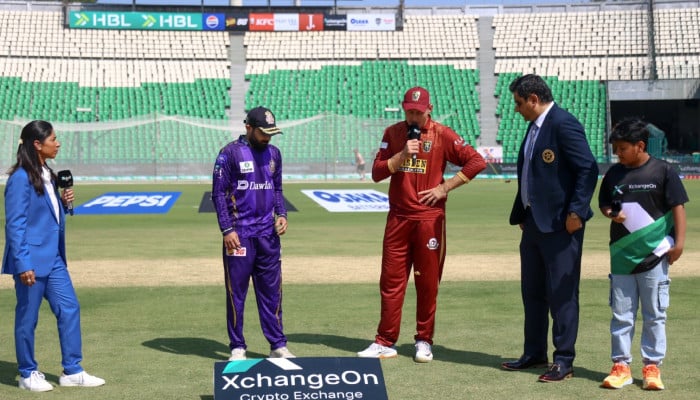
Quetta Gladiators decided to bat first after winning the toss against Hyderabad Kingsmen in the fifth encounter of the Pakistan Super League 11 at the Gaddafi Stadium in Lahore on Sunday.
Both teams are chasing their first win of the tournament after losing their opening matches. Hyderabad Kingsmen fell to defending champions Lahore Qalandars, while Quetta Gladiators were defeated by Karachi Kings.
Quetta Gladiators and debutant Hyderabad Kingsmen are facing each other for the first time in the tournament’s history.
Squads
Hyderabad Kingsmen: Marnus Labuschagne (c), Hassan Khan (vc), Usman Khan (wk), Akif Javed, Maaz Sadaqat, Saim Ayub, Mohammad Ali, Kusal Perera, Muhammad Irfan Khan, Shayan Jahangir, Glenn Maxwell, Hammad Azam, Riley Meredith, Sharjeel Khan, Asif Mehmood, Hunain Shah, Rizwan Mehmood, Saad Ali, Tayyab Arif, Maheesh Theekshana and Ahmed Hussain.
Quetta Gladiators: Saud Shakeel (c), Abrar Ahmed, Usman Tariq, Hasan Nawaz, Shamyl Hussain, Alzarri Joseph, Rilee Rossouw, Ahmed Daniyal, Jahanzaib Sultan, Jahandad Khan, Khawaja Mohammad Nafay, Khan Zeb, Bismillah Khan, Saqib Khan, Ahsaan Ali, Brett Hampton, Sam Harper, Bevon Jacobs, Ben McDermott (wk) and Tom Curran.
This is a developing story and is being updated with further details.


Logan Paul sold a Pokémon card for more than $16 million. Here’s why investors are watching

Texas keeps NCAA swim lead behind Kós’ record in 100 backstroke

Great decision or a big mistake?

-
 Business1 week ago
Flipkart group CFO to leave co amid IPO plans – The Times of India
-

 Fashion1 week ago
China’s textile & apparel exports surge 17% to $50 bn in Jan-Feb 2026
-

 Sports1 week ago
Rating Adidas’ 2026 World Cup away shirts: Argentina, Spain, Mexico and more
-

 Sports1 week ago
American Conference Commissioner Tim Pernetti thanks Trump for Army-Navy game executive order
-

 Tech1 week ago
Gamers Hate Nvidia’s DLSS 5. Developers Aren’t Crazy About It, Either
-
 Business5 days ago
Property Play: Home flippers see smallest profits since the Great Recession, real estate data firm says
-
 Business1 week ago
‘Marriage penalty’ in Washington state’s new millionaire tax stirs debate
-

 Entertainment5 days ago
UN warns migratory freshwater fish numbers are spiralling