

Business
X could ‘lose right to self regulate’, says Starmer

Laura CressTechnology reporter
 BBC
BBCThe UK will bring into force a law which will make it illegal to create non-consensual intimate images, following widespread concerns over Elon Musk’s Grok AI chatbot.
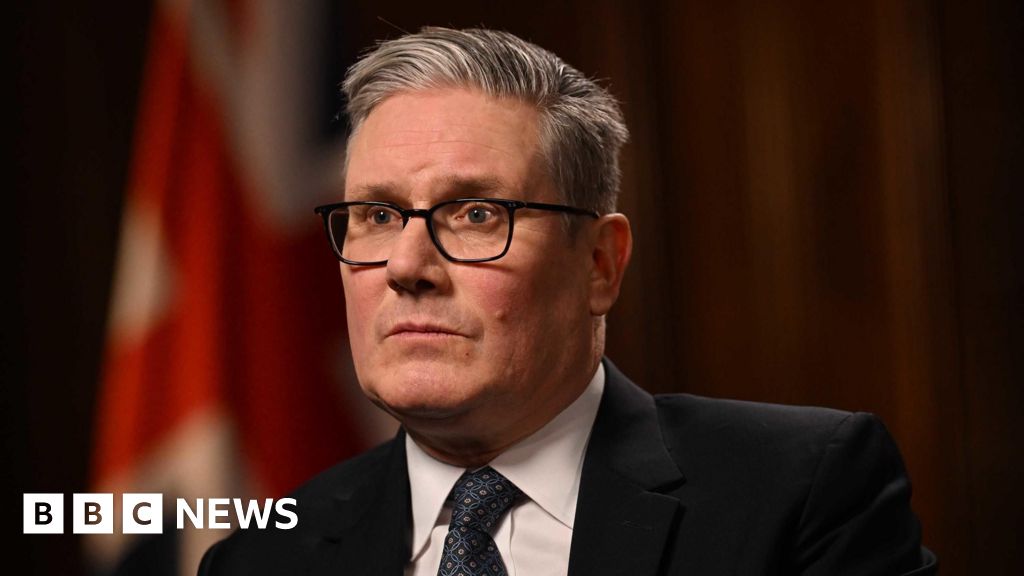
Speaking to Labour MPs on Monday, Sir Keir Starmer warned X could lose the “right to self regulate”.
“If X cannot control Grok, we will”, he said, saying the government would act quickly in response to the issue.
The government also plans to unveil legislation to make it illegal to supply online tools used to create such images.
The BBC has approached X for comment. It previously said: “Anyone using or prompting Grok to make illegal content will suffer the same consequences as if they upload illegal content.”
It comes hours after Ofcom announced it was launching an investigation into X over “deeply concerning reports” about Grok altering images of people.
If found to have broken the law, Ofcom can potentially issue X with a fine of up to 10% of its worldwide revenue or £18 million, whichever is greater.
And if X does not comply, Ofcom can seek a court order to force internet service providers to block access to the site in the UK altogether.
In a statement, Technology Secretary Liz Kendall urged the regulator not to take “months and months” to conclude its investigation, and demanded it set out a timeline “as soon as possible”.
It is currently illegal to share deepfakes of adults in the UK, but legislation in the Data (Use and Access) Act which would make it a criminal offence to create or request them has not been enforced until now, despite passing in June 2025.
Last week, campaigners accused the government of dragging its heels on implementing that law.
Liz Kendall told the Commons that the offence “will be brought into force this week”. In addition to the Data Act, Kendall said she would also make it a “priority offence” in the Online Safety Act.
Kendall said AI-generated pictures of women and children in states of undress, created without a person’s consent, were not “harmless images” but “weapons of abuse”.
“The content which has circulated on X is vile. It’s not just an affront to decent society, it is illegal,” she said.
“Let me be crystal clear – under the Online Safety Act, sharing intimate images of people without their consent, or threatening to share them, including pictures of people in their underwear, is a criminal offence for individuals and for platforms.
“This means individuals are committing a criminal offence if they create or seek to create such content including on X, and anyone who does this should expect to face the full extent of the law.”
‘Not about’ restricting free speech
But the technology secretary said the “responsibilities do not just lie with individuals for their own behaviour” – and “the platforms that host such material must be held accountable, including X”.
She said the government would also build on measures outlined in the Crime and Policing Bill to criminalise nudification apps.
“This new criminal offence will make it illegal for companies to supply tools designed to create non-consensual intimate images, targeting the problem at its source,” she said.
“In addition to all of these actions, we expect technology companies to introduce the steps recommended by Ofcom’s guidance on how to make platforms safer for women and girls without delay.
“If they do not, I am prepared to go further.”
Legal expert Jamie Hurworth said Kendall’s comments were “an indicator of how seriously the government are now taking this issue”.
“It remains to be seen whether an overstretched police force has sufficient resources to investigate and bring perpetrators before the courts but it is important that each link in the chain – from individual creators to social media platforms – is held to account for their involvement in this type of behaviour.”
Ofcom’s investigation will examine whether X has failed to take down illegal content quickly when it became aware of it, and taken “appropriate steps” to prevent people in the UK from seeing it.
The decision follows a global backlash over Grok’s image creation feature, with both Malaysia and Indonesia temporarily blocking access to the tool over the weekend.
An Ofcom spokesperson did not give an indication on how long the investigation would take but said it would be a “matter of the highest priority”.
In a response to an earlier post questioning why other AI platforms were not being looked at, Elon Musk said the UK government wanted “any excuse for censorship”.
But Kendall refuted this.
“This is not, as some would claim, about restricting freedom of speech,” she said.
“It is about tackling violence against women and girls.”
Shadow technology secretary Julia Lopez welcomed Ofcom’s investigation, and said her party supported the government on nudification tools.
But she criticised the government over comments Kendall made last week, when she said she would back Ofcom if it blocked UK access to X for failing to comply with laws.
Ms Lopez said despite the internet being used by criminals before, websites have not been banned before.
“It is an extraordinarily serious move against a platform that can be used for good, for uncovering scandal, sparking democratic revolution, and allowing day-to-day the free exchange of ideas, including ideas we don’t like.”
Business
‘India solidly through global shocks’: EAM Jaishankar calls for ‘hedge, de-risk, diversify’ strategy amid Iran war – The Times of India
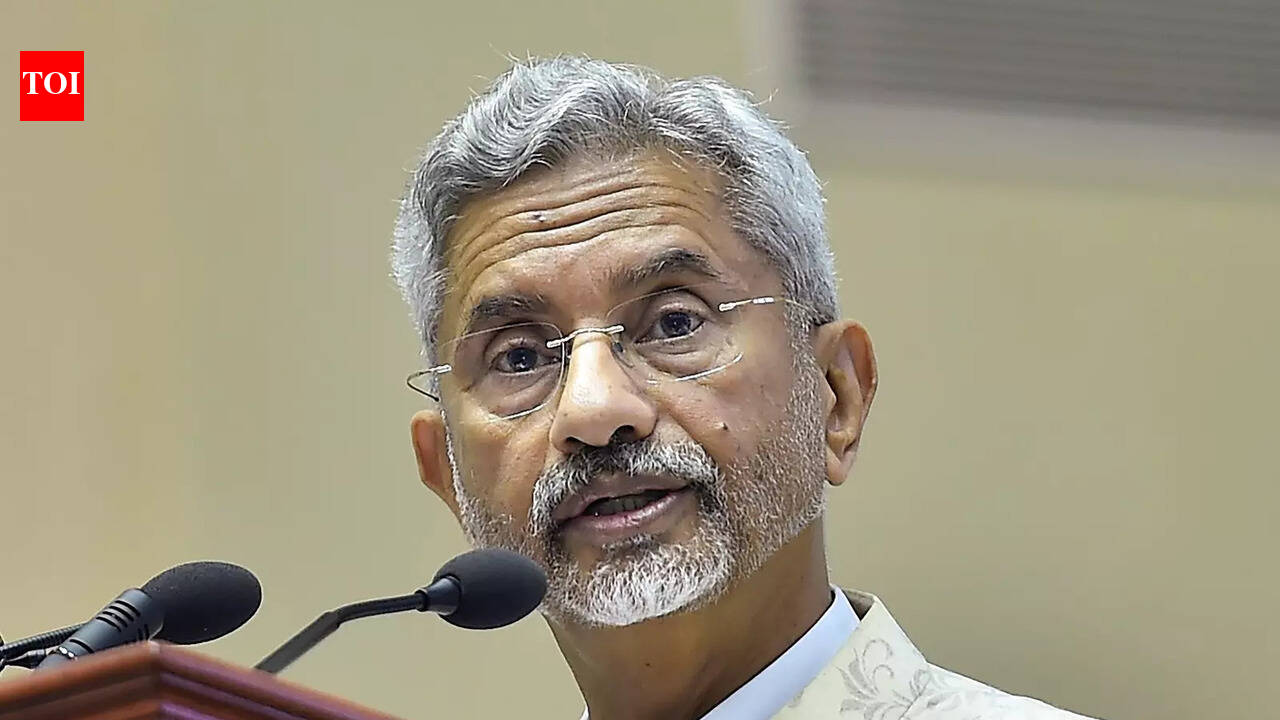
External affairs minister S Jaishankar on Saturday said that India has “solidly come through” a the ongoing turbulent geopolitical situation amid the Middle East conflict and the Russia-Ukraine war, adding that the country has been “managing domestic and external challenges successfully.”Speaking at the 15th Annual Convocation Ceremony of IIM Raipur, he said countries today must focus on “hedging, de-risking and diversifying” as the global order changes rapidly.
He said the world is going through a “structural” shift, adding, “The global order is changing before our very eyes with visible shifts in the relative power and influence of countries. The politics of some societies find it difficult to come to terms with these changes.”Jaishankar also said, “New developments in technology, in energy, military capabilities, in connectivity and in resources have encouraged risk-taking in an increasingly competitive environment. Everything today is being leveraged, if not actually weaponised. The world is then confronted with the prospect of securing itself in an increasingly volatile and unpredictable environment. This has necessitated the need to hedge, de-risk and diversify.”He said India has reasons for optimism compared to many other countries. “There is an optimism in our society that is lacking in many other parts of the world,” he said, adding that India is now among the top five economies and has handled recent global shocks well.He further stated, “No one can dispute that the multiple global shocks that have recently tested our resilience, and that India has come through that solidly. We have managed both domestic and external challenges fairly successfully.”The minister said building national capabilities is key for India’s goal of Viksit Bharat 2047. He also praised “inclusive growth, representative politics, and decisive leadership.”He said, “Building national capabilities has become more critical in the light of the global trends that I have mentioned… We must endeavour to build and secure within our control as many capacities as we can.”On foreign policy, Jaishankar said India is focusing on expanding market access, securing resources and technology, and supporting Indians abroad, while promoting “Brand India.”“Our foreign policy is today focused on expanding market access for Indian producers. It is also focused on helping to secure resources, technologies and essential goods. It looks after Indians… And it promotes Brand India,” he said.These remarks come at a time when the Middle East tensions that began on February 28 with US-Israel strikes on Iran have stretched beyond the 1 month mark. The crisis has since intensified with Iran’s chokehold over the strategically crucial Strait of Hormuz, sending ripples to oil baskets across the globe.
Business
Govt assures IMF of timely power tariff hikes, agrees to subsidy cap under $7bn EFF – SUCH TV

Pakistan has assured the International Monetary Fund (IMF) of implementing timely electricity tariff adjustments and capping power subsidies at Rs830 billion in the upcoming budget to sustain energy sector viability amid global market shocks.
The new baseline tariff will be implemented from January 15, 2027, under the structural benchmark agreed with the IMF under the $7 billion Extended Fund Facility (EFF).
The privatisation of power distribution companies — including Iesco, Gepco and Fesco — has been delayed once again and is expected to be finalised by early 2027.
The government is working closely with the Privatisation Commission to assess the viability of privatising two targeted Gencos (Nandipur and Guddu).
The government is committed to the IMF to apply the recently adopted net billing regulation to new consumers to better balance solar and grid demand, in line with international practice. These steps will help prevent the recurrence of the monster of the circular debt.
“It has been anticipated that with allocated subsidy and the timely tariff adjustments, it will minimise Circular Debt (CD) flow target of Rs300 billion and remain committed to reducing gross CD flow to zero by FY31,” top official sources confirmed to The News here on Friday.
Pakistan, according to the official, assured the IMF of achieving energy sector viability to maintain macroeconomic stability.
For this purpose, the government shared with the IMF in writing for timely tariff increases that recover costs and the re-emergence of circular debt.
The execution of timely adjustments in tariffs is necessary in the context of recent shocks to global energy markets to ensure the sector’s viability and broader macroeconomic stability.
The government has established the Integrated Energy Plan (IEP) targeted for completion by April 2027 in a bid to make better-informed decisions on supply and demand across the energy sector value chain.
According to the government’s strategy, it is aimed at incorporating the CD Management Plan to be adopted by the cabinet by the end of July 2026.
This upcoming CDMP will ensure timely electricity tariff adjustments consistent with cost recovery that remain progressive, and increases are introduced, balanced across consumer categories.
This includes Nepra’s continued timely notifications of quarterly tariff adjustments (QTAs) and automatic monthly fuel charge adjustments (FCAs), as well as the full implementation of the January 2027 annual rebasing by January 15, 2027.
Following the implementation of the CD stock reduction operation in FY26 and recognising ongoing improvements in operational efficiency and performance, the FY27 budget will include a subsidy limited to Rs830 billion.
The subsidy will cover (i) the projected tariff differential for Discos and KE; (ii) current and arrears payments of Fata; (iii) agricultural tubewells; and (iv) CD stock payments to counterbalance anticipated CD flow, which continues to be targeted at a lower level following the CD stock operation.
The settlement with several IPPs, with whom penalty payments on arrears were to be waived as part of the broader CD stock reduction operation, remains incomplete, with CD continuing to accumulate as a result. The government will finalise arrangements with all IPPs by the end of June 2026.
The government will try to resolve a dispute with KE, currently under litigation, which has resulted in significant nonpayment and arrears by the end of December 2026.
The government will continue to move forward with its fundamental cost-reducing power sector reforms, including private sector participation in Disco management to improve performance, efficiency, and governance, and address power sector CD drivers, helping to mitigate the need for higher tariffs.
The government is moving forward with the private sector participation process for second batch of Discos, i.e. Hesco and Sepco, for which conditions precedent – in line with World Bank recommendations and including outstanding subsidy claims; outstanding balances with the government, other Discos, and other entities; and other balance sheet issues – will be completed by the end of December 2026 as structural benchmark under the IMF programme.
For improving the transmission system, the appointment of a CEO to the Independent System and Market Operator is underway, as are efforts to finalise staffing arrangements.
The incorporation and legal formation of the Energy Infrastructure and Development Management Company (EIDMC) have been completed, and its leadership selection process has also been initiated.
The National Grid Company (NGC) is operational and is undergoing a review of its processes in the context of its new role.
If privatisation does not prove feasible, work to bring relevant companies under one entity to reduce redundancies will be done, make necessary improvements, and enhance operations.
The Nepra issued wheeling auction framework guidelines in January 2026; this will enable auctions under the auspices of the Competitive Trading and Bilateral Contract Market (CTBCM).
The first wheeling auction, for 200MW, will take place by the end of June 2026.
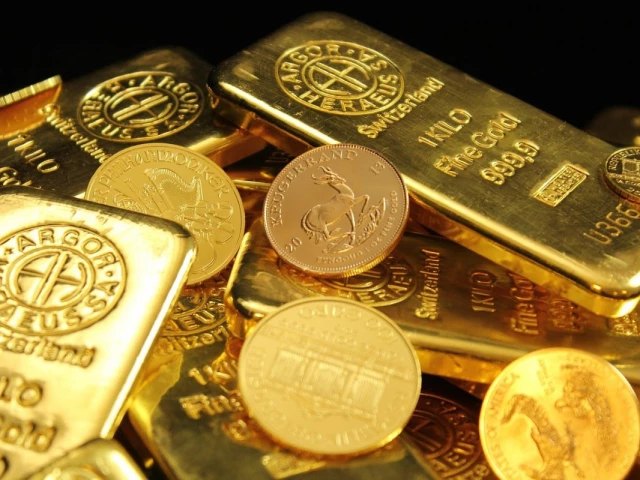
At current prices, the looted gold is worth around $70 million. PHOTO: PIXABAY
Prices of gold and silver remained stable in domestic and international markets on Saturday.
In the local market, the price of gold per tola held steady at Rs490,362, while 10 grams of gold remained at Rs420,406.
On the global market, gold prices per ounce were stable at $4,676.
Silver prices also remained firm, with one tola trading at Rs7,794 and 10 grams at Rs6,682. Globally, the price of silver per ounce held steady at $73.10.
Read: SBP injects Rs13.68tr into market
Yesterday, gold prices in Pakistan rose, tracking an upward trend in the international market. In the domestic market, the price of gold per tola climbed by Rs3,400 to settle at Rs490,362.
Likewise, the price of 10 grams of gold increased by Rs2,915, reaching Rs420,406, according to figures released by the All-Pakistan Gems and Jewellers Sarafa Association (APGJSA).
A day earlier, on Thursday, gold prices had declined, with the per tola rate falling by Rs7,100 to Rs486,962.
In the global market, gold prices gained $34, reaching $4,676 per ounce, including a $20 premium.
Moreover, silver prices also moved higher, rising by Rs160 to Rs7,794 per tola.
Meanwhile, on Friday, the Pakistani rupee posted a slight gain against the US dollar in the interbank market.
By the close of trading, the local currency stood at 279.10, appreciating by Rs0.01 against the greenback. On Thursday, it had settled at 279.11.
In global markets, China’s yuan strengthened against the US dollar as the latter steadied, with investor attention shifting to the release of US payroll data later in the day.
The dollar had surged a day earlier on safe-haven demand after US President Donald Trump signalled that the Iran conflict could persist.
The spot yuan opened at 6.8930 per dollar on Friday and was last trading 37 pips higher than its previous close.


Price, where to buy, and are they safe for kids

Tigers place Justin Verlander on 15-day IL with hip injury

US agents arrest relatives of Iran’s Qassem Soleimani after revoking their green cards

-
 Business1 week ago
How do you spot a fake online review?
-

 Entertainment1 week ago
Lee Sang-bo dies at 45: Funeral details revealed
-

 Sports1 week ago
Illinois defense gets tough, ousts Houston to reach Elite Eight
-

 Sports7 days ago
USMNT handed reality check by Doku, Belgium ahead of World Cup
-

 Sports7 days ago
2026 NCAA men’s hockey tournament: Schedule, results
-
 Fashion1 week ago
China rolls out tariff cuts on Congo imports from April 1
-
 Fashion1 week ago
EU apparel imports slump 15.48% YoY in Jan; Bangladesh hardest hit
-

 Sports7 days ago
Man City show why they are worthy WSL title winners as tired United wilt