

Business
Young graduates most likely to be wrong about student loan repayments – poll


Nearly three in five young graduates wrongly believe they must start repaying their student loans as soon as they get any job, a report has suggested.
A study, by the Policy Institute at King’s College London (KCL), and the Higher Education Policy Institute (Hepi) think tank, reveals a number of misunderstandings about universities – including tuition fees and student debt.
The survey, of more than 2,000 adults in the UK in June, suggests that the public believes around 40% of graduates would not go to university if they could choose again.
But the actual proportion who say this is only 8% – as measured in a survey last year, the report said.
Many also misunderstand how student debt works, particularly young graduates themselves, it found.
More than a third (35%) of the public wrongly think university graduates must start paying back their student loan as soon as they get any paid job, which rises to 58% among graduates aged 18 to 34.
The report also suggests that the public underestimates higher education’s contribution to the economy.
Only 6% correctly ranked the University of Oxford as having the highest revenue out of a list of seven organisations – even though its income was more than £1 billion higher than Greggs (the second on the list).
The study also found that 13% of the public believe that remaining in the UK to seek asylum is the most common outcome among overseas students who entered the country three years prior.
But only 0.5% of international students do this, the report suggested.
Professor Bobby Duffy, director of the policy institute at KCL, said the standout finding for him was the “overestimation” of the sense of regret about going to university.
“This will be driven by vivid, individual stories of graduate regret and the generally negative background noise about the declining value of a degree,” he said.
Prof Duffy: “It’s extremely difficult to first get public attention, and then cut through the noise of individual negative stories that are much more likely to stick in our minds.”
Nick Hillman, director of the Hepi, said: “Universities are bigger in terms of income and employment and more successful in terms of student outcomes than the public often recognise.
“However, it would be absurd to blame the voters for this major misunderstanding.
“Those of us who work in the higher education sector have not done a good enough job of telling people the true role of universities in modern Britain today.
“We should start correcting that record by inviting more people onto more campuses more often.”
A spokesperson for Universities UK (UUK) said: “Universities create new opportunities for millions, underpin the government’s industrial strategy and supercharge the whole UK economy.
“They deserve to be celebrated as one of the UK’s greatest success stories. In 2021-22, the sector contributed more than £265 billion to the economy.
“However, the results of the survey demonstrate that the sector and the Government must work better together to ensure that the public have the information they need to make informed choices about their future, including how student finance works, so more people see going to university as a realistic option.”
A Department for Education spokesperson said: “This report shows that we have a world class higher education sector that can deliver great outcomes for students, and university remains a fantastic option for people looking to get in-demand skills and get into a rewarding career.
“We have been clear that universities must deliver a high-quality experience and we are determined to support the aspiration of every person who meets the requirements and wants to go to university – regardless of their background.
“We will soon publish our plans for reform as part of the Post-16 Education and Skills Strategy White Paper as we fix the foundations of higher education through our plan for change.”

Britain is to “flirt” with recession and unemployment will be sent soaring amid the fallout of the Iran war, according to economic forecasters.
The latest Item Club report predicts the economy will flatline in the second and third quarters, which will leave gross domestic product (GDP) rising by 0.7% over the year as a whole, down from 1.4% expansion in 2025.
While the economy will “flirt with recession” – defined as two quarters or more in a row of falling GDP – it will also see higher oil and energy prices weigh on activity and the jobs market suffer its “biggest hit since the pandemic”, the Item Club warned.
But it predicted that interest rates will remain on hold throughout 2026 despite soaring inflation caused by the war.
Matt Swannell, chief economic adviser to the Item Club, said: “Spiralling energy costs and disruption to supply chains will push the UK to the brink of a technical recession in the middle of this year.
“Consumers’ spending power will be squeezed, while more expensive financing arrangements and a less certain global economic backdrop will pour cold water on companies’ investment plans.”
The independent forecasting group said the UK’s jobless rate will peak at 5.8% by the middle of 2027, with almost 250,000 more people without a job.
It follows a gloomy economic outlook report from the International Monetary Fund (IMF) last week showing the UK facing the biggest downgrade to growth among the G7 group of countries, with 0.8% forecast for 2026, down sharply from the 1.3% predicted in January.
But recent figures showed the UK economy had stronger-than-first thought momentum before the Iran war impact, with data showing GDP grew by 0.5% month-on-month in February – the fastest expansion since January 2024.
The Item Club said inflation is set to soar to almost 4% in the second half of 2026 – nearly double the Bank’s 2% target – but that Monetary Policy Committee (MPC) policymakers will hold off from knee-jerk hikes to interest rates.
Mr Swannell said: “We don’t expect the Bank of England to repeat the 2022 playbook and hike interest rates as energy prices rise.
“This time policy is already restrictive, and a more fragile economy means that businesses will find it harder to pass on higher costs to the consumer.
“Instead, the MPC can stand pat as it waits for inflation to fall back before it cuts interest rates a couple more times in the middle of next year.”
Business
Pakistan says it will repay remaining $1.5 billion loan to UAE by April 23 amid IMF funding hopes – The Times of India

Pakistan has expressed hopes to repay the remaining $1.5 billion of the total $3.5 billion loan to UAE by April 23. This comes ahead of an expected $1.2 billion disbursement from the International Monetary Fund (IMF), following recent discussions in Washington.Spokesperson for the State Bank of Pakistan, country’s central bank told PTI, “Pakistan has repaid $2 billion of a $3.5 billion fund, which was placed by the United Arab Emirates with the State Administration of Foreign Exchange (SAFE) deposit with the central bank.”“The amount of $2 billion was transferred to the UAE following the maturity of deposits held by the State Bank. The remaining amount has to be paid by April 23,” he said.Earlier this week, the Saudi Fund for Development deposited $2 billion of its $3 billion support with the State Bank of Pakistan.The central bank spokesperson added that Pakistan’s foreign exchange reserves had remained steady due to ongoing inflows into the financial system.Meanwhile, in a separate update, Pakistan’s finance minister Muhammad Aurangzeb said in Washington that the country is anticipating a $1.2 billion release under the Staff Level Agreement (SLA) reached with the IMF after recent negotiations in the US capital. He said the IMF Executive Board is expected to meet in mid-May in Washington to review the agreement, which would clear the next tranche under the programme.The UAE had earlier extended $3.5 billion to support Pakistan’s balance of payments position, with the arrangement rolled over until recently. However, reports earlier this month suggested the UAE sought immediate repayment of funds following regional developments in the Middle East after the US-Israel launched joint strikes on Iran.In parallel, Saudi Arabia has also moved to support Pakistan’s external financing needs. The Saudi Fund for Development has signed an agreement with the SBP allowing an extension in the maturity of a $3 billion deposit. On Thursday, it deposited $2 billion of that total with the central bank, providing additional support to Pakistan’s reserves.“The agreement, signed between the SaudiA Fund for Development (SFD) and the State Bank of Pakistan (SBP), provides for the extension in the maturity of a $3 billion deposit placed by SFD with the State Bank of Pakistan,” said a post on X by the ministry of finance.Officials said Pakistan has been paying around 6 per cent interest on the UAE-linked funds. The deposit arrangements were previously rolled over on a yearly basis, but in December 2025, the term was first extended for one month and then for two months until April 17.Pakistan’s pending billsFor the current fiscal year, Pakistan requires approximately $12 billion in external deposit rollovers, including $5 billion from Saudi Arabia, $4 billion from China, and $3 billion from the UAE.According to official figures, Pakistan’s foreign exchange reserves stood at $16.4 billion as of March 27, a level authorities said was sufficient to cover nearly three months of imports. The latest repayment to the UAE comes as the country continues to manage pressure on its external financial position.
Business
India’s clean energy push: Govt mulls bids for 220 MWe Small Modular Reactor – The Times of India
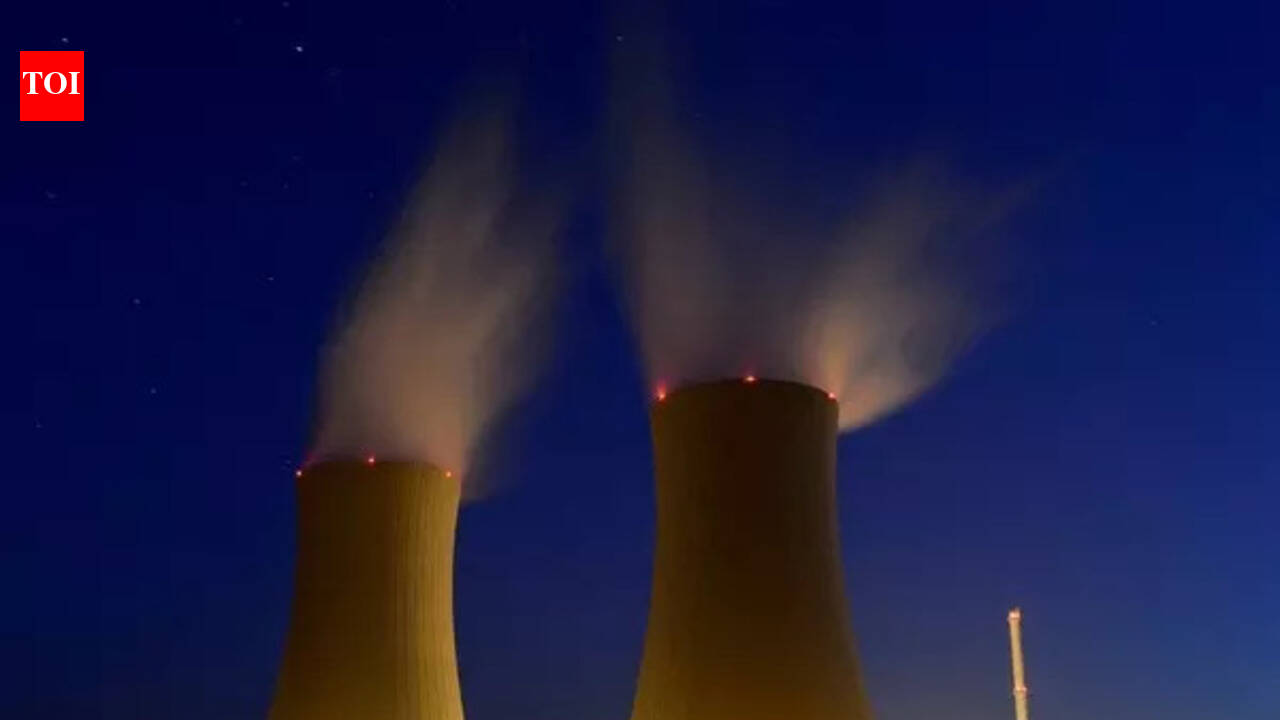
India is set to take a major step in expanding its nuclear energy programme, with plans to invite bids for the establishment of a 220 MWe Bharat Small Modular Reactor (BSMR-200), within the next three to six months. The project is considered as a major part of the country’s clean energy transition, officials told ET.Foreign companies will be allowed to participate in the bidding process, but only through tie-ups with local partners, an official said. The reactor design will be standardised, and the first unit is expected to serve as a model for future installations.“A cost of roughly Rs 30 crore per megawatt (MW) has been approved for BSMR-200 as a pilot project,” another official told the financial daily.
The BSMR-200 is being jointly developed by the Bhabha Atomic Research Centre (BARC) and the Nuclear Power Corporation of India Ltd (NPCIL). The total cost of development and construction is estimated at around Rs 5,960 crore, to be funded through the Nuclear Energy Mission. After approvals, the construction is expected to take anywhere between 60 and 72 months.Officials said that inter-ministerial consultations are currently underway to finalise the bidding details.The move follows the opening up of the nuclear sector to private investment after the enactment of the Sustainable Harnessing and Advancement of Nuclear Energy for Transforming India (SHANTI) Act in December 2025.“A final call on the proposal will be taken by the Cabinet Committee on Economic Affairs,” the official said, adding that domestic firms capable of executing the project on an engineering, procurement and construction (EPC) basis have already been identified.The Union Budget had already alloted Rs 20,000 crore to develop at least five indigenously designed and operational small modular reactors by 2033 under the Nuclear Energy Mission.India has also set an ambitious goal of reaching 100 GW of nuclear power capacity by 2047, alongside efforts to strengthen local manufacturing and technology development in the sector.In a recent milestone for the nuclear programme, India’s prototype fast breeder reactor reached criticality this month.


Van Dijk hands Liverpool a UCL boost and reason to believe after more late drama

Did ‘Charlie’s Angels’ star Jaclyn Smith say no to Bond girl role?
UK to narrowly avoid recession and jobless rate to surge, Item Club warns

-

 Entertainment7 days ago
Palace left in shock as Prince William cancels grand ceremony
-

 Sports7 days ago
The case for Man United’s Fernandes as Premier League’s best
-

 Fashion4 days ago
France’s LVMH Q1 revenue falls 6%, shows resilience amid Iran war
-
 Business1 week ago
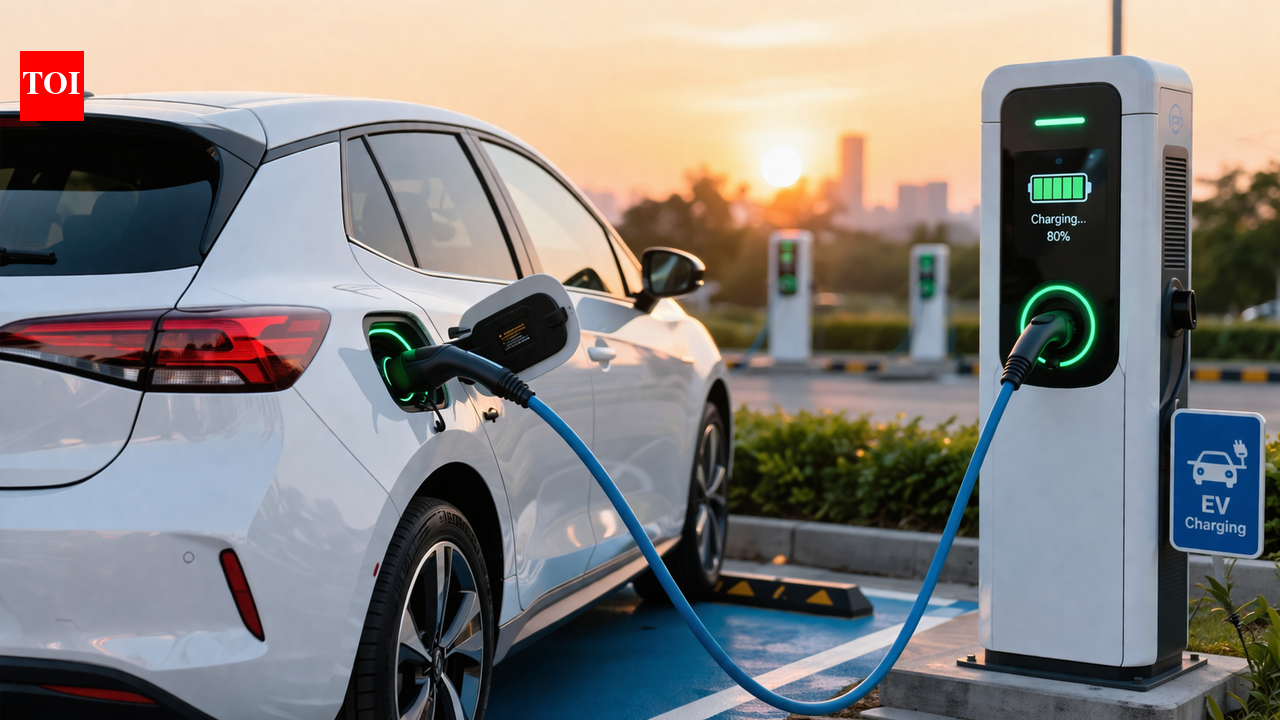
100% road tax waiver for electric cars, new rules for 2, 3 and 4 wheelers – what Delhi govt’s draft EV policy says – The Times of India
-
 Business7 days ago
UK could adopt EU single market rules under new legislation
-

 Entertainment1 week ago
Dua Lipa hits major career high ahead of wedding with Callum Turner
-

 Sports1 week ago
Lamar Jackson hits back at critics with faithful message on social media
-

 Fashion7 days ago
Energy emerges as biggest cost driver in textile margins