

Business
Young people to be hit hardest by UK’s ageing society, report suggests


Young people will be hit hardest by successive governments’ failure to focus on financial and societal challenges caused by an ageing population, a House of Lords report has suggested.
They will need to plan and prepare to work longer and save more from a much earlier age, the economic affairs committee said.
The report also found that the crisis in adult social care “remains a scandal” which needs to be addressed urgently.
Committee chair Lord Wood of Anfield told the BBC it was a “struggle to find where in government” there was a focus on ageing and the “transformational effects” it was going to have on people.
“Ageing is something that we’re just watching happening”, he told BBC Radio 4’s Today programme, adding: “We know that adaptation is the way forward”.
Policies governments have used to address the impact of declining fertility and rising life expectancy in the UK – raising the state pension age or increasing immigration for example – were not adequate solutions on their own, the report said.
Getting more people in their 50s and 60s to stay in or return to work “is key”, the committee said, and the government must prioritise incentives to do so.
It found that while age discrimination may reduce the number of over 50s working, it heard evidence that its most damaging form may be self-directed, with older workers mistaken about the extent they faced and then limiting their own decisions.
It also said an ageing population will need more care workers, leaving fewer workers for other parts of the economy.
There is “widespread ignorance” of how much it costs to retire, it said, and the government should consider an education campaign – as well as finding out if the UK’s financial services sector is equipped to provide for the population as it ages.
Lord Wood said that the government and financial services industry needs to devise “more innovative ways of getting younger people to think about lives frankly they can’t conceive of at the moment – when they’re in their eighties and early nineties.”
“There’s a long time for them to be financially planning for at a time when we know young people are doing less financial planning,” he added.
“Raising the state pension age, which saves the government money, but increases pensioner poverty as many people have already stopped working by their sixties, is a red herring.
“To successfully confront this challenge, the approach to financial management of today’s and tomorrow’s young people will need to change.”

Panic selling returned to the Pakistan Stock Exchange (PSX) on Thursday as President Donald Trump said the United States would continue to attack Iran, with the benchmark KSE-100 Index sinking by about 5,500 points during the opening minutes of business.
At 9:35am, the benchmark index was hovering at 150,022, down by 5,489 points or 3.45%.
However, by 11:00 the equities recovered some losses and the index was trading at 151,621.26 points down by 3,890.30 or 2.57 percent.
Experts opined that the jubilation of yesterday’s market halt has been completely wiped out as the ‘ceasefire rally’ crashed into a harsh geopolitical reality.
Offloading was observed in key sectors, including automobile assemblers, cement, commercial banks, oil and gas exploration companies, OMCs and power generation.
Index-heavy stocks, including MARI, OGDC, POL, PPL, MCB, MEBL, NBP and UBL, traded in the red.
On Wednesday, the PSX had staged a powerful rally with the benchmark KSE-100 Index surging past the key psychological barrier of 150,000 points as improving investor sentiment.
The KSE-100 Index closed at 155,511.57 points, registering a sharp gain of 6,768.25 points or 4.55%.
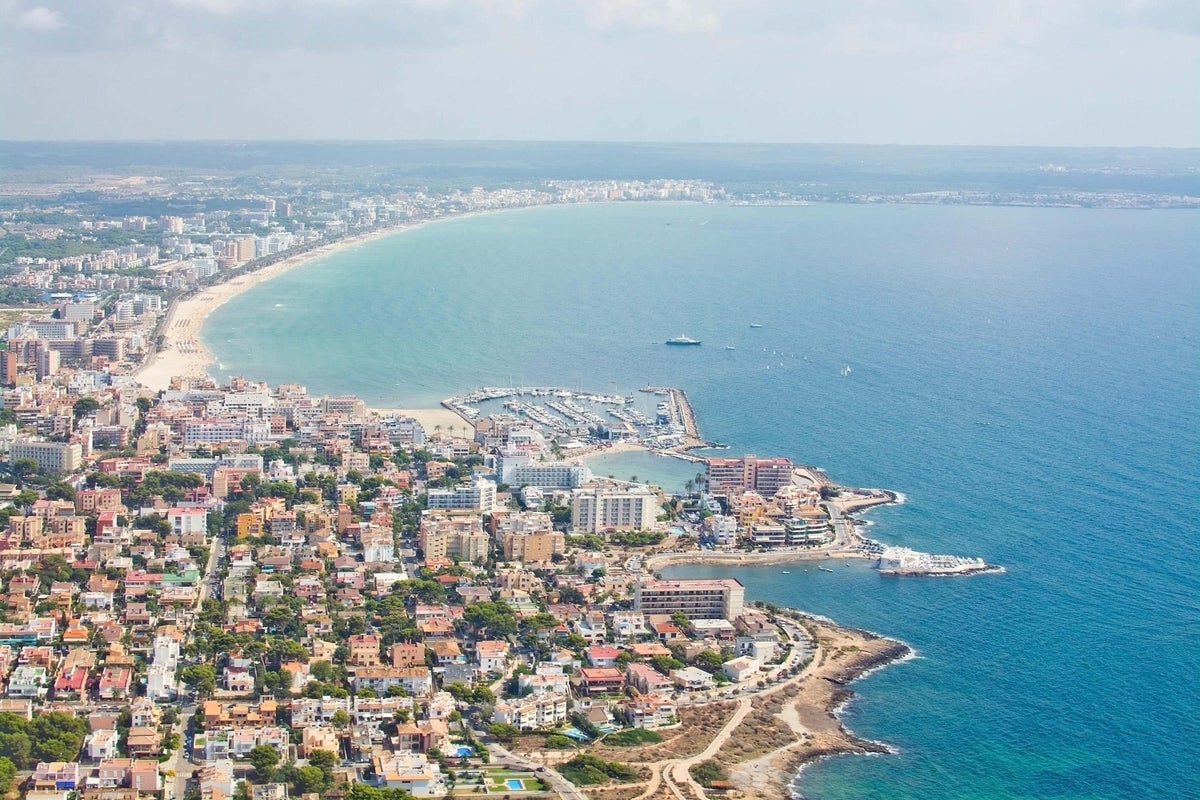
Travel agent Lastminute.com said war in the Middle East has impacted some 17,000 bookings, while holidaymakers are shifting towards alternative destinations like the Canary Islands and Sardinia.
The website, which offers holiday packages to destinations including Dubai and Abu Dhabi, said it was having to “adapt quickly” to travellers changing their preferences in light of the conflict.
The US-Israeli war with Iran, which escalated at the end of February, led to disruption and cancellations of some flights to Gulf states including the United Arab Emirates, Saudi Arabia and Qatar.
The airspace closures, coupled with consumer sentiment when it comes to travel taking a hit, affected approximately 17,000 bookings, Lastminute revealed.
It said the total volume of affected travel around the region is currently the equivalent of about a day and a half of its normal daily operations.
Despite the conflict influencing where and when people choose to book trips, the “overall intent to travel remains high”, according to Lastminute.
Consumers have been seeking reassurance and flexibility, and early booking patters indicate a shift in the preferences of travellers.
It noted increased demand toward alternative destinations such as Spanish archipelagos the Canary and Balearic Islands, Italian islands Sicily and Sardinia, and other European city breaks.
Lastminute’s chief executive Alessandro Petazzi said: “We continue to closely monitor the evolving situation in the Middle East, with supporting our customers remaining our top priority.
“At the same time, Lastminute.com’s flexible, pan-European model enables us to adapt quickly as travel patterns evolve, with demand naturally rebalancing across destinations.”
The Netherlands-based company reported a 15% jump in revenues to 361 million euro (£315 million) for the 2025 financial year, compared with the year before.
Adjusted earnings before tax and other costs increased by a third to 55 million euro (48 million).
The company said it was remaining “vigilant” against the geopolitical situation in the Middle East, but added that it was sticking to forecasts of a roughly 10% increase in revenues and profits in the year ahead.
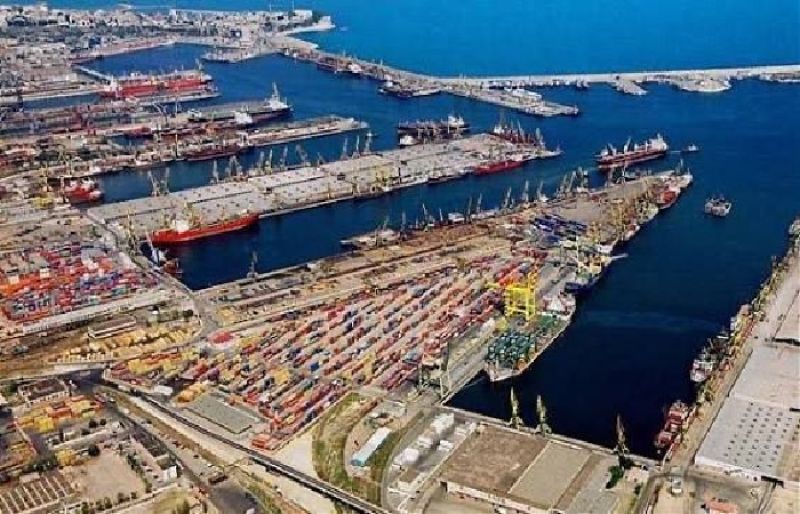
Islamabad: Pakistan and Romania have taken a significant step toward strengthening bilateral economic ties by signing a Memorandum of Understanding on port cooperation.
The agreement was signed between the National Company “Maritime Ports Administration” S.A. Constanța and the Karachi Port Trust during a virtual ceremony.
The MoU was formalized by Mihai Teodorescu, General Manager of Constanța Port Administration, and Rear Admiral Shahid Ahmed, Chairman of Karachi Port Trust.
Senior officials from the Ministries of Foreign Affairs and Transport of both countries attended the ceremony, along with ambassadors Dan Stoenescu and Ilyas Mehmood Nizami. Representatives from the Pakistan-Romania Business Council were also present.
The agreement aims to enhance maritime connectivity between Karachi Port and the Port of Constanța on the Black Sea, facilitating smoother trade flows between South Asia and Europe.
It is expected to support Pakistan’s maritime sector and blue economy while strengthening Romania’s position as a key logistical gateway to the European Union.
Constanța Port, one of the largest ports on the Black Sea, provides strategic access to Central and Western Europe via the Danube corridor.
This route enables efficient transport of goods to major European hubs, offering a cost-effective and sustainable logistics solution.
Officials say improved connectivity between the two ports will open new avenues for bilateral trade. Romanian exports—including machinery, industrial equipment, chemicals, and agricultural products—are likely to gain better access to Pakistani and regional markets.
At the same time, Pakistani exports will benefit from more efficient entry points into Europe.
The agreement also establishes a framework for cooperation in port management, training, and exchange of expertise, including the formation of a joint working group.
Romanian Ambassador Dan Stoenescu emphasized that the initiative will help expand Romania’s economic footprint in Asia and contribute to balanced trade growth. He noted that enhanced maritime links will play a vital role in strengthening regional integration and promoting shared prosperity.
Maritime trade remains central to the European Union’s economy, with more than 75 percent of its external trade conducted by sea.
In this context, stronger Pakistan-Romania maritime ties are expected to boost trade under the EU’s GSP+ scheme, supporting economic development and deeper integration into global value chains.


India-Bangladesh textile trade reset: 5 shocks to watch now

Pakistan Selects Davis Cup Juniors Team for Kazakhstan Event – SUCH TV

Cardinals’ Masyn Winn involved in car crash after delivering game-winning hit vs Mets

-

 Politics1 week ago
Afghanistan announces release of detained US citizen
-
 Business1 week ago
Property Play: Home flippers see smallest profits since the Great Recession, real estate data firm says
-
 Fashion1 week ago
Ho Chi Minh City bizs adjust production plans, seek new supply chains
-
 Business1 week ago
More women are entering wealth management, but few are in advisory roles, study finds
-
 Business1 week ago
Centre plans to cut broken rice share in PDS, boost ethanol feedstock supply – The Times of India
-

 Fashion1 week ago
India’s Gen Z to drive half of fashion market by 2030: Reedseer
-
 Business6 days ago
How do you spot a fake online review?
-
 Business1 week ago
Co-op boss quits after ‘toxic culture’ claims reported by BBC