

Politics
2025 marks decisive reset in Pakistan-US ties: Washington Times

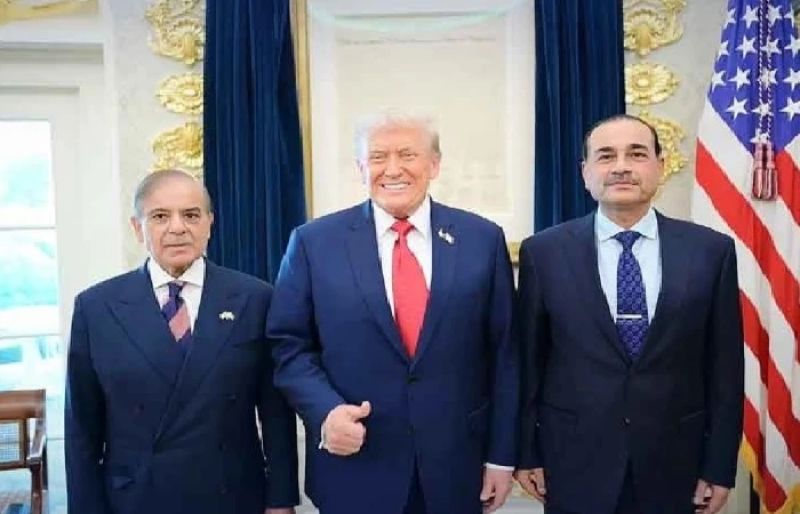
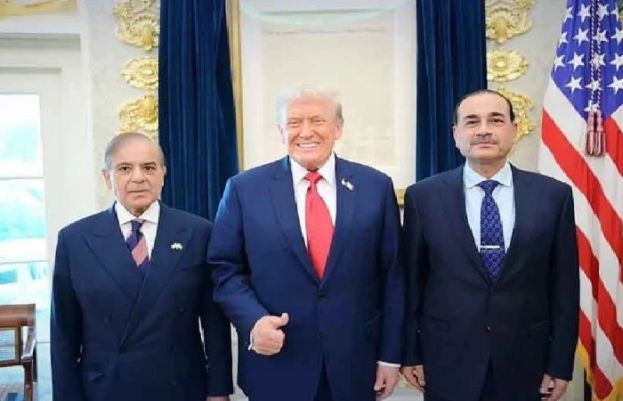
The Washington Times has described 2025 as a turning point in Pakistan–US relations, citing what it called a dramatic shift in Washington’s approach.
The newspaper said President Donald Trump abandoned the long-standing “India First” policy and elevated Pakistan’s strategic importance, a change it linked largely to the May conflict between Pakistan and India.
In May 2025, following India’s unprovoked attacks, Pakistan launched a calibrated military response, Operation Bunyanum Marsoos, targeting Indian troop concentrations, air assets, and key command infrastructure. Retaliatory strikes neutralized over 26 high-value installations across five Indian states, including missile silos, air defence systems, logistics hubs, and communications networks.
Pakistani drones and cyber operations further disrupted India’s energy grids, rail networks, and surveillance systems, while multiple Rafale jets were reportedly shot down. The operation demonstrated Pakistan’s military discipline, precision, and strategic reach, sending a clear message that its airspace and national sovereignty would not be violated.
The article provides a special analysis of the growing rapport between Chief of Defence Forces, Field Marshal Syed Asim Munir and President Trump, describing Pakistan’s transformation from an “undesired state” to a key partner. Its rapid image-building and opinion shift in Washington are described as rare and unique, positioning Pakistan as a central pillar of Trump’s South Asia policy.
Earlier, during his official visit to the United States, Field Marshal Munir praised President Trump for helping prevent “many wars,” including brokering the May Pakistan-India ceasefire.
Addressing the Pakistani diaspora, he highlighted Pakistan’s diplomatic successes, warned against any future Indian aggression, and reaffirmed that Indian Illegally Occupied Jammu and Kashmir remains an internationally recognized dispute. The military chief also held high-level engagements with US military and political leadership, emphasizing strengthened bilateral cooperation, regional security, and counterterrorism collaboration.
Initially, Washington had sought to strengthen India through platforms like the Quad, sidelining Islamabad. However, India’s political climate, restrictions on personal freedoms, uneven military performance, and diplomatic rigidity cast doubt on its role as a regional stabilizer.
The first thaw in Pakistan-US relations came via secret counterterrorism exchanges, signaling substantive cooperation. In March, Trump unexpectedly praised Pakistan’s counterterrorism efforts during a national address, prompting a policy shift.
Islamabad seized the opportunity, turning limited cooperation into strategic gains. Engagement increased, and the bilateral relationship evolved from transactional to strategic. The short but intense May skirmish with India became a decisive turning point, showcasing Pakistan’s military discipline, strategic focus, and asymmetric capabilities – qualities that reportedly surprised Trump.
The article also highlights historic engagement between Trump and Field Marshal Munir, including their first-ever luncheon meeting for a Pakistani military chief and Munir’s red carpet visit to US Central Command Headquarters for high-level talks. Advisers described their relationship as a “budding bromance,” with Munir emerging as a disciplined, strategic, and carefully image-managed figure in Washington. Pakistan also leveraged this attention with light diplomatic gestures and public relations moves, further boosting its standing.
US President Donald Trump called the visit an “honour,” praising Munir for helping avert further escalation between Pakistan and India. The meeting discussed the recent Middle East conflict, Pakistan’s understanding of Iran, and regional security issues. Trump credited Munir’s leadership in securing the May ceasefire, calling it a major contribution to preventing war between the nuclear-armed neighbours, and noted that the luncheon marked the first time a US president hosted a Pakistani army chief unaccompanied by civilian officials.
By early 2026, The Washington Times notes, Pakistan sits at the center of Trump’s emerging grand strategy for South Asia and the Far East. It offers Washington discreet channels to Iran, a potential role in Gaza, and a subtle counterweight to China’s regional influence. Islamabad has re-established itself as a serious regional actor, reshaping US policy and rewriting the balance of power in South Asia.
- Trump calls “Project Freedom” humanitarian gesture for stranded ships.
- Iran chokes off major flows of oil, gas and fertiliser to world economy.
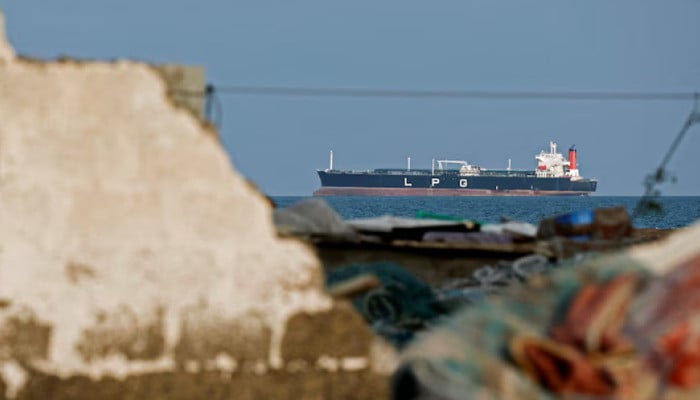
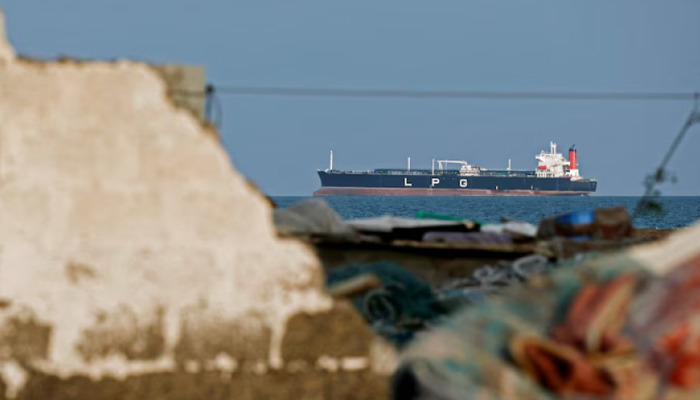
- Over 900 commercial vessels present in Gulf, says maritime intel firm.
Iran warned on Monday that it would consider any US attempt to interfere in the Strait of Hormuz a breach of the Mideast ceasefire, as President Donald Trump said the United States would begin escorting ships through the blocked waterway.
Negotiations between the two countries have been deadlocked since a ceasefire came into effect on April 8, and Iran’s stranglehold on the strategic strait following US-Israeli attacks on Tehran has been a main point of contention.
Trump said Sunday the new maritime operation, which he dubbed “Project Freedom,” was a “humanitarian” gesture for crews aboard the many ships swept up in the blockade and which may be running low on food and other crucial supplies.
“We will use best efforts to get their Ships and Crews safely out of the Strait. In all cases, they said they will not be returning until the area becomes safe for navigation,” Trump said in a Truth Social post, noting operations would begin on Monday.
In response, the head of the Iranian parliament’s national security commission said: “Any American interference in the new maritime regime of the Strait of Hormuz will be considered a violation of the ceasefire.”
By blocking the Strait of Hormuz, Iran has choked off major flows of oil, gas and fertiliser to the world economy, while the United States has imposed a counter-blockade on Iranian ports.
Trump, in his post, said he was “fully aware that my Representatives are having very positive discussions with the Country of Iran, and that these discussions could lead to something very positive for all.”
He made no direct mention of what Tehran described as a 14-point plan “focused on ending the war.”
US Central Command said it would use guided-missile destroyers, over 100 land and sea-based aircraft, multi-domain unmanned platforms and 15,000 service members in the Hormuz effort.
As of April 29, more than 900 commercial vessels were located in the Gulf, according to maritime intelligence firm AXSMarine.
‘Impossible operation’
US news website Axios, citing two sources briefed on the proposal, reported that Iran set “a one-month deadline for negotiations on a deal to reopen the strait,” dissolve the US naval blockade and end the war.
Earlier Sunday, the Revolutionary Guards sought to put the onus back on Trump, saying he must choose between “an impossible operation or a bad deal with the Islamic Republic of Iran.”
Washington’s European allies are concerned that the longer the strait remains closed, the more their economies will suffer, and German Foreign Minister Johann Wadephul demanded that it be reopened.
In a call with his Iranian counterpart Abbas Araghchi, Wadephul stressed that Germany supported a negotiated solution but that “Iran must completely and verifiably renounce nuclear weapons and immediately open the Strait of Hormuz.”
Oil prices are currently about 50% above pre-conflict levels, largely due to the supply snarls in the strait.
‘Suffocating the regime’
The US president, who spent the weekend at his Mar-a-Lago resort in Florida, declined on Sunday to specify what could trigger new American military action.
But in his post he said that “if in any way, this Humanitarian (ship-guiding) process is interfered with, that interference will, unfortunately, have to be dealt with forcefully.”
Treasury Secretary Scott Bessent said the US naval blockade was only part of a broader economic embargo.
“We are suffocating the regime, and they are not able to pay their soldiers. This is a real economic blockade, and it is in all parts of government,” he told Fox News.
In yet more bellicose rhetoric, Mohsen Rezaei, a military adviser to Iran’s Supreme Leader Ayatollah Mojtaba Khamenei, said Iranian forces would sink US ships.
“The US is the only pirate in the world that possesses aircraft carriers. Our ability to confront pirates is no less than our ability to sink warships. Prepare to face a graveyard of your carriers and forces,” he posted on X.
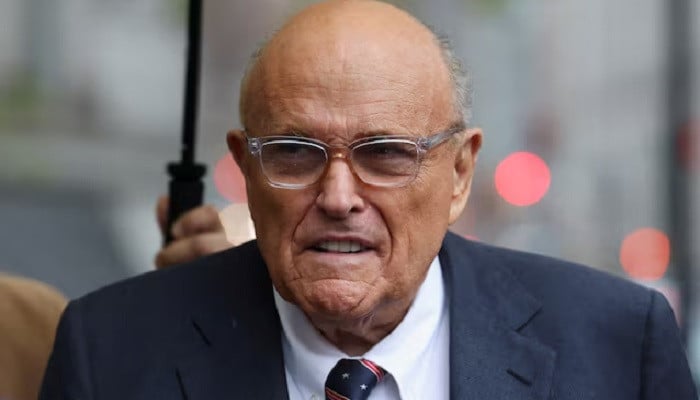
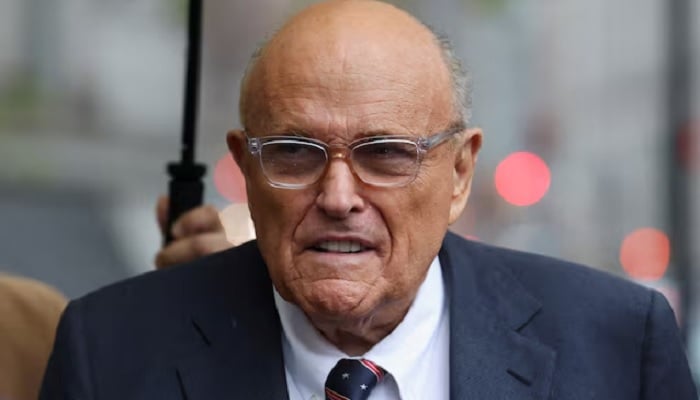
Former New York City Mayor Rudy Giuliani has been hospitalised and is in “critical but stable condition,” his spokesperson said on Sunday.
The spokesperson, Ted Goodman, did not immediately provide more details about Giuliani’s condition or how long he has been hospitalised.
“Mayor Giuliani is a fighter who has faced every challenge in his life with unwavering strength, and he’s fighting with that same strength now,” Goodman said in a statement. “We do ask that you join us in prayer for America’s Mayor Rudy Giuliani.”
Giuliani, 81, garnered acclaim for his response to the September 11, 2001, al Qaeda attack on New York City, earning the nickname “America’s Mayor.”
Giuliani worked as an attorney for President Donald Trump in his failed efforts to overturn the results of the 2020 election, an effort that led to criminal charges against Giuliani in two US states and a defamation lawsuit from election workers. Giuliani has denied wrongdoing in the criminal cases.
Trump, in a social media post, called Giuliani the “Best Mayor in the History of New York City” and said he had been mistreated by Democrats.
Giuliani was previously hospitalised last year following a car crash in New Hampshire.
- Merz says withdrawal not linked to his criticism of US’s Iran policy.
- Pentagon to cut 5,000 troops from Germany, raising concerns.
- Biden-era missile deployment plan also seen as abandoned.
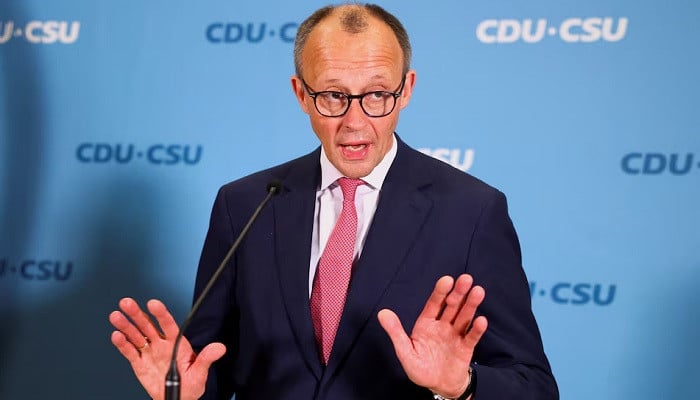
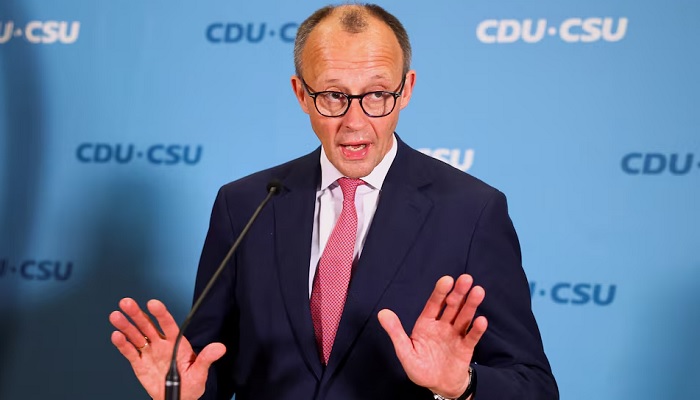
German Chancellor Friedrich Merz said he must accept that President Donald Trump does not share his opinions in order to work with the United States within Nato, but stressed there was no link between their rift and a planned troop drawdown.
Merz dismissed suggestions that his criticism of US war planning in Iran had sparked Washington’s Friday announcement that the US would reduce its military presence in Germany, its largest European base, by 5,000 soldiers, and repeated his commitment to the transatlantic alliance.
Merz had questioned whether Trump had an exit plan for the Middle East and said the US was being “embarrassed” in talks with Iran. Trump later called Merz an “ineffectual” leader.
“I have to accept that the American president has a different view on these issues than we do. But that does not change the fact that I remain convinced that the Americans are important partners for us,” Merz told public broadcaster ARD in an interview due to be aired later on Sunday.
Asked whether US plans to reduce its troop presence in Germany had anything to do with the spat between the two leaders, Merz said, “There is no connection.”
Trump called for a reduced US military presence in Germany already during his first term and has repeatedly called on Europeans to take greater responsibility for their own security.
Friday’s announcement is also seen as a cancellation of a plan under Joe Biden’s administration to deploy a US battalion with long-range Tomahawk missiles to Germany.
This is a blow to Berlin, which had pushed for the move as a powerful deterrent against Russia, while the Europeans develop such weapons of their own.
Merz said Trump had never committed to this plan and that it was unlikely the US would give up such weapons systems, adding, “If I’m not mistaken, the Americans don’t have themselves enough at the moment.”


Princess Charlotte shows off ‘sporty' Princess Kate trait in latest video

Canada’s Gildan’s Q1 strong on HanesBrands integration, outlook steady

Celtics star accuses referees of having an ‘agenda’ against him after playoff exit

-

 Tech7 days ago
A Brain Implant for Depression Is About to Be Tested in Humans
-

 Tech1 week ago
Almost 90% of women leave tech industry within 10 years | Computer Weekly
-
 Business7 days ago
‘I had £20,000 stolen and had to fight a 13-month fraud reporting rule to get it back’
-
 Business1 week ago
Pakistan’s oil market is fuelling the crisis | The Express Tribune
-

 Sports6 days ago
Pro wrestling star Steph De Lander reveals how colleague’s advice helped lead her to title triumph at ACW
-
 Entertainment7 days ago
Norway joins Type 26 Frigate Programme to boost NATO naval power
-

 Entertainment7 days ago
Melania Trump says ABC should ‘take a stand’ on late-night host Kimmel
-

 Tech6 days ago
This Ambitious Laptop Doesn’t Leave Much Room for Your Hands